Tag: commercials

  • Advertising & the art of survival for the Indian cinema exhibition sector

    Advertising & the art of survival for the Indian cinema exhibition sector

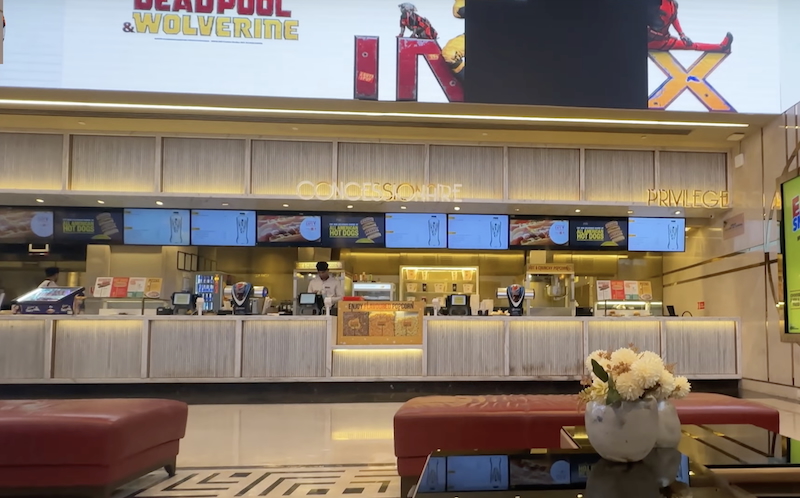
    MUMBAI: A recent ruling by a Bengaluru consumer court against PVR Inox’s practice of running blocks of commercials before a film’s screening has sent shockwaves through India’s cinema exhibition industry. The court ordered PVR Inox to pay Rs 20,000 in compensation to a customer whose screening of “Sam Bahadur” was delayed by 25 minutes, along with Rs 8,000 in legal costs and a hefty Rs 100,000 fine. The complainant argued that the delay disrupted his schedule and constituted misrepresentation of screening times, while PVR has denied any wrongdoing and plans to appeal the decision. The court also instructed PVR to mention actual start times for films on tickets, rather than just show start times (ads included).

    While judicial rulings must be respected, there is concern that this decision may not fully account for the operational realities of running a multiplex. The cinema exhibition industry operates on a tight schedule, with only a 50-minute gap between screenings. Within this window, crucial activities such as cleaning, restocking, and technical checks must be completed to ensure a seamless movie-watching experience. Typically, around 20-30 minutes are consumed by cleaning operations alone, leaving theatre owners with limited time to run commercials and pre-show content.

    The placement of advertisements before a movie is neither new nor exclusive to India. In most countries, pre-show advertisements are a standard practice, helping exhibitors generate additional revenue to sustain their business. These ad slots are often categorized into different packages, such as bronze, silver, gold, and platinum, depending on when they are played relative to the start of the movie.

    For instance, in the United Kingdom, cinema-goers are accustomed to watching an average of 11 minutes of commercials before the film begins. This system allows cinemas to monetize screenings while ensuring that the audience is well aware of this industry-wide practice. The United States follows a similar model, with advertisements running for about 15-20 minutes before the start of a feature film.

    Theatre chains, including PVR Inox, depend on multiple revenue streams to stay afloat. Ticket prices alone are often insufficient to cover operational costs, especially given the significant investment in infrastructure, maintenance, and technology. Average ticket prices in India are among the lowest in the world; hence, chains are dependent on food and beverage purchases by patrons to plug the gap in revenues. Advertisements play the next most important role in offsetting these expenses, ensuring that cinema halls can offer high-quality viewing experiences while keeping ticket prices competitive.

    Additionally, government-mandated public service announcements and advisories—such as health warnings about smoking or messages promoting national interests—also consume valuable screen time. At one point, playing the national anthem before the movie was a compulsory practice in India, further adding to the pre-screening content duration.

    The consumer court’s ruling sets a concerning precedent that could disrupt the well-established norms of the cinema industry. If similar cases emerge, multiplex operators may be forced to reduce or eliminate advertisements, leading to revenue losses and potentially higher ticket prices to compensate. This could, in turn, affect moviegoers who may have to pay more for the same entertainment experience.

    Moreover, imposing rigid constraints on advertisements without considering industry norms and financial dependencies could discourage investments in multiplex infrastructure and expansion. It could also affect advertisers, for whom cinema remains a lucrative medium to reach captive audiences. I remember as a youngster how we would pester our parents to take us earlier to the cinema hall so we could learn about new launches and promotions and take advantage of them by rushing to the stores. Even the commercials during the interval were something we watched, fascinated and goggle-eyed.

    While consumer rights must be protected, it is imperative that regulatory and judicial bodies take a holistic approach when adjudicating industry practices. Instead of outright bans or penalties, a more balanced solution could involve clearer communication from cinema chains about the expected duration of advertisements before a film starts. This could include displaying specific information on ticket booking platforms and at theatre entrances, ensuring transparency while allowing theatres to sustain their business model. For more than 70 years, not many objections relating to the airing of advertisements have been filed in the courts – consumer or otherwise. Let us remember: a swallow does not make a summer.

    PVR Inox’s decision to appeal the ruling is a step toward safeguarding the interests of the industry. If courts begin penalizing exhibitors for long-standing practices that are globally accepted, it may only serve to disrupt an ecosystem that has been meticulously structured to benefit both businesses and audiences alike.

    The cinema industry is already navigating challenges such as declining footfalls due to streaming services and high operational costs. Adding legal hurdles in the form of restrictions on pre-show or interval advertisements could prove to be a costly misstep that does more harm than good. As this case unfolds, it remains to be seen whether common sense and pragmatism will ultimately prevail.

  • TDSAT & Ad cap: TRAI almost done with its arguments

    TDSAT & Ad cap: TRAI almost done with its arguments

    MUMBAI: The third day of the arguments presented by the Telecom Regulatory Authority of India (TRAI) saw several crucial points being touched upon and the TDSAT also noting down points that could be pondered upon for rumination.

    The TRAI counsel Rakesh Dwivedi pointed out that if one reads section 7 (11) of the Cable TV Networks (CTN) Act then it must be read with the ad cap regulation because the regulator was using it only to enforce this section.

    Section 7 (11) states that the authority has the power to ‘seize equipment used for operating the cable television network if it is found to be breaching its other sections’.

    According to the TRAI, programmes and advertisements are different and the regulator is trying to prevent intermixing of these two and ensuring an increase in quality of service.

    The regulator also gave its version regarding Article 19 (a) of the Constitution saying that airwaves and frequencies are a public property of the government and so there is no fundamental right that can apply to it. Electronic media and press are different and cannot be treated equally. Broadcasters are companies and not citizens so fundamental rights don’t apply to them, Dwivedi argued.

    The point about misuse of clock hour was once again raised by Justice Aftab Alam to which the TRAI reverted by saying that the clock hour regulation instituted by the TRAI and the CTN Act are the same thing and they cannot be interpreted in any other way. Broadcasters are thinking of a bankable hour, that can be carried over within 24 hours but the TRAI says that a clock hour is fixed.

    The bench questioned the TRAI that if it could have enforced the ad cap law under the CTN Act then it need not have made a separate regulation or a direction or use the TRAI act for it.

    To this, counsel said that the CTN Act only applies to cable operators at this stage. And just because they have two powers that are coinciding they cannot take away one power. The point where broadcasters come into the picture of this Act, is for the advertising and programming code, which they have to adhere to by virtue of them having to apply for an uplinking and downlinking licence.

    The TRAI counsel also requested that merely because it had framed a regulation or passed a direction the bench may not nullify it because it has passed it under the TRAI act and not the CTN act, although it has powers under both. He also requested that if the bench were to find anything wrong with the ad cap regulation, they may modify it. However, Alam said that it cannot be done since it was a delegated regulation. To this TRAI asked the bench to consider it as a direction and then modify it keeping in mind the best interest of the viewers.

    One of the arguments, that the counsel raised, relates to Article 14 of the Indian Constitution that speaks about the fundamental right to equality. He stated that it would be in fair spirit if cable operators and broadcasters are not equated with each other at this juncture. The TRAI counsel presented data which clearly showed that broadcasters were airing TV commercials for an unbearable duration every day in between programmes and hence it had decided to apply the ad cap to them first. The limits on TV commercial time will be imposed on cable operators later by the TRAI, the counsel revealed. And the fact that cable ops will be made to comply later does not mean that broadcasters should be excluded from the ad cap now.

    The counsel said he would be addressing the issue of clubbing channel genres together on Monday.

    The bench asked the TRAI why it wasn’t willing to wait till digitization was completed to impose the ad cap regulation. The TRAI argued that by September 2014, nearly 50 per cent of the country will be digitized. Hence it was a good enough reason to bring in ad time limits rules now so that TV air time could be slowly modulated over the period. The TRAI counsel agreed the regulation may not be perfect in its current form, but that does not give the TDSAT a reason to strike it down.

    Regarding FTA channels, Dwivedi said that the broadcasters had not given the TRAI any financial or commercials analysis of the minute by minute usage of ad time and data to support that ad revenues will indeed fall when the ad cap comes into effect. Hence, the regulator had made a general reccee of the channels and deduced what needed to be done and only then drawn up the ad cap regulation. It also stated that FTA channels don’t have too many ads so TRAI did not know why they were objecting to it.

    At the end of the proceedings, an important observation was made by the TDSAT that if the ad cap regulation is struck down, no law can be contended except section 7 (11) of the CTN Act, because broadcasters have accepted this act. Articles 14 and 19 (1) (a) of the Constitution are against the imposition of the ad cap regulation and then the only thing that remains is the interpretation of the 7 (11) section of the CTN Act.

    The TRAI will continue with its arguments on Monday and the broadcasters are scheduled to speak after that.

  • TRAI presents its ad cap arguments

    TRAI presents its ad cap arguments

    MUMBAI: After nearly a week long argument from the News Broadcasters Association (NBA) and music channels – B4U, 9XM, Mastiii and M Tunes — it was time for regional players and the big daddy – the Telecom Regulatory Authority of India (TRAI) to present their side of the story on the ad cap.

    Among those who presented their case today were Polimer Media and south India biggie Sun TV. The channels brought to the fore a point from February 2011 when TRAI had confirmed that “there should not be any regulation at present on advertisement on both FTA and Pay channels.”

    It had taken this position in Petition No. 34(C) of 2011 in the TDSAT filed by a society called Utsarg against TRAI and several other broadcasters and content aggregators seeking a cap on television advertising time on the ground that these advertisements interfered with viewership of television programmes. The channels questioned the reversal in TRAI’s  stance today.

    Now, it was the turn of the TRAI to send its lawyer to make its deposition.  TRAI argued that it was right in taking recourse to  both the Acts – the Cable Networks Regulation Act 1995 as well as The Indian Telegraph Act 1885 and the TRAI Act – and it was empowered under both as broadcasters are licensees under the latter. To this, the bench comprising of Justice Aftab Alam and member Kuldip Singh said that if it already has the authority under the Cable TV Act then it should not have acted on the TRAI Act.
        

    However, TRAI argued that the Cable TV Act is applicable only to cable operators and the bench in turn responded that a broadcaster does not come under it then. TRAI claimed that they were merely interpreting section 7 (11) of the Cable TV Act of 1995 which says that the authority has the power to ‘seize equipment used for operating the cable television network’ if it is found to be breaching its other sections.

    On the laying of the ad cap regulation in Parliament, TRAI’s counsel said that it had submitted it to the relevant ministry. To this, the bench responded that the law decrees that it would become applicable only after it is accepted or rejected or modified in the house. All the actions TRAI takes won’t apply with retrospective effect. Hence if TRAI  prosecutes a broadcaster before laying in parliament would not that be a violation of fundamental rights was the question?  The argument was then that in such a situation it is beyond the jurisdiction of the TDSAT and comes under the ambit of the Supreme Court.

    One of the points raised by the petitioner channels was the possible misuse of the 12 minute ad cap regulation. It said that a broadcaster could have uneven advertising slots such as one minute of advertisement in the first 30 minutes while the next half an hour could have 11 minutes. Similarly the concept of clock hour too had its flaws. Hypothetically, a broadcaster could air 11 minutes of ads from7:49 pm to 8 pm and then another 11 minutes of commercials between 8:00 pm to 8:11 pm. That would mean TV viewers would be subjected to 22 minutes of commercials in an hour of television time, thus putting paid to TRAI’s mandate to maintain quality of service. To this, the TRAI claimed that all laws can be misused but then it doesn’t stop them from being made.

    TRAI will continue its arguments tomorrow.

  • Delhi HC accepts Prasar Bharatis plea for clean feed of sports signals

    Delhi HC accepts Prasar Bharatis plea for clean feed of sports signals

    NEW DELHI: Chief Justice N V Ramana and Justice Pradeep Nandrajog of the Delhi High Court have said that any channel telecasting a live television broadcast of sporting events of national importance must share the same with national broadcaster Doordarshan without any commercials.


    Upholding Prasar Bharati’s view, the Court made the observations while dismissing ESPN’s plea seeking a direction to Prasar Bharati not to insist on the live signal of international cricket matches of India without any commercials. “We find no merit in the writ petition which we dismiss but without any order as to costs.”


    Prasar Bharati had on 6 April told ESPN that “it is not in a position to share the live signals which are not clean” and insisted that the channel provide the feed of the matches without any commercials.


    Filing a petition before the High Court, ESPN had claimed to be the exclusive distributor of cricket matches of national importance. Furthermore, it said as a matter of practice it had offered the live signals of several matches with commercials as mandated by the Sports Broadcasting Signals (Mandatory sharing with Prasar Bharati) Act 2007 and relevant rules, but the pubcaster had imposed a condition relating to clean feed.


    Seeking the court’s intervention, the channel had said, “Refusal of the respondent to accept the feed has resulted in a stalemate or impasse which may deprive millions of viewers of watching the international cricket tournaments.”

    ESPN had argued that it did not have control over the “Commercial inserts” that were attached to the feed received by it from the event organisers. ESPN had further argued that its “obligation under the law was to share the live broadcast signal as it was received” by it from the sporting event organiser; and since the feed received by it contain certain advertisements by the organiser of the sporting event, their obligation were limited to share the signal as it is. 

  • Holy Crap! ‘Everybody Loves Raymond’ makes greatest quotes from TV list

    Holy Crap! ‘Everybody Loves Raymond’ makes greatest quotes from TV list

    MUMBAI: US broadcaster TV Land will count down The 100 Greatest TV Quotes and Catchphrases next month.

    This will be a week-long look at the memorable sayings from American cartoons, television series, commercials and news programmes over the past 60 years.

    The quotes that have made the cut include Donald Trump’s parting shot to the loser of the business based reality show The Apprentice “You’re fired”, Holy crap! from the sitcom Everybody Loves Raymond which airs in India on Star World and MTV’s iconic phrase I want my MTV! which was made legendary in the Dire Straits song Money For Nothing.

    Another phrase that made it is Oh my God! They killed Kenny! from the acerbic animated show South Park. The phrase for the show X-Files The truth is out there is also present. In the news category not surprisingly Neil Armstrong’s quip of “One small step for man one giant leap for mankind” after he became the first man to step on the moon is also present. Then there is the late JFK’s call to his countrymen, “Ask not what your country can do for you. Ask what you can do for your country.” The expression that film critics Roger Ebert and the late Gene Siskel used in rating a film “Two thumbs up!” or “Thumbs Down” that has influenced film critics who came after them is also there.

    TV Land president Larry W. Jones says, “We have found that television is such a huge part of Baby Boomers’ DNA that it makes sense that so much of America’s pop culture jargon has come from TV. We are sure that The 100 Greatest TV Quotes & Catchphrases will strike a chord with the TV
    Generation and will illustrate the influence the medium has had on pop culture.”