Tag: commercial

  • 133 news and non-news pay channels violated adcap rule in 1st quarter

    133 news and non-news pay channels violated adcap rule in 1st quarter

    NEW DELHI: While the adcap case continues to drag with no sign of an early hearing, a study shows that a total of 133 pay channels including 30 news and current affairs channels continue to violate the regulations for telecasting a maximum of twelve minutes of advertisements and commercials per hour.

    The report released today by the Telecom Regulatory Authority of India for the period from 28 December to 27 March shows that the number of violators has come down marginally from 149 during the three months ending 27 December.

    While there has been a very miniscule increase in the violators among news channels from 28 top 30, there is a sharp fall in non-news channels from 121 to 103 as on 27 March.

    Average duration per hour of Advertisements (commercial and self promotional) during peak hours (7pm ‐ 10 PM) in Pay News Channels for the period 28 December to 27 March shows that the highest of these was 24.83 minutes by ETV Rajasthan and the lowest was 12.15 minutes by Times Now.

    Among pay non-news channels for the same period, the highest was 23.41 minutes by B4U Movies (which had topped the list in December last year as well) and the lowest was 12.04 by Odiosha TV’s Tarang.

    There are at least sixteen news and 24 non-news channels clocking more than fifteen minutes per hour.

    TRAI has made it clear that ‘the information is based on the data submitted by the broadcasters and TRAI bears no responsibility for correctness of same. As per information available with TRAI, the rest of the Pay News and non-news channels are carrying less than 12 minutes of average duration per hour of advertisements (Commercial & Self promotional) during peak hours (7PM – 10 pm)’.

    While asking TRAI not to take any coercive action against any channel pending hearing of the case in the first hearing almost two years earlier, the Delhi High Court had asked all channels and TRAI to keep a record of the advertising time consumed including commercials.

    The petition had been filed by the News Broadcasters Association and some channels challenging the TRAI decision to implement the directive of 12 minutes contained in the Cable Television Networks (Regulation) Act 1995. The Information and Broadcasting Ministry and TRAI are the respondents in the petition.

    After the Information and Broadcasting Ministry told the Court on 27 November that it was discussing the issue with broadcasters, the matter was put off to 11 February and then to 29 March. In the 11 February hearing, Discovery Communications moved for intervention while Home Cable sought early hearing.

    In its intervention MSO Home Cable Network (P) Ltd said it wanted to intervene as it was directly affected by the outcome of the present petition. It wanted the NBA petition to be dismissed and added: “The Pay channel broadcasters are profiteering at the expense of subscribers and the DPO’s. There is no justification for changing monthly subscription when commercial advertisements are inserted. The Standards of Quality of Service (Digital Addressable Cable TV Systems) Regulations 2012 (with Amendments thereafter) is justified to the extent they are applicable to Pay Channels. The pay channel broadcasters cannot charge the subscription fee while inserting commercials into the content or in the alternative, the subscribers have to be compensated for the revenue earned on the basis of their being subscribers of the channels.”

    Interestingly, I and B Minister Arun Jaitley had in January last year said that he was in favour of any ad cap in the print or electronic media.

    In the petition, the news channels have taken the plea that most of them are free to air and therefore do not get any subscription fee from the viewers as the GEC channels do.

  • 133 news and non-news pay channels violated adcap rule in 1st quarter

    133 news and non-news pay channels violated adcap rule in 1st quarter

    NEW DELHI: While the adcap case continues to drag with no sign of an early hearing, a study shows that a total of 133 pay channels including 30 news and current affairs channels continue to violate the regulations for telecasting a maximum of twelve minutes of advertisements and commercials per hour.

    The report released today by the Telecom Regulatory Authority of India for the period from 28 December to 27 March shows that the number of violators has come down marginally from 149 during the three months ending 27 December.

    While there has been a very miniscule increase in the violators among news channels from 28 top 30, there is a sharp fall in non-news channels from 121 to 103 as on 27 March.

    Average duration per hour of Advertisements (commercial and self promotional) during peak hours (7pm ‐ 10 PM) in Pay News Channels for the period 28 December to 27 March shows that the highest of these was 24.83 minutes by ETV Rajasthan and the lowest was 12.15 minutes by Times Now.

    Among pay non-news channels for the same period, the highest was 23.41 minutes by B4U Movies (which had topped the list in December last year as well) and the lowest was 12.04 by Odiosha TV’s Tarang.

    There are at least sixteen news and 24 non-news channels clocking more than fifteen minutes per hour.

    TRAI has made it clear that ‘the information is based on the data submitted by the broadcasters and TRAI bears no responsibility for correctness of same. As per information available with TRAI, the rest of the Pay News and non-news channels are carrying less than 12 minutes of average duration per hour of advertisements (Commercial & Self promotional) during peak hours (7PM – 10 pm)’.

    While asking TRAI not to take any coercive action against any channel pending hearing of the case in the first hearing almost two years earlier, the Delhi High Court had asked all channels and TRAI to keep a record of the advertising time consumed including commercials.

    The petition had been filed by the News Broadcasters Association and some channels challenging the TRAI decision to implement the directive of 12 minutes contained in the Cable Television Networks (Regulation) Act 1995. The Information and Broadcasting Ministry and TRAI are the respondents in the petition.

    After the Information and Broadcasting Ministry told the Court on 27 November that it was discussing the issue with broadcasters, the matter was put off to 11 February and then to 29 March. In the 11 February hearing, Discovery Communications moved for intervention while Home Cable sought early hearing.

    In its intervention MSO Home Cable Network (P) Ltd said it wanted to intervene as it was directly affected by the outcome of the present petition. It wanted the NBA petition to be dismissed and added: “The Pay channel broadcasters are profiteering at the expense of subscribers and the DPO’s. There is no justification for changing monthly subscription when commercial advertisements are inserted. The Standards of Quality of Service (Digital Addressable Cable TV Systems) Regulations 2012 (with Amendments thereafter) is justified to the extent they are applicable to Pay Channels. The pay channel broadcasters cannot charge the subscription fee while inserting commercials into the content or in the alternative, the subscribers have to be compensated for the revenue earned on the basis of their being subscribers of the channels.”

    Interestingly, I and B Minister Arun Jaitley had in January last year said that he was in favour of any ad cap in the print or electronic media.

    In the petition, the news channels have taken the plea that most of them are free to air and therefore do not get any subscription fee from the viewers as the GEC channels do.

  • Canon India targets digitising Rs 3000 crore photo print market with DreamLabo 5000

    Canon India targets digitising Rs 3000 crore photo print market with DreamLabo 5000

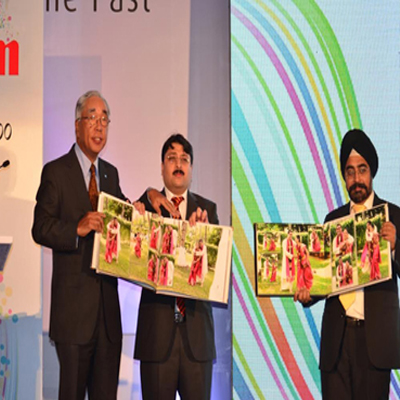
    BENGALURU: Canon India (Canon) announced its entry into the Rs 3000 crore photo printing market in India, and more specifically the Rs 300 crore digital printing market with the introduction of the USD 500,000 (About Rs 3.2 crores) priced DreamLabo 5000 commercial inkjet printer equipment, with the intent of targeting the retail photo and album printing industry. This launch makes India the first country in South Asia where the DreamLabo 5000 machine is being installed says the company.

    Canon India President and CEO Kazutada Kobayashi, said, “Canon has always been at the forefront of bringing innovative products to customers. With this latest business entry, we are hoping to strengthen our ability to meet the printing needs of professional and wedding photographers. With the DreamLabo 5000, we clearly want to establish innovation leadership in India. For us at Canon India, this is not just a new machine, but the technology that can revitalise the entire industry and open up substantial new business opportunities. Canon is setting a new benchmark for the production printing of high quality photos with this launch.”

    Globally, DreamLabo merchandise has been positioned as premium item. The company is following a systematic approach with DreamLabo 5000. It started with a leading photolab in each region and then expanded the presence in that country or region. Its first customer for the DreamLabo 5000 in India is Bangalore-based 100 year old, 22 photo lab store chain G K Vale. G K Vale clocks revenues of about Rs 50 crore annually.

    GK Vale Managing director Anand Sukumar said to  www.indiantelevision.com, “DreamLabo 5000 will help our bottom line, and will not make a very major impact to our bottom line. We have received a good response and may even buy a second machine.”

    A campaign is being planned by both Canon India and G K Vale to attract commercial clients. Some of the ideas being mulled at Canon are including a small flyer or a booklet with each of the 20,000 digital SLRs’ that it sells monthly, in-store promotions at Canon Image Squares, among others. Industry sources reveal that Canon India is likely to spend around Rs 0.75 crore to Rs1 crore during the next calendar year towards above the line (ATL) and below the line (BTL) activities for promotion of its partners such as G K Vale. Canon India spends around Rs100 crore towards brand building, marketing, ATL and BTL activities. Dentsu handles the creative duties for Canon India.

    GK Vale spends about Rs 1 crore annually, but with the installation of the DreamLabo 5000, it will double its advertising spends on social media, print and outdoor and local radio.

    Commercial printing business contributes just about Rs 95 crores or 5 per cent to Canon India’s top line, revealed Canon India executive vice president Alok Bhardawaj. Canon expects revenue of just Rs15 crore during the next calendar year and is targeting revenue of Rs100 crore from this stream over a five year period.

  • Unilevers’ Project Sunlight promises a brighter future

    Unilevers’ Project Sunlight promises a brighter future

    MUMBAI: Earlier this year, Indian TV channels aired a TV commercial set in a village where a majoirty of children succumbed to diarrhea even before they could complete two years. It then panned to a man who walked on his hands in to a temple in gratitude of his son turning five. All this in a modern India where Audis and Lamborghinis speed across expressways. The TV commercial was a public messaging initiative by multinational giant Hindustan Unilever (HUL) and it sought to encourage healthy handwashing habits amongst children on the back of its brand Lifebuoy.

    Similarly, on 20 November, celebrated world over as Universal Children’s Day, the company – no stranger to emotionally connecting with people – launched a brand new initiative christened ‘Project Sunlight,’ with an equally moving advertisement/film.

    An extension of HUL’s ‘Sustainable Living Plan’ launched in 2010, ‘Project Sunlight’ aims to make sustainable living desirable and achievable by inspiring people to look at the possibilities of a world where everyone lives well and within the natural limits of the planet.

    The ad film is aptly titled ‘Why bring a child into this world?’ and starts with expectant parents across the globe sharing their concerns about bringing a child into a world fraught with natural and man-made disasters, then going on to allay their fears and explain how it is the best possible time to do so.

    Also launched in Brazil, Indonesia, UK and the US apart from India, ‘Project Sunlight’ is designed to appeal to people everywhere, particularly parents, encouraging them to join what Unilever (HUL’s parent) sees as a growing community of people who want to make the world a better place for their children and for future generations.

    As part of the launch, Unilever plans to help two million children through its ongoing partnerships: providing school meals through the World Food Programme; supporting Save the Children to provide clean, safe drinking water; and improved hygiene through UNICEF. In collaboration with UNICEF, it aims to reach out to 500,000 school children in 3,500 schools across India and set up hand washing facilities.

    Said HUL CEO & MD Sanjiv Mehta in a press statement: “The launch of ‘Project Sunlight’ is a significant milestone in the history of our company. We believe that large companies like ours have to be part of the solution to the problems the world is facing. Adopting sustainable lifestyles and people using their purchasing power to make consumption choices that are good for them and good for the world are important factors in the drive to reducing social inequality and averting the worst climate change predictions – to make sustainable living commonplace.”

    Guided by Unilever’s consumer insight, including new international research commissioned by the company, ‘Project Sunlight’ demonstrates that children are key to motivating adults to want to adopt more sustainable lifestyles and are a powerful influence on changing parental behaviour.

    On the campaign, said Unilever chief marketing & communications officer Keith Weed: “In the first stage of ‘Project Sunlight,’ we are inviting people to take three simple actions. We want to help people ‘See’ a brighter future; in order to do this, we are inviting people to watch a film online which aims to inspire and motivate people. We want to encourage them to ‘Act’ by doing small things which, added together, contribute to a better society and environment. Ultimately, we want people to ‘Join’ the movement and become part of a growing community of like-minded people and organisations who all want to play their part in building a brighter future.”

    Why did HUL choose the name Sunlight? “We chose the name Sunlight as a tribute to our founder William Lever, whose audacious vision 130 years ago to ‘make cleanliness commonplace’ with Sunlight soap inspired Unilever’s equally ambitious purpose today: to make sustainable living commonplace. Sunlight also reflects the sense of possibility and optimism which characterises Unilever’s approach,” informed Weed.

    ‘Project Sunlight’ will initially go live on an online hub – www.projectsunlight.com – which brings together the social mission stories of Unilever brands across the world, and invites consumers to get involved in doing small things which help their own families, others around the world and the planet. 

    The film, especially commissioned by Unilever and directed by Academy Award winning director Errol Morris, inspires people to see the future in a more positive and optimistic way. The Indian version of the film has a voiceover by actor Shah Rukh Khan.

    IndustrySpeak

    As a parent it touched me. I would be lying if I said I don’t worry about the future each time my boys were on the way. It feels good to know that someone else is also thinking about kids’ future. It is very refreshing. It is a completely different way of looking at the future. Thanks to many of the science fiction novels and Hollywood blockbusters, we sometimes feel the future will be grim and tough. We all collectively have overlooked the fact that life is actually getting better every given day. And to top it all, hearing SRK, the parent, talk just makes the film more relatable. Also SRK’s popularity with the masses will pull in more eyeballs to this campaign.

    Abhijit Avasthi, NCD, Ogilvy & Mathers

    Today, consumers buy brands for what they believe in and stand for rather than what they preach/tell about themselves. It’s important to have good karma. And to associate a celebrity with it will only propel the idea to a larger section of the population. Remember Lead India? It used the likes of Amitabh Bachchan, Karan Johar among many others, which gave it prominence.

    Why bring a child into this world? is a common question on the minds of many. It is a lovely idea and shows that today, when companies are taking away from the environment; there are some who want to give back to the world.

    Nisha Singhania, co-founder and director, Infectious

    For a company of that stature to come and say that yes, the present looks dicey but we are working towards a brighter future, says a lot about their determination.  If one looks at the film, it shows a beautiful insight because today, couples do discuss and are apprehensive about bringing new life into the world. It might help some to rethink on the subject.

    As for a voiceover by SRK, I’m not too sure if it will help the film’s reach because it is not as distinctive as Amitabh Bachchan’s voice. Having said that, it is such a beautiful film that it doesn’t need someone to help push it.

    Arun Iyer, NCD, Lowe Lintas

    Usually it’s corporations that need an image makeover that go heavy on CSR initiatives. For instance Shell and Exxon, whose businesses are not exactly environment-friendly, champion the cause of environmental protection. So naturally, over the years, one has grown cynical about such things.

    However, the film, momentarily at least, makes one suspend the cynicism. The emotions it shows are raw, and the lack of slickness makes it work. As it doesn’t come across as manipulative, you are drawn in, and empathise with the people it features. Every parent is concerned about the world he is leaving for his children. Perhaps the ideal way to make people realise that it’s important to improve and sustain the planet is to remind them of this. By featuring expectant parents, the idea taps into this insight nicely.

    Viral Pandya, co-founder and chief creative officer, Out of the Box

  • Vodafone’s new TVC cashes in on the joy of ‘sharing’

    Vodafone’s new TVC cashes in on the joy of ‘sharing’

    MUMBAI: The best way to tap young customers is by showing their stories in the most fascinating way. Vodafone’s new television campaign, “made for sharing” is doing just that.  It is inspired from the life of youngsters and how they share every moment of their life on the internet.

    The TVC is created by Ogilvy Mumbai and produced by Good Morning Films.

    The commercial chronicles the life of a girl who is sad because she has broken up with her boyfriend. But over the course of the film, she recovers from the heartbreak as she starts having fun with her friends and living her life. During the period of recovery she shares all her feelings – the sadness, hanging out with her BFFs, the joy of taking a holiday, singing, shopping etc – through status updates, Instagram pictures and video uploads using Vodafone’s mobile internet.

    The TVC is a testament of how important ‘sharing’ is to a youngsters’ lives and how Vodafone with 24×7 internet connectivity is made for young people.

  • NBA concludes arguments, hearing to continue on Monday

    NBA concludes arguments, hearing to continue on Monday

    MUMBAI: It took four days for the News Broadcasters Association (NBA) to present its arguments in the ad cap case against the Telecom Regulatory Authority of India (TRAI) to the Telecom Disputes Settlement Appellate Tribunal (TDSAT). But it finally concluded presenting the news industry’s viewpoint on it in terms of existing regulation. After pointing out how the proposed ad cap was reportedly in violation of statutory and constitutional law, its lawyers today highlighted the commercial compulsions and problems that news broadcasters face.
        

    One of the major points highlighted that was drawn out is the issue of high carriage fees that is crippling the whole news industry. News broadcasters have to pay about 30 percent and sometimes even 50 per cent of their revenues as carriage fees while for the GECs it is about 20 per cent.

    “Although they might be paying the same amount as carriage fees, their revenue is higher and instead of regulating something as important as this, TRAI is trying to impose ad cap,” says a news broadcaster.

    TDSAT has asked NBA to file affidavits on Monday to demonstrate the commercial impact any changes in air time will have on their survival. This includes tabulating the revenues they generate in a non-12 minute per hour ad cap scenario and what they expect these to drop to on its imposition.
    With the NBA concluding its presentations, it will be on to the other channels and the TRAI to state their case when hearing begins from Monday – after tomorrow’s recess.

  • ICC invites breweries to partner with them for World Cup 2015

    ICC invites breweries to partner with them for World Cup 2015

    MUMBAI: The pitch is open for the brewing companies for the International Cricket Council (ICC) World Cup 2015. The Council is inviting brewing companies to submit proposals to become the Official Beer Partner of the ICC Cricket World Cup 2015 in Australia and New Zealand.

    The brewery that gets the partnership can avail a lot of provisions — it will receive a raft of rights and benefits that will enable it to use valuable ICC intellectual property in association with its beer brand(s); it will also have the right to sell products containing the exclusive ICC Cricket World Cup 2015 event logo, and will also have the right and obligation to supply beer at all 14 venues of the event.

    But to be on board to avail all this and more, the company should have a proven track record. The Council is seeking companies that have dealt in large scale sports sponsorship and marketing programs, the supply of beer at major sporting events, and a sound understanding of the Australian and New Zealand markets, as well as sufficient human and financial resources to leverage the promotional opportunity.  

    ICC General Manager – Commercial Campbell Jamieson said in a release: “Being the Official Beer Partner of ICC is a much bigger opportunity than just being an exclusive supplier of beer to the 49 matches of the ICC Cricket World Cup 2015. This will be an attractive marketing and business opportunity for any brewing company, and hopefully the seed of a longer term relationship with ICC. We expect to receive high quality proposals from brewing companies that will both leverage the marketing and media rights package to maximize association with this prestigious global sporting event, and to provide a great product to the spectators in the stands.”

  • Kolkata govt. promotes film fest with outdoor campaigns

    Kolkata govt. promotes film fest with outdoor campaigns

    KOLKATA: “Ticket kete na ki pass niye” (Did you buy a ticket or do you have a pass?) – this is what the Kolkata government has been asking its residents.

    The state government’s Information and Cultural Affairs (I&CA) department has been running an outdoor campaign to spread awareness about its 19th Kolkata International Film Festival (KIFF) that opened on Sunday.

    The department owns close to120 hoarding space in the city and has used almost one-third of the space for the promotion of KIFF.

    Government enlisted agencies including Arun Sign Service, Karukrit Advertising and Pioneer Publicity Corporation have been asked to maintain the hoardings for KIFF.

    “The teaser campaign has been out for some time now. It is just to spread the right word among the people about the festival,” said West Bengal Outdoor Advertising Association, treasurer and grievance committee convener, Ashif Kumar Biswas.

    While S Chakraborty from Karukrit Advertising said that the government has given two billboards to each agency in one area where one advertisement would be there to promote the festival and the other one will be used for commercial advertisement so that the agencies can recover the cost of the government hoarding. “We have got 20 by 10 feet flex from the authorities,” he said.

    When asked about the money being spent in the advertisements, the agencies said that since these billboards are owned by the department, the cost is not much.

    City based media analysts think that the teaser, which is usually a common aspect of such festivals, increases curiosity among film lovers.

    Apart from promoting the festival with outdoor campaigns, the state government has also made special efforts to pay tribute to legendary singer Manna Dey, who passed away recently and filmmaker Rituparno Ghosh, who too passed away earlier this year. While the singer’s famous songs are a part of the official theme song, the filmmaker’s unreleased movie Taak Jhaank (Sunglass) will be premiered at the festival.

  • Stay in tune with your friends with Line, Katrina

    Stay in tune with your friends with Line, Katrina

    MUMBAI: Star power surely works! And thus Line Corporation, that operates Line, a free call and messaging app, launched a new TV commercial recently that features actor Katrina Kaif, who is trying to woo users with stickers.

    Yes, the company has come up with two ads of 40 seconds and 20 seconds that have been created by Hakuhodo Percept, Delhi to present to the audience the sticker language.

    This time, Katrina is seen in a coquettish mood where she is trying to spark a playful conversation with a French man using Line messaging application. The ad campaign captures the quintessence of displaying emotions, defying the barriers of language and hitting off a romantic encounter using exciting new series of stickers on the app.

    The story begins with an attractive French man trying to woo Katrina to spend a romantic night in town, but language becomes a barrier and he leaves Katrina puzzled. The story develops as Katrina switches to stickers on LINE and drops cues to the French guy who then uses his charm to impress her with his witty selection.

    The ad features visually alluring effects on screen while Katrina and the French man continue sharing stickers with each other. The commercial highlights the new way of sharing emotions through personalised stickers to spark off conversations between users on Line. The TVC unfolds with a vibrant background score that lingers on.

  • Broadband optical fiber access solution to be launched for cable ops by Alcatel-Lucent

    Broadband optical fiber access solution to be launched for cable ops by Alcatel-Lucent

    NEW DELHI: A new broadband optical fiber access solution is being launched soon by Alcatel-Lucent for cable multiple-system operators (MSOs).

    The Ethernet Passive Optical Networking (EPON), solution can be integrated into existing cable access networks to deliver greater capacity to more businesses at a lower cost. This will enable MSOs, particularly those in North America, to expand their service offerings to meet the growing data bandwidth needs of businesses.

    Bright House Networks, the sixth largest owner and operator of cable systems in the US has selected Alcatel-Lucent’s EPON solution for its commercial services network, Alcatel-Lucent said in a statement.

    “Compared with competing alternatives, EPON has clear advantages in capital efficiency, vendor interoperability, bandwidth scalability and standardised provisioning,” said Bright House Networks, Network Engineering/Operations & Enterprise Solutions – SVP Craig Cowden.

    North American businesses are estimated to spend over $140 billion per year in total on communications services, yet MSOs are currently only capturing a small percentage of this market.

    “The business communications market segment is growing rapidly and cable operators in North America have a real opportunity to address it,” said Alcatel-Lucent Fixed Networks head Federico Guillen.

    Revenue from fixed broadband services providing connections between 100 megabits-per-second (100Mbps) and 1 gigabit-per-second (1Gbps) is predicted to more than double between 2013 and 2017.

    Alcatel-Lucent’s EPON solution for MSOs is based on the highest capacity fiber platform on the market – the Alcatel-Lucent 7360 ISAM FX with 1G EPON and 10G EPON linecards.

    The solution supports DOCSIS provisioning of EPON (DPoE), EPON Small Form-factor Pluggable (SFP) Optical Network Units (ONU), and a 10G EPON ONU. This enables it to integrate smoothly with existing networks, provisioning systems, and customer premises equipment, allowing MSOs to provision new services.
    EPON delivers more bandwidth (up to 1G or 10G upload and download speeds) than today’s DOCSIS networks and supports three to four times the number of customers per fiber as existing point-to-point coarse wavelength division multiplexing (CWDM) solutions.