Tag: Commerce Ministry

  • MIB mulls national b’cast policy to ease stakeholders’ woes

    MIB mulls national b’cast policy to ease stakeholders’ woes

    NEW DELHI: India’s Ministry of Information and Broadcasting is exploring formulating a national broadcast policy or NBP with an aim to ease lengthy and time consuming government processes that media and entertainment industry players have to go through while conducting their businesses.

    According to MIB secretary Amit Khare, his ministry is also formulating the internal FDI policy to align the overall framework with that of the Commerce Ministry. The government had liberalised investment norms for many sectors, including media and entertainment, in 2016, and later dismantled Foreign Investment Promotion Board too making sectoral nodal ministries responsible for greenlighting FDI proposals.   

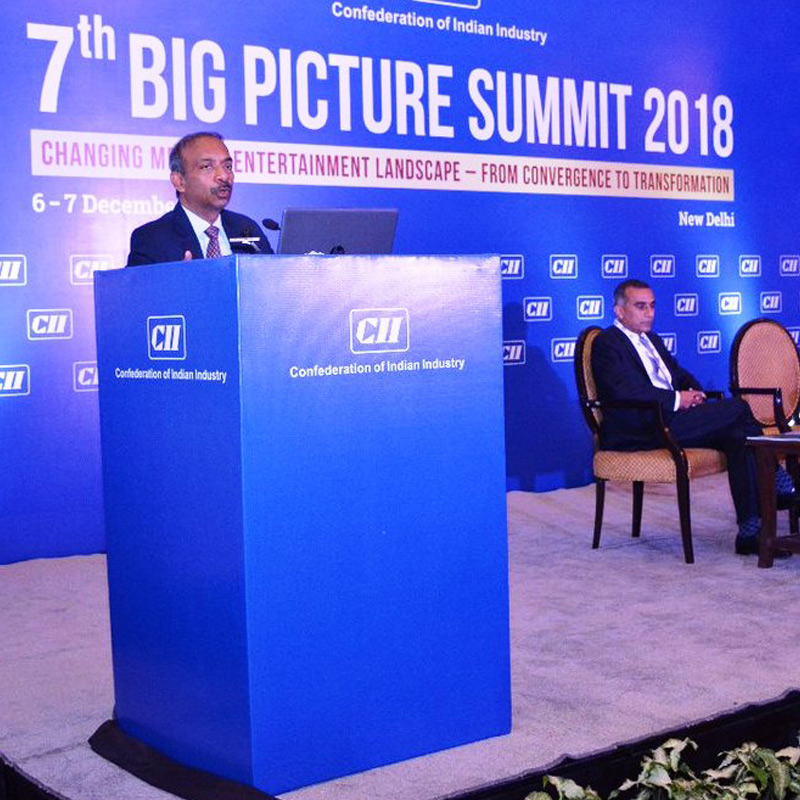
    “The media and entertainment sector should grow in a way that has less hurdle and more motivation,” Khare said here yesterday while addressing the concluding day audience at the CII Big Picture Summit 2018.

    Expanding on the NBP, Khare said government was exploring ways to ease processes, including a rethink on existing regulations for India’s M&E sector, which, not only has clocked impressive growth, but is also a big generator of employment for people. A new DTH policy, which is in the offing, is an indicator of the government's thought process.

    Admitting that regulation has failed to keep pace with changing technologies, the senior government official said, “Regulating everything is not desirable and even if desirable, it may not always be feasible.”

    However, he did not elaborate on the government’s thought process on content regulation for the digital space that’s fast becoming home to bold themes and bolder content if compared to traditional media of print and television.

    Pointing out that the government faced challenges while formulating policies or reviewing existing ones, Khare gave the example of expanding outlets for distribution of content that now, according to him, can be created practically by anyone with newer digital platforms offering creators enough number of outlets to showcase such creations.

    “In such a scenario, policy reforms [become] a little difficult,” Khare said, adding that the present government, however, was keen to review irksome government processes and clearances without being the “monitor” to mind a “grown-up” industry like media.

    Dwelling further on technology and the transformation it was bringing about in society, in general, Khare said MIB was in talks with regulator TRAI and BECIL to hold workshops to explore actively how broadband services could be delivered via existing cable TV networks to approximately 40 million households that presently don’t have internet facilities.

    Broadcast Engineering Consultants India Limited or BECIL, a government organisation under the ambit of MIB, provides project consultancy services and turnkey solutions encompassing the entire gamut of radio and television broadcast engineering.

    Later speaking to the media on the sidelines of the event, Khare said consultations will start with industry stakeholders on the formulation of NBP, but refused to give a time frame of it being legislated into some form of a policy document or guidelines.

    Info Tech Minister advocates robust digital measurement norms

    Facebook, Twitter, YouTube and WhatsApp have changed the manner in which users consume content and communicate with each other, but the social media platforms need to be mindful of "certain dos and don'ts" and guard against any misuse of their platforms, Information and Technology Minister Ravi Shankar Prasad said on Friday.

    Speaking at the CII Big Picture Summit, Prasad said that social media platforms' large focus on India underscored the sheer size and opportunities presented by the market here.

    "Facebook, Twitter, LinkedIn and WhatsApp are coming to India not only because they are giving some service. India offers a robust market, by its sheer size. I always say, come do business, but remember certain dos and don'ts…you must follow," Prasad said.

    The minister said that social media firms should also guard against any potential misuse of their platforms. In particular, these "public platforms" must not be misused by those with wrong intentions for the purpose of exploitation and denigration of others, he said.

    Outlining India's rising digital clout on the back of its large smartphone user base, strong IT outsourcing industry, electronic manufacturing capabilities and biometric programme Aadhaar, the minister asserted that the country will never barter its digital sovereignty and is, in fact, bringing a strong data protection law to safeguard its digital information.

    The right of accessing the internet is "not negotiable" and if the internet is designed for common good, it should be safe and secure, he added.

    He also called for a robust mechanism for measuring the ratings of digital platforms.

  • India gets its own IPR mascot ‘IP Nani’

    India gets its own IPR mascot ‘IP Nani’

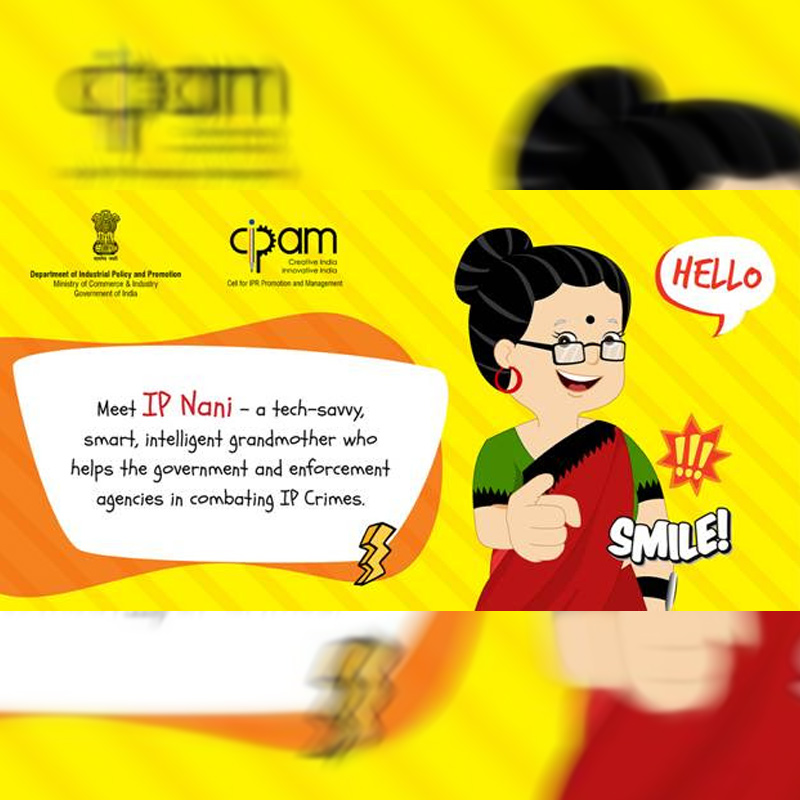
    MUMBAI: India’s intellectual property (IP) mascot – IP Nani – was launched by Commerce and Industry minister Suresh Prabhu over the weekend.

    Speaking on the occasion, Prabhu said that the protection of IP rights (IPR) is critical for building a knowledge-based society adding that mere legal provisions are not sufficient for its protection but their strict implementation is equally required. He underlined that piracy is a serious crime which should not go unpunished. He even called for creating awareness against stealing IPR and stressed on the need for participation of society in the effort.

    Mascot IP Nani is a tech-savvy grandmother who helps the government and enforcement agencies in combating IP crimes with the help of her grandson ‘chhotu’ aka Aditya. The IP mascot will spread awareness about the importance of IPRs among people, especially children, in an interesting manner.

    This character is also in line with the World Intellectual Property Organisation’s campaign for the World IP Day which celebrates the brilliance, ingenuity, curiosity and courage of the women who are driving change in our world and shaping our common future. It also highlighted that how a strong IP system can support innovative and creative women.

    The Cell for IPR Promotion and Management (CIPAM), a professional body under the Department of Industrial Policy and Promotion collaborated with the European Union Intellectual Property Office to produce a series of animated videos on IPRs for children with IP Nani as the central character.

    CIPAM has been conducting IPR awareness workshops for school students since April 2017. For the first time ever IPRs have been exclusively included in the NCERT textbook for class 12 school syllabus. These efforts are aimed at inspiring the next generation of creators and innovators to become proud IP owners.

    Also Read :

    World IP Day celebration in Delhi and Mumbai

    Owning IP not priority for Big Synergy

  • Viacom18 & govt announce anti-piracy partnership

    Viacom18 & govt announce anti-piracy partnership

    NEW DELHI: In a step highlighting seriousness of stakeholders, Viacom18 has forged a partnership with the Cell for IPR Promotion and Management or CIPAM, a professional body under the Commerce Ministry, to launch an anti-piracy awareness campaign laying stress on the importance of IPRs.

    “A possible solution to the problem of piracy lies in creating awareness about intellectual property rights (IPRs) among the masses. It is pertinent that one of the main objectives enshrined in the national IPR policy is creating awareness about IPRs to build a healthy IP ecosystem in the country,” Commerce Ministry’s Department of Industrial Policy and Promotion (DIPP) joint secretary Rajiv Aggarwal said.

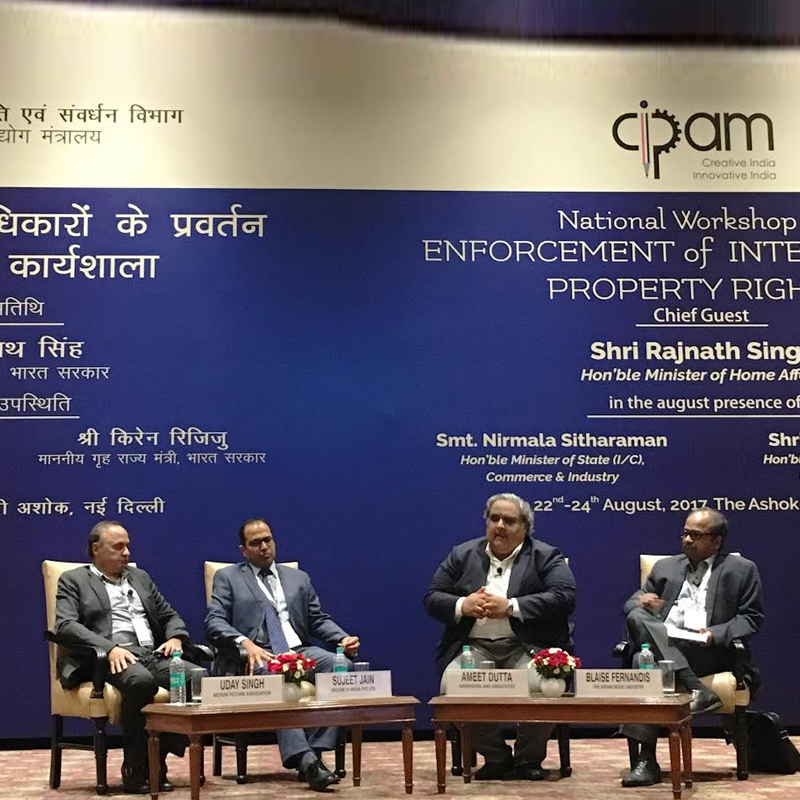
    Aggarwal, speaking on the partnership that was announced during an ongoing three-day national workshop on enforcement of IPRs, lauded the industry’s contribution in taking a lead to rally around the cause of IPR protection.

    According to Viacom 18 Media group general counsel and company secretary Sujeet Jain, “When it comes to consumption and circulation of pirated content, there is limited knowledge about its economic and social impact. Through this partnership with CIPAM, we hope to raise awareness amongst youth and children about the perils of piracy and the need for the protection of IPRs.”

    Content piracy, especially online, is a menace that has started to cause serious dent to revenues of content owners and also the Indian government in terms of taxes. And, it is high time that the industry and the government collaborated on a war-footing to create awareness about IPRs and anti-piracy measures being undertaken.

    As part of the association with CIPAM, Viacom18 has created a behavior change awareness videos, involving popular animated characters of its flagship kids’ channel Nickelodeon and Sonic (Motu-Patlu and Shiva, respectively), spreading the message that content piracy was equivalent to stealing.

    The campaign will see CIPAM and Viacom18 airing these videos across schools, colleges and various educational institutions, in addition to the network’s kids channels.

    Because IPRs are increasingly becoming crucial drivers of social and economic growth in the 21st century DIPP has organized a meet here, which was inaugurated by Home Minister Rajnath Singh in the presence of Minister of Commerce Nirmala Sitharaman and Minister of State for Home Kiren Rijiju. Sessions on various aspects of IPR, its protection, existing laws and anti-piracy measures are scheduled to be discussed by industry and government representatives.

    Singh said that counterfeiting and piracy activities give rise to serious organized crimes and police officials should be equipped with proper knowledge and training so as to curb and restrain IPR breaches.  

    The workshop is designed to help police officials and prosecutors to understand their role in effective enforcement of IPRs. It will also provide an opportunity to the officials to share their experiences, exchange best practices and coordinate effectively with each other.

    Sitharaman, while emphasizing that people need to understand  ways to create and protect their intellectual property for a secure future, said the World Intellectual Property Organization (WIPO), in collaboration with CIPAM, was setting up two technology and innovation support centres  in Punjab and Tamil Nadu.

    Meanwhile, a statement from Viacom18 added that it was not the first time that Viacom18 was championing the cause of IPR protection. Earlier this year, along with the Bombay High Court, the media group conducted a crack-down on counterfeit merchandise of their licensed character Dora the Explorer.

    This initiative was primarily targeted to protect children from hazards of using inferior quality products under the impression of them being original Viacom18 merchandise. The company, which also owns film production unit Viacom18 Motion Pictures, had previously led a campaign against film piracy too.

    ALSO READ:

    Comment: War on online video piracy, which matters, is here for India to fight

    Indian online video to grow to US 1.6 bn at 35 percent CAGR by 2022

    MPA forecasts Asia Pacific online video opportunity at US$35 billion by 2021

  • Copyright Force finally here to fight online piracy

    Copyright Force finally here to fight online piracy

    NEW DELHI: The Copyright Force is finally here to fight online content piracy, which has been bleeding the Indian content companies, from film, music and TV world, billions of rupees in revenues as pirates have been making hay.

    It seems in co-ordinated movements by the Indian government and the industry, plans have been initiated to seriously fight the online piracy menace. While the Department of Industrial Policy and Promotion (DIPP), under Commerce Ministry, earlier this week discussed the copyright and piracy issues with stakeholders, industry body FICCI sent out notes to stakeholders to be part of  Copyright Force, a unique cross-industry coalition.

    Globally online piracy of content costs trillions of dollars that have prompted several industry organisations to focus specifically on arresting online piracy. According to Dubai-based GO-Gulf, there are $12.5 billion in economic losses each year due to piracy in the music industry alone; 71,060 jobs are lost in the United States every year due to piracy and $2.7 billion in workers’ earnings are lost each year due to online piracy. Interestingly, according to the research, India is ranked 5th (60 per cent) in the Top 10 countries with online piracy, while China tops the list with 91 per cent piracy.

    The DIPP meeting of stakeholders, including producers from film and TV industry, was held to discuss issues related to copyright infringement and ways to tackle online piracy. The meeting, chaired DIPP joint secretary Rajiv Aggarwal, not only appreciated efforts being initiated by the Telangana Intellectual Property Crime Unit or TIPCU to curb piracy of copyright protected material, but expressed the need to adopt this model by other states also to check the menace within their respective jurisdiction.

    Incidentally, TIPCU is a motivated version of Police Intellectual Property Crime Unit (PIPCU), funded by the Intellectual Property Office of the UK and run by the City of London Police with a special focus on offences committed online.

    The industry initiative, helmed by FICCI, is on the lines of discussions at DIPP — to facilitate exchange of global best practices, support platforms that encourage B2G and G2B dialogue and encourage initiatives to promote and protect copyright and possibly take action against offenders, along with law enforcement agencies.
    While highlighting the need for a robust copyright eco-system and acknowledging the National IPR Policy was as a step in the right direction, FICCI outlined the objectives of the Copyright Force:

    # Highlight vital role that copyright plays in fostering creativity and culture, stimulating investmentsand economic growth, while serving to enhance the competitiveness of industry and business
    # Encourage innovation and improved consumer experience through legitimate content delivery platforms
    #Address the challenge of piracy that undermines the growth potential of this sector.

    The  Copyright Force, which  will bring together leaders in the fields of film, television, music, media, Internet, technology and OTT content delivery platforms, likely to have its first formal meeting sometime in January 2017. Some of the biggest broadcasting companies in India have been part of initial discussion on the formation of Copyright Force.

    ALSO READ:

    Online pirates beware, Copyright Force on way

    Internet included in broadcasting for purpose of Copyright

  • Copyright Force finally here to fight online piracy

    Copyright Force finally here to fight online piracy

    NEW DELHI: The Copyright Force is finally here to fight online content piracy, which has been bleeding the Indian content companies, from film, music and TV world, billions of rupees in revenues as pirates have been making hay.

    It seems in co-ordinated movements by the Indian government and the industry, plans have been initiated to seriously fight the online piracy menace. While the Department of Industrial Policy and Promotion (DIPP), under Commerce Ministry, earlier this week discussed the copyright and piracy issues with stakeholders, industry body FICCI sent out notes to stakeholders to be part of  Copyright Force, a unique cross-industry coalition.

    Globally online piracy of content costs trillions of dollars that have prompted several industry organisations to focus specifically on arresting online piracy. According to Dubai-based GO-Gulf, there are $12.5 billion in economic losses each year due to piracy in the music industry alone; 71,060 jobs are lost in the United States every year due to piracy and $2.7 billion in workers’ earnings are lost each year due to online piracy. Interestingly, according to the research, India is ranked 5th (60 per cent) in the Top 10 countries with online piracy, while China tops the list with 91 per cent piracy.

    The DIPP meeting of stakeholders, including producers from film and TV industry, was held to discuss issues related to copyright infringement and ways to tackle online piracy. The meeting, chaired DIPP joint secretary Rajiv Aggarwal, not only appreciated efforts being initiated by the Telangana Intellectual Property Crime Unit or TIPCU to curb piracy of copyright protected material, but expressed the need to adopt this model by other states also to check the menace within their respective jurisdiction.

    Incidentally, TIPCU is a motivated version of Police Intellectual Property Crime Unit (PIPCU), funded by the Intellectual Property Office of the UK and run by the City of London Police with a special focus on offences committed online.

    The industry initiative, helmed by FICCI, is on the lines of discussions at DIPP — to facilitate exchange of global best practices, support platforms that encourage B2G and G2B dialogue and encourage initiatives to promote and protect copyright and possibly take action against offenders, along with law enforcement agencies.
    While highlighting the need for a robust copyright eco-system and acknowledging the National IPR Policy was as a step in the right direction, FICCI outlined the objectives of the Copyright Force:

    # Highlight vital role that copyright plays in fostering creativity and culture, stimulating investmentsand economic growth, while serving to enhance the competitiveness of industry and business
    # Encourage innovation and improved consumer experience through legitimate content delivery platforms
    #Address the challenge of piracy that undermines the growth potential of this sector.

    The  Copyright Force, which  will bring together leaders in the fields of film, television, music, media, Internet, technology and OTT content delivery platforms, likely to have its first formal meeting sometime in January 2017. Some of the biggest broadcasting companies in India have been part of initial discussion on the formation of Copyright Force.

    ALSO READ:

    Online pirates beware, Copyright Force on way

    Internet included in broadcasting for purpose of Copyright

  • Govt examining proposal to relax FDI norms in Print Media

    Govt examining proposal to relax FDI norms in Print Media

    NEW DELHI: After a recent slew of relaxations relating to foreign investment norms, the PM Narendra Modi-led government is said to be considering a proposal to liberalise investment levels in print media.

    Quoting unnamed Finance Ministry officials, Bloomberg reported that the ministry is of the view that foreign investment norms in India’s print media could be raised from the present 26 per cent to 49 per cent, bringing it at par with norms for TV news segment.

    The Department of Industrial Policy and Promotion (DIPP) under the Commerce Ministry will take a final call on the matter, the Bloomberg report quoted the government officials as saying.

    Though, foreign investment in India’s print media sector is limited, but from time to time global giants like News Corp, having widespread interest in media, have evinced interest in investing here but stopped short because of restrictive policies and an inherent opposition from big Indian media groups.

    In June 2016, the government had liberalised foreign investment norms in many sectors including airlines, retail, defence and TV broadcast carriage services like DTH, HITS, teleports, etc.

    Recently, a delegation of  US-India Business Council (USIBC), which included some broadcast companies, had petitioned the Commerce Ministry to relax foreign investment levels in electronic news media that stands at 49 per cent at present, but just shy of giving majority controlling stake to any foreign entity.

    Interestingly, in January 2015, the then Minister of Information and Broadcasting (MIB) and present Finance Minister Arun Jaitley had opined that restrictions on foreign investment limit in print media need to be debated afresh.

    Delivering the inaugural JS Verma memorial lecture, organised by News Broadcasters’ Association (NBA), Jaitley had said the practicality of FDI norms in print media should be examined anew in a spreading digital age when such limits are becoming irrelevant as news products are increasingly being made available on the Internet.

    Finance Minister Jaitley’s forward-looking views on foreign investment norms in India’s print sector — and media in general — could be viewed at

    and 

    Are such proposals under study a precursor to relaxations for TV news channels too?

    ALSO READ
    Stakeholders welcome easing of FDI norms for broadcasting; want DAS to move faster
     

  • Govt examining proposal to relax FDI norms in Print Media

    Govt examining proposal to relax FDI norms in Print Media

    NEW DELHI: After a recent slew of relaxations relating to foreign investment norms, the PM Narendra Modi-led government is said to be considering a proposal to liberalise investment levels in print media.

    Quoting unnamed Finance Ministry officials, Bloomberg reported that the ministry is of the view that foreign investment norms in India’s print media could be raised from the present 26 per cent to 49 per cent, bringing it at par with norms for TV news segment.

    The Department of Industrial Policy and Promotion (DIPP) under the Commerce Ministry will take a final call on the matter, the Bloomberg report quoted the government officials as saying.

    Though, foreign investment in India’s print media sector is limited, but from time to time global giants like News Corp, having widespread interest in media, have evinced interest in investing here but stopped short because of restrictive policies and an inherent opposition from big Indian media groups.

    In June 2016, the government had liberalised foreign investment norms in many sectors including airlines, retail, defence and TV broadcast carriage services like DTH, HITS, teleports, etc.

    Recently, a delegation of  US-India Business Council (USIBC), which included some broadcast companies, had petitioned the Commerce Ministry to relax foreign investment levels in electronic news media that stands at 49 per cent at present, but just shy of giving majority controlling stake to any foreign entity.

    Interestingly, in January 2015, the then Minister of Information and Broadcasting (MIB) and present Finance Minister Arun Jaitley had opined that restrictions on foreign investment limit in print media need to be debated afresh.

    Delivering the inaugural JS Verma memorial lecture, organised by News Broadcasters’ Association (NBA), Jaitley had said the practicality of FDI norms in print media should be examined anew in a spreading digital age when such limits are becoming irrelevant as news products are increasingly being made available on the Internet.

    Finance Minister Jaitley’s forward-looking views on foreign investment norms in India’s print sector — and media in general — could be viewed at

    and 

    Are such proposals under study a precursor to relaxations for TV news channels too?

    ALSO READ
    Stakeholders welcome easing of FDI norms for broadcasting; want DAS to move faster
     

  • Column-Policy Cross-Connections

    Column-Policy Cross-Connections

    Point 1: With over 1.2 billion population, India is a dream market for any product or service. In short, a land of opportunities.

    Point 2: Despite economic liberalisation started in early 1990s and followed through by successive governments, including the present one in New Delhi, India is still termed a challenging market.

    Just like any other sector, India’s INR 1,157 billion media and entertainment (M&E) industry too gets affected by the two aforementioned points.

    That the M&E industry holds immense potential can be easily seen in various crystal-ball gazing done.

    Indian Government Economic Survey 2016, an annual report card for Indian economy released every February, states the M&E recorded “unprecedented growth” over the last two decades making it one of the fastest growing industries in India. It is projected to grow at a CAGR of 13.9 percent to reach INR 1964 billion by 2019, the Survey states, adding digital advertising and gaming are projected to drive the growth of this sector in the coming years.

    The FICCI-KPMG annual report on Indian M&E sector, released in March, also reiterates the optimism. According to the report, the sector is expected to be worth INR 2,260 billion by 2020 and the advertising sector grew by 14.7 percent from INR 414 billion in 2014 to INR 475 billion in 2015.

    But then what’s holding back big bang investments not only from Indian investors but also foreign ones? Especially when China, the only other market in Asia that outstrips India in terms of size and opportunities, is mostly closed for foreign investors with stringent rules relating to M&E sectors.

    My theory is that despite successive governments from 1990 (it was in 1991 that economic liberalisation was set in motion in India and Indians also got exposed to satellite TV in few years from then) following up on that, full benefits have failed to accrue to the country. Reason? Various liberalisation processes and easing norms of doing business get enmeshed with other policy decisions— some taken in isolation — thereby continuing to make India a challenging market.

    Take, for example, the much talked about government step in June in liberalising FDI investment norms for various sectors, including media, defence, pharmaceuticals and retail.

    FDI policy on broadcasting carriage services as of June 2016


    Sector/Activity

    New Cap and Route

    5.2.7.1.1

    (1)Teleports(setting up of up-linking Hubs/Teleports);

    (2)Direct to Home (DTH);

    (3)Cable Networks (Multi System operators (MSOs) operating at National or State or District level and undertaking upgradation of networks towards digitalization and addressability);

    (4)Mobile TV;

    (5)Headend-in-the Sky Broadcasting Service(HITS)

    100%


    Automatic

    5.2.7.1.2 Cable Networks (Other MSOs not undertaking upgradation of networks towards digitalization and addressability and Local Cable Operators (LCOs))

    Infusion of fresh foreign investment, beyond 49% in a company not seeking license/permission from sectoral Ministry, resulting in change in the ownership pattern or transfer of stake by existing investor to new foreign investor, will require FIPB approval

    (Source: Commerce Ministry)


    The government in June said that FDI in all broadcast carriage services like cable, MSO, DTH, mobile TV, HITS have been upped to 100 percent and brought under automatic route, which means bureaucratic and lengthy permission processes have been lessened.

    Small caveat in automatic route investment norms notwithstanding, Indian companies and foreign investors should have been popping the champagne bottles. But industry reactions were sober to the extent of being subdued.

    General analysis of the aforementioned decision, in short, was: the government took a big step, but not a giant one. Why?

    According to government data, total FDI flow into India since April 2000 to December 2015 stood at US$ 408.68 billion. But the media sector’s share of FDI inflows from 2000-2015 was pegged at $4.48 billion.

    Considering the burgeoning media industry and newer technologies coming in, this sector’s share of FDI during this 15-year period should have been higher.

    So, why are foreign investors hesitant in investing in India, especially when PM Modi’s dream of Digital India can dovetail into building digital infrastructure capable of delivering many media services?

    The federal government may be trying its best to ease norms of doing business in India and live up to its claim of ‘India being a fav destination for foreign investors’, other proposed and existing policy decisions not only send out confused signals, but, actually, create more impediments.

    Take, for example, broadcast carriage regulator TRAI’s two discussion papers on infrastructure sharing in TV broadcasting distribution and  set-top-box interoperability .
    TRAI’s contentions for floating these discussion subjects are to explore avenues to reduce expenditure of companies providing these services by doing away with duplication (in the first case) and examine whether interoperable STBs can largely benefit the consumers.

    Critics of both these TRAI discussion subjects opine that if followed through and converted into regulations, both measures could add another layer of restrictions on the industry.

    Hong Kong-based Asian media industry organisation CASBAA, which also has Indian members, doesn’t mince words when it said in its submission on STB interoperability that the TRAI paper was based on a “number of untested, unproven presuppositions concerning the practice of technical interoperability”.

    Countering TRAI assertions, CASBAA said, “Regulator-imposed technical interoperability requirements will impose very large burdens on Indian consumers and industry players and risk stifling innovation in development of new features of interest to consumers.”

    If a holistic view is taken of both the TRAI consultations, surprisingly aimed at bringing down media services to a common denominator having little USPs, it’s no wonder the likes of Comcast and Liberty Media or closer home the Hong Kong-headquartered PCCW, for instance, have not been enthused much to invest in Indian broadcast carriage segment despite FDI norms liberalisation and a whopping over 100 million TV homes still on the plate.

    It’s not only TRAI, but also the general layout of the taxation and financial environment, apart from other cross-media restrictions, which would deter foreign investors.

    A DTH service provider in India, for example, on an average pays 40 percent tax, including an annual 10 percent licence fee, while ARPUs range between INR 175-220 for most of the six DTH companies. Why would AT&T, parent company of American DirecTV, invest in a DTH operation in India?

    Or, for that matter, why would Comcast or PCCW invest in Indian cable TV distribution when a large number of LCO operations are still far from transparent?

    Add to that a slowing down of the digital rollout — the earlier two phases of the proposed four-phased digitisation of TV services did manage to bring about increased transparency resulting in higher tax revenues for the government — and you have a pitch that’s not conducive for fair foreign investment game.

    Singapore-based market media market research company Media Partners Asia estimates approximately $2 billion has been invested by strategic and foreign institutional investors in Indian pay-TV distribution platforms, which certainly is peanuts considering  over 250 million TV homes are target consumers.

    If confusing policy signals were not enough, stellar performer ISRO’s new-found love for Make In India and resultant insistence on weaning away all Indian users of satellite-based services from foreign satellites to INSAT — informal as of now but gaining currency — is also fodder to scare a foreign investor as such moves smack of throwback to pre-90s when India was dubbed a closed market and not an open economy.

    That’s why, I would insist, till systematic changes are brought about in the country and various government organisations and regulators also see the big picture on regulations instead of functioning within their own small islands, attempts by any Indian government to make India the most favoured destination for foreign investments will not bear ripened fruit. And, in the process, full benefits won’t accrue to the consumers.

    (1 USD= INR 67)

    (Anjan Mitra is Consulting Editor of Indiantelevision.com and will write a fortnightly column on media matters.)


  • Column-Policy Cross-Connections

    Column-Policy Cross-Connections

    Point 1: With over 1.2 billion population, India is a dream market for any product or service. In short, a land of opportunities.

    Point 2: Despite economic liberalisation started in early 1990s and followed through by successive governments, including the present one in New Delhi, India is still termed a challenging market.

    Just like any other sector, India’s INR 1,157 billion media and entertainment (M&E) industry too gets affected by the two aforementioned points.

    That the M&E industry holds immense potential can be easily seen in various crystal-ball gazing done.

    Indian Government Economic Survey 2016, an annual report card for Indian economy released every February, states the M&E recorded “unprecedented growth” over the last two decades making it one of the fastest growing industries in India. It is projected to grow at a CAGR of 13.9 percent to reach INR 1964 billion by 2019, the Survey states, adding digital advertising and gaming are projected to drive the growth of this sector in the coming years.

    The FICCI-KPMG annual report on Indian M&E sector, released in March, also reiterates the optimism. According to the report, the sector is expected to be worth INR 2,260 billion by 2020 and the advertising sector grew by 14.7 percent from INR 414 billion in 2014 to INR 475 billion in 2015.

    But then what’s holding back big bang investments not only from Indian investors but also foreign ones? Especially when China, the only other market in Asia that outstrips India in terms of size and opportunities, is mostly closed for foreign investors with stringent rules relating to M&E sectors.

    My theory is that despite successive governments from 1990 (it was in 1991 that economic liberalisation was set in motion in India and Indians also got exposed to satellite TV in few years from then) following up on that, full benefits have failed to accrue to the country. Reason? Various liberalisation processes and easing norms of doing business get enmeshed with other policy decisions— some taken in isolation — thereby continuing to make India a challenging market.

    Take, for example, the much talked about government step in June in liberalising FDI investment norms for various sectors, including media, defence, pharmaceuticals and retail.

    FDI policy on broadcasting carriage services as of June 2016


    Sector/Activity

    New Cap and Route

    5.2.7.1.1

    (1)Teleports(setting up of up-linking Hubs/Teleports);

    (2)Direct to Home (DTH);

    (3)Cable Networks (Multi System operators (MSOs) operating at National or State or District level and undertaking upgradation of networks towards digitalization and addressability);

    (4)Mobile TV;

    (5)Headend-in-the Sky Broadcasting Service(HITS)

    100%


    Automatic

    5.2.7.1.2 Cable Networks (Other MSOs not undertaking upgradation of networks towards digitalization and addressability and Local Cable Operators (LCOs))

    Infusion of fresh foreign investment, beyond 49% in a company not seeking license/permission from sectoral Ministry, resulting in change in the ownership pattern or transfer of stake by existing investor to new foreign investor, will require FIPB approval

    (Source: Commerce Ministry)


    The government in June said that FDI in all broadcast carriage services like cable, MSO, DTH, mobile TV, HITS have been upped to 100 percent and brought under automatic route, which means bureaucratic and lengthy permission processes have been lessened.

    Small caveat in automatic route investment norms notwithstanding, Indian companies and foreign investors should have been popping the champagne bottles. But industry reactions were sober to the extent of being subdued.

    General analysis of the aforementioned decision, in short, was: the government took a big step, but not a giant one. Why?

    According to government data, total FDI flow into India since April 2000 to December 2015 stood at US$ 408.68 billion. But the media sector’s share of FDI inflows from 2000-2015 was pegged at $4.48 billion.

    Considering the burgeoning media industry and newer technologies coming in, this sector’s share of FDI during this 15-year period should have been higher.

    So, why are foreign investors hesitant in investing in India, especially when PM Modi’s dream of Digital India can dovetail into building digital infrastructure capable of delivering many media services?

    The federal government may be trying its best to ease norms of doing business in India and live up to its claim of ‘India being a fav destination for foreign investors’, other proposed and existing policy decisions not only send out confused signals, but, actually, create more impediments.

    Take, for example, broadcast carriage regulator TRAI’s two discussion papers on infrastructure sharing in TV broadcasting distribution and  set-top-box interoperability .
    TRAI’s contentions for floating these discussion subjects are to explore avenues to reduce expenditure of companies providing these services by doing away with duplication (in the first case) and examine whether interoperable STBs can largely benefit the consumers.

    Critics of both these TRAI discussion subjects opine that if followed through and converted into regulations, both measures could add another layer of restrictions on the industry.

    Hong Kong-based Asian media industry organisation CASBAA, which also has Indian members, doesn’t mince words when it said in its submission on STB interoperability that the TRAI paper was based on a “number of untested, unproven presuppositions concerning the practice of technical interoperability”.

    Countering TRAI assertions, CASBAA said, “Regulator-imposed technical interoperability requirements will impose very large burdens on Indian consumers and industry players and risk stifling innovation in development of new features of interest to consumers.”

    If a holistic view is taken of both the TRAI consultations, surprisingly aimed at bringing down media services to a common denominator having little USPs, it’s no wonder the likes of Comcast and Liberty Media or closer home the Hong Kong-headquartered PCCW, for instance, have not been enthused much to invest in Indian broadcast carriage segment despite FDI norms liberalisation and a whopping over 100 million TV homes still on the plate.

    It’s not only TRAI, but also the general layout of the taxation and financial environment, apart from other cross-media restrictions, which would deter foreign investors.

    A DTH service provider in India, for example, on an average pays 40 percent tax, including an annual 10 percent licence fee, while ARPUs range between INR 175-220 for most of the six DTH companies. Why would AT&T, parent company of American DirecTV, invest in a DTH operation in India?

    Or, for that matter, why would Comcast or PCCW invest in Indian cable TV distribution when a large number of LCO operations are still far from transparent?

    Add to that a slowing down of the digital rollout — the earlier two phases of the proposed four-phased digitisation of TV services did manage to bring about increased transparency resulting in higher tax revenues for the government — and you have a pitch that’s not conducive for fair foreign investment game.

    Singapore-based market media market research company Media Partners Asia estimates approximately $2 billion has been invested by strategic and foreign institutional investors in Indian pay-TV distribution platforms, which certainly is peanuts considering  over 250 million TV homes are target consumers.

    If confusing policy signals were not enough, stellar performer ISRO’s new-found love for Make In India and resultant insistence on weaning away all Indian users of satellite-based services from foreign satellites to INSAT — informal as of now but gaining currency — is also fodder to scare a foreign investor as such moves smack of throwback to pre-90s when India was dubbed a closed market and not an open economy.

    That’s why, I would insist, till systematic changes are brought about in the country and various government organisations and regulators also see the big picture on regulations instead of functioning within their own small islands, attempts by any Indian government to make India the most favoured destination for foreign investments will not bear ripened fruit. And, in the process, full benefits won’t accrue to the consumers.

    (1 USD= INR 67)

    (Anjan Mitra is Consulting Editor of Indiantelevision.com and will write a fortnightly column on media matters.)


  • Steps taken to allow level-playing field in FDI for all MSOs and LCOs, rules tightened on ownership

    Steps taken to allow level-playing field in FDI for all MSOs and LCOs, rules tightened on ownership

    MUMBAI: In a major step to create a level-playing field, cable operators or multi-system operators who are not undertaking upgradation of networks towards digitalization and addressability will also be entitled to 100 per cent foreign direct investment.


    However as in other cases where it has increased the FDI to 100 per cent, entry beyond 49 per cent will be through the government route.


    There is also a change in the policy with regard to uplinking and downlinking of channels. The investment will be 49 per cent through the government route with regard to uplink of news and current affairs channels but uplinking of non-news and current affairs channels (GECs) will be 100 per cent through the automatic route. Downlinking of TV channels is also 100 per cent through the automatic route.


    The investment for terrestrial FM radio continues to be 49 per cent through the automatic route, subject to such terms and conditions specified from time to time by the Information and Broadcasting Ministry for grant of permission for setting up of FM Radio stations.


    These changes have come after a re-assessment of the relaxations allowed in fifteen sectors including broadcasting on 10 November.


    It was also clarified that in the I and sector where the sectoral cap is up to 49%, the company would need to be’owned and controlled’ by resident Indian citizens and Indian companies, which are owned and controlled by resident Indian citizens.


    The Department of Industrial Policy and Promotion of the Commerce Ministry said for this purpose, the equity held bythe largest Indian shareholder would have to be at least 51% of the total equity, excluding the equity held by Public Sector Banks and Public Financial Institutions, as defined in Section 4A of the Companies Act 1956 or Section 2 (72) of the Companies Act 2013, as the case may be.


    The term ‘largest Indian shareholder’ will include any or a combination of individual shareholders, or a relative of the shareholder within the meaning of Section 2 (77) of Companies Act 2013; and a company/group of companies in which the individual shareholder/HUF to which he belongs has management and controlling interest; in the case of an Indian company, a group of Indian companies under the same management and ownership control.


    For the purpose of this Clause, “Indian company” will be a company which must have a resident Indian or a relativeas defined under Section 2 (77) of Companies Act 2013/ HUF, either singly or in combination holding at least 51%of the shares.


    This is subject to the provision that in case of a combination of all or any of the entities will have entered into alegally binding agreement to act as a single unit in managing the matters of the applicant company.