Tag: Comment

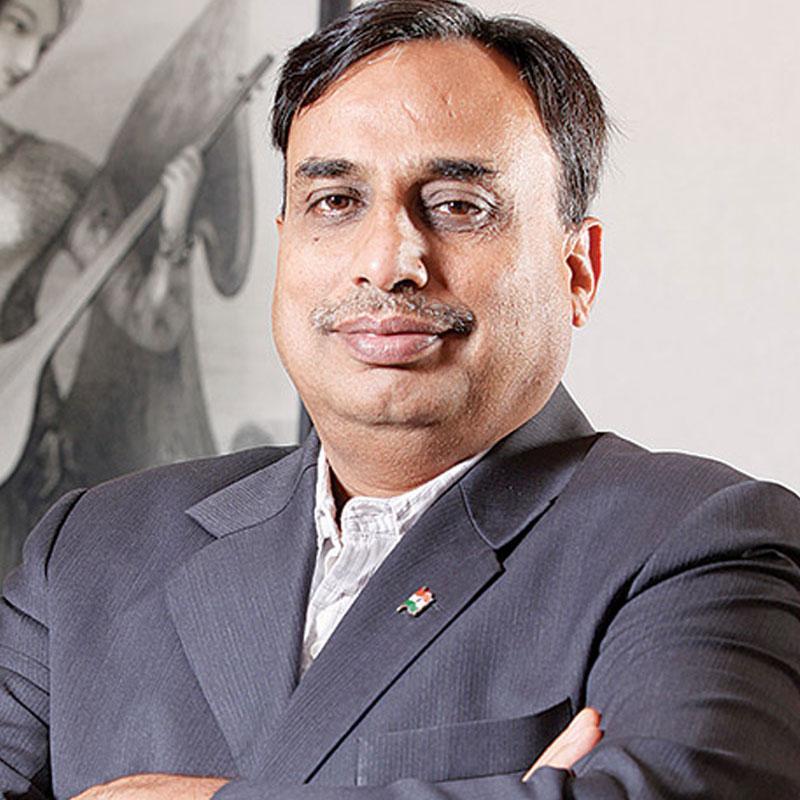
  • Comment: Jawahar Goel gets into the boxing ring with iron gloves

    Comment: Jawahar Goel gets into the boxing ring with iron gloves

    MUMBAI: Jawahar Goel is known to be a feisty fighter.  The third amongst four brothers, and currently the chairman & managing director of Dish TV, JG (as he is called) was probably the most vociferous amongst them, after eldest brother Zee TV chairman and MP Subhash Chandra,  in the past. Like a pugilist, he had a wide array of punches – the uppercut, the jab, the cross, and even the hook.  And he used them in good measure in the corporate world, weighing his gloves  with lead.

    He was known not to mince his words;  he would speak straight from his heart. On most occasions, they rang true. Hence, they were harsh and would land where it hurt his opponents.

    However, JG has been relatively quiet for a large part over the past half a decade. Almost reticent to a ‘T,’ he shied away from making any major public pronouncements to the media or appearing in any industry conferences.  He left the speaking to professionals in his company or his elder brother or the next generation Punit and Amit Goenka.  

    He, for a long time has smarted and yelped that the DTH sector has been overburdened in terms of entertainment taxes, royalties to government, and of course on content costs that it forks out to broadcasters. His belief has been that the DTH sector has been paying a premium to TV channels and in the process has subsidized  cable TV sector costs for content, and now the OTT platforms, which are getting it for very low cost or free.

    He should know as Dish TV is also the oldest DTH operator in India and has gone the whole route of high capex, customer acquisition, and operating costs,  negative cash flows, and a bleeding bottomline. Finally, after more than a decade of operations it attained profitability a couple of years ago.

    A pioneer, JG had a great hand to play in the setting up the MSO Alliance, a lobby body of multi-system operators or the large cable networks in the early 2000s.  Then, around three years back,  he attempted to bring together several distribution platforms to form a content aggregation company to negotiate carriage deals with large broadcasters.  It made sense on paper – might would definitely bring clout, and help the cabal hammer down prices that networks such as Star India, Sony Pictures levy was charging them. But bringing together fiercely competitive groups with vested interests was an idea bound to fail right from the get-go.  And hence the plan had to be aborted. Finally, he set up a venture called Comnet but with the combine subsrciber base of Siti Networks and Dish TV.


    Even then  JG harboured the hope  that others would join the combine. And he continued to bristle about the high costs of content and was waiting, watching, keeping his eyes open for any chance to turn things in DishTV’s favour.  He had been working hard to make the DTH operator cash positive as well as bottom line positive.  And lower content costs by growing  scale could aid him in that attempt. Quite a change for a man who was president of the broadcast industry body the Indian Broadcasting Foundation for four years or terms.

    All along he was planning to make Dish TV even bigger. It was already India’s largest DTH operator. But that was not enough for him. He was looking at more than organic growth.

    The opportunity came from unexpected quarters, rival DTH venture, the fast growing Videocon d2h’s promoters had run into a spot of bother thanks to the overleveraging they had resorted at the parent group  Videocon which is a consumer electronics major and had diversified into oil and gas, real estate, and other ventures.

    Of course, there was a relationship too for the past decade or so, with the two entrepreneurial families – the Dhoots and the Goels – having a connection through marriage.

    JG  and his team quickly evaluated what was on offer and the two groups had the media guessing what would follow next. News reports incorrectly speculated that Dish was acquiring Videocond2h.  Goel and the Dhoots instead went in for a merger, surprising many.  

    The duo’s decision created the largest satellite TV delivering platform in India. And  along with Siti Networks made the Essel Group, arguably the third largest TV distribution firm in the world, courtesy the 38-39 million subs they jointly control.

    The joint venture is expected to see the light of day anytime now following all government, exchanges, and regulatory clearances. But it has resulted in the two families having equal say in managing it. However, Dish TV has the option to either buy a substantial chunk over time from Videocon or the market. With the scale that the Essel group has got now, broadcasters will have to be ready for a  bloody battle when content contract re-negotiation comes up next with Dish TV Videocon d2h.

    JG sounded the clarion call of what is going to come up next, just last week. Clearly at his aggressive best, now that the major part of the joint venture’s regulatory and government permissions  are out of the way, he fired out a bunch of letters to the government, regulators and the media. They were meant to throw a cat amongst the pigeons.

    One of them stated that all the ministries and the Board of Control for Cricket in India had better wake up and not award the telecast rights of world cricket’s most highly valued property, the Indian Premier League to Star India, something which the  latter so desperately needs.  

    He warned that Star has too many sports telecast rights with it ( almost 70 per cent of cricket’s recach – a game that is a religion in India). If and when the IPL  rights are awarded to Star, then it would tantamount to a painful monopoly (more than 85 per cent reach and 93 per cent of the ad revenue on sports channels).  There is no way that so much power should be allowed to be concentrated in one group, he reasoned.

    He expressed that Star does not even care about public interest, pointing to its litigation with Doordarshan on cricket telecast feed sharing.  The Supreme Court recently ordered the pubcaster to make the cricket feed available only on its free to air terrestrial network, and not on cable TV or any other satellite TV platforms.

    He informed all the powers-that-be in his letter that there are clear indications that Star India wants to rule India’s pay TV market and will most likely take the charges it levies on pay TV distributors for its channels northwards, much higher than those recommended by the Telecom Regulatory Authority of India under its Tariff Order of earlier this year.  The fact that Star India and DTH operator Tata Sky (co-owned by the Tatas and Murdoch) have been fighting a battle in Indian courts against the tariff order being implemented are pointers to  its intent, he further stated. 

    The order, which was to be implemented more than six months back , has been kept on hold, pending a decision from the Chennai High Court.

    Star India cannot be awarded the IPL telecast rights, he reiterated as higher channel rates  would force TV distribution platforms to up subscription rates for their customers in keeping with what is being charged to them. This in turn would end up being anti-consumer, JG explained in the letter.

    He  went to the extent of saying that the power equation was already lopsided even when Sony Pictures Networks India had the rights to the IPL (over the last decade) and overseas cricket  matches that India plays in some countries.  (The Essel group earlier this year exited the sports telecast business by selling its Ten Sports brand and TV channels to SPNI).

    That JG is firing on all cylinders became evident very soon. He approached the courts seeking to disallow Star India from renaming its channel Star Bharat. The courts disallowed his plea.

    No one knows if this is the last of the letters and litigation from JG’s office chambers.

    For old timers,  however, this in vintage JG lobbying at his best. And it is reminiscent of when he had sent letters to almost every member of parliament in the late nineties and early 2000 stating that ISKYB (Murdoch’s fully owned DTH venture then) should not be allowed to operate in India as it would be anti-national from the security front.

    He bested Murdoch at that time as Star (or News Television India as it was called then) was not given a licence and Murdoch had to  jettison his DTH plans until he found a stronger and more acceptable partner in the Tatas.

    Will his efforts yield results this time around too?

    We will know soon when the winning IPL bids are announced.

    Also Read:

    Jawahar Goel raises alarm of emerging Star cricket monopoly (updated)

    Dish TV shoots off letter to IBF; alleges discrimination by b’casters, OTT platforms

    TDSAT ‘no’ to stay Star Bharat launch, DPO payments subject to adjudication

  • Mark Zuckerberg on net neutrality debate in India

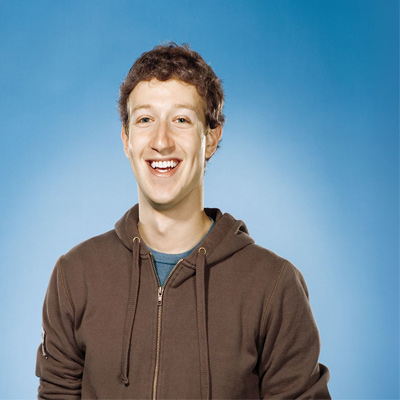
    Mark Zuckerberg on net neutrality debate in India

    Over the past week in India, there has been a lot written about Internet.org and net neutrality. I’d like to share my position on these topics here for everyone to see.


    First, I’ll share a quick story. Last year I visited Chandauli, a small village in northern India that had just been connected to the internet.


    In a classroom in the village, I had the chance to talk to a group of students who were learning to use the internet. It was an incredible experience to think that right there in that room might be a student with a big idea that could change the world — and now they could actually make that happen through the internet.


    The internet is one of the most powerful tools for economic and social progress. It gives people access to jobs, knowledge and opportunities. It gives voice to the voiceless in our society, and it connects people with vital resources for health and education. 


    I believe everyone in the world deserves access to these opportunities.


    In many countries, however, there are big social and economic obstacles to connectivity. The internet isn’t affordable to everyone, and in many places awareness of its value remains low. Women and the poor are most likely to be excluded and further disempowered by lack of connectivity. 


    This is why we created Internet.org, our effort to connect the whole world. By partnering with mobile operators and governments in different countries, Internet.org offers free access in local languages to basic internet services in areas like jobs, health, education and messaging. Internet.org lowers the cost of accessing the internet and raises the awareness of the internet’s value. It helps include everyone in the world’s opportunities.


    We’ve made some great progress, and already more than 800 million people in 9 countries can now access free basic services through Internet.org. In India, we’ve already rolled out free basic services on the Reliance network to millions of people in Tamil Nadu, Maharashtra, Andhra Pradesh, Gujarat, Kerala and Telangana. And we just launched in Indonesia on the Indosat network today.


    We’re proud of this progress. But some people have criticized the concept of zero-rating that allows Internet.org to deliver free basic internet services, saying that offering some services for free goes against the spirit of net neutrality. I strongly disagree with this.


    We fully support net neutrality. We want to keep the internet open. Net neutrality ensures network operators don’t discriminate by limiting access to services you want to use. It’s an essential part of the open internet, and we are fully committed to it.


    But net neutrality is not in conflict with working to get more people connected. These two principles — universal connectivity and net neutrality — can and must coexist.


    To give more people access to the internet, it is useful to offer some service for free. If someone can’t afford to pay for connectivity, it is always better to have some access than none at all.


    Internet.org doesn’t block or throttle any other services or create fast lanes — and it never will. We’re open for all mobile operators and we’re not stopping anyone from joining. We want as many internet providers to join so as many people as possible can be connected.


    Arguments about net neutrality shouldn’t be used to prevent the most disadvantaged people in society from gaining access or to deprive people of opportunity. Eliminating programs that bring more people online won’t increase social inclusion or close the digital divide. It will only deprive all of us of the ideas and contributions of the two thirds of the world who are not connected.


    Every person in the world deserves access to the opportunities the internet provides. And we can all benefit from the perspectives, creativity and talent of the people not yet connected. 


    We have a historic opportunity to connect billions of more people worldwide for the first time. We should work together to make that happen now.


    (Mark Zuckerberg is the founder of Facebook.com. This article was first published on Mark Zuckerberg’s official Facebook page. The views expressed here are that of the writer and Indiantelevision.com does not necessarily subscribe to them.)