Tag: Comcast

  • AT&T, Comcast, Charter and Dish Network emerge among top cable, satellite and telco pay-TV operators

    AT&T, Comcast, Charter and Dish Network emerge among top cable, satellite and telco pay-TV operators

    MUMBAI:  AT&T (IPTV + Satellite), Comcast    (Cable), Charter (Cable), Dish Network  (Satellite), Verizon (IPTV), Cox (Cable), and Altice (Cable) have emerged as the top seven cable, satellite and telco pay-TV operators in the third quarter this year.

    FierceCable has tallied a look at the third-quarter earnings season, ranking the top satellite, cable, and telco pay-TV operators and studying their performance through key metrics, including average revenues per user (ARPU) and subscriber growth.

    Top US Pay TV Service Provider Metrics Q3 2016 (ranking by subscribers)
    Rank   Platform Subscribers (millions) Net Adds ARPU*
    1 AT&T IPTV + Satellite 25.292 -3,000 $118.09
    2 Comcast Cable 22.428 32,000 $148.47
    3 Charter Cable 16.887 -47,000 $80.81
    4 Dish Network Satellite 13.643 50,000 $89.44
    5 Verizon IPTV 4.673 36,000 n/a
    6 Cox Cable 4.146 3,000 n/a
    7 Altice Cable 3.598 -41,000 $117.80


    Source- Fierce Cable

    Meanwhile, satellite, cable, and telecommunications-based subscription video services lost 430,000 customers in the third quarter, according to SNL Kagan, giving the industry a loss of 1.3 million subscribers. The research firm’s count for the third quarter is lower than the 486,000 estimate given by MoffettNathanson analyst Craig Moffett last week. UBS experts sent analysis of the overall video industry in the United States, showing losses and gains in the past few years in this space. The firm said that it estimated that the pay TV subscribers base of U.S. multichannel including Sling TV,  dropped by 0.6 per cent year over year in the third quarter, similar to the drop in both the first quarter and the second quarter.

    MoffettNathanson experts said the overall subscriber declined in the pay-TV space in the last 10 years. Dish Network’s Sling TV service has affected the trend, the experts said. Experts said that Charter, Comcast, and other cable companies are scoring over telco providers such as Verizon and AT&T as also on satellite providers such as Dish Network. In the broadband internet space, UBS experts marked impressive performance of Comcast and Charter against Verizon and AT&T.

    According to Firece Cable, in the third quarter, around 94,000 pay-TV customers were lost by cable operators, SNL Kagan said. This was still the sector’s best performance in 10 years.  AT&T’s decision to give priority to the growth of DirecTV generated 323,000 new subs for the platform in the third quarter, offsetting huge losses for Dish Network in satellite. In the 12-month period ending 30 September, SNL Kagan calculated that Dish Network’s Sling TV added 925,000 customers.

  • Comcast to launch wireless service using Verizon

    Comcast to launch wireless service using Verizon

    MUMBAI: Here is good news for all Comcast subscribers. The US cable giant’s chief executive Brian Roberts has announced the launch of a wireless service by mid-2017. It plans to create a service that would run on its 15 million WiFi hotspots and use Verizon’s wireless network through a deal struck in 2011. Under that deal, a consortium of cable companies led by Comcast sold nationwide spectrum licenses to Verizon for $3.6 billion and secured wireless-resale rights.

    This new business line will in-turn help the company to better retain its cable customers in the pay-TV market.

    Roberts said that they believed there would be a big payback with reduced churn, more stickiness and better satisfaction. Comcast would market the wireless service inside their footprint, to existing and potential Comcast cable customers, as opposed to nationwide. The company was interested in up-selling customers to a bigger bundle of services.

    Roberts also introduced Comcast’s newly integrated Netflix experience on its next-generation X1 set-top box and guide. It is in discussions with several other video streaming providers to integrate their services into the X1 box.

    Over the past several years, Comcast has been replacing its cable customers’ routers with new ones doubling as public Wi-Fi hotspots. It is also among the potential bidders for wireless airwaves in a current federal auction. With this move, Comcast is trying to be the first successful cable mobile virtual network operator (MVNO), a concept pioneered by Virgin Mobile UK in 1999.

  • Comcast to launch wireless service using Verizon

    Comcast to launch wireless service using Verizon

    MUMBAI: Here is good news for all Comcast subscribers. The US cable giant’s chief executive Brian Roberts has announced the launch of a wireless service by mid-2017. It plans to create a service that would run on its 15 million WiFi hotspots and use Verizon’s wireless network through a deal struck in 2011. Under that deal, a consortium of cable companies led by Comcast sold nationwide spectrum licenses to Verizon for $3.6 billion and secured wireless-resale rights.

    This new business line will in-turn help the company to better retain its cable customers in the pay-TV market.

    Roberts said that they believed there would be a big payback with reduced churn, more stickiness and better satisfaction. Comcast would market the wireless service inside their footprint, to existing and potential Comcast cable customers, as opposed to nationwide. The company was interested in up-selling customers to a bigger bundle of services.

    Roberts also introduced Comcast’s newly integrated Netflix experience on its next-generation X1 set-top box and guide. It is in discussions with several other video streaming providers to integrate their services into the X1 box.

    Over the past several years, Comcast has been replacing its cable customers’ routers with new ones doubling as public Wi-Fi hotspots. It is also among the potential bidders for wireless airwaves in a current federal auction. With this move, Comcast is trying to be the first successful cable mobile virtual network operator (MVNO), a concept pioneered by Virgin Mobile UK in 1999.

  • Newsy expands to Cable via Fioptics

    Newsy expands to Cable via Fioptics

    MUMBAI: Scripps’ subsidiary Newsy is now available to the cable television audiences through a partnership with Cincinnati Bell’s Fioptics. The over-the-top news network will feature news live.

    Newsy offers analysis and perspective on the day’s top stories, spanning world and national news, policy, culture, science and technology.

    “Cable is still the most powerful television viewing platform in the world,” said Newsy GM Blake Sabatinelli. “Partnering with Cincinnati Bell allows us to deliver our award-winning news coverage to an
    audience hungry for a new perspective.”

    “As we continue to expand the Fioptics channel lineup, we’re committed to providing our subscribers with the best content. Newsy provides a fresh take on news coverage that our customers will embrace,” added Cincinnati Bell director of content and consumer product marketing strategy Michael Morrison.

    The partnership marks Newsy’s first carriage with a cable TV network. In the last 18 months, Newsy has added distribution on services including Sling TV, Roku, Watchable from Comcast and Apple TV.

    E.W. Scripps, the storied owner of 19 local television stations and daily newspapers in 13 markets across the U.S., announced that it has acquired Newsy, a digital video news platform, for $35 million in
    cash. Newsy will become a subsidiary of Scripps

  • Newsy expands to Cable via Fioptics

    Newsy expands to Cable via Fioptics

    MUMBAI: Scripps’ subsidiary Newsy is now available to the cable television audiences through a partnership with Cincinnati Bell’s Fioptics. The over-the-top news network will feature news live.

    Newsy offers analysis and perspective on the day’s top stories, spanning world and national news, policy, culture, science and technology.

    “Cable is still the most powerful television viewing platform in the world,” said Newsy GM Blake Sabatinelli. “Partnering with Cincinnati Bell allows us to deliver our award-winning news coverage to an
    audience hungry for a new perspective.”

    “As we continue to expand the Fioptics channel lineup, we’re committed to providing our subscribers with the best content. Newsy provides a fresh take on news coverage that our customers will embrace,” added Cincinnati Bell director of content and consumer product marketing strategy Michael Morrison.

    The partnership marks Newsy’s first carriage with a cable TV network. In the last 18 months, Newsy has added distribution on services including Sling TV, Roku, Watchable from Comcast and Apple TV.

    E.W. Scripps, the storied owner of 19 local television stations and daily newspapers in 13 markets across the U.S., announced that it has acquired Newsy, a digital video news platform, for $35 million in
    cash. Newsy will become a subsidiary of Scripps

  • NBC Broadcasting to restructure exec suites as chairman exits

    NBC Broadcasting to restructure exec suites as chairman exits

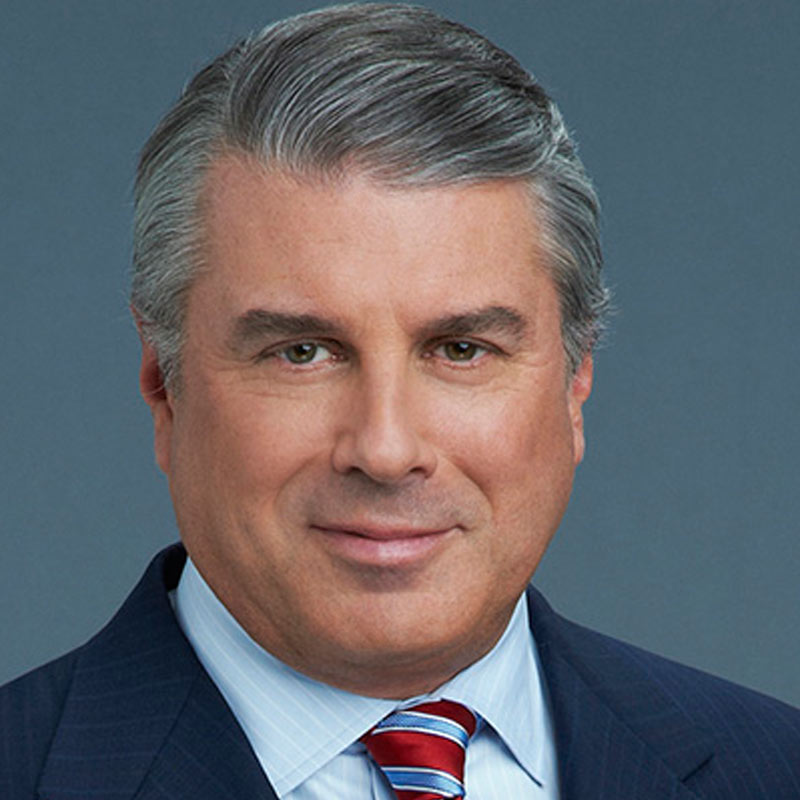
    MUMBAI: US-based NBC Broadcasting chief Ted Herbert is stepping down from his role as the chairman after 40 years in the industry. Herbert was key adviser to NBCUniversal chief Steve Burke. He saw a wide swath of territory including local advertising sales, the network’s owned television stations, affiliate relations and distribution of NBC-owned content.

    He was in the position since 2011 when Comcast Corp. completed its acquisition of NBCUniversal. Prior to that, he ran the E! cable network for Comcast.

    With this exit, Burke plans to restructure the executive suites at the network. NBC Sports Group chairman Mark Lazarus will take on Harbert’s title to become chairman of NBC Broadcasting and Sports. He will oversee affiliate relations, advertising and the owned-TV stations. Harbert other duties will be spread to other execs

    The syndication business will be overseen jointly by senior entertainment executives George Cheeks and Paul Telegdy.

    NBCUniversal Global Distribution chairman Kevin MacLellan will add domestic and new media distribution of NBC content to his responsibilities. Maggie McLean Suniewick has been named president of digital enterprises, which is a unit focusing on strategy and development in the digital space.

  • NBC Broadcasting to restructure exec suites as chairman exits

    NBC Broadcasting to restructure exec suites as chairman exits

    MUMBAI: US-based NBC Broadcasting chief Ted Herbert is stepping down from his role as the chairman after 40 years in the industry. Herbert was key adviser to NBCUniversal chief Steve Burke. He saw a wide swath of territory including local advertising sales, the network’s owned television stations, affiliate relations and distribution of NBC-owned content.

    He was in the position since 2011 when Comcast Corp. completed its acquisition of NBCUniversal. Prior to that, he ran the E! cable network for Comcast.

    With this exit, Burke plans to restructure the executive suites at the network. NBC Sports Group chairman Mark Lazarus will take on Harbert’s title to become chairman of NBC Broadcasting and Sports. He will oversee affiliate relations, advertising and the owned-TV stations. Harbert other duties will be spread to other execs

    The syndication business will be overseen jointly by senior entertainment executives George Cheeks and Paul Telegdy.

    NBCUniversal Global Distribution chairman Kevin MacLellan will add domestic and new media distribution of NBC content to his responsibilities. Maggie McLean Suniewick has been named president of digital enterprises, which is a unit focusing on strategy and development in the digital space.

  • Time Warner invests into Hulu as equity owner

    Time Warner invests into Hulu as equity owner

    BENGALURU: Time Warner Inc. and Hulu LLC announced today that Time Warner will become a 10 percent owner of Hulu, the premium streaming TV service that offers the best of current season programming, premium original content, films and full seasons of hit series. Time Warner joins The Walt Disney Company, 21st Century Fox, and Comcast in the joint venture.

    Turner’s powerful entertainment, sports, news and kids networks including TNT, TBS, CNN, Cartoon Network, Adult Swim, truTV, Boomerang and Turner Classic Movies will be available live and on-demand on Hulu’s new live-streaming service, which is slated to launch early next year. Hulu will continue its current offering of ad-supported and ad-free subscription video on demand products to complement both traditional pay TV packages as well as the new streaming service.

    Time Warner chairman and CEO Jeff Bewkes said, “Our investment in Hulu underscores Time Warner’s commitment to supporting and developing new platforms for the delivery of high-quality content and great consumer experiences to audiences around the globe.”

    Bewkes continued: “We’re also excited to join Hulu’s other owners in launching a new consumer-friendly package featuring leading networks that will deliver more value to audiences and complement Hulu’s core SVOD offerings. The inclusion of Turner’s networks in Hulu’s new streaming service furthers our efforts to allow consumers to engage with and enjoy our brands across a wide range of platforms and services.”

    Hulu CEO Mike Hopkins said, “This investment from Time Warner marks a major step for Hulu as we continue to redefine television for both consumers and advertisers. Our two companies have long enjoyed a productive relationship – which includes the availability of past seasons of popular Turner shows on our current SVOD offerings – and we are very proud that Turner’s networks will be included in our planned live streaming service.”

  • Time Warner invests into Hulu as equity owner

    Time Warner invests into Hulu as equity owner

    BENGALURU: Time Warner Inc. and Hulu LLC announced today that Time Warner will become a 10 percent owner of Hulu, the premium streaming TV service that offers the best of current season programming, premium original content, films and full seasons of hit series. Time Warner joins The Walt Disney Company, 21st Century Fox, and Comcast in the joint venture.

    Turner’s powerful entertainment, sports, news and kids networks including TNT, TBS, CNN, Cartoon Network, Adult Swim, truTV, Boomerang and Turner Classic Movies will be available live and on-demand on Hulu’s new live-streaming service, which is slated to launch early next year. Hulu will continue its current offering of ad-supported and ad-free subscription video on demand products to complement both traditional pay TV packages as well as the new streaming service.

    Time Warner chairman and CEO Jeff Bewkes said, “Our investment in Hulu underscores Time Warner’s commitment to supporting and developing new platforms for the delivery of high-quality content and great consumer experiences to audiences around the globe.”

    Bewkes continued: “We’re also excited to join Hulu’s other owners in launching a new consumer-friendly package featuring leading networks that will deliver more value to audiences and complement Hulu’s core SVOD offerings. The inclusion of Turner’s networks in Hulu’s new streaming service furthers our efforts to allow consumers to engage with and enjoy our brands across a wide range of platforms and services.”

    Hulu CEO Mike Hopkins said, “This investment from Time Warner marks a major step for Hulu as we continue to redefine television for both consumers and advertisers. Our two companies have long enjoyed a productive relationship – which includes the availability of past seasons of popular Turner shows on our current SVOD offerings – and we are very proud that Turner’s networks will be included in our planned live streaming service.”

  • Column-Policy Cross-Connections

    Column-Policy Cross-Connections

    Point 1: With over 1.2 billion population, India is a dream market for any product or service. In short, a land of opportunities.

    Point 2: Despite economic liberalisation started in early 1990s and followed through by successive governments, including the present one in New Delhi, India is still termed a challenging market.

    Just like any other sector, India’s INR 1,157 billion media and entertainment (M&E) industry too gets affected by the two aforementioned points.

    That the M&E industry holds immense potential can be easily seen in various crystal-ball gazing done.

    Indian Government Economic Survey 2016, an annual report card for Indian economy released every February, states the M&E recorded “unprecedented growth” over the last two decades making it one of the fastest growing industries in India. It is projected to grow at a CAGR of 13.9 percent to reach INR 1964 billion by 2019, the Survey states, adding digital advertising and gaming are projected to drive the growth of this sector in the coming years.

    The FICCI-KPMG annual report on Indian M&E sector, released in March, also reiterates the optimism. According to the report, the sector is expected to be worth INR 2,260 billion by 2020 and the advertising sector grew by 14.7 percent from INR 414 billion in 2014 to INR 475 billion in 2015.

    But then what’s holding back big bang investments not only from Indian investors but also foreign ones? Especially when China, the only other market in Asia that outstrips India in terms of size and opportunities, is mostly closed for foreign investors with stringent rules relating to M&E sectors.

    My theory is that despite successive governments from 1990 (it was in 1991 that economic liberalisation was set in motion in India and Indians also got exposed to satellite TV in few years from then) following up on that, full benefits have failed to accrue to the country. Reason? Various liberalisation processes and easing norms of doing business get enmeshed with other policy decisions— some taken in isolation — thereby continuing to make India a challenging market.

    Take, for example, the much talked about government step in June in liberalising FDI investment norms for various sectors, including media, defence, pharmaceuticals and retail.

    FDI policy on broadcasting carriage services as of June 2016


    Sector/Activity

    New Cap and Route

    5.2.7.1.1

    (1)Teleports(setting up of up-linking Hubs/Teleports);

    (2)Direct to Home (DTH);

    (3)Cable Networks (Multi System operators (MSOs) operating at National or State or District level and undertaking upgradation of networks towards digitalization and addressability);

    (4)Mobile TV;

    (5)Headend-in-the Sky Broadcasting Service(HITS)

    100%


    Automatic

    5.2.7.1.2 Cable Networks (Other MSOs not undertaking upgradation of networks towards digitalization and addressability and Local Cable Operators (LCOs))

    Infusion of fresh foreign investment, beyond 49% in a company not seeking license/permission from sectoral Ministry, resulting in change in the ownership pattern or transfer of stake by existing investor to new foreign investor, will require FIPB approval

    (Source: Commerce Ministry)


    The government in June said that FDI in all broadcast carriage services like cable, MSO, DTH, mobile TV, HITS have been upped to 100 percent and brought under automatic route, which means bureaucratic and lengthy permission processes have been lessened.

    Small caveat in automatic route investment norms notwithstanding, Indian companies and foreign investors should have been popping the champagne bottles. But industry reactions were sober to the extent of being subdued.

    General analysis of the aforementioned decision, in short, was: the government took a big step, but not a giant one. Why?

    According to government data, total FDI flow into India since April 2000 to December 2015 stood at US$ 408.68 billion. But the media sector’s share of FDI inflows from 2000-2015 was pegged at $4.48 billion.

    Considering the burgeoning media industry and newer technologies coming in, this sector’s share of FDI during this 15-year period should have been higher.

    So, why are foreign investors hesitant in investing in India, especially when PM Modi’s dream of Digital India can dovetail into building digital infrastructure capable of delivering many media services?

    The federal government may be trying its best to ease norms of doing business in India and live up to its claim of ‘India being a fav destination for foreign investors’, other proposed and existing policy decisions not only send out confused signals, but, actually, create more impediments.

    Take, for example, broadcast carriage regulator TRAI’s two discussion papers on infrastructure sharing in TV broadcasting distribution and  set-top-box interoperability .
    TRAI’s contentions for floating these discussion subjects are to explore avenues to reduce expenditure of companies providing these services by doing away with duplication (in the first case) and examine whether interoperable STBs can largely benefit the consumers.

    Critics of both these TRAI discussion subjects opine that if followed through and converted into regulations, both measures could add another layer of restrictions on the industry.

    Hong Kong-based Asian media industry organisation CASBAA, which also has Indian members, doesn’t mince words when it said in its submission on STB interoperability that the TRAI paper was based on a “number of untested, unproven presuppositions concerning the practice of technical interoperability”.

    Countering TRAI assertions, CASBAA said, “Regulator-imposed technical interoperability requirements will impose very large burdens on Indian consumers and industry players and risk stifling innovation in development of new features of interest to consumers.”

    If a holistic view is taken of both the TRAI consultations, surprisingly aimed at bringing down media services to a common denominator having little USPs, it’s no wonder the likes of Comcast and Liberty Media or closer home the Hong Kong-headquartered PCCW, for instance, have not been enthused much to invest in Indian broadcast carriage segment despite FDI norms liberalisation and a whopping over 100 million TV homes still on the plate.

    It’s not only TRAI, but also the general layout of the taxation and financial environment, apart from other cross-media restrictions, which would deter foreign investors.

    A DTH service provider in India, for example, on an average pays 40 percent tax, including an annual 10 percent licence fee, while ARPUs range between INR 175-220 for most of the six DTH companies. Why would AT&T, parent company of American DirecTV, invest in a DTH operation in India?

    Or, for that matter, why would Comcast or PCCW invest in Indian cable TV distribution when a large number of LCO operations are still far from transparent?

    Add to that a slowing down of the digital rollout — the earlier two phases of the proposed four-phased digitisation of TV services did manage to bring about increased transparency resulting in higher tax revenues for the government — and you have a pitch that’s not conducive for fair foreign investment game.

    Singapore-based market media market research company Media Partners Asia estimates approximately $2 billion has been invested by strategic and foreign institutional investors in Indian pay-TV distribution platforms, which certainly is peanuts considering  over 250 million TV homes are target consumers.

    If confusing policy signals were not enough, stellar performer ISRO’s new-found love for Make In India and resultant insistence on weaning away all Indian users of satellite-based services from foreign satellites to INSAT — informal as of now but gaining currency — is also fodder to scare a foreign investor as such moves smack of throwback to pre-90s when India was dubbed a closed market and not an open economy.

    That’s why, I would insist, till systematic changes are brought about in the country and various government organisations and regulators also see the big picture on regulations instead of functioning within their own small islands, attempts by any Indian government to make India the most favoured destination for foreign investments will not bear ripened fruit. And, in the process, full benefits won’t accrue to the consumers.

    (1 USD= INR 67)

    (Anjan Mitra is Consulting Editor of Indiantelevision.com and will write a fortnightly column on media matters.)