Tag: Coke

  • Leo Burnett promotes Ajeeta  Bharadwaj as Planning Head for Mumbai

    Leo Burnett promotes Ajeeta Bharadwaj as Planning Head for Mumbai

    MUMBAI: Leo Burnett India has boosted its senior team and strategy offering by promoting Ajeeta Bharadwaj to the role of Planning Head in Mumbai.

    Bharadwaj, who was previously Executive Planning Director, will report to, Leo Burnett Chief Strategy Officer – South Asia Dheeraj Sinha.

    Confirming the development, Sinha said, “Bharadwaj has been one of the strongest pillars of strategy at Leo Burnett India. She has made an unparelled contribution in shaping the future of several brands that we work on. Bharadwaj is fully steeped into our HumanKind philosophy and is an astute practitioner of the HumanKind tools. She has also led and developed several knowledge and insight projects over the years. Not only is this promotion very well deserved, it also comes at an opportune time, when we are building a huge momentum around our strategy function. With Bharadwaj as the leader in Mumbai, we will continue to up the temperature on sharp insights, leading to great work for our clients.” 

    Bharadwaj added on her  new role saying, “It has been an amazing journey at Leo Burnett. I have had the good fortune to work on some incredible brands and with some incredible partners, both among clients and within the agency. And I truly believe that the best is yet to come. We are doing some fantastic work and each piece is making us hungrier for more and better. In my new role, I’m looking forward to working closely with Dheeraj in producing new-age work that would help us in our constant endeavour to reach for the stars.”

    Bharadwaj has 15 years of experience in brand planning and strategy. Brands she has worked on include HDFC Life, P&G, Tata Sampann, Emami, Star Plus, Heinz, Coke, Sony Entertainment Television, CavinKare, Anchor, AXN, Sony Pix, Godrej, Qi Spine Clinic and Fiat. 

    She and her team have also received 12 LeoIntel stars for innovative category and culture thinking across the Leo Burnett WW network.

  • Leo Burnett promotes Ajeeta  Bharadwaj as Planning Head for Mumbai

    Leo Burnett promotes Ajeeta Bharadwaj as Planning Head for Mumbai

    MUMBAI: Leo Burnett India has boosted its senior team and strategy offering by promoting Ajeeta Bharadwaj to the role of Planning Head in Mumbai.

    Bharadwaj, who was previously Executive Planning Director, will report to, Leo Burnett Chief Strategy Officer – South Asia Dheeraj Sinha.

    Confirming the development, Sinha said, “Bharadwaj has been one of the strongest pillars of strategy at Leo Burnett India. She has made an unparelled contribution in shaping the future of several brands that we work on. Bharadwaj is fully steeped into our HumanKind philosophy and is an astute practitioner of the HumanKind tools. She has also led and developed several knowledge and insight projects over the years. Not only is this promotion very well deserved, it also comes at an opportune time, when we are building a huge momentum around our strategy function. With Bharadwaj as the leader in Mumbai, we will continue to up the temperature on sharp insights, leading to great work for our clients.” 

    Bharadwaj added on her  new role saying, “It has been an amazing journey at Leo Burnett. I have had the good fortune to work on some incredible brands and with some incredible partners, both among clients and within the agency. And I truly believe that the best is yet to come. We are doing some fantastic work and each piece is making us hungrier for more and better. In my new role, I’m looking forward to working closely with Dheeraj in producing new-age work that would help us in our constant endeavour to reach for the stars.”

    Bharadwaj has 15 years of experience in brand planning and strategy. Brands she has worked on include HDFC Life, P&G, Tata Sampann, Emami, Star Plus, Heinz, Coke, Sony Entertainment Television, CavinKare, Anchor, AXN, Sony Pix, Godrej, Qi Spine Clinic and Fiat. 

    She and her team have also received 12 LeoIntel stars for innovative category and culture thinking across the Leo Burnett WW network.

  • BBDO India gets Ritu Sharda as senior executive creative director in Delhi

    BBDO India gets Ritu Sharda as senior executive creative director in Delhi

    MUMBAI: BBDO India announced Ritu Sharda as the new senior executive creative director in Delhi. Sharda joins the leadership as part of the reputed team behind the globally acclaimed ideas such as Ariel ‘Share the Load’ and Whisper ‘Touch the Pickle’. In her new role at BBDO India, Sharda will be looking to lead a strong creative team and bring in her creative flavour to existing accounts such as 7 Up, Quaker Oats, Mirinda, Zandu, Wrigley’s, SC Johnson and Exxon Mobil. She will also be responsible for leading the creative standards for new businesses based out of Delhi.

    BBDO India chairman and CCO Josy Paul commented, “We are thrilled to have Ritu Sharda leading the creative culture and product of BBDO in Delhi. Ritu is a transformational artist, poet, writer, social observer, and an internationally recognized builder of big brands. Her sensitivity to the truth and power of advertising as a change agent in society is what makes her super special. Our highly talented Delhi team will benefit greatly from her creative energy and inspired leadership.”

    Sharda has worked with an impressive array of brands through her career so far. Prior to joining BBDO India, Sharda led the creative work on brands such as Sony Bravia and HCL in her role as executive creative director at ITSA Brand Innovations. She also marked her directorial debut with films for Sony Bravia. Her creative influence spans agencies such as McCann, Publicis India, DDB Mudra and Contract.  Her compelling work and ideas have contributed significantly to brands like Aviva, Coke, HP, Microsoft, MasterCard, Dabur, Samsung, Maggi, HBO, McDonald’s, Nestle to name a few. Her immensely popular campaigns for Maggi and Coke have earned her major acclaim and recognition in the industry. And her diversity of ideas have won major metals and honour at Cannes, GoaFest, Effies and One Show.

    On joining BBDO India, Sharda says, “I am super excited. I met Josy a couple of months back and it was an absolute delight and things have clicked beautifully from there on. I love the kind of work BBDO is doing. The time, the place, everything feels just right.”

  • BBDO India gets Ritu Sharda as senior executive creative director in Delhi

    BBDO India gets Ritu Sharda as senior executive creative director in Delhi

    MUMBAI: BBDO India announced Ritu Sharda as the new senior executive creative director in Delhi. Sharda joins the leadership as part of the reputed team behind the globally acclaimed ideas such as Ariel ‘Share the Load’ and Whisper ‘Touch the Pickle’. In her new role at BBDO India, Sharda will be looking to lead a strong creative team and bring in her creative flavour to existing accounts such as 7 Up, Quaker Oats, Mirinda, Zandu, Wrigley’s, SC Johnson and Exxon Mobil. She will also be responsible for leading the creative standards for new businesses based out of Delhi.

    BBDO India chairman and CCO Josy Paul commented, “We are thrilled to have Ritu Sharda leading the creative culture and product of BBDO in Delhi. Ritu is a transformational artist, poet, writer, social observer, and an internationally recognized builder of big brands. Her sensitivity to the truth and power of advertising as a change agent in society is what makes her super special. Our highly talented Delhi team will benefit greatly from her creative energy and inspired leadership.”

    Sharda has worked with an impressive array of brands through her career so far. Prior to joining BBDO India, Sharda led the creative work on brands such as Sony Bravia and HCL in her role as executive creative director at ITSA Brand Innovations. She also marked her directorial debut with films for Sony Bravia. Her creative influence spans agencies such as McCann, Publicis India, DDB Mudra and Contract.  Her compelling work and ideas have contributed significantly to brands like Aviva, Coke, HP, Microsoft, MasterCard, Dabur, Samsung, Maggi, HBO, McDonald’s, Nestle to name a few. Her immensely popular campaigns for Maggi and Coke have earned her major acclaim and recognition in the industry. And her diversity of ideas have won major metals and honour at Cannes, GoaFest, Effies and One Show.

    On joining BBDO India, Sharda says, “I am super excited. I met Josy a couple of months back and it was an absolute delight and things have clicked beautifully from there on. I love the kind of work BBDO is doing. The time, the place, everything feels just right.”

  • Give the Coke bottle a second life; use its cap optimally

    Give the Coke bottle a second life; use its cap optimally

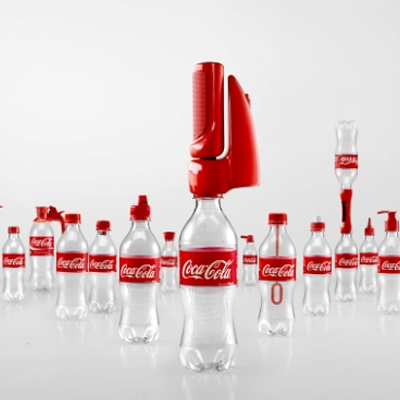
    NEW DELHI: Coca-Cola has launched a new activation campaign as part of its global sustainability programne aimed at upscaling used Coca-Cola bottles to encourage consumers to re-use and recycle plastic.


    ‘2nd Lives’ is a project being done with Ogilvy & Mather China and has been rolled out first in Vietnam with select Asian markets to follow.


    ‘2nd Lives’ includes a line of 16 innovative caps which can be screwed onto bottles after consumption, transforming them into fun and useful objects, such as a paintbrush, water squirter and pencil sharpener, among others. The bottle caps are gifted to customers upon purchase of a Coke bottle.


    “We are always looking for better solutions to reduce the use of plastic and increase recycling around the world. The variety of our ‘2nd Lives’ caps shows that there are many creative ways to re-use plastic simply and practically, and also supports our global sustainability programme. We have created fun tools with Coke bottle tops, bringing small moments of happiness into people’s lives. We hope to make a positive impact and empower people to lead happier lives,” said Coca-Cola ASEAN director integrated marketing communications Leonardo O’Grady.


    ‘2nd Lives’ was piloted in Ho Chi Minh City, Vietnam in March, with an expected 40,000 bottle caps to be gifted throughout the country this year. The campaign is set to launch in Thailand and Indonesia at a later date.


    “The idea has universal appeal and can therefore be replicated in other markets, beyond Asia. These unique bottle caps are changing consumers’ behaviour and mindsets with an incredibly simple, yet clever, idea. It’s not about high tech capabilities, just creative thinking,” said Ogilvy & Mather Beijing executive creative director Juggi Ramakrishnan.

  • AT&T and ‘American Idol’ part ways

    AT&T and ‘American Idol’ part ways

    MUMBAI: Judges have come and gone, but what had remained consistent about Fox’s American Idol apart from host Ryan Seacrest, are the sponsors.


    However, in a new development AT&T which has been the sponsor for the reality show for its last 12 editions has finally decided to part ways. The American telecom giant has earlier been quoted as saying that the show is a powerful platform that allows it to connect with its customers directly.


    However, it seems the show’s declining ratings has adversely affected the relationship between the two. As per the Nielsen data, reported in American dailies, the average audience size for Idol has dropped by 9.9 million viewers over the past three seasons, from 23.1 million in 2011 to 13.2 million last year.


    The other sponsors – Coke and Ford – are still associated with the show, the 13th edition of which went on air on 15 January.

  • Law and Kenneth’s independent growth story

    MUMBAI: In 2004, it was a stormy period for Indian ad agencies as the multinational invasion was in full force. Lintas India had already been taken over by IPG Lowe in 2000 and four years later Enterprise Nexus, floated by Mohammad Khan, got merged with Bates.

    Standing firm against this onslaught was this pilot aspirant young Indian who rapidly rose to the rank of Publicis India CEO at the age of 29. He had already left that high position and was helping UK-based independent agency St. Luke‘s start up operations in India in 2002. In this wave of consolidation sweeping the ad world, Praveen Kenneth saw an opportunity rarely spotted or dared by others.

    Andy Law, who co-founded St. Luke‘s, was at that time having a rough time with the board members of the UK agency. He quit while Kenneth continued to head the India operations. But the Indian dreamer was secretly nursing his ambitions. He soon realised that being a part of a UK-based global agency network has its restrictions when it comes to growth and progress.

    In his professional career graph, Kenneth had already soared the high skies with stints at MAA Bozell, Ogilvy and Mather, McCann Erickson and as the CEO of Publicis India. During this time, he worked with brands like Coke, L‘Oreal, Cathay Pacific, Levers and Helwett-Packard.

    Restless at turning an entrepreneur, Kenneth decided to strike. Along with his UK mate Andy Law and investment support from
     Bodyshop‘s Anita Roddick, Kenneth gobbled up St. Luke‘s. His dream: to grow the business in India and make St. Luke‘s the hub of Asia Pacific. Thus was born eight years ago on 3 October the renamed Law and Kenneth as one of the first Indian independent agencies with a global footprint.

    “It was a daring dream,” recalls CEO and managing partner Anil Nair (Sr.) “But we knew that in order to realise our ideals, we need to go our own way and here we are today, eight years after going solo.”

    The core team at Law and Kenneth has remained unchanged since its inception with Nair (Sr.), managing partner and head of digital Anil K Nair (Jr.) and managing partner and planning director Sandhya Srinivasan.

    The journey has been rough and smooth amid fierce competition. Though Law and Kenneth didn‘t have the cash advantage, the scope to grow was immense as the Indian economy was opening up.

    Says Nair Sr, “We came into existence at a time when agencies were merging and getting consolidated. At the time, our resources were our existing clients like ITC, Bombay Dyeing and Godrej, and the workforce we employed.”

    Running simultaneous operations in London, the Middle East, Africa (Nigeria) and Australia with the focus being on India as the epicentre of growth, Law and Kenneth started its Delhi operations in 2006 and Dabur was one of the first clients for the branch. In 2008, Law and Kenneth started its office in Kolkata and in 2010, the Chennai office was launched. The Mumbai office continues to serve as the headquarters.

    Today, Law and Kenneth boasts of an expansive repertoire of clients across product categories like ITC, Renault, DAbur, Bharat Petroleum, TATA AIG, Indian Terrain, Vivel, Hero Motocorp, Godrej Interio, Essenza Di Wills, DAbur Honitus, e-bay, Times Now, Real Activ, Pidilite, Spencers Retail, Fiama di Wills, DAbus Foods, GVK, Kent, ING Life Insurance, Reliance, Zydus Wellness and Park Hyatt Goa.

    The agency is now readying itself for the next phase of growth and has expanded its senior level team. It recently made three senior level appointments in Rana Barua (chief operating officer), Amardeep Singh (chief creative officer) and Samir Datar (senior vice-president, strategic planning) in a bid to prepare for the next stage in its growth.

    Say Nair Sr, “We have almost doubled our business in the past two years and have an intensive six to eight months to look forward to as far as work is concerned. We felt that these appointments at senior levels were needed to expand our bandwidth and better cope with the work demand that faces us.”

    The growth for Law and Kenneth has come in the organic manner. One of the agency‘s founder clients ITC‘s entry into the personal care category was spearheaded by Law and Kenneth. As that business grew, it required them to expand their team which spurned their growth. Similar is the case with Dabur which re-launched Honitus syrup and lozenge, the communication for which was handled by Law and Kenneth. In case of Hero Motocorp, the agency handles the brand communication and does close to four to five campaigns a year.

    “Hero Motocorp is spending substantial amounts of money. It takes an army to handle as it is a humungous account. It‘s probably the largest two wheeler account in the country. We may not handle a single product, but people have seen the brand intervention and communication from ‘Hum mein hai Hero‘ to the Olympics communications to the mileage campaign. So in one year‘s time, there were four to five campaigns by us for the company and each campaign was in the Rs 200 to 300 million range, which makes it close to Rs 1.5 billion spent over a period of time,” says Nair Sr.

    Law and Kenneth is not an average advertising agency, according to Nair. The focus is to offer the client an integrated brand communications service. The agency prides itself on its integrated approach – it has a creative (Law and Kenneth), digital (Digital Law and Kenneth) and experiential (Ngage Law and Kenneth) wings to cater to the growing needs of its clients.

    The current plan is to actually make the agency a viable option for big brands. Law and Kenneth approaches the business with an absolute dispassionate and fair view on what works in a market place. There is no creative or planning or servicing agenda that the agency focuses on. The focus in turn is on coming up with outcomes that are favourable for the clients and the industry.

    “Nearly 20 per cent of our business last year came from non advertising ventures. Digital Law and Kenneth is seen as one of the most brand centric agencies in the country. The reason is that we don‘t only look at it as digital. The person driving that department, Anil K Nair, is a planner from mainline. Sometimes digital agencies lack in the understanding of brand principles, though they maybe fabulous at technology. So, we have a brand person to drive our digital front, interact with the clients and the technology people act as the backend. This formula has been a tremendous success. We handle clients like Idea and Hero through the digital set up,” informs Nair Sr.

    It is now looking at growth but the agency would like to continue to do so organically. It believes in acquiring or hiring talent rather than other idea shops.

    “It‘s not as if the option to acquire agencies or set ups haven‘t crossed out minds. But we feel that business is something we can always get. So for that we don‘t need to as such acquire companies. If it is talent, yes we are always on a lookout to expand the talent pool at Law and Kenneth. We don‘t lack on any level at Law and Kenneth at this stage. The only thing we lack maybe is time, and an acquisition will not help us with that,” says Nair Sr.

    While acquiring a company is not on the card, Law and Kenneth owners have no intentions of selling either. It plans to continue as an indie for the time being and build on its strengths. “We value our freedom, our thought and our set up and intend to, for the time being, nurture and grow that,” concludes Nair Sr.

    In terms of limitations and hurdles, the agency feels that getting new business is not a problem. The era of global brands collaborating with global agencies is fast waning and in fact, in markets like India, brands prefer working with local agencies so that they get the cultural nuances right. The glitch comes when the question of investments comes up. Being headquartered at Mumbai, Law and Kenneth India has to fend for itself and its global branches.

    “For other agencies, taking a loan or investments incurs them an interest rate at par with the global rates viz. two to four per cent. In our case, that same amount will cost us an interest rate of 18 to 19 per cent. This is our biggest hurdle presently. We do not have the benefit of a global headquarters,” reveals Nair Sr.
  • Global Image Re-Positioning 2007

    Suddenly, there is a new global tidal wave of change all over the Asian region, the obvious signs are people on the move, new developments and properties popping up all over the region and a nouvo-consumerism is appearing at every corner, customers are buying shiny and wonderful things with beautiful packaging and companies are addressing their hunger with massive blitzes. Unseen by the masses but clearly visible to global circumnavigators, a new storm is building, wiser and well seasoned, like homing pigeons, immigrants are returning to their homelands…soon it will cut a clear path.

    Global Re-Immigration

    Currently, there are far more opportunities mushrooming for Asians, plus the quality of life can be far greater and more economical than what’s being offered in most foreign lands. During and following WWII, in search of paradise, these immigrants originally came to the West seeking freedom, opportunities and a higher quality of life. These western societies certainly did offer all that and more. Not any longer.


    The West is tangled up in problems. In the US alone, tension between Republicans and Democrats demonstrate that they are not simply opposing parties, rather they are arch enemies whose ideological divide has created a deadlocked and stagnant society which would be hard to imagine a decade ago. The war issues are almost like an internal US civil war of ideologies. There is also this new issue of constant daily harassment and unjustified racial profiling all over the West, targeting each and every individual with a slight difference in skin tone, accent or culture. This has fueled the mega-movement further.

    The so-called ‘clash of civilization’ as some would like to see happen, has contributed largely to this now unstoppable movement. Almost every Muslim and most Asians are being targeted. Today in America, children are worried about their old parents being embarrassed and humiliated for being Muslim, non-white or slightly different, while the same parents worried about the future of their young children and wonder how they will ever find a promising future in such a suspicious environment. West is no longer tolerant or accommodating anything that is Muslim in origin or tradition, period.

    The trillion dollar Iraq war and the outcome of 9-11 have created a mega shift in attitudes. All this is adding nothing but fire to the re-location movements. The grassroots level ethnicity, which provided innovative colors, different languages and foreign accents, are leaving the backroom engines slowly and steadily. There is already a shortage of a highly qualified force at very economical rate all over the western economies. Immigrants knew then very well when to move in and they know now when to get out.

    Currently there are all kinds of research and studies showing steady decline in population in the west and for the first time, there are clear indicators that American youth will be looking towards Asia for greater opportunities and potentials, unlike their parents who were on the path of glory from the start.

    Global Image Re-positioning

    In order to shift perceptions en masse, it requires mega shifts of options at the ground level. The world’s latest and most advanced grand and luxurious shopping malls are erupting by the thousands in the East. India alone has a middle class larger than the entire population of USA. The land of the ‘fakirs and the snake charmers’ have an uncontrollable nouvo-consumerism, ready to devour anything that shines.

    The powerhouse image maker of the past, Hollywood is simply now old and exhausted, while Bollywood is in a $4 billion dollar-per-year frenzy. Paris the heart and soul of fashion is for the passé, as there are some 100 new fashion centers that have arisen mostly in Asia. The East is not only replacing formerly western dominated industries, they are adjusting for the latest innovation and technology resulting in far superior and dazzling ideas.

    The sunshine days for Eastern iconization are here, corporate image and brand name identities that were only using Western standards are now shifting in a big way to the East. Studies have clearly shown Asia to be the driving force behind branded goods; way over Europe and USA, obviously the wealthy population is far bigger than the west.

    The movement for creating local Asian brands is picking up heat, using latest tools of the trade and the software that is capable of spinning colors and dazzling graphics that would dwarf any top agency in New York or London . The issues of cyber-branding and corporate images are becoming very real – demanding cutting edge knowledge and very superior sets of skills.

    Amidst all this activity – is the Dubai phenomena. A fine example of what a single city can do in less than 10 years. Inspired by this great experiment there are now some 100 cities in the Middle East, India and China all poised to embrace the Dubai model of rapid growth and re-deployment of government services to attract business and opportunities. There are clear indicators that such attempts will be equally successful in most such anxious cities. Just like the earlier rapid urbanization of the US following World War II, where hundreds of cities simultaneously sprouted throughout the landscape.

    A few years ago, India adopted and proved the outsourcing model, making the biggest IThole in the US and becoming the global centre of software to the world. China became the world’s largest factory, and the Middle East is on its way to becoming the region full of luxury buyers via hundreds of world-class luxury centers of providing new standards and new benchmarks in modern living. All this combined creates a new, Eastern-oriented, mental shift to image and branding.

    Global Hyper-Acceleration

    While it took a century to brand the Eiffel tower, Coke, Disney or Benz, recreating similar icons in Asia would now take a fraction of that time. One of the main reasons being, the speed at which all interaction and information now flows in this hyper-technologically driven society.

    Here, it’s micro-miniaturization yielding premium prices. A corporate society with compulsive innovations that continuously creates smallest things for large and deep pockets. This acceleration will further mount to frenzy and will become its own revolution when a billion plus cyber-entrepreneurial-warriors hit the e-commerce highways.


    Mega Re-Housing Shifts

    There is an extraordinary real estate boom, all over Asia, from major cities to unheard of villages. Prices have been continuously doubling and continue to double, with no conceivable end. The re-immigration of highly experienced and qualified people returning home with liquid cash and business ideas led to explosive development in real estate.

    The approximately one million apartments being developed in Dubai and UAE alone, is a solid indication of the global desire to explore these regions as long term promises of a newer, modern and higher standard of living. The wheels have started to grind and the machine is on. This region already has billions of their own to manage plus millions coming in with cash and ideas to relocate to the East. With over 100 monumental structures under way, it is only a matter of time before Westerners become well versed with the names and locations of these massive new developments.

    Winner and Losers

    The business communities in the west will have to adjust to the HR gaps, lack of knowledge base and cost effective work force with international reach, while the business in Asia is already marching to a very dynamic tune. When the dust finally settles on this anti-Muslim and anti-ethnic chase in the west, a decade would have passed, and the global adjustment would have taken a stronghold.

    The West is very comfortable with this current outbound movement as it supposedly makes them safer. Depending on one’s location and destination, the final winners are the youth of Asia for possessing and controlling such extraordinary growth options in an endless variety, that is unmatched by any other region in the world.

  • Fifa signs deal for official World Cup melody

    Fifa signs deal for official World Cup melody

    MUMBAI: Music publisher and online publishing administrator Kobalt Music Group has been signed up by footballs’ governing body Fifa to be the exclusive worldwide licensor and administrator for the Official Melody of the 2006 Fifa World Cup.

    Written by Nadir Khayat aka Red One and Bilal Hajji, the 30-second melody, a sample from the Red One song Bamboo will also be incorporated into several other songs.

    These include the official single of the event and other pieces of music to be used extensively throughout the championships, including the song Hips Don’t Lie – Bamboo which has been performed by Shakira.

    In addition, dance, hip-hop, house and Bamboo mixes will also be sold as ringtones. Kobalt founder and CEO Willard Ahdritz says, “Kobalt is exploiting the content on a global basis through digital distribution partners on five continents. With an audience of more than a billion people and extensive promotion, the potential exposure and consumer base for the Official Melody is extraordinary.

    “We are thrilled to be the administrator for Fifa to market, license and collect for both the publishing and master rights in what could be the biggest digital event ever.”

    The World Cup takes place from 9 June-9 July in Germany. The Official Melody of the event will receive extensive exposure during all World Cup events, including cross-promotion and in sponsor ad spots from such advertisers as Adidas, Avaya, Budweiser, Coke, Continental, Deutsche Telekom, Emirates, Fujifilm, Gillette, Hyundai, Mastercard, McDonald’s, Phillips, Toshiba and Yahoo.

    Through the deal, Kobalt is working with Fifa’s concept developer, Engine AB an MTG company, which is Fifa’s exclusive agent for the creation and supervision of the overall music program for the 2006 Fifa World Cup.

    Kobalt is a global, independent music publisher offering administrative and creative services to writers, publishers and other publishing rights holders. Kobalt’s technology enables clients to receive faster delivery of revenues and information in a transparent and efficient manner.

  • ‘We expect our involvement with cricket to improve our market impact by 25-30 per cent’ : Sandeep Tiwari – LG Electronics India marketing head

    ‘We expect our involvement with cricket to improve our market impact by 25-30 per cent’ : Sandeep Tiwari – LG Electronics India marketing head

    Having been in the country for nine years now LG Electornics is for the first time using a Bollywood star as its brand ambassador. It has signed on bollywood actor Abhishek Bachchan to endorse its line of consumer durables like refrigerators, air conditioners. The aim is to connect better with women. This year the company is targeting a turnover of Rs 90 billion.


    Indiantelevision.com‘s Ashwin Pinto caught up with LG Electronics India marketing head Sandeep Tiwari on the sidelines of a media briefing.


    Excerpts:

    With the signing of Abhishek, LG is changing its strategy by moving away from relying only on cricket. What prompted this?

    I won’t say that our strategy has changed. It has been enhanced. Quite a few people expect us to exit cricket. That is not the case. We realise though that two growth engines as far as the advertising fraternity is concerned will work. One is all around cricket and the stars. The other will revolve around entertainment.


    We are going with a double engine effect. Cricket delivers numbers and reaches masses. It however alienates women. It does not address that gender with the same amount of passion. Cricket is better for a consumer electronics television oriented effort for the male audience. It also partially delivers in the air conditioner category as men to some extent make decisions for this product. But when it comes to pushing mobile phones, washing machines, microwave ovens, refrigerators it does not deliver the full impact.


    We will be launching a mobile phone campaign later on. That TG is very young from the late teens. Our brand has to become younger, their generation brand. We do not want to become a brand that is for an older generation just because we have been around for several years. We have learnt from what Coke, Pepsi have done over the years to remain young. This will helps us address all sections of consumers. We want to become a consolidated consumer driven brand that also encompasses mobile and IT.

    Could you talk about LG’s brand positioning in the market and how it allows for differentiation?

    We are differentiated from the Indian and foreign brands. LG does not get classified as either. It is easy for Indians to relate to it. The brand has a multinational lineage while delivering what Indians require. We don’t show any foreign ads.


    Our communication language is not that of a foreigner. Emotions work a lot in India. The warmth and affection that a brand showers upon its target audience will be reciprocated. A brand may be ranked higher but if it is not relatable then it will not do well.

    Has this positioning been tweaked in any way recently?

    I would not say so. In 1997 we were represented in high end markets. We were niche. Today we sell different TV sets, refrigerators. We don’t just have SEC A+ 35+. Our target is total. So our communication must address everybody. You cannot have one for the higher end and another for the lower end.


    That is what we are looking to achieve with a celebrity. The sheer rub off of that celebrity will draw in masses for a high end product. It connects mind to mind. This is where a Saurav Ganguly works.


    This is also what Abhishek Bachchan will do for us. Even in Allahabad, Benares it will work. At the same time we do not use a celebrity for everything. For television sets our positioning has been around the eyes. We used an average child.


    Conventional wisdom says that television watching is bad as it causes strain. Our communication showed that with LG’s eye technology it is not harmful. The position was very different in that we showed that it will give the child a world of knowledge. The child plays a crucial role in terms of buying a TV set. We looked at the TV as being an infotainment medium and not entertainment.

    Speaking of television what are the plans in the television manufacturing area and how challenging are price points as in consumers waiting for prices to fall and then buying TV sets?

    In this area we are targeting a 100 per cent growth for flat panel displays year on year in terms of the number of units sold.


    It is going to be interesting to see how we fare with little penetration of plasma sets and high acceptability of that category. People want a TV that can be hung from the ceiling or mounted on a wall. The big size experience at home is an aspirational product.


    As far as pricing points are concerned I will give the example of mobile phones. Though prices will fall nobody waits. People cannot wait to upgrade and change. People accept that gadgets will not last a lifetime. They want what is the best option as long as the brand is delivering what it promises.


    The consumer has become more experimental in nature. 35-37 per cent of revenue comes from television. Electronics along with IT contribute around 48 per cent of our revenues. Appliances contribute around 36 per cent.


    In 1997 when we started our group turnover was Rs 125 crores (Rs 1.25 billion). In 1999 we crossed Rs 1000 crores. Last year it was Rs 7500 crores. We are looking to touch Rs 9000 crores this year.

    What is a more powerful platform – Bollywood or cricket?

    They complement each other. No brand in our position can afford to ignore one or the other. The cricketing calendar is limited. We take the time for which they are played. For a lot of the months we cannot device our season vis-a-vis the cricket calendar.


    But with a film star we can plan better. A cricketer is only relevant when a game is being played. His performance affects how a brand that uses him is perceived to an extent.


    Brands go through highs and lows. When a cricketer fails the public reacts badly to the ad featuring the cricketer. A Bollywood campaign though cannot only be attributed to the star involved. Actors do not always play themselves. They show more versatility in negative, positive roles. It offers a wider spectrum.

    ‘The 1999 World Cup in England was our first mass awareness programme right from our carton boxes to communication. It became known to everyone

    In what way has the brand communication for home appliances evolved and why choose Abhishek?

    Till now the home appliances communication platform had the health message. Today that platform is being adopted by a lot of me too brands.


    We felt that we therefore needed to break way from that by graduating to a Health Plus objective. From here came the idea of Intello. This means that the products are technologically intelligent and futuristic.


    We want to position the brand as being young, vibrant and premium. So we picked Abhishek as he portrays Indian values. He also exudes an aura of aristocracy.


    The signing of Abhishek marks the start of the second phase of our marketing strategy in India. It is the marketing of a leader phase.

    Which are your key products that will be given a marketing thrust this year?

    Mobile phones are key for us this year. Flat panel displays are also important. Laptops will be third in importance but from the long term point of view as in 2010 laptops will be second.


    ACs have experienced good growth and the market shares are high. The aim is to sustain AC growth.

    To what extent is the marketing budget going to rise this year? How much of this will go towards television?

    The marketing budget will increase marginally compared to last year apart from cricket due to the Champions Trophy.


    We expect our involvement with cricket to improve our market impact by 25-30 per cent. Media advertising constitutes 40 per cent of the marketing spend. Out of that 40 per cent is spent on television and print.

    Does LG feel that there is scope for using television in a more interactive manner to reach consumers? By interactive I mean engaging the audiences in a more active manner.

    This is going to be very important. Using a celebrity is a classical way to approach that. If you could increase market share by simply putting ads then there would be no need for marketing professionals.


    Wittiness and innovation play a crucial role in breaking the clutter. It is not money versus money. It is not a question of Rs 250 crores versus Rs 280 crores. The content of communication and synergies created are what the focus should be on.

    LG is one of the ICC’s official partners. How has this benefited the brand over the years?

    When we associated with them in 1999 it was a big transitional phase. This was because it was our first attempt at national penetration and visibility. From 1997 till 1999 we did not have any television commercials. We were not represented among the masses in a true sense. We were just represented in towns through hoardings, newspapers.


    The 1999 World Cup in England was our first mass awareness programme right from our carton boxes to communication. It became known to everyone. Subsequently the two Champions Trophies and the 2003 World Cup became a mainstay in our efforts to build the brand.


    The ICC association has given us the stature of a mammoth brand. This would not have been possible through regular communication. The ICC association is more to do with the LG logo as a whole rather than with simply different parts of the company like a fridge or an AC. No other medium would have given us that.

    The pre purchase and post purchase experience are important towards enhancing brand value. In the long term word of mouth publicity is key

    How is LG looking to leverage the Champions Trophy which will be held in India?

    What is interesting is that it is coinciding with Diwali. It will be from the second week of October to the second week of November. Diwali falls somewhere in between. We have to figure out how the two communications of Diwali and cricket can work together.


    There will be two objectives to be achieved simultaneously. Can they be jelled to leverage the best out of the two? This is one of our biggest marketing challenges of the year.

    LG and the other ICC partners met recently. What transpired?

    There are two huge events coming up. It certainly required some getting together to figure how to leverage that.


    LG, Hutch, Hero Honda and Pepsi met with the ICC to discuss how we can work together to maximise opportunities.


    These are four large brands that do not compete or fight with each other. We discussed avenues that can be worked on together. How successful this is time will tell.

    Are below the line activities and promotions growing in importance for the brand?

    Significantly. 60 per cent of our budget is spent on these kinds of activities. It is crucial because no technology will work well until it is explained to the customer. At the ground level the product must be on display. The experience that a customer goes through on ground is equally important as using mass media.


    The pre purchase and post purchase experience are important towards enhancing brand value. In the long term word of mouth publicity is key. We have around 1,150 in shop demonstrators and 1,000 counters across the country. This is a force and manpower that no other competing brand has. Exhibitions play a significant role across the country. The portfolio that we have cannot be addressed with just one showroom.


    One showroom can only accommodate 30 per cent of our product line. Exhibitions give us the opportunity to display more products and do something meaningful. We concentrate on training our sales people and upgrading their sales skills.


    Mobile vans and road shows will play a crucial role going forward. We are also using malls as a place for display as a lot of people visit them. In-house demonstrations of products after purchase are another area of focus. Cookery classes for our microwave ovens tells the customer that LG does not just sell microwaves. It is also teaching him how to cook.


    Ladies come to learn cooking and they also learn about the other products available from the range. This activity will be strengthened over the years as India cannot be addressed by only going to 10 or 20 towns. The major growth will have in those middle markets.

    As a marketing tool what potential do you feel the mobile has?

    All our portfolio except for laptops and mobiles are in house. You can only see someone else’s Airconditioner by going to their living room. They remain inside. A mobile phone is flashed around as a personality trait. If you sell a LG phone to a school or college student you are preparing him/her to be a future LG television, washing machine, refrigerator customer.


    So we are catching them young. The mobile phone in the future will be the first entry product into the customers home. After that will come television sets and washing machines.


    It becomes a brand that a person is proud of. However we are staying away from SMS and MMS communication activities on ethical grounds.

    Are you happy with how global sports organisers have combated the threat of ambush marketing?

    I do not think that it is a very big issue. There are enough marketing opportunities for everyone.


    I do not think that media alienation for a certain period of time makes a big difference.

    There are lots of major sporting events this year. So how is LG splitting up its ad spend?

    We are staying away from cricket apart from the Champions Trophy.


    Every brand has limited resources and cricket is no longer an inexpensive proposition. Conserving of resources for better utilisation is what optimisation is all about. We will be doing activities around the Fifa World Cup though.


    We are yet to roll out ideas at the storyboard level. This activity will be in select markets like Goa, West Bengal.

    How do you work with your creative agencies?

    It is a partnership right from the concept generation level to how it shapes out to seeing it delivered to the marketplace. We even address the media together.


    The competitive business environment leaves little room for chance. It has to be a team effort.