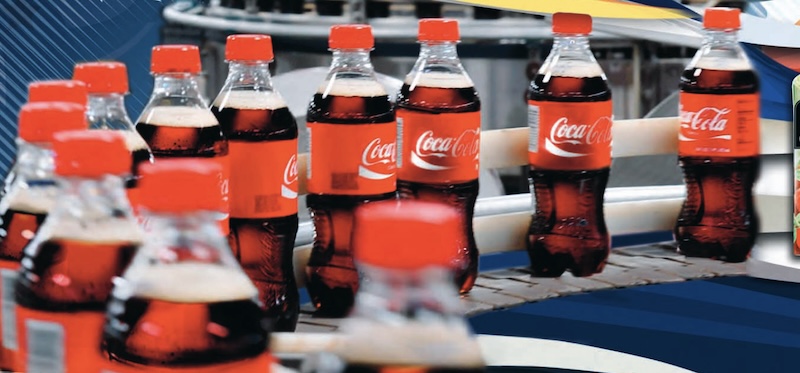
Tag: Coke

  • Jubiliant Bhartia group develops thirst for Coke’s biggest Indian bottler

    Jubiliant Bhartia group develops thirst for Coke’s biggest Indian bottler

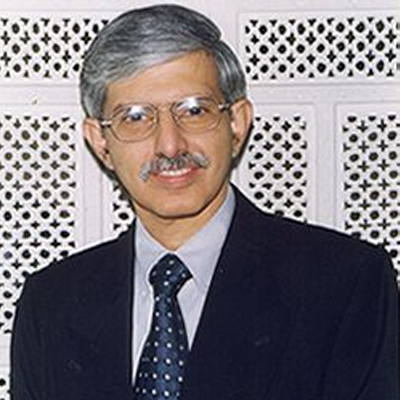
    MUMBAI: It’s bottling  a major partnership with  the famous Bhartia brothers  – Shyam and Hari.  Atlanta-based The Coca -Cola Co today announced that it has reached an agreement with the multibillion dollar, well- diversified Jubilant Bhartia group to acquire a 40 per cent stake in Hindustan Coca -Cola Holdings (HCCH). 

    HCCH is  the parent company of the largest Coca -Cola bottler in India, Hindustan Coca -Cola Beverages (HCCB) which primarily has a presence in the south and west of India. 

    “The Jubilant Bhartia group will bring invaluable experience and insights to our business as we continue to grow our presence in India,” said The Coca- Cola Co president of international development Henrique Braun. “Jubilant Bhartia Group brings a track record of building and growing consumer and other businesses in India with international partners. They are also committed to investing in the communities they serve.”

    The Coca -Cola Co’s locally-owned franchise partners in India are positioned to drive successful outcomes. The investment by the Jubilant Bhartia Group family will contribute to the company’s ongoing success and help strengthen its position in the Indian market, added The Coca-Cola Co in a press statement.

    Jubilant Bhartia group founder & chairman Shyam S. Bhartia and founder & co-chairman Hari S. Bhartia said the investment is an ideal addition to their business. They have a fortune estimated at about $.4.5 billion according to Forbes. The group has a presence in fast food, pharma, energy and auto distribution. Group company Jubiliant Foodworks operates the Dominos Pizza, Dunkin Donuts and Popeye’s franchises in India.

    “The Coca- Cola Co is home to some of the most respected global brands and we are delighted to be associated with them,” Bhartia said. “Together, we will leverage opportunities to grow the business to greater heights and ensure more Indian consumers can enjoy The Coca Cola Co’s refreshing portfolio of iconic local and international brands.”

    Because the brothers have non-disclosure agreements with the  beverage giant, the Bhartias were loath to reveal any details of the scale of investment the deal entailed, but market guesstimates are that it  is at around Rs 12,500 crore, with HCCB being valued at Rs 31,250 crore.

    The Coca -Cola India  president  & southwest Asia operating unit head Sanket Ray said.  “We welcome the Jubilant Bhartia group to the Coca -Cola system in India. With its diverse experience in various sectors, Jubilant brings decades of rich experience that will help accelerate the Coca -Cola system, enabling us to win in the market and provide greater value to local communities and consumers.”

    The transaction is subject to regulatory approval. Rothschild & Co acted as exclusive financial adviser to The Coca -Cola Co while Morgan Stanley was the advisor for the Jubiliant Bhartia group

  • Star Maa’s Bigg Boss Telugu Season 7 launches with a bang; onboards 19 sponsors

    Star Maa’s Bigg Boss Telugu Season 7 launches with a bang; onboards 19 sponsors

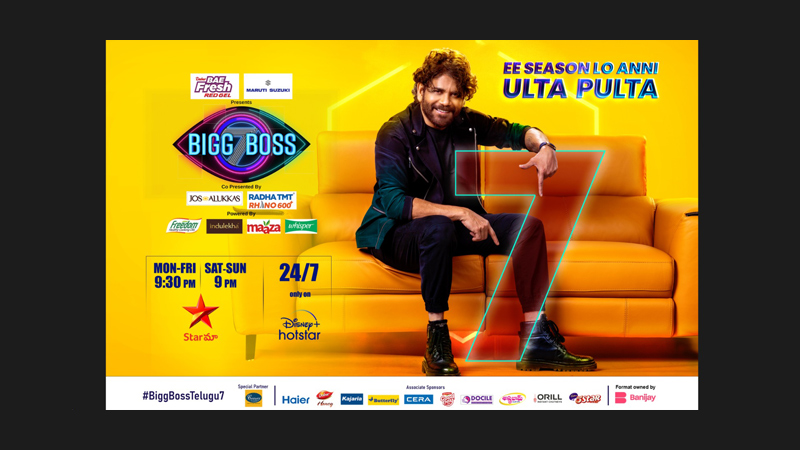
    Mumbai: Bigg Boss Telugu, the most popular reality show in the twin states of AP & Telangana has kicked off its seventh edition with much enthusiasm. It has onboarded a whopping 19 sponsors spanning various categories such as FMCG, Construction/Real Estate, Jewellery, Durables, and Automotive, among others. Brands onboard include Dabur, Maruti, Jos Alukkas, Radha TMT, Indulekha, Freedom Edible Oil, Coke, Whisper, Centuary Fiber, Cera, Britannia, Kajaria Cements, Haier, Butterfly, Docilekart, Shastry Balm, Orill & Mondelez.

    “Bigg Boss Telugu over the last 6 years on Star Maa has consistently been the most-watched Reality TV show in Telugu. The magic of Bigg Boss Telugu lies in its ability to bring families together and create unforgettable moments,” said Amrutha Nair, Head – Ad Sales and Strategy, Entertainment Network Channels, Disney Star. “We are thrilled by the response from brands for the seventh season of the show, it is a sign of a great festive season. Bigg Boss Telugu offers an exceptional platform for brands to leave a lasting impact, thanks to its extensive reach, and dedicated audience. It provides brands with an uncluttered media platform and numerous opportunities for sustained visibility, which can be rare during the bustling festive season. We look forward to presenting another engaging and entertaining season of the show to our Telugu viewers,” she added.

    With the launch of the seventh edition of Star Maa’s Bigg Boss Telugu on 3 September 2023, it’s evident that the show has secured a special place in the hearts of Telugu audiences. The show’s ability to maintain relevance among diverse age groups and its unwavering commitment to enhancing entertainment for its loyal viewer base have been key factors contributing to its enduring success season after season.

    The show’s campaign received immense traction this year too. With a central theme of everything being “upside down’ or “उल्टापुल्टा, the hashtag #BiggBossTelugu7 has achieved a remarkable reach of 1.5 billion, accompanied by over 8 million engagements.

    In the prior season, an astonishing 8.4 crore (84 million) individuals were reached, with over 40 billion viewing minutes generated. These remarkable numbers underscore the show’s enormous popularity and influence. In this season, Bigg Boss Telugu has shifted to the coveted prime-time slot of 9:30 PM, enhancing its accessibility to a broader audience. This time adjustment is also a strategic step aimed at guaranteeing that the captivating drama and entertainment of the show reaches an even larger number of households.

    As Bigg Boss Telugu gears up for another sensational season, with 100+ days of non-stop entertainment, it’s clear that its ability to innovate, engage, and captivate audiences across generations remains unwavering, while brands continue to capitalise on its unique association opportunities. 

  • Coca-Cola launches a limited edition bluetooth-enabled gift bottle

    Coca-Cola launches a limited edition bluetooth-enabled gift bottle

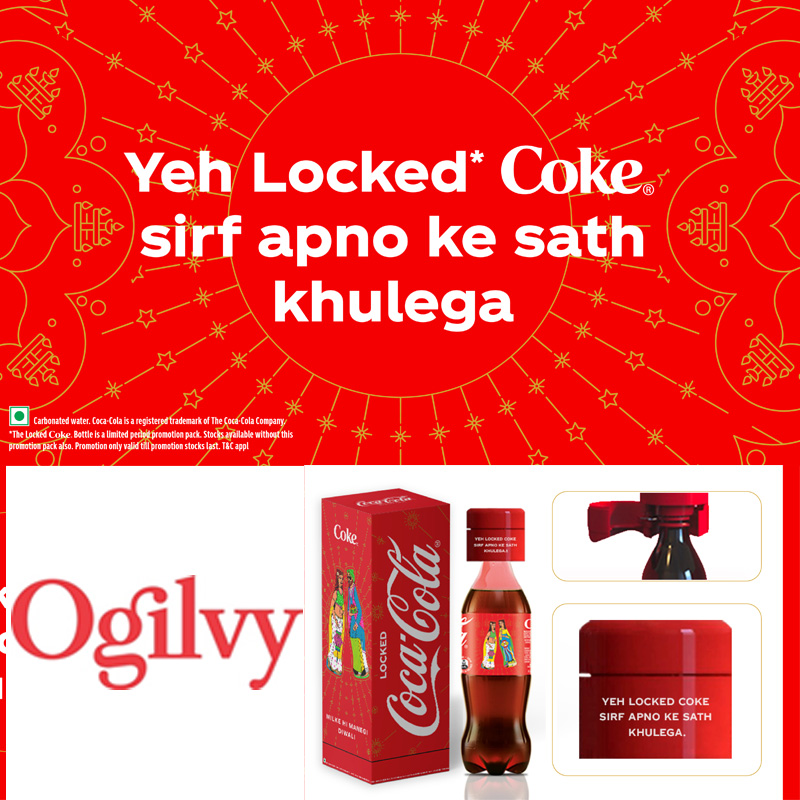
    Mumbai: Coca-Cola India has rolled out a technological product innovation-a “locked” Coke, which is a limited edition bottle of the beverage for the festive season. The “locked” bottle is fitted with a special bluetooth-enabled cap that is programmed to open only in the presence of the sender’s mobile phone.

    The concept is in line with Coke’s recent “#MilkeHiManegiDiwali” campaign, which encourages consumers to meet and celebrate this Diwali in-person. The innovation will be brought to life by a 360-degree campaign, including a series of digital films and partnerships with popular influencers.

    This is a first-of-its-kind product innovation by Coke in India and the TVC film has been conceptualised and created by Ogilvy Mumbai. The bottle can be ordered via a website by filling in the gift recipient’s residential address and a customised festive wish or message. The recipients will then receive the customised bottle via delivery, which will be pre-programmed to detect the presence of the sender’s mobile phone in order for it to be unlocked. This unique bottle acts as a symbolic reminder of a promise made to meet in person.

    Speaking about the initiative, Coca-Cola director of marketing Kaushik said, “We at Coca-Cola are excited to unveil a first-of-its-kind product innovation to our consumers. Digital enablement and product innovation are key pillars of growth for us at Coca-Cola, and our new “locked” bottle perfectly aligns with this strategy. The unique limited-edition gift bottle (that is available in India) is sure to inspire social connections, as people come together to meet, greet, connect, and share a (locked) Coke this Diwali.”

    Ogilvy India chief creative officer Sukesh Nayak added, “This is an invitation that I hope no one declines. We hope this beautiful merger of tech with humanity that has created the most inviting Diwali invitations sees people make the effort to go and visit the person inviting them, open the locked bottle of Coke, and enjoy it together.”

  • Guest Column: Think globally, advertise locally: The key to reaching local customers

    Guest Column: Think globally, advertise locally: The key to reaching local customers

    Mumbai: Although an American brand, Colgate is the only brand in India purchased by more than half of all households. Another interesting fact about the brand is that even though Colgate products target the mass population, the middle class is where most of its sales come from. Colgate’s understanding of the target market and developing region-specific marketing strategies are among the many driving forces behind its success. To give you a perspective, Colgate uses Bollywood celebrities for advertising in North & West India and Tollywood celebrities for South & East India. Not only that, when promoting online, the brand uses region-specific influencers to attract gen z. Why so? In this highly developed era, brands like Colgate, Coke and Hero Honda understand that the non-metros relatively rule the Indian economy. Hence, they build their promotion strategy in a way that suits the needs and requirements of tier two and three consumers.

    As a marketer, one needs to do more than what Colgate does. In order to get through, brands need to get even more vernacular. This is particularly true in India, which is home to over 120 officially recognised languages and more than 19,000 dialects. However, promotions in tier two and three cities have become the biggest challenge to marketers today, who have to skillfully communicate with a much larger but scattered audience characterised by language, culture, and lifestyle variations. Brands have to adopt the principle of multinational companies, i.e., think global, act local, and understand that people cannot be influenced by faces they don’t relate to. Therefore, brands must have a localised marketing/promotional strategy targeting regional audiences to reach local customers.

    Here is how it can be achieved ~

    Speak the language of your customers

    In India, reaching local customers is only possible by vernacular word-of-mouth marketing. The ingredients to a perfect regional marketing strategy are discovering your local market and understanding your customers and their community. This includes deploying region and language-specific social media campaigns featuring local ambassadors and connecting with their peers. Another suitable option is being updated with the traditions and values of mass consumers and planning the marketing strategies accordingly. Until you know who you are catering to, you will not be able to sell properly. Take the example of Bisleri, which carries the brand name in both English and local languages to ensure that the end consumer gets Bisleri and does not mistake any other brand for Bisleri.

    The unsaid power of word-of-mouth marketing

    A brand’s region-specific customer advocate is more likely to influence the people within their region than a ‘one face for all’ celebrity campaign. This is because people trust the opinions or recommendations of an “insider” over a popular face telling them what to do. Marketing strategies in tier two and three cities are most effective when personal selling is involved. As in the case of Hero Honda, they appointed regional sales representatives to go to the major areas and talk with the people and tell them the benefits and features of the bikes. Such a strategy not only builds relationships and trust but also organically enables word-of-mouth marketing.

    User-generated content

    Due to initiatives like Digital India, small towns in the country now have access to the internet and are consuming content via social media. It has also led consumers to become increasingly savvy about the tactics marketers use to reach them and they can quickly tell organic from paid. Brands can instead leverage the online presence of potential local consumers through targeted user-generated content and incentivise local advocates to create content that will gain the traction of local audiences and direct them toward the brand’s social media page.

    Celebrities vs local brand advocates

    Certain connotations get associated with a brand when a celebrity endorses it. For example, people perceive that since a rich celebrity promotes the brand, it must be expensive or not readily available in their small town. However, when a localite endorses the same brand, the result is the stark opposite. Since the customers and the promoter are of the same socioeconomic level, the phrase “If he/she can do it, so can I” works its magic. It pushes potential customers to try out the brand at least once, and after a good customer experience, they join the chain of word-of-mouth, bringing in more customers. Another example from the pages of Hero Honda’s marketing strategy is based on building relationships with people who have a strong influence in the area, such as teachers, doctors, etc., to advocate for them.

    In the mistrust society, word-of-mouth is an easy, effective, and quick way to gain the trust of local customers. They are naturally inclined toward listening to and making a purchasing decision based on the genuine feedback of local brand advocates. The flexibility and adaptability of word-of-mouth marketing can get your brand in front of a broader local audience. The age-old tradition of increasing business by word-of-mouth is the way to reach locals in India’s tier two and three cities. The simplicity and community-oriented approach of word-of-mouth make it the best practice to attract local customers.

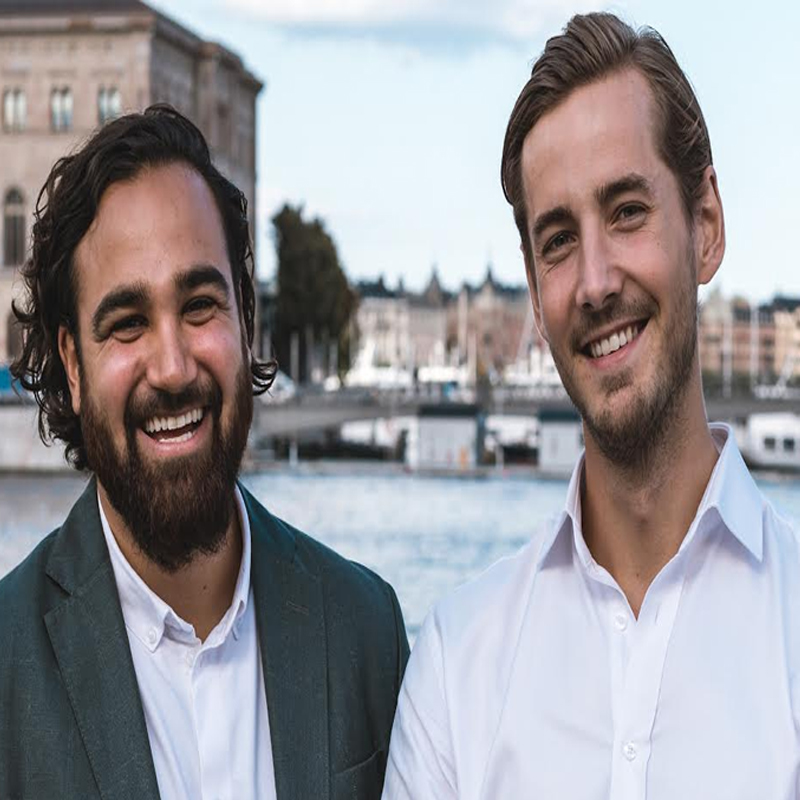
    The author of this article is Brandie co-founders Pranav Kosuri & Douglas Andersson.

  • Cola wars: PepsiCo ends 30-year partnership with WPP, as Coca-Cola signs up the agency

    Cola wars: PepsiCo ends 30-year partnership with WPP, as Coca-Cola signs up the agency

    Mumbai: The biggest rivalry in advertising history is in full view once again as the two beverage giants PepsiCo and The Coca-Cola Company engage in an indirect battle over their common global partner. PepsiCo India has brought its over three decades of association with WPP to a grinding halt after the latter inked a comprehensive deal with Coca-Cola. The beverage major is set to call India’s leading agencies for media and creative pitches. And the reason behind it is anybody’s guess.

    “PepsiCo India follows a re-pitching cycle every few years for agencies and partners working on our brand mandates. This year Wunderman Thompson and Mindshare will not be participating in the process,” stated a PepsiCo India Spokesperson to IndianTelevision, while adding, “We value our partnership and thank them for what we have achieved together over the years.”

    WPP Group-owned Mindshare and Wunderman Thompson were the company’s media and creative agency on record, respectively.

    Last year in November, Coca-Cola named WPP as its global marketing network partner. As a part of this alliance, WPP will play a major role in Coca-Cola, executing a new marketing model that is built to drive long-term growth for the entire company’s portfolio of brands across more than 200 countries and territories.

    The news of this association evidently has not gone down well with Pepsico, as WPP was handling the latter’s business in markets like India. India is among the few countries where WPP Group agencies represent PepsiCo. Rumours have been strife since then that PepsiCo might change its agency soon as no brand wants to work with agencies with contending brands.

    As the two largest soft-drink brands, Coca-Cola and Pepsi have long been arc rivals. Pepsico and Coca-Cola are two major advertisers in the country and the beverage makers have jostled for consumer attention with pointed ads featuring major Bollywood stars as brand ambassadors over the last decade.

     According to reports, PepsiCo has been devoting between $2.3 and $ three billion to advertising and promotion of its products annually. Over the last six years, Coca-Cola has spent an average of $ four billion a year on advertising worldwide.

  • Ronaldo’s Coke snub kicks off a meme-fest

    Mumbai: What seemed like a simple act by Portugal footballer Cristiano Ronaldo of moving aside two bottles of Coke and replacing them with a bottle of water at a post-match presser quickly metamorphosed into a sponsors’ nightmare at the 2020 Euro football league. For one, it cost the beverage giant a staggering loss of valuation pegged at $ four billion.

    The incident also seems to have kickstarted a trend amongst the Euro 2020 players- with France’s Paul Pogba and Italy’s Manuel Locatelli following in the Portugal captain’s footsteps by taking a swipe at one of the official Euro 2020 sponsors and doing a ‘Ronaldo’. To the extent that the UEFA (The Union of European Football Associations) had to step in to ask the players to stop the ‘bottle removing’ trends.

    But that didn’t prevent the opening of social media floodgates to an abundance of memes on the entire episode! Riding on the frothy meme-tsunami triggered by the football legend’s snub to the aerated drink, brands too launched a flood of witty, cheeky campaigns on social media.

    There was of course, Amul topical doing what it does best – literally milking the matter – this time on ‘beverages and football…and on not bottling one’s feelings!’

    This round on moment marketing was however won by Fevicol for nailing it with their on-point post.

    Created by Schbang, the tagline featuring two bottles of the glue goes “Na bottle hategi, na valuation ghategi”


    A post shared by Fevicol (@fevicolkajod)

    Online trading platform Upstox had a word of warning to brands on the placement of their products and for those trading in stock markets: “Stock markets are subject to Ronaldo’s risks, place your brand carefully”. Taking a dig at the Cola giant, it added, “It’s not only defenders who need to be scared of CR7”.


    A post shared by Upstox (@upstox.pro)

    Portugal footballer’s healthy preferences found favour with diagnostic lab network Pathkind Labs, which posted : When a legend says it you do it. Stay hydrated. Adding a word of caution, ‘Summer is at its peak. Drink plenty of water and stay cool!’


    A post shared by Pathkind Labs (@pathkind)

    Needless to add, packaged drinking water brand Bisleri was completely in agreement with the famous footballer’s views on the water. Bisleri endorsed his act of holding up a bottle of water to the cameras and making an appeal to drink water instead of sugary drinks. Leveraging the act to its advantage, it hilariously wrote, tagging the footballer: Christiano choosing water over soft drinks since 1985.

    It also added, “Be smart like the G.OA.T -Quench your thirst with the right choice” possibly simultaneously taking a dig at another cola giant which had a tagline of ‘yehi hain right choice, baby’! Talk about hitting two birds with one stone, huh?


    A post shared by Bisleri (@bislerizone)

    Parle’s Rola Cola added its two cents on the debate of soft drinks – saying ‘have a solid rola cola instead’

    Manforce condoms too waded into the meme storm, with a creative saying ‘MAKE LEGENDARY CHOICES #Ifyouknowyouknow’

  • Brands alter logos to spread awareness on social distancing

    Brands alter logos to spread awareness on social distancing

    MUMBAI/NEW DELHI: If there’s something sacred for any brand, it is the logo! A logo is like the skin to a brand’s soul. It is what distinguishes the brand from competitors and makes it identifiable with a distinctive character of its own. For decades, brands have invested significantly in promoting their identities using these signs and symbols and any changes in them require a huge strategic and economic planning. It is seldom that we see brands adapting their logos for moment marketing but the ongoing global pandemic of Covid-19 has made many brands take this crucial call.

    Understanding their social responsibility by virtue of their popularity, many brands have synced their logo designs with the message of isolation and social distancing. While most experts would suggest a likely hit on their revenues, some brands have made significant investment on this to show their commitment to the cause.

    The most prominent names in the list of brands that have rebranded their logos for the moment could be McDonald’s, which had its golden arches engraved in its logo in 1962, and Coca Cola.

    According to Mirum India executive creative director Naila Patel, all creativity done by the brands are welcomed. Majorly, at the time of crisis, this kind of move attracts the attention of consumers. “It puts the brand in a humane and emphatic light which increases positivity towards the brand. In today’s times, brands which have a cause in their corner attract consumers. The young, educated and evolved consumers identify themselves better with the brands that stand by causes or show empathy in tough times.”

    Brand-nomics managing director Viren Razdan said: “The Pandemic has brought the world together, united in fear and hope. As all the stops are being pulled out to spread the prevention message, iconic brands are making their popular following count by cleverly weaving in the message into their well-ingrained logos. Coca-Cola Times Square spot is perhaps the most expensive signage, and the impact would be great.”

    He also adds a word of caution for brands. “In the hypersonic media landscape we operate in, marketers and brands do their best to stay relevant in consumer conversations. But as McDonald’s would have learned, any such act requires your own house to be open to public scrutiny or else all this backfires as superficial, clever, opportunistic, and tactical brownie points. The McDonald’s campaign of moving the arches was withdrawn after public outcry on internal policies,” he adds.

    Let’s take a look at some of the brands that have re-shaped their logos.

    Sending out the message that social distancing is the only way to stop the spread of SARS-CoV-2 virus, McDonald’s Brazil changed the logo for the company on its official social media handles, separating the letter M, saying “Separados por um momento para estarmos sempre juntos” which translates to “separated for a moment to always be together.” The brand has recently extended the campaign in India and Pakistan as well.

    The quick service restaurant chain, through its social handles including Facebook, Twitter and Instagram, has urged citizens worldwide to stay indoors.

    Meanwhile, Coca-Cola has changed its ad on Times Square billboard with letters spread apart in its spelling. The new tagline of the reads, “Staying apart is the best way to stay connected”.

    According to reports, the changes will only be seen on Times billboard.

    German multinational automotive manufacturing company Volkswagen and Audi are also changing their logos temporarily.

    The iconic Volkswagen logo now has its ‘V’ and ‘W’ separated to project the distance that needs to be maintained in this crucial time. Audi has also done the same thing by separating the four rings that have been associated with the brand since the 1930’s.

    Another brand joining the league is Swiss banana producer and distributor Chiquita Brands International. The company posted a new version of its logo without Miss Chiquita saying, ‘I’m already home. Please do the same and protect yourself’.

    Argentina’s ecommerce platform, Mercado Libre, too, tweaked its logo, changing the shaking hands to elbow bumps.

    Closer home, in India, Shopper’s Stop has launched a new creative logo, transforming its identity into a heart-and-infinity sign to salute and applaud frontline professionals for their dutiful actions during these tough times.

    CARS24, a tech-enabled used car platform, has launched “Home24” campaign urging people to stay at home and spreading awareness around hygienic practices including washing hands and self-isolation. As part of this campaign, the company has tweaked its logo from ‘CARS24’ to ‘Home24’ to spread awareness about COVID 19 and conveying the importance of social distancing and ‘stay at home’. The logo has replaced the old logo of CARS24 on the company’s website and across all the social media platforms including Facebook, Twitter and Instagram.

    Not just logo designs, brands are actively playing with their propositions to spread awareness during these tough times.

    As published in USA Today, Nike is promoting social distancing through a new ad highlighting the importance of staying apart. The ad reads: “If you ever dreamed of playing for millions around the world, now is your chance. Play inside, play for the world.”

    The sports company has, in fact, shut down stores in some countries until 27 March.

    Sports icon Michael Jordan, who had worked with Nike contracts, also shared a message, “Now more than ever, we are one family. #JUMPMAN #playinside

  • Coca-Cola India identifies West Bengal as one of its key growth markets

    Coca-Cola India identifies West Bengal as one of its key growth markets

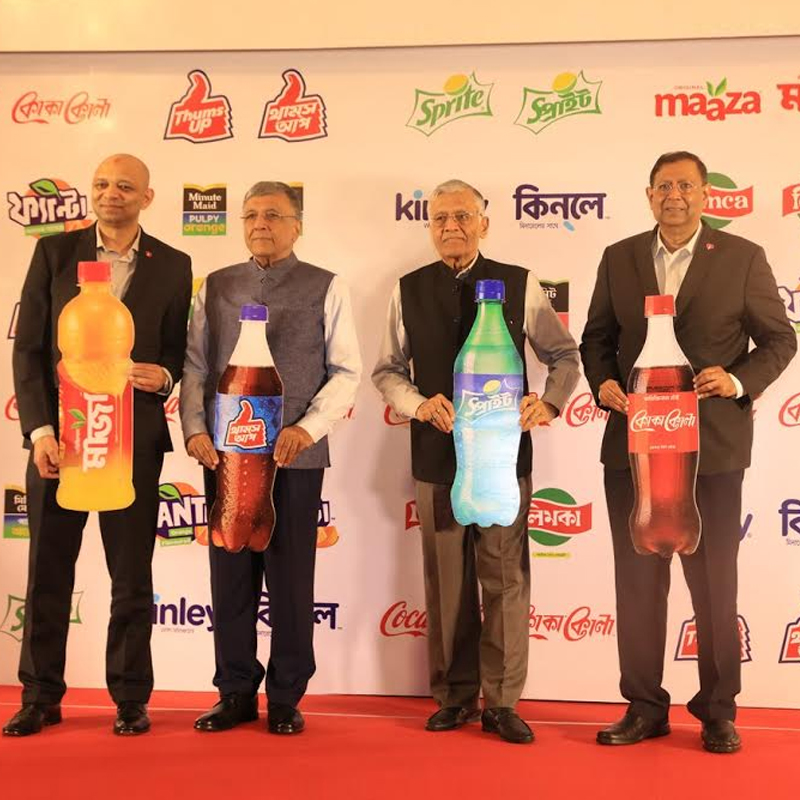
    MUMBAI: Taking forward its vision to become a ‘Total Beverage Company with strong local roots’, Coca-Cola India announced West Bengal as its key growth market and unveiled strategic plans to showcase commitment to the state. West Bengal is the first Indian state where the entire portfolio and marketing initiatives of Coca-Cola’s brands have been hyper-localized to resonate with local language and suit consumer preferences. The initiative begins with West Bengal and would extend nationally with local execution in other states. The company also announced its partnership with Kolkata Knight Riders (KKR) to turn up the excitement of the upcoming season of the Indian Premier League (IPL) for fans in Bengal.

    Coca-Cola India is deeply intertwined with the vibrancy of West Bengal through its relationship with music, sports, food, festival and culture. Consumers in West Bengal have a special love for Coca-Cola beverages, making it a priority market for the company. The initiative has been developed in line with local affinity and preferences of consumers in West Bengal and their strong emotional connect with their culture.

    Speaking at the launch of the initiative,  Coca-Cola India and South West Asia President T Krishnakumar said, “West Bengal is a vital part of our India story, and we will continue to build for the state by customizing our brand and product propositions with an improved understanding of the local consumers’ consumption patterns and desires. West Bengal has and always will remain close to our hearts and with this initiative, we aim to showcase our gratitude by celebrating the unique, diverse culture of Bengal with our differentiated offerings and continued investment. We are initiating this as a pilot in West Bengal and plan to extend this nationally with local execution in other states”

    To kickstart the initiative, Coca-Cola has rolled out Bengali packaging labels for all beverages across its portfolio, which includes Coke, Sprite, Thums Up, Maaza, Fanta, Limca, Kinley, and Minute Maid. Each brand will devise a hyperlocal campaign to deepen connect and bring on-ground experience alive for consumers in Bengal.
    > Coca-Cola India senior VP Shehnaz Gill added “The initiative is built on the premise of creating joyful moments that are of true cultural significance in West Bengal. We will engage with consumers across multiple touchpoints using three key pillars: Language & Culture, Festivals, and Passion Points such as Cricket, Food, Music etc. Coca-Cola India’s hyper-local strategy will reflect in the marketing mix, packaging, advertising, social media activations and a range of on-ground events across portfolio. This will be further anchored in a strong marketing framework to create an edge while keeping the consumers’ sensibilities at the forefront of all decisions.”

    As part of the initiative, Coca-Cola is tapping consumer passion moments such as Language and Cricket to build a strong emotional connect and cultural relevance. The pride for Bengali language is ubiquitous across West Bengal and Coca-Cola fueled the excitement by rekindling the love for storytelling during International Mother Language Day. Consumers were invited to participate in the contest by sharing their love for the language through short poems, tiny tales, and haikus. The winning entries were shared on Coca-Cola’s social media handles and also featured on Radio Mirchi by RJ Somak. Brand Coca-Cola will be the official beverage partner with Kolkata Knight Riders (KKR) to turn up the excitement of the upcoming season of the Indian Premier League (IPL) for fans in Bengal. A host of activities are planned both in stadium, as well as across the state to engage consumers and create unique experiences.

  • Dentsu X appoints Arabinda Ghosh as CSO

    Dentsu X appoints Arabinda Ghosh as CSO

    MUMBAI: Dentsu X, an integrated media specialist from Dentsu Aegis Network, has roped in Arabinda Ghosh as chief strategy officer. He will report to Roopam Garg, chief client officer, dentsu X India and will be based out of Delhi.

    Ghosh brings with him extensive experience in research and planning spanning two decades. He has worked with big research firms in India such as the Kantar brands–IMRB, TNS, Millward Brown, and Nielsen. 

    During his last stint at Kantar, he was the key consultant to Coke and ABInBev for their branding and communication development strategy and has also guided clients on the effectiveness of cross-media impact and how to harness and optimise the consumer journey to achieve the desired brand objectives.

    Dentsu X India CEO Divya Karani said, “Having worked with Arabinda on the Tata group media mandate in the past, I am elated once again to have him aboard at dentsu X. In these intervening years, Arabinda has grown tremendously with his rich experience on BAT, Coke and other business. He brings immense value to the company’s capabilities. We are increasingly bringing on board senior talent who can carry forward the learnings of seamless integrated consumer and brand interaction to bear on our clients’ business.”

    Ghosh added,  “I find dentsu X to be the most cutting edge and innovative media company, which enables me to pursue my dream. I am excited because dentsu X’s vision of ‘experience over exposure’ encapsulates the future of the entire communication eco-system in a pithy way. I look forward to both being able to contribute and learn as we move forward.”

  • Hathway Bhawani MD and CEO Sameer Joseph quits

    Hathway Bhawani MD and CEO Sameer Joseph quits

    MUMBAI:  Hathway Bhawani Cabletel and Datacom’s managing director and CEO Sameer Joseph has resigned with immediate effect, that is, 4 October, 2017. 

    With an experience of 20+ years of successful track record in service, financial service, FMCG and telecom industry working with brands like TNT, Coke, Idea, Airtel, Tata & Uninor.

    Joseph had joined Hathway Bhawani in November 2016 as the senior vice-president – operations and managing director. Prior to joining Hathway Bhawani, he worked as the vice-president and national sales and distribution head with Sun Telenor Payment Bank. 

    He also worked with Uninor as the associate vice-president and regional sales and distribution head (north and west ) for six years.