Tag: Coffee

  • Indonesian coffee unicorn hopes to brew up a storm in India

    Indonesian coffee unicorn hopes to brew up a storm in India

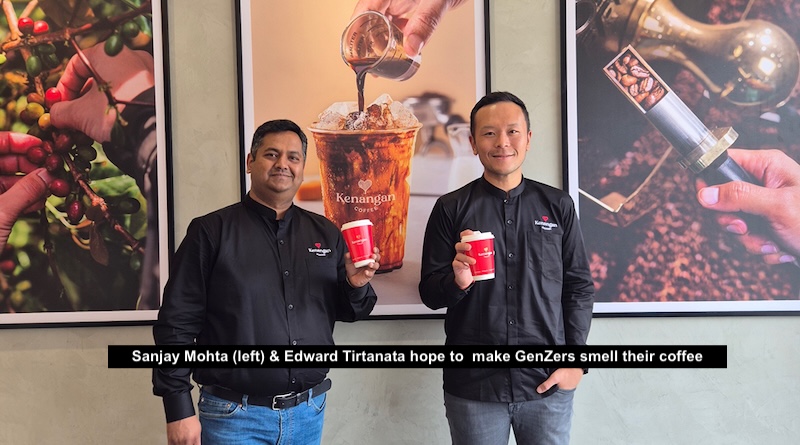
    MUMBAI: The aroma of Indonesian coffee has wafted into India’s bustling café scene as Southeast Asia’s fastest-growing coffee chain, Kopi Kenangan, has  planted its flag at Pacific Mall in Delhi’s Tagore Garden. Valued at over $1 billion—making it the region’s first food and beverage unicorn—the brand is brewing ambitious plans for the world’s most populous nation.

    “India’s vast young population and growing appreciation for diverse coffee experiences make it an ideal market for Kenangan Coffee. We are committed to delivering high-quality coffee that resonates with local preferences, creating memorable moments for every customer,” says  Kenangan Brands co-founder & CEO Edward Tirtanata, backed by heavyweight investors including Peak XV Partners and Meta co-founder Eduardo Saverin’s B Capital.

    The coffee upstart is positioning itself as a challenger to pricier global giants like Starbucks and Tim Hortons. With espresso shots starting at a modest Rs 99 and larger servings below Rs 150—roughly Rs 80-100 cheaper than premium competitors—Kopi Kenangan is clearly betting its beans on price-conscious customers.

    The company’s secret ingredient? Gula Aren, an Indonesian palm sugar with a lower glycemic index than refined alternatives, aimed at health-conscious Indians who still fancy a sweet fix. This nutritious twist might just be the sugar rush needed to stand out in India’s increasingly frothy café marketplace.

    With plans to open 10+ stores by end-2025 and intentions to pour up to Rs 40 crore into sourcing and expansion over the next two years, the brand isn’t just dipping its toe in the market—it’s diving in headfirst.
    “Our mission is to blend Indonesian craftsmanship with local flavours,” says vice president and general manager for India Sanjay Mohta, as the company prepares to tap local coffee producers to complement its Indonesian offerings.

    India’s café culture is still percolating compared to mature markets, but with consumption estimated at over one million 60-kilogram bags between 2023-2024, there’s plenty of room to grow. While established chains like Café Coffee Day have seen their market share drip away due to financial troubles, newcomers including Third Wave Coffee and Blue Tokai have been gaining steam.

    For now, the Indonesian outfit is targeting students and young professionals in their first jobs—Gen Zers and millennials looking for an affordable caffeine kick. After Delhi, the brand plans to expand to Mumbai and Bengaluru, hoping its wallet-friendly prices and locally-sourced ingredients will help it brew up a loyal following.
    In a market where even fast-food giants like McDonald’s are trying to espresso themselves, Kopi Kenangan will need more than just cheap prices to avoid becoming another has-bean. But if it can capture India’s increasingly caffeinated hearts, this Indonesian import might just become everyone’s cup of tea—or rather, coffee.


  • Nespresso expands into India with Delhi flagship

    Nespresso expands into India with Delhi flagship

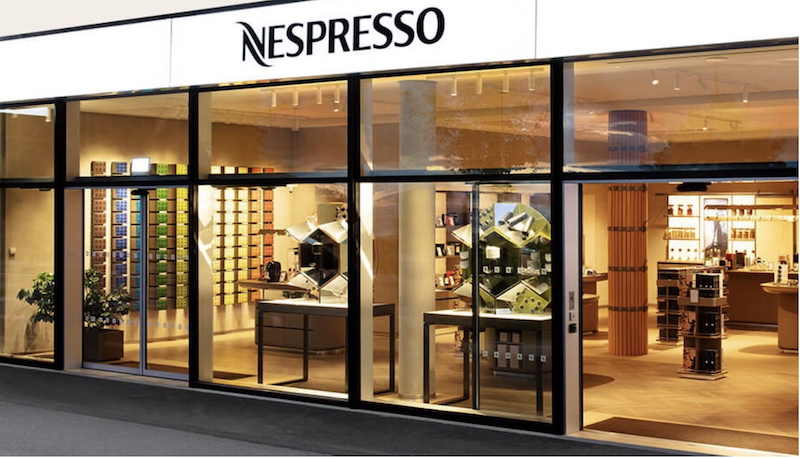
    MUMBAI:  Coffee connoisseurs can cheer. Nespresso, the Nestlé-owned premium coffee brand, has established its first Indian retail presence with a boutique in Delhi’s Select Citywalk Mall, marking a significant step in the firm’s Asian expansion strategy.

    The Swiss company, which pioneered the premium single-serve coffee segment, has entered a market traditionally dominated by tea consumption but where urban coffee culture has gained substantial momentum in recent years. The company had initially entered the Indian market in late 2024 through e-commerce channels before committing to this brick-and-mortar investment.

    Nespresso chief executive  Philipp Navratil, highlighted the importance of physical retail in the firm’s market development approach. “This boutique will help us bring Nespresso’s product range to Indian coffee consumers in an immersive environment,” he noted at the launch event. The company appears to be replicating its successful retail strategy from other emerging markets, where experiential shopping has proven effective in building brand loyalty.

    The Delhi boutique follows Nespresso’s established retail formula: trained coffee specialists offer tastings and personalised recommendations in a carefully designed environment showcasing both the firm’s coffee varieties and its machine range. This high-touch approach has served the brand well in other markets where coffee consumption patterns are evolving.

    For Nestlé, the parent company with an already substantial presence in India, this expansion represents a strategic move into the premium segment.

    “Coffee culture in India is evolving rapidly,” observed Nestlé India chairman & managing director Suresh Narayanan. “This launch reflects our commitment to deliver premium experiences to Indian consumers.”

    The company has appointed Thakral Innovations as its official distribution partner in India, covering all Nespresso products across retail channels. This partnership model has been successfully deployed by Nespresso in other markets where specialised distribution expertise is required.

    Notably, Nespresso has maintained supply chain connections in India since 2011, sourcing high-quality coffee through its sustainability programme. The firm currently works with approximately 2,000 Indian coffee farmers through its AAA Sustainable Quality initiative, which focuses on improving quality, productivity and environmental practices.

    The Indian premium coffee market has shown resilience and growth potential despite economic headwinds, with urban consumers increasingly willing to spend on premium food and beverage experiences. Nespresso’s entry pits it against established players including Starbucks, which has operated in India since 2012 through a partnership with Tata Consumer Products.

    Nespresso, which achieved B Corp certification in 2022, currently operates in 93 markets worldwide with a retail network of 791 boutiques. Whether the company can successfully cultivate a significant market in a country where tea remains the dominant hot beverage will be a key test of its globalisation strategy and the evolving tastes of Indian consumers.
     

  • Continental Coffee with Platinum Outdoor to deliver an ‘Xtra strong’ campaign

    Continental Coffee with Platinum Outdoor to deliver an ‘Xtra strong’ campaign

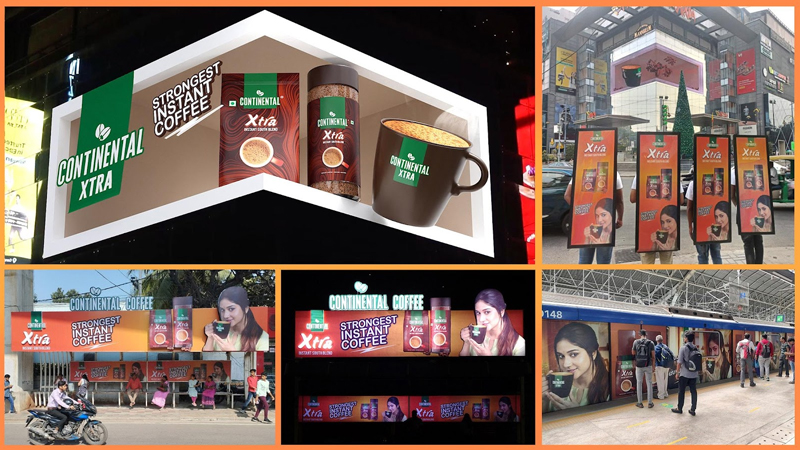
    Mumbai: With a comprehensive Out-of-Home (OOH) campaign, Platinum Outdoor, a unit of Madison World, assisted Continental Coffee gain awareness and consideration for its ground-breaking multi asset allocation in the coffee category. With a carefully selected mix of media channels and a thoughtfully planned campaign, Platinum Outdoor successfully captured audiences’ attention in three cities. This left a lasting impact on outdoor advertising while underlying the strongest coffee message through “Start Strong Stay Strong” from Continental Xtra.

    Continental Coffee Private Limited is a subsidiary of CCL Products (India) Limited, founded to deliver not only the one of the finest coffee in the world but also customised coffee options for each customer. With infrastructural backbone and a global client repertoire in over 100 countries, with more than 1200 Cups of Continental Coffee consumed every second across the globe.

    To highlight its exclusive features of chunky granules designed to capture and preserve rich aroma and flavour which ensure a robust and intense coffee experience, Platinum Outdoor used visual appeal, influencers, in-store experiences and digital storytelling, to position Continental Xtra as the epitome of a strong and aromatic coffee experience.

    A 3D anamorphic display was installed in Bangalore with sampling activity, as well as using several formats, including Metro wraps, Chennai BQSs, and Hyderabad hoardings for a period of 30 to 45 days. Using these iconic placements, the campaign reached a broader audience, increasing brand recall and strengthening credibility. The result was improved distributor relations, brand perception, and credibility for Continental Coffee and increased sales. By strengthening the brand’s relationships with distributors, Continental Coffee’s outdoor campaign achieved a mutually beneficial environment for sustained success. In addition to achieving significant visibility and impact among consumers, it also cultivated a mutually beneficial environment for sustained success.

    Speaking on the campaign, Continental Coffee CMO Raja Chakraborty commented, “At Continental Coffee we believe in Innovation, be it our product or communication. This is an effort in the same direction”.

    Platinum Outdoor & MRP CEO Dipankar Sanyal also commented, “The process of strategizing and executing Continental Coffee’s outdoor campaign on such a grand scale, especially in today’s ever-changing outdoor landscape, has been an extremely rewarding experience. Certainly, the campaign has been a tremendous success for the brand”.

    Platinum Outdoor is a part of Madison World, India’s homegrown communication agency established in 1988 that operates several brands in OOH including MOMS, activation specialist – Madison TURNT, rural specialist – Anugrah Madison and retail specialist – MRP. Platinum Outdoor handles marquee clients like Tata Motors, Vi, Parle Agro, Campus Shoes, Square Yards, Zee5, L&T Housing and Havells amongst many others. Madison World through its 11 Units served last year, as many as 500 Advertisers.

  • Tata Coffee will merge with Tata Consumer Products Limited

    Tata Coffee will merge with Tata Consumer Products Limited

    Mumbai: Tata Coffee will merge with Tata Consumers Products Ltd ( TCPL). On Thursday The Board of Directors of TCL (Tata Coffee Limited) in collaboration with TCPL acknowledged the conditions under 29 clauses of provisions are fulfilled and stated in regulatory filings. The upcoming merger will be effective from 1 January 2024. It will be a composite scheme of arrangements among TCPL, and TCL.

    As per media reports, TCPL will issue one equity share to existing Tata Coffee shareholders. After demerger or amalgamation TCL will dissolve with the statutory process.

    Tata Consumer Products is known for its quality and innovation. Tata Consumers Limited has different product lines of Coffee, Tea, Salt, Liquid Foods, and beverages. In the last few years, Tata Consumers gave better returns on stock investment.

    This FMCG consolidated business will help Tata Group for its momentum to market share expansion. Tata Consumer Products also has a strong presence abroad in the FMCG segment. According to industry experts, it is likely to add to its earnings by 3-5%. In the next financial year.

    According to the Forbes India report, TCPL is the 8th largest FMCG player in India with a market cap of Rs 0.879 Lakhs Crores.

  • Cafe Coffee Day appoints Malavika Hegde as CEO

    Cafe Coffee Day appoints Malavika Hegde as CEO

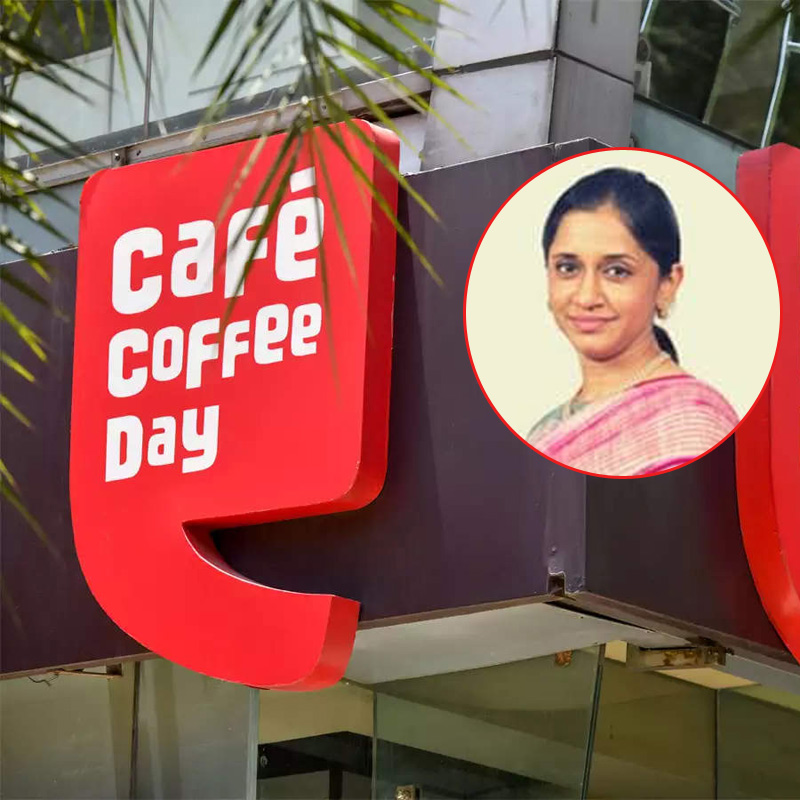
    NEW DELHI: Coffee Day Enterprises has appointed Malavika Hegde as CEO of the company. She has been the non-executive director of the organisation and will assume the new role starting 7 December.

    The company announced the development in a BSE filing.

    Hegde is former Karnataka chief minister S M Krishna's daughter and the wife of late V G Siddhartha, the Cafe Coffee Day founder and CEO who died due to drowning in 2019.

    Siddhartha, who was dubbed the coffee baron of India, was widely recognised for having brought the coffee shop culture to a largely tea-loving country. However, the success story of Cafe Coffee Day came to an ignominious turning point when the founder plunged to his death in the Nethravathi river in an apparent suicide, raising speculations that the company was in dire financial straits.

    Cafe Coffee Day runs hundreds of coffee shops across India that brew cappuccinos and lattes for Indians. It was launched in 1996 and is present in over 200 plus cities. It competes with big players such as Starbucks Corp, Barista, Costa Coffee and others.

  • Nescafe launches OOH campaign for monsoon

    Nescafe launches OOH campaign for monsoon

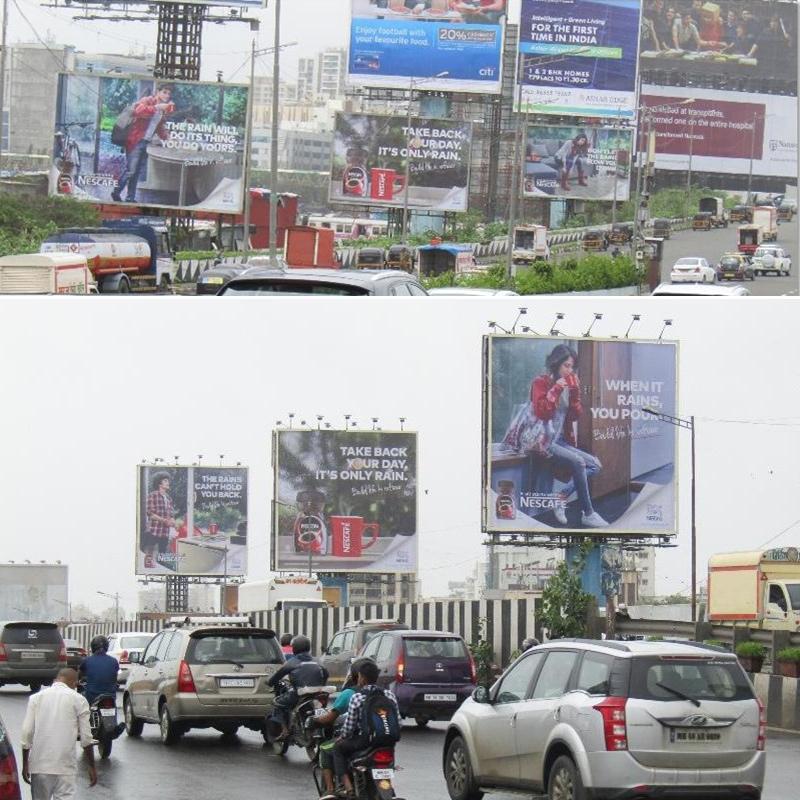
    MUMBAI: It is monsoon and Nescafe, the coffee brand is back to make a statement yet again with its new OOH campaign ‘Badal Life Ki Raftaar’.

    The sudden, mischievous downpour, the romance of the grey clouds and the bank of hanging mist leaves one luxuriating in this much-loved season. Think monsoon and several munchies come to mind. It’s certainly a cliché but few joys can match up to the experience of watching the pitter-patter of rain on your window and a freshly brewed cup of coffee.

    Executed by Street Talk, the brand occupied the OOH medium solely considering its TG. The objective of the innovation was to spread the message that “You can’t guzzle a hot drink, it has to be taken slowly” (making it the perfect way to measure out breaks) and while you’re sipping and blowing and waiting for that optimum comfortable drinking temperature, you can inhale the warmth of the aromatic vapours.

    A lot of insights were put in place to arrive at the pockets that would have the best impact on the potential consumers. The agency studied the best permutation and combination with media price, site visibility potential and the best of site characteristics to arrive at the media placements specifically addressing the right TG.

    The cluster approach at key junctions aided immediate buzz for the brand. The brand was made highly visible using a No-Miss Media Approach where, the handpicked media did complete justice to brand.

    But the highlight of the campaign was the innovative steaming cup of coffee, strategically placed at high traffic zones across multiple locations to attract significant eyeballs. The billboard featured a coffee mug emitting fumes, emulating steam from a freshly brewed cup of coffee. 

  • The Tata group and Starbucks Coffee Company strengthen partnership

    The Tata group and Starbucks Coffee Company strengthen partnership

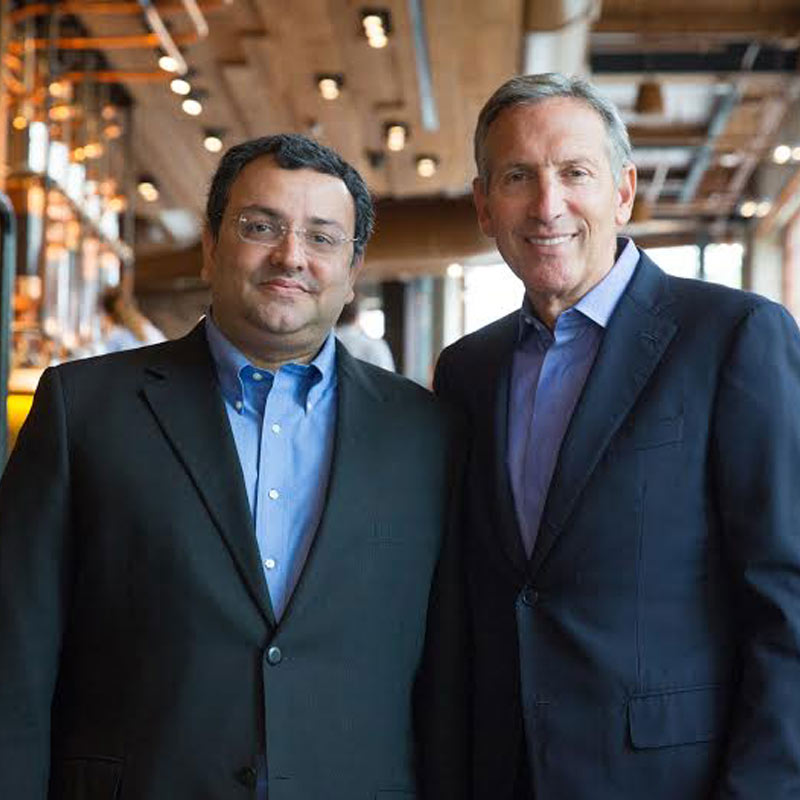
    MUMBAI: In a meeting at Starbucks Reserve® Roastery and Tasting Room in Seattle, Washington, chairman and chief executive officer of Starbucks Coffee Company, Howard Schultz, and chairman, Tata Sons Limited, Cyrus Mistry, announced multiple new joint initiatives , which expand the existing Tata and Starbucks relationship and strengthen the companies’ commitment to developing the Tata-Starbucks brand and building a different kind of company in India.

    For the first time, Starbucks will offer a single-origin coffee from India in the U.S., giving customers from outside the country a unique opportunity to experience a rare, small-lot coffee from the Tata Nullore Estates located in the beautiful Coorg coffee growing area of India. Starbucks Reserve® Tata Nullore Estates will be the first coffee from India to be roasted at the Starbucks Reserve® Roastery and Tasting Room and will only be available at this Seattle location later this year.

    “These announcements build upon the incredible success and shared values between Starbucks and Tata in our partnership in India,” said Schultz. “We are humbled by the way in which customers in India have embraced Starbucks elevated coffeehouse experience, which now spans to more than 80 stores across six cities. As we continue on our journey with Tata, we are delighted to introduce the finest coffee from India to a new audience. Starbucks Reserve® Tata Nullore Estates, the first ever Starbucks Reserve® coffee sourced exclusively from India, highlights the deep coffee heritage and expertise of both companies to source, roast and distribute the finest-quality arabica coffees and elevates the story of India coffee for our customers.”

    Starbucks also announced plans to increase its coffee roasting capacity for supplying its stores in India and, over time, select markets around the globe. Since Tata Coffee Limited opened its doors to a roasting and packaging plant in Kushalnagar in Coorg, Karnataka, in 2013, this facility has steadily increased its roasting capabilities. Today, it roasts Starbucks® India Estates Blend and Espresso Roast coffees and will soon expand to include both Kenyan and Sumatran coffees for Starbucks stores throughout India. This builds upon Tata and Starbucks commitment to cultivate a future supply of high-quality, sustainable green coffee from existing and potential sources in India through world-class agronomy practices.

    “We are proud to work with Starbucks, a company which shares our commitment to both the coffee growing regions and the coffee farmers to ensure we meet the global demand for high-quality coffee over the long-term,” said Mistry. “Our journey with Starbucks since 2012 has been gratifying and we are pleased to build on the strong relationship between Starbucks and the Tata group as we continue to further advance Indian coffee around the globe. We are honored to be sourcing the finest Indian coffee and introducing Starbucks customers outside India to its quality for the first time.”

  • The Tata group and Starbucks Coffee Company strengthen partnership

    The Tata group and Starbucks Coffee Company strengthen partnership

    MUMBAI: In a meeting at Starbucks Reserve® Roastery and Tasting Room in Seattle, Washington, chairman and chief executive officer of Starbucks Coffee Company, Howard Schultz, and chairman, Tata Sons Limited, Cyrus Mistry, announced multiple new joint initiatives , which expand the existing Tata and Starbucks relationship and strengthen the companies’ commitment to developing the Tata-Starbucks brand and building a different kind of company in India.

    For the first time, Starbucks will offer a single-origin coffee from India in the U.S., giving customers from outside the country a unique opportunity to experience a rare, small-lot coffee from the Tata Nullore Estates located in the beautiful Coorg coffee growing area of India. Starbucks Reserve® Tata Nullore Estates will be the first coffee from India to be roasted at the Starbucks Reserve® Roastery and Tasting Room and will only be available at this Seattle location later this year.

    “These announcements build upon the incredible success and shared values between Starbucks and Tata in our partnership in India,” said Schultz. “We are humbled by the way in which customers in India have embraced Starbucks elevated coffeehouse experience, which now spans to more than 80 stores across six cities. As we continue on our journey with Tata, we are delighted to introduce the finest coffee from India to a new audience. Starbucks Reserve® Tata Nullore Estates, the first ever Starbucks Reserve® coffee sourced exclusively from India, highlights the deep coffee heritage and expertise of both companies to source, roast and distribute the finest-quality arabica coffees and elevates the story of India coffee for our customers.”

    Starbucks also announced plans to increase its coffee roasting capacity for supplying its stores in India and, over time, select markets around the globe. Since Tata Coffee Limited opened its doors to a roasting and packaging plant in Kushalnagar in Coorg, Karnataka, in 2013, this facility has steadily increased its roasting capabilities. Today, it roasts Starbucks® India Estates Blend and Espresso Roast coffees and will soon expand to include both Kenyan and Sumatran coffees for Starbucks stores throughout India. This builds upon Tata and Starbucks commitment to cultivate a future supply of high-quality, sustainable green coffee from existing and potential sources in India through world-class agronomy practices.

    “We are proud to work with Starbucks, a company which shares our commitment to both the coffee growing regions and the coffee farmers to ensure we meet the global demand for high-quality coffee over the long-term,” said Mistry. “Our journey with Starbucks since 2012 has been gratifying and we are pleased to build on the strong relationship between Starbucks and the Tata group as we continue to further advance Indian coffee around the globe. We are honored to be sourcing the finest Indian coffee and introducing Starbucks customers outside India to its quality for the first time.”

  • Radical changes in FDI regime; Most sectors on automatic FDI route

    Radical changes in FDI regime; Most sectors on automatic FDI route

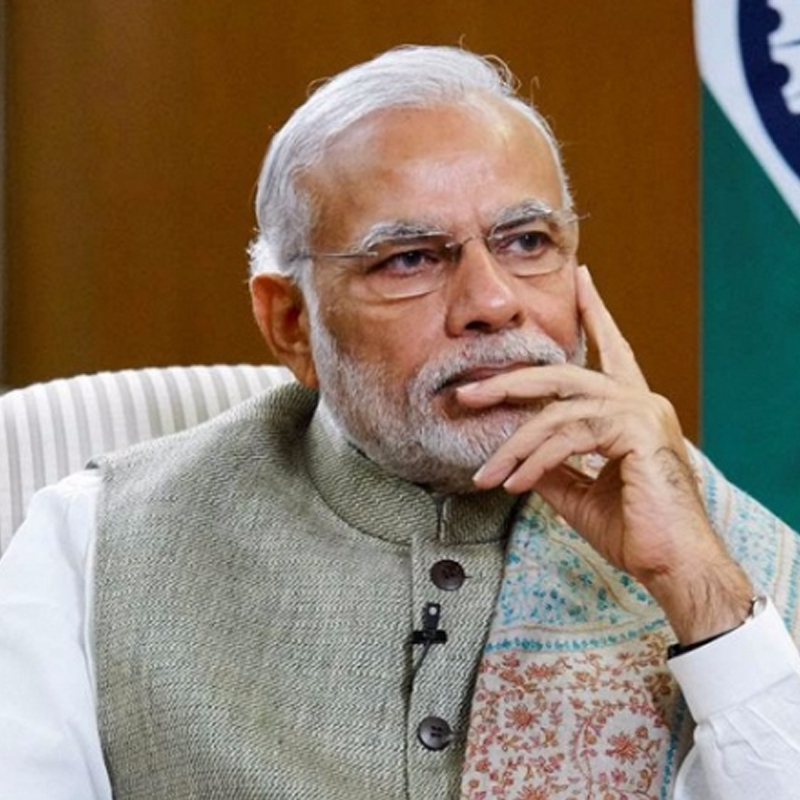
    MUMBAI: The Union Government has radically liberalized the FDI regime today, with the objective of providing major impetus to employment and job creation in India. The decision was taken at a high-level meeting chaired by Prime Minister Narendra Modi today. This is the second major reform after the last radical changes announced in November 2015.  Now most of the sectors would be under automatic approval route, except a small negative list. With these changes, India is now the most open economy in the world for FDI.

    In last two years, Government has brought major FDI policy reforms in a number of sectors viz. Defence, Construction Development, Insurance, Pension Sector, Broadcasting Sector, Tea, Coffee, Rubber, Cardamom, Palm Oil Tree and Olive Oil Tree Plantations, Single Brand Retail Trading, Manufacturing Sector, Limited Liability Partnerships, Civil Aviation, Credit Information Companies, Satellites- establishment/operation and Asset Reconstruction Companies. Measures undertaken by the Government have resulted in increased FDI inflows at US$ 55.46 billion in financial year 2015-16, as against US$ 36.04 billion during the financial year 2013-14. This is the highest ever FDI inflow for a particular financial year. However, it is felt that the country has potential to attract far more foreign investment which can be achieved by further liberalizing and simplifying the FDI regime.  India today has been rated as Number 1 FDI Investment Destination by several International Agencies.

    Accordingly the Government has decided to introduce a number of amendments in the FDI Policy. Changes introduced in the policy include increase in sectoral caps, bringing more activities under automatic route and easing of conditionalities for foreign investment. These amendments seek to further simplify the regulations governing FDI in the country and make India an attractive destination for foreign investors.  Details of these changes are given in the following paragraphs:

    1. Radical Changes for promoting Food Products manufactured/produced in India

    It has now been decided to permit 100% FDI under government approval route for trading, including through e-commerce, in respect of food products manufactured or produced in India.

    2. Foreign Investment in Defence Sector up to 100%

    Present FDI regime permits 49% FDI participation in the equity of a company under automatic route.  FDI above 49% is permitted through Government approval on case to case basis, wherever it is likely to result in access to modern and ‘state-of-art’ technology in the country. In this regard, the following changes have inter-alia been brought in the FDI policy on this sector:

    i. Foreign investment beyond 49% has now been permitted through government approval route, in cases resulting in access to modern technology in the country or for other reasons to be recorded.  The condition of access to ‘state-of-art’ technology in the country has been done away with.

    ii. FDI limit for defence sector has also been made applicable to Manufacturing of Small Arms and Ammunitions covered under Arms Act 1959.

    3. Review of Entry Routes in Broadcasting Carriage Services

    FDI policy on Broadcasting carriage services has also been amended. New sectoral caps and entry routes are as under:


    http://www.indiantelevision.com/sites/drupal7.indiantelevision.co.in/files/styles/large/public/fdi.jpg?itok=yfNxkWYk


    4. Pharmaceutical

    The extant FDI policy on pharmaceutical sector provides for 100% FDI under automatic route in greenfield pharma and FDI up to 100% under government approval in brownfield pharma. With the objective of promoting the development of this sector, it has been decided to permit up to 74% FDI under automatic route in brownfield pharmaceuticals and government approval route beyond 74% will continue.
    5. Civil Aviation Sector

    (i) The extant FDI policy on Airports permits 100% FDI under automatic route in Greenfield Projects and 74% FDI in Brownfield Projects under automatic route. FDI beyond 74% for Brownfield Projects is under government route.

    (ii) With a view to aid in modernization of the existing airports to establish a high standard and help ease the pressure on the existing airports, it has been decided to permit 100% FDI under automatic route in Brownfield Airport projects.

    (iii) As per the present FDI policy, foreign investment up to 49% is allowed under automatic route in Scheduled Air Transport Service/ Domestic Scheduled Passenger Airline and regional Air Transport Service. It has now been decided to raise this limit to 100%, with FDI up to 49% permitted under automatic route and FDI beyond 49% through Government approval. For NRIs, 100% FDI will continue to be allowed under automatic route. However, foreign airlines would continue to be allowed to invest in capital of Indian companies operating scheduled and  non-scheduled air-transport services up to the limit of 49% of their paid up capital and subject to the laid down conditions in the existing policy.

    6. Private Security Agencies

    The extant policy permits 49% FDI under government approval route in Private Security Agencies. FDI up to 49% is now permitted under automatic route in this sector and FDI beyond 49% and up to 74% would be permitted with government approval route.

    7. Establishment of branch office, liaison office or project office

    For establishment of branch office, liaison office or project office or any other place of business in India if the principal business of the applicant is Defence, Telecom, Private Security or Information and Broadcasting, it has been decided that approval of Reserve Bank of India or separate security clearance would not be required in cases where FIPB approval or license/permission by the concerned Ministry/Regulator has already been granted.

    8. Animal Husbandry

    As per FDI Policy 2016, FDI in Animal Husbandry (including breeding of dogs), Pisciculture, Aquaculture and Apiculture is allowed 100% under Automatic Route under controlled conditions. It has been decided to do away with this requirement of ‘controlled conditions’ for FDI in these activities.

    9. Single Brand Retail Trading

    It has now been decided to relax local sourcing norms up to three years and a relaxed sourcing regime for another five years for entities undertaking Single Brand Retail Trading of products having ‘state-of-art’ and ‘cutting edge’ technology.

    Today’s amendments to the FDI Policy are meant to liberalise and simplify the FDI policy so as to provide ease of doing business in the country leading to larger FDI inflows contributing to growth of investment, incomes and employment.

  • Radical changes in FDI regime; Most sectors on automatic FDI route

    Radical changes in FDI regime; Most sectors on automatic FDI route

    MUMBAI: The Union Government has radically liberalized the FDI regime today, with the objective of providing major impetus to employment and job creation in India. The decision was taken at a high-level meeting chaired by Prime Minister Narendra Modi today. This is the second major reform after the last radical changes announced in November 2015.  Now most of the sectors would be under automatic approval route, except a small negative list. With these changes, India is now the most open economy in the world for FDI.

    In last two years, Government has brought major FDI policy reforms in a number of sectors viz. Defence, Construction Development, Insurance, Pension Sector, Broadcasting Sector, Tea, Coffee, Rubber, Cardamom, Palm Oil Tree and Olive Oil Tree Plantations, Single Brand Retail Trading, Manufacturing Sector, Limited Liability Partnerships, Civil Aviation, Credit Information Companies, Satellites- establishment/operation and Asset Reconstruction Companies. Measures undertaken by the Government have resulted in increased FDI inflows at US$ 55.46 billion in financial year 2015-16, as against US$ 36.04 billion during the financial year 2013-14. This is the highest ever FDI inflow for a particular financial year. However, it is felt that the country has potential to attract far more foreign investment which can be achieved by further liberalizing and simplifying the FDI regime.  India today has been rated as Number 1 FDI Investment Destination by several International Agencies.

    Accordingly the Government has decided to introduce a number of amendments in the FDI Policy. Changes introduced in the policy include increase in sectoral caps, bringing more activities under automatic route and easing of conditionalities for foreign investment. These amendments seek to further simplify the regulations governing FDI in the country and make India an attractive destination for foreign investors.  Details of these changes are given in the following paragraphs:

    1. Radical Changes for promoting Food Products manufactured/produced in India

    It has now been decided to permit 100% FDI under government approval route for trading, including through e-commerce, in respect of food products manufactured or produced in India.

    2. Foreign Investment in Defence Sector up to 100%

    Present FDI regime permits 49% FDI participation in the equity of a company under automatic route.  FDI above 49% is permitted through Government approval on case to case basis, wherever it is likely to result in access to modern and ‘state-of-art’ technology in the country. In this regard, the following changes have inter-alia been brought in the FDI policy on this sector:

    i. Foreign investment beyond 49% has now been permitted through government approval route, in cases resulting in access to modern technology in the country or for other reasons to be recorded.  The condition of access to ‘state-of-art’ technology in the country has been done away with.

    ii. FDI limit for defence sector has also been made applicable to Manufacturing of Small Arms and Ammunitions covered under Arms Act 1959.

    3. Review of Entry Routes in Broadcasting Carriage Services

    FDI policy on Broadcasting carriage services has also been amended. New sectoral caps and entry routes are as under:


    http://www.indiantelevision.com/sites/drupal7.indiantelevision.co.in/files/styles/large/public/fdi.jpg?itok=yfNxkWYk


    4. Pharmaceutical

    The extant FDI policy on pharmaceutical sector provides for 100% FDI under automatic route in greenfield pharma and FDI up to 100% under government approval in brownfield pharma. With the objective of promoting the development of this sector, it has been decided to permit up to 74% FDI under automatic route in brownfield pharmaceuticals and government approval route beyond 74% will continue.
    5. Civil Aviation Sector

    (i) The extant FDI policy on Airports permits 100% FDI under automatic route in Greenfield Projects and 74% FDI in Brownfield Projects under automatic route. FDI beyond 74% for Brownfield Projects is under government route.

    (ii) With a view to aid in modernization of the existing airports to establish a high standard and help ease the pressure on the existing airports, it has been decided to permit 100% FDI under automatic route in Brownfield Airport projects.

    (iii) As per the present FDI policy, foreign investment up to 49% is allowed under automatic route in Scheduled Air Transport Service/ Domestic Scheduled Passenger Airline and regional Air Transport Service. It has now been decided to raise this limit to 100%, with FDI up to 49% permitted under automatic route and FDI beyond 49% through Government approval. For NRIs, 100% FDI will continue to be allowed under automatic route. However, foreign airlines would continue to be allowed to invest in capital of Indian companies operating scheduled and  non-scheduled air-transport services up to the limit of 49% of their paid up capital and subject to the laid down conditions in the existing policy.

    6. Private Security Agencies

    The extant policy permits 49% FDI under government approval route in Private Security Agencies. FDI up to 49% is now permitted under automatic route in this sector and FDI beyond 49% and up to 74% would be permitted with government approval route.

    7. Establishment of branch office, liaison office or project office

    For establishment of branch office, liaison office or project office or any other place of business in India if the principal business of the applicant is Defence, Telecom, Private Security or Information and Broadcasting, it has been decided that approval of Reserve Bank of India or separate security clearance would not be required in cases where FIPB approval or license/permission by the concerned Ministry/Regulator has already been granted.

    8. Animal Husbandry

    As per FDI Policy 2016, FDI in Animal Husbandry (including breeding of dogs), Pisciculture, Aquaculture and Apiculture is allowed 100% under Automatic Route under controlled conditions. It has been decided to do away with this requirement of ‘controlled conditions’ for FDI in these activities.

    9. Single Brand Retail Trading

    It has now been decided to relax local sourcing norms up to three years and a relaxed sourcing regime for another five years for entities undertaking Single Brand Retail Trading of products having ‘state-of-art’ and ‘cutting edge’ technology.

    Today’s amendments to the FDI Policy are meant to liberalise and simplify the FDI policy so as to provide ease of doing business in the country leading to larger FDI inflows contributing to growth of investment, incomes and employment.