Tag: Coca-Cola

  • Sports industry a key to sports development in India: CII-KPMG report

    Sports industry a key to sports development in India: CII-KPMG report

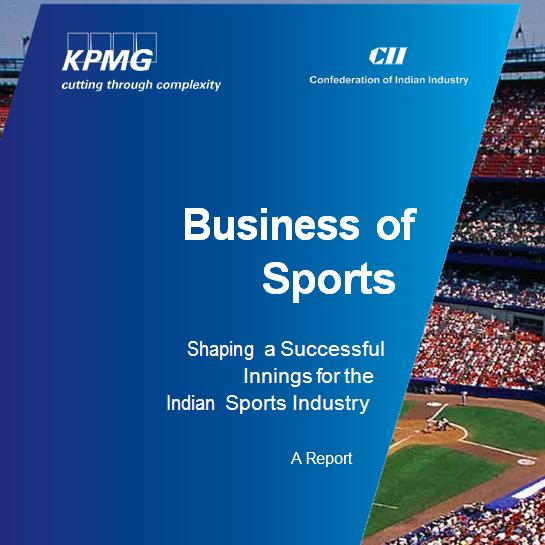
    MUMBAI: KPMG under the aegis of CII released a report titled Business of Sports – Shaping a Successful Innings for the Indian Sports Industry. The report identifies key issues in the sports ecosystem and explores measures to develop a private-investment led sporting scenario in the country – one that helps imbibe a sporting culture and achieve the country’s vision of excellence in sports.


    The report states that resource scarcity in India makes it difficult for the government to attain the above objectives and calls for collaborative efforts of both the government and private sector towards strengthening the sports ecosystem. Long term sustainability of commercial ventures in the Indian sports sector would require sustained audience interest driven by India’s winning performances at international sporting events.


    Sports not only boost the youth and instil pride among citizens, but also facilitate social and economic development of a nation. Sports sector is seen to have a significant socio-economic impact worldwide contributing to 1-5 per cent of national GDP.  This can be achieved by building a sporting culture in the country.


    However, in India sports is not recognised as an industry yet, limiting corporate investments except in cricket and a few other leagues. Being home to various upcoming leagues and the youngest population in the world, India’s sports sector offers tremendous growth potential.


    Ministry of Youth Affairs & Sports Secretary Ajit M Sharan, released the CII – KPMG report at the Scorecard 2014, CII’s National conference on Sports. 


    Earlier CII National Committee on Sports and Group (Asia) president and Coca Cola Company chairman Atul Singh highlighted Industry’s role of ‘going beyond Sponsorships and CSR activity and the need for a policy shift to recognize Sports as an industry’.  He said: “This would help actualise the India@75 vision for broad-basing sports in India, and promote excellence in Sports, by promoting infrastructure development, providing technical support for athletes, as well as grooming talented sportspersons”.


    “Corporate funding in sports may be the answer to ignite sports development in India. The gestation period for realizing return on such investments may be long, but global experience shows us that it could be potentially rewarding”, added KPMG partner in India Jaideep Ghosh.


    Global sports industry is estimated to be worth around $ 600 billion and growing at a rate higher than national gross domestic product rates around the world. While direct sports revenues are dominated by gate collections, sponsorships, media rights, the sports sector may comprise several segments such as sports tourism, sporting equipment manufacturing and retail, sports apparel, recreational sports, high school and college athletics, as well as associated businesses such as sports marketing, sports medicine, venues & infrastructure, hospitality and merchandising.


    Click here for the Key issues and recommendations

  • Chris Garbutt promoted to Chief Creative Officer of Ogilvy & Mather East

    Chris Garbutt promoted to Chief Creative Officer of Ogilvy & Mather East

    MUMBAI: Ogilvy & Mather announced today the promotion of Chris Garbutt to Chief Creative Officer of Ogilvy & Mather East. He is currently Chief Creative Officer for Ogilvy & Mather France and will transition into his new role by mid-year. He will be based in New York and report to North American Chief Creative Officer Steve Simpson.

    Garbutt will be responsible for driving the creative vision and delivery for clients across all of Ogilvy & Mather’s East disciplines, including advertising, customer engagement, public relations, digital, shopper marketing, branded content and entertainment. He will continue to work with many of the agency’s global brands and will also continue to sit on the agency’s Worldwide Creative Council.

    Chris first started his career at Ogilvy & Mather Johannesburg in 1995 then moved to TBWAHuntLascaris. He was European Creative Director at TBWAParis where he worked on Nissan, Sony Playstation and Absolut Vodka for five years. He re-joined Ogilvy & Mather France in 2008 as Executive Creative Director working on global campaigns for Dove, Perrier, Coca-Cola, IBM, Louis Vuitton and more. He is currently ranked in the top ten most awarded Chief Creative Officers in the world.

    Tham Khai Meng, Worldwide Chief Creative Officer stated: “Chris inspires, teaches and raises standards. His rare talent, relentless perseverance to always excel in the creative work and his proven leadership skills make him the ideal candidate for this newly created role. I have every confidence that Chris, working with our talented team in New York, will shine and take our office to the next level.”

    Commenting on his move to New York, Chris said, “One of the most exhilarating things about working at Ogilvy is the power of our global network and the opportunity to transcend regions and disciplines. The ability to continue to work with some of the world’s most respected brands but also create the new model agency of the future was something not to be missed.”

    “This is the age of the adaptable agency. Our work is changing daily, and it requires different talent and disciplines,” said Steve Simpson, North American Chief Creative Officer for Ogilvy & Mather. “This development plays to Ogilvy’s strengths. In this new role, Chris will only help us speed our progress and our own evolution.”

    He has worked with a variety of brands and categories, from radio stations to airlines; Volkswagen to BMW; Nando’s Restaurants to KFC; luxury to fast moving consumer goods. Chris’s significant award wins include numerous international awards from festivals such as Eurobest, Cannes Lions, D&AD, One Show, Clios, New York Festivals and the European Effie Awards.

  • Samsung is the most popular brand on social media in 2013

    Samsung is the most popular brand on social media in 2013

    NEW DELHI: Samsung was the most popular social-media brand worldwide in 2013, according to Starcount, which compiled data across Facebook, YouTube and other sites to come up with its top 10 list.

    Although Samsung was not the most popular brand on any particular social network, it earned 16 million new followers across multiple platforms in the past 12 months — enough to get data aggregator Starcount’s top spot.

    Walt Disney came in second place, largely due to a one-million-follower increase on Sina Weibo, a Chinese microblogging site.

    National Geographic grabbed the bronze after its top-rated YouTube channel got 160 million views this past year.

    Nike was viewed over 50 million times this year, while Google came next by earning over three million fans on Facebook taking its total following to more than 15 million.

    Coca Cola had 15 million people liking its Facebook page while over 58 million viewed its YouTube offerings.

    MTV had ten million new fans across Facebook, Twitter and Google after the MTV awards presentation.

    Facebook solidified its position as the top-most social media, with 16 million new fans on its own page in 2013.

    Instagram got sixteen million new fans during the year while YouTube had over three million new fans over Google during 2013.

  • Coca-Cola is all set to bring the Football Frenzy to India

    Coca-Cola is all set to bring the Football Frenzy to India

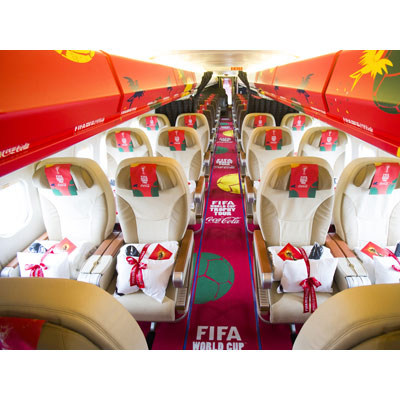
    MUMBAI: The Countdown has begun for the arrival of the ultimate FIFA World Cup™ Trophy Tour by Coca-Cola in Kolkata.


    Football fans will get a chance to dive into the madness of Football and be part of Football history with a once-in-a-lifetime photo op with the original, solid gold FIFA World Cup™.


    The Trophy is currently in Bhutan and is all set to fly to Kathmandu tomorrow, following which it will be coming down to Kolkatta for a 3-day football festivity


    Over the last one month, Kolkata has been living the football madness with celebrations across city paras and communities as part of Coca-Cola’s 2014 FIFA World Cup™ Campaign. Special events were held across the city in celebration of Kolkata’s passionate love for the game. Thousands of fans got the opportunity to win tickets to a special Trophy interaction open for consumers, to be held on 23rd December.


    The FIFA World Cup™ Trophy Tour by Coca-Cola is on its longest journey to date, visiting 88 countries over a span of 9 months.


    On this third global FIFA World Cup™ Trophy Tour by Coca-Cola, World Football’s greatest prize will be travelling 149,576.78 km (That’s 3.75 times round the world!!) reaching to over 800,000 people with this special Football experience.

    Did you know these facts about the Trophy ?
    · The Trophy bears the engraved years and name of each FIFA World Cup winner since 1974
    · The authentic, one of a kind FIFA World Cup™ Trophy weighs 6.175 kg and is made of solid 18ct Gold
    · The Trophy cannot be won outright – The winners receive a gold plated replica
    · The Trophy can only be held by former winners, current winners and the heads of State

  • DDB Mudra appoints Sambit Mohanty as creative head, North

    DDB Mudra appoints Sambit Mohanty as creative head, North

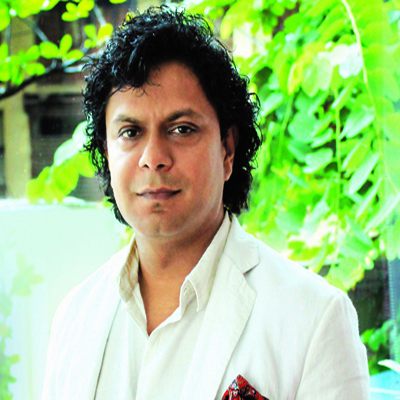
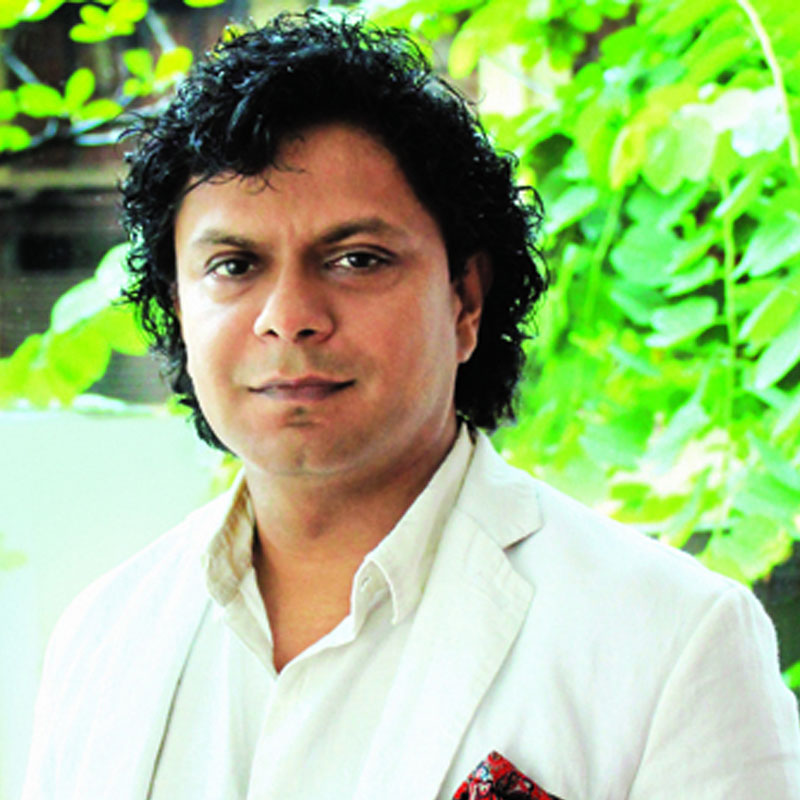
    MUMBAI: DDB Mudra has roped in Sambit Mohanty (fondly known as Sam) as creative head, North. Sambit will be based out of Delhi and will report in to DDB Mudra Group chairman and CCO Sonal Dabral.

    Sam joins DDB Mudra from McCann Erickson where he was executive creative director, New Delhi, instrumental in creating memorable work for Coca-Cola (Haan, Haan, Mein Crazy Hoon) and Aircel (Thoda Extra Milta Hai Toh Achcha Lagta Hai).

    With over 14 years in advertising and design, Sambit has worked with world-class brands in categories ranging from Telecom, Food & Beverage, Automotive, Retail, Media & Publications, Healthcare and Lifestyle. In his diverse career, Sam has been a part of well-known agencies including Leo Burnett, Publicis, Lowe and Elephant Design and worked on an envious list of clients such as Coca-Cola, GM, Nestle, HP, Pernod-Ricard, Virgin Mobile, Hitachi, Max Bupa, Godfrey Philips, The Indian Express, BBC World, Tanishq, Britannia, Reckitt-Benckiser and more.
    DDB Mudra Group chairman and CCO Sonal Dabral

    On joining DDB Mudra, Delhi, Sambit said: “It’s a privilege to be part of DDB’s creative culture that’s guided by play books not rule books. With Sonal’s help, I’m keen on creating a place where one looks forward to coming to work – even on a Monday morning. And also producing some glorious work along the way!

    An avid quizzer, Sambit is well-known on the Delhi quiz circuit. He has had the distinction of being a finalist in BBC Mastermind as well as a National winner of the Brand Equity Quiz.

    Sambit has won national and international awards including a Silver World Medal at New York Festivals. He has also been acknowledged by 4Ps business magazine as one of ‘India’s Gen-Next Creative Brains’.  
    DDB Mudra Delhi president Vandana Das

    DDB Mudra Group chairman and CCO Sonal Dabral said: “New Delhi is an extremely important market for us so I’m really happy that a talent like Sambit will lead our creative offering there. Sambit is among the rare breed of creative professionals in India who are equally comfortable with Hindi or English, with paper and pen or mouse and computer screen. I’m certain Sambit will play a big role in helping shape an exciting creative future for DDB Mudra Group.”

    DDB Mudra Delhi president Vandana Das added: “We have got to dot our “I”s in the creative business. I am looking at ushering, welcoming, embracing creative leadership in DDB Mudra Delhi through Sambit. He is a phenomenal talent and he has got the three Is – Inspiration, Imagination and Involvement. Many “I”s put together becomes “We” and I look forward to generating some more incredible work from our office.”

  • 9X Diaries

    9X Diaries

    WThere was a time when music channels meant only MTV and Channel [V]. Today however, many more names are jostling for space in this category, with the genre itself having changed significantly between then and now.

    9X as a group is now a profitable business says a confident Pradeep Guha

    It was precisely during this period of transition that 9X entered the fray. Launched in 2007 as INX Media, the company started operations with 9XM, later adding a Hindi GEC 9X, followed by an English news channel NewsX.

    In 2009, the English news channel was bought by Indi Media while the Hindi GEC was sold to Zee Entertainment Enterprises a year later. In August 2010, INX Media was renamed 9X Media with the focus completely on its music business.

    Looking back at what he calls a strategic decision, 9X Media managing director Pradeep Guha says: “Given the age demographic of India, music to my mind has immense potential both to connect with relevant audiences as content as well as engage with them as a medium. 9X as a group is now a profitable business.”

    Cut to the present: 9X Media is the country’s largest music network with five music channels including 9XM (latest Bollywood hits), 9XO (international music), 9X Jalwa (all time Bollywood hits), 9X Tashan (Punjabi) and 9X Jhakaas (Marathi).

    What ingredients make this successful recipe?

    9X Media executive vice president and new business head Punit Pandey analyses: “Three important things were taken into consideration. One the format, the fact that we deliver a unique format of music and humour with animation was and continues to be a key differentiator, something that the viewers took an immediate liking to. Secondly, Music curation, one of the most important factors towards viewers bookmarking their favourite music channel and lastly adoption of the second screen. We have been able to successfully adopt the second screen as core TG is the youth who consumes music not just on the television but also on their computers and mobile phones.”

    The network wanted to be unique and hence, chose to go vertical by building a robust music network rather than going horizontal. The network knew it had to fulfill the needs of hardcore music enthusiasts and hence, the objective was to build a robust music vertical. Presently, over 15 people are working hard to deliver the best results in the digital space.
    9X Portfolio

    Among other achievements, 9X Media won Gold at the Communicator Awards, Silver at the W3 Awards and Bronze at the IDMA 2013 for its gaming app called ‘Stop that Silly’.

    9XM

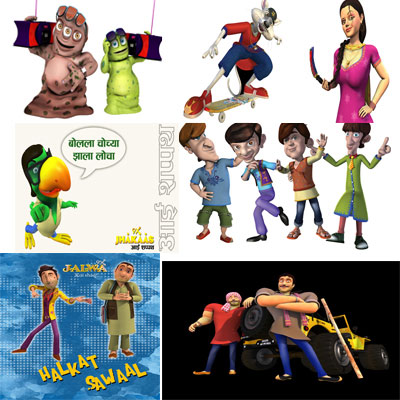
    The network launched its first offering, 9XM, in 2007. 9XM targets youngsters’ needs and attitudes and has created a niche for itself in music and entertainment. It airs the latest Hindi film songs interspersed with jokes and anecdotes belted out by its animated characters, including Bade and Chote, Bheegi Billi, Badshah Bhai and The Betul Nuts.

    About the thought process behind these characters that have created a special place in viewers’ hearts, Pandey explains: “Back in 2007, when we thought of constructing a music channel, we clearly saw a huge gap in terms of a pure music channels. The so-called music channels then, were airing reality shows and all other content but music.  We said lets construct a music channels which delivers best curated music and to build stickiness, we introduced humour with animation.At the end in a music channel, you don’t appoint yourself to watch a half an hour show. You tune into a video, you like or you don’t like it, and walk out.”

    Presently, 9XM has nearly 3.5 million fans on facebook, thanks to it being a one-stop shop for Bollywood news, humour and gossip presented in a different manner. On twitter though, 9XM has just over 15,000 followers and on YouTube too, it has a bit more than 14,000 subscribers.

    9XM was the country’s first music channel to stream content live on its website, www.9xm.in and across mobile TV platforms. The channel launched games and applications for iPad and iPhone users, with fans of its animated characters able to download their favourite games including the Angry 9XM Heroes, Silly Chicken and Talking Silly Chicken from the IOS App store.

    9X Jalwa

    9X Media launched its other Hindi music channel last year. Touted as a ‘timeless Bollywood music channel’, 9X Jalwa plays back to back Bollywood music from the mid-sixties till 2000s, coupled with humour-led interstitials by characters and trivia-based slate shows.

    What is important in today_s world is to adopt all the screens that your consumers have adopted, says Punit Pandey

    9X Jalwa’s official facebook page boasts more than 73,000 likes while there were only 580 followers on twitter at the time of penning this article. Apart from the usual animated characters, there are two specially designed for Jalwa called Halkat Sawaal that feature on the channel’s YouTube page.

    So why does 9X Media focus on the digital platform? “What is important in today’s world is to adopt all the screens that your consumers have adopted. Having a website is a plus point, but that is not how you build your community. You have to build your community in the digital world, through creating facebook pages and keeping your YouTube pages eye-catching,” reveals Pandey, adding that they are pretty well-established in the space.

    Speaking of a 9X Media staple – animated characters, apparently, all the ideation, scripting, jokes and PJs are done by the channel whereas animation and lighting is handled by Prime Focus. Says Prime Focus senior vice president – films and commercials India Niraj Sanghai: “We have a team of 60-65 members dedicated to work for 9XM. The creative team at 9XM is doing a good job, ideating the whole script, characters and jokes that they are working on and the PJs that they crack. We are basically transforming their ideas into reality. We deliver 75 hours of animation content every month. We are tremendously happy with the response we are getting from people. The fact that people love these characters and adore them is a sign of our efforts being appreciated.”

    9XM is spending an estimated Rs 10-12 crore per year on these characters and plans are afoot to introduce yet another character by the name Billi Don.

    9X Tashan

    9X Media’s first offering in the regional music space, 9X Tashan, targets free-spirited Punjabi viewers, playing hit contemporary Punjabi music 24×7.

    What was the thought behind going regional? “Content growing out of a region is extremely liked. A consumer wanting to consume content originating from their region has become very popular. Taking this into consideration, we thought of expanding our footprint in the regional space also,” reasons Pandey informing about the regional animated characters called Bhabhi and Jhat and Jhaat.

    9X Tashan’s official facebook page boast around 273,480 likes with over thousands of people talking about it. By contrast, it has only 848 followers on twitter.

    9X Jhakaas

    The network launched Maharashtra’s first Marathi music channel on 31 October, 2011. 9X Jhakaas airs the best Marathi film and non-film songs including lavanis and other traditional forms, apart from rib-tickling short-format animated shows that are extremely popular among viewers. Targeted at confident and go-getter Maharashtrians across India, 9X Jhakaas promises its audience a Jhakaas experience. One of the talking points is the channel’s animated character Chochya.

    9X Jhakaas is available across cable and satellite homes and also streamed live on the website www.9xjhakaas.in. While it doesn’t have much of a presence on twitter, its official facebook page has 118,299 likes.


    9XO

    The sixth and only international music channel from 9X Media, 9XO airs contemporary music from across the globe and is targeted at up-scale urban youth. The channel’s website www.9xo.in engages users by helping them create their own playlists with selected songs and share them with others.

    Significantly, 9XO has more than 23,000 followers on twitter while its official facebook page boasts an outstanding 253,780 likes.

    Brands piggyback on animated characters

    9X Media’s animated characters are a big draw for advertisers, who want to cash in on them to promote various brands.

    We are basically transforming their ideas into reality, says Niraj Sanghai

    “Animation provides an out-of-the-box feel to the brand, increasing the brand’s recall value. Animated characters break the monotony created by the innumerable human faces and their equally high number of associations with a variety of brands. Besides, animated characters come out as neutral, unbiased entities,” says Pandey.

    A majority of big brands including Cadburys (Gems), Coca Cola India (Coke), Idea Cellular, ITC (Vivel Deo Soap), Gelusil, Dabur (Hajmola), Lux Cozy Innerwear, Veedol, HUL (Cornetto and Ponds), etc have effectively used 9XM’s popular character episodes for product integrations.

    For instance, Bheegi Billi is often seen strumming his guitar and talking about his experience with brands like Cadbury’s Gems, Sprite, Minutemaid, Kwality Walls Cornetto and Lux Cozi. 
    Similarly, the Betul Nuts are also seen doing sher-o-shayari about Gelusil Antacids, Coke etc.

    Coming to the moot question, how has the journey been for the network so far? “9X Media is doing decently well since 2007. We are on track as far as our plans are concerned,” says Pandey.


    On the other hand, a highly-placed music professional feels that the network is capable of producing content a lot more. “I feel the network has not reached that stage where we can say yes it is the best from the rest. They need to focus more on their regional outlets, where the network is currently not doing so well. If that happens, then I am sure it will work wonders for them.”
  • ‘Best Corporate Consultancy in the World 2013

    ‘Best Corporate Consultancy in the World 2013

    MSLGROUP, Publicis Groupe’s strategic communications and engagement consultancy, was named the ‘Best Corporate Consultancy in the World 2013’ by The Holmes Report, one of the most authoritative commentators in the communications industry. The recognition is a testimony to the consultancy’s strengths in helping its clients establish, protect and expand their business through strategic reputation management and corporate advisory practices.


    Paul Holmes, editor of The Holmes Report, said of the award, “MSLGROUP has quietly pulled together one of the most formidable corporate capabilities in the world…providing an impressive range of financial communications and corporate and public affairs counsel.” This highly prestigious acknowledgment comes within weeks after The Holmes Report appointed MSLGROUP as ‘Asia-Pacific Consultancy of the Year.’


    Glenn Osaki, Asia President, MSLGROUP, said: “In Asia, more and more of our clients are turning to MSLGROUP for higher value communications advisory. This has given us the opportunities to provide counsel beyond communicating a business strategy but for the shaping of it. To ensure that we stay close to our clients’ business, we have focused on strengthening our Strategic Communications Advisory in Asia, including investing to ensure that we have the strongest talent in public affairs and government relations in China, India and Singapore, as well as establishing our regional Financial Communications practice in Hong Kong in 2012.”


    Highlights from MSLGROUP in Asia include multiple high-level and cross-market advisory work across the region for clients including P&G, Coca-Cola, Walmart, Business Software Alliance, and Invest in France Agency. MSLGROUP is playing a large role to provide integrated communications for leading companies in India, including Dell and United Technologies (UTC). The China team regularly advises C-suite executives on all issues related to communications with significant impact on business strategy, including its 15+ year client, IKEA. Since 1997, Genedigi Group in China has been providing strategic public affairs and corporate communications counsel to a large number of Fortune 500 companies and Chinese firms.


    On the global scale, examples of MSLGROUP’s world-class advisory includes its strategic corporate counsel for UTC across its diversified aerospace and building systems industries, which has helped UTC to become one of the most admired companies in the world; a 15-market thought leadership and public affairs campaign for the World Gold Council; Kekst’s work on the American Airlines bankruptcy and subsequent merger with US Airways; reputation and issues management for Google in Germany and Italy; and CNC’s work on the Vodafone/KDG takeover and Lufthansa’s sale of BMI to British Airways.


    Olivier Fleurot, CEO of MSLGROUP commented, “We have long believed in the power of a holistic and truly global group offering that is based around the expertise of best-in-class regional entrepreneurs. Knitting these units together with our dynamic teams in the fast-growing economies of India and Brazil is providing us with a leading edge for our clients worldwide today.”

  • Anatomy of the top 100 brands 2013

    Anatomy of the top 100 brands 2013

    MUMBAI: This year, Apple has re-written history by replacing Coca-Cola, the number one brand for the past 13 years, as the new numero uno in the coveted top 100 global brands announced by brand consultancy, Interbrand.

    Interestingly, it’s not as if Coca-Cola got it wrong this time round. Rather, the FMCG brand has been on a successful spree; winning awards, launching brilliant campaigns, and engaging people in popular initiatives like Coke Studio. Just that technology and new media have emerged leaders this year.
    Ashish Mishra says the report tries to find an answer to who really leads the brand the marketer or the consumer, or both

    Says Interbrand India managing director Ashish Mishra: “If we look at the top five or ten, its technology and new media which is leading the pack and this is the trend all across.”

    The top 10 brands convey a message: A brand today has got to be all about the people. And how anticipation, co creation, conversation, innovation, investment in people & big data, strategic CSR and new leadership is the new way ahead. Mishra goes on to say that Apple has climbed the charts because of the Apple culture is has fashioned across the globe.

    East is East, West is West

    What emerges from the list is that most of the top 100 brands belong to the Western world. So is it to do with our white fixation or the fact that brands from the US, UK, Germany or France have made a name for themselves globally?

    “A brand needs to be where the top 10 GDPs are,” says Ashish, adding that apart from the brands’ financial performance, their role in influencing consumer choice, the strength they command as also recognition across the globe are important factors while determining their value.

    What is more unfortunate is that no Indian brand figures in the top 100. The consultancy reasons it’s all about diversification.

    Mishra explains that post Independence, India grew at a fast clip while business grew in various directions. For example, Tata today means different things i.e. Tata Steel, Tata Motors, TCS etc. to different people. Ditto for other Indian conglomerates, which diversified into different brands and sub-brands, which in turn grew bigger than the mother brand in some cases.

    “An organisational structure is important and somewhere down the line, custody of sub-brands was handed over to people (CEOs, CMOs, CFOs etc) who took charge but forgot to work towards the mother brand,” says Mishra of the irony of the Indian market.

    The agency is helping many companies in India to bridge the gap and be part of the global brands. And to achieve it, the agency feels the companies need to have an inside-outside perspective wherein they need to go to the right markets after creating a name for themselves here as well as compete with the global counterparts on the same parameters.

    Media not so savvy

    Of the top 100, the only media brands are Disney, Thomson Reuters, Discovery (new entrant this year) and MTV. Implying that while media may be the most influential opinion maker for readers and viewers, it somehow fails to impress brand creators.
    While the consultancy does evaluate media brands excluding publishing houses, very few made it to the list. Also, the consultancy made an exception for India and China by taking into consideration government-owned brands because of their sheer number in these countries.

    “The names in the list are the most influential brands globally. But if you look at the media in a broader context, then many other brands too would be included. For example, Facebook,” says Ashish. Incidentally, the top 30 brands evaluated by the consultancy in India did not have a single name from the media.
    Whatever may be the case, the names that figure on the list demonstrate that these brands have indeed managed to deliver meaningful and seamless experiences across all platforms and touch points.

  • Anatomy of the top 100 brands 2013

    Anatomy of the top 100 brands 2013

    MUMBAI: This year, Apple has re-written history by replacing Coca-Cola, the number one brand for the past 13 years, as the new numero uno in the coveted top 100 global brands announced by brand consultancy, Interbrand.

    Interestingly, it’s not as if Coca-Cola got it wrong this time round. Rather, the FMCG brand has been on a successful spree; winning awards, launching brilliant campaigns, and engaging people in popular initiatives like Coke Studio. Just that technology and new media have emerged leaders this year.

    Ashish Mishra says the report tries to find an answer to who really leads the brand the marketer or the consumer, or both

    Says Interbrand India managing director Ashish Mishra: “If we look at the top five or ten, its technology and new media which is leading the pack and this is the trend all across.”

    The top 10 brands convey a message: A brand today has got to be all about the people. And how anticipation, co creation, conversation, innovation, investment in people & big data, strategic CSR and new leadership is the new way ahead. Mishra goes on to say that Apple has climbed the charts because of the Apple culture is has fashioned across the globe.

    East is East, West is West

    What emerges from the list is that most of the top 100 brands belong to the Western world. So is it to do with our white fixation or the fact that brands from the US, UK, Germany or France have made a name for themselves globally?

    “A brand needs to be where the top 10 GDPs are,” says Ashish, adding that apart from the brands’ financial performance, their role in influencing consumer choice, the strength they command as also recognition across the globe are important factors while determining their value.

    What is more unfortunate is that no Indian brand figures in the top 100. The consultancy reasons it’s all about diversification.

    Mishra explains that post Independence, India grew at a fast clip while business grew in various directions. For example, Tata today means different things i.e. Tata Steel, Tata Motors, TCS etc. to different people. Ditto for other Indian conglomerates, which diversified into different brands and sub-brands, which in turn grew bigger than the mother brand in some cases.

    “An organisational structure is important and somewhere down the line, custody of sub-brands was handed over to people (CEOs, CMOs, CFOs etc) who took charge but forgot to work towards the mother brand,” says Mishra of the irony of the Indian market.

    The agency is helping many companies in India to bridge the gap and be part of the global brands. And to achieve it, the agency feels the companies need to have an inside-outside perspective wherein they need to go to the right markets after creating a name for themselves here as well as compete with the global counterparts on the same parameters.

    Media not so savvy

    Of the top 100, the only media brands are Disney, Thomson Reuters, Discovery (new entrant this year) and MTV. Implying that while media may be the most influential opinion maker for readers and viewers, it somehow fails to impress brand creators.
    While the consultancy does evaluate media brands excluding publishing houses, very few made it to the list. Also, the consultancy made an exception for India and China by taking into consideration government-owned brands because of their sheer number in these countries.

    “The names in the list are the most influential brands globally. But if you look at the media in a broader context, then many other brands too would be included. For example, Facebook,” says Ashish. Incidentally, the top 30 brands evaluated by the consultancy in India did not have a single name from the media.
    Whatever may be the case, the names that figure on the list demonstrate that these brands have indeed managed to deliver meaningful and seamless experiences across all platforms and touch points.

    Click here for Interbrand‘s Best 100 Global Brands

  • Anatomy of the top 100 brands 2013

    Anatomy of the top 100 brands 2013

    MUMBAI: This year, Apple has re-written history by replacing Coca-Cola, the number one brand for the past 13 years, as the new numero uno in the coveted top 100 global brands announced by brand consultancy, Interbrand.


    Interestingly, it’s not as if Coca-Cola got it wrong this time round. Rather, the FMCG brand has been on a successful spree; winning awards, launching brilliant campaigns, and engaging people in popular initiatives like Coke Studio. Just that technology and new media have emerged leaders this year.


    Says Interbrand India managing director Ashish Mishra: “If we look at the top five or ten, its technology and new media which is leading the pack and this is the trend all across.”


    The top 10 brands convey a message: A brand today has got to be all about the people. And how anticipation, co creation, conversation, innovation, investment in people & big data, strategic CSR and new leadership is the new way ahead. Mishra goes on to say that Apple has climbed the charts because of the Apple culture is has fashioned across the globe.


    East is East, West is West


    What emerges from the list is that most of the top 100 brands belong to the Western world. So is it to do with our white fixation or the fact that brands from the US, UK, Germany or France have made a name for themselves globally?


    “A brand needs to be where the top 10 GDPs are,” says Ashish, adding that apart from the brands’ financial performance, their role in influencing consumer choice, the strength they command as also recognition across the globe are important factors while determining their value.


    What is more unfortunate is that no Indian brand figures in the top 100. The consultancy reasons it’s all about diversification.


    Mishra explains that post Independence, India grew at a fast clip while business grew in various directions. For example, Tata today means different things i.e. Tata Steel, Tata Motors, TCS etc. to different people. Ditto for other Indian conglomerates, which diversified into different brands and sub-brands, which in turn grew bigger than the mother brand in some cases.


    “An organisational structure is important and somewhere down the line, custody of sub-brands was handed over to people (CEOs, CMOs, CFOs etc) who took charge but forgot to work towards the mother brand,” says Mishra of the irony of the Indian market.


    The agency is helping many companies in India to bridge the gap and be part of the global brands. And to achieve it, the agency feels the companies need to have an inside-outside perspective wherein they need to go to the right markets after creating a name for themselves here as well as compete with the global counterparts on the same parameters.


    Media not so savvy


    Of the top 100, the only media brands are Disney, Thomson Reuters, Discovery (new entrant this year) and MTV. Implying that while media may be the most influential opinion maker for readers and viewers, it somehow fails to impress brand creators.
    While the consultancy does evaluate media brands excluding publishing houses, very few made it to the list. Also, the consultancy made an exception for India and China by taking into consideration government-owned brands because of their sheer number in these countries.


    “The names in the list are the most influential brands globally. But if you look at the media in a broader context, then many other brands too would be included. For example, Facebook,” says Ashish. Incidentally, the top 30 brands evaluated by the consultancy in India did not have a single name from the media.
    Whatever may be the case, the names that figure on the list demonstrate that these brands have indeed managed to deliver meaningful and seamless experiences across all platforms and touch points.