Tag: COAI

  • Airtel, Vodafone lead market; UP East adds max subs

    Airtel, Vodafone lead market; UP East adds max subs

    MUMBAI: Witnessing a healthy growth in telecom penetration, the GSM subscriber base in the country grew to 801.81 million in November 2016. COAI, the association of mobile telephony service providers in the country, which released the November GSM subscriber base numbers, has said the number of GSM subscribers witnessed a jump of 10.18 million as compared to the previous month.

    Telecom industry’s steady growth was recorded in net subscriber additions from 2.09 million in August to 10.18 million in November.

    Amongst the telecom companies, Bharti Airtel continued to hold on to the pole position in November, adding another 1.08 million additional subscribers during the month to take its total subscriber base to 263.35 million mobile subscribers. Closely followed by Vodafone with 202.79 million subscribers and Idea Cellular with 187.68 million subscribers. With 32.84%, Bharti Airtel owns the maximum market share in the industry.

    The report, which also assesses the growth of mobile subscribers across various circles in India said, UP East added the maximum number of subscribers (73.82 million) in November and Idea added the maximum number of subscribers (7.43 million) in November.

    Talking about the growth in the subscriber base, COAI director-general Rajan S Mathews said, “The telecommunication industry has again posted a good growth for the month of November 2016. It is heartening to see that the industry is showing signs of a robust growth and we have again moved ahead in ensuring complete connectivity at all levels. Telecom companies have been contributing towards fulfilling the government’s vision of Digital India since beginning and we will continue bridge the digital divide for a fully connected and digitally empowered India.”

    Speaking about the impact made by the telecom industry, he added, “We are an enabler of comprehensive growth. The industry has also ensured that the government’s plans reach even the farthest corners of the country and everyone is equally benefitted from the digital revolution.”

  • Jio extends HNY free data offer up to 31 March ’17

    Jio extends HNY free data offer up to 31 March ’17

    MUMBAI: Taking a significant lead over the incumbent telecom operators, Reliance Industries Ltd (RIL) chairman and managing director Mukesh Ambani today showed some more `datagiri’ while announcing a slew of new offers and initiatives that all had an underline themes of Digital 2017 and Happy New Year (HNY).

    Ambani, while addressing RIL employees and stakeholders in a meeting, revealed that starting 4 December 2016, every new Jio user will get data, voice, video and the full bouquet of Jio applications free till 31 March, 2017. He also added that all the existing customers will get extended benefits of Jio Happy New Year offer on the existing SIMs.

    Speaking about Jio’s success, India’s richest man said that it was the fastest-growing technology company in the world. He said that the e-KYC (know your customer or the customer verification process) allowed the activation of SIM within five minutes — the fastest experience for SIM activation in the world.

    Ambani said that Jio successfully rolled out e-KYC across 200,000 outlets in India, which is nearly equal to ATMs in India. “We are in the process of doubling this network to 400,000 digitally enabled outlets by March of 2017,” he added.

    RIL CMD also mentioned that, in the first three months, Jio has grown faster than Facebook, Whatsapp or Skype. “In 83 days, Jio added 50 million customers on its 4G LTE all-IP wireless broadband network.”

    However, swelling subscriber numbers are also a burden on the infrastructure; especially when 50 million+ customers vie to take full advantage of the free Jio `Welcome Offer.”
    On an average, a Jio customer, as per claims, is using 25 times more data than the average Indian broadband user. And, Jio signed up over 600,000 customers every day for the past three months. According to Ambani, a Jio customer today is consuming data “on par” with and, in many cases, “more” than sophisticated users anywhere in the world.

    Still, admitting that Reliance has found out few issues with data speed on Jio network, Ambani said that about eight per cent of Jio towers experienced “congestion” due to “abnormally high data usage, which resulted in customers served by such telecom towers experienced lower data speeds.

    “While 92 per cent of our base stations and customers have been experiencing consistently high data speeds, we are working to de-congest these eight per cent towers, so that impacted customers go back to experiencing true-4G speeds. On the whole, Jio is not only delivering four times more data than all other Indian telecom operators combined, but also much faster throughputs than any other mobile network in India.”

    Reliance Jio, which has been at loggerheads with other telecom operators and also the telcos’ apex industry body COAI, is now playing the customer card having announced expansions and new initiatives like digital wallet/money.

    Dwelling on indifferent to bad voice services on Jio network, Ambani took a pot-shot at competition: “While customers have shown unprecedented love for Jio services, we have not received the required support from existing operators. In the last three months, nearly 9000 million voice calls from Jio customers to the networks of our three largest competitors were blocked… We thank the government and regulator for enforcing the licence conditions.”

    Targeting the high-end customers, who, probably, don’t have time to go to a Jio store to acquire a SIM card and want to retain their existing phone numbers, Reliance is offering SIM delivery at home and full number portability. “I am happy to inform that Jio now fully supports mobile number portability,” Ambani said, adding free home delivery and e-KYC features were being launched across India through the MyJio application to be available in the top 100 cities by 31 December 2016.

  • Jio extends HNY free data offer up to 31 March ’17

    Jio extends HNY free data offer up to 31 March ’17

    MUMBAI: Taking a significant lead over the incumbent telecom operators, Reliance Industries Ltd (RIL) chairman and managing director Mukesh Ambani today showed some more `datagiri’ while announcing a slew of new offers and initiatives that all had an underline themes of Digital 2017 and Happy New Year (HNY).

    Ambani, while addressing RIL employees and stakeholders in a meeting, revealed that starting 4 December 2016, every new Jio user will get data, voice, video and the full bouquet of Jio applications free till 31 March, 2017. He also added that all the existing customers will get extended benefits of Jio Happy New Year offer on the existing SIMs.

    Speaking about Jio’s success, India’s richest man said that it was the fastest-growing technology company in the world. He said that the e-KYC (know your customer or the customer verification process) allowed the activation of SIM within five minutes — the fastest experience for SIM activation in the world.

    Ambani said that Jio successfully rolled out e-KYC across 200,000 outlets in India, which is nearly equal to ATMs in India. “We are in the process of doubling this network to 400,000 digitally enabled outlets by March of 2017,” he added.

    RIL CMD also mentioned that, in the first three months, Jio has grown faster than Facebook, Whatsapp or Skype. “In 83 days, Jio added 50 million customers on its 4G LTE all-IP wireless broadband network.”

    However, swelling subscriber numbers are also a burden on the infrastructure; especially when 50 million+ customers vie to take full advantage of the free Jio `Welcome Offer.”
    On an average, a Jio customer, as per claims, is using 25 times more data than the average Indian broadband user. And, Jio signed up over 600,000 customers every day for the past three months. According to Ambani, a Jio customer today is consuming data “on par” with and, in many cases, “more” than sophisticated users anywhere in the world.

    Still, admitting that Reliance has found out few issues with data speed on Jio network, Ambani said that about eight per cent of Jio towers experienced “congestion” due to “abnormally high data usage, which resulted in customers served by such telecom towers experienced lower data speeds.

    “While 92 per cent of our base stations and customers have been experiencing consistently high data speeds, we are working to de-congest these eight per cent towers, so that impacted customers go back to experiencing true-4G speeds. On the whole, Jio is not only delivering four times more data than all other Indian telecom operators combined, but also much faster throughputs than any other mobile network in India.”

    Reliance Jio, which has been at loggerheads with other telecom operators and also the telcos’ apex industry body COAI, is now playing the customer card having announced expansions and new initiatives like digital wallet/money.

    Dwelling on indifferent to bad voice services on Jio network, Ambani took a pot-shot at competition: “While customers have shown unprecedented love for Jio services, we have not received the required support from existing operators. In the last three months, nearly 9000 million voice calls from Jio customers to the networks of our three largest competitors were blocked… We thank the government and regulator for enforcing the licence conditions.”

    Targeting the high-end customers, who, probably, don’t have time to go to a Jio store to acquire a SIM card and want to retain their existing phone numbers, Reliance is offering SIM delivery at home and full number portability. “I am happy to inform that Jio now fully supports mobile number portability,” Ambani said, adding free home delivery and e-KYC features were being launched across India through the MyJio application to be available in the top 100 cities by 31 December 2016.

  • TRAI’s CDR idea rejected; Govt to look into Rs 3050 cr penalty

    TRAI’s CDR idea rejected; Govt to look into Rs 3050 cr penalty

    MUMBAI: The telecom ministry has formed a committee to look into TRAI’s penalty suggestion on Vodafone, Airtel and Idea as they allegedly failed to provide sufficient inter-connect points (PoI) to Reliance Jio, leading to severe call drops.

    Telecom operators across GSM and CDMA platforms meantime turned down TRAI’s recommendation of computing call drop rates through a meta data analysis of CDRs (call detail records). This, TRAI asserted, has been designed for billing purpose only, and not for checking quality of service. Such an analysis, the operators said, would project a flawed picture as abnormal call disconnects/terminations could be triggered by handsets getting turned off due to other errors, or due to battery draining out or a subscriber moving to an underground building or a station.

    Cellular Operators Association of India (COAI) represented the operators, the Economic Times reported.

    On the the hand, the union telecom minister Manoj Sinha said the ministry has formed the committee to look into the regulator’s recommendation on the proposed Rs 3,050 crore penalty, Business Standard reported. Last month, the regulator had proposed the penalty on the three telcos.

    Lately however Reliance Jio has been allegedly limiting all voice calls to 30 minutes. As a part of Jio’s free Welcome Offer, users were allowed unlimited voice calls. However, lately, the calls were being abruptly disconnected after a duration of 30 minutes, which is not an isolated case.

    The regulator had earlier sent a letter to the Department of Telecommunications recommending a charge of Rs 50 crore per circle for 21 service areas, except for Jammu & Kashmir, for Airtel and Vodafone. For Idea Cellular, TRAI suggested penalty for 19 circles.

    At the meeting of BRICS Ministers of Communications, Sinha said that the committee would give its considerations on the TRAI suggestion.

    The regulator’s suggestion came after Reliance Jio complained that more than 75 per cent of the calls on its network were dropping since the incumbent operators were not giving sufficient PoIs. The regulator stated that the incumbents went “against public interest.”

  • TRAI’s CDR idea rejected; Govt to look into Rs 3050 cr penalty

    TRAI’s CDR idea rejected; Govt to look into Rs 3050 cr penalty

    MUMBAI: The telecom ministry has formed a committee to look into TRAI’s penalty suggestion on Vodafone, Airtel and Idea as they allegedly failed to provide sufficient inter-connect points (PoI) to Reliance Jio, leading to severe call drops.

    Telecom operators across GSM and CDMA platforms meantime turned down TRAI’s recommendation of computing call drop rates through a meta data analysis of CDRs (call detail records). This, TRAI asserted, has been designed for billing purpose only, and not for checking quality of service. Such an analysis, the operators said, would project a flawed picture as abnormal call disconnects/terminations could be triggered by handsets getting turned off due to other errors, or due to battery draining out or a subscriber moving to an underground building or a station.

    Cellular Operators Association of India (COAI) represented the operators, the Economic Times reported.

    On the the hand, the union telecom minister Manoj Sinha said the ministry has formed the committee to look into the regulator’s recommendation on the proposed Rs 3,050 crore penalty, Business Standard reported. Last month, the regulator had proposed the penalty on the three telcos.

    Lately however Reliance Jio has been allegedly limiting all voice calls to 30 minutes. As a part of Jio’s free Welcome Offer, users were allowed unlimited voice calls. However, lately, the calls were being abruptly disconnected after a duration of 30 minutes, which is not an isolated case.

    The regulator had earlier sent a letter to the Department of Telecommunications recommending a charge of Rs 50 crore per circle for 21 service areas, except for Jammu & Kashmir, for Airtel and Vodafone. For Idea Cellular, TRAI suggested penalty for 19 circles.

    At the meeting of BRICS Ministers of Communications, Sinha said that the committee would give its considerations on the TRAI suggestion.

    The regulator’s suggestion came after Reliance Jio complained that more than 75 per cent of the calls on its network were dropping since the incumbent operators were not giving sufficient PoIs. The regulator stated that the incumbents went “against public interest.”

  • Jio 4G to erect 45,000 towers; more the merrier, says COAI

    Jio 4G to erect 45,000 towers; more the merrier, says COAI

    MUMBAI: Late entrant telecom operator Reliance Jio will erect around 45,000 mobile towers in the next six months to boost its 4G network.

    Telecom lobbying body COAI meanwhile stated that it has established around 129,101 base transceiver stations (BTSs) across India to tackle call drops on networks.

    Reliance Jio in meeting with the telecom minister Manoj Sinha has committed to erect 45,000 crore mobile towers in six months to further strengthen its network. The company has said that it has plans to invest Rs 1 lakh crore over a period of four years and the new towers are part of this investment, PTI has reported.

    Reliance Jio reportedly informed Sinha that it has already invested Rs 1.6 lakh crore in the networks and installed 2.82 lakh base stations across India covering 18,000 cities and two lakh villages.

    Jio said that it has made all efforts to provide good consumer experience but non-availability of point of interconnection from Airtel, Vodafone and Idea has led to high call failure rate on its network. Sinha then directed the telecom operators to resolve PoI issue among themselves at the earliest.

    Telecom regulator TRAI had recommended Rs 3,050 crore penalty on Airtel, Vodafone and Idea Cellular holding them responsible for congestion in RJIL network. TRAI chairman RS Sharma has asked the incumbent operators to mutually resolve interconnection issue at the earliest and warned action against those found liable for poor service quality benchmark around network congestion, call drop etc.

    Consisting largely of India’s GSM operators, COAI members are said to have invested Rs 12,000 crore for installing these BTSs. The 100-day-plan to install BTSs was reportedly completed last month. TRAI’s Independent Drive Tests (IDTs) conducted between December 2015 and January 2016 revealed that call drop rates in cities like Mumbai, Pune, Delhi were much above the permissible limits. The limits are set at 2% by the regulator.

  • Jio 4G to erect 45,000 towers; more the merrier, says COAI

    Jio 4G to erect 45,000 towers; more the merrier, says COAI

    MUMBAI: Late entrant telecom operator Reliance Jio will erect around 45,000 mobile towers in the next six months to boost its 4G network.

    Telecom lobbying body COAI meanwhile stated that it has established around 129,101 base transceiver stations (BTSs) across India to tackle call drops on networks.

    Reliance Jio in meeting with the telecom minister Manoj Sinha has committed to erect 45,000 crore mobile towers in six months to further strengthen its network. The company has said that it has plans to invest Rs 1 lakh crore over a period of four years and the new towers are part of this investment, PTI has reported.

    Reliance Jio reportedly informed Sinha that it has already invested Rs 1.6 lakh crore in the networks and installed 2.82 lakh base stations across India covering 18,000 cities and two lakh villages.

    Jio said that it has made all efforts to provide good consumer experience but non-availability of point of interconnection from Airtel, Vodafone and Idea has led to high call failure rate on its network. Sinha then directed the telecom operators to resolve PoI issue among themselves at the earliest.

    Telecom regulator TRAI had recommended Rs 3,050 crore penalty on Airtel, Vodafone and Idea Cellular holding them responsible for congestion in RJIL network. TRAI chairman RS Sharma has asked the incumbent operators to mutually resolve interconnection issue at the earliest and warned action against those found liable for poor service quality benchmark around network congestion, call drop etc.

    Consisting largely of India’s GSM operators, COAI members are said to have invested Rs 12,000 crore for installing these BTSs. The 100-day-plan to install BTSs was reportedly completed last month. TRAI’s Independent Drive Tests (IDTs) conducted between December 2015 and January 2016 revealed that call drop rates in cities like Mumbai, Pune, Delhi were much above the permissible limits. The limits are set at 2% by the regulator.

  • Ambani’s disruptive digital India  Jio “datagiri” gameplan

    Ambani’s disruptive digital India Jio “datagiri” gameplan

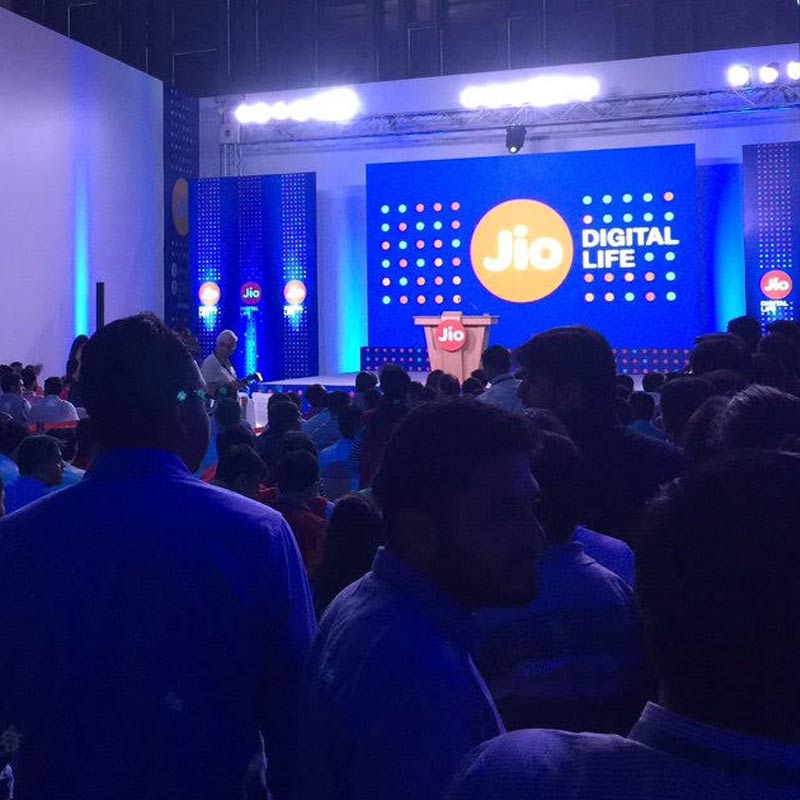
    MUMBAI: The Mukesh Ambani-promoted Reliance Industries Ltd on 1 September unveiled ‘datagiri’ (dominace via data services) coupled with disruptive marketing tactics in classic Reliance style — all dedicated to Prime Minister Modi’s Digital India dream.

    And while Ambani enumerated the many features of Reliance Jio service, the group’s telecoms and value-added services company, for about 45 minutes in a speech at RIL’s AGM here, there was mayhem on the stock markets. Crores of rupees were wiped off in fortunes as share prices of incumbent telcos tumbled. An analysis by a business news paper estimated that many listed telecoms companies, including younger brother Anil Ambani’s Reliance Communications, lost over Rs 11,0000 crore on the markets.

    While the stock markets were witnessing a bloodbath, Ambani told his shareholders, “In the journey of time, there comes a few life changing movements. Our Prime Minister Shri Narendra Modi’s inspiring vision of a “Digital India” is one such movement. Jio is dedicated to realizing our Prime Minister’s vision for 1.2 billion Indians. Jio will give the `power of data’ to each Indian to fulfill every dream and to collectively take India to global digital leadership.”

    Sample some facts: free voice call for Jio customers; data at almost 1/10the the price of those prevailing now; no roaming charges; one million Wi-Fi hotspots around the country by middle of next year; 100 per cent VolTe network that allows simultaneous usage of voice and data services; all customers to get freebies of voice calls, data usage and  video streaming totally free 5 September to 31 December, 2016; a 4G network coverage of  18,000 cities and towns & and over 200,000 villages; student discount of 25% on data usage and a promised investment of about US$ 14 billion in the Reliance Jio ecosystem.

    “The Jio ecosystem stands tall on five fundamental pillars (of) best quality broadband network with the highest capacity; a world of affordable 4G smartphones and wireless IP devices; compelling applications and content; superior digital service experiences and affordable and simple tariffs,” Ambani said, sending the Indian telecoms consumers, reeling under indifferent services provided by the present from incumbents, into a tizzy and queuing up for a Reliance Jio connection that has plans to cover 90 per cent of India’s population y March 2017.

    Jio’s suite looks compelling. Apart from a state-of-the-art pan-India digital services business and fixed and wireless broadband connectivity offering superior voice and data services on an all-IP network, Jio will also offer end-to-end solutions that address the entire value chain across various digital services in key domains such as education, healthcare, security, communication, financial services, government-citizen interfaces and entertainment.

    According to reports, the company filed its tariff plans with the Telecom Regulatory Authority of India (TRAI) on 1 September 2016.

    Reliance Retail Ltd, another subsidiary of RIL, has introduced a slew of affordable 4G LTE smart-phones under the LYF brand, starting at Rs. 2,999. More feature-rich models will be available at progressively higher price-points like Rs. 3,999, Rs. 4999 and so on. The company has also tied up with smart-phone makers like LG, Samsung and Micromax to bundle Jio SIM and other free services.

    If all these were not enough, Ambani announced setting-up of the a venture capital fund, where Jio will work on creating Jio Digital Entrepreneurship Hubs in key cities and towns of India. The Jio Digital India Start- up Fund has set aside Rs. 5,000 crore to be invested over the next five years.

    “In this era, if you are not digital, and if you don’t have globally competitive digital tools and skills, you simply will not survive. You will get disrupted. You will be outcompeted. You will be left behind. You will become irrelevant. India and Indians cannot afford to be left behind. Today, India is ranked 155th in the world for mobile broadband Internet access, out of 230 countries,” Ambani elaborated, adding that Jio services are aimed at bringing India at par with developed telecoms market.

    If things work out as planned, then India’s broadcast ecosystem can start seeing an even great shift in consumption of video on mobile handsets, smart TVs, and on on-the-go devices.

    “Clearly, the data plans could lead to a price war in the segment with others being forced to follow suit,” says an industry observer. “All this is good for the consumer as prices will only head further south and the more they do, the more video will be consumed digitally. Which is fabulous for the OTT ecosystem that is currently being nurtured by independents and the broadcast majors.”

    Jio Welcome Offer

    The Jio ‘Welcome Offer’ provides an opportunity to every Indian to learn, try, customise and experience high quality digital services, without paying for the services up to 31 December, 2016 after which the applicable tariffs will apply.

    The company also proposes to use this time period to fine-tune its services and resolving interconnection issues with incumbent players.

    “In the last month alone, Jio customers suffered over 5 crore (50 million) call failures to other networks because of insufficient interconnect capacity,” Ambani said hinting at the all-out war being played out with incumbents accusing Reliance of not playing fair— an allegation tossed back by Reliance to competitors. “The onus is rightly on the incumbent operators not to misuse their market power by creating unfair hurdles,” Ambani reiterated.

    Jio may extend the period of free services in case Jio subscribers are not able to get adequate experience of seamless connectivity across the network due to point of inter-connect congestion, mobile number portability restrictions and if the quality of service parameters are not as per the benchmarked by desired by company management.

    Existing `invited’ or test users of Jio, who enrolled for the Jio Preview Offer, will be transitioned to the Jio Welcome Offer.

    Tariff Plans

    The Company filed  detailed tariff plans with TRAI. Ambani enumerated the following principles used for formulating the tariff plans:

    i)       Benefits of technology would be passed onto customers. All domestic voice calls for Jio customers will be absolutely free, across India and at any time. Domestic roaming charges will not apply in Jio tariffs.

    ii)      Data tariffs have been made highly affordable, with full transparency, without any associated conditions. The company is offering the lowest LTE data rates in the world. Additionally, it would offer unlimited night time LTE data.

    iii)      The Jio-Apps bouquet, which is worth Rs. 15,000 for an annual subscription, will be available complimentary for all active Jio customers up to 31 December 2017. This has been done to make digital life available to everyone.

    iv)  A special student discount offer, with 25% more data on the main tariff plans, would be offered to all students.

    v)  Jio has introduced a simple tariff structure with only 10 main plans, designed to fit every budget, as against the 22,000 tariff plans prevailing in the country today.

    These are summarised here:

    public://Untitled-2_1.jpg

    Industry Reactions

    An official statement from British telecoms giant Vodafone India said, “We have always offered great value to our customers, backed by excellent customer service, a nationwide presence, and Vodafone SuperNet, our best network ever. We will continue to do so for our hundreds of million customers across the country.”

    Cellular Operators Association of India (COAI), an apex body of telcos in India, which had gone public over differences with member Reliance Jio taking the war of words to the Prime Minister’s Office, welcomed the announcements.

    “Reliance Jio is a valued member of the COAI. We wish to congratulate them on the announcement of the launch of their services. As a valuable member of the association, we welcome them with great warmth and applaud the bold vision of Mukesh Ambani and the innovation he proposes to bring to the industry,” Director General COAI Rajan S. Mathews said in a statement.

    “We welcome Reliance Jio’s entry to the digital world and wish them the very best. We also welcome Jio’s call to leading operators to work together. As a responsible operator, we will fulfill all our regulatory obligations as we have always done,” Bharti Airtel, India’s largest telecom operator in terms of subscribers, said in a statement, adding,”Over the last 20 years, Airtel has been contributing towards building a digitally enabled India and remains fully committed to and take leadership in supporting the government’s Digital India vision. We will continue to innovate and deliver best-in-class products and services to our customers.”

    Content aggregators and OTT players were also quick to hail Jio’s game plan. Zee Entertainment Enterprises MD and CEO Punit Goenka tweeted: “Mukesh Ambani’s #datagiri opens up a new chapter for the telecom industry and for the consumers! The data plans launched, which are cheapest across the world, are indeed a boon for content creators and consumers!”

    Viacom 18 Group CEO Sudhanshu Vats said in a tweet that Reliance Jio is truly changing the face of India’s telecom sector. “This is #digitalrevolution!” he added. Viacom18 is a joint venture between Viacom Inc and RIL-controlled Network18 group that operates several news and entertainment TV channels, including Colors and Colors Infinity, apart from other media properties.

    As many years back Reliance Telecommunications, part of an unified RIL under Dhirubhai Ambani, had created disruptions in the nascent Indian telecoms market, over a decade later his elder son, Mukesh, is replaying the disruption saga, albeit more digitally. Déjà vu indeed!
  • Ambani’s disruptive digital India  Jio “datagiri” gameplan

    Ambani’s disruptive digital India Jio “datagiri” gameplan

    MUMBAI: The Mukesh Ambani-promoted Reliance Industries Ltd on 1 September unveiled ‘datagiri’ (dominace via data services) coupled with disruptive marketing tactics in classic Reliance style — all dedicated to Prime Minister Modi’s Digital India dream.

    And while Ambani enumerated the many features of Reliance Jio service, the group’s telecoms and value-added services company, for about 45 minutes in a speech at RIL’s AGM here, there was mayhem on the stock markets. Crores of rupees were wiped off in fortunes as share prices of incumbent telcos tumbled. An analysis by a business news paper estimated that many listed telecoms companies, including younger brother Anil Ambani’s Reliance Communications, lost over Rs 11,0000 crore on the markets.

    While the stock markets were witnessing a bloodbath, Ambani told his shareholders, “In the journey of time, there comes a few life changing movements. Our Prime Minister Shri Narendra Modi’s inspiring vision of a “Digital India” is one such movement. Jio is dedicated to realizing our Prime Minister’s vision for 1.2 billion Indians. Jio will give the `power of data’ to each Indian to fulfill every dream and to collectively take India to global digital leadership.”

    Sample some facts: free voice call for Jio customers; data at almost 1/10the the price of those prevailing now; no roaming charges; one million Wi-Fi hotspots around the country by middle of next year; 100 per cent VolTe network that allows simultaneous usage of voice and data services; all customers to get freebies of voice calls, data usage and  video streaming totally free 5 September to 31 December, 2016; a 4G network coverage of  18,000 cities and towns & and over 200,000 villages; student discount of 25% on data usage and a promised investment of about US$ 14 billion in the Reliance Jio ecosystem.

    “The Jio ecosystem stands tall on five fundamental pillars (of) best quality broadband network with the highest capacity; a world of affordable 4G smartphones and wireless IP devices; compelling applications and content; superior digital service experiences and affordable and simple tariffs,” Ambani said, sending the Indian telecoms consumers, reeling under indifferent services provided by the present from incumbents, into a tizzy and queuing up for a Reliance Jio connection that has plans to cover 90 per cent of India’s population y March 2017.

    Jio’s suite looks compelling. Apart from a state-of-the-art pan-India digital services business and fixed and wireless broadband connectivity offering superior voice and data services on an all-IP network, Jio will also offer end-to-end solutions that address the entire value chain across various digital services in key domains such as education, healthcare, security, communication, financial services, government-citizen interfaces and entertainment.

    According to reports, the company filed its tariff plans with the Telecom Regulatory Authority of India (TRAI) on 1 September 2016.

    Reliance Retail Ltd, another subsidiary of RIL, has introduced a slew of affordable 4G LTE smart-phones under the LYF brand, starting at Rs. 2,999. More feature-rich models will be available at progressively higher price-points like Rs. 3,999, Rs. 4999 and so on. The company has also tied up with smart-phone makers like LG, Samsung and Micromax to bundle Jio SIM and other free services.

    If all these were not enough, Ambani announced setting-up of the a venture capital fund, where Jio will work on creating Jio Digital Entrepreneurship Hubs in key cities and towns of India. The Jio Digital India Start- up Fund has set aside Rs. 5,000 crore to be invested over the next five years.

    “In this era, if you are not digital, and if you don’t have globally competitive digital tools and skills, you simply will not survive. You will get disrupted. You will be outcompeted. You will be left behind. You will become irrelevant. India and Indians cannot afford to be left behind. Today, India is ranked 155th in the world for mobile broadband Internet access, out of 230 countries,” Ambani elaborated, adding that Jio services are aimed at bringing India at par with developed telecoms market.

    If things work out as planned, then India’s broadcast ecosystem can start seeing an even great shift in consumption of video on mobile handsets, smart TVs, and on on-the-go devices.

    “Clearly, the data plans could lead to a price war in the segment with others being forced to follow suit,” says an industry observer. “All this is good for the consumer as prices will only head further south and the more they do, the more video will be consumed digitally. Which is fabulous for the OTT ecosystem that is currently being nurtured by independents and the broadcast majors.”

    Jio Welcome Offer

    The Jio ‘Welcome Offer’ provides an opportunity to every Indian to learn, try, customise and experience high quality digital services, without paying for the services up to 31 December, 2016 after which the applicable tariffs will apply.

    The company also proposes to use this time period to fine-tune its services and resolving interconnection issues with incumbent players.

    “In the last month alone, Jio customers suffered over 5 crore (50 million) call failures to other networks because of insufficient interconnect capacity,” Ambani said hinting at the all-out war being played out with incumbents accusing Reliance of not playing fair— an allegation tossed back by Reliance to competitors. “The onus is rightly on the incumbent operators not to misuse their market power by creating unfair hurdles,” Ambani reiterated.

    Jio may extend the period of free services in case Jio subscribers are not able to get adequate experience of seamless connectivity across the network due to point of inter-connect congestion, mobile number portability restrictions and if the quality of service parameters are not as per the benchmarked by desired by company management.

    Existing `invited’ or test users of Jio, who enrolled for the Jio Preview Offer, will be transitioned to the Jio Welcome Offer.

    Tariff Plans

    The Company filed  detailed tariff plans with TRAI. Ambani enumerated the following principles used for formulating the tariff plans:

    i)       Benefits of technology would be passed onto customers. All domestic voice calls for Jio customers will be absolutely free, across India and at any time. Domestic roaming charges will not apply in Jio tariffs.

    ii)      Data tariffs have been made highly affordable, with full transparency, without any associated conditions. The company is offering the lowest LTE data rates in the world. Additionally, it would offer unlimited night time LTE data.

    iii)      The Jio-Apps bouquet, which is worth Rs. 15,000 for an annual subscription, will be available complimentary for all active Jio customers up to 31 December 2017. This has been done to make digital life available to everyone.

    iv)  A special student discount offer, with 25% more data on the main tariff plans, would be offered to all students.

    v)  Jio has introduced a simple tariff structure with only 10 main plans, designed to fit every budget, as against the 22,000 tariff plans prevailing in the country today.

    These are summarised here:

    public://Untitled-2_1.jpg

    Industry Reactions

    An official statement from British telecoms giant Vodafone India said, “We have always offered great value to our customers, backed by excellent customer service, a nationwide presence, and Vodafone SuperNet, our best network ever. We will continue to do so for our hundreds of million customers across the country.”

    Cellular Operators Association of India (COAI), an apex body of telcos in India, which had gone public over differences with member Reliance Jio taking the war of words to the Prime Minister’s Office, welcomed the announcements.

    “Reliance Jio is a valued member of the COAI. We wish to congratulate them on the announcement of the launch of their services. As a valuable member of the association, we welcome them with great warmth and applaud the bold vision of Mukesh Ambani and the innovation he proposes to bring to the industry,” Director General COAI Rajan S. Mathews said in a statement.

    “We welcome Reliance Jio’s entry to the digital world and wish them the very best. We also welcome Jio’s call to leading operators to work together. As a responsible operator, we will fulfill all our regulatory obligations as we have always done,” Bharti Airtel, India’s largest telecom operator in terms of subscribers, said in a statement, adding,”Over the last 20 years, Airtel has been contributing towards building a digitally enabled India and remains fully committed to and take leadership in supporting the government’s Digital India vision. We will continue to innovate and deliver best-in-class products and services to our customers.”

    Content aggregators and OTT players were also quick to hail Jio’s game plan. Zee Entertainment Enterprises MD and CEO Punit Goenka tweeted: “Mukesh Ambani’s #datagiri opens up a new chapter for the telecom industry and for the consumers! The data plans launched, which are cheapest across the world, are indeed a boon for content creators and consumers!”

    Viacom 18 Group CEO Sudhanshu Vats said in a tweet that Reliance Jio is truly changing the face of India’s telecom sector. “This is #digitalrevolution!” he added. Viacom18 is a joint venture between Viacom Inc and RIL-controlled Network18 group that operates several news and entertainment TV channels, including Colors and Colors Infinity, apart from other media properties.

    As many years back Reliance Telecommunications, part of an unified RIL under Dhirubhai Ambani, had created disruptions in the nascent Indian telecoms market, over a decade later his elder son, Mukesh, is replaying the disruption saga, albeit more digitally. Déjà vu indeed!
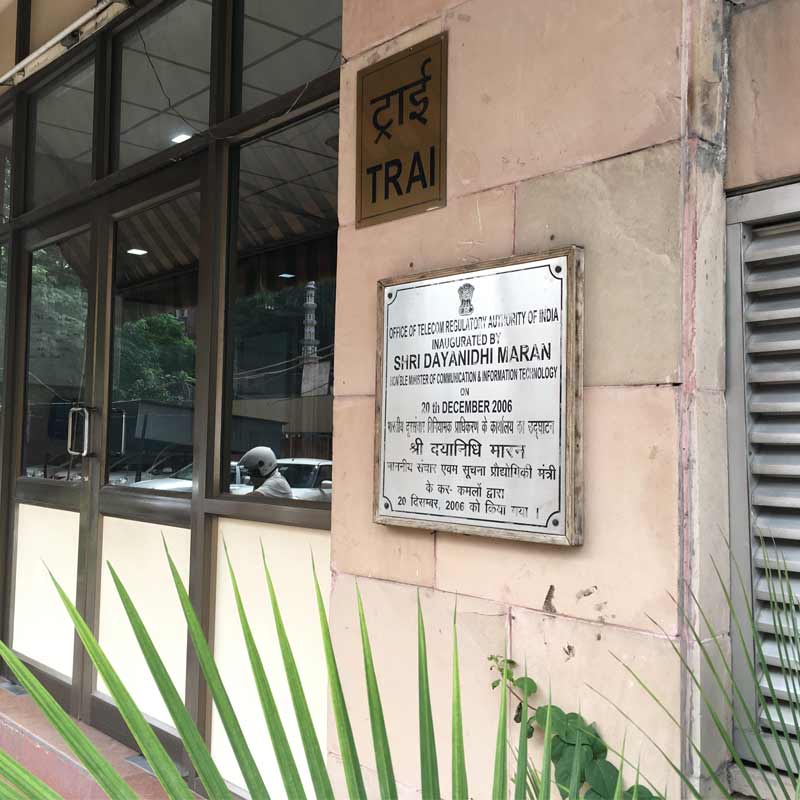
  • COAI vs. TRAI: Is incumbents’ wrath justified?

    COAI vs. TRAI: Is incumbents’ wrath justified?

    When an industry organisation goes out on a limb to hit out against one of its own members, it raises questions. When the industry body is a powerful one like Cellular Operators’ Association of India (COAI), it should raise eyebrows all round.

    In a rare instance, COAI, an apex body representing Indian and global telecom companies providing telecoms-related converged services (voice, broadband, VAS, content, etc) in the country, went public with its grievances against Telecom Regulatory Authority of India (TRAI) alleging the regulator’s actions (rather proposed ones) were biased against incumbent players.

    What COAI meant is that a discussion paper of  TRAI, which has a possibility of forming basis of a regulation in future, is designed to favour new players in the telecoms convergence arena (read Reliance JIO).

    Oh boy! This industry body-regulator face-off  is not only juicy but is a curious one on many counts too.

    First, it’s rare for an industry organisation comprising companies with  competing business interests to go public with a view that hits out against one of its own members.

    Second, the under-current of panic (or is it arrogance?) amongst existing established telcos at the arrival of  a  newcomer may indicate to lack of self-confidence though it must be admitted that the cash-rich new kid on the block has the potential of starting a pricing bloodbath that can turn the bottomlines of existing players scarlet.

    Third and last, going public accusing the regulator of bias and appealing to the government to intervene may not be the correct way to address the issue of bias, if at all it exists. Simply because getting the government involved as a third umpire could be slippery slope.

    So, why is COAI hitting out at TRAI and insinuating that the regulator’s discussion papers on inter-connects and related issues are drafted to benefit Reliance JIO, which has publicly stated has invested about Rs. Rs. 1,34,000 crore so far in the project?

    COAI’s allegations revolve around  the way  telecoms business is done via inter-connections (where a service provider lets its customer hook on to another network in the absence of its own infrastructure in an area), the charges levied therein and the fact that certain aspects of the business is being tried to be removed to ease the entry path of newcomer Reliance JIO. The latter has  claimed to have 15 lakh customers in a test/trial phase with over 50 per cent call drops in the absence of other telcos refusing to interconnect despite the fact Reliance JIO’s network is quite widespread in the country.

    An industry and trade organisation normally settles differences and conflicting interests of members (that is bound to exist and should be allowed to flourish in the true spirit of transparency and democracy)  beyond the pale of public glare as a divided house is not taken as seriously  by  target audience.

    But by washing part of the dirty linen in public via the executive office, COAI may end up undermining its own credibility as an organisation representing the telecoms sector in India.

    Thus, even if there are differences of opinion (and business interest) within COAI, the dissenting note(s), if there were any, also should have been played  out so transparency was maintained.

    This brings us to incumbents’ sense of entitlement.

    Existing telcos (and many other players in other businesses too), all claiming to have subscriber bases in millions in the world’s largest market in terms of numbers, have often cried foul at the arrival of a disruptive newcomer or technology saying in the interest of a level playing field the new entities should also be regulated and restricted.
    Reliance JIO could turn out to be as ruthless and apathetic to customer satisfaction as some other existing players in the future, but that’s no reason to create more hurdles in its path or object to its test services.

    One wonders where was the level playing field when Indian telecom customers, plagued by indifferent implementation of consumer protection laws and falling quality of services, turned towards cheaper and newer technologies to communicate? And when it became apparent to incumbents that the new techs were more efficient (for example, OTT services, including Skype, WhatsApp, etc), again the bogey of level-playing field was raised to seek regulatory interventions.

    A status quo is the best scenario for existing players all over the globe; and especially so in India where any change or possibility of  betterment of consumer satisfaction is resisted more efficiently than providing a service. The recent Delhi taxi and auto-rickshaw unions stir against cab aggregators like Ola and Uber is a great case in point of the sense of entitlement that existing players in business and politics want to have in India; irrespective of (pathetic) quality of services and low customer satisfaction.

    Though Reliance JIO is capable of  taking care of  its interests in all possible ways, as is evident in the letter it sent out to Telecoms Secretary JS Deepak earlier this month rebutting COAI’s allegations point-by-point,  the double-standards of existing telcos is not only confounding but also goes against the grain of level-playing field that COAI and its members have flaunted so often in the past.

    (The author is Consulting Editor of Indiantelevision.com)