Tag: COAI

  • IAMAI demands imposing revenue sharing mechanisms between internet companies and TSPs smack of rent-seeking

    IAMAI demands imposing revenue sharing mechanisms between internet companies and TSPs smack of rent-seeking

    Mumbai: The Internet and Mobile Association of India (IAMAI) has in its counter comments submitted to the Telecom Regulatory Authority of India (TRAI) on the consultation paper “Regulatory Mechanism for Over-The-Top (OTT) Communication Services, and Selective Banning of OTT Services” said that demands for imposing revenue sharing mechanisms between internet companies and telecom service providers (TSPs) smack of rent-seeking.

    IAMAI also flagged demands made by the Cellular Operators Association of India (COAI) and the Indian Council for Research on International Economic Relations (ICRIER). The COAI has called for regulatory intervention to ensure “largest traffic originators” pay a ‘fair share charge’ to telecom companies to account for capital investments made by the latter to “accommodate surging data traffic”. Similarly, ICRIER has called for the imposition of a ‘Broadband Infrastructure Levy’ to be applied at 3% of India operations of “significant” OTT service providers based on “specialized contracts” between service providers and network operators.

    According to IAMAI members, by requiring “largest” OTT service providers to pay TSPs for data used by consumers, TSPs would effectively be charging twice for the same service – as they already charge consumers for data. In any case, “surging data traffic” is merely data consumed by consumers that they have already purchased from telecom companies. Therefore, the “strain” on infrastructure of TSPs occurs when they sell data to consumers beyond their infrastructural capacity – a fact that has been conveniently ignored.

    Opposing demands to bring OTT service providers under regulations typically reserved for telecom companies, IAMAI highlighted that such demands fail to recognise that telecom service providers are subject to a special regulatory and licensing regime by virtue of the control that they exercise over valuable national resources such as spectrum. Therefore, the introduction of a telecom regulatory regime for OTT service providers would be an act of over-regulation.

    Over-the-top service providers have provided high quality content for little-to-no cost to users. This in turn has spurred the rapid growth of data consumption and economic activity in India. Mandating revenue-sharing mechanisms between OTTs and TSPs would effectively reverse this phenomenon by disincentivising growth for OTT based businesses, for whom a volume-based revenue sharing mechanism would be a glass ceiling for continuing growth and may prove to be an entry barrier for startups.
     

  • COAI’s India Mobile Congress recognises companies for innovation & contribution to the ICT sector

    COAI’s India Mobile Congress recognises companies for innovation & contribution to the ICT sector

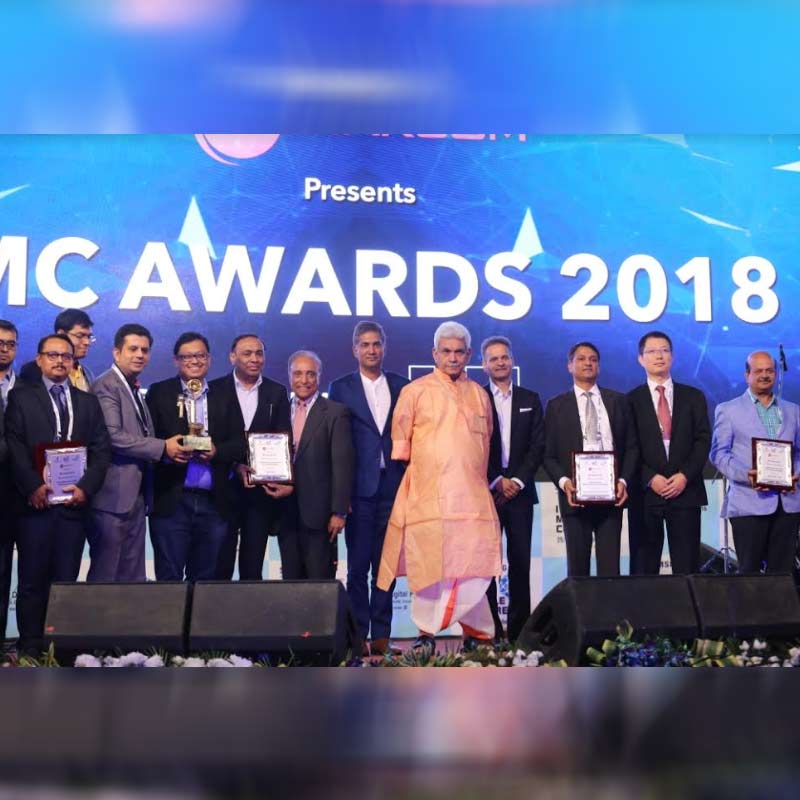
    MUMBAI: The second day of the India Mobile Congress 2018, which is one of the biggest marquee Mobile, Internet, and Technology event for South-East Asia, with the theme, “New Digital Horizons – Connect. Create. Innovate.”, concluded with the IMC Digital Communications awards. UTStarcom was the award partner for the IMC Digital Communications Awards.

    The awards were given to the companies, for their exemplary contribution to the sector. The highlight of the night was Indus Towers who won the IMC Digital Communications award for “Best Green Technology Adoption for Telecom Networks”. This was part of total five IMC Digital Communications award categories. Other winners included Huawei Communications India for “Innovative Network Solution of the Year for Connectivity”; Hotstar for the “Best OTT Content Platform”; State of Jharkhand for the “State with the Best Digital Infra Policies” and Surat Smart City for “Smart Cities Project with Most Innovative Technology Adoption”. All the winners were felicitated by the Shri Manoj Sinha, Hon’ble Minister of State (Independent Charge) for Communications and Minister of State for Railways.

    As part of this year’s award ceremony, three winners of the 9th Aegis Graham Bell awards, in the Telecom and Mobile categories, were also felicitated at this year’s IMC. The winners included Mahindra comviva for “Innovative Telecom Product or Solutions”, eKincare for “Innovative Mobile App for Enterprise”; and Accenture for “Bringing the fortune to the bottom of the pyramid” category. 

    Aegis Graham Bell awards are given out by the Aegis School of Data Science, Cyber Security & Telecom, and decided by a select jury of key innovators and veterans with aim of promoting innovators and innovations in Information & Communication Technology (ICT) domain and as a tribute to the father of telephony, Alexander Graham Bell.
    The IMC awards were driven by management consulting major KPMG, the Knowledge Partner for IMC 2018. 

    Sharing his views on the award ceremony and the contribution by the winners, Rajan S Mathews, Director General, COAI, said, “We must say that the participants and the awardees plays a vital role in introducing new technology and the much needed change. There is a dire need to encourage innovations and disruption in ICT industry to make the technology work for good. It becomes the responsibility of the entire industry to acknowledge the contribution by these individual, companies and institutions towards the development of the technology.”

    IMC 2018, jointly organised by the Department of Telecommunications (DoT) and COAI for the second time in India, has gone above and beyond everyone’s expectations in showcasing India’s prowess in communications and technology sectors and futuristic technology innovations that will shape India’s future to the rest of the world. 
    The three day event, titled “New Digital Horizons: Connect, Create, Innovate”, being held at Aerocity, New Delhi, has received unprecedented response with participation from some of the world’s biggest technology companies as well as massive interest from the industry and other visitors.

  • 3 more quarters of losses for telecom industry, says COAI

    3 more quarters of losses for telecom industry, says COAI

    MUMBAI: According to COAI director general Rajan Mathews, the telecom sector will probably experience three or more quarters of losses, as the telcos remain under pressure due to high levies and unsustainable tariffs.

    Speaking to PTI, Mathews said, “Under the current scenario, I see at least another three plus quarters of losses. Why? Because personally, I do not think the present tariffs are sustainable for long term health of the industry.”

    Mathews explained that the high incidence of levies – licence fee and spectrum usage charges – intermingled by upfront payment for radio-waves have added to the operators' woes. Taking that into account he stated that 2018-19 will certainly be a "tough year" in terms of financial performance of the industry.

    “Already we have been through two quarters of losses (this fiscal). So something dramatic has to happen in the next two quarters and we know that is not going to happen. Clearly, 2018-19 will be a tough year in terms of financial performance for the industry but the beginning of fiscal 2019-20 will see clarity (emerging),” he added.

    When asked about whether the mobile rates will fall further or stabilise, he told, “The tariffs are already at affordable levels. It is difficult for me to see how much further the tariffs can drop.”

    He also described that the continuous decline in revenue stream would be unfavourable for the industry as telcos will need investments for updating technology and for wider and better coverage.

    Reliance Jio had set off a tariff war since its arrival in the market. In counter to Jio’s services, rival companies such as Bharti Airtel and Vodafone Idea had to cut tariffs.

    Bharti Airtel reported a loss of Rs 940 crore from its mainstay India business for the June quarter. However, Airtel in the April-June period reported a net profit of Rs 97 crore on a consolidated basis after taking into account revenues from its Africa business.

  • COAI to review implications of SC judgement on Aadhar linkage with sim

    COAI to review implications of SC judgement on Aadhar linkage with sim

    MUMBAI: On Wednesday, the five judge bench of Supreme Court struck down Section 57 of the Aadhaar Act while upholding the constitutional validity of the scheme. It has led to a big no to compulsory linkage of mobile phone numbers to the unique identification number. In response to the verdict, Cellular Operators’ Association of India (COAI) Wednesday said it will examine and assess implications of the Supreme Court judgement.
    Section 57 of Aadhaar act permitted private entities like telecom companies and banks to use Aadhaar data.
    “We respect the Aadhaar verdict of the Supreme Court, the apex court of India. We are going to review the judgement and its implications. We shall await further orders and instructions from Department of Telecom,” COAI director general Rajan S Mathews said in a statement. He also added COAI member operators as will definitely comply with the law.
    Justice Chandrachud while reading out the judgement said linking Aadhaar with mobile poses threat to autonomy, dignity and privacy. He added though the aim might be legitimate but the means to achieve that aim cannot be lopsided. He also directed the telecom service providers to delete the data they had collected from users.
    As per an Economic Times report, a BSNL official said removing consumer data, if required, won’t be a huge problem as it is largely a software driven function. However, individual telco operators are awaiting a communication from the Department of Telecommunications (DoT).

  • Being pro-consumer does not mean one is anti-industry: TRAI chairman RS Sharma

    Being pro-consumer does not mean one is anti-industry: TRAI chairman RS Sharma

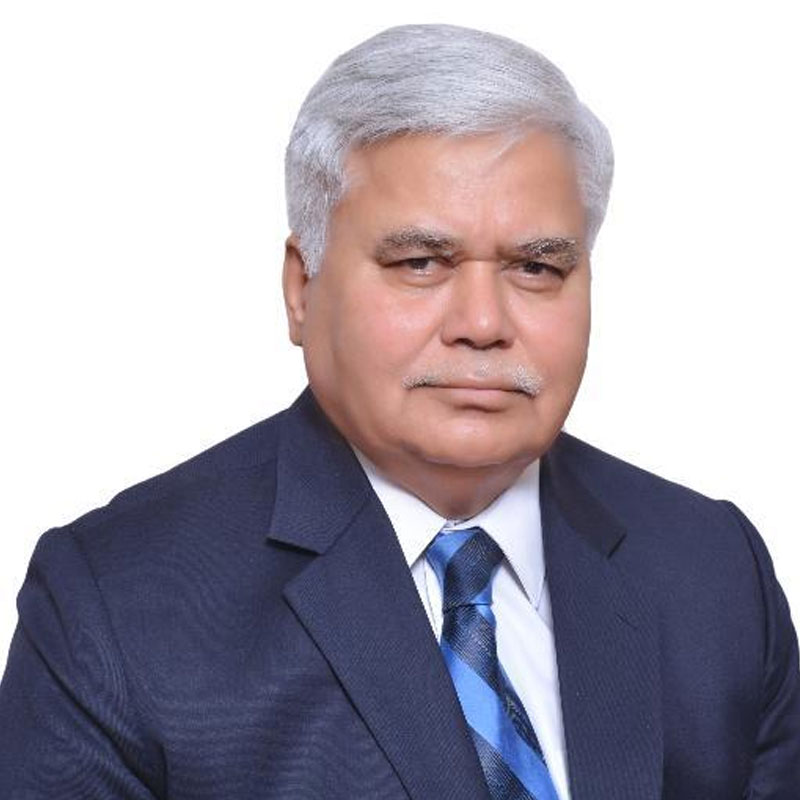
    MUMBAI: Outgoing TRAI chairman RS Sharma, whose tenure saw major, at times controversial, decisions on issues like termination charge and predatory pricing, on Wednesday said he is of the firm belief that being pro-consumer does not mean one is anti-industry.

    The TRAI Act itself calls for ensuring consumer protection and growth of the sector in equal measure, Sharma said.

    “Some people take the line that if you are pro-consumer, you are anti-industry… that is far from the truth. Pro-consumer does not mean anti-industry. It is not a zero-sum game, one should be conscious of that,” Sharma told PTI.

    The TRAI Act mandates that the regulator has to ensure fair competition, consumer protection and growth of the industry, said Sharma who is set to complete his term as TRAI chief on Thursday.

    In the past, decisions by Telecom Regulatory Authority of India (TRAI), ranging from slashing of call-connect charges to its stance on the provision of points of interconnect (sought by Reliance Jio at the start of its services), and predatory pricing rules have come under the industry’s attack. 

    Earlier this year, TRAI’s predatory pricing norms sparked-off a furore as old telecom operators and industry association criticised the new rules.

    More recently, industry body Cellular Operators Association of India (COAI) raised a red flag over TRAI’s new regulations on curbing pesky calls and messages, saying tailoring of systems, and use of blockchain technology will involve Rs 200-400 crore investment and 18 months for the rollout, at a time when the sector is financially-stressed.

    Sharma on Wednesday said that “reasonable time” has been given to the telecom operators on norms to curtail pesky telemarketing calls and messages. The rules, he said, came about only after a prolonged discussion with the industry.

    “I think reasonable time has been given…My position has been that the regulation has come after a lengthy year-long discussion process. It is not the knee-jerk reaction of TRAI, that it has issued these regulations,” Sharma said.

    Recounting his early days in TRAI, Sharma admitted that he had initially been somewhat apprehensive on whether the regulatory role would imbibe a developmental aspect.

    “… initially, I was a bit apprehensive as I had, through my life, been engaged in developmental work … I was wondering whether the regulatory role had any developmental facet. But I had the advantage of being in technology space for quite some time, and telecom is more about technology today…I have thoroughly enjoyed this role,” he said.

    Sharma noted that the telecom sector has undergone a “fundamental change” marked by operator consolidation, the explosion of data and fierce market competition.

    “There are concerns about the quality of service and those concerns, unfortunately, remain till date. TRAI has tried to do the best, within the framework of the Act.

    There is a new regulation on service quality that is granular and will be helpful…operators have also become sensitive to the fact that they cannot leave one area or tower unattended for long,” Sharma said.

  • Cable TV, DTH players cautiously optimistic on Jio fiber competition

    Cable TV, DTH players cautiously optimistic on Jio fiber competition

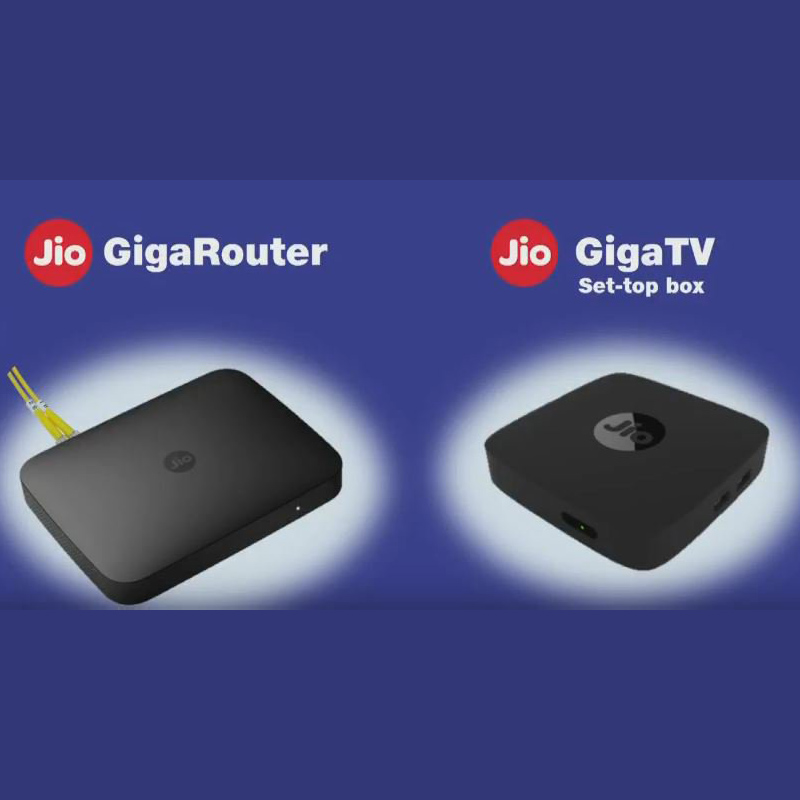
    MUMBAI: The terminator…, oops sorry, the disruptor is back. And, this time it is targeting India’s multi-billion-dollar cable TV and DTH businesses with promises to unleash high-speed fixed line fiber-based broadband services that aims to “connect everyone, and everything, everywhere” — at least in 1,100 cities to begin with. No wonder the legacy businesses are eyeing the announcement on the launch of Reliance Jio GigaFiber project with a mix of healthy skepticism and optimism.

    “It will be a challenge, but then this would increase general awareness about fixed-line broadband (FLBB) services as penetration of wired broadband is pretty low,” Kerala Communicators Cable Ltd (KCCL) CEO Shaji Mathews told Indiantelevision.com when asked about the big bang launch of Jio GigaFiber from 15 August 2018, which is also backed by Reliance Industries’ money power.

    According to Mathews, Jio GigaFiber rollout would help getting the focus back on good quality FLLB services as “over the years the industry in general had been focusing on and talking more about wireless broadband”. KCCL is an initiative of independent cable TV operators in Kerala under the guidance of Cable Operators Association (COA), an umbrella union of over 4,000 local cable operators functioning all over the southern state.

    What about the gorilla in the room? Mathews, who has spent almost a life time in the cable TV business, was of the opinion that Jio’s entry into the FLLB segment would “bring true value to real players as the capable cable ops will survive” the competition. “Moreover, as the cable companies are already on ground with existing businesses, they have an added benefit of existing fiber optics,” he added optimistically.

    Echoing similar sentiments SITI Networks Limited chief business officer Rajesh Sethi, while accepting further disruption — as in Jio fiber — was expected in the content delivery eco-system, said, “As we keep pace with changing technological trends, the industry is expected to become more multifaceted, efficient and customer centric.”

    A senior rep from another MSO company who didn’t want to be named felt that with the entry of cash-rich companies like Reliance Jio, it would help legacy players to “focus better” on the core business. “The new venture of Jio will also bring back investors’ focus on the sector, apart from increased awareness among consumers,” the MSO company exec added while talking to Indiantelevision.com.

    India’s FLBB penetration was expected to increase to 10.3 per cent from the present single digit share by year 2022 as per Singapore-based Media Partners Asia research. As content and applications were also getting heavier and denser in size gradually, there were fair chances that Jio could disrupt the market, while other players have equal opportunity too in this segment, the MPA analysis had stated some time back.

    An immediate effect of the Jio fiber project announcement was that shares of listed MSO companies like Hathway Cable & Datacom, Den Networks, GTPL Hathway and SITI Networks dropped in the early part of trading on Indian bourses. It must also be mentioned that shares of Reliance Industries too had dipped in early trading as RIL chairman Mukesh Ambani was addressing the shareholders at yesterday’s company annual general meeting.

    While the spotlight may be falling on cable operators and MSOs, there is no denying the fact that Jio GigaFiber could also impact the business plans of DTH platforms and incumbent telecom players like Airtel, Vodafone and even State-run BSNL as Jio plans to offer not only just FLBB, but also a host of other telecom and TV services, apart from smart solutions for the retail consumer’s home, in general.

    India’s DTH players, for example, felt that while fiber-based broadband services could be a good option for high-rise residential complexes in urban Indian cities, it would be a challenge to lay fiber in far-flung hilly areas or take the lines into homes in those places where houses are horizontally laid out.  

    For cities like Mumbai, Bengaluru and Gurugram, having rows and rows of high-rise gated residential complexes, fiber based broadband services was a good opportunity, but it would be an expensive affair for a row of houses, DTH operator Dish TV’s managing director Jawahar Goel was quoted by BloombergQuint as saying. He added: “For delivering the cable and DTH services, we will always have the competitive edge, as our cost is lesser.”

    Telcos like Bharti Airtel, considered India’s biggest operator in terms of market and subscriber shares, however, are expected to react to the impending Jio competition in FLLB by cutting subscription rates and handing out higher monthly data packages to consumers at reduced costs.

    Over the last few months, Airtel, for example, has been aggressively attempting to sell its high-speed digital fixed line broadband services to existing consumers in Delhi and National Capital Region, which includes areas like Gurugram and places like Vaishali and Kaushambi in Ghaziabad district and Noida — all having rows of high-rise residential complexes of various sizes with varied population.

    Meanwhile, telecom industry body Cellular Operators Association of India (COAI), which has been at loggerheads with member Reliance Jio over a slew of issues in the past, yesterday termed Jio’s fixed-line fiber broadband system as a “game changer” and said the company garnering over 200 million mobile users in a short span of time is “commendable”, according to a Press Trust of India report from New Delhi.

    “The announcements made by Mukesh Ambani (RIL chairman) have positioned RJio as an extensive technology company rather than just a telecom service provider. This is an interesting development and once the plans laid out today start taking shape, we can expect new streams of revenue to be initiated that will benefit the industry,” COAI director-general Rajan S Mathews was quoted by the wire service as having said in a statement.

    The PTI report also took note of a latest note from JP Morgan that said while there were no details yet on pricing of the upcoming optic fiber broadband service, it was of the view that given Jio’s customer acquisition strategy, the launch pricing should effectively be at a “large discount” to current broadband and set top box pricing prevalent.

  • TRAI may invite ideas to boost b’cast & tele-products manufacturing

    MUMBAI: The Telecom Regulatory Authority of India (TRAI) will consider studying the issue of testing and quality of mobile phones and set-top boxes as part of a wider consultation to boost manufacturing of telecom and broadcasting products. The issue is important because telecom operators had flayed mobile handset quality for call drops and approached the Government saying the role of devices in issue of service quality had not been adequately considered.

    TRAI’s discussion paper pertaining to incentivising manufacturers of broadcasting and telecom equipment is in the works, sources told PTI. It may be released in the next month. Amongst other aspects, the paper may explore possible sops for operators who use indigenous products in their networks.

    Meanwhile, on the occasion of World Telecommunication and Information Society Day, COAI conducted a high-level roundtable to highlight and discuss the role of technology in the advancement of 17 United Nations Sustainable Development Goals. The event focused on the success story of the Indian telecom revolution.

    Experts called for a closer collaboration between five ministries and Government departments of DoT, MeitY, MoC, MHRD, I&B and Skill Development. COAI emphasised the need for digital literacy and capacity building and creation of local language content for actualising the real potential of Digital India.

    Over Rs 9.2 lakh crore has been invested by Telecom Service Providers in building world class telecom Infrastructure. About 3.51 lakh BTSs were added, and subscribers have crossed the mark of one billion. Total internet subscribers in India are 261.31 million as per TRAI data.

    ACT Fibernet, a leading non-ISP broadband operator in India, issued a statement: ACT Fibernet actively employs analytics across its operations to build a better understanding of customer and business processes..

  • BSNL violating TRAI’s IUC norms, complains COAI

    BSNL violating TRAI’s IUC norms, complains COAI

    NEW DELHI: The Cellular Operator Association of India (COAI) has approached the Telecom Regulatory Authority of India against the state-owned Bharat Sanchar Nigam Ltd’s (BSNL) new limited fixed mobile telephony app-based calling service that virtually turns mobiles into a cordless phone.

    The new service works in sync with landlines to make and receive calls within home premises.

    Claiming it was like the “in-principle same version of their fixed mobile telephony (FMT) services” launched last year and subsequently withdrawn, COAI members want TRAI to direct BSNL to withdraw the new service. BSNL has so far marketed its service as “distinct”.

    Interestingly, Reliance Jio has not joined in as it claims to have divergent views.

    While launching the new service in mid-January, BSNL had stated that the latest limited Fixed Mobile Telephony (FMT) service is “different” from the contentious Fixed Mobile Telephony service it had announced last year. The PSU was subsequently forced to put on hold the service following opposition from cellular operators.

    The operators say the new service is disguised as a Public Switched Telephone Network (PSTN) service and violation of numbering plan and breach of licence conditions.

    In its letter to TRAI, COAI has also alleged that BSNL’s service represents evasion and bypass of Interconnect Usage Charges (IUC) in the form of termination charges. “We understand that the new service will use fixed line Caller Line Identification for making calls from mobiles and currently no termination charges are applicable for calls to and from fixed line in terms of TRAI’s prevailing IUC regulation,” COAI said.

    If the service is allowed, other operators with landline number series may also start using the methodology for saving on IUC leading to major revenue implications, COAI has argued.

    “In light of the serious concerns … we request your kind intervention in issuing an immediate direction to BSNL for withdrawing this app-based calling service,” COAI has said.

    While putting its service on hold, BSNL chairman Anupam Shrivastava had said the earlier service allowed customers on roaming in India and overseas to connect their landlines through mobile and make calls through them, but the new service is restricted within the home premises.

    “Landline subscribers find it inconvenient to fetch the contact details from mobiles and then dial the number on fixed line … This service will turn mobile handset into a cordless device within the home premises, which means that customers can still avail the attractive landline tariffs of BSNL,” Shrivastava had said.

    Also Read:

    BSNL launches FMT & Ditto TV; 4G planned this year

    Fazed by expensive 4G spectrum, BSNL gifting Kerala 1k hotspots

  • BSNL violating TRAI’s IUC norms, complains COAI

    BSNL violating TRAI’s IUC norms, complains COAI

    NEW DELHI: The Cellular Operator Association of India (COAI) has approached the Telecom Regulatory Authority of India against the state-owned Bharat Sanchar Nigam Ltd’s (BSNL) new limited fixed mobile telephony app-based calling service that virtually turns mobiles into a cordless phone.

    The new service works in sync with landlines to make and receive calls within home premises.

    Claiming it was like the “in-principle same version of their fixed mobile telephony (FMT) services” launched last year and subsequently withdrawn, COAI members want TRAI to direct BSNL to withdraw the new service. BSNL has so far marketed its service as “distinct”.

    Interestingly, Reliance Jio has not joined in as it claims to have divergent views.

    While launching the new service in mid-January, BSNL had stated that the latest limited Fixed Mobile Telephony (FMT) service is “different” from the contentious Fixed Mobile Telephony service it had announced last year. The PSU was subsequently forced to put on hold the service following opposition from cellular operators.

    The operators say the new service is disguised as a Public Switched Telephone Network (PSTN) service and violation of numbering plan and breach of licence conditions.

    In its letter to TRAI, COAI has also alleged that BSNL’s service represents evasion and bypass of Interconnect Usage Charges (IUC) in the form of termination charges. “We understand that the new service will use fixed line Caller Line Identification for making calls from mobiles and currently no termination charges are applicable for calls to and from fixed line in terms of TRAI’s prevailing IUC regulation,” COAI said.

    If the service is allowed, other operators with landline number series may also start using the methodology for saving on IUC leading to major revenue implications, COAI has argued.

    “In light of the serious concerns … we request your kind intervention in issuing an immediate direction to BSNL for withdrawing this app-based calling service,” COAI has said.

    While putting its service on hold, BSNL chairman Anupam Shrivastava had said the earlier service allowed customers on roaming in India and overseas to connect their landlines through mobile and make calls through them, but the new service is restricted within the home premises.

    “Landline subscribers find it inconvenient to fetch the contact details from mobiles and then dial the number on fixed line … This service will turn mobile handset into a cordless device within the home premises, which means that customers can still avail the attractive landline tariffs of BSNL,” Shrivastava had said.

    Also Read:

    BSNL launches FMT & Ditto TV; 4G planned this year

    Fazed by expensive 4G spectrum, BSNL gifting Kerala 1k hotspots

  • Airtel, Vodafone lead market; UP East adds max subs

    Airtel, Vodafone lead market; UP East adds max subs

    MUMBAI: Witnessing a healthy growth in telecom penetration, the GSM subscriber base in the country grew to 801.81 million in November 2016. COAI, the association of mobile telephony service providers in the country, which released the November GSM subscriber base numbers, has said the number of GSM subscribers witnessed a jump of 10.18 million as compared to the previous month.

    Telecom industry’s steady growth was recorded in net subscriber additions from 2.09 million in August to 10.18 million in November.

    Amongst the telecom companies, Bharti Airtel continued to hold on to the pole position in November, adding another 1.08 million additional subscribers during the month to take its total subscriber base to 263.35 million mobile subscribers. Closely followed by Vodafone with 202.79 million subscribers and Idea Cellular with 187.68 million subscribers. With 32.84%, Bharti Airtel owns the maximum market share in the industry.

    The report, which also assesses the growth of mobile subscribers across various circles in India said, UP East added the maximum number of subscribers (73.82 million) in November and Idea added the maximum number of subscribers (7.43 million) in November.

    Talking about the growth in the subscriber base, COAI director-general Rajan S Mathews said, “The telecommunication industry has again posted a good growth for the month of November 2016. It is heartening to see that the industry is showing signs of a robust growth and we have again moved ahead in ensuring complete connectivity at all levels. Telecom companies have been contributing towards fulfilling the government’s vision of Digital India since beginning and we will continue bridge the digital divide for a fully connected and digitally empowered India.”

    Speaking about the impact made by the telecom industry, he added, “We are an enabler of comprehensive growth. The industry has also ensured that the government’s plans reach even the farthest corners of the country and everyone is equally benefitted from the digital revolution.”