Tag: co-production

  • Geophil’s Robin looks to build co-production slate

    Geophil’s Robin looks to build co-production slate

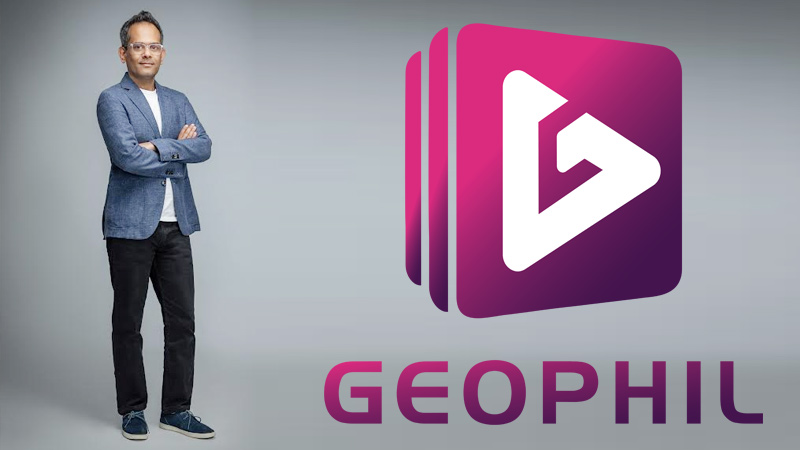
    Mumbai: There have been many who’ve tried and failed. But this is not deterring young television executive Robin Philip from doing so once again. The managing director of Geophil is quite gung-ho about building a strong co-production portfolio between Indian and international studios and between international ones.

    In a conversation with Indian Television founder, CEO & editor-in-chief Anil Wanvari, Philip revealed that “Geophil started as book publishing and distribution house based out of Mumbai. They had ambitions to grow in the media space beyond the print format and that’s where I joined about a year back after my stint with the Indian broadcaster – Zee. I had the honour in working with them in multiple geographies including in Asia Pacific and middle east and then with the OTT platform name Viu which is owned by a Hong Kong-based PCCW.”

    He further went on to say about what exactly Goephil does and how it bridges the gap between co-producers, “At Geophil, our vision is to actually take the entire bandwidth of co-producing content to a different level. We know that over the last year or so we have a lot of players who are trying to come together, join forces and co-produce. However, there isn’t a very organised way of doing it. So the vision is that, with the advent of OTT and the fact that people today, anywhere in the world are interested in watching content beyond their languages. We want players to look beyond licensing as a means of feeding their consumers with foreign content and only using the originals or the production platform for creating content locally. The only reason why I say an Australian platform will not produce content in Turkey is because they are unaware of how to work with the producer in Turkey or they don’t want to take care of 100% of the course. So that’s where we come in, we make sure that we come with the local experience in the market anywhere in the world where we give you the comfort that we get you the story. We will make sure that you know the timelines and the budgets in which the production is going to happen. The good thing is we will bring other co-producers who have similar interests in very different part of the world to join hands with you such that the producers together co-own the IP, get to air it in their own region and at the same time, monetise from markets, that are a lot of interest to them such that in a happy scenario, you are the content owner, you have a good ROI on your investment plus you created content which is an original which is going to not stay with you for two years or five years which happens with a licensing deal, but for life. This in a nutshell, is what we do. So we call ourselves the bridge between producers, platforms, investors, anybody who wants to kind of be part of the ecosystem of co-production.”

    To listen to the entire conversation, watch the video:

  • T-Series, Reliance Entertainment ink a 10-film deal at Rs 1K cr investment

    T-Series, Reliance Entertainment ink a 10-film deal at Rs 1K cr investment

    Mumbai: Film production houses T-Series and Reliance Entertainment have joined forces to produce more than 10 films together across varied genres with an investment of approximately Rs 1000 crore.

    The production houses together will produce big-budget tentpole projects as well as mid-small budget content-rich films ranging through different genres, production scales, talent and music, according to a statement from the studios.

    The slate includes Hindi remakes of Tamil blockbuster drama and action thrillers, a mega historic biopic, espionage thriller, courtroom drama, satire comedy, romance drama, and a film based on shocking true events, amongst others, it added.

    The upcoming films will be produced over the course of the next 24 to 36 months, with filmmakers Pushkar and Gayatri, Vikramjit Singh, Mangesh Hadawale, Srijit Mukherji and Sankalp Reddy on board to helm the projects.

    T-Series and Reliance Entertainment have previously worked together on the music marketing front for more than 100 films.

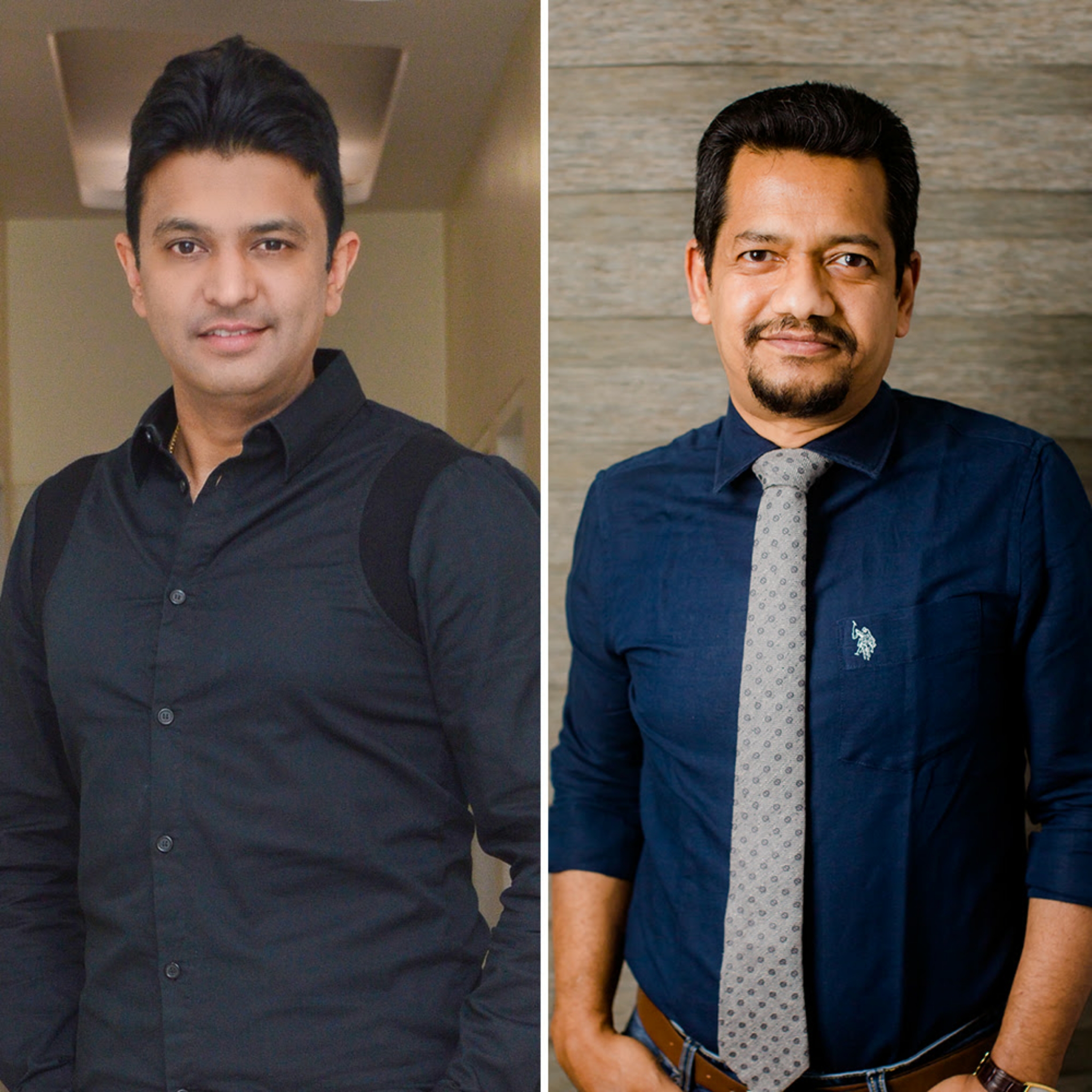
    “After working on music marketing together, this collaboration has happened on the right time and this will just strengthen our ties,” said T-Series chairman and MD Bhushan Kumar. “Shibasish and I hope to give our Hindi film audiences new and unconventional films.”

    “This partnership with Bhushan will surely mark the beginning of a great feat in Indian film industry as we move on to offer a bouquet of path-breaking and momentous films to our audience,” stated Reliance Entertainment Group CEO Shibasish Sarkar.

    As per the release, there are confirmed alignments with some of India’s biggest stars and four to five films will have a comfortable big-screen release worldwide, starting next year-2022.

  • KAM SUMMIT ’21 – Co-Production: Not a distant dream anymore?

    KAM SUMMIT ’21 – Co-Production: Not a distant dream anymore?

    Mumbai: Day one of the KAM Summit 2021 witnessed an enriching session on ‘Co-Production: Not a distant dream anymore’ where discussion over how co-production has been a lucrative opening for the animation sector and what are the different models and challenges being faced in co-production took centre-stage.

    The panel members included Toonz Media Group CEO P Jayakumar, Assemblage Entertainment founder and CEO AK Madhavan (MadMax), Punnaryug Artvision founder & FICCI chairman of AVGC Forum Ashish Kulkarni, Telegael CEO Paul Cummins, and Cosmos-Maya business development consultant Joris Eckelkamp. The session was moderated by Zebu Animation CEO Adi Shayan.

    Assemblage Entertainment founder and CEO AK Madhavan (MadMax) said his company has done about six full length feature films and most of them were co-productions. “Co-production is largely used to milk or take advantage of arbitrage, which could be skill oriented, tax exemptions or arbitrage of cultural and faith of expertise. Co-production gives you the experience of being a producer to learn the other areas of production and you also get into the nuances of understanding syndication, distribution, financing and taxes. It is a learning and evolving process,” said Madhavan.

    According to Punnaryug Artvision founder & FICCI chairman of AVGC Forum Ashish Kulkarni, the main reason for co-production is matching of skills, cost arbitrage and also considering fitting in timelines where you can contribute to the project and put everything together to make sense of co-production.

    “Lot of co-production mechanisms are effectively working within the country. We have produced two seasons of Shaktimaan. For the first season, we co-produced with Chennai based Excel Animations and the second season was co-produced with a studio based in Hyderabad. And also two of my upcoming projects are also being co-produced within Indian studios,” said Kulkarni.

    Sharing his 30 years of experience in the animation industry, Telegael CEO Paul Cummins said, “Animation can be considered as a big part of our production but co-production is very much our model. Since we started about 30 years ago, we have been involved in 100 co-productions, mainly animations. We co-produce with countries like Australia, Germany and we successfully launched many co-produced pre-school and TV animated series.”

    Quoting the risk behind co-production Toonz Media Group CEO P Jayakumar said, the essential part is to share the risk and rewards and it is the basic fundamental of co-production. It is difficult to analyse whether the risks and rewards are equitable. In initial stages we did some stupid co-productions, but over a period of time we learned and evolved, he added.

    Eckelkamp highlighted the importance of communication while co-production. “You have to choose your partner wisely and you have to ensure that you both find a solution for any problem that arises in the early stage or future, you have to deal with it effectively. I think it is an important task to keep up the communication working throughout the production, and not only in the beginning, to establish a certain communication,” he said.

    Elaborating on how co-production gets started and what thought process goes into it, Cummins said, “Co-production is all about building networks in the industry of context. Each co-production is different. A lot of time you build-up a network of partners where often you reach out to them for future co-pros. Building trust and confidence and delivering what you promised is essential for effective co-production.”

    Jayakumar enlisted key points about how co-production can make use of tax and government funding. “Co-production all starts from the producer and project; it is all about how you finance the project. Secondly the subsidies and tax collected is basically free money. There are many countries like Spain and Ireland which offer 50 per cent and it is upto you how you find the place to get your project done and get about 30-40 per cent of overall budget free of money,” he said.

    He added further, “Co-production is about how you finance the project. As a commissioning broadcaster, you have to look for how to optimally fund the production without losing too much of shares, and how to find your partner. To find the right partner in co-production without losing your shares is a game and for me it was a puzzle game.”

    Describing the model and future of what he has planned for himself and Cosmos-Maya, Eckelkamp said, “Our plan is to concentrate on more original IPs because co-production is effectively done based on who owns the IP, who is the producer and who has the project. The later you are coming into the project and it is already financed, the less share you own and you are in a weaker position as a co-producer.”

    Asserting that co-production is always an independent studio thing, Madhavan said, the need is to understand the origin of co-productions. “Big boys like Disney, Warner, DreamWorks don’t do co-production. It is mostly done by independent creators or studios that have gaps in skills, story delivery, design, and predominantly the gap in finance. Co-production doesn’t originate unless and until there is a gap; it may be due to creative reasons, distribution reasons and market reasons,” he said.

    Concluding the session, Kulkarni spoke about what the future holds for animation co-production mechanisms. “Blockchain is evolving and the whole co-production mechanism is going to change. It will take people a little time to understand blockchains but with this we can solve the large amount of issues we face during co-production. With NFTs (Non-fungible tokens) and blockchain mechanism, we, the creators, will be able to see the light of the day for some of the shows!” he said.
  • UK minister for culture, media, sport Jowell lays emphasis on India UK film co-production treaty

    UK minister for culture, media, sport Jowell lays emphasis on India UK film co-production treaty

    MUMBAI: A film co-production treaty between India and the UK was signed last year. 10 films are expected to be made in the first year..

    This announcement was made Britain’s secretary of state, department of culture, media and sport Tessa Jowell at Frames. “Last year, I signed the main body of the Indo-UK co-production treaty. The treaty will enable both our film industries to take fuller advantage of the new opportunities of the digital age.

    “We estimate that in the first year around 10 films would be made. This will benefit UK and India by around 155 million pounds. Cineworld cinemas in the UK are showng Indian films. There were 2.6 million visitors to Hindi films in the UK last year. Indian films accounted for 16 per cent of all releases in the UK last year, taking in 12 million pounds at the UK box office last year.

    “The treaty will benefit both nations’ creative skill sets. There will be creative and technical collaborations from film festivals and marketing to production management services and the sale of cinematography equipment. It has been fantastic to the UK Film Council distribution and exhibition Fund to support The Rising. Veer Zaara took in 2.3 million pounds at the UK box office.

    “We have just completed a White Paper on the BBC where a key theme is bringing the world to UK and UK to the world. Coupled with developments in the BBC Asian Network and the Window of Creative Competition which will open BBC production to a wider range of creative talent, we will surely see further collaboration between the two cultures and countries.”

    She noted that this kind of progress is important not just in the film contest but as part of the UK government’s aim to nurture the creative sector. “The global market value of creative industries has increased from $831 billion in 2000 to $1.3 trillion in 2005. This represents more than seven per cent of the total GDP. In the UK creative business contributes 11.4 billion pounds to our trade balance. This is one pound in ever 12 pounds in our GDP. My job is to ensure that the creative sector is the first to benefit from the economic changes wrought by globalisation. For the film industry we know that digital technology is enabling better production, distribution and access.

    “It is starting to fully examine the potential of this new technology in the ciontext of games, animation, individual and producer platforms as well as providing opportunities for areas like multiplex development.

    Indian innovation is making waves across the world being the first to stream a film on mobile for instance,” said Jowell.

    Jowell says that the UK government is encouraging the creative sectors to work together and share best practice and skills. “We have encouraged the BBC to work with organisations like Visit Britain and the Tate galleries. We have recently launched a flagship Creative Economy programme which is getting together luminaries from the creative sectors of film, music, fashion, advertising, publishing and computer games.”

    The result, Jowell says, is that the UK is seeing regional clusters of creative business. In the film industry, the UK is seeing investment in regional production firms, visual effects firms, post production houses and film financiers.