Tag: co-founder

  • GUEST COLUMN: What can be the anticipated future of the creator economy

    GUEST COLUMN: What can be the anticipated future of the creator economy

    Mumbai: It’s no wonder that the digital media industry has shifted tremendously over the previous decade. This shift in focus has given rise to a new type of media personality: the content creator. Content creators are capturing the attention that was previously reserved for traditional media and as a result, they’re transforming content, consumer behaviors, and – maybe most importantly – consumer purchasing. These developments are spawning a completely new industry: the creative economy.

    From restricted IG and YouTube creators to now boasting over a million creators in the country as a result of the development of short-form video platforms and the simplicity of making content – ‘Content Creator’ is now a proper career that a gen-Z youth can now justify to their parents.

    As of now, creators have relied mainly on marketing campaigns and ad money generated by YouTube views. While this is fantastic, very few people can truly get it right and achieving wider adoption is extremely difficult because brands work with a small number of agencies, who in turn work with a small amount of creators. Technology can help companies and creators communicate more effectively but there is currently no dominant player in this space. Instagram and YouTube, on the other hand, have made pledges to develop toward the Creator economy and it will be fascinating to follow where they land.

    All of this is unfolding so rapidly that it’s vital to stop and think about where it’s all heading. What is the creative economy’s future?

    Affiliate – Affiliate revenue is something that fintech developers have been able to fully realise and reap tremendous rewards from. The next phase is to scale across the board. You don’t have to be linked with a brand to sell it; marketplaces such as Amazon reward referrals and affiliate sales.

    Paid subscriptions – This is really exciting for producers who have a strong connection with their viewers and may provide exclusive material or other advantages to their fans. If a creator can attract even two per cent of their viewers into monthly paid customers, there is a lot of money to be made.

    Creator products – Creators benefit from a focused reach, which, when utilised wisely, may result in the creation of incredibly profitable D2C enterprises. A creator is the one who best knows their audience; they understand the gaps and goals in their life and can help cross these by developing various things. Creators are also adept at creating excitement, something conventional businesses must pay considerably in to guarantee their brand narrative is delivered appropriately – it does become a zero-cost game for the creator. To get this right, producers must create high-quality products, engage in authentic communication, and go all out with their digital content to maximise sales.

    NFTs – With all of the hoopla around NFTs, and even once it corrects and comes down a bit. This will be a really vital tool for creators to involve with communities and possibly allow fans to own stock in them. NFTs will play a significant part in creating incredibly tight-knit communities for creators, as well as opening up a variety of new avenues for commercialisation for creators.

    Branded content – This statistic has climbed steadily over the last five years and shows no indications of decreasing, businesses will soon are becoming more ROI and conversions focused on these efforts. With more and more tech tools to measure real sales for such campaigns on the horizon, this will eventually become similar to ad purchasing with pre-determined KPIs, unlocking value for artists.

    It is reasonable to assume that Indian content producers will lead the very next century in global space. We are only getting started, and the times ahead are incredibly exciting for both artists and viewers. All in all, it is believable that the creator economy has a lot of potential and that more monetisation avenues will open up for creators in the future. So, to all the creators, businesses, customers and brand owners who are working and building in this space be in it for the long haul. Ultimately, investing in relationships and communities can never go wrong.

    (About Author: Vaibhav Pathak is the co-founder of The Girlfriend Box)

  • GUEST COLUMN: A complete guide to retail analytics for 2022

    GUEST COLUMN: A complete guide to retail analytics for 2022

    Mumbai: There are a million things that retailers need to do every day. From creating strategies for attracting new customers to finding ways to retain old customers and introducing exciting offers and brand campaigns, they have to also keep an eye on the fierce competition in the market as well.

    But, coming up with strategies and implementing marketing tactics is not enough until you track them right!

    Data analytics must be a crucial part of every retail business these days. Whether the website traffic, engagement rates, inventory, revenues, or expenses, tracking every retail marketing metric is essential. By monitoring your data the right way, you can gain meaningful insights and make better, informed decisions for your business.

    So, let’s dive into what retail analytics is and how it can be leveraged to make your retail business a success.

    What is retail analytics?

    Retail analytics refers to collecting retail data and analyzing it to gain meaningful insights into the performance of the business. That is information about their stores, vendors, products, and customers. Retail analytics allows retailers to harness all the data, discover trends, and make predictions based on the current data values.

    Types of retail analytics

    You can tap into different types of retail analytics that can help you understand the performance of your business in a better way. These include:

    In-store analytics: This refers to the methods you use to collect data from your retail store. For instance, foot traffic, dwell time, conversion rate, etc.
    Web analytics: You must also know how your website is performing. This includes tracking metrics like website traffic, conversions, and sales.
    Inventory analytics: Keeping track of your stock is also crucial in retail analytics. It helps you determine which products are doing better and which are not. The primary metrics here include sell-through rate, stock turn, etc.
    Customer analytics: It is all about knowing your customers—for example, customer retention rate, churn rate, customer loyalty, etc.

    Importance of retail analytics

    When you have all the data you need, you can use retail data analytics to improve various aspects of your business. Here are a few points highlighting why retail analytics is crucial for every retail business.

    1. Better sales and marketing tactics

    Retail analytics can help you understand your customers at a deeper level, making it easier for you to market your products to the right customers and in the right way. For instance, data analytics can help you find out what messaging attracts more customers or which social media channel has the highest engagement rates. This way, you can improve your marketing campaigns accordingly and drive sales.

    2. Improved business management

    Retail analytics plays a crucial role in enhancing day-to-day business management. It allows you to predict which products are being preferred by customers these days, and you can make decisions on stocking, tracking, and restocking the units accordingly. You can keep track of how a particular product sells and understand the current demand in the market.

    3. Enhancing customer loyalty

    Retail analytics helps you keep track of purchase history, shopping patterns, preferences, and other essential metrics associated with every customer. As retail analytics enables you to analyse customer behavior better, you can use this information to provide a better, personalised shopping experience to every buyer.

    4. Better in-store operations

    With in-store retail analytics, you can make changes around your store to attract more customers and increase your sales. For instance, you can determine which store layouts attract the customers the most or which product placement draws maximum attention. You can enhance your staffing, include appealing designs, and implement effective sales tactics to make your offline store a hit.

    Data analytics is not as easy as it sounds

    Many marketers these days struggle with data analytics. According to Marketing Revolution, 57 per cent of marketers incorrectly interpret data and likely get incorrect results. The main problem that retail marketers face these days is the lack of data which leads to:

        Uninformed decisions and underachieved goals
        Poorly performing campaigns since marketers have no idea which aspect of their campaigns to improve
        Unnecessary investment in data analytics tools and vendors

    How to utilise retail analytics for your business?

    Retail analytics can help take away the guesswork out of your business. It gives you a reality-check of how your business is performing and enables you to keep track of every aspect of your business, from sales to inventory and customer experience. Here’s how you can overcome data analytics problems and make use of retail analytics better.

    1. Integrate various marketing channels

    Keeping data from different sources distinctively makes tracking it a difficult task. The first step to retail marketing involves connecting all your marketing channels to a single data platform. Bring data from multiple marketing channels to a centralised place so that you can track data, find patterns and understand your customer journey in a better way.

    2. Real-time tracking

    Track the critical metrics every single day! Real-time tracking allows you to understand the current market situation. This way, you can take immediate action and see results. You can send the proper communication to your customers at the right time and promote your sales.

    3. Represent your data visually

    Do not just rely on spreadsheets for retail analytics. Make use of charts, graphs, and funnels to understand every little detail. Visual representation of data will also make it easier for you to identify patterns and understand the performance of your business in a better way.

    4. 360-degrees retail analytics

    This is considered one of the most important analysis tools for a retail company. It is a compact, easy-to-read, insightful report that combines all the customer metrics in one place. For instance, a 360-degree customer profile helps you understand their buying history, interests, preferences, shopping patterns, and demographics.

    5. Access analytics data from anywhere

    Data should be available to retailers at all times and across platforms. This means you should be able to access and manage your analytics dashboards at any time from your laptop, tablet, or even mobile phone. This way, you can share this data anytime, from anywhere, with your team and keep track of your retail business performance.

    Some tips for better retail analytics:

    Here are some essential tips that retailers should keep in mind to ensure a successful data analytics process for their business.

    1. Focus on key metrics

    There are different key performance indicators (KPIs) in retail marketing. But, not all of them might work for all retail businesses. So, you must find out which metrics affect your business the most and are relevant to you. Track them and make the best use of retail analytics. Some important retail marketing KPIs include:

        Customer retention
        Average transaction value
        Conversion rate
        Foot traffic and digital traffic
        Sales per square foot
        Inventory turnover
        Gross margins return on investment

    2. Be consistent

    Retail analytics should be something that you do regularly—for instance, weekly or even daily. When you track the metrics constantly, you understand the various factors bringing that change in a better way. For example, if you follow your sales weekly, you can quickly determine if your sales are dropping and immediately take action.

    3. Connect different metrics

    If you want to gain clear insights into the performance of your business, you need to relate the various metrics and analyze them. For example, foot traffic should be associated with the number of sales to determine whether people entering your store are actually buying your product.

    4. Collaborate with your team

    Clever algorithms and practical tools are essential, but so is a team that can study the results and gives its opinions. Talk to your staff and understand what they are experiencing on the frontline. Then match their experiences with the results from the numbers you have collected. Allow your team members to bring in different perspectives in analysing and interpreting data to create better marketing strategies.

    5. Use intelligent tools

    Last but not least, find a tool that can help you maximise your retail analytics efforts. Pick up a tool that can help you collect, measure and analyze data all in one place. You should be able to spot long-term trends, track every metric, integrate with other tools or applications, and access data from anywhere you want.

    Gain a competitive advantage with retail analytics

    There is no denying that data can do wonders for a retail business. But, it is essential to note that data alone cannot do everything. You need the right analytics tools to extract the correct value from the data you have collected.

    (About Author: Pranav Ahuja is the co-founder and CEO of Xeno)

  • GUEST COLUMN: Streamlining performance marketing via automation is must in post-pandemic era

    GUEST COLUMN: Streamlining performance marketing via automation is must in post-pandemic era

    Mumbai: The Covid-19 pandemic altered how we live and work in ways that will redefine our behavior even after its effects subside. As of today, businesses are still continuing to rapidly deploy digital and automation technologies which in turn are putting trends (previously progressing at a slower pace) on a fast-track mode. The marketing automation software market poised to grow at 8.55 per cent is slated to unlock a market capitalisation of $6.4 billion by 2024 (Source- Marketing Automation Market by Component-Software, Services). While over 51 per cent of businesses are already using marketing automation, over 58 per cent of companies have plans of adopting it (Source- Emailmonday).

    Across advanced economies, the dynamics of these changes, whether in business models, operations or consumer behavior will continue this year but not with the same intensity as witnessed in 2020 or 2021. Against such a scenario, a lot of businesses are stretched for margins. Therefore, the best utilisation of resources for them is to focus on growing their businesses by having their employees focus on tasks that are oriented towards value-creation. Using automation to replace all the man-hours put into repetitive manual processes will be their arsenal!

    This year marketers in India are channeling their energies towards generating distinct, value-added user experiences and making user engagement even more connected for consumers who are always online. Digital marketers in India should look to leverage automation in five important ways to make their performance marketing strategies more efficient and scalable.

    Offer testing

    Nobody wants to send traffic to an inactive offer or to spend money on users that are not going to yield any return. Offer testing can save both time and cost for advertisers and publishers. By identifying broken links, corrective measures can be taken in a timely manner to make the most of the efforts. This saves hours and hours of advertising operations along with manual back and forth communication to solve an issue, which can be identified by an automated tool within seconds. Some of the leading performance marketing management platforms offer testing as an inbuilt part, where all the actions from creating a new offer to promoting them to your partners can be validated by the system upon the user’s choice.

    Data-driven campaign optimisation

    The next key lever typically in the hands of marketers to pull when it comes to optimizing their digital marketing campaigns is audience targeting. They should focus on effectively targeting their audience based on geolocation, device, traffic type, carriers, interests, and other custom data. Performance marketing solutions with automated audience targeting can reduce the amount of manual work and cost based on rules set by the marketers. Additionally, they can set rules that determine which ads are distributed to the publisher partners to best match the audiences targeted using advanced machine learning algorithms. This means that companies can use granular targeting options manually and also use a platform’s recommendation tool, powered by machine learning, to suggest the right advert for the right user, thereby increasing the ROI for the advertiser and profitability for businesses.

    Automated insights

    While the first-generation campaign management tools only provide limited data insights and still require substantial manual work processes, the next-generation solutions are integrating more sophisticated data science tools. Digital marketers can partner with performance marketing management platforms which can lend them greater accessibility to performance metrics. This in turn will allow marketers and partners to see tracking and revenue numbers in real-time. Further, today’s data science tools can automatically discover patterns, trends, and business opportunities in the given data sets, so that marketers can further optimize their performance marketing efforts. Business users can query billions of real-time events in seconds with just drag and drop actions and marketers can identify patterns in traffic across a business with just a few clicks. Many global martech platforms are offering these directly with zero setup and no third-party fees and integration pains.

    Automatic offer approval

    Affiliate or partner marketing is unique from other digital advertising channels (like search or social media) in the way that the marketer must distribute and accept offers with the partner for referring potential customers. It’s a process that is until today manual and archaic in the digital marketing age. Fortunately, automation now enables importing, creating, and accepting offers from a vast number of integrated partners based on predefined rules, thereby saving tons of time and resources. When it comes to taking any action with automation, marketers should look at partnering with those martech platforms which allow them to configure the rule to their needs. Flexibility is a key ingredient for automation to succeed and their martech platforms should empower them to set up their processes with dos and don’ts and let the platform handle the rest while they can focus on other value-adding tasks.

    Automated client notifications

    Another big part of the partner marketing domain is keeping all partners informed of all the changes that might be happening on an offer. Communicating this information to the partner in real-time can be a bit of a challenge. With automation, all of this can be handled with a click of a button. An industry-wide innovation like ‘Smart Triggers’ helps identify your partners and the contacts, write an appropriate text for the update, and all marketers need to do is schedule it.

    Performance marketing is made even more effective by automation. To really hit business goals, it’s important to build campaigns strategically—choose the right platforms, advertising formats, and optimisation goals, focus on the right audience, and, of course, create campaigns that will resonate with the target audience. Automation is the key to scaling and achieving these goals.

    (About Author: Yogeeta Chainani co-founded Swaarm, in September 2020. As the CEO of Swaarm, Yogeeta drives product innovation and human resources along with spearheading business development in India and other global geographies for her company.)

  • Hero MotoCorp’s Dhiraj Tripathi joins Electric One as co-founder & COO

    Hero MotoCorp’s Dhiraj Tripathi joins Electric One as co-founder & COO

    Mumbai: Hero MotoCorp’s former executive Dhiraj Tripathi has joined auto start-up Electric One Mobility as co-founder and chief operating officer (COO).

    Electric One is a multi-brand EV franchise store chain with a pan-India presence that provides a retail platform under one roof for sales, after-sales and distribution of electric two-wheelers and three-wheelers to leading EV manufacturers such as Okinawa, Kinetic Green, Lectrix by SAR group, BattRE, Hero Lectro, LML Electric, GT Force, Mayuri, Olectra and Hayasa.  

    An auto industry veteran, Tripathi has donned several leadership roles in the last 25 years across leading companies like Bajaj Auto, Honda Cars, Mahindra & Mahindra, Castrol and Daewoo Motors. In his most recent role, he was associated with Hero MotoCorp as regional head for Africa and Middle East region. During his tenure, he led the brand’s market entry into 18 countries in the region, said the statement.

    “We are excited to have Dhiraj on board,” commented Electric One founder Amit Das. “I believe that with his strong and diverse auto industry & global business experience, Dhiraj will strengthen domestic business operations and drive international expansion.”

    Tripathi commands global business experience across emerging markets of India, Africa, and the Middle East region. In the last decade, he led diverse businesses across leading two-wheeler auto OEMs. Prior to Hero MotoCorp, he served at Bajaj Auto as business head for West Africa, where he was accredited with a cumulative export sale of ~two million units and doubling Bajaj’s market share in Nigeria which is the largest exports market for Indian OEMs, according to the company.

    Earlier in his career, Tripathi has been the founding team member of Castrol BikeZone, a start-up from Castrol-BP and regarded as the first multi-brand two-wheeler service franchise store chain in India.

    “In a short span, Electric One has emerged as one of the fastest-growing franchises with more than 100 stores across 40 cities in 15 states. It’s gearing up for global expansion across South East Asia, Middle East, Europe and Africa” stated Electric One co-founder and chief – brand & engagement Guido Quill, who is a German national.

  • BharatPe co-founder Ashneer Grover resigns as MD and CEO

    BharatPe co-founder Ashneer Grover resigns as MD and CEO

    Mumbai: Ashneer Grover, the co-founder of financial technology firm BaharatPe has resigned from the company’s board as managing director and chief executive officer on Tuesday.

    In his resignation letter, Grover said that he was forced to resign from the company by its investors.

    Grover, in his resignation letter, wrote, “I am being forced to bid adieu to a company of which I am a founder. I say with my head held high today this company stands as a leader in the fintech world. Since the beginning of 2022, unfortunately I have been embroiled in baseless and targeted attacks on me and my family by a few individuals who are ready not only to harm me and my reputation but also harm the reputation of the company, which ostensibly they are trying to protect.”

    “From being celebrated as the face of Indian entrepreneurship and an inspiration to the Indian youth to build their own businesses, I am now wasting myself fighting a long, lonely battle against my own investors and management. Unfortunately, in this battle, the management has lost of what is actually at stake – BharatPe,” he added in his letter.

    Grover’s resignation came a few days after he lost an arbitration that he had filed against the company’s investigation against him, with an emergency arbitrator held that there was no ground to stop governance review at the firm.

    Earlier in January, Grover went on a two-month leave of absence following allegations of using abusive language against Kotak Mahindra Bank staff and fraudulent practices, had filed an arbitration plea with the Singapore International Arbitration Centre (SIAC) claiming the company’s investigation against him was illegal.

    Last week, Madhuri Jain Grover, the former operations head of BharatPe and wife of Grover was fired from the company. 

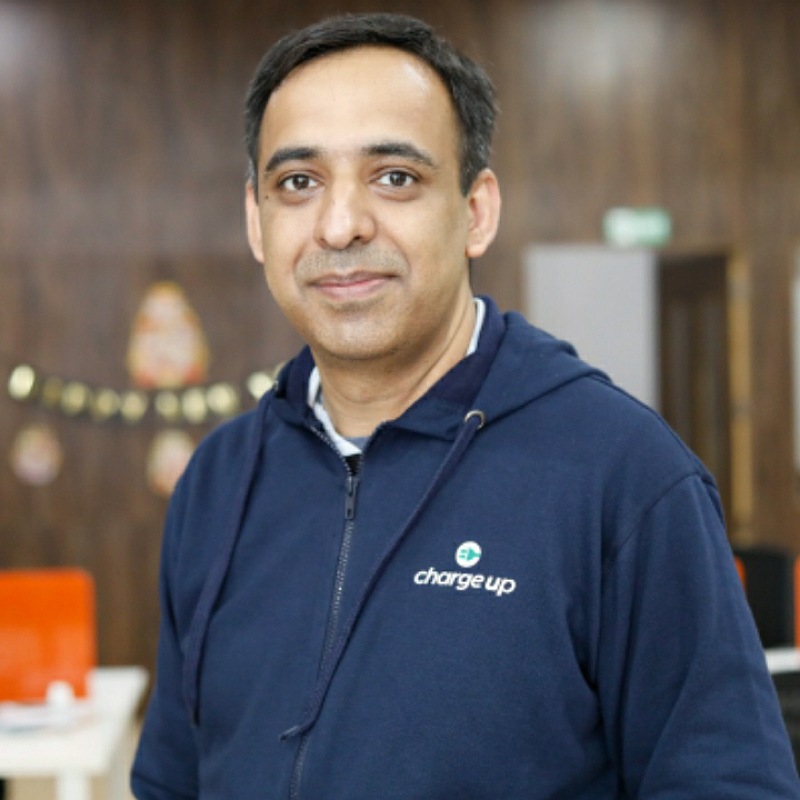
  • Ankur Madan named as COO and co-founder at Chargeup

    Ankur Madan named as COO and co-founder at Chargeup

    Mumbai: Chargeup, the homegrown battery-swapping network for e-rickshaws, has announced the joining of Ankur Madan as COO and co-founder of the company.

    At Chargeup, Madan will head operations and technology and lead the company’s product strategy, said the statement.

    Madan has over 15 years of market experience in multiple industries and is proficient in building businesses from scratch. Prior to Chargeup, he held key positions in Ubico Networks, Bharti Airtel, Haier Appliances, and Spectra.

    “Ankur is vastly experienced in product strategy and development, and managing various commercial aspects in the customer as well as business-facing arenas. With his expertise, I foresee Chargeup moving faster towards its next step of product development and market expansion across India,” said Chargeup CEO and co-founder Varun Goenka. “We are aiming to leverage best-in-class technologies to constantly improve our battery services, and Ankur’s joining augurs well for our plans on this front as well.”

    Madan has a bachelor’s degree in information technology with a master’s in management from the London School of Economics. He has also studied ‘design thinking and innovation’ as part of the MIT Sloan Executive Education programme.

    Chargeup is an advanced technology-driven solution provider that offers Battery as a Service (BaaS) support to EV drivers in India. By facilitating easy battery swapping, Chargeup is enabling electric two and three-wheeler drivers to overcome range anxiety through standardised battery technology and robust execution capabilities, said the statement. 

  • CupShup promotes Sourav Kumar to co-founder

    CupShup promotes Sourav Kumar to co-founder

    Mumbai: CupShup, a full-service agency has promoted Sourav Kumar to the position of co-founder. Prior to this, Kumar served as the growth head for over three years.

    Kumar joined CupShup in 2018 and was the seventh employee then at the company. Joining as city manager for Delhi NCR region, he rose through the ranks strengthening operations, client servicing and account management, said the statement.

    “We are delighted to have Sourav in this new role. The energy and passion was palpable even at the first meeting and Sourav has not just maintained but at times bettered it with time,” said CupShup co-founder Sidharth Singh. “His vast experience of working across different ecosystems and his agency acumen will bring in better efficiency and add to the creative talent we have in the team.”

    In his new role, Kumar will be accountable for the overall growth of CupShup. Right from strategising sales, profitability, partnership, client relationship, retention programming, planning expansion strategy, and process building.

    “I am excited and proud to take on the mandate of a co-founder at CupShup. I am thankful for Sidharth’s trust in my abilities and vision,” said Kumar. “CupShup has played a key role in my career graph, and I look forward to adding more to their growth as a company.”

  • Spice Money elevates Sanjeev Kumar & Rajneesh Arora as co-founders

    Spice Money elevates Sanjeev Kumar & Rajneesh Arora as co-founders

    Mumbai: Homegrown rural fintech Spice Money has strengthened its leadership team and elevated Sanjeev Kumar from his earlier role of CEO to co-founder and CEO. Rajneesh Arora, previously chief innovation and strategy officer, has now been appointed as co-founder and chief product and strategy officer. 

    In this new role, Kumar will drive the company’s strategic business plan that spells growth for both Spice Money and Travel Union. Arora will work closely with the product and strategy teams to deliver unique and world-class experiences to Spice Money’s partners and end-users, said the company in a statement.

    Both Kumar and Arora will be supported by a strong team of next-in-line leaders with expertise in different verticals. This fortified leadership team will fuel the next round of growth for Spice Money by furthering digital and technological innovation, it added.

    “Spice Money is all set to move to newer heights of digital and technological transformations. This needs high momentum and laser-sharp focus, which will be led by our new and thoughtful leadership,” stated Spice Money founder Dilip Modi. “We want to encourage an entrepreneurial culture through this co-founder approach and I am confident that our momentum will be continued and in fact, accelerated. All of Spice Money’s teams will work towards implementing the right strategies, plans, structures and people in place to successfully achieve our aspiration to become the largest rural fintech company in India.”

    Spice Money has expanded its business to the rural travel sector with the recent launch of Travel Union, a B2B rural travel-tech platform, that addresses the key challenges faced by rural travel agents and their customers

  • Former dentsu exec Gautam Mehra joins ProfitWheel as co-founder

    Former dentsu exec Gautam Mehra joins ProfitWheel as co-founder

    Mumbai: Gautam Mehra, dentsu International’s former chief data and product officer – APAC, has announced that he will be joining the recently announced SaaS platform ProfitWheel as co-founder along with Vivek Bhargava and Aman Khanna.

    ProfitWheel is a product company focused on creating a customer data-led marketing intelligence platform for the new direct-to-consumer world.

    “Gautam and I have worked together for over a decade, and I am delighted to have him on board as a co-founder,” said Vivek Bhargava. “Under his leadership, we will have an increased focus on driving tech innovations and building new products that will enable true intelligence in the mar-tech ecosystem. His past experience of solving a problem local to each market and driving a global product-led solution is precisely what we intend to deliver at ProfitWheel.”

    Mehra had joined dentsu Group in 2014 as business head – social media division at iProspect Communicate 2. In his last role at dentsu International (previously dentsu Aegis Network), he spearheaded the programmatic and data segment for the group in the region. He also built DMC (dentsu Marketing Cloud), the proprietary data insights to activation stack for dentsu.

    “I am driven by building products that solve large business challenges, and this feels like the right time to build something new, as ad tech reinvents itself,” Mehra said on his new role. “With ProfitWheel, we are focused on solving the biggest problems for D2C brands on effective customer acquisition, enhanced profitability, marketplace expansion, and growth in the most privacy-compliant manner.”

  • ProfitWheel brings in Aman Khanna as co-founder

    ProfitWheel brings in Aman Khanna as co-founder

    Mumbai: The SaaS startup ProfitWheel has launched its US operations and has brought in Aman Khanna as co-founder. He joins the company after a seven-year stint and will work closely with ProfitWheel co-founder Vivek Bhargava.

    Khanna has been involved in the company’s US operations since its inception and hitherto existence in stealth mode. He has spent his career in digital advertising in corporate America. 

    Previously, he has worked at iProspect, Boston, before moving to Yahoo! into a management role. He continued with his leadership positions at firms such as Adelphic Mobile and Visual IQ, before joining Nielsen.

    “Aman is the perfect partner to lead the US operations with his rich product and market experience,” said Bhargava. “Under his leadership, we are looking at growing our sales, customer success and product teams in the Americas as well as globally.”

    “These are interesting times for the adtech/martech ecosystem. As we enter a cookieless era, businesses will need to reinvent themselves in search of newer technologies that avoid the decaying tech stack,” said Khanna. “Our technology platforms are built to help service customers across the globe, industries, and business segments. As we venture into the US market, our vision is to help our clients expand globally through our products.”