Tag: CNN

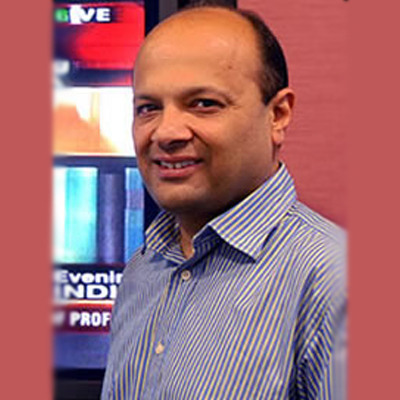
  • ‘Our expansion plans are not too dependent on CAS or DTH or any other new technology’ : Sameer Manchanda – Global Broadcast News Jt. MD

    ‘Our expansion plans are not too dependent on CAS or DTH or any other new technology’ : Sameer Manchanda – Global Broadcast News Jt. MD

    He is credited with having stitched some lucrative deals for NDTV — rather it’s said that the so-called one-sided deal that NDTV had with Star for content on Star News for five years was a combination of his ability to draft agreements and talk foreign partners into deals and NDTV promoter Prannoy Roy’s charm and credibility. In certain quarters, he is also described as the merciless corporate honcho who leaves no stone unturned to achieve success.
    Whichever way you look at it,
    Sameer Manchanda is a go-getter, easily moulding himself according to varied situations. A Fellow of the Institute of Chartered Accountants of India, he has been with the television industry since 1984 — NDTV to be precise — and has seen major stages of evolution in this sector. He has considerable and varied experience and expertise in distribution, strategic and financial planning, capital structuring and restructuring, funding, business valuations, mergers and acquisitions, collaborations and joint ventures.
    No wonder, in 2005 the entrepreneurial bug bit him when Manchanda set up Global Broadcast News Ltd along with Television Eighteen Group promoter Raghav Bahl, TV18 CEO Haresh Chawla and managing editor of NDTV Rajdeep Sardesai. He was also instrumental in formulating and finalizing the alliances with CNN and Channel7.
    In a rare interview with
    Indiantelevision.com’s Anjan Mitra, Manchanda, the joint MD of GBN (managers of English news channel CNN IBN and its Hindi sibling Channel7), looks at the industry, peers into the crystal ball for the changes taking place, the challenges ahead and what makes him tick.
    Excerpts:

    What’s the big picture in the television industry as you see it?
    Digital television and various delivery platforms for content are certain to make things exciting. The new digital wave is going to change the consumption patterns of electronic content. Platforms like DTH, IPTV, mobile TV, podcast and broadband will all happen and audiences would not be just passive onlookers, but participants and partners in the business of packaging, delivering and consuming content.

    We will need to be ready for all these. For example, mobile video is going to be a big thing in India too in the near future.

    At a time when all these things are poised to happen — and happening — the biggest challenge for any management is to figure out ways to cope with technological advances. In India, there are over 100 million mobile phones, over 100 million TV homes out of which approximately 60 million are cable and satellite homes. Just look at the consumer power of these various platforms. I see this as the future.

    Any management that could figure out ways to make its content consumable worthy for people on such different platforms would be the real winner. In the next five years, I foresee Indian media companies scaling up their operations.

    Do you foresee multi-billion dollar Indian media companies, especially broadcasting companies, coming about in future?
    Why not? If they can do it in other parts of the globe, why not in India? With ramping up of operations, valuations too would go up. If you can have a Viacom being valued at $25 billion, CBS at $20 billion, Walt Disney at $65 billion, News Corp at $20 billion and NTL at $ 7 billion (all valuations mentioned are approximate), why not a multi-billion India broadcaster?

    As India globalises and broadcasters scale up operations, in the next five to six years we could see several multi-billion dollar media companies in India.

    How is Global Broadcast Network, managing CNN IBN and Channel 7, gearing up to take advantage of the developing scenario?
    The first thing for us was to get CNN IBN on track and build it up as a strong, credible news source. After having done that, we are going in for increased interactivity as audiences are our partners and their involvement is very necessary. The programme Citizen Journalist is just one such initiative. Once people get used to that, then the advertising revenue will follow.

    Second, as a news company we decided not only do we have to be present in the English space, but also in the Hindi segment. For this we decided to go the acquisition route for Channel7. From a management perspective, while CNN IBN is on a growth path — our ratings have been good — Channel7 gives us presence in the vast Hindi market. In future, we’ll launch more channels, but getting Channel7 up there with the big boys and increasing its market share is the big task ahead of us all.

    Getting Channel7 up there with the big boys is the big task ahead of us all

    How do you want to consolidate your position as a company?
    As a group — GBN is part of the Television Eighteen Group — we do have synergies and from the management’s perspective it’s to build up an organization that would be present in all spheres of general and business news in both English and Hindi. (Television Eighteen runs CNBC TV18 and Hindi channel Awaaz).

    As a bouquet of channels, over a period of time we’d go pay to exploit the various distribution platforms. When that happens, we would also tie-up with one of the existing distribution bouquets (Zee Turner, Star, and One Alliance).

    When will the group channels actually align with an existing distribution bouquet?
    Pretty soon. We would engage in a dialogue and tie up with one of the existing distribution platforms. All such platforms need good content and we feel that our channels make compelling viewing. Within a year you’d see developments on this front.

    Would that mean both CNN IBN and Channel7 become pay channels?
    CNN IBN certainly would as all other English news channels are. CNBC TV18 draws in a substantial amount of subscription revenue. We’d keep Channel7 free to air (like other Hindi news channels) till the time leaders in this space decide to make some radical moves.

    Has GBN given up altogether an option of foraying into non-news segment of TV broadcasting?
    AT GBN, the charter is to concentrate on the news segment. Over a year’s time, we’d continue to launch more channels, but within the news segment. News is not just as we see it. It can be lifestyle and sports too as news encompass all these things. GBN would continue to operate within its core strength and there I don’t see an entertainment channel fitting in.

    How much of the expansion will depend on technologies like CAS and DTH proliferating in the Indian industry?
    Our expansion plans are not too dependent on CAS or DTH or any other new technology. Things like CAS and DTH are already making their presence felt. However, we do assume that newer technologies will come in and we should be ready for the situation. But if the future doesn’t also arrive over the next 12-18 months, our expansion plans are unlikely to get affected.

    How would you describe the present distribution scenario? You are considered a wiz in that field having, reportedly, done wonders in your previous organisation, NDTV?
    At this point of time distribution is an important component of the business. It’s like having good content. Look at FMCG companies like Coke and Pepsi. They are doing well because not only do they have popular products, but also great distribution and marketing strategies. The television business too is like that; at least evolving into one where it is important to not only have compelling content, but also good distribution. People are realizing this and have started investing in distribution to have the right mix.

    Distribution will also play a key role as the TV business goes forward with newer technologies and platforms coming up. Whether a TV channel needs to be on all platforms, whether podcast is good for only news and not entertainment, whether long term deals are good…questions like these would have to be asked by a management and answered.

    At GBN, we have decided that our channels should be on all platforms and available everywhere with the final aim of building up a rapport with the consumer in whichever way he wants to consume news. With India presently facing bandwidth problems where one TV channel is less clear than the other on a cable network, for example, it’s very important to be available on other platforms too. It’s all about building relationships with consumers, distribution partner(s) and clients.

    Though you said the company is planning to join hands with an existing distribution partner, there are reports that GBN and TV18 Group would like to build up a distribution team of its own. Comment.
    As far as GBN is concerned, we’d join a bouquet as of now. We do have an in-house distribution team, which services the clients. But that’s more from the point of view of relationship building. You need a different arm to collect money from the market and a different set-up to build relationships. We feel it’s better to have two arms doing (seemingly) separate work.

    Star, One Alliance and Zee Turner have built up an expertise in the area of collecting money and the feeling at GBN is that we should go along with it, even as an in-house team works on affiliates and relationships with them. Both can be complementary to each other.

    You mean to say the in-house distribution team would just concentrate on building relationships, while the actual work is outsourced. Seems a bit strange to me, but what do you feel? That’s how the Indian market has developed so far and we are not here to change things overnight. Our distribution team may help a foreign client, which we are doing. We have just signed up to be the Indian agent of Australian Broadcasting Corporation (ABC), an infotainment channel with large doses of news and travel shows. We don’t mind forging relationships with such foreign channels.

    Did GBN pay carriage fee when it launched its first channel?
    We did pay some amount, but that’s a standard practice. Whenever a new product is launched, one pays for visibility. Even abroad TV channels pay for visibility in the initial stage. These are considered part of the overall expenses.

    Would GBN go in for CNN-type of licensing deals as it expands its portfolio?
    We are very clear that we want to build on our existing relationships and forge new ones. We have learnt a lot from CNN at CNN IBN. Would we do similar deals as we move ahead? It depends on the value a foreign partner, or for that matter any partner, brings on the table. If for a future channel, we feel a partner can bring some value on the table, we’d explore all possibilities.

    We have just signed up to be the Indian agent of the Australian Broadcasting Corporation

    Was it a tough task integrating the working of Channel7 with the group?
    Some of the integration process is still on, but on the whole the exercise has been smooth and quite seamless. People have been busy with the re-launch, but over a period of time the management would concentrate on the integration in its entirety. The former owners understand our goals and appreciate that a lot of effort is being put in to build value.

    How did GBN/TV18 Group zero down on Channel7 for acquisition?
    I think it just happened. But two things contributed to the deal going through. One, the promoters of Jagran (which formerly owned Channel7) were professionals and, second, there was hardly any baggage in the sense that the channel was barely one- year old. We felt that the management expertise at GBN and TV18 Group could do wonders with Channel7 and, as I said, it just happened.

    What’s the next stage for Channel7?
    When we took it over, Channel7’s market share was between 6-7 per cent. Not bad for a year-old channel, but Hindi is a very competitive market. That it’s also big, makes us optimistic. So, we started off with 6-7 per cent market share of Channel7 and have managed to ramp up the share up to slightly over 10 (based on data of a week before the interview took place). The need is to carry on growing.

    From a management perspective, do you foresee any trend emerging in the mass Hindi news market?
    Aaj Tak continues to be the leader, remarkably hanging on to the advantage it took when it started several years back, but the viewership pattern for other channels are changing. In recent times, Star News has occupied the No. 2 slot, which was earlier ruled by NDTV India. This changing viewership pattern gives us some hope. It’s a long haul for Channel7, but we would certainly like to build it up as the next most credible platform for news in Hindi.

    As subsets of the TV business, what are the other revenue streams being tapped by GBN?
    Making content enabled and customized for different platforms is certainly one. Syndication of programming from the archives is another. And, taking the channels international would be a big thing. Especially if we can manage to strike lucrative deals abroad in markets like the Middle East, the US and the UK.

    We have signed a non-exclusive pact with a telecom major to make mobile handset-enabled content and feel that such relationships with other telecom companies would bring in substantial revenue over the years.

    I also feel the company needs to have a separate division where people think and make customized content for various delivery platforms. It’s not easy to encapsulate 30-minute news bulletins into one and two-minute capsules. All over the world, people are experimenting and so are we on various aspects of this business like which content will work on mobile TV, for example, and what will not.

    What percentage of the overall revenue do you think is likely to accrue from such subsets of the business?
    Quite significant over the years. In the next five to six years about 10-12 per cent of the revenue would come from content tailored for various platforms. At the moment, we are trying to form relationships for the convenience of the consumer. Going forward, this would increase also. It’s all in the future, but for that we need to be prepared. We are very clear that we are doing it and that’s why we are also building up a strong tech team.

    What sort of investment has gone into GBN up till now?
    I think in the excess of Rs 100 crore (Rs 1 billion), excluding the acquisition cost of Channel7).

    As the management head of a young company what’s your priority — the topline growth or would you rather watch the bottomline?
    We would do both. First, we’d build value, which we are doing. Second, we are also focused on the balance sheet. We are very clear that apart from building values and credibility, we are here to do business too.

    It’s too early to comment on the topline growth, but it’s picking up and doing better than our expectations. By the time we complete a year around January 2007, as a company our financials should be healthy. Unless, of course, something very dramatic happens with the economy and it goes into a tailspin over the next six months.

    When do you think the company would reach a breakeven point?
    Very soon. I am confident that by March 2007, we should be in a position to tell our shareholders some good news. Presently, we are doing well quarter-wise and the company is fairly comfortable even now. We have got the viewership, which will lead to revenues. It’s amplified in the fact that we have about 80-100 brands on our channels.

    What made you get into the entrepreneurial mode? Was it lack of due recognition at NDTV where you spent almost two decades engineering lucrative deals for the company?
    It was a combination of various factors. As a distribution and finance person, I could foresee the changes that would take place in India — changes where you need to move in and be part of. Such opportunities don’t come every day.

    Moreover, the equation and mix was just perfect to try taking advantages of the changes happening in the Indian industry. Rajdeep (Sardesai) brings in the editorial strength, I bring in the business acumen, while Raghav (Bahl, the promoter of TV18 Group) and Haresh (Chawla, the CEO of TV18) bring in the group synergies and infrastructure. It was a combination of like-minded people.

    Let me make things clear that it was not that NDTV was giving me a short shrift or not agreeing with my vision. NDTV is a fantastic company. It was pure entrepreneurial spirit where one wanted to chart out one’s own path and take some risks. It has worked fairly well till now and let’s hope that in future also it does so.

  • Zee-Turner switches off OCN Network in Mangalore

    Zee-Turner switches off OCN Network in Mangalore

    MUMBAI: Zee Turner Limited, the distribution arm of Zee Telefilms Ltd and Turner International (I) Pvt. Ltd, has finally switched off its bouquets of 26 channels on OCN Network in Mangalore due to non payment of its huge outstanding to Zee Turner and non signing of fresh agreement after expiry of earlier one.

    Zee Turner has been in negotiations with OCN for past eight months to clear its outstanding and to sign a fresh subscription agreement declaring its accurate subscriber base as the old agreement. It was found that OCN had been serving many more subscribers and households as compared to the number of subscriber households declared to Zee Turner.

    The decision to switch off the operator came in wake of fall out of negotiations and the operator’s constant abstinence from clearing its outstanding and signing the requisite agreement.

    While rest of Mangalore on CCC and ICN’s network continues to enjoy the channels of Zee Turner, close to 50,000 subscribers of OCN Network are deprived of channels like CNN, Zee Cinema, Zee TV, HBO, Cartoon Network, Pogo due to default on OCN’s part.

    Zee Turner Ltd. CEO Arun Poddar said, “We are concerned about our viewers and still trying to negotiate with OCN and have kept all our channels of communication open. We have shared an extremely healthy relationship with OCN in past and are positive of resolving the issue in an amicable manner.”

    It is to be noted that as per the regulation of the Telecom Regulatory Authority of India (Trai), if a cable operator drops a channel or bouquet of channels from his network, he is required to reduce the price of such channel/bouquet to be charged from his customers/households. The viewers are, therefore, entitled and may ask for reduction in price from their monthly cable bill if these channels are missing due to such switch off.

  • CNN launches a suite of free video podcasts

    CNN launches a suite of free video podcasts

    MUMBAI: News broadcaster CNN has announced the launch of six online video podcasts, regularly updated newscasts and programming produced specifically for digital video players.

    The video podcasts, in addition to CNN’s audio podcasting products, are available for free at www.CNN.com/podcasting and at iTunes.

    CNN.com senior VP, GM David Payne says, “For the most part, the podcasting audience skews much younger than CNN’s television viewers and, perhaps surprisingly, somewhat younger than even users of CNN.com. They were raised during the age of the Internet, not that of the 6 o’clock news. They don’t necessarily want to see polished newscasts, but they want to see the action and make judgments for themselves. So we have produced original podcasts in a format that appeals to their fast-paced lifestyles and varied interests.”

    CNN producers designed each of the podcasts specifically for the small digital video player screen, although they may also be played on personal computers and other devices. The format also allowed CNN.com to offer programming with more raw footage, high-impact video, edgy humor and experimental content.

    CNN’s video podcasts include All Access – Backstage Pass. This is a behind-the-scenes look at how CNN journalists get their stories. The launch of video podcasting marks the latest digital product from CNN. In June 2005, CNN.com began offering free video to all of its users. In December 2005, the site launched CNN Pipeline, an on-demand broadband video service that puts users in control of multiple live video streams, CNN’s video archives and on-demand news clips from CNN’s unmatched newsgathering operation around the world.

  • ‘CNN Future Summit’ global initiative launches 15 June

    ‘CNN Future Summit’ global initiative launches 15 June

    MUMBAI: Starting 15 June, CNN will showcase CNN Future Summit: Of Man and Machine. The international news channel unveiled this interactive two-year programming initiative, CNN Future Summit is designed to stimulate debate on technological advances that will shape tomorrow’s world.

    In a global initiative, CNN has compiled a think tank of the world’s leading futurologists, which, combined with an extensive multi-media open forum on CNN.com, will explore the potential impact of scientific innovation.

    In an official statement issued today, the first of four one-hour roundtable discussions, hosted by Michael Holmes from Singapore. For this, the panelist lined-up includes Alan Colman, CEO and chief scientific officer of ESI in Singapore (widely known for his work on cloning Dolly the Sheep in 1997), Joanne Pranksy billed as the world’s first robotic psychiatrist, University of Lausanne cultural and social anthropologist Daniela Cerqui, University of California synthetic biology department founding director Jay Keasling and Humanoid Robot Research Center, Korea’s Humanoid Robot Research Center Jun-Ho-Oh.

    CNN International senior VP Rena Golden says, “The world class caliber of our panelists for this first discussion is testament to the esteem in which CNN Future Summit is already held by both the scientific community and the general public. We are delighted that such an illustrious group has been chosen by the nominating committee to lead our global discussion and help form a vision of our future.”

  • Business Luminary Nandan Nilekani shares his experiences with CNN’s Todd Benjamin in ‘The Boardroom’

    Business Luminary Nandan Nilekani shares his experiences with CNN’s Todd Benjamin in ‘The Boardroom’

    Airtimes: Indian Standard Times
    Tuesday, June 6 at 1830 hrs during World News Asia
    Saturday, June 10 at 1100am during World Business this Week and
    1830 hrs during World News
    Sunday, June 11 at 1930 hrs during World News


    THE BOARDROOM is CNN’s new weekly interview segment offering insights into the minds of the world’s top business leaders. The interview segment airs across primetime evening news on WORLD NEWS ASIA and business programming including WORLD BUSINESS TODAY AND BUSINESS INTERNATIONAL. This week, CNN’s Financial Editor, Todd Benjamin interviews Nandan Nilekani, the President and CEO of Indian software giant, Infosys Technologies, on THE BOARDROOM.


    Nilekani speaks to Todd Benjamin about his childhood, family and his education and shares his experiences while building the first Indian company to be listed on the NASDAQ.


    He also talks about his expeditious journey, with his six partners, which led to the foundation of one of India’s biggest software companies. He proudly attributes his present stature to his middle class upbringing, which enabled him to dream and create a company with the highest standard of ethics, corporate governance and transparency.


    While pondering over the prevailing corruption in India, Nilekani talks to THE BOARDROOM about India’s boom, the drive behind his Company’s success and also why he believes India is ‘a good role model for emulation.’


    Next up is Brett Yormark, the 39 year old CEO of the Nets Sports and Entertainment, before Chairman of Esquel Group Marjorie Yang speaks to Andrew Stevens in Hong Kong. Finally Todd Benjamin rounds off June in an interview with Dell CEO Kevin Rollins.


    THE BOARDROOM goes beyond quarterly earnings and trading updates and focuses instead on what motivates these cognoscente CEOs, their leadership styles and strategies. Todd Benjamin in Europe, Maggie Lake in the U.S. and Andrew Stevens in Asia bring priceless face time with the biggest names in business and the top leaders of the world’s most powerful and influential companies.

  • News channels look at scoring goals

    Soccer mania is in the air! With the Fifa World Cup scheduled to kick off 9 June in Germany, news channels in India, both domestic and international, have lined up extensive plans to capture the soccer fever.

    At the moment, most news channels are running a countdown show and profiling the teams and players in various news segment of the day.

    The scenario was quite different four years back. Then the news space was predominantly ruled by the bi-lingual Star News and the Hindi-language Zee News, besides the two international news channels, BBC World and CNN International.

    But today, the same space has more players and is far more competitive. No surprise, therefore, that all the news channels are gung ho about the football fever.

     
    THE ECONOMICS OF COVERAGE

    Industry observers say that an event of such magnitude can cost a news channel between Rs 5 million to Rs 10 million. If the annual operating expenses of news channels are taken into account, then the expenditure on Fifa World Cup might not look big, though it’s an important part of a news channel’s life.



    For example, NDTV Ltd’s operating expenses round up to approximately RS 1.78 billion annually, while TV18’s touches RS 700 million. TV Today with its three channels — the fourth one started just a few days back — incurred an annual operating cost of about RS 1.07 billion. The operating cost primarily includes expenditure on marketing, personnel, administration and uplinking.


    Since all news channels have respective long term tie-ups with global wire agencies like Reuters and APTN, part coverage of events like the World Cup come at a slightly incremental cost.

    “Generally, news channels have a long term agreement with a global news agency and for events like Fifa no extra fee is charged. News channels also inks deal with the sports channel that holds the telecast rights to access various other footage,” Zee News director Laxmi Goel says.

    According to Goel, news channels are also likely to tie-up with ESPN Star Sports as it holds the rights to Fifa World Cup for this region. “At our end, the negotiations are on with ESS and we are also talking to other agencies for acquiring additional footage. Apart from that we will use extensively footage provided by Reuters and APTN,” he added.

    With the soccer fever spreading in India though the country has never qualified for playing in the tournament, ESS is literally on a high. The sports channel is charging $100,000 for 60 seconds footage per match.

    ESS’ euphoria is not shared by all the news channels though they want to provide extensive coverage of Fifa World Cup. The high cost of accessing footage from the rights holder is still an impediment in concluding deals.

    Times Now channels’ parent Times Global Broadcasting vice-president and business head Partho Das Gupta points out that the company is in the process of “closing alliances” with ESS and others.

  • Michael Ware is CNN’s Baghdad based correspondent

    Michael Ware is CNN’s Baghdad based correspondent

    MUMBAI: CNN has announced that Michael Ware, the Time magazine Baghdad bureau chief who gained renown for in-depth coverage of the insurgency in Iraq , is joining the broadcaster as a correspondent based in Baghdad.

    A frequent guest to CNN over the last five years, Ware becomes a full-time international correspondent providing news reports and analysis across all CNN networks.

    CNN senior VP international newsgathering operations Tony Maddox says, “Michael is one of the most accomplished correspondents working in Iraq . His exclusive stories and unique insights into the workings of the insurgency will increase the scope and depth of our reporting. He joins a fantastic CNN team of committed journalists in Baghdad, and we are very excited to have him as a full-time member of the CNN family.”


  • CNN to report on Asia’s pollution crisis

    CNN to report on Asia’s pollution crisis

    MUMBAI: CNN correspondents will report from across Asia on the most polluted cities in a half-hour focus on the continent’s environmental crises and the threats they pose to the rest of the world in Ill Wind: Asia’s Pollution Crisis. The special airs on 4 June at 4 30 pm and 11 30 pm.

    Anchored by Anjali Rao from Hong Kong, Stan Grant, Jill Dougherty, Ram Ramgopal, Atika Shubert and Kristie Lu Stout analyse both the causes and effects of pollution in reports from India, China, Hong Kong, Japan and the US.

    Ramgopal reports from New Delhi which, despite having won praise for converting its public transport fleet to less polluting natural gas, is now under assault from a two wheeled traffic boom.

    The journey continues towards the west coast of the United States where Kristie Lu Stout reveals how pollutants from Asia are beginning to be detected in the air and water.

    In a sign of how things may improve, Tokyo bureau chief Atika Shubert reports from Kawasaki, a city that was once a “pollution nightmare” that has transformed itself into an “eco-town”. The city’s environmental model aims to strike a rare balance between the needs of development and growth while greatly reducing pollution.

  • Al Jazeera International sees delay in launch

    Al Jazeera International sees delay in launch

    MUMBAI: The proposed English news and current affairs channel Al Jazeera International has delayed the launch of the channel from April to September at the earliest.

    The channel an offshoot of the Qatar-based Arabic network has pushed the launch date on account of series of constructions and technical glitches at its four centres in London, Doha, Kuala Lumpur and Washington, according to The Guardian.

    The channel is said to be still experiencing problems and thus, the launch has now been stated to be early September.

    The executives of the channel are said to be increasingly fed up with the slow pace of progress. “Staff are extremely frustrated, as is the management, who are tearing their hair out at the inefficiency of support staff,” said a source to the publication The Guardian.

    The bosses at the English-language service were concerned about “meddling” from Al-Jazeera’s Arabic owners, who are thought to be worried the new channel could end up a “watered down version of the BBC or CNN” and a “damp squib managed by non-Muslim westerners”.

    Although the broadcaster has inked a deal with the Sky Digital in UK, it is however finding difficulties in striking deals in the key American market.

    The Al-Jazeera spokeswoman speaking to The Guardian said that the broadcaster was not releasing an official launch date. However, she said the channel’s management had a particular date towards which they were working.

    “They are waiting on their technical requirements to be fulfilled,” she said.

    CNN and BCC are the main competitors to the Al-Jazeera International targeting the English-language news audiences, particularly in its coverage of the Middle East.

    The broadcaster has already roped in high-profile personalities, including Sir David Frost, former CNN Riz Khan, former CNN Rageh Omaar, Channel Five news presenter Barbara Serra for the London newsroom, and as well as other journalists from Sky, ITN and elsewhere.

    Recently, the channel hired a host of presenters for sports coverage.

    Al-Jazeera launched in Qatar in November 1996, bankrolled by the Emir of Qatar, but came to international prominence during the US attack on Afghanistan in 2001 when it was the only foreign broadcaster in Kabul.

    Al-Jazeera, which has been credited with changing the face of Arab television news, has faced criticism from the US as well as several Arab states. The channel is always surrounded by controversies by screening messages from the most-wanted man Osama bin Laden, the leader of the terrorist group Al-Qaida.

    The British Broadcasting Corporation has announced plans to set up its own Arabic news channel next year and has roped in former Al-Jazeera executive Salah Negm as news editor.

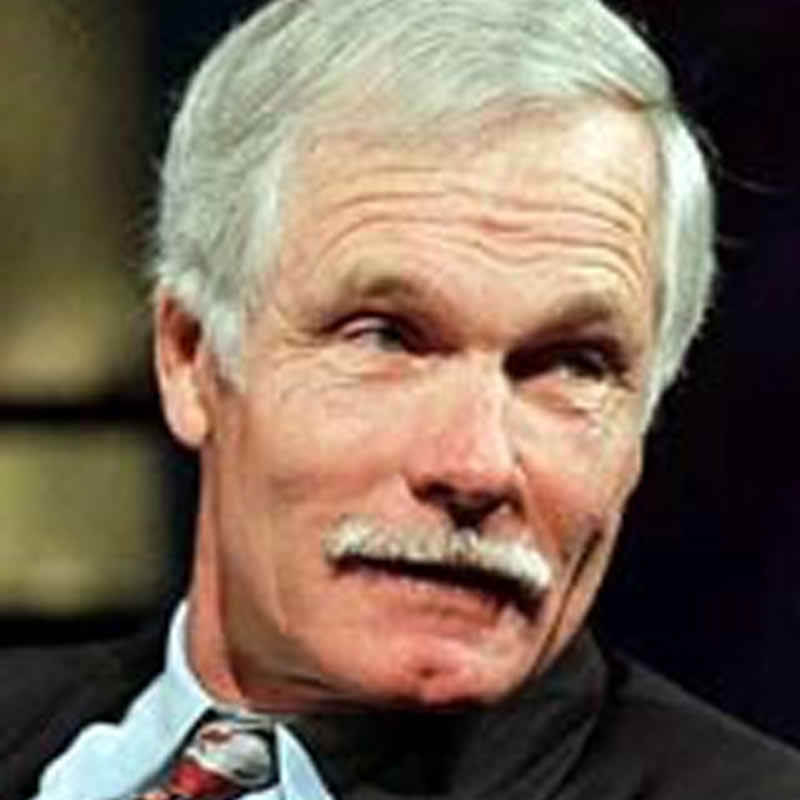
  • Ted Turner bids adieu to Time Warner

    Ted Turner bids adieu to Time Warner

    MUMBAI: For one so flamboyantly outspoken – he once famously challenged nemesis Rupert Murdoch to a face-off in the boxing ring – Ted Turner’s departure from the network he founded was pretty low key.

    There were none of the usual verbal fisticuffs, just a relatively quiet fading away for the maverick “former” media mogul as he bid goodbye on Friday to Time Warner inc, the media behemoth that had swallowed the network he created – CNN.

    The severing of all direct ties to Time Warner was made official Friday after Turner chose not to stand for re-election at the company’s annual meeting.

    Expectedly, the two-hour meeting, held in Atlanta instead of the Time Warner’s headquarters in New York, was underpinned by the recurring theme of Turner’s legacy, which saw more than one senior executive, including chairman and CEO Richard Parsons, giving their eulogies to the now ex-vice chairman.

    The fact that all the paens sung about his “legacy” had nothing more than sentimental value was not lost on anyone, including Turner, who chose not to stay till the end of the meeting and left mid-way through it and headed for his home in upscale Atlanta.

    And he did throw in a not-so-gentle parting shot before he left saying, “I have been with the company and its successors for 35 years now. I just wished that the last five years, I could have made a bigger contribution. I didn’t have that opportunity, unfortunately, but I hung in there as long as the company, I felt, needed me — until the class-action lawsuits and the antitrust problems were resolved.”

    That about summed up the regret that Turner, 67, now officially part of Time Warner’s past, will always carry with him – not to have any say in the world’s first truely global news network CNN. Well maybe he still might. After all he remains the company’s largest individual shareholder.

    But that’s not on his mind at the moment anyway. He has his philanthropic work and he has his restaurant chain – Ted’s Montana Grill that serves bison meat – as his main priorities. Turner is chairman of the United Nations Foundation, which he started with a $1 billion pledge to the agency in 1997, and co-chairs the Nuclear Threat Initiative with former US senator Sam Nunn of Georgia.

    His final words to Time Warner shareholders: “I’ve done my best and, like (famed newsman) Edward R. Murrow said in that great Warner Bros. movie that was just released a month ago, good night and good luck.”

    CNN certainly could use some of that luck as it tries desperately to catch up with Murdoch’s news ratings leader Fox News, which has left Turner’s former network in its wake these past few years.