Tag: CNN International

  • Is digital taking over print?

    Is digital taking over print?

    MUMBAI: With the growing number of avenues available for news consumption in India, viewers are often puzzled about which source to trust. The explosion of digital, television and print media has changed the way of news consumption.

    And discussing how news had moved avenues with changing time were Indian Express whole time director Anant Goenka, BBC World News television presenter Ros Atkins, Extentia Information Technology CEO Umeed Kothavala, Inshorts founder Azhar Iqubal, The Wire founding editor Siddharth Varadarajan, Zee Media Group CEO Bhaskar Das and CNN International chief New Delhi bureau Ravi Agarwal. Moderating the session was MxM India editor-in-chief Pradyuman Maheshwari.

    Over the years, we have seen news moving from print to magazines to TV and now to digital platforms. Shedding some light, Zee Media’s Das said, “That the market is supposed to move, is a basic axiom. The problem that the majority of the houses are facing is that they are stuck to one business model. With digital, there are multiple ways of making money. Monetisation moves from format to format. In the end, it’s not about the medium. You can’t compare a conventional way of system with a realistic model. There are four monsters like Google, Facebook, Apple and Amazon. They make money. There will be monopolistic tendencies.”

    Indian Express’s Anant added, “Digital has arrived. Our revenues have increased over four years and I see print is going to be there for a long time. I can say that Indian Express can survive digitally with the same reportage and structure. But I think in digital you can’t just stick to advertising. That will not be much. You will have to get audiences to pay for content.

    “Every story is different, and depending on the story, we file digital first or print first. The best investigative story we like to give to print first; exclusivity is a one minute word. At the moment we find it is exclusive on the web only for a minute. Also if it is time critical to break the story, then we do break it on web”, he explained further.

    Das said, “The audiences that consume newspapers today they were born before 1970 and are not post 1990 born. At the same time, most of the stars want to see their names in newspapers.

    The Wire’s Varadarajan added, “With digital the ability to tell stories has enhanced due to the enhanced interactivity. The viewers can consume content according to their convenience on digital platforms. Every TV channel and newspaper today recognises digital as the future. But the old adage of dollars for print, dimes for digital and pennies for mobile still holds true for most organisations.”

    Inshorts Azhar Iqbal when asked about how his news application was working and what was its future replied, “We are not making any money as of now. I don’t know how are we going to perform in the future. We are focused on ‘time is money’. As long as we can attract eyeballs, we will be able to monetize”.

    Adding, Extentia Information Technology’s Umeed Kothavala said, “Digital and technology have changed the context of consumption. Along with monetization, organisations also need to keep track of the growing power of social media, citizen journalism and also the fact that there are many more options for people to get their news from”.

    Anant took on Inshorts Azhar Iqubal, making his displeasure known at the latter copying news from Indian Express without the media group’s consent and rehashing it into a 60 word article for Inshorts’ usage.

    On the entertainment front, Varadarajan commented how a majority of entertainment news in the print sector was paid for by artistes and hence they would always prefer their exclusive interviews to be printed in the print medium rather than digital.

    CNN’s Agrawal said, ““Digital news is the present, not just the future. It is the present and is very important for us. CNN International looks at providing content globally. We don’t have a print medium. The news that we cover is from a global perspective and the information can be accessed by all the people irrespective of the geography. We as an organisation think of being the first to put out the news. We then decide on how news can be distributed across the various delivery platforms.”

    BBC’s Atkins pointed out that if BBC didn’t provide relevant news to the audience, they would not come to it. “On my show BBC Outsource, if there is a credible story, say from CNN, I will show it to my audience. Given that social media is expanding and that news can be accessed through it, we have to provide credible content to the audience.”

    The panellists also discussed the importance of maintaining the same level of credibility and gate-keeping standards on a digital platform as on traditional print or television platforms.

    Voicing his opinion, Varadarajan said, “There are two things which are important – credibility and reliability. One should always try to achieve both these elements. If you can’t pick on one, than you should always give preference to credibility”.

    “We get higher fee from most of our advertisers because the news that we are providing is credible and they know this”, added Das.

    When television came in, the pundits said that it was the end of print. When roll out of the internet, they said that print and television would not be able to compete. All the mediums have so far been able to co-exist, and even grow. With so many upcoming digital avenues, what will be interesting to see is how print will retain for itself its space in the ecosystem and how digital will be a game changer that it is already has become.
  • CNN tracks the tea industry in depth, to air ‘The Price of tea’ series

    CNN tracks the tea industry in depth, to air ‘The Price of tea’ series

    MUMBAI: CNN International is set to enlighten viewers by taking a closer look at India’s tea industry. The channel will air a three part series titled The Price of Tea under its CNN Freedom Project starting from 14 March 2016. The show will be aired during CNN’s news streaming from 5:30 pm.

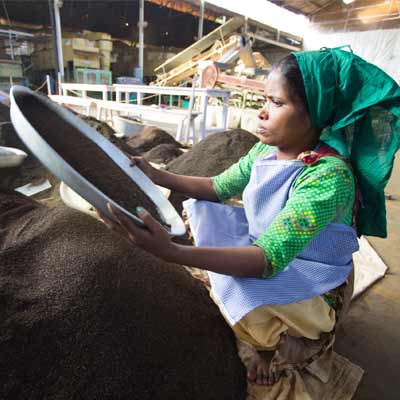
    The series will see tea-workers living in squalor in crumbling mud huts, many with no access to education. ‘The Price of Tea’ sheds light on the workers struggling to survive, while others are being trafficked into the sex trade.

    Trafficked for tea will take the viewers on a trek to Assam, India, a region that produces more tea than anywhere in the world to meet 18-year old Manju Gaur. She was just 14 when the traffickers came promising her a better life in the big city. With no education and making just pennies a day, she thought it would be a way to support her family. Instead, she saw young girls sexually assaulted by a ruthless trafficker, their money confiscated, and unable to leave. Manju managed to escape but now, she has another concern. Her 14-year old sister was still being held by traffickers.

    The second part titled The Raid is a daring raid on an apartment complex, wherein the show embeds with local police on a mission to rescue Manju’s 14-year old sister being held for more than a year by an alleged trafficker. CNN confronts the alleged trafficker, a man with a history. As police apprehend him, they demand to know where Manju’s 14-year old sister has been working. Will there be a final, emotional reunion?

    In the last segment Meet the Traffickers, the show ends by revealing the convicted trafficker who confesses to selling girls for as little as $200 (approx. Rs 13,000). He takes CNN to the railway station to show where he loaded girls on to the train and shipped them off to a life of domestic servitude and sometimes, worse.

  • CNN tracks the tea industry in depth, to air ‘The Price of tea’ series

    CNN tracks the tea industry in depth, to air ‘The Price of tea’ series

    MUMBAI: CNN International is set to enlighten viewers by taking a closer look at India’s tea industry. The channel will air a three part series titled The Price of Tea under its CNN Freedom Project starting from 14 March 2016. The show will be aired during CNN’s news streaming from 5:30 pm.

    The series will see tea-workers living in squalor in crumbling mud huts, many with no access to education. ‘The Price of Tea’ sheds light on the workers struggling to survive, while others are being trafficked into the sex trade.

    Trafficked for tea will take the viewers on a trek to Assam, India, a region that produces more tea than anywhere in the world to meet 18-year old Manju Gaur. She was just 14 when the traffickers came promising her a better life in the big city. With no education and making just pennies a day, she thought it would be a way to support her family. Instead, she saw young girls sexually assaulted by a ruthless trafficker, their money confiscated, and unable to leave. Manju managed to escape but now, she has another concern. Her 14-year old sister was still being held by traffickers.

    The second part titled The Raid is a daring raid on an apartment complex, wherein the show embeds with local police on a mission to rescue Manju’s 14-year old sister being held for more than a year by an alleged trafficker. CNN confronts the alleged trafficker, a man with a history. As police apprehend him, they demand to know where Manju’s 14-year old sister has been working. Will there be a final, emotional reunion?

    In the last segment Meet the Traffickers, the show ends by revealing the convicted trafficker who confesses to selling girls for as little as $200 (approx. Rs 13,000). He takes CNN to the railway station to show where he loaded girls on to the train and shipped them off to a life of domestic servitude and sometimes, worse.

  • ‘There is a ‘church and state’ line between editorial and advertising’ :Sunita Rajan

    ‘There is a ‘church and state’ line between editorial and advertising’ :Sunita Rajan

    MUMBAI: Time and again news media, especially broadcast has come under scrutiny for compromising its editorial because of advertisers. Paid news and native advertising aren’t new to the industry and neither is the eternal debate between editorial and advertorial. Because the fact remains that the industry is heavily dependent on advertisers, and while selling content on entertainment channels is a task by itself, when it comes to news channel or other news media, it’s a completely different ballgame.

    While people are quick to point fingers and accuse media for being ‘sold’ and its content being ‘paid news’, they seldom look at it from the shoes of those who perform the tough balancing act of editorial and advertising sales and keep the machine running so more news is produced and reported.

    To understand how a popular mainstream media goes about doing its ‘business’ while ensuring that its editorial credibility is intact, indiantelevision.com’s Papri Das got in touch with CNN International advertising sales asia pacific VP Sunita Rajan to get some expert insight.

    A key member of the CNN International team, Rajan has been tasked with setting the business strategy to drive advertising revenue for CNN’s global portfolio of multi-platform products among Asia Pacific based advertisers. With an emphasis on integrated advertiser solutions across the full range of CNN’s linear and non-linear properties, she is responsible for managing strategic relationships and brand partnerships. 

    Excerpts from the interaction:

    With broadcast news being heavily dependent on advertising revenue, how does CNN go about creating news content without falling prey to native advertorials?

    I would like to break the response down in three parts. Firstly, as an advertising sales person, I don’t manage or control editorial. That’s part of the business agreement. My role is to run the business which is advertising and sales across the Asia pacific region. I think the best analogy to describe how we look at this is that there should be church and state lines between editorial and advertising. CNN is very clear about it. There is no blurring of those lines. 

    We have maintained that we keep our audiences at the heart of what we do. Our editorial ensures that every piece of content that we produce is of value to the audiences. We don’t make the news, we report the news. 

    Even in the features, long form and analysis pieces that we do, we are mindful and also extremely stringent about selecting the stories that we believe are of value to the audiences. For example, our series on Silk Route, or even a lifestyle series.

    Can you explain the business model for CNN international?

    Our business model for CNN international is of ad sales and content sales. The other stream of revenue is business development which we have initiated in the last couple of years. The three key pillars of all streams of revenue are distribution, content and ad sales.

    What happens when a piece of editorial content has a conflict of interest with an advertiser?

    I wouldn’t say there is a conflict of interest because we are not kept informed of what editorial does. Marketing and ad sales never get into the editorial meets. The only space where there’s a discussion or interface it is with the number of features content that we do special seasons or theme weeks. There are times when the editorial highlights or showcases a particular country. We have a number of franchises, like On The Road, which is focusing on India this time as its relevant to our audiences. India is being talked about and with Modi’s Make In India falling into place, the youth and their aspiration need to be looked at.

    What brings advertisers to CNN?

    We go and talk to brands and partners, we build commercial partnerships. What we sell to clients and what we bring to the conversation is the brand proposition. We talk about our audiences, scale and size, texture and profile and a bit of what these audiences care about and why they consume content on CNN, how they come to CNN for its unique content and CNN as a platform. To be honest, what brands are buying is the quality of the audience, the profile of the audience, and that’s what we showcase when we going for a pitch.

    How do you react to advertisers wanting to get an editorial favour as part of an advertising deal?

    We don’t promise the clients editorial coverage if that is what you are asking. I think the reason the clients come into conversations with CNN is because they recognise the value of the brand and they recognise the principles that CNN as an international platform adheres to. They come to us because of that integrity and the value we bring to the table, and not because they think they can influence the editorial. There are a number of channels that do operate with that market behaviour probably

    From the ad sales point of view, for me and my team, it is our job to identify themes and content relevant to the client. For example we have CNN Money, which is an online vertical that CNN operates and that’s our business proposition as well. It’s about how we present to our audience, what is unique about the content for brands and advertisers, the differentiation between how we capture the story and how others do it. Because we are not just focused in the stock markets, we go beyond that and talk about the aspirational values of stories and stories on finance and wealth etc.

    How different is advertising sales in news channels from that of other entertainment broadcasters?

    Ad sales for news, whether it’s international market or local news is very different from general entertainment channels and sports channels. Those brands and their content are very much a point of view. News, on the other hand is a must have; a daily habit. You dip in and out of it but it’s 24 by 7. It’s less about the specific show. Yes, we do have content on a specific time, be it daily weekly or monthly.  We do offer certain programs for sponsorships, everything except for news and current affairs and business as it can’t be sponsored in Europe like everywhere else. We don’t necessarily take one program to the market and ask for a sponsor for it. That’s because’ when you are buying news, you are buying the brands reach and not its audience at 7 pm or 9 pm like entertainment channels. Now advertisers may choose to place their advertisement at a specific time of the day. That’s where I come in and recommend what the media schedule will look like and which programming would be more relevant to the brand. 

    But there are editorial events such as Heroes which is a very popular franchise and is in its 10th year this year. Or a republican debate, which we do sell as a big point of view. It has specific time bands and exclusives with CNN, so an occasion such as that is sold as a standalone property.

    How important is TV viewership ratings to you from an ad sales perspective? 

    Whole news brands and channels always had a good proportion of viewership command, it is not always that a news broadcaster focuses its ad sales or the opportunity to associate with brands just based on television ratings. We don’t sell on ratings but the reach of the channel across a week and also the context or the value of the environment. It is very much a brands sale than ‘how many people are watching or engaging with the channel.’

    Both in India and in other markets, it is also about brands looking for an international platform and reach. I am not saying that we are not getting the BRAC ratings, but we are not selling on just the BARC ratings. We also very much have a multiscreen and multiplatform presence, be it on TV, desktop or the mobile or through a responsive website. 

    There are a number of digital platforms in India that have started aggregating short form video content on news that audiences can consume on demand. Are they competition to conventional news broadcasters when it comes to the digital footprint?

    From a business owner perspective and media owner perspective, one needs to be able to be where the audiences are, be it on an investment scale or technology scale that drives one’s content. And to be where the audiences are, you need to serve where they consume the content. Rather than concentrating on just creating programming, it is important to recognise who your audiences are, where are they consuming content and what kind of content they prefer. Not forgetting your primary audience on television, it is also increasingly necessary to evolve so that you have as many touch points with your audiences as possible.

    As far as CNN is concerned we look at it positively. It comes as an advantage to have worked in a global market. We own the content we produce and showcase so we work with a number of platforms and partner with them, whether it’s Facebook, Youtube or Snapchat. While we see our content through such platforms, we also aggregate our own content, providing it to enrich the user experience, and driving audiences. So a number of these technology platforms have recognised the value of working with CNN. We don’t see them as threats but as opportunities. 

  • ‘There is a ‘church and state’ line between editorial and advertising’ :Sunita Rajan

    ‘There is a ‘church and state’ line between editorial and advertising’ :Sunita Rajan

    MUMBAI: Time and again news media, especially broadcast has come under scrutiny for compromising its editorial because of advertisers. Paid news and native advertising aren’t new to the industry and neither is the eternal debate between editorial and advertorial. Because the fact remains that the industry is heavily dependent on advertisers, and while selling content on entertainment channels is a task by itself, when it comes to news channel or other news media, it’s a completely different ballgame.

    While people are quick to point fingers and accuse media for being ‘sold’ and its content being ‘paid news’, they seldom look at it from the shoes of those who perform the tough balancing act of editorial and advertising sales and keep the machine running so more news is produced and reported.

    To understand how a popular mainstream media goes about doing its ‘business’ while ensuring that its editorial credibility is intact, indiantelevision.com’s Papri Das got in touch with CNN International advertising sales asia pacific VP Sunita Rajan to get some expert insight.

    A key member of the CNN International team, Rajan has been tasked with setting the business strategy to drive advertising revenue for CNN’s global portfolio of multi-platform products among Asia Pacific based advertisers. With an emphasis on integrated advertiser solutions across the full range of CNN’s linear and non-linear properties, she is responsible for managing strategic relationships and brand partnerships. 

    Excerpts from the interaction:

    With broadcast news being heavily dependent on advertising revenue, how does CNN go about creating news content without falling prey to native advertorials?

    I would like to break the response down in three parts. Firstly, as an advertising sales person, I don’t manage or control editorial. That’s part of the business agreement. My role is to run the business which is advertising and sales across the Asia pacific region. I think the best analogy to describe how we look at this is that there should be church and state lines between editorial and advertising. CNN is very clear about it. There is no blurring of those lines. 

    We have maintained that we keep our audiences at the heart of what we do. Our editorial ensures that every piece of content that we produce is of value to the audiences. We don’t make the news, we report the news. 

    Even in the features, long form and analysis pieces that we do, we are mindful and also extremely stringent about selecting the stories that we believe are of value to the audiences. For example, our series on Silk Route, or even a lifestyle series.

    Can you explain the business model for CNN international?

    Our business model for CNN international is of ad sales and content sales. The other stream of revenue is business development which we have initiated in the last couple of years. The three key pillars of all streams of revenue are distribution, content and ad sales.

    What happens when a piece of editorial content has a conflict of interest with an advertiser?

    I wouldn’t say there is a conflict of interest because we are not kept informed of what editorial does. Marketing and ad sales never get into the editorial meets. The only space where there’s a discussion or interface it is with the number of features content that we do special seasons or theme weeks. There are times when the editorial highlights or showcases a particular country. We have a number of franchises, like On The Road, which is focusing on India this time as its relevant to our audiences. India is being talked about and with Modi’s Make In India falling into place, the youth and their aspiration need to be looked at.

    What brings advertisers to CNN?

    We go and talk to brands and partners, we build commercial partnerships. What we sell to clients and what we bring to the conversation is the brand proposition. We talk about our audiences, scale and size, texture and profile and a bit of what these audiences care about and why they consume content on CNN, how they come to CNN for its unique content and CNN as a platform. To be honest, what brands are buying is the quality of the audience, the profile of the audience, and that’s what we showcase when we going for a pitch.

    How do you react to advertisers wanting to get an editorial favour as part of an advertising deal?

    We don’t promise the clients editorial coverage if that is what you are asking. I think the reason the clients come into conversations with CNN is because they recognise the value of the brand and they recognise the principles that CNN as an international platform adheres to. They come to us because of that integrity and the value we bring to the table, and not because they think they can influence the editorial. There are a number of channels that do operate with that market behaviour probably

    From the ad sales point of view, for me and my team, it is our job to identify themes and content relevant to the client. For example we have CNN Money, which is an online vertical that CNN operates and that’s our business proposition as well. It’s about how we present to our audience, what is unique about the content for brands and advertisers, the differentiation between how we capture the story and how others do it. Because we are not just focused in the stock markets, we go beyond that and talk about the aspirational values of stories and stories on finance and wealth etc.

    How different is advertising sales in news channels from that of other entertainment broadcasters?

    Ad sales for news, whether it’s international market or local news is very different from general entertainment channels and sports channels. Those brands and their content are very much a point of view. News, on the other hand is a must have; a daily habit. You dip in and out of it but it’s 24 by 7. It’s less about the specific show. Yes, we do have content on a specific time, be it daily weekly or monthly.  We do offer certain programs for sponsorships, everything except for news and current affairs and business as it can’t be sponsored in Europe like everywhere else. We don’t necessarily take one program to the market and ask for a sponsor for it. That’s because’ when you are buying news, you are buying the brands reach and not its audience at 7 pm or 9 pm like entertainment channels. Now advertisers may choose to place their advertisement at a specific time of the day. That’s where I come in and recommend what the media schedule will look like and which programming would be more relevant to the brand. 

    But there are editorial events such as Heroes which is a very popular franchise and is in its 10th year this year. Or a republican debate, which we do sell as a big point of view. It has specific time bands and exclusives with CNN, so an occasion such as that is sold as a standalone property.

    How important is TV viewership ratings to you from an ad sales perspective? 

    Whole news brands and channels always had a good proportion of viewership command, it is not always that a news broadcaster focuses its ad sales or the opportunity to associate with brands just based on television ratings. We don’t sell on ratings but the reach of the channel across a week and also the context or the value of the environment. It is very much a brands sale than ‘how many people are watching or engaging with the channel.’

    Both in India and in other markets, it is also about brands looking for an international platform and reach. I am not saying that we are not getting the BRAC ratings, but we are not selling on just the BARC ratings. We also very much have a multiscreen and multiplatform presence, be it on TV, desktop or the mobile or through a responsive website. 

    There are a number of digital platforms in India that have started aggregating short form video content on news that audiences can consume on demand. Are they competition to conventional news broadcasters when it comes to the digital footprint?

    From a business owner perspective and media owner perspective, one needs to be able to be where the audiences are, be it on an investment scale or technology scale that drives one’s content. And to be where the audiences are, you need to serve where they consume the content. Rather than concentrating on just creating programming, it is important to recognise who your audiences are, where are they consuming content and what kind of content they prefer. Not forgetting your primary audience on television, it is also increasingly necessary to evolve so that you have as many touch points with your audiences as possible.

    As far as CNN is concerned we look at it positively. It comes as an advantage to have worked in a global market. We own the content we produce and showcase so we work with a number of platforms and partner with them, whether it’s Facebook, Youtube or Snapchat. While we see our content through such platforms, we also aggregate our own content, providing it to enrich the user experience, and driving audiences. So a number of these technology platforms have recognised the value of working with CNN. We don’t see them as threats but as opportunities. 

  • Huawei extends commercial partnership with CNN

    Huawei extends commercial partnership with CNN

    MUMBAI: Huawei is extending its commercial partnership with CNN International launching a 12-week integrated campaign that spans program sponsorship, on-air weekly segments and vignettes, spot advertising, banner ads and digital components.

    The centre-piece of the campaign is the sponsorship of CNN International flagship program Connect the World in Asia and Latin America. Live from Abu Dhabi, Connect the World is hosted by Becky Anderson and analyses today’s news stories, anticipates their consequences and contextualises their origins.

    The Connect the World program sponsorship is complemented with the launch of a new on-air series called The Connectors, which will be seen across APAC, LATAM, and EMEA.

    The Connectors explores the creative thinking behind some of the world’s most successful products, as well as the innovative business solutions shaping brands today. Each week will see a creative team take audiences on a journey from idea to fruition.

    Beginning week of 1 February, 2016, the first segment features internationally-renowned Aardman Animations, the creators of the iconic Wallace and Gromit series. Aardman creative director Peter Lord and his team discuss the creative process behind Special Delivery, a new immersive 3D interactive short story project commissioned by Google Spotlight Stories.

    In addition to the segments, weekly vignettes will showcase people from the world of business and lifestyle who use straightforward logic to solve problems plaguing their industry. Kicking-off the series is Dearman, a start-up clean tech company that uses liquid air and nitrogen to deliver zero-emission power and cooling.

    CNN International vice president advertising sales Asia Pacific Sunita Rajan said, “CNN International and Huawei have had a long-standing relationship but this new campaign which incorporates program sponsorship and an on-air series takes the partnership to a much deeper level. We’re delighted to partner with Huawei across CNN’s television and digital platforms and we’re confidentThe Connectors will resonate with audiences around the world.”

    Huawei Consumer Business Group CMO Glory Zhang added, “We are thrilled to further our relationship with CNN and its exceptional reach. The Connectors series perfectly complements our vision of ‘Building a Better Connected World,’ emphasising a need for greater agility, creativity and compelling content behind businesses today. Being able to reach audiences via integrated platforms that resonate is key for us. We are confident the latest CNN campaign will propel our message to new heights, be it to showcase the newest Huawei watch, Mate 8 or P8 Smartphones.”

    The Connectors begins week of 1 February, 2016 and airs in CNN International flagship programConnect the World.

  • Huawei extends commercial partnership with CNN

    Huawei extends commercial partnership with CNN

    MUMBAI: Huawei is extending its commercial partnership with CNN International launching a 12-week integrated campaign that spans program sponsorship, on-air weekly segments and vignettes, spot advertising, banner ads and digital components.

    The centre-piece of the campaign is the sponsorship of CNN International flagship program Connect the World in Asia and Latin America. Live from Abu Dhabi, Connect the World is hosted by Becky Anderson and analyses today’s news stories, anticipates their consequences and contextualises their origins.

    The Connect the World program sponsorship is complemented with the launch of a new on-air series called The Connectors, which will be seen across APAC, LATAM, and EMEA.

    The Connectors explores the creative thinking behind some of the world’s most successful products, as well as the innovative business solutions shaping brands today. Each week will see a creative team take audiences on a journey from idea to fruition.

    Beginning week of 1 February, 2016, the first segment features internationally-renowned Aardman Animations, the creators of the iconic Wallace and Gromit series. Aardman creative director Peter Lord and his team discuss the creative process behind Special Delivery, a new immersive 3D interactive short story project commissioned by Google Spotlight Stories.

    In addition to the segments, weekly vignettes will showcase people from the world of business and lifestyle who use straightforward logic to solve problems plaguing their industry. Kicking-off the series is Dearman, a start-up clean tech company that uses liquid air and nitrogen to deliver zero-emission power and cooling.

    CNN International vice president advertising sales Asia Pacific Sunita Rajan said, “CNN International and Huawei have had a long-standing relationship but this new campaign which incorporates program sponsorship and an on-air series takes the partnership to a much deeper level. We’re delighted to partner with Huawei across CNN’s television and digital platforms and we’re confidentThe Connectors will resonate with audiences around the world.”

    Huawei Consumer Business Group CMO Glory Zhang added, “We are thrilled to further our relationship with CNN and its exceptional reach. The Connectors series perfectly complements our vision of ‘Building a Better Connected World,’ emphasising a need for greater agility, creativity and compelling content behind businesses today. Being able to reach audiences via integrated platforms that resonate is key for us. We are confident the latest CNN campaign will propel our message to new heights, be it to showcase the newest Huawei watch, Mate 8 or P8 Smartphones.”

    The Connectors begins week of 1 February, 2016 and airs in CNN International flagship programConnect the World.

  • CNN International Commercial names Rani Raad as president

    CNN International Commercial names Rani Raad as president

    MUMBAI: CNN International Commercial has appointed Rani R. Raad to the new role of president.


    In this role, Raad will continue to be responsible for CNN’s commercial functions outside the US. In addition, the development of Turner International’s programmatic trading strategy will be facilitated under his leadership.


    Previously as CNN International executive vice president and chief commercial officer, Raad has led the CNN International Commercial group since it was created in 2013 to directly align all of CNN’s international commercial activity into one organisation. This activity spans core business activities such as advertising sales, content sales and partnerships, business development, marketing and research.


    Turner International president Gerhard Zeiler said, “Rani has a remarkable track record in leading a diverse portfolio of commercial initiatives across international markets. He has built a new digital team that is the authority in this space and has transformed the commercial operation for CNN internationally, bringing in a new leadership team to deliver best-in-class and award-winning ad sales solutions as well as re-setting the licensing and content sales businesses to yield a suite of new branded initiatives around the globe.”


    Raad added, “I’m excited and passionate about the role that CNN continues to play in today’s fast-changing news and media landscape. As the world’s news leader, our commitment to innovation underpins our commercial activities as well as the brand’s editorial output. I look forward to being part of this change as we bring to market even more sophisticated, data-driven and creative solutions for our wide range of commercial partners.”


    Previously Raad also held the position of senior vice president and managing director for CNN International Ad Sales. He will continue to have responsibility over Turner’s Kids and General Entertainment businesses across Turkey and the Middle East.


    Raad began his career with CNN in New York and is now based in London.

  • CNN International Commercial names Rani Raad as president

    CNN International Commercial names Rani Raad as president

    MUMBAI: CNN International Commercial has appointed Rani R. Raad to the new role of president.


    In this role, Raad will continue to be responsible for CNN’s commercial functions outside the US. In addition, the development of Turner International’s programmatic trading strategy will be facilitated under his leadership.


    Previously as CNN International executive vice president and chief commercial officer, Raad has led the CNN International Commercial group since it was created in 2013 to directly align all of CNN’s international commercial activity into one organisation. This activity spans core business activities such as advertising sales, content sales and partnerships, business development, marketing and research.


    Turner International president Gerhard Zeiler said, “Rani has a remarkable track record in leading a diverse portfolio of commercial initiatives across international markets. He has built a new digital team that is the authority in this space and has transformed the commercial operation for CNN internationally, bringing in a new leadership team to deliver best-in-class and award-winning ad sales solutions as well as re-setting the licensing and content sales businesses to yield a suite of new branded initiatives around the globe.”


    Raad added, “I’m excited and passionate about the role that CNN continues to play in today’s fast-changing news and media landscape. As the world’s news leader, our commitment to innovation underpins our commercial activities as well as the brand’s editorial output. I look forward to being part of this change as we bring to market even more sophisticated, data-driven and creative solutions for our wide range of commercial partners.”


    Previously Raad also held the position of senior vice president and managing director for CNN International Ad Sales. He will continue to have responsibility over Turner’s Kids and General Entertainment businesses across Turkey and the Middle East.


    Raad began his career with CNN in New York and is now based in London.

  • CNN International expands its Asia Pacific editorial team

    CNN International expands its Asia Pacific editorial team

    MUMBAI: CNN International has announced the expansion of its Asia Pacific editorial team with CNNMoney to have a presence in New Delhi plus additional staff in its Hong Kong bureau.


    CNNMoney is CNN’s top destination for money news, reporting the latest business headlines and top financial stories for viewers and readers all over the world. Headquartered in New York, with a presence in London and Hong Kong, the new India position marks the next phase of CNNMoney’s expansion for Asia Pacific and further strengthens the world’s largest global business news source.


    The New Delhi post will be held by associate editor Charles Riley who will be responsible for reporting on key economic stories and developing new editorial content from India and expanding the network’s business coverage from the region. Riley was most recently based in Hong Kong where he pioneered CNNMoney’s coverage from Asia. His Hong Kong role will be filled by CNN Digital producer Jethro Mullen who will join the CNNMoney team in January.


    CNN International has also appointed an additional three new members to the Hong Kong editorial team, further cementing its position as a centre for newsgathering excellence. Juliet Perry joins as a digital producer and Natalie Leung takes on the role of associate designer – both charged with enhancing desktop, mobile and social platform capabilities. On the news desk, Zahra Ullah joins as an assignment editor bolstering the already strong line-up of senior producers.


    “Nothing gives me greater pleasure than finishing the year with expanding our editorial presence in India and Hong Kong,” said CNN International senior VP and managing editor Ellana Lee. “Increasing our resources shows once again our commitment to Asia-Pacific and the strength of our newsgathering capabilities.”


    The Hong Kong bureau will continue to grow in 2016 with further staff appointments expected to be made in the first quarter of next year.