Tag: CNN-IBN

  • Manmohan Singh CNN IBN’s ‘Man of the Year’

    Manmohan Singh CNN IBN’s ‘Man of the Year’

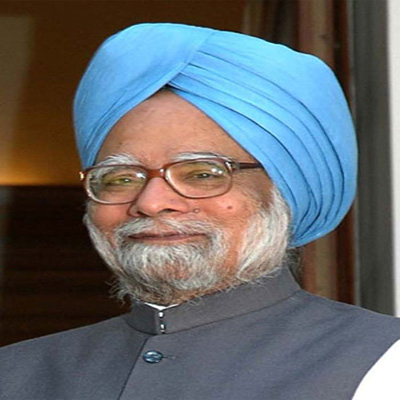
    NEW DELHI: The word was out early last morning in huge ads splashed in newspapers that Dr Manmohan Singh, the Indian premier had won the Indian Man of the Year in the “Politics” category, but later in the evening in a high-tech massive awards ceremony, he was declared the overall winner of the CNN-IBN Indian Man of the Year 2007.

    The organisers had thought he would perhaps finally be able to make it, but he could not. The award was received on his behalf by Dr Sanjay Baru, his media in-charge. But soon after, Singh was shown receiving his award at his residence in a special TV coverage. The gala event saw some of the top men and women from business, media and political fields attend the first ever CNN-IBN Indian Man of the Year awards.

    With the biggest ever business takeover of Corus Steel by the Tata group, Ratan Tata expectedly won the award in the business category. He too could not attend and the prize and citation were received by his representative.

    Laxmi Narayan Mittal had also been in the running in the business section, but had to make way to Tata. However, his stature and achievement was rewarded by a Jury Award. But perhaps the best surprise was in the sports category, with Jeev Milkha Singh winning the sports award, with a proud father, Flying Sikh, Milkha Singh applauding. Sania Mirza failed the rigorous tests and processes involved, though Amar Singh, sitting in the audience would have none other than her as his choice.

    “Jeev’s mother and I never wanted him to be a sportsperson, because when we were in sports there was no money in it. We wanted him to become a doctor or engineer, but he went ahead and became a golfer. Now that he has done so, he must win every award in the sport,” Milkha Singh said.

    There were two other delightful decisions. Rajkumar Hirani, director of “Lagey Raho Munnabhai” and the right to information missionary Arvind Kejriwal won the awards in the entertainment and social work categories.

    Hirani said he was overwhelmed by the audience reaction to the film. “I was scared when we did the film. It is truly gratifying that a concept like Gandhism has found a meaning in the context of the 21st century India,” Hirani said.

    Introducing the awards, CNN-IBN chief editor Rajdeep Sardesai said that the idea was first floated by one of his senior colleagues but “My first reaction was – Oh, another award.” He said that most Indian awards were confusing: who chose them, on what criteria, what was the credibility?

    “We decided that if we have to go for an awards ceremony, we needed to have that credibility. That is why some of India’s top people were selected as jury, headed by eminent jurist Soli J Sorabjee.” Strict criteria were fixed and nominations received from across the country. These were scrutinised and the jury spent days going through the process.

    “We wanted the Indian’s to vote as a whole and hence the SMS votes were also invited,” However, Sardesai said that “We knew SMS votes can be fixed, so there was a modicum of doubt about that.” Still, he said, some factors were considered from there.

    Finally, the awardees were decided and he along with the jury were satisfied with the choice as credible and acceptable.

    The jury comprised of Sorabjee, senior police officer and social worker Kiran Bedi, former billiards champion Geet Sethi, industrialist Deepak Parekh and Infosys boss Nandan Nilekani.

    Interestingly, before the announcement of prize for each category, members of the audience were asked their choice. In one such response, railways minister Laloo Prasad drew laughter when he refused to comment. “Yeh judicial mamla hain, to jury nay jo kaha hum usko mantey hain (This is a judicial matter, and I stand by the verdict of the jury).

    Sadesai had spoken of the new, vibrant India, the cynosure of world business, and it was thus in the fitness of things that Pepsi CEO Indra Nooyi bagged the jury’s verdict in the NRI category.

    The audience was regaled when Sorabjee said that deciding on awards was fraught with danger, of losing old friends, but in a more serious note, added that 100 top Indians had been initially short-listed and the most important deciding factor in the final verdict was, did the person concerned do India proud in his or her area of activity and put India on the global map?

    Somenath Chatterjee, Speaker, Lok Sabha brought the ceremony late at night by a long and arduous speech.




  • Indian Telly Awards Technical Nite hits new high

    Indian Telly Awards Technical Nite hits new high

    MUMBAI: They were the real stars at the Sixth Indian Telly Awards Technical Nite. The production teams that sweat it out to set new standards of technical quality, the marketing whizkids and ad sales teams that work quietly behind the scenes to build up the channel and the brands around it, the programmers who brainstorm over endless cups of coffee to hit upon that one single bright idea that will get the audience to sit up and take notice.

    Indiantelevision.com, along with its partners Zee Network, Aaj Tak, CNN IBN, IBN 7, Times Now, Zee Cinema, Radio City, Bright Advertising, Rajasthan Patrika and Mid Day, Fun Cinema, CMCG India, Tellychakkar.com and AnimationXpress.com, dedicated the event to recognize and laud the efforts of all those individuals, teams and channels who made television a viewing pleasure in the past year.

    The awards event was a sparkling affair held at the St Andrew’s Auditorium in Bandra.

    In Indiantelevision founder and CEO Anil Wanvari’s words, “This is really what television is all about and it gives me great pride and satisfaction that we at Indian television have had the opportunity, for the sixth year running, to acknowledge and reward all the great work that this vibrant industry is delivering. Happy Viewing!”

    As for the winners, here’s how the story unfolded:

    BEST CHANNELS

    The kid’s entertainment space is getting more competitive by the day but Hungama TV managed to keep the little one’s hooked and bagged the Best Kid’s channel. Channel [V] won the best music channel award, while HBO was awarded the best English movie channel. CNBC TV18 maintained its numero uno position in the business news channel segment once again.

    The Big Idea award went to CNN IBN’s ‘Citizen Journalist’, an initiative that has allowed viewers to be part of breaking news. The best interactive show award was bagged by Cellcast’s Bid2Win while the Cable operator/ MSO (Multi Systems Operator of the year went to Hathway Cable and Datacom Pvt Ltd.

    PROGRAMMING AWARDS

    Current Affairs Programme
    Jessica’s Fight For Justice NDTV 24 X 7

    Business Programme
    Business Baazigar
    25 FPS
    Zee TV

    Music Programme
    Sa Re Ga Ma Pa Zee TV

    Non-fiction Programme on Entertainment Channel
    The Great Indian Laughter Challenge Dwitiya
    Endemol India / Star One

    Non Fiction Programme On News Channel
    Red Corridor
    CNN IBN

    TV Documentary
    Missing In Action
    CNN IBN

    Edutainment / Science / Knowledge Based Show
    India Innovates
    NDTV Profit

    News Show
    Witness – Vidarbha Farmers : Suicide Tourism?
    NDTV 24 X 7

    Entertainment News Show
    Gustakhi Maaf
    NDTV India

    Lifestyle & Fashion Show
    Maximum Style
    Multimedia Communications / Zoom

    Talk Show on a News Channel
    State Of The Nation
    CNN IBN

    Talk Show on an Entertainment Channel
    Lola T[V]
    Channel [V]

    Cookery Show
    The Foodie
    TIMES NOW

    Sports News Show
    Love Of Cricket
    CNN IBN

    TECHNICAL AWARDS

    Special/Visual Effects for Television
    Tilak Shetty
    J Bole To Jadoo
    Graphiti Multimedia

    Art Direction (Set Designing)
    Omung Kumar Bhandula
    Dharti Ka Veer Yodha Prithviraj Chauhan
    Sagar Films Pvt Ltd

    Art Direction (Game show / Talk Show/ Reality Show/ Events)
    Omung Kumar Bhandula
    Kenstar Max
    Stardust Awards

    Videography (Best TV Cameraman)
    Alok Upadhyay
    Detective Omkar Nath
    DON Sphere Origins

    Videography (Best TV Cameraman) – News & Documentary
    Manvendra Gautam
    Special Report -Saving the Congo
    New Delhi Television Ltd

    Costumes for a TV Programme
    Nisha Sagar, Tara Desai, Neerushaa
    Dharti Ka Veer Yodha Prithviraj Chauhan
    Sagar Films Pvt Ltd

    TV Show Packaging (Fiction)
    Kohinoor
    Sahara One
    Cinevistaas Ltd

    TV Show Packaging (Non Fiction)
    Klub Zee Cinema
    Zee Cinema

    TV Channel Packaging (Including Channel Ids & Generic Promos)
    Bhoot Rap
    Toon Disney/Jetix The Walt Disney Co.(India) Pvt Ltd

    Editor (Fiction)
    Manish Mistry
    Bombay Talking
    UTV

    Editor (Non Fiction)
    Jatin Gupta India Matters
    The Last Run
    New Delhi Television Ltd

    Background Music for a TV Programme
    Prem Joshua
    The Maharaja Of Jodhpur – The Legacy Lives on..
    Aim Television Pvt Ltd

    TV Lyricist
    Javed Akhtar
    Haath Se Haath Milaa
    BBC World Service Trust

    Music Director
    Shankar, Ehsaan & Loy
    Haath Se Haath Milaa
    BBC World Service Trust

    Title Singer for a TV Show
    Sonu Nigam & Shreya Ghoshal
    Haath Se Haath Milaa
    BBC World Service Trust

    Director (Soap & Drama)
    Ajai Sinha
    Astitva – Ek Prem Kahani
    Ananda Films & Tele Comm Pvt Ltd

    Director (Sitcom)
    Deven Bhojani
    Sarabhai Vs Sarabhai
    Hats Off Productions

    Director (Thriller)
    B P Singh
    C.I.D
    Fireworks Productions

    Screenplay Writer (Drama Series & Soap)
    Fatema Rangila
    Kaisa Yeh Pyaar Hai
    Balaji Telefilms Ltd

    Dialogue Writer (Drama Series & Soap)
    Preeti Mamgain
    Jab Love Hua
    Dj’s A Creative Unit

    Sitcom/Comedy Writer
    Aatish Kapadia
    Sarabhai Vs Sarabhai
    Hats Off Productions

    Story Writer
    Arshad Syed
    Detective Omkar Nath
    DON Sphere Origins

    Creative Director (Production House) – Joint
    Naved Jaffri R & N Productions
    Deven Bhojani Hats Off Production Pvt Ltd

    Yes, the event was about competition and winners and the ‘oh nearly missed that’ awards. But keeping the mood light were the amazing dance and music performances peppered through the awards event.

    The entertainment quotient was provided by fusion dancers Vrajesh and Kalyani who presented a unique Jazz meets Kathak performance while Pandit Ravindra Chary on sitar and Merlin rounded up the nite with some jazz, rock and blues.

  • RATINGS: Narrowing divide in the English news space

    RATINGS: Narrowing divide in the English news space

    MUMBAI: If the last six months’ TAM ratings in the English news space could tell a story this is what they would reveal:

    What started as a one horse market with NDTV 24×7 garnering the lion’s share of the pie saw two new entrants with CNN IBN and Times Now. Headlines Today, the English news channel from the TV Today Network continued to be in the shadows of Aaj Tak.

    But has the market dynamics changed with Cas in place? Certainly a better picture so far as the niche channels are concerned has appeared post Cas. NDTV 24×7, CNN IBN and Headlines Today have gone pay while Times Now has chosen to stay free-to-air (FTA) at least for the time being.

    CNN IBN, which started on a high note and even managed to equal market share with NDTV 24×7 (See table 15 Nov- 15 Dec) has stabilized at the end of one year and occupies the third position with a 20 per cent relative channel share (TG:CS AB 15+ years- 1 January to 13 January/ Market :HSM ). CNN IBN director marketing Dilip Venkatraman would only say that as far as CNN IBN was concerned, despite the numbers, he was confident that the “content quotient” of their channel was bound to bring in viewership. Also the “stickiness of viewership with the channel” is higher, he asserts.

    GENRE / CHANNEL 15 JULY – 15 AUG 15 AUG – 15 SEP 15 SEP – 15 OCT 15OCT-15NOV 15NOV-15DEC 15DEC-30DEC 01JAN – 13JAN 07
    ENG NEWS – TG: CS AB 15 Years + Market: HSM  
    BBC World 0 0 0 0 0 9 5
    CNN 8 0 0 0 0 0 5
    CNN IBN 23 30 30 27 33 18 20
    Headlines Today 15 10 10 9 11 9 15
    NDTV 24×7 38 40 40 36 33 36 30
    Times Now 15 20 20 27 22 27 25

    (Courtesy: TAM Peoplemeter System)

    Mindshare managing director Gautaman Raghotama believes that the increase in news channel shares is not so much a reflection of eating into each other’s share but eating into the channel shares of GEC. Mindshare is also the media agency for CNN IBN.

    Says Raghotama, “There is a definite movement of viewership from general entertainment channels to niche channels and especially news channels. The news genre is increasingly becoming a space for ‘infotainemt’. Look at how the Shilpa Shetty controversy was played out across news channels. It was as good as watching Celebrity Big Brother on a news channel.”

    “Another problem with the English news space is that at present there are no clear differentiatiors. So while the audience is slowly building a loyalty to certain news channels, the tendency is also to watch news on one channel and then breeze through the others for a different point of view.”

    “With Times Now and Headlines Today there is a connectivity concern.”

    Despite that concern, it is these two channels that one must watch out for in 2007. Times Now weathered a stormy year, to stabilize at the number two spot with a channel share of 25 per cent (See Table 01 January-13 January 2007). The channel achieved better clarity on its personality as a general news channel by slimming down the business band segment and focusing on what it called the ‘Big Story’ in the day, mentioned Times Now CEO Sunil Lulla in an interview to Indiantelevision earlier in the week. Times Now also led the pack in the TAM Elite Panel ratings.

    It is the minnow of the pack Headlines Today, however, that has switched gears into the fast mode with some good programming. TV Today CEO G Krishnan says, “Unlike General Entertainment Channels that get viewership spikes on tent pole programming – News Channels get a spike during big stories. Headlines Today has been able to effectively look at innovative wrap around content around big stories whether it is cricket, the Shilpa Shetty controversy or Abhishek-Aishwarya wedding to engage the viewers. In addition, shows like Entertainment Quarter, Sports Quarter are doing well for us. This week the time spent and the reach of the channel has increased by 50 per cent. We are definitely on the growth path and it’s heartening to note that more viewers are consuming our content for a longer duration.”

    Assuming that there is a potential clutter in this space would it be easier for network channels to woo the advertiser? Says Krishnan, “Headlines Today as a product caters to the metro-urbanite. Thus an advertiser is able to reach out to the younger metro audiences. From a sales strategy – we are able to optimize revenues by looking at a network approach. Now with the increase in viewership – we are also working on a stand alone strategy to maximize on the revenue opportunity.”

    What is noteworthy is that the market share for these channels is now more evenly divided. But does a 4-player market spell a cannibalization of the market share?

    “I don’t think there is a clutter in the news space with four channels in the fray. But is there space for a fifth channel? I would assume not. I don’t know if they will be able to garner channel share but what is certain is that the existing players will definitely find it tough,” says Gautaman.

    Madison Media Group CEO Punita Arumugam looks at the scenario optimistically as far as the ad pie is concerned?

    “Yes, the ER and growth rate will get affected but the genre itself will grow. Take a look at what’s happened in the kid’s channels market or the Hindi movies market. The market also grew as the players increased.”

    It’s anybody’s story so far as English news goes and each one of them must be looking at increasing channel share. But isn’t the English news channel market a niche within a niche segment.

    Counters Arumugam, “As far as the viewers are concerned what would happen is that as more and more choices are available within a particular genre, fragmentation is inevitable. But personally I don’t think this will affect any of the channels adversely.”

    “If you consider the profile of new advertisers that is already happening as the market sees an explosion. The FMCG sector is looking at this genre more aggressively. Also a healthy competition between the four channels would see advertising rates become more competitive.”

    Gautaman agrees that FMCG players are moving out of the GEC bracket and looking at niche channels.”The English news channels targeted at the affluent, metro consumers will certainly benefit from this shift. Local operators and retail clients will also look at this genre closely. Besides much of this money will have to come from GEC’s and other media options. There will be a rearrangement of revenue to various genres,” he says.

    Krishnan surely speaks for all channels when he says, “The operating principle for all advertisers is – “Have viewership – Will advertise”. He further adds, “With Headlines Today being on a growth path in terms of viewership, advertisers wanting to reach out out to the younger affluent metro audiences will look at Headlines Today as an ideal platform.”


  • Indian Telly Awards to honour technical finesse

    Indian Telly Awards to honour technical finesse

    MUMBAI: They are the faces behind Indian television, the ones that make sure that the impact is registered in a news story, the glamour quotient high in your daily soap, the finishing touch, the right music, the maximum intensity. They make television viewing an experience and most often you don’t even see them.

    But at Indian Television we understand the need for perfection that makes these technical experts the best in their field. And so at the Sixth Indian Telly Awards – Trade, Technical, Channel & Programming Nite we honour them and their work.

    The sixth edition of the Indian Telly Awards- Technical will be held on 6 February at the St. Andrew’s Auditorium, Bandra. What began as a germ of an idea in 2001 has progressed to fruition thanks to support from the industry.

    This year the awards will be anchored by telestars Pawan Shanker, Karishma Tanna, Rajesh Kumar and Barkha Bisht.

    Some of the categories for the awards function include : Current Affairs Programme , Business Programme , Music Programme , Non-fiction Programme, Non Fiction Prorgamme on news Channel, TV Documentary , Special/Visual Effects for Television, Art Direction, Videography (Best TV Cameraman), Costumes for a TV Programme, TV Show Packaging (Fiction), TV Show Packaging (Non Fiction), TV Channel Packaging (Including Channel Ids & Generic Promos), Editor (Fiction/Non Fiction ), Background Music for a TV Programme , Director (Thriller/Sitcom/Soap & Drama) Screenplay Writer, Dialogue Writer, Media Innovation, The BIG Idea Award , Interactive Show and Cable operator /MSO (Multi Systems Operator of the year).

    And if it’s about television, then it must also be about high octane entertainment. Fusion dancers Vrajesh and Kalyani present a unique Jazz meets Kathak performance while Pandit Ravindra Chary on sitar and Merlin round up the nite with some jazz, rock, blues and divine music.

    The event partners include Zee Networks Aaj Tak, CNN IBN, IBN 7 , Times Now Zee Cinema, Radio City , Bright Advertising , Rajasthan Patrika, & Mid Day, Fun Cinema , CMCG India , Tellychakkar.com & Animation Xpress .com.

    So starting at 6:30 pm this evening you have a date with the very best in Indian television.

  • Global Broadcast News sets Rs 230-250 price band for public issue

    Global Broadcast News sets Rs 230-250 price band for public issue

    MUMBAI: Global Broadcast News Ltd, owners and operators of English news channel CNN-IBN, has set a price band of Rs 230 to Rs 250 for its Rs 1.05 billion initial public offering (IPO).

    The issue will open on 15 January and close on 18 January. The proceeds of the IPO will be used to meet the company’s growth plans and to complete the acquisition of Hindi channel IBN-7.

    “This is the second company we are taking to the markets. All future channel launches, which will be in the general news space will be through this company,” TV18 managing director Raghav Bahl said at an analysts meet in Mumbai today. TV18, which holds the business channels CNBC TV18 and CNBC Awaaz, was listed late last month after being restructured to meet regulatory guidelines.

    GBN will also hold 15 per cent in Web18, the company that holds all the internet properties of TV18.

    After the listing, foreign institutional investors will have a limit of investing upto 18 per cent. “GBN will have a foreign holding of eight per cent through Network18. This will mean that FIIs can hold 18 per cent in GBN,” Bahl clarified. Regulation permits news channels uplinking from India to have a maximum foreign holding of 26 per cent.

    The IPO is lead managed by ICICI Securities and Kotak Mahindra Capital Company Ltd. The co-book running lead managers to the issue are JM Morgan Stanley and IL&FS Investment.

  • ‘The best thing that has happened is the wake up call on content’

    ‘The best thing that has happened is the wake up call on content’

    As I see it, I think what has happened is that the media game has become far more commoditised, and in a sense cluttered and competitive now than ever before. As for me, in the context of television content, there has been an increase in the volume of that content available this year, but paradoxically, whether quality has improved is a huge question mark.


    That to me is the biggest worrying point in 2007. Just see, so many news channels coming together to work on a content code would not have happened 12 months ago. They are all recognising that we could be going down a very slippery slope. We at CNN IBN are considering having an ombudsman who would ensure that the highest standards of journalistic integrity are maintained.


    It is also becoming a major question whether for the odd rating points here and there are we allowing standards to slip, and I think we shall not be forgiven beyond a point if we allow this to happen. That for me has been the defining aspect of 2007.


    It has been like a wakeup call. It may have been driven in by the government, and they took the first step and that worried us, because the government is identified with censorship, but there is much that we have to look at very carefully.


    We have to realise that our jobs as journalists is to provide credible information and I hope this debate does not end in 2007 and from being a government-led debate it should become an industry-led one.


    I am glad that Indian Television Dot Com’s News Television (NT) Awards, which was launched from this year itself, started with a debate on content and the direction in which we are going: can we self regulate? Do we need a broadcasting council? These are all questions that came up this year and these have to be answered in 2008.


    The other issue, though I confess that I am not an expert on it, is distribution, and I think it is going to be the next big challenge. As Cas rolled out, and digitilisation began, we realised that it is the future. How Cas can be spread across the country and not just to a few areas will be a big challenge. How regulation will ensure a level playing for all will be a challenge.


    To my mind we have reached a stage where the entire distribution area will need a serious study, along with the issue of content.


    Media game has become far more commoditised, and in a sense cluttered and competitive
    _____****_____

    The way the hidden camera was being used was a worrying thing. It was becoming an end in itself rather than a means to an end. These are serious issues and I think we need a far more rigorous code of content across our channels.


    I hope we are moving in that direction, I really do.


    The other big challenge is, how do you become multi-media? Mobile, television, Internet, possibly even print becoming a part of it. Localisation without a print partner does not work. We need to be spread across all the platforms, rather than just be television, the only platform we have. I think it is going to be the battle of the networks in the future, not just television channels alone.


    I am positive that Hindi channels must also do the same. Who says Hindi channels should stay away from the web? It may not happen today, but it is going to happen five years from now.


    I think the future will also see a greater emphasis on localisation and regionalisation of news. We will need to be much more conscious of a changing viewer, but without sacrificing quality… that is the key. The future battle will be of perceptions, of influence, or being thought leaders. In CNN IBN. That’s been our aim, to be thought leaders.


    We are going into Marathi and we are taking these decisions consciously. We want to be India’s window to the world but to spread our influence, we also have to be in the regional space.

  • “The best thing that has happened is the wake up call on content”

    “The best thing that has happened is the wake up call on content”

    And you will find that regionalisation will finally give the media greater depth. There is tremendous energy in the media in regions and they need a platform and I am sure you will see that a lot in 2008. For us it is the quality that matters, and we take enormous pride in the fact that both CNBC and CNN IBN were the winners of the Indian Telly Awards and NT Awards this year. For us, recognition as a quality network matters more than anything else at the moment.

    There could be a perception that since people watch some irresponsible channels that the people in general are crass in their tastes, but looking at what has happened in the Hindi news space, I think TAM also has a need to take a second look at itself, and I don’t want the ministry to be doing it, as it seems to be suggesting. That would be terrible. I have a lot of faith in the people who do our ratinsg and I think they are people of great credibility. And just as we as content makers are looking inwards, they also need to do the same thing.

    I don’t think the Hindi news viewer is so drastically different from any other, or that this crudeness is what he wants, because what everybody is now wanting is quality. If you do chaddi-banyan (panty) journalism, you will get chaddi-banyan advertisements. I am not going to mention any specific channel but that revenue model cannot work. In the long run you have to do credible, thought provoking, inclusive journalism.

    There are too many short-term players in the market at the moment. It is a box-office-rating journalism for them. But Hindi TV news has done a lot of intelligent masala journalism and there is scope for a lot of that, without doing chaddi-banyan journalism. That is not the point. What worries me is the dumbing down of content.

    There is tremendous energy in the media in regions and they need a platform and I am sure you will see that a lot in 2008
    _____****_____

    There is need to take stock of the societal changes taking place. On the day of the Gurgaon school shootout, I think that was the real story, and not Gujarat elections. On the day of actual elections, or results coming out, Gujarat polls will be the real news story, but one important thing is that we have moved away from the journalism centred around politicians. And the Hindi channels are sometimes very good at that.

    And in our case, we have given our Hindi channel, IBN 7 the space to create an identity of its own. It is not a copy channel of the English CNN IBN, it has its own reportage, analysis and plan of action. If for the shootout story they headline it as “Gurgaon shootout” and not some Hindi word, I think they are entirely entitled to their own sensibility and this shows their growing self-confidence. Similarly for the Gujarat polls we in the English channel have used the word Gujarat Yatra, and why not? We are into breaking barriers. We have the Gujarat elections special programme titled “Kaun Banega CM”, and why not? Why do we have to see Kaun Banega Crorepati as a programme title only in a Hindi channel?

    But these are in any case the frills, and I feel that sometimes too much is inspected of the frills, but making the cake is the real challenge. That is my biggest worry: how do you relentlessly make quality news without getting into the ratings war.

    What have been the best and the worst things this year? Well, the best thing that has happened is the wake up call on content, the worst thing is that we have not been able to break the barrier between quantity and quality! We have talked a lot about it, but we have to do much more than just talk.

  • CNN-IBN announces nominees for Indian of the Year Award

    CNN-IBN announces nominees for Indian of the Year Award

    MUMBAI: CNN-IBN has announced the list of nominees for three of the six categories of CNN-IBN Indian of the Year Award. Six personalities belonging to the disciplines of sports, business and politics have been short-listed by the judiciary council in concurrence with the TV 18 editorial group.

    The nominees for the Politics category are:

    – West Bengal chief minister Buddhadeb Bhattacharya.

    – Tamil Nadu chief minister M Karunanidhi.

    – Bihar chief minister Nitish Kumar.

    – Railway minister Laloo Yadav.

    – Indian prime minister Manmohan Singh.

    – Gujarat chief minister Narendra Modi.

    The nominees for the Business category:

    – Tata Group chairman Ratan Tata.

    – Suzlon head Tulsi Tanti.

    – Reliance Industries Limited chairman and managing director Mukesh Ambani.

    – Bharat Forge chairman and managing director Baba Kalyani.

    – Mahindra & Mahindra Ltd managing director Anand Mahindra.

    – Air Deccan managing director Captain GR Gopinath.

    The nominees for the Sports category are:

    – Indian golfer Jeev Milkha Singh.

    – Indian shooter Jaspal Rana.

    – Tennis player Leander Paes.

    – Badminton player Saina Nehwal.

    – Cricketer Anil Kumble.

    – Cricketer Mahendra Singh Dhoni.

    Rajdeep Sardesai editor-in-chief CNN-IBN and IBN7 said, “With the generation of the nominee list for the Politics, Business and Sports categories we have taken our first step in short-listing all those that have made India proud in 2006. These candidates have been chosen based on the noteworthy contributions they have made in their respective fields.”

    CNN-IBN and IBN 7 national sales head Sanjay Dua added, “The CNN-IBN Indian of the Year is a property that is bound to be appealing and profitable to all advertisers alike. I am confident that such a prestigious title is something they will take pride in being associated with as it recognises and celebrates achievements of eminent Indians across various spheres.”

    The above nominees, along with those of the other three categories ie. entertainment, public service and NRI will shortly be open for voting by the public and the electoral college. This will then determine the Indian of the Year for each category.

  • ‘We have stepped up work on digitalization for Prasar Bharati’ : Asutosh – IBN 7 managing editor

    ‘We have stepped up work on digitalization for Prasar Bharati’ : Asutosh – IBN 7 managing editor

    His father wanted him to be a doctor, but he chose science as his discipline in college. Within a short time, having done his graduation from Allahabad University, he switched over to philosophy as his master’s degree subject. He did not stick to that either, and did his M Phil from JNU in Foreign Affairs.


    Today at 37, Ashutosh is the managing editor of the Hindi news channel IBN 7. He has been with TV journalism ever since it took off in the country.


    But why journalism, and why so many changes? “Restlessness,” he smiles, almost apologetically. Suave and affable, Ashutosh got a prize fellowship, the Dag Hammejoldt U N Scholarship in 1996, and that was one of his two “major jumps in life.”


    He has got pretty strong opinions and does not believe he needs to pussyfoot his industry for some of the ills that have gotten in and are sticking out like snot. But he has the analytical tools to examine why these problems are there and tries to find a way out.


    Ashutosh spoke to Indiantelevision.com’s Sujit Chakraborty.


    Excerpts:

    Why is Hindi news television so loud, often crude, repetitive and boring?
    I agree with you, but only partly. There has been an unbelievable level of dumbing down of content, so much so that some of it ought not to be there at all. I guess the editors of Hindi channels would have to soon sit and decide what goes and what does not. It’s just the rating, the grabbing of eyeballs, which has become the single focal point and, therefore, all this is happening. But as time goes by, we shall have to mature. This is an evolutionary process.

    Eyeball journalism?
    Absolutely. To that extent, I agree with you. But there is the other positive side. Hindi TV journalism has completely revolutionised the news universe. It has educated and broadened the frontiers of news audience. Things have gone so local it is difficult to believe. And yet, we have become unbelievably global as well, for a Saddam story is as important to a Hindi viewer as a rape in Nashik.


    The other huge positive is at the cultural level. I mean, who knew Karva Chauth? We in the Hindi channels went and did Karva Chauth and now it is a nationally recognised Hindu festival. So is Ganesh Chaturthi…

    But Ganesh Chaturthi was always a huge affair…?
    Yes, but in Maharashtra. We now have brought it to mainstream news with round the clock coverage. Look at Dandiya dance from Gujarat. It is now an elite-class affair in Delhi, and our people here deck up and go for Dandiya. So we have brought Ganesh Chaturthi and Dandiya to Delhi and taken Karva Chauth and Chhat out of Hindi heartland to the rest of the country. Hindi news TV has re-unified and revitalised Indian culture and identity.


    The other thing is that Hindi journalism has brought terror to the law makers and law enforcers. They have changed radically after the sting operations. Corruption has not been wiped out, but things have changed, because now no one knows who is a sting man and who is a common person.


    Most importantly, Hindi TV journalism has brought in a sense of urgency, which has forced newspapers to change. They had lost all urgency, till we came along and gave them such a fright by being there 24 X 7. They had to wake up… I mean the Times Of India front page today is not what it was a few years ago.

    Is it that Hindi news channels introduced crudeness and audiences lapped it up? Or is it that the audience itself was like that and you catered to their tastes?
    Both are responsible. But much of this is misunderstood. Take for example: the ‘F’ word…. It sounds OK when said in English but if I were to translate it in Hindi and use it, there would be a horrific repercussion.


    Hindi itself and the people who speak the language are robust, rustic, loud, feudal. Hindi is used in the area where feudalism is still prevalent largely. Hindi journalism is evolving to be more liberal and things are changing.


    English journalism is sophisticated, modern and in touch with global realities. But English news is only for South Block, India International Centre, South Delhi’s sophisticated lot, may be. Even in Delhi, it makes no sense in Shahdara, a few kilometres from the heart of the Capital. Hence, all these account for the complaint of crudeness, etc., but things are changing.

    In what sense?
    Well, there is this stereotypical image of the Hindi journalist, that you have to be the jholawalla and chew paan masalaa….

    And try your best to be dirty and scrumpy, like this major presenter who makes you feel he could any time spit out the paan juice on the floor of the studio, despite the fact that he is a fine National School of Drama actor…. Why?
    (Laughs) But for him that is his achievement, being sophisticated and yet doing the opposite… Things, though, are changing fast. I mean, look around our studio here, there is none like that. Most of them are fluent in English, dress well… the Hindi news reporter’s image is changing fast. Today, in fact, Hindi TV scribes are better paid than their English counterparts. Because in English TV journalism, there is less competition, so there is less demand and the salaries are lower. We have to compete against huge odds.

    What are the synergies you draw from CNN-IBN?
    We are two entirely different and independent channels. Our outputs are different, but at the level of logistics and information there is a lot of synergising. If there is a murder somewhere, and we do not have that, but they (CNN-IBN) do, they tell us. If they are short of an OB Van where something is happening, they tell us and we give them the back up.

    Why are the names of programmes in your channel ( from Breakfast News downward) in English?
    This is a planned thing. It is a clear signal to the viewers that we have to be international in our approach. There is no point in forcing a bad Hindi name for a good Hindi programme. So if the name sounds good in English, and it catches on, we shall use English names. That is a conscious approach.

    Hindi journalism has brought terror to the law makers and law enforcers. They have changed radically after the sting operations

    Breaking news… all the time, Hindi channels are giving breaking news. Pramod Mahajan dies, that is breaking news for all the channels, from morning to late night. Don’t you think this is ridiculous?
    (Laughs) Those two words are the most misunderstood and misused in Indian TV journalism. Breaking News is a TV technique for catching the eye of the viewer; it is vibrant and attractive, but it is being used for everything. We have to evolve somehow to have different methods of presenting big breaking news and the ordinary news.

    Some of your programmes are very long drawn. Do you think any audience would stay that long with a channel?
    These long programmes are meant to tell the audience that here is a basket from which you get everything, from Saddam Hussain to Bollywood to travel and lifestyle. Stay with the channel and you will get everything from the same basket.

    But is it getting reflected in your TRPs?
    (Somewhat uncertainly), Yes, there is a good response. We have gained ratings and respectability.

    What would you say is the driver programme for your channel?
    We simply do not subscribe to the idea of a driver programme. If the driver programme is good, the channel’s showing is good. But if the driver programme flops, it all goes down. So we cannot have one or two driver programmes. The idea is to create a channel that has all good content across.

    I asked a friend once why there were no programmes on environment on Hindi channels, and he said it does not sell. Is that true?
    True, that is the worst tragedy of Hindi TV journalism. There is a lack of concern, and I am party to that crime. Blame it on eyeball journalism. Besides, can you imagine what kind of money BBC or CNN or Nat Geo spend on their programmes?

    Forget big money. Environmental programmes are the most ethical sting operations you can carry out at minimal cost and people would stay glued to them because it relates to their life. Also, corruption is rampant.
    (Ponders) Yes, I see what you mean, but may be we need to give some real thought to this.

    How do you see yourself in the ratings warfare?
    Everyone wants to be number one, and so do we. But as a group, we are have decided that the biggest thing that we need to develop is credibility. We need to bring back the credibility of TV news journalism. In the process, if we become number one, so be it. I would prefer to stay at the second or third place if people told me that we are hugely credible.

    You see so much sophistication in foreign channels. Why do Indian channels never pick that up?
    Oh, Indian channels are way ahead in terms of energy, vitality and intelligence. And we make mistakes, from the exuberance of youth. That can be corrected. But foreign journalism is not what we want to do.


    Indian journalism is far superior. We also went to war in Kargil, and we were taken there by the Indian army. But Indian channels did not spare the army for the mistakes they made. We did critical stories against the army as well.


    We have that freedom. But look at CNN’s embedded journalism… they not only go with the army, they become the army. This is unimaginable, there is no democracy. BBC was marginally better, but just that.

  • ‘Consumer annoyance with intrusion in their space will take a new turn’

    ‘Consumer annoyance with intrusion in their space will take a new turn’

    Spatial Access Solutions managing partner Meenakshi Madhvani, while reviewing the predictions she made last year as to what the critical drivers in the television and media space would be, comes away pretty satisfied, and does some more crystal ball gazing…


    If there’s anything more challenging than predicting the media scene in India, it’s reviewing them a year later. It does feel good though if you are more right than wrong on your own predictions. Here’s how the reality played out in 2006 and some more predictions for 2007.


    Technology and its impact


    As predicted, the impact of technology on communication in 2006 was rather limited. Consumer pull rather than organizational push continues to determine the rate of acceptance and dissemination of technology. 2007 will see the adoption of newer technology but again, this is likely to be at the very top of pyramid. CAS may be pushed through by legislation but 3G, TiVo and wi-fi zones still appear to be a while away. Value-added SMS services though are likely to thrive.


    Consumers’ annoyance with intrusion in their space will take a new turn. We don’t think consumers are convinced that a “Do Not Disturb” option keeps pesky telemarketers at bay. In 2007, consumers will hit back. Beware all marketers who think they can intrude on consumers’ privacy and get away with it!


    The television medium


    Last year we had predicted that the television media owners would look at sampling the product and then worry about revenue. The resultant of this would be longer gestation periods and fewer media players who will want to enter the space on a whim. True enough, 2006 has seen no significant launches as far as television is concerned.


    To a great extent, this is also impacted by the lack of differentiation in product offerings. We had thought Times Now had the potential to make a dent in the English news segment but it doesn’t seem to have done as well as its competitors. Sticking to the basics though has meant that a NDTV 24×7 continues to hold its own and a CNN-IBN has created a niche for itself.


    We had also mentioned that those who do come in will be serious players with deep pockets. Our prediction that Disney’s entry would make players like Hungama feel the heat couldn’t have been truer. Disney went on to acquire Hungama!


    In 2007, we see major players attempting to build adequate critical mass and then leveraging on it. This could either mean acquisition of existing channels or launch of new ones to fill gaps in their content offerings. NDTV and their proposed general entertainment channel is a case in point.


    This brings us to the point on media companies who sought public funds for consolidation and expansion. 2007 should see a lot more activity in each of these companies. While entities like NDTV and TV18 are seen to be active, some like Mid-Day appear overdue for a significant expansion.


    We had also predicted that television channels (especially the bigger ones) would not be able to hold on to their advertising rates. This too is turning out to be true. The reasons are not hard to find: lack of differentiation and consumers drifting towards more compelling (read niche) content. Already, we see the effective rates for some top rated Hindi soaps dip by as much as 30% over the last quarter. On the other hand, niche content channels have been able to hold on to or slightly better their effective rates.


    The internet


    Last year we had predicted that the internet is going to come into its own in 2006. That has failed to happen or at least failed to match our expectations. 2007 should be year for advertisers to fully wake up to the potential of the web and for web marketers to accelerate the process. Failure to do so may result in advertising monies getting diverted to the “new” medium on the block – FM radio.


    FM radio


    Last year we had mentioned that 2007 and not 2006 will be the year of the radio. Though a few stations have managed to go on air, 2007 will see the complete roll-out. We believe the sheer numbers of channels present and the pressure to deliver a differentiated product will see a few exciting programming formats being developed.


    A contentious issue on radio is research data or the lack of it. We see a TV like situation developing where there may be more than one “industry” data source. The only way to avoid multiplicity of research data is for major players to come together and push the agenda for the industry. This also means that the only available research data, the ILT, needs to expand its coverage to more areas to be relevant to the radio channels and advertisers.


    Print


    The growth of smaller towns into bigger metros will result in more action for newspapers. While this means higher readership, it also means higher advertising costs. Newspaper publishers’ insistences on maintaining a low cover price mean that they are almost entirely dependent on advertising revenues to sustain the venture. Subsidizing cover price only works when there is adequate advertising support. Unfortunately, not all editions may be advertising money spinners. To make newspaper publishing a viable venture, newspapers will have to find a way to rationalize their cover price.


    Interestingly, the magazine scenario in India has become more active than ever before. While newspapers seem to be reaching new lows as far as cover price is concerned, magazine publishers, specifically those specializing in niche content, are intent on making circulation revenue a viable source of income.


    2007 may be too soon to expect newspapers to rationalize cover price but do expect magazines to up their cover price and consolidate.


    While at one point, newspaper supplements almost dealt the death blow to magazines, over a longer time period, the tables may turn. One factor is the size of operations. The bigger a newspaper grows, the more difficult it becomes to cater to specific reader groups and the more expensive it becomes to an advertiser. The cost of creating a 16 page supplement is soon not going to be justified by the ad revenue it brings in!


    The other factors are the speed and depth of coverage. Here, newspapers will get caught between news channels and magazines. And accelerating that process once again will be the consumer who demands what he wants rather than remain pleased with what he gets. Isn’t it ironical that some newspapers actually have magazine inserts these days?


    Other predictions


    An unlikely fall-out of segmentation of media is that we are likely to see more working relationships between players who are not in direct competition to each other. There is even likely to be greater co-operation between direct competitors, like India Today and Outlook, to protect their turf (magazine advertising) and grow it. A similar trend may be observed in radio.


    With consumers now buying around the year, traditional advertising peak periods, like Diwali, may well be on the decline. This can have serious ramifications on budgeting exercises for advertisers as well as the media.


    A shake out on media research seems likely in 2007. aMap versus TAM and NRS versus IRS are the two big title fights.


    Media agencies will continue to face a tough time, all of their own making. Dwindling avenues of compensation, advertisers seeking better ROI, Greater acceptance of the need for media audits, more aggressive media houses and man-power problems will continue to plague Media Agencies.


    With specialists emerging for each degree of the much abused 360 degrees approach to marketing, one wonders what will happen to the traditional media planner. However, all the specialization does present a great scope for people who specialize in multi-tasking to hold all of these activities together. Maybe the much abused client servicing person will be back in the spotlight, for the right reasons this time around.


    By the way, this is another prediction. 2007 will see the resurgence of the Account Executive – he will now play the role of the aggregator! Smart agencies will fuel this need among advertisers and help advertisers manage the process. Smart Agencies have realized that if you cannot get your client to give you all his business, lock stock and barrel, you keep an eye on the outflows and monitor where the money is going. For this you need sharp servicing!


    Finally, 2007 is a year in which we hope issues plaguing the industry are not swept under the carpet but addressed. (We at Spatial Access will be doing our bit to add transparency to the Industry)


    The rot, as they say, may be deep rooted but we need to make a start somewhere. And 2007 just seems right for it.