Tag: CNG

  • Let entertainment rule this decade – I&B minister

    Let entertainment rule this decade – I&B minister

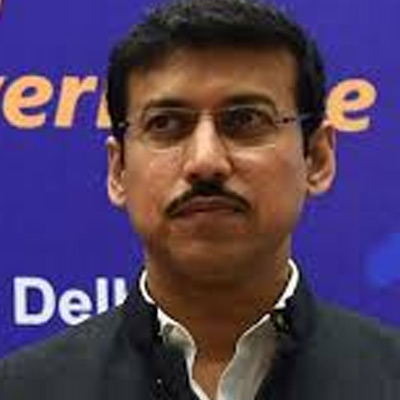
    NEW DELHI: India’s information and broadcasting minister Ravi Shankar Prasad today said that the media and entertainment (M&E) industry needs to vigorously 
    educate the policy-makers, government officials and politicians about the vast revenue and employment-generating potential that it has, even as he declared “let this decade be the decade for entertainment sector.”
     

    The minister was also of the opinion that conditional access (CAS) is a positive thing to happen, but it should be implemented side by side with set top boxes (STBs) being made available in the market. Prasad also said he would look into the issue of migration to revenue sharing in the private FM radio segment.

    “I considered myself fairly aware of things, but today after interacting with you all, I again learnt that the global entertainment and media industry’s (including sports) turnover would be touching $1.2 trillion this fiscal,” Prasad said, adding, “That’s why I reiterate that 
    policy-makers, politicians and officials need to be educated more on the potential of this industry.”

    Replying to a slew of issues raised by the entertainment and media industry today under the aegis of the Ficci entertainment committee, that is slated to hold M&E conclave Frames 2003 in Mumbai next month, Prasad spoke about various issues. He assured the representatives of various companies and organisations that it would be his endeavour to help in strengthening the laws and regulations to arrest the growing menace of piracy, under-declaration of cable subscriber base and duty rationalisation of components.

    Prasad exhorted the industry to come to him with a structured paper on issues like piracy, involving all segments of M&E industry, which also presents a 
    comparative legislative view of other countries for him to take up the matter with other ministries concerned.

    For example, on the issue of lax enforcement of copyright laws, that was raised by the Indian Music Industry (IMI) representatives, Prasad said, “Certain matters raised by you all need not necessarily fall within the ambit of my ministry, but let me assure you that I am willing to take up these matters with ministries like human resources development along as I get your co-operation.”

    Then addressing the issue of conditional access system (brought up by the likes of SET India chief executive Kunal Dasgupta, HTMT’s Ashok Mansukhani and CETMA’s Suresh Khanna), the minister pointed out that that his agenda would be to complete the unfinished task of his predecessor Sushma Swaraj, but along with it he’d like to tread cautiously.

    “CAS as a concept is good, but I would not like it to become an issue like CNG,” the minister said, hinting that before CAS is implemented certain assurances must come on availability of set-top boxes which would be needed as the government has mandated that all pay channels have to go through STBs.

    His alluding to CNG (classic case of supply vs demand situation) is significant as when the Delhi government, on being directed by the Supreme Court, introduced compressed natural gas-run public transport like auto rickshaws and buses, for several months last year there was total chaos as availability of CNG was not proportionate to the demand.

    “But I am ready to do anything that is best for the (cable) consumer,” Prasad said, adding that he would like to adhere to the deadline of 14 July for implementation of CAS.

    Those who were present at the star-studded Ficci meet included senior government officials from the I&B ministry — who incidentally came in for high praise from the industry — filmmaker and chairman of the Ficci entertainment panel Yash Chopra, Bollywwod bigwigs like Subhash Ghai, Yash Johar and Bobby Bedi, UTV’s Ronnie Screwvala. Sahara TV president Mahesh Prasad, BBC World’s resident director Vinod Bakshi, Reliance Entertainment’s Amit Khanna, Universal Music India’s president and managing director V Lazarus, Tips’ director Ramesh Taurani, PVR’s managing director Ajjay Bijli, Atul Goel from E-city Entertainment, Ravi Nirula from Radio Mirchi, Star/RadioCity representatives, Showtime’s managing director Michael Menezes and Moving Pictures’ CMD Ramesh Sharma, Win Radio’s Gautam Radia, apart from a host of other people from sectors like animation, film distribution, multiplexes and legal fraternity.

    The minister also took a swipe at Bollywood’s underworld connections and said that he would ensure transparent governance. But the film industry, on a growth path, should also reciprocate the gesture, he said. “Issues like bringing in corporate governance should be looked into by you people,” Prasad said, responding to various grievances of the likes of Ghai and Raj Tilak.

    The minister further said: “If we want to make India globally competitive (in M&E), then we must have good trained professionals and that is why India could make a mark in the infotech sector.”

    Some of the main issues that were raised during the two-hour meeting are as follows:

    * Government sops to open institutes for training manpower for the M&E industry as also doing some R&D to locate fresh talent

    * Strict implementation of laws regarding piracy and copyright (IMI represented that over the last three years the music industry’s losses have mounted to Rs 18 billion because of rampant piracy and inadequate laws).

    * Removing laws that are antiquated and involves government officers approving scripts of foreign productions that result in revenue loss to the government (global companies according to Teamwork Four’s Roy spend about $ 2.5 billion annually on shooting at various locales round the globe and out of which India gets only 1 per cent because of cumbersome laws).

    * Rationalisation of taxes and duties on components used in equipment meant for the M&E industry

    * Simplifying rules for uplinking and other such issues as broadcasters are forced to go abroad to save on tax (Sahara’s Prasad said withholding tax is one such issue).

    * Creation of a national fund to fight piracy with contribution from the government as also adoption of a national task force on issues like IPR.

    * Need for co-production treaties.

    * Shifting from licence regime to revenue sharing in the FM radio sector.

    * Rationalisations of entertainment tax though it’s a state subject.

    * Content regulation and clarity in laws regarding that.

    Click here for issues related for detailed transcripts of the representations made by the constituents of the entertainment industry

  • “The Indian market offers a double opportunity for us”

    “The Indian market offers a double opportunity for us”

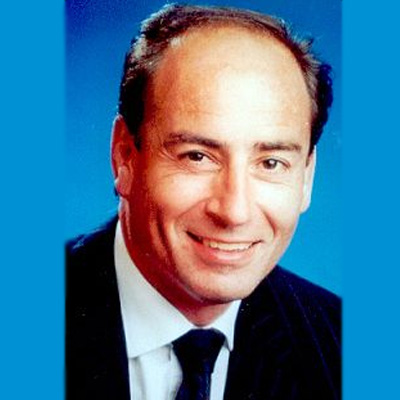
    Jonathan Howlett, global director of airtime sales of BBC World, is no stranger to India. He has come to the sub-continent often and is a keen observer of things, issues and trends. So much so that this time round when he was in India, with one of his stopovers in Delhi, Howlett pointed out that the Capital’s air smells cleaner compared to his early visits (the Supreme Court which has been at loggerheads with the Delhi government and transporters over phasing out old fume belching vehicles from the Delhi roads and go increasingly for CNG-driven public utility vehicles like buses and auto-rickshaws can sit back and smile now, probably).

    Howlett, who joined BBC World in 1994 from the UK-based Carlton Communications (his posting was in Delhi in the early 1990s), not only sniffs out the cleaner air, but also business opportunities that India presents being in a unique position of having an economy which despite the global meltdown has been “comparatively less effected.”

    A former director of sales also at Meridian Broadcasting, having spent his career within ITV sales, the seemingly 40-something Howlett, unlike some of his counterparts in other global media companies, is a soft-spoken and low profile man. Getting information out of him for a journalist looking for a ‘good copy’ is as hard as coming out of an interview on Hardtalk unscathed.

    Still, braving the odds, indiantelevision.com’s Anjan Mitra tries to fork out information on BBC World’s new strategies for South Asia, specially India, and other issues in this recent interview with Howlett at the poolside of the Hyatt Regency in Delhi even as the BBC World’s PR people hover round to ensure that nothing too sensitive gets out .


    As a marketing and sales person, how do you view the situation at present?
    It’s not very exciting, but okay. There still is an element of uncertainty that stems out of economic concerns. The (concerns about) corporate governance issue out of the US has subsided a lot and now there is more business confidence. Asia is certainly coming back as are other markets like Germany and Europe. Japan is still flat, but India is a great market.

    The GDP growth rate (of India) looks okay and today there is far more international access to the market here. International companies want to come to India and lots of Indian companies are looking at international opportunities. In a way, we win both ways (where business opportunities are concerned).

    Are you trying to say that India is turning out to be a good market for media companies because the Indian economy has been isolated or did not got affected by the global economic meltdown?
    I would rather put it that the (Indian) economy was comparatively less affected. The Indian market is more robust compared to some other countries. What’s more, there is an increased interest in India in news channels. The general mind block about news channels (as vehicles for advertising campaigns) is going away and we at BBC find ourselves in a unique place as the channel’s global agenda is different (from the local news channels).

    So, you see good growth in India for BBC World over the next few years?
    As I said, India has been less affected. But the truth is also that we cannot change the market place. We can explore the challenge to open up new business opportunities. We also cannot always dictate the pace of growth. If one doesn’t recognise that one will end up with a mish-mash (of a strategy).

    The Indian market offers a double opportunity for us. First, it is a still growing market for us and, second, there are more interactions between India and the rest of the world. If we understand the market well, we can grow our share of revenue and also viewership in India.

    How big do you think the news channel market is in India?
    It is difficult to put it in context and I am not sure how big the market is. But here we generally target the upscale viewers in the socio-economic category of `A’ and `B’.

    Does that mean that BBC World will be content to confine itself to metros and other urban areas in India?
    Not really. We reach into the smaller as well as bigger cities and BBC is building up its distribution across the country. But we do target upscale viewers because lifestyles are changing, purchasing power is increasing as also the availability of products. For example, there are more people here who work for international companies like SAP. In that way, probably, we are also competing with channels like National Geographic for the upscale audience.

      We reach into the smaller as well as bigger cities and BBC is building up its distribution across the country. But we do target the upscale viewers because lifestyle are changing, purchasing power is increasing, as also the availability of products
    Which will be the product categories or sectors that have not been fully exploited by BBC World from an advertising revenue point of view?
    If I can give an example, we haven’t taken enough (advertising revenue) out of the telecom sector (in India) as compared to travel and tourism. In that way, do I compete with Nat Geo? Yes, we do on certain category base. What distinguishes the Indian market from others is that there is a broader base across more categories. If you want to build a market, then you must look at each sector and optimise your performance.

    Do you think local Indian news channels like Aaj Tak and even Star News are competion to BBC World where the advertising pie is concerned?
    Yes and no. I need to be aware and interested in all the new news channels as also the existing ones in India. One benefit of the new news channels is that more advertisers are prepared to use news channels now and see it as actually delivering (the eyeballs). I would say that there is complimentarity between local news channels and BBC.

    What is the reason behind a renewed interest amongst advertisers and media planners in news channels in India ?
    News channels have redefined their agenda. News channels no more mean only politics. There is news about travel, sports, information technology and business. Now, all these are potential targets (for advertising). When you think of BBC today, it doesn’t really mean that it will be only about politics.

    Globally there this is a trend now that because of the cost of providing satisfying news, consolidation is happening. Globally there is lesser number of players.

    So, what is the strategy that BBC World is adopting to tackle and exploit the changing ways that the news channels business is managed today?
    We are targeting secondary and tertiary markets directly instead of going through London or New York. We are going to (markets like) Philippines and Frankfurt directly rather than having the (advertising) money come from New York or London.

    The other places where we are pushing ahead is Eastern Europe, Pakistan (at least four Pakistani companies advertise on BBC World, including the country’s national airline) and Indonesia.

    News channels have redefined their agenda. News channels no more mean only politics. There is news about travel, sports, information technology and business  

    Since India is a good market for BBC World, do we foresee more localisation of content on the channel ?
    The way we look at it is just focus on India looking at exploiting the channel we have and getting more out of the product instead of going about commissioning more programmes from local players.

    If I can given an instance, the idea is to attract viewers through existing top class programming that we have on air. Top Gear for example can generate, and does so too, a lot of interest in India. Today, I see more variety of cars on Indian roads. Then we have this great product in Mastermind India as quizzing has always had a particular place India.

    We need also to promote programmes like Asia Business News and we feel that viewership will grow (in India) for such programming over the next one year. If you grow the viewership, you’ll also grow the revenue.

    Is that why Tim Sebastian of Hardtalk has been brought to India as part of a roadshow?
    Yes. And why not? Hardtalk is a great product (for advertisers).

    How has the revenue been growing, or declining, for BBC World ?
    Well, I cannot speak on figures as part of policy, but what I can say is that revenue in the calendar year 2002, until now has grown significantly globally. Revenues from India too have grown significantly and it is more a significant market now.

    What will be BBC World’s market share in India ?
    Very small, just a fraction of the whole market. But being a small player has its advantages. If you are small, then you can still do well if the market is not doing very well at any given time. (BBC World claims to be reaching 11 millions Indian cable homes.).

    Has the revenue situation improved since the time BBC decided to do its own airtime sales instead of having a third party like Star do it in India ?
    The revenue (since then) has increased manifold and the brand count massively. To sell a channel like BBC World, you have to explain the values to the media. We are getting that message across better now.

    How has the last year been in the aftermath of 11 September, 2001?
    Last year has been quite intense. Though 11 September had a dampening effect on revenue, there has been an increase in viewership. Now is the time to exploit the increased viewer base.

    In a way, the tragic incidents of 11 September, 2001 have actually turned out to be good business proposition for TV channels, is it not?

    It’s a very selfish thing to say, but yes. It has not been bad