Tag: CMO

  • Facebook hunts for CMO

    Facebook hunts for CMO

    MUMBAI: Even Facebook is finding it hard to fill vacancies. The company has posted a job notice on LinkedIn looking for a CMO. It has been without a CMO all year, since Gary Briggs exited, leaving the company without a top marketing strategist just as it was hit with some of its most difficult challenges.

    At minimum, the right person will know how to “guide a brand’s reputation and experience in crisis management,” says the job description. That might undersell the talents this person will need. Today’s CMO needs to be able to show real business results and infuse the whole operation with a consistent brand identity and focus on the message. On Facebook, that message needs to be about feeling safe and connected. “What they need is a PR master, someone that can build back the public trust,” Pattisall says. “Not just a marketer, but someone connected to leadership answering directly to Sheryl and working pretty closely with Mark to carry their vision forward.”

    In 2017, Facebook spent $325 million on marketing, and it is looking for a person with experience of managing marketing budgets of at least $500 million. That would mean a likely candidate has to be from the top 100 largest advertisers in the US In the past, the CMO would only need to handle ad campaigns and traditional communications, but the role is evolving, Pattisall says.

    CEO Mark Zuckerberg was pressured to testify before Congress to answer for mishandled consumer data, which came to light in the Cambridge Analytica affair.

    In July, Facebook was threatened with the largest fine possible from UK regulators over its flimsy data policies that exposed consumers to malicious developers for years.

    According to reports, data is not Facebook’s only problem. It has been blamed for everything from helping to destroy democracy in America to enabling genocide in Myanmar. Both of those charges stem from bad actors who have been able to warp Facebook for their nefarious purposes—in Myanmar, hate-filled posts have stirred real world violence against a minority group.

    “This is a challenging job,” says Pivotal senior analyst Brian Wieser. “Facebook is not quite the prestige brand it once was, and there is so much worse to come.”

    This year, Zuckerberg has focused the company on a multi-year project to clean up the platform, rid it of the most offensive content, and improve people’s experience. Those efforts could ultimately reduce the amount of time people spend on Facebook, as the company has promised to prioritise people’s well-being over profits.

    Facebook recently rolled out an ad campaign meant to remind people of all the good times they’ve had on the social network with promises to do better to fight fake news and spam. Those attempts to rejuvenate the brand have not gone well. This week, satirist John Oliver mocked Facebook’s marketing campaign on his HBO show, calling the company “history’s most profitable data-harvesting machine.”

  • ZEE5 launches another original series- Babbar Ka Tabbar

    ZEE5 launches another original series- Babbar Ka Tabbar

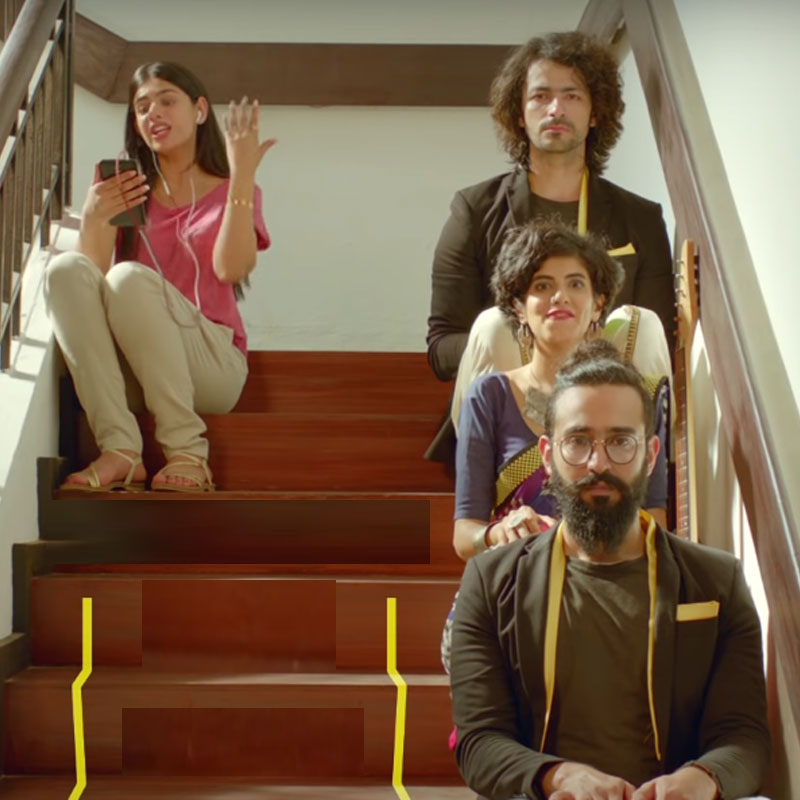
    MUMBAI: After Zero KMS, ZEEL’s digital platform, ZEE5 today launched another web series named Babbar Ka Tabbar.

    This humorous family drama reflects the time that we live in and address the generation gap between today’s youths and parents in a quirky manner.

    This 12 episodic series has been shot in Delhi and will be launching in two parts. Viewers can watch 2 episodes for free and then go premium to uncover the rest of the drama. Manu Rishi, Anshuman Jha, Ayesha Raza, Avneet Kaur and Bhavin Bhanushali are playing the main characters.  A ‘trying too hard to be cool’ father, an over-protective mother, a socially-awkward son, an overconfident daughter and a good-for-nothing paying guest-cum-family therapist. 

    ZEE5 India Chief Marketing Officer Manish Aggarwal said, “After Life Sahi Hai 2, here is another mass entertainer from our OC stable. We are confident that the Babbars and Jamia will be loved as much as the rest of our characters. Since our launch, we have been registering viewers from across the country, which are seeking entertainment and are willing to pay for it. This is in keeping with the content strategy we have carefully chalked out for ZEE5, and viewers have much to look forward to in the coming months.” 

    Producer, Victor Mukherjee, is very excited about partnering with ZEE5 on a format that is very unique. “It has been an absolute pleasure working with such brilliant actors. We do hope the viewers enjoy watching it as much as we enjoyed making it”.

    Also Read:

    Diverse language content the pivot for ZEE5’s growth

    ZEE5’s original web series, Zero KMS, gains traction

    Zee5 launches 20 originals to drive up subscription

  • Digital media spends to increase by 49 per cent next year: Nielsen Report

    Digital media spends to increase by 49 per cent next year: Nielsen Report

    MUMBAI:  A Nielson report has now confirmed what many believed of the growing ad spends in the digital world. The study has found that digital ad spends have now eclipsed traditional marketing budgets of brands.  The report also says increase in digital media budgets are poised to jump considerably over the next 12 months. However, over the top (OTT)services have to go a long way to win over marketer.

    The responses for the report were gathered through in-depth interviews of marketers and extensive surveys of  marketing executives from across verticals. The goal was to identify their most valued digital media channels categorised as social media, search, mobile, programmatic, OTT-TV/Connected TV(CTV).

    Important digital media channels

    Social media and search engines are considered extremely important by marketers . 79 per cent of respondents ranked search as “very” or “extremely” important, while 73 per cent thought the same about social media. A large majority also considered online video (64 per cent) and email (59 per cent) to be critical.

     Surprisingly, while a bunch of OTT platforms are mushrooming worldwide, marketers showed least reliance for OTT or Connected TV (CTV). Fewer than 8per cent of respondents considered it extremely important (and 18 per cent very important) at this point. Nearly 25 per cent of respondents ranked it as “not so” important or “not at all” important to their current media strategy.

    public://Figure 1.JPG

    Effectiveness of digital media channels for business:

    Other than zeroing in on the most important digital channels, the report also found effectiveness of each of these digital media channels. Again, search (68 per cent), social media (68per cent) and mobile (59 per cent) were ranked as “very” or “extremely” effective by a large section of respondents.

    Only 28 per cent of marketers ranked OTT TV/CTV as a “very” or “extremely” effective channel, the lowest among the individual categories. Over 30 per cent of respondents have yet to dedicate media budget to OTT TV/CTV. Over time when these channels will be more established, that number may decrease.

    public://figure 2.JPG

    “We are moving more and more toward [digital] marketing…social, search and [display] advertising driven. But we have just begun so the confidence in results is still being analyzed,” the report quoted one anonymous respondent.

    “Respondents reported digital media as representing 37.6 per cent of total advertising spend. This is remarkably similar to the percentage of advertising budget dedicated to traditional media (when calculated the same way), which was only a percentage point off at 36.6per cent,” the report read.

    However, the next 12 months are  going to be very different. 82 per cent of respondents agreed that digital media spend is going to increase, with only 4 per cent forecasting a decrease. Respondents expect a  49 per cent increase in digital media budgets in the next 12 months, with some even suggesting a higher spike.

  • Intex Technologies appoints Rajiv Bakshi as CMO

    Intex Technologies appoints Rajiv Bakshi as CMO

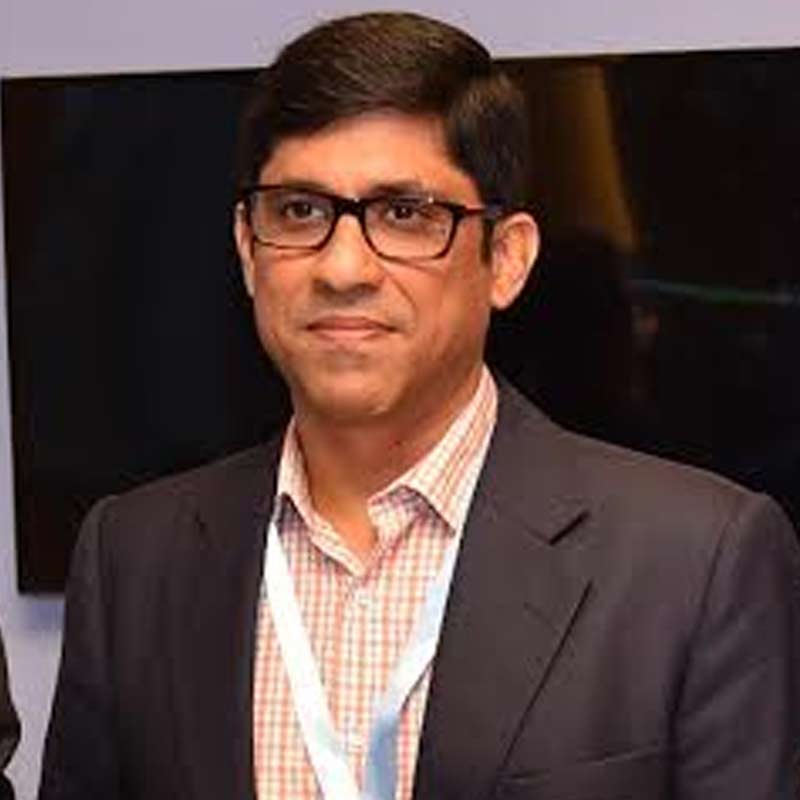
    MUMBAI: In line with the company’s continued efforts to strengthen and professionalise management to accomplish accelerated growth, mobile and consumer electronics company Intex Technologies (Intex) has appointed Rajiv Bakshi as its chief marketing officer (CMO).

    An alumnus of the Harvard Business School, Bakshi has distinguished reputation of spearheading strategic brand development, business transformation, consumer acquisition and digital strategy to drive long-term growth and profitability. As the CMO, he will envision Intex’s go-to-market strategy for the entire range of its mobile and consumer durables.

    Intex director Keshav Bansal said, “We are delighted to have Mr. Bakshi amidst us and are certain that his diverse experience will go a long way in contributing to the growth of the company in India and international markets. His immense expertise in strategic marketing and brand management will augment Intex’s growth and profitability.”

    Bakshi will lead the generation of consumer insights for incisive product development and planning, augment the sales and distribution network across the general trade, e-commerce portals, large-format stores and the company-branded retail network. Additionally, he will pioneer the digital strategy and boost international operations.

    Commenting on the appointment, Bakshi said, “Serving millions of customers, Intex is recognised amongst the distinguished group of national brands that have demonstrated continuous growth over the last two decades. Its unstinted commitment to provide access to technology and best-in-class experience to consumers has propelled its nationwide recognition.”

    Prior to Intex, Bakshi had a 13-year stint at Discovery Networks India & South Asia region as the VP and head of marketing and products. He expanded the company’s portfolio from a single TV channel to 11 channels. He also pioneered India’s first lifestyle channel TLC and created a differentiated kids’ network with Discovery Kids.

  • Microland appoints Purnima Menon as chief marketing officer

    Microland appoints Purnima Menon as chief marketing officer

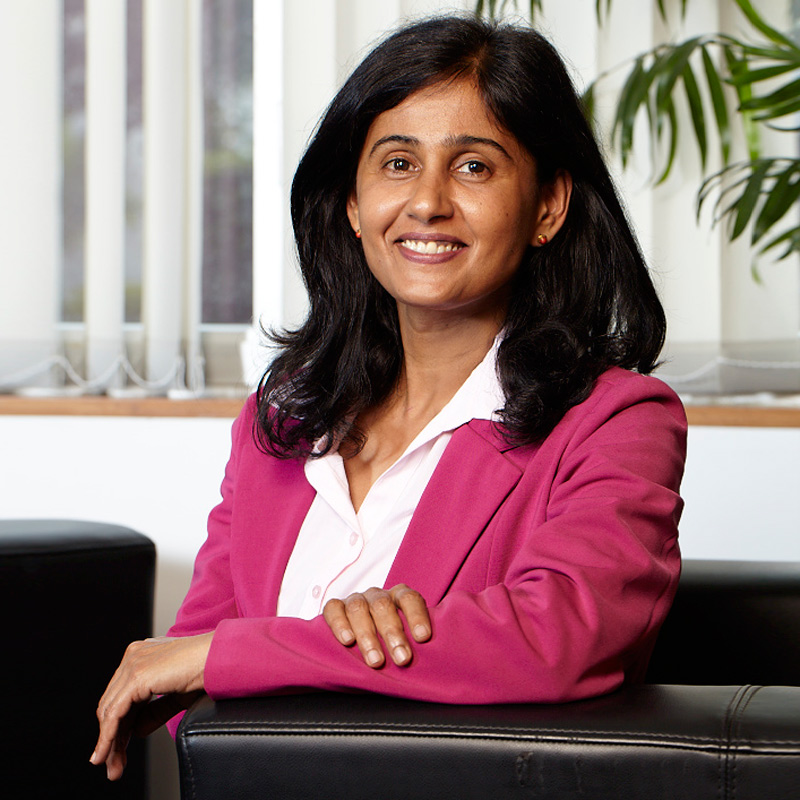
    MUMBAI: Microland, the Hybrid IT Infrastructure Service Provider, has appointed Purnima Menon as chief marketing officer.

    Based out of Microland’s corporate headquarters in Bangalore Menon will be responsible for all marketing functions including global business, strategic marketing, sales enablement and corporate communications to drive demand and growth for Microland.

    “We are very pleased to welcome Purnima to the Microland team. Purnima brings in extraordinary business expertise and marketing leadership to Microland. She is well recognised for developing strategies that have accelerated growth and built brands of some of the words most successful technology companies. Purnima’s insight and industry knowledge will help us elevate the Microland brand, stimulate increased demand for our solutions and services as well drive revenue growth. As we look ahead to the future of Microland, I am confident that Purnima will be a catalyst for change as we continue to execute our initiatives across our geographies,” said Microland Limited chairman and MD Pradeep Kar.

    “Microland is well poised for its next decade of growth in helping customers leverage the Hybrid IT infrastructure world. My aim will be to apply my expertise and leverage industry trends to further develop Microland’s revenue growth across the globe,” Menon.

    Menon joins Microland with over 19 years of experience, providing marketing and strategic thought leadership to large organizations. Prior to joining Microland, Purnima was the Executive Vice President and Chief Marketing Officer of a global IT Services Company. Her earlier stints included Head of Marketing at Infosys BPO and Head of Marcom & PR at Avaya GlobalConnect. Purnima is the recipient of numerous recognitions, including the Gold Winner in Online & Social Marketing, Awards for Excellence in Brand Management as well been chosen to the prestigious 100 most talented Global Marketing Leaders.

  • Microland appoints Purnima Menon as chief marketing officer

    Microland appoints Purnima Menon as chief marketing officer

    MUMBAI: Microland, the Hybrid IT Infrastructure Service Provider, has appointed Purnima Menon as chief marketing officer.

    Based out of Microland’s corporate headquarters in Bangalore Menon will be responsible for all marketing functions including global business, strategic marketing, sales enablement and corporate communications to drive demand and growth for Microland.

    “We are very pleased to welcome Purnima to the Microland team. Purnima brings in extraordinary business expertise and marketing leadership to Microland. She is well recognised for developing strategies that have accelerated growth and built brands of some of the words most successful technology companies. Purnima’s insight and industry knowledge will help us elevate the Microland brand, stimulate increased demand for our solutions and services as well drive revenue growth. As we look ahead to the future of Microland, I am confident that Purnima will be a catalyst for change as we continue to execute our initiatives across our geographies,” said Microland Limited chairman and MD Pradeep Kar.

    “Microland is well poised for its next decade of growth in helping customers leverage the Hybrid IT infrastructure world. My aim will be to apply my expertise and leverage industry trends to further develop Microland’s revenue growth across the globe,” Menon.

    Menon joins Microland with over 19 years of experience, providing marketing and strategic thought leadership to large organizations. Prior to joining Microland, Purnima was the Executive Vice President and Chief Marketing Officer of a global IT Services Company. Her earlier stints included Head of Marketing at Infosys BPO and Head of Marcom & PR at Avaya GlobalConnect. Purnima is the recipient of numerous recognitions, including the Gold Winner in Online & Social Marketing, Awards for Excellence in Brand Management as well been chosen to the prestigious 100 most talented Global Marketing Leaders.

  • Indian Media Review: Shashi Sinha addresses the elephant in the room — common measurement

    Indian Media Review: Shashi Sinha addresses the elephant in the room — common measurement

    MUMBAI: All eyes were trained on this year’s media review by The Advertising Club, what with the stalwarts of the industry repeatedly endorsing it on the social media weeks before the event took place. And indeed, the topic that the session addressed hit close to to every stakeholder in the industry alike — be it publishers from across media, advertisers or media agencies. It was on having a common currency of measuring the effectiveness of media for advertising across platforms.

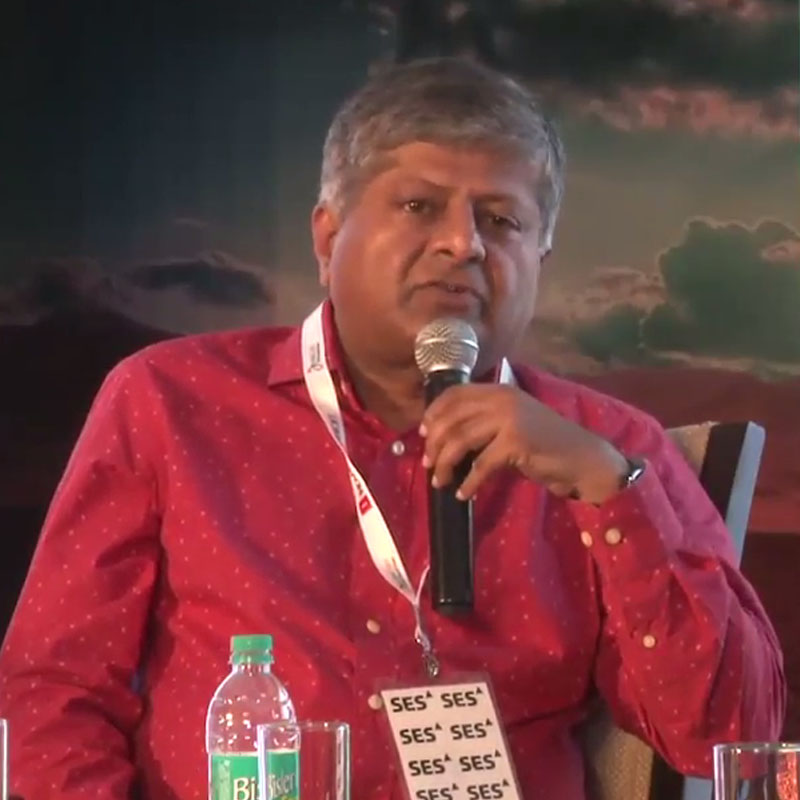
    IPG Mediabrands CEO was one of the key speakers at the review. Shashi Sinha started off on a more comfortable note of how agencies can help businesses grow with an effective measurement.

    According to him, “Instead of complaining that clients are demanding more accountability from the media they bought, agencies need to understand that better measurement gives CMOs better rationale for justifying better budgets.”

    This ‘better measurability’, as per Sinha, is being achieved in several ways at present, primarily — introduction of BARC’s measurement system for broadcasters, revival of the Indian Readership Survey (IRS) by next year, and digital.

    The issue, Sinha emphasised, came down to whether the fraternity wanted to take a few more steps further to improve the system of measurement across media after understanding the need of the hour or whether they wanted to stall the progress and delay the combined measurement system.

    Speaking specifically of the digital measurement system, Sinha shared that it was wrong to expect a panel of digital platforms or ‘OTT’ players to be self regulators of their measurement systems, given that the category is extremely fragmented. Therefore, he openly asked if “digital publishers are willing to be measured by third parties and be transparent with their numbers?”

    Highlighting how the IRS, which Sinha expects to be fully functional in eight months, will increase the sample size of print publishers by 40 per cent, he added that multimedia evaluation was also being considered by the board.

    Sinha expressed his welcome surprise at the Audit Bureau of Circulation (ABC) testing the measurement possibilities in the publishing side of digital (as BARC only caters to video consumption measurements). “Unlike video measurement, it is relatively cheap and is actually already functional for the last three to four months. We just need the heavyweights in the medium to come to a consensus for it to be fully rolled out,” Sinha added.

    After addressing and updating the audience about the different scopes of measurements in each media, Sinha quickly moved on to emphasise the need to have a common source of truth or ‘a single view of truth’

    This brings him to suggest the ambitious idea of Media Research Users Council (MRUC), the IRS, BARC and ABC to come together to contribute to a common pool of data that can be further sliced and diced in accordance with each media based on the clients requirement, although Sinha agreed that currently major challenges were in making that thought become a reality.

    Instead, one could start with thinking along the lines of a measurement currency that each media can be compared in, and according to Sinha, it is CPT,

    “Television measurement needs to move from CPRP to CPT format, and that’s a good starting point of having some commonality of currency between mediums. Publishers need to understand that moving from one currency system to the other doesn’t bring any difference in the buying and selling equation with clients. That will always be based on the demand-supply ratio,” assured Sinha, adding that the current CPT of channels is actually an opportunity to drive growth.

    CPT or Cost Per Thousand is basically the advertising cost of reaching a certain number of viewers in a defined target group on television, while CPRP or Cost Per Rating Point is the cost of advertising time on television based on the price of time for a single rating point generated by the channel.

    More mature markets such as the US, the UK and Germany have already switched to CPT as a currency when buying and selling television media.

  • Indian Media Review: Shashi Sinha addresses the elephant in the room — common measurement

    Indian Media Review: Shashi Sinha addresses the elephant in the room — common measurement

    MUMBAI: All eyes were trained on this year’s media review by The Advertising Club, what with the stalwarts of the industry repeatedly endorsing it on the social media weeks before the event took place. And indeed, the topic that the session addressed hit close to to every stakeholder in the industry alike — be it publishers from across media, advertisers or media agencies. It was on having a common currency of measuring the effectiveness of media for advertising across platforms.

    IPG Mediabrands CEO was one of the key speakers at the review. Shashi Sinha started off on a more comfortable note of how agencies can help businesses grow with an effective measurement.

    According to him, “Instead of complaining that clients are demanding more accountability from the media they bought, agencies need to understand that better measurement gives CMOs better rationale for justifying better budgets.”

    This ‘better measurability’, as per Sinha, is being achieved in several ways at present, primarily — introduction of BARC’s measurement system for broadcasters, revival of the Indian Readership Survey (IRS) by next year, and digital.

    The issue, Sinha emphasised, came down to whether the fraternity wanted to take a few more steps further to improve the system of measurement across media after understanding the need of the hour or whether they wanted to stall the progress and delay the combined measurement system.

    Speaking specifically of the digital measurement system, Sinha shared that it was wrong to expect a panel of digital platforms or ‘OTT’ players to be self regulators of their measurement systems, given that the category is extremely fragmented. Therefore, he openly asked if “digital publishers are willing to be measured by third parties and be transparent with their numbers?”

    Highlighting how the IRS, which Sinha expects to be fully functional in eight months, will increase the sample size of print publishers by 40 per cent, he added that multimedia evaluation was also being considered by the board.

    Sinha expressed his welcome surprise at the Audit Bureau of Circulation (ABC) testing the measurement possibilities in the publishing side of digital (as BARC only caters to video consumption measurements). “Unlike video measurement, it is relatively cheap and is actually already functional for the last three to four months. We just need the heavyweights in the medium to come to a consensus for it to be fully rolled out,” Sinha added.

    After addressing and updating the audience about the different scopes of measurements in each media, Sinha quickly moved on to emphasise the need to have a common source of truth or ‘a single view of truth’

    This brings him to suggest the ambitious idea of Media Research Users Council (MRUC), the IRS, BARC and ABC to come together to contribute to a common pool of data that can be further sliced and diced in accordance with each media based on the clients requirement, although Sinha agreed that currently major challenges were in making that thought become a reality.

    Instead, one could start with thinking along the lines of a measurement currency that each media can be compared in, and according to Sinha, it is CPT,

    “Television measurement needs to move from CPRP to CPT format, and that’s a good starting point of having some commonality of currency between mediums. Publishers need to understand that moving from one currency system to the other doesn’t bring any difference in the buying and selling equation with clients. That will always be based on the demand-supply ratio,” assured Sinha, adding that the current CPT of channels is actually an opportunity to drive growth.

    CPT or Cost Per Thousand is basically the advertising cost of reaching a certain number of viewers in a defined target group on television, while CPRP or Cost Per Rating Point is the cost of advertising time on television based on the price of time for a single rating point generated by the channel.

    More mature markets such as the US, the UK and Germany have already switched to CPT as a currency when buying and selling television media.

  • Five steps to build a strong brand: Kantar Millward Brown

    Five steps to build a strong brand: Kantar Millward Brown

    MUMBAI: Curating the top 50 most valuable brands list in India was an eye-opener in many ways, said Kantar Millward Brown MD Dinesh Kapoor, referring to the valuable insights that brands can gather from the data available to the agency.

    Studying the multiple variables that determined on what spectrum of the Top 50 chart it would rank, or whether it qualified at all, revealed the need of the hour for CMOs across categories to build a valuable brand.

    This brought Kapoor  to enlist the ‘must dos’ of building a strong brand in India. While the core principles echoes what gurus have passed down to the generation next for decades, it’s been adjusted to suit the current socio-economic and political flavour of the country, and how consumers are reacting to it.

    Meaningful: With a fast paced economy, some marketers may forget the simplest and essential rule in the book, i.e, to build a meaningful brand that meets the consumer’s need and makes their life better. 

    http://www.indiantelevision.com/sites/drupal7.indiantelevision.co.in/files/styles/large/public/graph1.jpg?itok=e490aph9

    Differentiate: When there is competition, and several new products are being launched in every category, it is essential to have a USP, or point of difference. Brands that improved on differentiator grew by 81% higher than brands which failed to differentiate, read a report by Kantar. 

    http://www.indiantelevision.com/sites/drupal7.indiantelevision.co.in/files/styles/large/public/graph2.jpg?itok=Gcb8sQEv

    Innovation: Citing examples of Bajaj Auto, Kotak, and Airtel, Kapoor  explained how differentiation made on top of innovation adds more value to the brands. While Bajaj V launch was a differentiation based on creativity, Kotak tried a unique proposition with its revised interest rates. On the other hand, Airtel has stayed ahead of the curve by setting trends. It is noteworthy that the emphasis to be different is far greater in the Indian market than the global or other Asian markets. 86 per cent of brands that grew on innovation also grew on differentiation, informed Kapoor.

    http://www.indiantelevision.com/sites/drupal7.indiantelevision.co.in/files/styles/large/public/graph3.jpg?itok=QNQ4vUqg

    Advertising: Appealing communication is a pillar of brand-building that helps the brand stay salient in the minds of the consumers, says Kapoor. Brand value growth is even greater when meaningfully different brands build salience with great creative advertising.

    http://www.indiantelevision.com/sites/drupal7.indiantelevision.co.in/files/styles/large/public/graph4.jpg?itok=mRULWR2y

    Brand Love: What comes out of the heady mix of the above mentioned variables is an increase in the brand love index that further helps to multiply a brand’s value.

    http://www.indiantelevision.com/sites/drupal7.indiantelevision.co.in/files/styles/large/public/graph5.jpg?itok=i_WgUqnS

    What makes brand value an important trait to vie for is its direct relation to how the brand performs on the stock market.

    “It’s not an assumption that a highly valuable brand is more likely to do well on the stock market. We have substantial data to back up the statement that strong brands generate superior shareholders’ return,” shared  Kapoor, adding that a stronger brand is more likely to withstand a tough market situation, and augment revenue growth during favourable times. 

    http://www.indiantelevision.com/sites/drupal7.indiantelevision.co.in/files/styles/large/public/graph6.jpg?itok=B_AIatXf

  • Five steps to build a strong brand: Kantar Millward Brown

    Five steps to build a strong brand: Kantar Millward Brown

    MUMBAI: Curating the top 50 most valuable brands list in India was an eye-opener in many ways, said Kantar Millward Brown MD Dinesh Kapoor, referring to the valuable insights that brands can gather from the data available to the agency.

    Studying the multiple variables that determined on what spectrum of the Top 50 chart it would rank, or whether it qualified at all, revealed the need of the hour for CMOs across categories to build a valuable brand.

    This brought Kapoor  to enlist the ‘must dos’ of building a strong brand in India. While the core principles echoes what gurus have passed down to the generation next for decades, it’s been adjusted to suit the current socio-economic and political flavour of the country, and how consumers are reacting to it.

    Meaningful: With a fast paced economy, some marketers may forget the simplest and essential rule in the book, i.e, to build a meaningful brand that meets the consumer’s need and makes their life better. 

    http://www.indiantelevision.com/sites/drupal7.indiantelevision.co.in/files/styles/large/public/graph1.jpg?itok=e490aph9

    Differentiate: When there is competition, and several new products are being launched in every category, it is essential to have a USP, or point of difference. Brands that improved on differentiator grew by 81% higher than brands which failed to differentiate, read a report by Kantar. 

    http://www.indiantelevision.com/sites/drupal7.indiantelevision.co.in/files/styles/large/public/graph2.jpg?itok=Gcb8sQEv

    Innovation: Citing examples of Bajaj Auto, Kotak, and Airtel, Kapoor  explained how differentiation made on top of innovation adds more value to the brands. While Bajaj V launch was a differentiation based on creativity, Kotak tried a unique proposition with its revised interest rates. On the other hand, Airtel has stayed ahead of the curve by setting trends. It is noteworthy that the emphasis to be different is far greater in the Indian market than the global or other Asian markets. 86 per cent of brands that grew on innovation also grew on differentiation, informed Kapoor.

    http://www.indiantelevision.com/sites/drupal7.indiantelevision.co.in/files/styles/large/public/graph3.jpg?itok=QNQ4vUqg

    Advertising: Appealing communication is a pillar of brand-building that helps the brand stay salient in the minds of the consumers, says Kapoor. Brand value growth is even greater when meaningfully different brands build salience with great creative advertising.

    http://www.indiantelevision.com/sites/drupal7.indiantelevision.co.in/files/styles/large/public/graph4.jpg?itok=mRULWR2y

    Brand Love: What comes out of the heady mix of the above mentioned variables is an increase in the brand love index that further helps to multiply a brand’s value.

    http://www.indiantelevision.com/sites/drupal7.indiantelevision.co.in/files/styles/large/public/graph5.jpg?itok=i_WgUqnS

    What makes brand value an important trait to vie for is its direct relation to how the brand performs on the stock market.

    “It’s not an assumption that a highly valuable brand is more likely to do well on the stock market. We have substantial data to back up the statement that strong brands generate superior shareholders’ return,” shared  Kapoor, adding that a stronger brand is more likely to withstand a tough market situation, and augment revenue growth during favourable times. 

    http://www.indiantelevision.com/sites/drupal7.indiantelevision.co.in/files/styles/large/public/graph6.jpg?itok=B_AIatXf