Tag: Clubhouse

  • Podcast Advertising: Opening new doors for marketers

    Podcast Advertising: Opening new doors for marketers

    Mumbai: With ABP Live, Clubhouse, and other similar platforms making the right noise, the long format of audio content has gained popularity, and drawn the attention of marketers too. Previously, podcasts were mostly extended content pieces coming out of radio channels because of their understanding of the medium. However, they have grown immensely over the last few years.

    According to KPMG, India is the third-largest podcast-listening market globally and is expected to be valued at Rs 176.2 million by 2023, growing at a CAGR of 34.5 per cent. The audio was also noted as the most preferred medium among listeners as well as advertisers last year. As per eMarketer’s report from April 2020, 49 per cent of users prefer using audio platforms. According to experts, the age group of 18-25 years has formed an important and growing audience set in the last year for this type of content, while the age group of 35-45 years is positively moving towards consuming podcast content, which is a great platform for brands to be present.

    ABP Live Podcasts: A new favorite for advertisers

    ABP Live podcast has found a loyal listener base too, proving its immense growth potential.  By offering advertising opportunities, the podcast is emerging as an influential platform. The key reason behind brands’ interest and increasing spending on podcast advertising is that it works, and it works more effectively compared to the traditional advertising mediums that have become increasingly less effective. It is a popular medium especially among millennials and GenZ as the medium lets them learn more about self-love, discover something new, cope with anxiety, or simply entertain themselves.

    As one of the leading players in the industry offering a comprehensive platform for advertisers, ABP Live brings a plethora of audio-based content, quenching listeners’ thirst for knowledge, entertainment, sports, news, health, and business. The popular podcast by ABP Live- ‘Car Mein Patrakaar’, has also won wide recognition.

    The podcasts provide a diversity of original content to the listeners that are smart, culturally relevant, highly information-driven, and filled with invigorating conversations. ABP Live has about 30 podcasts under its umbrella as of now which translates into 150 hours of audio content, which further opens doors for advertisers. Furthermore, the ABP Live Podcasts team has also been innovating in the podcasting space by fusing ASMR in their content and audio dramas, to provide the listeners with an immersive storytelling experience.

    Apart from podcasts on Personal Finance, Health, Explainers, Motivation, ABP Live includes “Car Mein Patrakar”– a talk show wherein ABP News’ star anchor Sumit Awasthi indulges in a candid conversation with a popular celebrity. “FYI-For Your Information”– a series of audio explainers which talk about everything under the sun that holds relevance for the common man. “Bollywood, Binge and Beyond”– an English podcast that gives  a detailed hawk eye view about everything from the world of entertainment. “Sange Suman” projects major news and debates from West Bengal, hosted by noted journalist Suman De.

    Opening Doors For Advertisers

    Considering the growing demand for podcasts in India, ABP Live has provided a significant opportunity for advertisers. However, before we decide whether to invest in podcast marketing, we must first understand what, how and what the results could be. Here are the things that make podcasts an ideal medium for advertising:

    ●      Great hosts make great deals : Listeners might skip what a 30-second spot is narrating but they pay high attention to unique, live ad reads narrated by their favorite trusted hosts.

    ●      Higher attention span than radio: Unlike radio listeners, podcast listeners are dedicated enough to tune in at a particular time to listen to their favorite show. Hence, they are much more likely to pay attention. They do not skip ads, simply because they do not want to miss out on any part of the show they’re listening to.

    ●      Hosts make a personal approach: Word of mouth is important in advertising and it becomes 10x more important when it comes from a trusted host. People tend to develop personal relationships with their hosts or podcasts personalities. It’s a psychological process that unknowingly takes place over time. Subsequently, the host becomes an important person to disseminate brands’ messages to the listeners.

    Podcasts like ABP Live podcasts have reached masses and seen tremendous results for early-stage brands who conduct marketing programs that are synergetic to their target profiles. Interestingly the channel has gone too narrow in terms of marketing. It has regional podcasts which allow brands to tap into niche marketing.

    An Opportunity To Tap Into Regional Market

    ABP Network has a language-first approach. Starting from the culturally rich state of West Bengal, the network serves regular content in Hindi, English, and Bangla and is equipped to handle content in all Indian major languages. In the past, ABP Live has created innovative audio content in Marathi and Bangla too. Also for a brand or advertiser, they get to deliver their message directly to their target audience in the language they speak and understand. This opens a big door of opportunities for regional podcasters who can leverage this by keeping a ‘language first’ approach.

    This format of regional language content creation is beneficial for the podcaster in terms of reach maximisation and also revenue growth. Regional podcasters can create their own set of loyal audience bases and can attract brands and advertisers to be associated with them. Going forward, we expect podcasters to grow by exploring innovation in the audio content space.


  • Clubhouse names ex-TikTok exec Parijat Kaushik as head of partnerships

    Clubhouse names ex-TikTok exec Parijat Kaushik as head of partnerships

    Mumbai: Social audio platform Clubhouse has announced its first-ever hire in India by appointing Parijat Kaushik as head of partnerships for the country. This is also the first country-specific appointment by the company outside the United States.

    In this role, Kaushik will be responsible for scaling Clubhouse’s operations in India.

    Prior to joining Clubhouse, Kaushik led marketing efforts for short video app TikTok and music streaming service Resso for the South Asia region.

    Kaushik is an integrated marketing generalist with experience in media, entertainment & technology domains.

    Previously, he also had stints at companies like Hungama, TinyOwl, and Sony Music Entertainment among others.

  • Clubhouse takes off in India amid pandemic

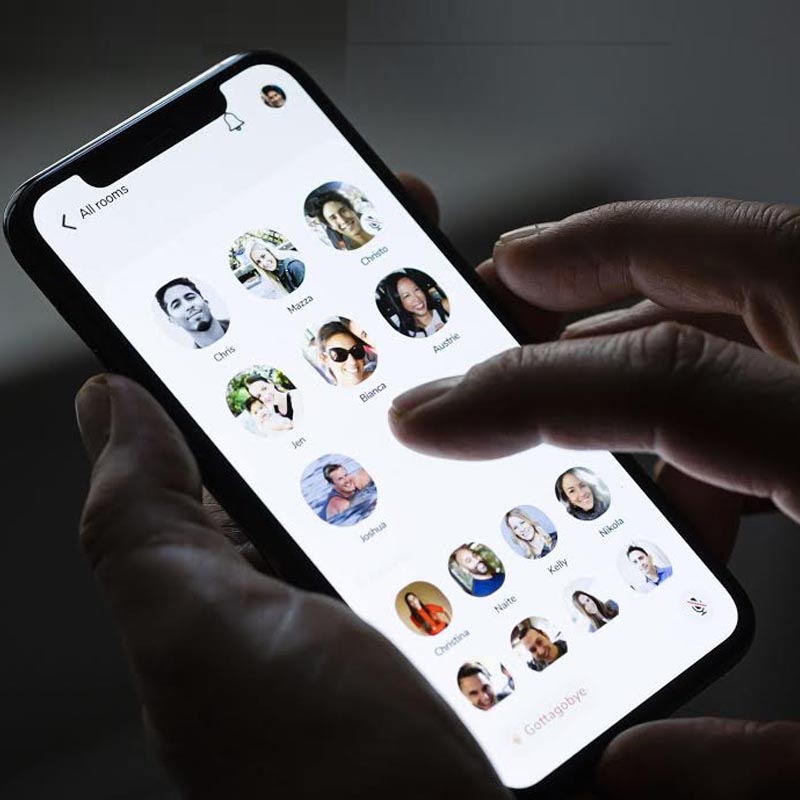
    KOLKATA: With large parts of the country still under lockdown, people have begun exploring new virtual spaces to interact with each other. Within few days of its launch for androids in India, the social media app, Clubhouse recorded over one million Android downloads in the country pitching India as one of the top markets for this new emerging audio-based app.

    “India seems to love it,” said Zoo Media and Foxymoron co-founder Pratik Gupta. “The platform is acting as both casual and formal setup to discuss diverse topics, so it’s an apt media vehicle for brands to latch onto. Early brand movers will gain an advantage; both in terms of scale & cost-effectiveness, right from the start. The concept is new – it’s almost like a talk show where people are free to express themselves.”

    What are the opportunities for brands?

    The opportunities lie in being able to either host a branded room or sponsor rooms that are hosted by prominent creators or simply aid and join third-party rooms for now. According to Grapes Digital national business head Rajeesh Rajagopalan, marketers may think about running their campaigns on the app going forward because the elements like chat apps, conference calls or podcasts would help marketers/brands to reach a diverse set of consumers.

    “For a marketeer or an advertiser, Clubhouse presents a great opportunity to establish the brand and promote products, services, or events,” said Isobar India COO Gopa Kumar, adding that it gives a voice to an authentic narrative that is inherent in the platform as all the people and the conversations are real. “There are opportunities to share your brand purpose, story, connect with consumers at large, get their feedback, act as a focus group to know more about how and what they feel about the brand. Brands can start small and start seeing how they can establish a connection with the audience and push the narrative, cause, or story.”

    Although the conversations are voice delivered like podcasts, the main difference is the chats are live. Since there is no recording, users tend to be hooked on to its content for long as they are anticipating and looking for conversations about topics they are interested in—whether to listen or share. “It is an extension of a Podcast hosted in a virtual venue around a limitless audience. It has reinforced the age-old power of human voice emotions,” Vizeum India ex-CEO Himanka Das said. Its key attribute is an audio medium, which sets it apart from established social media and messaging platforms like Facebook, Instagram, Sharechat, TikTok, Moj, WhatsApp, and YouTube.

    The Indian market has the appetite to support audio-only platforms. But the app needs to localise its feature for the Indian market and tap into the regional languages more to capitalise on the audience, believe experts. “Any such social media platform will house rich data in these couple of months to deploy deep learning algorithms to derive actionable insights from consumer cohorts based on interest, interactions, and habits. This can bring magic to enable brands to curate audio content to drive structured conversations. This will be key to drive the metric for monetising for brands,” added Das.

    How influencers can leverage the platform?

    According to experts, it has become an important platform for influencers and creators to engage with their fan base. Influencers will play a critical role in driving conversation and traffic, once the initial hype starts to fade away. The width of content & topics available on the platform makes it an amazing platform for influencers to participate. For the audience, it gives them a sense of being up-close and personal with their favourite influencers.

    “Clubhouse is a peer-to-peer network that can be leveraged by the influencer community to interact with the user base,” said Buzzoka CEO and co-founder Ashutosh Harbola. For example, they can quickly host a Room with 200 followers on the app. However, it won’t be a primary channel for influencer marketing. It can always be an extension for influencers to engage with the users in the long-term, he added. Considerably, Clubhouse now allows Instagram, Twitter profiles to be linked to the user profile.

    Monetisation opportunities:

    There are plenty of opportunities for brands to exploit the platform but it seems that Clubhouse may not restrict its monetisation to advertising revenue only. The app is looking to expand into payments, ticketing, subscription, ticketing, tipping, Clubhouse co-founder Rohan Seth said recently.

    “Clubhouse will continue to focus on its audience expansion and methods to keep the creators incentivized & provide tools for better content creation. Clubhouse has recently launched Clubhouse Payments for direct payments to creators and has less focus on advertising revenue. These are still early days, and I think that the model that the business will adopt will be creator & payment to creator focussed. Brands will probably latch onto the creators through the platform itself, rather than opening it up to buying advertising space,” Zoo Media’s Gupta commented.

    According to Isobar’s Kumar it is too early to comment on monetisation opportunities as the app is soon to end invite system, to be open to all. The very fact it was an invite-only medium early on and had an exclusivity element, attracted many users, and also promise privacy. Hence, the industry needs to wait to see how the platform and its users evolve over some time.

    While the Indian government is in a standoff with few social media platforms regarding the implementation of new Information Technology Rules, Clubhouse founders expressed their willingness to comply with the new rules that came into effect on 26 May in a virtual press meet.

    In a country driven by freedom of speech, one has to keep a close watch on the audio content responsibly with the new social media regulations. This is also good for the brand safety going forward, highlighted experts.

  • Clubhouse for android to arrive in India this Friday

    Clubhouse for android to arrive in India this Friday

    KOLKATA: Android users in India can finally come out of Clubhouse FOMO as the invite-only audio chat is debuting on Friday, after a week it launched the beta version in the US.

    As the start-up’s android expansion continues, it will roll out in Japan, Brazil, Russia on Tuesday, followed by India and Nigeria on Friday. However, it will remain invite-only both on android and iOS despite the mass rollout. “Globe with meridians Rest of world throughout the week, and available worldwide by Friday afternoon,” the tweet added.

    While it has taken its home market by storm with top Silicon-valley execs, popular Hollywood stars, artists jumping on the bandwagon, its impact in India is still very limited with less than a lakh iOS users. This move could be critical in the Indian expansion as the market has a lion’s share of android users, despite the increasing footprint of iPhones in India.

    The development comes at a time when the download numbers have plateaued. Globally its downloads peaked in February with 9.6 million downloads. However, it has gradually come down to 9 lakh downloads in April, as per Sensor Tower data.

    The app saw 42,000 in February followed by 20,000 in March and 14,000 downloads in April in India – a gradual decline.


    In a tweet, the company said it is working on feature parity with iOS for android users. Earlier this year, the app revealed its plans to launch in India. Clubhouse is now facing stiff competition in the category as Twitter has rolled out its Spaces on a larger scale, Facebook is also working on a live audio chat feature.

    Adoption, penetration can be of a lesser challenge for the audio-based social apps compared to acceptance and usage which will be driven by content on the platforms, a senior digital market executive said earlier.

    “The good thing about this period is that it has shown us how universal voice is as a medium. The same types of rooms that we saw forming last year in the U.S. quickly started forming in Japan, Brazil, and Nigeria. Farmers in rural Georgia have been making friends with entrepreneurs in Tanzania. Film clubs have formed in India,” the company stated in a recent blog post along with examples of many other communities.

    Throughout this period, it felt the need to be cross-platform more strongly than ever, the company added.

  • Will social audio apps like Clubhouse make it big in India?

    Will social audio apps like Clubhouse make it big in India?

    KOLKATA: Audio-chat app Clubhouse has raced ahead in the last few months, especially it has gained more momentum after its Elon Musk moment. The Tesla CEO’s debut on the platform has not only maxed its craze but has thrown limelight on a new rage in the social media ecosystem. While emerging social apps based on audio chat are knocking on the door, established platforms are also making strides in the segment.

    What is the ‘Clubhouse’ frenzy?

    The invitation-only social media app Clubhouse has found takers in silicon valley investors, venture capitalists, tech executives, artists, musicians, TV presenters. Even before reaching its first anniversary, the company had amassed close to 10 million users and reached a valuation of $1 billion. Given the buzz the San-Francisco based app has generated in the international markets, it’s no surprise that a number of prominent faces in India are also jumping on the bandwagon.

    Another app which offered live voice chats way before Clubhouse is Discord, a niche platform popular among gamers. The app, boasting over 100 million monthly active users, secured $100 million in funding last year and is positioning itself as mainstream with the new tagline – “Your place to talk.” After it saw massive growth in voice users, it started to emphasise heavily on the voice chat feature. According to media reports, tech giant Microsoft is in the running to acquire Discord, in a transaction pegged at $10 billion. It is one of the most popular apps among the booming gaming community of India.

    The bottom line is that Clubhouse and Discord are relatively lesser-known names in our 1.3 billion-strong nation. However, social media platforms that have already made headway in the mass Indian market like Twitter, Facebook are investing big time to take on these emerging apps.

    “Audio-based apps are liberating for the user as it allows users to multitask than any other media out there. You can drive, text, run or do your chores while dropping in to listen to Elon Musk,” Tonic Worldwide chief strategy officer Unmisha Bhatt says.

    Will Indians adopt this global trend?

    The Indian digital ecosystem has kept up with all new global trends so far. No doubt the charm of something new will onboard users initially, but Mirum India joint CEO Sanjay Mehta is sceptical about the sustainable growth of audio based social media apps.

    He notes that the overall audio segment, as well as voice technology, is a high growth area in terms of consumption of content and creation of audio content. When it comes to apps like Clubhouse, the structure being used there is almost similar for all. Under the open discussion format, if any user just walks into a chatroom, one cannot be sure that the content they will get access to will be valuable. It leads to appointment listening – that is, joining the chats at the time when a particular well-known person is speaking on a topic of interest.

    According to Mehta, the concept of appointment consumption does not work well in a busy life. Hence, he is of the view that these apps will have limited value if the structure does not change. To have long-term growth compared to established social media players, the template or format needs to change.

    Isobar India COO Gopa Kumar also says that audio as a platform has been well accepted in India overall, giving examples of Gaana, Saavn, and Spotify. Which is why apps like Clubhouse will also see good uptake in India. Moreover, these audio-based social apps give users a certain kind of privacy. People can actually move around at their disposal and still interact, he explains.

    The reason users are receptive to audio is because they can consume content on the go as well, observes Kumar. But in the end, it’s the nature of the platform and the kind of content it puts out that makes all the difference. And since social audio apps is still a very niche segment, Kumar says it is too soon to judge if it can turn into a mass medium.

    “The growth of Clubhouse has been fuelled by high profile early adopters. With celebrities and Silicon Valley leaders leading the early adoption, users discovered and flocked to the app. Since these are live conversation apps, the audience consumption has been skewed towards quality content by well-known creators. For it to succeed in India, it would need a similar pattern. Mainstream content creators, celebrities and film folks would bring in the masses, otherwise, it will remain a niche product in India,” Bhatt adds.

    Moreover, India being a multilingual country has its own challenges. IdeateLabs founder and managing director Amit Tripathi is of the view that adoption in India might struggle until voice and vernacular marries. Video on the back of visuals and subtitles make it easier to be consumed in unknown or little known languages but audio does not stand that chance. So, regional content needs to be on platforms like Clubhouse to make them successful.

    How are big tech giants gearing up their efforts?

    Twitter announced a new voice chat room called Spaces last November. The microblogging network rolled out the feature gradually for some of its users globally, including India. It plans to make it available for all users in April so they can “Tweet and Talk”.

    Internal teams at Facebook are reportedly developing a product similar to Clubhouse to catch up with the trend. Notably, Facebook boss Mark Zuckerberg himself appeared on Clubhouse in February to talk about augmented/virtual reality. Messaging app Telegram that rose to fame in India after the WhatsApp privacy policy controversy has launched Voice Chats 2.0 that lets channels conduct live voice chat sessions with unlimited participants.

    With so many dollars being pumped into social voice features by these deep-pocket players, it will be interesting to see how this space evolves, Tripathi adds. He points out that adoption, penetration can be of a lesser challenge for the audio-based social apps compared to acceptance and usage which will be driven by content on the platforms.

    “Without proper content, customisation, a lot of education, I am not sure how far it will grow, how fast it will grow,” Tripathi sums up.

    Will brands jump on the bandwagon?

    Brands are already experimenting on Clubhouse to cash in on the craze. Isobar’s Kumar says that it is tough to project what kind of advertising opportunities will open up in the future, though he mentions that brands can open their own chat rooms and engage with consumers.

    “Brands will have to wear a creators hat to explore opportunities on these apps. For the right brand – one that’s willing to curate quality content and truly add value – there's an early mover opportunity. But these are early days and as adoption grows, we will see interest from brands,” Bhatt concludes.