MUMBAI: The Walt Disney Studios (Disney) has entered a five-year deal with Microsoft to move key parts of its movie-making and distribution processes to the cloud. Under the new partnership, the initial focus will be on moving some of the studio’s editing to the cloud.
According to a report from Variety, Disney’s StudioLab, an internal innovation incubation lab, will lead the deal. The ultimate goal is to use Microsoft’s Azure cloud platform all the way “from scene to screen”.
“There are tons of benefits of being in the cloud,” Walt Disney Studios chief technology officer Jamie Voris said as quoted by Variety. He also added that cloud-based editing will allow Walt Disney Studios to more easily collaborate across multiple locations. He explained that working collaboratively on the same project in the cloud will also cut down the need to store and administer many different copies of a file.
“It really feels like we are at the tipping point for cloud in media and entertainment,” said Microsoft US president Kate Johnson. "We like to think of us as the platform cloud for media and entertainment,” she added further. Disney opted for Microsoft because other cloud competitors weren't as focused on the media space.
MUMBAI: Jeff Bezos-led Amazon reported mixed second quarter results as it missed earnings estimates but beat estimates on revenues. The e-commerce giant reported earnings per share (EPS) of $5.22 in contrast to $5.55 expected EPS. At the same time, it posted revenues of $63.4 billion while market estimation was $62.52 billion.
Amazon’s revenue rose 20 per cent Y-o-Y, compared to rebound 16.8 per cent in the first quarter, which was the slowest in four years. However, Amazon’s net income of $2.6 billion was the lowest since the second quarter of last year.
The company has guided net sales to be between $66 billion and $70 billion, or to grow between 17 per cent and 24 per cent compared with third quarter 2018. This guidance anticipates an unfavourable impact of approximately 30 basis points from foreign exchange rates. Operating income has been expected to be between $2.1 billion and $3.1 billion, compared with $3.7 billion in the same quarter of last year.
Amazon’s highest growing business, Amazon Web Services reported 37 per cent growth, slipping from 41 per cent in the previous quarter. The revenue of its “other” category, including its increasingly important online ad business, climbed 37 per cent to $3 billion. However, international sales grew 12 per cent to $16.4 billion.
“Customers are responding to Prime’s move to one-day delivery — we’ve received a lot of positive feedback and seen accelerating sales growth,” said Amazon founder and CEO Jeff Bezos.
“Free one-day delivery is now available to Prime members on more than ten million items, and we’re just getting started. A big thank you to the team for continuing to make life easier for customers,” he added.
While Prime Video premiered the Jonas Brothers documentary Chasing Happiness, and Original Series Good Omens, based on the novel by Neil Gaiman, it will debut new Original Series The Boys, from creators Evan Goldberg and Seth Rogen, on 26 July and Carnival Row, starring Orlando Bloom and Cara Delevingne, on 30 August.
MUMBAI: E-commerce giant Amazon could not beat Wall Street expectation with its revenue and fourth quarter guidance in its third quarter earnings despite turning in a record profit. The company has reported a $2.9 billion profit for the three months ending in September topping $1 billion for the fourth consecutive quarter. Revenues of $56.58 billion fell short of expectations for $57.1 billion as well as guided revenue of $66.5 billion to $72.5 billion for next quarter.
Its high margin business including cloud, advertising and third-party seller services propelled the growth of its profit more than its core retail business. Its cloud business by revenue saw sales up 45.7 per cent to $6.68 billion. On the other hand, its advertising business, jumped 123 per cent to $2.5 billion in revenue.
“Net sales increased 29 per cent to $56.6 billion in the third quarter, compared with $43.7 billion in third quarter 2017. Excluding the $260 million unfavorable impact from year-over-year changes in foreign exchange rates throughout the quarter, net sales increased 30 per cent compared with third quarter 2017,” the company said in a release.
For the fourth quarter guiding too, Amazon has anticipated an unfavorable impact of approximately 80 basis points from foreign exchange rates. But this quarter is most important for the company’s sales due to the holiday season.
While total revenue increased 29 per cent from last year, a considerable trait has to be discussed. Though in its home market its growth was at high speed, in international markets that was lower. North American sales were $34.3 billion, up 35 per cent from last year but international sales grew just 13 per cent to $15.5 billion. The disappointing international result indicates that competition in e-commerce space is escalating.
“Amazon Business has now reached a $10 billion annual sales run rate and is serving millions of private and public-sector organisations in eight countries,” said Amazon founder and CEO Jeff Bezos especially mentioned this segment.
“Amazon Business is adding customers rapidly, including large educational institutions, local governments, and more than half of the Fortune 100. These organisations are choosing Amazon Business because it increases transparency into business spending and streamlines purchasing, with increased control. The team is doing a fantastic job building and innovating for customers,” he added.
Though Prime Video is a part of its attempt to turn customers for shopping by engaging through the video content, it has become a major competitor of streaming giant Netflix. “Prime Video continues to announce original series debuting in 2018, including: Homecoming, a psychological thriller starring Julia Roberts, and produced and directed by Sam Esmail; as well as season 2 of The Marvelous Mrs. Maisel, recent winner of eight Emmy awards including Outstanding Comedy Series,” the company added.
Amazon is also launching monthly Prime membership in Canada and Mexico, quarterly Prime membership in China, and monthly Prime Student membership in Germany.
MUMBAI: Amagi, a cloud-based technology provider for media processing, has launched Tornado, a machine learning-based content preparation service that enables TV networks and content owners to scale their operations and accelerate broadcast workflows.
Over the last three years, the broadcast industry has had to evolve significantly due to a rise in multi-screen content consumption, demands for “here and now” content and a shift in how consumers are viewing content as more consumers move from cable to over-the-top (OTT) services.
In such an evolving scenario, TV networks, content owners and digital-first networks are creatively trying to grab a piece of the action by trying new mediums and delivery methods to provide better experiences to consumers while streamlining costs and operations. Content preparation, however, continues to require pain-staking hours of manual work and massive overhead costs.
Compared to traditional manual content preparation, the company claims that the suite is nearly six times more efficient, allowing broadcasters free up capital and streamline workflows.
Tornado is a cloud-based machine learning-augmented content preparation suite that tackles content preparation challenges head-on. It is conceptualised as a suite of machine learning-based content preparation services that dynamically evolve as machines learn more about each segment of a video asset as they process higher volumes of content. Tornado can cater to the unique preparation needs of TV networks, content owners, vMVPD platforms, and digital-first networks with the company planning to continually expand the suite functionality and capabilities to optimise the entire broadcast workflow.
“Given how competitive broadcasting has gotten today, it has never been more important for broadcasters to be able to optimise their operations and spends,” Amagi CEO Deepakjit Singh said.
MUMBAI: The explosion of smart mobile phones in India and the penetration of internet has led to a boom in several innovative business proposals that explore the digital platform. With India leading the startup scene, everyday new ideas are turning from just business plans in a ppt file to an actual revenue generating business, backed by an aggressive venture capitalists.
At the same time, it has pushed several small and medium enterprises to go online, as their customers have already made the shift. It not only means a booming in the digital market, it also means more demand for technology to sustain its rapid growth — right from hardware to software. The Mobile App industry is estimated at $ 143 billion and counting. As more businesses start thinking mobile in their digital marketing initiatives, traditional agencies too are realising the need to include application development skilsl in their portfolio to sustain clients.
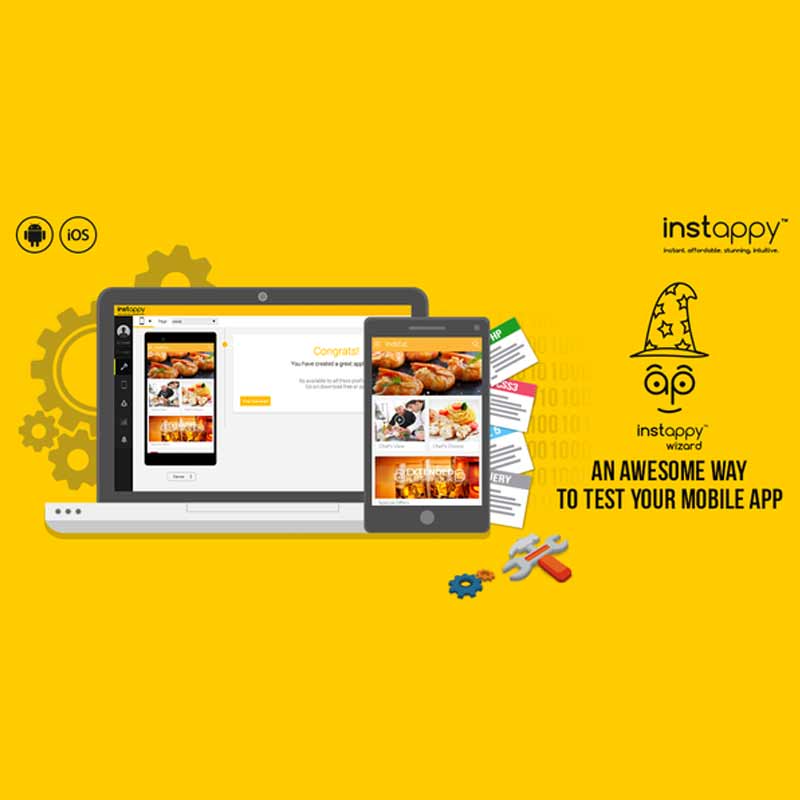
As per Gartner’s IT Spending Forecast, by 2017 the demand for enterprise mobile apps will exceed the supply available, especially in India — which comes as an opportunity for cloud-based Mobile app creation platform Instappy.
“Though India is one of the largest base for developers, globally the number of developers required and the apps in which are in demand has a gap of 1:5 and by 2017 this gap is only going to grow. A good application requires at least five developers working on it and needs a time period of at least 45 to 60 days on a an average. Whereas the number of enterprises and small businesses who want an application is far more than that. Had the pool of developers grown at the same rate that the SMEs are shifting to digital, this gap would have been avoided, but the mobile industry has seen a rapid boom and the developers aren’t keeping up,” explained Instappy, founder and MD Ambika Sharma
Instappy’s business model is based on this simple ratio, as well as the fact that SMEs prefer a platform that helps them get an app without going through complicated technical discussions with developers.
Observing the current trend in the market, Sharma shared that the small and medium enterprises jumping the digital bandwagon understand the importance of mobile and how it is going to build on their revenue in the long run.
While Instappy does get an occasional request of ‘an ola app’, or a ‘zomato app’, for the most part users are fairly well aware of keeping their app identity unique, though certain features may be replicated as reference.
“The only area that SMEs need to be educated about is building an application is not the end of it, it needs constant maintenance, software updates and improvements. Technology is changing fast and the business owners need to be updated for the most part as well,” she added.
Non technology savvy business owners and marketers often shy away from getting themselves an application to avoid dealing with the technical specifications because they are overwhelmed by the complexity. Therefore the cloud based platform thrives amongst Small and Medium Sized enterprises, making it a more democratised playing field for all businesses.
On an average the platform sees anything between 35 to 40 users building apps every week. Barring the first free trial month, the subscribers start off at Rs 30,000 to be on the platform, and the rates go higher depending on the services a user claims. Apart from this Instappy also entertains clients who ask for a more customized application for their businesses, which commands premium rates. But that is nothing compared to the ongoing rates if a professional team of developers are hired for the job.
For a basic application that serves a simple purpose, a business enterprise will have to pay a small group of developers anything between Rs 15 to Rs 20 lacs and the price can go up to crores if well known developers are hired and difficult coding is required.
“We are currently getting requests from across industry, but the ones that stand out are travel, learning and education, retail and stationery and beauty services business. Interestingly mass manufacturing industry, which is very traditional in its nature has also come on board with us to get an application out,” she shared.
The sudden rush to get an application has also brought in its own set of challenges for the development market. While most businesses want to go digital to expand their market online and open new ways to interact with the consumer, there are also some who want an app just for the sake of it. Sharma stayed clear of them.
“No smart business will create a app just for the sake of it or due to herd mentality. While it’s a trend, the applications have to serve a business purpose for them. It is very difficult to develop an app that covers all the needs of a business, while keeping the functionality in mind, and without going overboard with features. It takes almost 30 days to even figure out what all they want in it, and most of the time a specialised team has to step in to keep the businesses updated about the latest features they can avail or offer their customers through the app. Half the time businesses lack clarity on exactly what they want from an app.That is where the support team comes in and guides them based on their requirement,” Sharma pointed out, adding that Instappy mostly works with businesses who have their content ready.
To reach out to fresh new users, Instappy has a very active digital marketing strategy that banks on content marketing as well. “As a B2B portal that targets businesses online, without platform being on digital, our marketing spends are also largely inclined on digital campaigns with an occasional print advertisement,” Sharma said.
Launched in December 2015 in India, and in the European market in March 2016, the platform is already seeing positive acceptance from both the markets.
When asked about its yearly targets, Sharma said, “At this point we want to have at least 500 applications pushed out in the next 18 months time. Any business takes time when marketing dynamics are changing. We already making money with a revenue increase on a week – on week basis. Keeping in mind that we constantly want to invest in the platform from the technology standpoint to ready on demand features for customers, we cant put a date on when we will break even, but it shouldn’t take longer than two years for sure.
MUMBAI: The explosion of smart mobile phones in India and the penetration of internet has led to a boom in several innovative business proposals that explore the digital platform. With India leading the startup scene, everyday new ideas are turning from just business plans in a ppt file to an actual revenue generating business, backed by an aggressive venture capitalists.
At the same time, it has pushed several small and medium enterprises to go online, as their customers have already made the shift. It not only means a booming in the digital market, it also means more demand for technology to sustain its rapid growth — right from hardware to software. The Mobile App industry is estimated at $ 143 billion and counting. As more businesses start thinking mobile in their digital marketing initiatives, traditional agencies too are realising the need to include application development skilsl in their portfolio to sustain clients.
As per Gartner’s IT Spending Forecast, by 2017 the demand for enterprise mobile apps will exceed the supply available, especially in India — which comes as an opportunity for cloud-based Mobile app creation platform Instappy.
“Though India is one of the largest base for developers, globally the number of developers required and the apps in which are in demand has a gap of 1:5 and by 2017 this gap is only going to grow. A good application requires at least five developers working on it and needs a time period of at least 45 to 60 days on a an average. Whereas the number of enterprises and small businesses who want an application is far more than that. Had the pool of developers grown at the same rate that the SMEs are shifting to digital, this gap would have been avoided, but the mobile industry has seen a rapid boom and the developers aren’t keeping up,” explained Instappy, founder and MD Ambika Sharma
Instappy’s business model is based on this simple ratio, as well as the fact that SMEs prefer a platform that helps them get an app without going through complicated technical discussions with developers.
Observing the current trend in the market, Sharma shared that the small and medium enterprises jumping the digital bandwagon understand the importance of mobile and how it is going to build on their revenue in the long run.
While Instappy does get an occasional request of ‘an ola app’, or a ‘zomato app’, for the most part users are fairly well aware of keeping their app identity unique, though certain features may be replicated as reference.
“The only area that SMEs need to be educated about is building an application is not the end of it, it needs constant maintenance, software updates and improvements. Technology is changing fast and the business owners need to be updated for the most part as well,” she added.
Non technology savvy business owners and marketers often shy away from getting themselves an application to avoid dealing with the technical specifications because they are overwhelmed by the complexity. Therefore the cloud based platform thrives amongst Small and Medium Sized enterprises, making it a more democratised playing field for all businesses.
On an average the platform sees anything between 35 to 40 users building apps every week. Barring the first free trial month, the subscribers start off at Rs 30,000 to be on the platform, and the rates go higher depending on the services a user claims. Apart from this Instappy also entertains clients who ask for a more customized application for their businesses, which commands premium rates. But that is nothing compared to the ongoing rates if a professional team of developers are hired for the job.
For a basic application that serves a simple purpose, a business enterprise will have to pay a small group of developers anything between Rs 15 to Rs 20 lacs and the price can go up to crores if well known developers are hired and difficult coding is required.
“We are currently getting requests from across industry, but the ones that stand out are travel, learning and education, retail and stationery and beauty services business. Interestingly mass manufacturing industry, which is very traditional in its nature has also come on board with us to get an application out,” she shared.
The sudden rush to get an application has also brought in its own set of challenges for the development market. While most businesses want to go digital to expand their market online and open new ways to interact with the consumer, there are also some who want an app just for the sake of it. Sharma stayed clear of them.
“No smart business will create a app just for the sake of it or due to herd mentality. While it’s a trend, the applications have to serve a business purpose for them. It is very difficult to develop an app that covers all the needs of a business, while keeping the functionality in mind, and without going overboard with features. It takes almost 30 days to even figure out what all they want in it, and most of the time a specialised team has to step in to keep the businesses updated about the latest features they can avail or offer their customers through the app. Half the time businesses lack clarity on exactly what they want from an app.That is where the support team comes in and guides them based on their requirement,” Sharma pointed out, adding that Instappy mostly works with businesses who have their content ready.
To reach out to fresh new users, Instappy has a very active digital marketing strategy that banks on content marketing as well. “As a B2B portal that targets businesses online, without platform being on digital, our marketing spends are also largely inclined on digital campaigns with an occasional print advertisement,” Sharma said.
Launched in December 2015 in India, and in the European market in March 2016, the platform is already seeing positive acceptance from both the markets.
When asked about its yearly targets, Sharma said, “At this point we want to have at least 500 applications pushed out in the next 18 months time. Any business takes time when marketing dynamics are changing. We already making money with a revenue increase on a week – on week basis. Keeping in mind that we constantly want to invest in the platform from the technology standpoint to ready on demand features for customers, we cant put a date on when we will break even, but it shouldn’t take longer than two years for sure.
MUMBAI: Cloud-based broadcast infrastructure and targeted TV advertising specialist Amagi has launched a new managed playout service designed to simplify video content preparation, management, and delivery for broadcasters by leveraging cloud capabilities.
Utilising the end-to-end cloud-based service for content delivery, playout management, ingest, asset and archival management, quality control, traffic and scheduling, and 24/7 monitoring, broadcasters can dramatically increase workflow efficiency, reduce costs, and gain complete visibility and control over their playout. Amagi will showcase its complete technology offering at IBC2015 in Amsterdam (11 – 15 September).
“Faced with the challenge of delivering more content to an ever growing number of devices, today’s broadcasters need scalable, flexible, and cost-effective playout solutions,” said Amagi co-founder K.A. Srinivasan.
He further added, “Our next-generation cloud-based service transforms the way broadcasters handle video content, enabling them to distribute content more efficiently and cost-effectively on a global scale. Building on our successful CLOUDPORT infrastructure, we are now providing automated, technology-driven services, and a partner marketplace to provide a completely managed playout service to TV networks.”
Amagi’s next-generation playout service enables asset management on the cloud. Broadcasters can store and archive all necessary assets without requiring a large capital investment, as is the case with traditional asset management platforms. With built-in replication, the cloud is disaster-resistant and provides easy collaboration across multiple sites. Amagi’s cloud-based approach to asset management also provides broadcasters the ability to easily alter the content for VOD and OTT multiscreen delivery.
MUMBAI: Panviva has chosen Verizon Terremark’s private cloud to transition its flagship enterprise solution, Support Point. The decision has helped facilitate an important strategic direction for the company’s chief information officer – transforming Support Point into a SaaS-ready solution that easily scales to Panviva’s growing global customer base.
As a result, Panviva will now deliver Support Point to customers 90 per cent faster than before, enabling the company to offer its services at a more competitive price point and also frees up employees to focus on the customer experience, rather than the delivery process.
Support Point offers real-time guided navigation to improve efficiency and accuracy in modern contact center and customer service environments, as well as highly regulated or complex work environments. Support Point guides leading organisations through complex policies and systems, and helps them to outperform their competitors and reduce operating costs, while maximising the end-customer experience.
“We have over 200,000 users in 37 countries who count on us to deliver a product that adds genuine value to their service levels and operations,” said Panviva’s chief information officer Ben Cordeiro. “This requires us to be relentless in seeking out new technologies and innovations that will become that next differentiator, the thing that carves out another 10 per cent from end-customer wait times or adds another way to simplify compliance for end users. Most importantly however, all this needs to happen seamlessly. “In Verizon, we have found a partner that is not only helping us make a measurable difference to our service delivery, but has also provided us with a secure and globally scalable platform that is coupled with the transformation of our product and international expansion of our business,” said Cordeiro.
BENGALURU: Magine, a Swedish cloud-based television operator, announced today that it has obtained an additional round of funding to the extent of $19mn that will enable it to expand the supply of its recently launched service of television content online (OTT).
Michael Werner, Matthias Hjelmstedt, Erik Wikstrom, Xavier Ritort and Hakan Tranvik, founders of Magine, obtained the funds through an agreement with a group of Swedish and international investors.
The funding will help Magine to accelerate significantly the time for the implementation of the platform at the international level. Within a few a few months the service will expand from Sweden and will be launched soon in its key television markets of Germany and Spain. It will be available for users across at least five other markets before the end of the year says Magine.
Magine president Michael Werner says “Magine is not just another television platform, but a whole new way to access and enjoy content. It is a service that requires a subscription and has been designed to make people return to following television programs. Because of this, broadcasters and content providers are very likely to use it. Magine helps them to create new forms of monetization while respecting the system of existing copyrights. Our investors realized immediately the extraordinary potential for discovery of content and social interactions available to users, and the service’s ability to generate new revenue streams.”
In Sweden, Magine hosts some of the most famous brands and channels in the world. These includr Discovery, CNN International, BBC, Eurosport, National Geographic, Nickelodeon and Cartoon Network, in addition to the national broadcasters SVT and TV4. The company has also initiated talks with numerous media and international groups engaged in the entertainment industry, and expect further announcements in this regard later this month.
Last April, Magine was presented to the international television and community members for content production during MIPTV (International market of television), one of the major international events in Europe dedicated to the entertainment industry. The presentation of the service has been hailed as the highlight of the event by commentators, journalists and leading figures in the industry.
Magine is the new television. It is not a new device to follow television programs, but a service that offers absolute freedom to follow live TV, pause or resume viewing at a later time for all channels and all devices at any time, in compliance with the existing copyright. It offers high speed, excellent quality and images protected by DRM (Digital Rights Management, Digital Rights Management) through any type of Internet connection available. It is currently available on Apple devices and the Samsung smart TVs. Soon it will be possible to use the service on other television platforms and tablets with Android operating system.