Tag: Cloud based

  • ‘India doesn’t have enough developers to meet industry’s demand’: Instappy founder Ambika Sharma

    ‘India doesn’t have enough developers to meet industry’s demand’: Instappy founder Ambika Sharma

    MUMBAI: The explosion of smart mobile phones in India and the penetration of internet has led to a boom in several innovative business proposals that explore the digital platform. With India leading the startup scene, everyday new ideas are turning from just business plans in a ppt file to an actual revenue generating business, backed by an aggressive venture capitalists.

    At the same time, it has pushed several small and medium enterprises to go online, as their customers have already made the shift. It not only means a booming in the digital market, it also means more demand for technology to sustain its rapid growth — right from hardware to software. The Mobile App industry is estimated at $ 143 billion and counting.  As more businesses start thinking mobile in their digital marketing initiatives, traditional agencies too are realising the need to include application development skilsl in their portfolio to sustain clients.

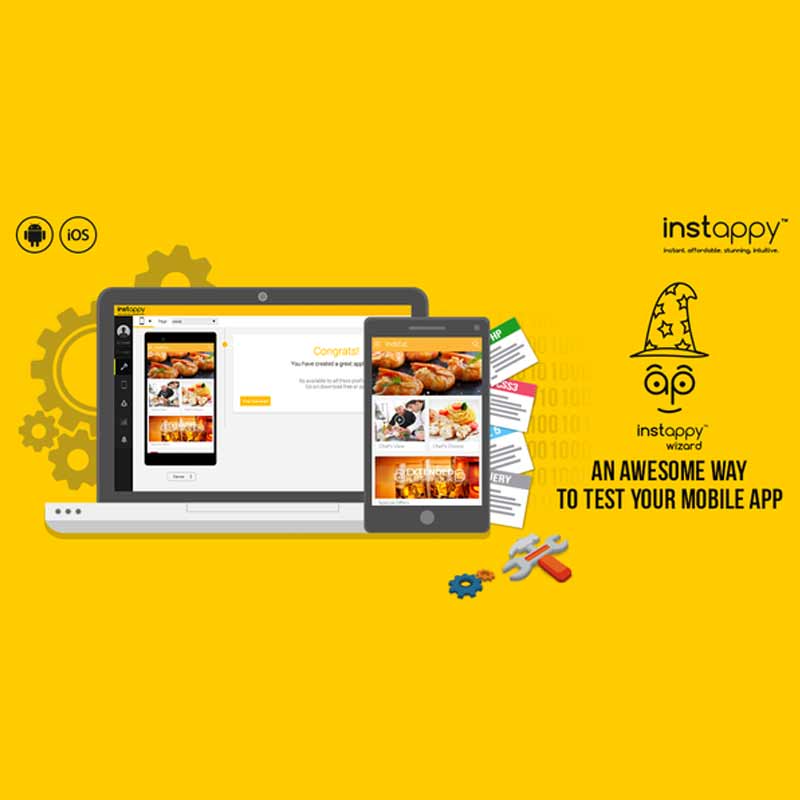
    As per Gartner’s  IT Spending Forecast, by 2017 the demand for enterprise mobile apps will exceed the supply available, especially in India — which comes as an opportunity for cloud-based Mobile app creation platform Instappy.

    “Though India is one of the largest base for developers, globally the number of developers required and the apps in which are in demand has a gap of 1:5 and by 2017 this gap is only going to  grow. A good application requires at least five developers working on it and needs a time period of at least  45 to 60 days  on a an average. Whereas the number of enterprises and small businesses who want an application is far more than that. Had the pool of developers grown at the same rate that the SMEs are shifting to digital, this gap would have been avoided, but the mobile industry has seen a rapid boom and the developers aren’t keeping up,” explained  Instappy, founder and MD Ambika Sharma

    Instappy’s business model is based on this simple ratio, as well as the fact that SMEs prefer a platform that helps them get an app without going through complicated technical discussions with developers.

    Observing the current trend in the market, Sharma shared that the small and medium enterprises jumping the digital bandwagon understand the importance of mobile and how it is going to build on their revenue in the long run.

    While Instappy does get an occasional request of ‘an ola app’, or a ‘zomato app’, for the most part users are fairly well aware of keeping their app identity unique, though certain features may be replicated as reference.

    “The only area that SMEs need to be educated about is building an application is not the end of it, it needs constant maintenance, software updates and improvements. Technology is changing fast and the business owners need to be updated for the most part as well,” she added.

    Non technology savvy business owners and marketers often shy away from getting themselves an application to avoid dealing with the technical specifications because they are overwhelmed by the complexity. Therefore the cloud based platform thrives amongst  Small and Medium Sized enterprises, making it a more democratised playing field for all businesses.

    On an average the platform sees anything between 35 to 40 users building apps every week. Barring the first free trial month, the subscribers start off at Rs 30,000 to be on the platform, and the rates go higher depending on the services a user claims. Apart from this Instappy also entertains clients who ask for a more  customized application for their businesses,  which commands premium rates.  But that is nothing compared to the ongoing rates if a professional team of developers are hired for the job.

    For a basic application that serves a simple purpose, a business enterprise will have to pay a small group of developers anything between Rs 15 to Rs 20 lacs and the price can go up to crores if well known developers are hired and difficult coding is required.

    “We are currently getting requests from across industry, but the ones that stand out are travel, learning and education,  retail and stationery and beauty services business. Interestingly mass manufacturing industry, which is very traditional in its nature has also come on board with us to get an application out,” she shared.

    The sudden rush to get an application has also brought in its own set of challenges for the development market. While most businesses want to go digital to expand their market online and open new ways to interact with the consumer, there are also some who want an app just for the sake of it. Sharma stayed  clear of them.

    “No smart business will create a app just for the sake of it or due to herd mentality. While it’s a trend, the applications have to serve a business purpose for them. It is very difficult to develop an app that covers all the needs of a business, while keeping the functionality in mind, and without going overboard with features. It takes almost 30 days to even figure out what all they want  in it, and most of the time a specialised team has to step in to keep the businesses updated about the latest features they can avail or offer their customers through the app. Half the time businesses lack clarity on exactly what they want from an app.That is where the support team comes in and guides them based on their requirement,” Sharma pointed out, adding that Instappy mostly works with businesses who have their content ready.

    To reach out to fresh new users, Instappy has a very active digital marketing strategy that banks on content marketing as well. “As a B2B portal that targets businesses online, without platform being on digital, our marketing spends are also largely inclined on digital campaigns with an occasional print advertisement,” Sharma said.

    Launched in December 2015 in India, and in the European market in March 2016, the platform is already seeing positive acceptance from both the markets.

    When asked about its yearly targets, Sharma said, “At this point we want to have at least  500 applications pushed out in the next 18 months time. Any business takes time when marketing dynamics are changing. We already making money with a revenue increase on a week – on week basis. Keeping in mind that we constantly  want to invest in the platform from the technology standpoint to ready on demand features for customers, we cant put a date on when we will break even, but it shouldn’t take longer than two years for sure.
  • ‘India doesn’t have enough developers to meet industry’s demand’: Instappy founder Ambika Sharma

    ‘India doesn’t have enough developers to meet industry’s demand’: Instappy founder Ambika Sharma

    MUMBAI: The explosion of smart mobile phones in India and the penetration of internet has led to a boom in several innovative business proposals that explore the digital platform. With India leading the startup scene, everyday new ideas are turning from just business plans in a ppt file to an actual revenue generating business, backed by an aggressive venture capitalists.

    At the same time, it has pushed several small and medium enterprises to go online, as their customers have already made the shift. It not only means a booming in the digital market, it also means more demand for technology to sustain its rapid growth — right from hardware to software. The Mobile App industry is estimated at $ 143 billion and counting.  As more businesses start thinking mobile in their digital marketing initiatives, traditional agencies too are realising the need to include application development skilsl in their portfolio to sustain clients.

    As per Gartner’s  IT Spending Forecast, by 2017 the demand for enterprise mobile apps will exceed the supply available, especially in India — which comes as an opportunity for cloud-based Mobile app creation platform Instappy.

    “Though India is one of the largest base for developers, globally the number of developers required and the apps in which are in demand has a gap of 1:5 and by 2017 this gap is only going to  grow. A good application requires at least five developers working on it and needs a time period of at least  45 to 60 days  on a an average. Whereas the number of enterprises and small businesses who want an application is far more than that. Had the pool of developers grown at the same rate that the SMEs are shifting to digital, this gap would have been avoided, but the mobile industry has seen a rapid boom and the developers aren’t keeping up,” explained  Instappy, founder and MD Ambika Sharma

    Instappy’s business model is based on this simple ratio, as well as the fact that SMEs prefer a platform that helps them get an app without going through complicated technical discussions with developers.

    Observing the current trend in the market, Sharma shared that the small and medium enterprises jumping the digital bandwagon understand the importance of mobile and how it is going to build on their revenue in the long run.

    While Instappy does get an occasional request of ‘an ola app’, or a ‘zomato app’, for the most part users are fairly well aware of keeping their app identity unique, though certain features may be replicated as reference.

    “The only area that SMEs need to be educated about is building an application is not the end of it, it needs constant maintenance, software updates and improvements. Technology is changing fast and the business owners need to be updated for the most part as well,” she added.

    Non technology savvy business owners and marketers often shy away from getting themselves an application to avoid dealing with the technical specifications because they are overwhelmed by the complexity. Therefore the cloud based platform thrives amongst  Small and Medium Sized enterprises, making it a more democratised playing field for all businesses.

    On an average the platform sees anything between 35 to 40 users building apps every week. Barring the first free trial month, the subscribers start off at Rs 30,000 to be on the platform, and the rates go higher depending on the services a user claims. Apart from this Instappy also entertains clients who ask for a more  customized application for their businesses,  which commands premium rates.  But that is nothing compared to the ongoing rates if a professional team of developers are hired for the job.

    For a basic application that serves a simple purpose, a business enterprise will have to pay a small group of developers anything between Rs 15 to Rs 20 lacs and the price can go up to crores if well known developers are hired and difficult coding is required.

    “We are currently getting requests from across industry, but the ones that stand out are travel, learning and education,  retail and stationery and beauty services business. Interestingly mass manufacturing industry, which is very traditional in its nature has also come on board with us to get an application out,” she shared.

    The sudden rush to get an application has also brought in its own set of challenges for the development market. While most businesses want to go digital to expand their market online and open new ways to interact with the consumer, there are also some who want an app just for the sake of it. Sharma stayed  clear of them.

    “No smart business will create a app just for the sake of it or due to herd mentality. While it’s a trend, the applications have to serve a business purpose for them. It is very difficult to develop an app that covers all the needs of a business, while keeping the functionality in mind, and without going overboard with features. It takes almost 30 days to even figure out what all they want  in it, and most of the time a specialised team has to step in to keep the businesses updated about the latest features they can avail or offer their customers through the app. Half the time businesses lack clarity on exactly what they want from an app.That is where the support team comes in and guides them based on their requirement,” Sharma pointed out, adding that Instappy mostly works with businesses who have their content ready.

    To reach out to fresh new users, Instappy has a very active digital marketing strategy that banks on content marketing as well. “As a B2B portal that targets businesses online, without platform being on digital, our marketing spends are also largely inclined on digital campaigns with an occasional print advertisement,” Sharma said.

    Launched in December 2015 in India, and in the European market in March 2016, the platform is already seeing positive acceptance from both the markets.

    When asked about its yearly targets, Sharma said, “At this point we want to have at least  500 applications pushed out in the next 18 months time. Any business takes time when marketing dynamics are changing. We already making money with a revenue increase on a week – on week basis. Keeping in mind that we constantly  want to invest in the platform from the technology standpoint to ready on demand features for customers, we cant put a date on when we will break even, but it shouldn’t take longer than two years for sure.

  • Cloud based television services company Magine gets $19mn funding

    Cloud based television services company Magine gets $19mn funding

     BENGALURU: Magine, a Swedish cloud-based television operator, announced today that it has obtained an additional round of funding to the extent of $19mn that will enable it to expand the supply of its recently launched service of television content online (OTT).

    Michael Werner, Matthias Hjelmstedt, Erik Wikstrom, Xavier Ritort and Hakan Tranvik, founders of Magine, obtained the funds through an agreement with a group of Swedish and international investors.

    The funding will help Magine to accelerate significantly the time for the implementation of the platform at the international level. Within a few a few months the service will expand from Sweden and will be launched soon in its key television markets of Germany and Spain. It will be available for users across at least five other markets before the end of the year says Magine.

    Magine president Michael Werner says “Magine is not just another television platform, but a whole new way to access and enjoy content. It is a service that requires a subscription and has been designed to make people return to following television programs. Because of this, broadcasters and content providers are very likely to use it. Magine helps them to create new forms of monetization while respecting the system of existing copyrights. Our investors realized immediately the extraordinary potential for discovery of content and social interactions available to users, and the service’s ability to generate new revenue streams.”

    In Sweden, Magine hosts some of the most famous brands and channels in the world. These includr Discovery, CNN International, BBC, Eurosport, National Geographic, Nickelodeon and Cartoon Network, in addition to the national broadcasters SVT and TV4. The company has also initiated talks with numerous media and international groups engaged in the entertainment industry, and expect further announcements in this regard later this month.

    Last April, Magine was presented to the international television and community members for content production during MIPTV (International market of television), one of the major international events in Europe dedicated to the entertainment industry. The presentation of the service has been hailed as the highlight of the event by commentators, journalists and leading figures in the industry.

    Magine is the new television. It is not a new device to follow television programs, but a service that offers absolute freedom to follow live TV, pause or resume viewing at a later time for all channels and all devices at any time, in compliance with the existing copyright. It offers high speed, excellent quality and images protected by DRM (Digital Rights Management, Digital Rights Management) through any type of Internet connection available. It is currently available on Apple devices and the Samsung smart TVs. Soon it will be possible to use the service on other television platforms and tablets with Android operating system.

    Also read:

    Mipcom unveils keynote line-up reflecting the new golden age of television

    MipTV: growing stronger in 50th year; India registers increased presence