Tag: Climate Change

  • Brands turn to sustainable practices, as consumers call for climate action

    Brands turn to sustainable practices, as consumers call for climate action

    MUMBAI: Consumers today expect brands to take responsibility towards following sustainable practices, while being more aware of their choices. And they expect action, not just empty promises on sustainability, according to a recent BBC Global News study which revealed that 80 per cent of consumers in the Asia Pacific region agree that demonstrating a commitment to sustainability adds value to the brand. But where do brands stand on sustainability today?

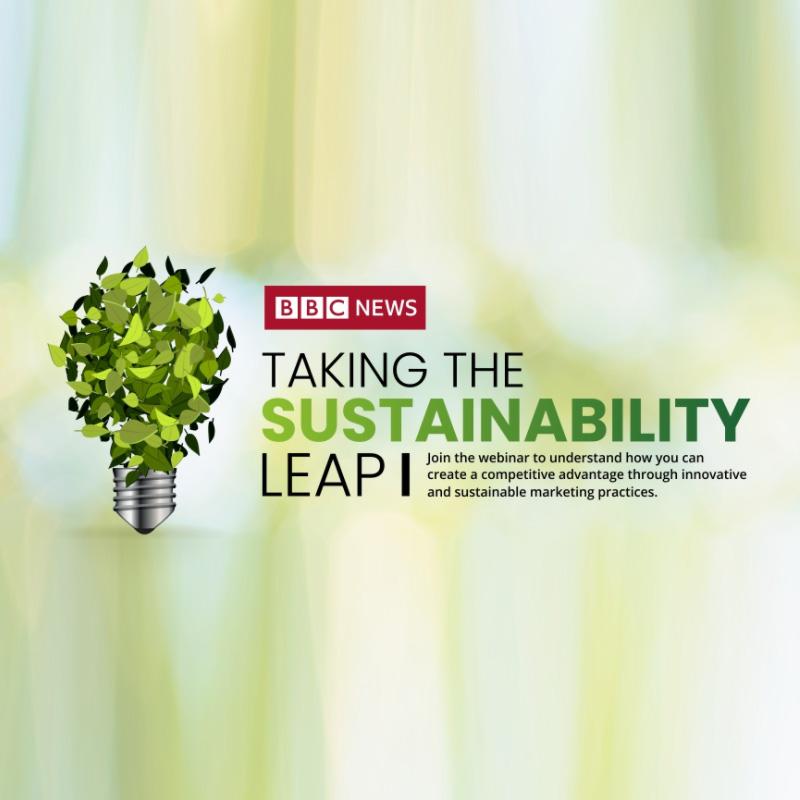
    A virtual webinar – ‘Taking the Sustainability leap’ organised by BBC News in collaboration with Indiantelevision.com on Thursday gave some valuable insights into innovative and sustainable marketing practices adopted by some of the leading brands who have taken the sustainability plunge.

    “The rise in global consumption levels over the last decades has been accompanied by a persistent increase in resource depletion and pollution, putting serious pressure on the environment well above its regenerative capacities,” said BBC Global News, SVP Commercial Development, Alistair McEwan as he initiated the discussion. “Without a significant change in current consumption and production patterns, the world will face strong environmental and economic costs such as those caused by projected climate change.”

    The event that shared case studies from sustainability leaders across the globe kicked off with a panel discussion on ‘Leading with Innovation and Inspiration’ led by The R Collective founder and CEO Christina Dean, Climate Force founder Barney Swan, The Fabrick lab founder Elaine Yan Ling Ng, and Sophie’s BioNutrients co-founder and CEO Eugene Wang.

    Other key speakers at the event included Maruti Suzuki India, assistant vice president-sustainability and carbon neutrality G P Chaddha, Godrej Group, head-environmental sustainability Ram Vaidyanathan, Tata Consultancy Services, head of sustainability marketing, Preeti Gandhi, Lenovo, head of communications, Asia Pacific, Geneviene Hilton, and Honasa Consumer Pvt Ltd (MamaEarth) vice-president marketing Sambit Dash. The discussion was moderated by BBC News senior journalist Devina Gupta.

    Shooting down the notion that sustainability and business profitability cannot go hand-in-hand, Godrej Group’s Ram Vaidyanathan pointed out that companies with stronger sustainable principles and ESG (Environmental, Social and Governance) practices have far out-performed the other companies on pure financial indicators as well. “80 per cent of sustainable initiatives are actually cost-saving, simply by being more efficient in the way we use resources,” he added, highlighting that from an investor’s perspective too it makes sense as strong ESG performance and processes are de-risking investments.

    “The current situation in India is that we’re still trying to make companies ESG-compliant. There’s a bit of regulatory pressure too,” said Maruti Suzuki’s GP Chaddha, adding that while production came to a virtual standstill during the pandemic, sustainable practices helped the company to bounce back quicker than others.

    Tata Consultancy Services (TCS)’s Preeti Gandhi talked about the low carbon emissions observed across the country and globally during the pandemic due to the prevalence of WFH and minimal commutes. “It is important for us to continue these reductions over the long term as we come back to work and return to normalcy,” she said, citing some of the efficiency measures the company has implemented over this period such including the hybrid working initiatives like ‘25 by 25’ wherein only 25 per cent of its employees will commute to work by the year 2025. “This would hopefully ensure that we continue to see the environmental resilience to continue, even post-pandemic.”

    Lenovo’s Geneviene Hilton underlined the fact that sustainability needs to be ingrained into the entire business from the start, for it to be truly effective. “Consumers today are also keen to know about the environmental, social, and governance measures that companies undertake,” she said.

    Taking the belief of embedding environmental sustainability into the business’ foundation, Mamaearth’s Sambit Dash talked about the PETA-certified brand’s vision about being a purpose-led brand wanting to make a good impact on the environment as well as society. “We recycled more plastic than we produced from the beginning. Therefore, at a time when other brands are trying to be ‘plastic neutral,’ we have been ‘plastic positive’ right from the start,” shared Dash.

    GP Chadhha referred to Maruti’s tagline of “Petrol khatam hi nahi hota” as evidence of its fuel-efficient cars. “There’s a need to increase incentivisation for brands and customers to start moving in the sustainable and carbon-neutral direction,” he said.

    According to Godrej’s Ram Vaidyanathan, the Customer is the biggest stakeholder when it comes to deciding the kind of products that any company makes, so that’s a big driver when it comes to sustainable products. He believes packaging should be the biggest area where those companies must focus on to create maximum impact.

    Gandhi also threw light on the role of media in championing the cause of sustainable consumerism and de-mystifying the eco-labels. “When it came to creating systems and platforms for eco-friendly collaborations, it must be led by the policy thinkers and changemakers across the board towards specific goals in driving sustainable development for all,” she noted.

    The event also saw BBC Future Planet editor Martha Henriques shedding some light on how BBC is doing its part of the sustainability of the planet. BBC Future Planet is the first major online publication launched in 2020, with a sole focus on climate change that also aims to be as close to zero carbon as possible. BBC StoryWorks APAC director Nicola Eliot discussed how brands are partnering with the BBC to tell their stories on forging an effective sustainability journey.

  • Discovery India ties up with UN India and WWF India to launch #StopTheMelt campaign

    Mumbai: Real life entertainment channel Discovery India on Saturday launched its #StopTheMelt campaign in partnership with UN India and WWF India to urge people to do their bit to slow down global warming.

    The theme of this year’s World Environment Day is ‘Ecosystem Restoration’ and the channel hopes to throw light on the ailing state of the planet on the occasion. So, for the first time, it has also decided to change its logo to deepen understanding of the impact of global warming, and to encourage people to take action today for a better tomorrow.

    A special film was also released in partnership with UN India and WWF India to raise awareness and rekindle hope within every individual with simple yet impactful call to action like tree plantation, avoiding plastics usage et al.

    Speaking about the campaign, Discovery Inc- South Asia, managing director, Megha Tata said, “We remain steadfast in our commitment to driving awareness about the need for reduction of human impact on the environment. We are proud to extend our partnership with UN India and WWF India, two most powerful and recognized forces working relentlessly towards environment conservation. As leaders in real-life entertainment, it is also our responsibility to continue drawing attention towards important issues beyond this day alone.”

    The campaign is backed by captivating creatives across Discovery Network social media platforms which symbolises the harsh effects of Global Warming. Several celebrities including Malaika Arora, Suresh Raina, Rana Daggubati, Dia Mirza, Pratik Gandhi, Neeraj Pandey (Filmmaker), Shital Bhatia (Film producer), Sania Mirza and environmentalist Ivan Carter, Nigel Marven among many others have lent their support to champion the cause of self-reflection to re-analyse habits and save the environment.

    UN resident coordinator in India, Renata Dessallien said, “2020 was a year of reckoning – a global pandemic that’s wreaked havoc in every part of the world, and a climate crisis that continues to deepen. This year, as we enter the UN Decade of Ecosystem Restoration, we must vigorously renew our commitment to tackle climate change head-on through collective action – plant more trees, change our diet, say no to plastic and pledge to re-use, reduce and recycle.”

    Sharing his thoughts, WWF India, secretary general & CEO, Ravi Singh said, “The focus is to invest our efforts to conserve, protect and restore our ecosystems, which is the solution to a sustainable future. WWF India has always taken pride to partner with Discovery India for campaigns driving the message to conserve nature and to secure a better future by putting both the health of people and our planet first.”

    To drive a deeper engagement with audiences, Discovery Channel will also air a five hour-long gripping slate of content specially curated for World Environment Day, including Wild Karnataka, The Story of Plastic, Jeremy Wade – Mighty Ganga, Great Global Clean-up, and India 2050 on 5 June from 12 Noon to 5 PM.

  • On Earth Day, L’Oréal Paris pledges to reduce its carbon footprint by 50%

    On Earth Day, L’Oréal Paris pledges to reduce its carbon footprint by 50%

    Mumbai: Amid increasing urgency to combat climate change, brands around the world have begun reevaluating their production practices. Now, beauty brand L’Oréal Paris has announced its sustainability program, ‘L’Oréal for the Future, because our Planet is Worth it’, on the occasion of World Earth Day.

    The brand has pledged to embrace the ambitious mission of reducing its carbon footprint by 50 per cent on every finished product. It has also announced its decision to contribute €10 million to environmental projects whose beneficiaries are communities of women around the world.

    “Now is the time to accelerate sustainable innovation, to make the shift to a circular economy and to reduce the impact of our products,” said L’Oréal Paris global brand president Delphine Viguier-Hovasse, adding that between 2005 and 2020, the brand’s factories and distribution centres had already reduced CO2 emissions by 82 per cent, water consumption by 44 per cent, and waste generation by 35 per cent.

    “There is still much work to be done but we will remain strong in our resolve to make a difference and play our part in this race against climate change. We have a duty to change the codes of beauty to adopt a more sustainable approach and to empower our consumers to achieve responsible consumption,” she added.

    Among the key pledges made by the brand include its aim to use 100 per cent recycled plastic, 100 per cent sustainable cardboard and operate100 per cent carbon neutral factories by 2030. Along with financial support, it will also develop specific programs that empower women in leadership positions.

  • Guest column: Brands have to re-strategise for impactful engagement with consumers

    Guest column: Brands have to re-strategise for impactful engagement with consumers

    MUMBAI: 2020 has been a year of hard lessons that will leave an impact across industries and societies for decades to come. The year of the pandemic made us change the way we conduct business, and rethink our strategies, compelling us to adapt to the changing realities of the times. We’ve already witnessed a fundamental shift in how companies approach their marketing. However, one thing is clear to all of us: the pre-Covid2019 world is gone for good and 2021 is going to be about how brands amend and adjust their strategies for the new normal. We don't know yet if schools will open anytime soon. We don't know about the functions of vaccines, however, we have to re-evaluate, gear up and think of a way forward for 2021 and beyond.

    1. Digital expansion

    When the dust from the Covid2019 crisis finally settles, it will be clear that we’ve dramatically accelerated the adoption of digital technology into our lives. The pandemic has shown us how this digital transformation has made many aspects of our home and work continue almost as normal, despite the abnormal circumstances. Agile marketing and a presence on both online and offline platforms is the need of the hour. Our online presence and digital engagement have always been high and we would also be focusing on how our brand can work on making the digital community stronger.

    2. Reconnecting with the normal world and fostering human connection

    As we’re navigating a new way, we know that many of those activities we took for granted have transformed. From going to the grocery store to children attending school, our lives have changed for good. For many of us, work has also shifted from full time work in an office to work from home. This has impacted the ways we humans interact with each other and we’re transitioning to virtual relationships. Now that we all are getting to grips with the new normal, it’s never been more important to stay connected to the people and embrace flexibility. Brands will have to re-target and re-strategise to engage with consumers in newer and more impactful ways.

    3. Ease of purchase

    As the pandemic has compelled consumers and us to adopt e-commerce/door-to-door services and dependency on digital means at a rapid pace, 2021 will see brands working further to improve product accessibility for consumers as India's digital revolution gathers pace after a subdued economic year overall.

    4. Climate change and sustainability

    Even though it might not be obviously clear, the Covid2019 pandemic has highlighted the fragility of human existence itself, and that in turn has forced consumers to prioritise sustainability and climate change issues that might have been overlooked five years ago. The rising penetration of social media in every aspect of lives has also compelled consumers to signal to their peers that they care about the planet. Caring for the planet and sustainable ecosystems along with proselytisation of veganism have become key virtue-signalling elements in our thought process. Brands across the world have responded to this change and even fossil fuel conglomerates are presenting “Green, sustainability” funds to mitigate the effects of climate change. The world is witnessing the power of mass behaviour change and everyone is remembering the importance of leading with purpose. Consumers prefer to connect with brands that display a sense of sustainability ethic.

    In 2020, Faber-Castell launched its recycled range of paper pencils, made with recycled and repurposed paper. The rainbow shavings in this product underlined the brand’s priority to promote inclusivity. Added to this, the water-soluble seeds found at the bottom of the product emphasized its eco-friendly quality. Through this one product, we are forwarding our goals of sustainability as well as inclusivity. This is not to say that we are resting on our accomplishments. Through advanced research and product development, we are constantly attempting to further improve our sustainability score through innovation in our packaging and products. The consumers have always positively responded to this and we hope that we will continue to be appreciated for it.

    (The author is marketing director of Faber-Castell India. Indiantelevision.com may not subscriber to her views.) 

  • Leonardo DiCaprio named UN Messenger of Peace

    Leonardo DiCaprio named UN Messenger of Peace

    MUMBAI: The Hollywood actor, Leonardo DiCaprio, has been appointed as a United Nations Messenger of Peace to raise awareness about climate change.


    On the new appointment, United Nations secretary-general Ban Ki-moon said, “DiCaprio is a credible voice in the environmental movement, and has a considerable platform to amplify its message.


     “I am pleased he has chosen to add his voice to UN efforts to raise awareness of the urgency and benefits of acting now to combat climate change,” he added.


    DiCaprio will also address a UN summit meeting on climate change on 23 September, a day before the UN General Assembly’s annual gathering of world leaders begins. Leaders from the 193 member states of the United Nations are expected to attend the climate session.


    “I feel a moral obligation to speak out at this key moment in human history – it is a moment for action. How we respond to the climate crisis in the coming years will likely determine the fate of humanity and our planet,” the actor said in a statement.


    The Academy Award-nominated star of The Wolf of Wall Street and The Aviator joins other celebrities, from Audrey Hepburn to Angelina Jolie, who have represented various UN organisations.


    In 1998, the actor established the ‘Leonardo DiCaprio Foundation’, whose mission is protecting Earth’s last wild places and building a more harmonious relationship between humanity and the natural world, the United Nations said in the statement.


    The organisation has contributed funds toward protecting tigers in Nepal, elephants in the wild, and marine animals, including sharks.


    In February, DiCaprio pledged a donation of $3 million to marine conservation and followed with an additional $7 million pledge several months later.


    On 21 September, two days before the UN Climate Summit in New York, the Clinton Foundation will honour the actor for his committed environmentalism during a Manhattan gala event featuring Bill Clinton, Hillary Clinton and Chelsea Clinton.


    There are currently 11 other messengers of peace and one goodwill ambassador, the United Nations said. Other Hollywood industry notables who have been given the Messenger of Peace title by the UN in recent years include Edward Norton, Michael Douglas, Charlize Theron, George Clooney and Stevie Wonder.

  • Unilever calls for businesses to fight against climate change

    Unilever calls for businesses to fight against climate change

    MUMBAI: Keeping true to its commitment of a better tomorrow, Unilever has issued a call for all companies affected by the growing costs of climate change, and in particular the food industry, to step up their commitment to tackling the issue. 


    The risk to the food industry from climate change is severe, with some analysts predicting that the external environmental costs of climate change could exceed the earnings of the entire food industry by 2030 unless an action is taken.  The call coincides with a report released by Oxfam International arguing that the ‘Top 10’ food companies, including Unilever, should be among those leading the charge to address climate change both in their own operations, in their supply chains, and in the wider public policy arena.


     Sustainability strategy and global advocacy vice president Miguel Veiga-Pestana commented, “Unilever has been at the forefront of industry efforts to tackle climate change since the mid 1990s. We were the first to establish the Unilever Sustainable Agriculture Programme to address carbon emissions from agriculture and deforestation, and more recently we were the first to launch a comprehensive plan with time-bound targets reported on annually to drive progress towards sustainable sourcing. The Unilever Sustainable Living Plan, was launched in November 2010. We are currently ahead of our self imposed target on sustainable sourcing and broader CO2 emissions from energy in our operations – down by 32 per cent since 2008.”


     Unilever has also sought to improve its footprint along the full breadth of the value chain, and to play a catalytic role within the industry and the wider private sector.


     For example:


    ·Committing to sourcing 100 per cent of agricultural raw materials sustainably by 2020, including tropical commodities, such as palm, soy and the paper and board used in its packaging.


    · Working with the United Nations Environment Programme and Greenpeace to eliminate highly damaging HFCs from commercial refrigeration


    · Actively contributing to the work of HRH The Prince of Wales’ Corporate Leaders Group on Climate Change, which has made the case for progressive public policy to bring down emissions and accelerate the deployment of renewable energy.


    · Sourcing 100 per cent renewable electricity for sites in Europe and North America


    ·Co-Chairing the Sustainability Committee of the Global Consumer Goods Forum (CGF), an industry group with combined turnover of $3 trillion, with specific programmes now in place on deforestation and refrigeration.


    ·Unilever also led the process which resulted in the creation of the Tropical Forest Alliance (TFA)  a public-private partnership between the 400 companies of the CGF, the governments of the USA, UK, Norway, the Netherlands, Indonesia and Liberia and a large number of international NGOs.  The principal goal of the TFA is to eliminate any trace of deforestation from the supply chains of consumer goods companies.


     None of this could come too soon.  With less than 20 months until world leaders meet in Paris to agree a global climate change agreement, Unilever has also stepped up its advocacy efforts, with Unilever CEO Paul Polman recently addressing the Abu Dhabi Ascent meeting – a preparatory meeting convened by the United Nations Secretary General, Ban Ki-moon, to build momentum towards an ambitious intergovernmental deal.  At the event, Unilever CEO Paul Polman called for joint efforts to scale up action to tackle climate change, urging politicians to lead with “clarity, confidence and courage” in the international climate change negotiations. 


     “If every major company affected by climate change – not only in the food and beverage sector, but other impacted sectors such as tourism, insurance and transport – were to address the issue as one of business survival, and step change their efforts for delivery, we could together make a significant impact. We hope that Oxfam’s report will encourage other businesses to recognise the urgent need to future proof their operations, provide for the long term needs of their consumers, step off the sidelines and move into action.” concludes Miguel Veiga-Pestana.

  • Landmark Agreement on Climate Change at ICAO

    Landmark Agreement on Climate Change at ICAO

    MUMBAI: The International Air Transport Association (IATA) praised the leadership of governments in reaching a landmark agreement on Climate Change at the close of the 38th Assembly of the United NationsInternational Civil Aviation Organization (ICAO).

    The agreement commits ICAO to developing a global market-based measure (MBM) that will be an essential enabler for the industry to achieve carbon-neutral growth from 2020 (CNG2020). A global MBM complements progress on improving technology, operations and infrastructure in the industry’s long-established four-pillar strategy to manage aviation’s climate change impact.

    “Today was a great day for aviation, for the effort against climate change and for global standards and international cooperation. Industry, civil society and governments have worked hard to reach this point and keep aviation at the forefront of industries managing their climate change impact. Now we have a strong mandate and a short three-year time frame to sort out the details. Airlines need and want a global MBM. Without losing any of the momentum built up over these last two weeks, we are eager to get on with the detailed work needed to design the global scheme in time for finalization at the 2016 Assembly,” said Tony Tyler, IATA’s Director General and CEO.

    Today’s agreement will set in motion discussions on the detailed design elements of a global MBM, including standards for the monitoring, reporting and verification of emissions and the type of scheme to be implemented. In June, IATA’s 240 member airlines representing some 84% of global traffic overwhelmingly passed a resolution asking governments to develop a global mandatory carbon offsetting scheme. The industry believes that this will be the most effective and efficient MBM to implement.

    “We should also recognize the important role that the European Commission and Parliament have played in raising the aviationemissions issue up the international agenda. Aviation would not be in the climate leadership position it is in today were it not for their early and persistent efforts which inspired both industry and other governments. As the EU Transport Commissioner, Siim Kallas, said, ‘The EU’s hard work has paid off.’Aviation—through the stewardship of ICAO—has achieved the first-ever global deal to curb an industry’s emissions,” said Tyler.

    “Reaching this landmark agreement among ICAO’s 191 member states was a challenging task. Today’s result carries on the ICAO tradition of uniting governments to focus on the global standards that underpin global connectivity. I congratulate the ICAO leadership for their vision and skill in rallying interests around a common purpose,” said Tyler.

    The Complete Agenda

    The 38th ICAO Assembly also delivered key decisions and direction on a broad range of technical and economic issues.

    Some highlights include:

    Safety: The Assembly endorsed the Enhanced-IATA Operational Safety Audit (Enhanced-IOSA). This builds on the proven benefits of the IOSA program by adding elements of continuous compliance monitoring. In addition, the Assembly encouraged greater state participation in the ICAO managed global Airline Operator Certificate registry. This will be a key tool in the efficient safety oversight of foreign carriers. The Assembly also encouraged harmonization among states on operational specifications.

    Security: The Assembly provided direction on critical areas in aviation security. To stem the proliferation of non-standard security data requests by governments the Assembly encouraged the use of ICAO global standards by immigration and border control agencies. It also encouraged standardizing air cargo security regimes through compliance with ICAO principles; to work with states on capacity building where needed; and to encourage implementation of the Roadmap to Strengthen Global Air Cargo Security.

    Regulation and Taxation: The Assembly encouraged universal adoption of the Montreal Convention 1999 (MC99). It further urged governments to align consumer protection regulations with MC99’s provisions and strike the right balance between protecting passengers and ensuring industry competitiveness. The IATA resolution on consumer protection regulation was noted by the Assembly.

    The Assembly also urged States to avoid imposing discriminatory taxes on international aviation and double taxation.

    Recognizing growing relationships among airlines to serve market need, the Assembly asked for cooperation among competition authorities in the context of how alliances, mergers and joint ventures are viewed. And it asked ICAO to develop a multilateral agreement on foreign ownership and control.

    Finally, the Assembly agreed to convene a Diplomatic Conference to update the Tokyo Convention which provides the international legal framework with respect to unruly passengers.

    Technology: As global navigation systems evolve, the Assembly encouraged states to develop equipment standards based on capabilities and refrain from mandatingthe use of specific satellite navigation systems. It also encouraged states to recognize the capabilities of flight simulation training entities which operate under global guidance developed by ICAO and the industry.

    “This was truly an Assembly of significant discussion and decisions. Global standards—developed and safeguarded by ICAO—are the bedrock of global aviation. We are encouraged by a clear message from governments coming out of this Assembly that global implementationof what has been agreed at ICAO is critical to the future successful development of our important industry. Airlines will carry some 3 billion people and over 50 million tonnes of cargo this year. A globally standardized environment is absolutely essential to perform this important task safely, securely, sustainably and efficiently,” said Tyler.