Tag: CK Jain

  • Doordarshan partners SBI to launch payment gateway for ad agencies

    Doordarshan partners SBI to launch payment gateway for ad agencies

    NEW DELHI: In a pioneering move, Doordarshan today became the first Indian television channel to introduce an online payment gateway for advertisers that will ensure greater efficiency and transparency.


    Under the system, each advertiser dealing with Doordarshan will have its own page through which it will not only be able to know its status of payments but also make these payments. 


    Although set up in collaboration with the State Bank of India, the system permits advertisers to transfer the payments through their own banks using the gateway. 


    Doordarshan automated its commercial operations for DD National channel in the Phase-I in January this year. The process for DD’s other channels is under implementation. The move has helped integrate various steps involved in executing commercials from booking to scheduling and billing. 


    However, the last step of payment receipt is still manual. Doordarshan has integrated the payment gateway and with its traffic and billing system would facilitate all clients and agencies to make online payment by directly going to Doordarshan’s portal from the place of their convenience at any time of the day. 


    The new system was inaugurated today by Prasar Bharati member (finance) Rajeev Singh in the presence of DD director general C Lalrosanga, Engineer-in-Chief CBS Maurya, ADG (CRD) Mukesh Sharma, ADG (commercial & sales) Inderjeet Kaur, ADG Deepa Chandra, ADG PA Naidu, and DDG (commercial) CK Jain, who also explained the system along with State Bank of India main branch chief manager (e-banking) DN Sharma.


    Jain said the first phase would cover Delhi and Mumbai, whereas the second phase will cover other centres. It will also facilitate an Online Deal and Release Order Booking System (ODROBS).


    Sharma said the multi-operating payment system could be used for sending payments from other banks as well. Each ad agency would have a name and password to log on through the DD portal and then go on with checking status or making payments. This facilitates collection of fees from ad agencies and is completely automated with options of NEFT, RTGS, and draft with provision for updating etc. 


    Doordarshan has so far been facing huge problem of reconciling its accounts because of entire manual operations, which leave a lot of agencies and clients dissatisfied. This has also resulted in several disputes and also in arbitrations with agencies. 


    It was pointed out on the occasion that Prasar Bharati CEO Jawhar Sircar has also been emphasising on use of IT in both Doordarshan and AIR for bringing efficiency into the system. 

  • DD completes first phase of automating commercial ops

    DD completes first phase of automating commercial ops

    MUMBAI: Doordarshan (DD) has successfully implemented the first phase of automating its commercial operations in the first week of July this year.


    It may be recalled that last year DD decided to upgrade from its semi-integrated software that handled its different departments manually, to Broadcast Air Time Scheduling System (BATS) software provided by Media Nucleus, which integrates all the departments online.


    Indiantelevision.com was the first one to report that in June 2014, DD had officially launched the BATS traffic and billing software, which would connect its Delhi and Mumbai offices. The pubcaster was looking at completing the integration in three phases.


    Speaking about the completion of the first phase, Doordarshan deputy director general CK Jain says, “Phase one was to implement the DD channels and automating the entire commercial operations. The first phase has been completely implemented and by the end of this month we are going to start rolling out the second phase.”


    The aim of phase one was to complete the integration of all 67 DD kendras.


    The benefits from phase one are as follows:


    .  Less of manual intervention.


    .  Able to release bills on time. 


    .  Promptly reconcile receipts of dues and payments. 


    .  Enable agencies to make online payments.


    .  Generate reports in multiple ways.


    According to Jain, it has built a strong Management Information System (MIS), which helps generate reports in a convenient manner. It also helps the network to analyse its revenue pattern and Twitter forecast etc. 


    “We can generate revenues as per our convenience. For instance, we can generate how much revenue we have earned from a particular show or total revenue earned in a particular week or month. It has made our lives much easier,” asserts Jain.


    The network, which was supposed to implement its commercial operations in the month of February this year had to face problems leading to the delay of the launch. “We started working from June last year. There were some issues, which were unexpected and changes were required with the customisation of software with the agencies we work with. Whatever we wanted to improvise, we implemented in phase one, as we have different operations as compared to private broadcasters. That’s one of the reasons why it took us longer than usual to implement the first phase,” informs Jain.


    Moreover, DD had to undergo a lot of changes due to agencies’ requirements as well. “Every agency issues their Receiving Order (RO) in a different format, so we had to work with different agencies to ensure that their RO format was similar. They are also quiet excited about the changes,” he says


    He further adds that while the completion of phase one does not see any improvement in the network’s financials, but it does however improve the satisfaction level of the agencies with whom the network works. “Sometimes a few agencies were dissatisfied with the services that we offered, so this kind of operation will make the advertisers happy,” he says.


    Future of the second phase


    The network plans to start the second phase of automating its commercial operations by the end of July. It plans to implement the remaining five national channels – DD Urdu, DD News, DD Bharti, DD Sports and DD Kisan – in their respective cities, eight remaining commercial revenue divisions (CRDs) and 15 regional channels. 


    The network also plans to automate its commercial operations of its 22 channels, except for DD National in the second phase.


    For the record, the aim of the BATS software is to provide satisfactory services to the pubcaster’s clients and advertising agencies. Inaugurated by Prasar Bharati chairman Dr A Surya Prakash, the application will integrate all the departments of scheduling, sales and billing, which were earlier being handled manually causing delays and several disputes with agencies.


    The decision of upgrading the backend was taken since Doordarshan, with its wide network of kendras and regional channels across the country, was facing difficulty to monitor its outstanding revenue initially, as it was done manually.

  • Sports broadcasters expect reforms from budget 2015

    Sports broadcasters expect reforms from budget 2015

    MUMBAI: Private sector is one of the largest contributor to Indian economy the first step towards economic reform would be making an investor friendly scenario. With a vast market like India if private sector is refraining from investing then there are certain issues at the bureaucratic level, which are hampering the economic growth. In such a scenario the biggest challenge is to garner trust, not by compromising with national security independence but by policies. Policies that rejuvenate investors to invest exp. Be it in Madison Square or Sydney Allphones Arena, the entire Indian diaspora was promised a better business friendly India by Prime Minister Narendra Modi, which laid foundation to skyscrapers of aspirations.


    Now emphasising on the current business workflow in India, a company has to abide by both central state laws, which turns out as an obstacle. Moreover government often intervenes in the financial strategic affairs of a private company. Sports broadcasting industry is one of the sufferer of such obligations. Broadcasters purchase content from  firms by paying the amount demed, but while producing the content they are forced to follow certain regulations, which indirectly decides how much should be charged for the content.


    Opposing such intervention Ten Sports CEO Rajesh Sethi told Indiantelevision.com, “In India, private sector is a huge contributor to the economy with digitization process in its final stages sports media can play a key role in economic growth provided we are backed with business friendly policies. The matory sharing of sports feed is something that directly hits us, though it’s not an issue related to the budget, I would certainly like the government to look into such issues. Moreover, we purchase content from somewhere by paying certain amount regulations restricts us when it comes to selling it. So the next level of de-regularisation or de-tarrifisation is something that I expect from this budget. I have high expectations from Arun Jaitley as he is someone who has immense knowledge of finance economics understs the problems that we are facing. He has delivered so far I hope he does in this budget too.”


    That somehow sums up the private sports broadcasting industry’s aspirations from budget Jaitley.


    The perspective of government broadcasting sector came from Doordarshan (DD) deputy director general C K Jain. Hailing the concept of Make in India he insisted that the government should reduce dependence on Chinese products. “I expect the government to remove service taxes from advertisements as we also have the same functions responsibilities. Also I would request the government to treat us as a government entity exempt us from various taxes liabilities. From sports perspective, service tax on advertisements is certainly a botheration should be dealt with.”


    Sharing his personal expectation Jain added, “Make In India has the potential to play a key role in economic growth provided government pays special attention to it. The local manufacturers need to be backed financially with loans tax rebates. The poor of the country needs to be benefited from the budget, as the goal is to uplift the poor to middle class, which will reduce the dependence in subsidies. If subsidies are reduced government will have more money which they can spend other important sectors.”     


    The Finance Minster has been criticised as pro private sector in recent past after he decided not to intervene in a legal battle between DD Star regarding World Cup. The Sports Act of Prasar Bharati forces private channels to share feed of any event of international importance with pubcaster DD, which enables them to showcase it live. Now the act was brought to ensure that one who cannot afford private channels gets access to events of such magnitude. Which is a fair call considering every citizen in the country has a right to information should not miss the World Cup or Olympics as they cannot afford private channels. The problem is with sharing the feed with cable subscribers. BCCI, Nimbus Communications the two sports channels (ESPN Star) went to court with a plea that no cable television network could broadcast such sports events without a licence from the content owners. 


    In an affidavit, Star Sports had said that it was losing around Rs 290 crore every year by sharing its sports signals with Doordarshan was expecting to lose around Rs 120 crore by sharing the telecast of the World Cup this year. Under the Act, the rights holder gets 75 per cent of the revenue from the telecast on DD. The remaining 25 per cent is retained by DD.


    While Jaitley plans to increase GDP reduce fiscal deficit through his financial proposal policies the entire nation’s eyes ears are glued to his words even as you read this report today (28 February, 2015) with immense expectations aspirations. It remains to be seen if Jaitley company makes it or breaks it.

  • Sports broadcasters expect reforms from budget 2015

    Sports broadcasters expect reforms from budget 2015

    MUMBAI: Private sector is one of the largest contributor to Indian economy and the first step towards economic reform would be making an investor friendly scenario. With a vast market like India if private sector is refraining from investing then there are certain issues at the bureaucratic level, which are hampering the economic growth. In such a scenario the biggest challenge is to garner trust, not by compromising with national security and independence but by policies. Policies that rejuvenate investors to invest and expand. Be it in Madison Square or Sydney Allphones Arena, the entire Indian diaspora was promised a better business friendly India by Prime Minister Narendra Modi, which laid foundation to skyscrapers of aspirations.


    Now emphasising on the current business workflow in India, a company has to abide by both central and state laws, which turns out as an obstacle. Moreover government often intervenes in the financial and strategic affairs of a private company. Sports broadcasting industry is one of the sufferer of such obligations. Broadcasters purchase content from  firms by paying the amount demanded, but while producing the content they are forced to follow certain regulations, which indirectly decides how much should be charged for the content.


    Opposing such intervention Ten Sports CEO Rajesh Sethi told Indiantelevision.com, “In India, private sector is a huge contributor to the economy and with digitization process in its final stages sports media can play a key role in economic growth provided we are backed with business friendly policies. The mandatory sharing of sports feed is something that directly hits us, though it’s not an issue related to the budget, I would certainly like the government to look into such issues. Moreover, we purchase content from somewhere by paying certain amount and regulations restricts us when it comes to selling it. So the next level of de-regularisation or de-tarrifisation is something that I expect from this budget. I have high expectations from Arun Jaitley as he is someone who has immense knowledge of finance and economics and understands the problems that we are facing. He has delivered so far and I hope he does in this budget too.”


    That somehow sums up the private sports broadcasting industry’s aspirations from budget and Jaitley.


    The perspective of government broadcasting sector came from Doordarshan (DD) deputy director general C K Jain. Hailing the concept of Make in India he insisted that the government should reduce dependence on Chinese products. “I expect the government to remove service taxes from advertisements as we also have the same functions and responsibilities. Also I would request the government to treat us as a government entity and exempt us from various taxes and liabilities. From sports perspective, service tax on advertisements is certainly a botheration and should be dealt with.”


    Sharing his personal expectation Jain added, “Make In India has the potential to play a key role in economic growth provided government pays special attention to it. The local manufacturers need to be backed financially with loans and tax rebates. The poor of the country needs to be benefited from the budget, as the goal is to uplift the poor to middle class, which will reduce the dependence in subsidies. If subsidies are reduced government will have more money which they can spend other important sectors.”     


    The Finance Minster has been criticised as pro private sector in recent past after he decided not to intervene in a legal battle between DD and Star regarding World Cup. The Sports Act of Prasar Bharati forces private channels to share feed of any event of international importance with pubcaster DD, which enables them to showcase it live. Now the act was brought to ensure that one who cannot afford private channels gets access to events of such magnitude. Which is a fair call considering every citizen in the country has a right to information and should not miss the World Cup or Olympics as they cannot afford private channels. The problem is with sharing the feed with cable subscribers. BCCI, Nimbus Communications and the two sports channels (ESPN and Star) went to court with a plea that no cable television network could broadcast such sports events without a licence from the content owners. 


    In an affidavit, Star Sports had said that it was losing around Rs 290 crore every year by sharing its sports signals with Doordarshan and was expecting to lose around Rs 120 crore by sharing the telecast of the World Cup this year. Under the Act, the rights holder gets 75 per cent of the revenue from the telecast on DD. The remaining 25 per cent is retained by DD.


    While Jaitley plans to increase GDP and reduce fiscal deficit through his financial proposal and policies the entire nation’s eyes and ears are glued to his words even as you read this report today (28 February, 2015) with immense expectations and aspirations. It remains to be seen if Jaitley and company makes it or breaks it.

  • DD Freedish revenue from e-auctions to reach Rs 120 crore by March

    DD Freedish revenue from e-auctions to reach Rs 120 crore by March

    NEW DELHI: Doordarshan’s free-to-air direct-to-home Freedish platform, which was telecasting 59 channels until recently has added two more channels to its kitty. What’s more, the platform is further looking at adding three more channels to its offerings soon, taking the total number of channels to 64.


    In fact, another channel will come on board the platform before the end of the month, according to deputy director general C K Jain.


    Clarifying the situation, Jain told Indiantlevision.com that 61 channels had been allotted and another three would be allotted shortly. The last two channels to be allotted were Sony Pal and Dillagi, which is still to go on air.


    A total of 20 e-auctions have been held so far, the latest being earlier this week. DD expects to reach a target of Rs 120 crore through these auctions by the end of March this year.


    Doordarshan had set a reserve price of Rs 3.7 crore per slot for the 20th online e-auction, though Indiantelevision.com learnt that the bid amount went up to Rs 4.2 crore in the 17th e-auction held on 12 November.


    The attempt is to touch the target of 112 television channels in the next few months, Jain said. He said that the delay had been partly due to some technical problems, which were being sorted.


    Prasar Bharati CEO Jawhar Sircar had said recently that the future of Doordarshan was in Freedish and digitisation. He had added that this may mean that some channels would have to be attracted to Freedish by means other than e-auction.


    DD sources also said that while Freedish may be encrypted to keep a tab on the number of subscribers, it would however remain free-to-air.


    As all these channels are on MPEG2. Freedish, which uses Insat 4B, is migrating from its old platform to a new upgraded platform with MPEG4 in an attempt to increase its capacity. The migration would result in increase of TV channels from 59 to 64 and radio channels from 22 to 24.


    Sircar had said in November that while most were coming through e-auctions, some popular channels may have to be ‘attracted’ to join Freedish since satellite television was the future.  


    To access the upgraded platform, the viewers need to edit the transponder parameter by changing only the symbol rate from 27500Ksps to 28500 Ksps in four transponders and retune/rescan their Set Top Box (STB) to receive the upgraded TV and radio channels.


    Viewers/subscribers who do not rescan their STB will continue to get ten channels for a period of seven days only from the date of upgradation. Out of these ten channels, one channel is an informative channel, which will show detailed procedure for re-tuning the STBs. 

  • Doordarshan automates its commercial operations

    Doordarshan automates its commercial operations

    NEW DELHI: Doordarshan is going full swing on its proposed revamp. And it’s not just the new programming lineup that the pubcaster is looking at.


    As reported earlier by indiantelevision.com , DD has been working hard at upgrading its backend services and in the process was looking at moving from its semi-integrated software that handles different departments manually, to Broadcast Air Time Scheduling System (BATS) software, which integrates all the departments online. The software has been provided by Media Nucleus.


    In the latest, Doordarshan has officially launched the BATS traffic and billing software which will now connect its Delhi and Mumbai offices. It can be noted that the pubcaster was looking at completing the integration in three phases. “This is the phase I of the process, in which we have integrated Delhi and Mumbai offices. Our aim is to complete the integration of all the 67 kendras by February 2015,” informed Doordarshan deputy director general CK Jain.

       
    The aim of the BATS software is to provide satisfactory services to the pubcaster’s clients and advertising agencies. Inaugurated by Prasar Bharati chairman Dr A Surya Prakash, the application will integrate all the departments of scheduling, sales and billing, which were earlier being handled manually causing delays and several disputes with agencies.

     
    The application will provide an integrated solution for all processes including sales, scheduling, billing and receipts. It is a menu driven enterprise, an ad scheduling and billing software which has been customised to the needs of Doordarshan. It has various modules associated with respective departments involved in ad-scheduling, logging and billing.

     
    The decision of upgrading the backend was taken since Doordarshan with its wide network of kendras and regional channels across the country was facing difficulty to monitor its outstanding revenue initially, as it was done manually.


    The chairman appreciating the initiative said, “Doordarshan should have taken this step 10 years ago but nonetheless this would bring much needed fairness and transparency into the system and will improve the overall efficiency and productivity of the organisation. Doordarshan is a media unit and has to function like a professional media unit as its activities are closely watched by all.”  

     
    Once implemented, BATS will bring much needed efficiency into commercial operations. This centrally-monitored software has all the relevant commercial details available on a single webpage for the management to check at one go. It ensures that all the information is relayed in real time across locations and networks.


  • FTA DD Freedish to soon encrypt with MPEG-4

    FTA DD Freedish to soon encrypt with MPEG-4

    MUMBAI: Since inception, DD Freedish has been the only DTH service that hosts free to air (FTA) channels. Boasting 18 million subscribers on the platform, it soon plans to encrypt signals for its future channels.


    With nearly 60 channels in its roster, Freedish plans to encrypt future channels with MPEG-4 compression technology to take it up to 110. Speaking exclusively to indiantelevision.com, Doordarshan deputy director general CK Jain said that the auction for the encrypted channels will happen in November with the commercial roll out of set top boxes (STBs) soon after. “48 channels will be on MPEG-4 and 64 on MPEG-2. Viewers who opt for MPEG-4 STBs will be able to view a total of 112 channels, including the FTA ones,” he said.


    The extended version of Freedish will have two streams of MPEG-4 and four of MPEG-2 so that the existing subscribers can continue watching the FTA channels. Currently the DTH service has five transponders on Insat 4B and will be soon getting an additional one, taking its tally to six. “The two encrypted streams will allow us to know definite subscriber numbers,” he adds.


    Jain is confident that digitisation drive in phase III and phase IV markets will see households pick Freedish. He is also sure that the plus point would be in the new TV households. The MPEG-4 STBs will be sold at a price higher than the current Rs 1200 for MPEG-2. But Jain says that given an option to watch more channels, he expects people to pick MPEG-4 boxes.


    Both the boxes will be available for sale through its distributors. November will see the auction for the 48 encrypted slots. Broadcasters who wish to be on the MPEG-4 bands, will have to undergo the auction, including ones who are also available on FTA.

  • Doordarshan to monetise content archive through digital platforms

    Doordarshan to monetise content archive through digital platforms

    KOLKATA: Public broadcaster Doordarshan has finally decided to make some money out of its huge treasure of content. It is currently involved in converting its entire archive into digital format which it is also keen to monetise. On the other hand, the broadcaster is also looking at creating its own web portal to disseminate content of national importance, free of cost.


    Two media agencies are being identified that will assist it in marketing this treasure trove. Recently, an expression of interest (EoI) was floated by Doordarshan and in the RFP (request for proposal) process, the names will be announced, said Doordarshan deputy general CK Jain while speaking exclusively to indiantelevision.com on the sidelines of IDOS 2014 in Goa .The tender process will take nearly six months, by the end of which, Jain hopes that it will have a longer list of digital content.


     “We have around two lakh hours of content yet to be converted. In fact we have converted 2,500 hours of content already which is being sold via physical media such as DVDs and CDs,” he said.  The programmes include Nirmala, Discovery of India and other classical programmes.


    The aim is to make the content available online and then monetise it by identifying its worth.  “We will convert the legacy tapes into digital formats,” Jain said adding that the pubcaster has content going back to pre-independence era.


    A national archive committee has been formed for identifying free and monetary content. Doordarshan is also exploring new revenue schemes for content syndication. Through this, it aims at getting a steady revenue stream.


    On the yet unnamed web portal, viewers will be treated to rare recordings of Mahatma Gandhi, Jawaharlal Nehru etc that will be available free of cost to digital audiences. It is further learnt that Doordarshan would make the matter available on platforms such as Bloomberg, Sa Re Ga Ma India, iTunes, Prasar Bharti and other telecom operators in the country.

  • IDOS 2014: Alternative platforms eye growth in phase III and IV of digitisation

    IDOS 2014: Alternative platforms eye growth in phase III and IV of digitisation

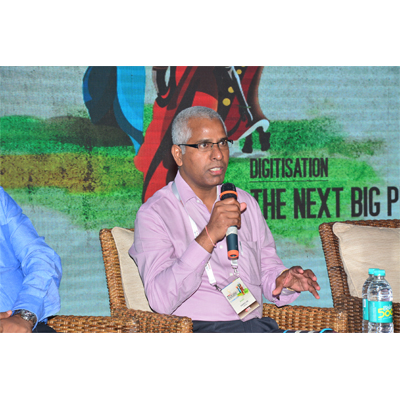
    MUMBAI: With digitisation being delayed for phase III and IV of digitisation, alternative platforms such as HITS and OTT will see their importance rising. Speaking on the growth of alternative video platforms were Doordarshan deputy director general CK Jain, IMCL MD and CEO Tony D’silva, JAINHITS MD Ankur Jain and Zenga TV MD and CTO Shabir Momin moderated by indiantelevision.com founder, CEO and editor in chief Anil Wanvari and Media Partners Asia executive director Vivek Couto.


    Couto started off by asking how the digitisation delay will impact DD’s DTH service Freedish to which CK Jain responded by saying that it won’t hurt Freedish or DD much because most of DD’s audience is in phase III and IV markets. “There are still many households that don’t yet have a TV set but I’m sure that the new households are likely to have DD Freedish as the connection or our upcoming DVB T2 service. So even if we lose out on some numbers, we will most likely make them up with the new ones,” he said.


    Ankur Jain was then asked to explain a bit about his HITS model to which he highlighted that JAINHITS has 253 services out of which 140 are free to air (FTA) for which no subscription is charged. However, the road wasn’t easy for them. He said that most broadcasters refused to give content on the pretext of geo fencing and piracy. “It took six months of TDSAT and High Court. But we still have one of the highest content rates in the industry as most of them are on RIO which we subsidise for our partners,” he said.


    JAINHITS has signed up with nearly 300 partners in 240 districts that have an analogue base of 2.7 million customers. As far as digitisation delay is concerned, Ankur Jain said, “The Minister had started making noise around the delay a while before it was announced and indiantelevision.com wrote the first story on it and it spread like wildfire. But we haven’t seen any real change in business volumes, demand for STBs, headends etc.”


    According to him, this model acts like an aggregator for the smaller operator and for bigger ones, an opportunity to reach smaller markets where they don’t have fibre or reach. When questioned about the challenges a HITS operator has to face, Ankur Jain said that it was the pressure to keep STB cost low. But eventually, it was seen that the STB that was sold to the LCO at Rs 2300 was being sold by the LCO to the customer either at Rs 2300 or Rs 2500. “The cable guy was cribbing that we would make him bankrupt. But they have the money and ability to talk to consumers and in most cases, they market the price up and sell it,” he pointed out.


    Mindset is also an issue while dealing with content companies because some of them want average revenue per user (ARPU) to go up while some want to selectively distribute and keep ARPU low and charge good rates.


    On the other hand, D’silva feels that the Hinduja ideology for launching HITS is different. “One of the major issues of phase I and II was that we aren’t getting fair share. The reason why we are looking at HITS is to bring order in disorder and we are spending considerable money to upgrade and take this network itself up,” he said. Content, however, remains an issue but according to him the way forward is to take content and make universal bundles.


    D’silva claims that for cable operators nearly 60 to 65 per cent of revenue comes from phase I and II, which is about 30 million with another 100 million lying in phase III and IV. With this, bundling dynamics will have to change. The Hinduja HITS model is looking at launching prepaid from the first day along with services such as VAS, TV Everywhere etc.  “It is not about delaying or advancing digitisation. It is whether we make the same mistakes or learn from it,” he said.


    He also said that he isn’t convinced about digitisation being mandated solely to increase ARPU as according to him ARPU is a function of the derivatives that are put in.


    Addressing Momin, Couto asked him to highlight a bit about the digital model. Momin started off by saying that digital has always been taken either as a threat or as inconsequential.  “We are building for a leapfrog future. I have to worry about 19 formats (devices). Our advantage is lack of hierarchy leading to more growth,” he said.


    The dynamics of digital is different where success is measured by minutes watched. Momin says that for digital platform, the important thing is to establish reach through good content. “I run two companies, Zenga TV and One Digital, both of them PAT positive. Sitting in India, we have a global platform with about 40 per cent revenue coming from international which has only 10 per cent viewership because their CPM rates are higher,” he said.


    Couto asked whether advertising revenue from India was sufficient and if it was coming out of TV and whether this will lead to a subscription based model for OTT anytime soon. Momin feels that the last few years have seen content makers rip people off by giving low quality product, thereby losing trust. “Very few people will say that I don’t want to look at an ad, I want to pay for quality content,” he said while stating that brand integration was an important means of revenue.


    Momin said that brands that were spending about Rs 50 lakh last year are now spending Rs 3 crore to Rs 3.5 crore but the important thing is brands mandating agencies to look at digital more. As far as ad rates are concerned, they aren’t the best in the world because of lack of good ad formats.


    Coming to an end to the session, Couto asked the HITS players to highlight their value in the ecosystem. Ankur Jain said that JAINHITS is helping digital India plan, DOCSIS and two way cable be a reality while D’silva said that broadband would be a success when entertainment is added as an important quotient to ‘roti, kapda aur makaan’. 

  • IDOS 2014: ‘Customer is the King and not the Content’

    IDOS 2014: ‘Customer is the King and not the Content’

    GOA: Content is the king is a passé; in today’s world it is the customer which rules.


    Businesses across the world understand that involving their customers will help them innovate and provide better products and services. The same goes for the Indian cable television industry. The players believe that the core intention of digitisation was not just converting the analogue signal into digital one, but to offer choice to the customers.


     “One key element, which we all missed out in the phase I and II of digitisation is the customer, itself. Customer is the king and not the content. Customer decides whether ARPUs will go up or not. Hence, a methodology needs to be found by all the stakeholders,” said Hinduja Group MD and IMCL CEO Tony D’silva while adding that if  a customer wants broadband, VAS or cable, we have to give it to him/her as per the need.


    He was speaking at a panel discussion on ‘Digitisation: The phase III and phase IV Challenge’ held at IDOS 2014.


    Ortel Communication CEO BP Rath said that the core intention of digitisation was not to decrease the carriage fee but to increase the ARPUs. “The aim was to offer choice to the customers; those who want more services, will pay more or otherwise,” he said and added that he is happy with the delay in dates for digitisation in phase III and IV as the players would get more time to understand the needs of their clients.


    “It was inevitable. Most of the people sitting here don’t know what India is. The lessons are simple. Except for seeding boxes in phase I and II, nothing much has been done. Customers’ choice was not taken into consideration in earlier phases,” he said.


    Instead of taking the top-down approach, we should work from customers’ perspective and integrate those into our plans, suggested Rath.


    Speaking in the same tone, CSG International south Asia vice president Letchu Narayanan said that customer experience matters the most. The industry should shift focus to customer as it is a customer-driven industry.


    Essel Group’s Dish TV CEO RC Venkateish feels that in phase III and IV there is a need for regional and low price offerings in around 70-80 million cable TV homes, which are yet to be digitized. He said that even though the players have different models, customer addressability is the need of the hour.


    On the content and the challenges to be handled in phase III and IV, Venkateish said the DTH players are working on different packages as per the customers need. “The road for better revenue can be achieved if all solve the problem together,” he said.


    Talking about the Dish TV business model, he said India is a big market and there are different needs. The company reports around 55 per cent of its revenue from the mass as only 15-20 per cent customers go for HD channels. “It all depends on the purchasing power,” he said.


    Maharashtra Cable Operators Foundation (MCOF) president Arvind Prabhoo said the players are mulling to offer choices to customers by not only providing network, Wi-Fi but also ensuring that the up-gradation is done before the next rollout.


    Agreeing with others Sagar E-Technologies executive director Sudish Kumar further elaborated that by understanding the needs of the customers, the industry players can establish the market well. “Every cable TV home in our network will connected with internet. If a customer will get a taste of it then it will contribute to the ARPU. We might not charge for cable, at all,” he proposed.


    The public broadcaster, Doordarshan, also has the same opinion that customer has to play a key role in digitisation. Doordarshan deputy director general CK Jain said, “Doordarshan is trying to ensure that people, who can’t afford the subscription of cable and DTH, we will provide value to them.”


    Cable TV Operators Association (COA) president Nassir Hassan Anwar talking about the preference of the customers in the southern region of the country said the demand for Hindi channels among the customers is comparatively less hence, the packages are designed keeping that in mind.


    So, going forward if customers’ needs are addressed, cable digitisation in India offers huge opportunity for all the stakeholders.