Tag: Cisco

  • Made-in-India STBs sale to witness 15% growth in DAS phase 4

    Made-in-India STBs sale to witness 15% growth in DAS phase 4

    NEW DELHI: With the government’s emphasis on Make in India, local manufacturing of set top boxes (STBs) that are built within the country is showing a steady increase, even as India continued to lead STB shipments for the quarter ended June 2015 accounting for about 94 per cent of the total shipments to the SAARC region (Bangladesh, Nepal, India, Pakistan and Sri Lanka).


    With digitisation in India and other countries in the region propelling the demand for SD STBs to HDTV and hybrid boxes, the STB market in major South Asian Association for Regional Cooperation countries is witnessing steady and robust growth.


    According to research from Dataxis, indigenous manufacturing had been merely five per cent in the Phase I and Phase II of Digital Addressable System (DAS). While this has seen a steady growth in the third phase, the sale of Made-in-India STBs is likely to witness growth up to 15 per cent in the fourth phase of digitization.


    “Local manufacturing in India, which got a shot in the arm with the Indian government’s Make-in-India initiative, is slowly picking up as indigenous brands are signing deals with MSOs in third and fourth stage. The local STB brands are opting to independent, regional MSOs than the pan-India MSOs or national players,” says Dataxis analyst Sreeja VN.


    STB shipments to SAARC countries have witnessed 20 per cent quarter-on-quarter growth during the second quarter of 2015. In Q2 2015, 4.38 million STBs were shipped in the SAARC region with an estimated value of $96 million.


    The Dataxis research also finds that the quantity of the STB shipments in India the first half of this year has declined compared to the same period a year ago. However, the total number of STBs shipped in Q2 2015 registered an increase on quarter-on-quarter basis.


    Technicolor tops the STB shipments to SAARC in the Q2 2015. The company’s recent deal to acquire Cisco’s STB unit could further bolster Technicolor’s presence in the SAARC STB market.


    Airtel Digital TV, Dish TV and Videocon d2h, the three major DTH players have announced their plans to focus on deploying indigenous brands, which will give a boost to domestic manufacturing of STBs in India. The first half of the 2015 also witnessed DTH players partnering with Indian brands to source STBs manufactured indigenously.


    Another notable trend, according to Dataxis Research, is the increasing demand for HD STBs in the region. Dataxis’s analysis of STB shipment for the H1 2014 and H1 2015 depicts steady growth in the volume of HD STBs shipped to India. The rise in the number of HD STBs has also contributed to a rise in the average selling price of STBs shipped in the first half of 2015 compared to the same period last year.


    The report says that the key STB vendors for the quarter are: Technicolor, Skyworth, Changhong, Huawei and Coship (international vendors), and Mybox, One-eIGHT technologies, Trend Electronics, Ridsys, and Willet Communications (domestic vendors). 

  • Cisco sells set-top-box biz to Technicolor for $600 million

    Cisco sells set-top-box biz to Technicolor for $600 million

    MUMBAI: Cisco has sold its set-top-box (STB) business to Technicolor for $600 million in a cash and stock transaction.


    The board of directors of the two companies will review the deal, which will be on a cash free, debt free basis.


    Under the terms of the agreement, upon the closing of the transaction, Cisco will receive approximately $450 million in cash and approximately $150 million in newly issued Technicolor shares, subject to certain adjustments provided for in the agreement.


    The acquisition should result in Technicolor’s connected home segment reaching adjusted EBITDA in excess of $219 million by year end 2016 and best-in-class profitability by 2017. The transaction will also translate into double-digit EPS accretion at Group level starting in the first full year after closing.


    Simultaneously to the acquisition, Technicolor and Cisco will enter into a strategic partnership that will allow both companies to develop and deliver next generation video and broadband technologies, with cooperation on Internet of Things (IoT) solutions and services. The strategic agreement will provide ongoing commitment to all existing customers and expand offerings.


    By combining their strengths and leading video expertise, from content creation to in-home delivery, the two companies will accelerate innovation and forge a leading entity that network service providers can rely on for their next generation connected home experiences.


    Technicolor and Cisco also have signed a long-term patent cross-licensing agreement that covers specific intellectual property and patents from both companies. As part of the deal and after the transaction has closed of Cisco senior vice president and chief strategy officer Hilton Romanski, will join Technicolor’s Board of Directors.


    Technicolor CEO Frederic Rose said, “We know that video expertise is essential to the future of creating outstanding network and home infrastructure products and services. Through this acquisition and strategic agreement, Technicolor can immediately bring its unrivalled experience and innovation in video creation, delivery, and display to more customers in more geographies, while strengthening our position as a technology leader.”


    “The strategic relevance of video to every consumer, business, city and country around the world is only growing, and the market is moving rapidly. This is the right time and we have the right company in Technicolor to drive the future of the CPE business to deliver what our customers and partners need, today and into the future. At Cisco, we are prioritizing our investments to deliver on our strategy of video in the cloud, and will partner with Technicolor to position the CPE business and employees for future success,” added Cisco CEO and chairman John Chambers.


    The $452 million cash portion of the consideration will be financed through cash-on-hand and fully-underwritten new debt with an anticipated limited impact on Technicolor’s leverage position.

  • Chuck Robbins takes over as Cisco CEO

    Chuck Robbins takes over as Cisco CEO

    NEW DELHI: Telecom vendor Cisco has appointed an insider, Chuck Robbins as its chief executive officer. 


    The policy of upgrading an insider is very much like that adopted by Microsoft, which had taken Indian born Satya Nadella for the top job. Robbins will take over the CEO position from John Chambers, who led the rise of Cisco for the last 20 years. Chambers will assume the role of executive chairman on 26 July.


    Robbins, who joined Cisco in 1997, knows every Cisco segment, technology area, and geography.


    Cisco chairman and CEO John Chambers said, “Our next CEO needs to thrive in a highly dynamic environment, to be capable of accelerating what is working very well for Cisco, and disrupting what needs to change.”


    He recently served as Cisco’s senior vice president of worldwide operations, leading the company’s global sales and partner team that drives $47 billion in business for the company. He was formerly Cisco’s senior vice president of the Americas.


    He has helped lead and execute many of the company’s investments and strategy shifts, including building the industry’s most powerful partner programme, now worth more than $40 billion in revenue to the company each year.


    He was also a key architect of the company’s strategy for the commercial business segment, which grew eight per cent year-over-year last quarter, and now represents 25 per cent of Cisco’s total business. He has sponsored the security and collaboration businesses at the executive level and was a sponsor for the Sourcefire and Meraki acquisitions.


    As a member of the team that has led Cisco’s transformation over the more than three years, Robbins has driven the reinvention of Cisco’s sales organization, cementing its place as the envy of the industry. But the growth of Cisco in the last two years was not impressive due to tough market conditions.


    Chambers has served as CEO of Cisco since January 1995, having joined the company in 1991 as the head of sales. He has grown the company from $1.2 billion in annual revenue to its current run rate of $48 billion.


    According to a Cisco release, Robbins was also elected to the Board of Directors of Cisco, effective 1 May. 


    “This is the perfect time for Chuck Robbins to become Cisco’s next chief executive officer. We’ve selected a very strong leader at a time when Cisco is in a very strong position,” said Chambers.


    He added, “Today’s pace of change is exponential. Every company, city and country is becoming digital, navigating disruptive markets, and Cisco’s role in the digital transformation has never been more important. Chuck is unique in his ability to translate vision and strategy into world-class execution, bringing together teams and ecosystems to drive results. Chuck knows every Cisco segment, technology area, and geography, and will move the company forward with the speed required to capitalize on the opportunities in front of us. He is a champion of the Cisco culture and has an incredible ability to inspire, energize, and connect with employees, partners, customers and global leaders. Chuck’s vision, strategy and execution track record is exactly what Cisco needs as we enter our next chapter, which I am confident will be even more impactful and exciting than our last.”


    “I joined Cisco 17 years ago because I wanted to be a part of a company where I believed the possibilities were limitless. Today, I am even more convinced that Cisco is that company,” said Robbins. “Over the past 20 years, John Chambers’ vision and leadership have built Cisco into one of the most important companies in the world; a company fiercely committed to delivering for its customers, shareholders, partners, and employees. The opportunity that lies ahead for Cisco is enormous, and the ability to lead this next chapter is deeply humbling and incredibly exhilarating. I am focused on accelerating the innovation and execution that our customers need from us. Their success will continue to drive us. At a time when our industry is on the cusp of more disruption than we’ve ever encountered, I couldn’t be more confident in our ability to win, or more honored to lead this great company.”

  • Neo Sports Broadcast set for mega revamp; sees Rs 400 crore equity infusion

    Neo Sports Broadcast set for mega revamp; sees Rs 400 crore equity infusion

    MUMBAI: “They say in golf if you are shooting 100 then your golf needs attention but if you are scoring 80 then your business may need attention. The sweet spot is somewhere in between, the ideal work life balance.” That’s how Harish Thawani, a man synonymous with the Indian sports industry and currently NEO Sports Broadcast chairman, begins the conversation after weeks of chasing to understand the company’s play in the current ecosystem.


    And be rest assured that this avid golfer has surely found that sweet spot in between, for his company Neo Sports Broadcast will soon see a complete makeover and fresh investments to the tune of Rs 400 crore in content, branding, marketing and technology in 2015-16.


    Neo Sports Broadcast, which operates two channels – Neo Prime and Neo Sports, will also see a slew of new initiatives being launched soon.


    “Our existing shareholders have decided to make an equity infusion of approximately Rs 400 crore into the company this year, subject to the necessary regulatory approvals,” Thawani tells Indiantelevision.com.


    Equity Infusion and Consumer Insights:


    The existing shareholders of Neo includes Oman Investment Fund, Nimbus and Thawani himself. Nimbus in turn is majority owned by Cisco, 3i and OIF; with Thawani and associates holding a significant stake. In 2012, after having lost the BCCI cricketing rights, Neo decided to re-engineer itself on its future growth story. Through consumer insights, TAM numbers and research undertaken by the company, it picked up two trends in the market.


    “One, sports other than cricket like football, tennis, badminton, golf and basketball were gaining significant traction and it helped us to find ourselves a relevant space in the ecosystem. Secondly, digitisation was providing an opportunity to broadcasters to cater to over 150 million viewers that now watch sports other than cricket,” Thawani explains.


    Based on these insights the company has decided to acquire quite a few properties for this year for its two channels.


    New Rights Acquisitions:


    As Neo Prime and Neo Sports look to boost their fan base based on its recent research on viewers’ preferences, the company has begun a fresh set of rights acquisitions. As many as five new rights deals have been recently concluded and at least five more are in the pipeline, providing over 40 new live events and over 800 hours of live programming a year. All rights acquisitions have been done on a multi-year basis.


    Neo has also boosted its football portfolio with a top five European league the Dutch Eredivisie and will shortly add another major European football property to its portfolio. Its Eredivisie acquisition followed the research insights that top tier clubs like Ajax, PSV Eindhoven and Feyenoord have a significant fan base in India.


    Another consumer insight showed that table tennis is an under-served sport in India, despite being a huge participation sport, commonly understood by viewers. This prompted Neo to acquire not just the World Cups and World Championships but also the ITTF World Tour. “The rise of Indians on the table tennis circuit augurs well for the growth of its viewership in India,” states Thawani.


    The telecast rights to the 2015 European Games (similar to the Asian Games) have been acquired by Neo and will be aired this summer. This second largest multi-nation, multi-sport event is expected to be a spectacular display of sport at the highest level.


    To boost its motor sport coverage and enthused by the fact that technology now enables live coverage, Neo has acquired the World Rally Championships (all 12 events a year).


    It has also boosted its coverage of live horse racing to engage the super affluent horse racing fans in India, with its deal to air English horse racing (including the major Derbies and Classics).


    Also in the pipeline is a programming band devoted to fight sport, which is expected to launch in the second half of 2015 apart from a major European football asset, a series of top tier badminton events and a tennis rights package.


    This complements Neo’s offering in tennis, consisting of the French Open, Davis Cup and Fed Cup; its top tier golf coverage with the PGA Tour of about 40 events a year, Bundesliga football, World Basketball Championships and others.


    When queried about plans for cricket, Thawani says, “It has been widely reported that Neo was recently a bidder for the ICC rights, which should convey that our interest in cricket will continue. There are several cricket rights that will come to market in the coming 18 months, and we will evaluate each opportunity.”


    Channel Upgrade to HD: 


    “We will convert both our channels; Neo Prime and Neo Sports from SD to HD. We aim to make this transition in October-December 2015 quarter,” says the man, who besides being an avid golfer, played as many as four other sports competitively at university and club level.


    Consumer Engagement:


    The company will also launch a multimedia campaign, including digital media to communicate its enhanced programming to fans in order to boost brand recall and increased engagement. The mega multimedia campaign will begin from as early as May 2015.


    It has been learnt that the company had seen an interest from companies such as Euro Sport, BeIn Sports and Super Sports among others to either buy a majority stake or outright purchase of Neo Sports Broadcast. However, Thawani refused to comment on any specific discussions citing confidentiality provisions, but states, “Neo is, to my knowledge, the only profitable sports broadcaster in India, having made profits in 2013-14 and we expect to sustain that trend. This has enthused our shareholders to back the company in its quest for further growth. Consequently, we have taken a decision to not evaluate any stake sale. When required, we may induct one more financial investor.”


    It is clear that Neo shareholders believe that smart management and digitisation would help it go a long way and therefore it would be a wrong time to disinvest. It may be recalled that just eight years back, Neo had one of the most successful pay TV launches in the world of sport, quickly becoming the number one sports channel in 2009 and number one sports network by 2010.


    In the world of today’s broadcast television, where content, technology and innovation rapidly changes the share of audience, Neo looks poised to take competition head-on with fresh capital infusion and many a new properties firmly tucked under its belt.
  • Videocon teams up with Cisco for 4K broadcast

    Videocon teams up with Cisco for 4K broadcast

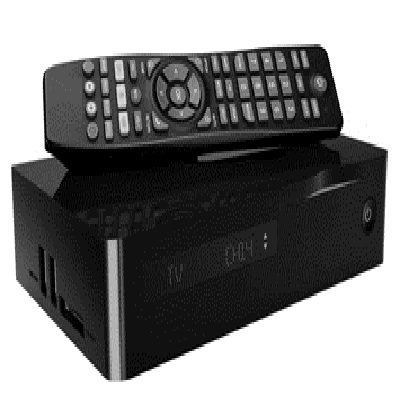
    MUMBAI: Direct-to-Home (DTH) company Videocon d2h tied hands with Cisco AnyRes Live UHD Encoders to launch its 4K-enabled Ultra High Definition viewing experience.


    This is the global launch of Cisco’s 4K encoder and a redefinition of TV viewing. The 4K encoder brings best-in-class quality for real-time media delivery applications such as live sports and 24-hour programming. The announcement comes in the midst of the on-going ICC Cricket World Cup 2015.


    4K resolution offers 8.3 million pixels to display a high definition picture even when viewed up close. This comprehensive platform can be scaled up to stream multiple formats to any device, including iPhone, iPad, feature phones, and smartphones, as well as delivering pristine Ultra HD video to televisions.


    Technical highlights:


    • Delivers highest quality encoding using an HEVC/H.265 codec developed by Cisco

    • Wide range of frame rates from 24 fps all the way up to 60 fps

    • Virtually flawless pictures achieved with 10 bit colour depth

    • Reliable transmission with an UHD input front end offering robust synchronisation to the live signal feeds

    • Capable of SD, HD, Full HD or Multi format ABR encoding using H.264 as well as H.265

    • Various baseband graphics processing features, including logo insertion.


    The launch of 4K encoders on the Videocon d2h platform marks the first ever deployment of Cisco AnyRes Live UHD Encoder in the world and will be followed shortly by two more customer deployments in Asia Pacific.

  • Cisco partners with Videocon d2h for advanced video services

    Cisco partners with Videocon d2h for advanced video services

    MUMBAI: Direct to home (DTH) operator Videocon d2h will deploy advanced video solutions from the Cisco Videoscape product portfolio to enable it to deliver an innovative, high quality television viewing experience to its customers.


    Cisco will collaborate with Videocon d2h to create an infrastructure that supports advanced services like 4K, Over The Top (OTT), Video On Demand (VOD), multi-screen video and multi-room Digital Video Recorder (DVR), on a high definition platform.


    Cisco is at the forefront of changing the way people experience TV entertainment through its Videoscape platform, which offers best-in-class content management and exceptional user interface capabilities. Cisco Videoscape enables consistent video experiences across multiple devices including TVs, tablets, PCs, mobile phones and gaming consoles. Cisco and Videocon d2h are uniquely positioned to offer an immersive video experience coupled with an array of value-added services and applications on multiple screens.


    Videocon d2h director Saurabh Dhoot said, “We pride ourselves in being a frontrunner in bringing futuristic technologies to India, some of which are yet to be experienced in even the most advanced countries. Our collaboration with Cisco will present our customers with the latest and best technology in the DTH industry and will introduce them to a whole new range of next-gen applications. We believe that this partnership will redefine the overall viewing experience through our varied product portfolios and service offerings. We continuously endeavor to provide top quality services to our consumers.”


    Videocon d2h chief executive officer Anil Khera added, “As part of our commitment to our consumers, we will be providing an advanced TV-viewing experience with many more interactive services and applications, in keeping with global trends. We are confident that our collaboration with Cisco will provide a greater range of services to our customers. Cisco’s expertise in delivering end-to-end solutions and world-class technology will support us in our vision of being an innovator in the DTH market with the most advanced products and services.”


    Cisco Service Provider Video Software Solutions VP sales Asia Pacific Sue Taylor said, “Our mission is to continuously partner with operators who value innovation and strive to offer a wide range of differentiated and superior video experiences to their subscribers. Our expertise in the successful rollout of high-end features and services will enable Videocon d2h to deliver video in more exciting, more engaging and more impactful ways.”

  • Cisco powers Siti Cable’s DOCSIS 3.0 technology for broadband

    Cisco powers Siti Cable’s DOCSIS 3.0 technology for broadband

    MUMBAI: Siti Cable, that controls nearly 4.3 million digital cable TV subscribers, has chosen Cisco to boost its broadband. The tech company will provide DOCSIS 3.0 technology for its broadband service in the country.

    Through this, the MSO will be offering speed of up to 100 mbps. DOCSIS 3.0 can offer download speed of upto 300 mbps per subscriber and the upload capacity up to 100 mbps. As earlier reported by indiantelevision.com, this technology has been launched in Delhi and NCR.

    Speaking on the association, Siti Cable CEO VD Wadhwa said, “It is an absolute pleasure to be introducing our broadband service. We plan to accelerate the deployment to capitalise on the enormous business potential this market currently holds. With the deployment of this technology, we are uniquely positioned to offer superior Internet browsing, video streaming, video surveillance and rich media content on the same coaxial cable that delivers high-quality digital cable TV signals. We will offer much higher speed at highly competitive price. We are confident that Cisco’s technological expertise will help us in the achievement of this goal.”

    Cisco India and SAARC service provider sales managing director Sanjay Kaul said, “It is commendable to see Cisco’s vision, to be the leading enabler of ICT (Information and Communications Technology) and broadband acceleration in India, coming closer to reality. We believe that the cable TV industry has the potential to transform the broadband industry in India and would like to congratulate Siti Cable for marking an important milestone on this roadmap.”


  • ET Now holds first Cisco Technology Awards

    ET Now holds first Cisco Technology Awards

    MUMBAI: India’s premier English business news channel ET Now and worldwide leader in networking Cisco collaborated to hold the first ever Cisco Technology Awards on 30 July 2014. The first edition of these awards aimed at encouraging, recognizing and rewarding those organizations that have displayed a strong technology foundation and are ready to harness a new wave of technology called the ‘Internet of Everything’. This technology works on the simple premise of connecting people, process, data and things. The Internet of Everything has the power to transform the Indian landscape and can really revolutionize the way we live and the way we work.

    The event was graced with the presence of State Bank of India Chairman Arundhati Bhattacharya, Chairman and judged by key dignitaries from the world of technology such as Capgemini India CEO Aruna Jayanthi, Narsee Monjee Institute of management Studies information systems area professor and chairman Nilay Yajnik, NASSCOM former president Som Mittal and Advent International operating partner Girish Paranjpe.

    Listed below are the winners of the Cisco Technology Awards;

    Cisco India and SAARC marketing director Nand Kishore Badami said, “We are very proud to announce the winners of the Cisco Technology Awards. Each winner is a testament to the fact that India is full of innovative companies that are well positioned for the future by embracing the Internet of Everything. The Cisco Technology Awards is another example of how we are partnering with the industry to fully realize the promise of the Internet of Everything.” 

    Times Television Network branded content business head Hemant Arora said, “We are proud to have partnered with Cisco to launch the first ever platform to recognize technology and its impact on organizations. Moving towards the future, technology is set to take all of us to the next level through innovations that will transform our lives and surroundings and together we aim to highlight its importance through this partnership.”

    In addition to the awards, ET NOW and Cisco have also created a unique television show ‘Internet Of Everything: Tech Talks’. The first two episodes highlighted the importance of Internet Of Everything and how it is helping organizations such as ‘Trident Group’ the largest producer of terry towels in the world, make its process more efficient and cost effective and how ‘Navi Mumbai Municipal Corporation’ uses technology to deploy a first of its kind intelligent surveillance system that improves citizen security.

    Tune in to catch the telecast of the ‘Cisco Technology Awards’ on 9 August at 7:30 pm & 10t August at 4 pm exclusively on ET Now.

  • USD 1 trillion to be spent on telecom and datacom over next 5 years

    USD 1 trillion to be spent on telecom and datacom over next 5 years

    NEW DELHI: The Asia Pacific region has shown major growth of six per cent year-over-year in the telecom/datacom equipment and software revenue as against 4.5 per cent by North America.


    This trend is expected to continue through at least 2018, Market research firm Infonetics Research says. It also projects a cumulative $1.01 trillion will be spent by service providers and enterprises on telecom/datacom gear and software over the five years from 2014 to 2018.
     

    Sales of telecom and datacom equipment and software came globally to $183 billion in 2013, three per cent above the previous year.
     

    According to research data from its 2014 Telecom and Datacom Network Equipment and Software report, Infonetics says the overall telecom and datacom network equipment and software market share leaders are in rank order: Cisco, Huawei, Ericsson, Alcatel-Lucent and ZTE – the same top five vendors with virtually the same shares as the year prior.


    Vendor share positions also held steady in the enterprise segment, with Cisco in the driver’s seat and followed distantly by tightly bunched Avaya, Brocade, HP, and Juniper (listed in alphabetical order).
          

    Infonetics Research principal analyst Jeff Wilson said: “Despite the fact that enterprises and service providers are in the middle of massive network upheavals due to the evolution of software-defined networking (SDN) and network functions virtualisation (NFV) technology, the telecom and datacom networking equipment and software market is on track to grow annually through 2018 with the fastest growth coming in 2015.”
     

    Infonetics co-founder and co-author of the report Michael Howard added: “Looking at just the service provider equipment space, we’re seeing a shakeup in vendor market share, with Huawei leapfrogging longtime number-one Ericsson to take the top spot in 2013. While Huawei’s been doing well in a number of regions, China’s economy is a key factor keeping Huawei’s growth so strong.”
     

    The report has compiled worldwide and regional market size, vendor market share, and forecasts through 2018 from all of its reports that track enterprise and service provider gear. It is the majority of all data networking and telecom equipment for service providers, cable companies, and small, medium, and large organisations, excluding consumer electronics.

    The 11 major categories of equipment and software tracked in Infonetics’ report include broadband aggregation; broadband CPE; pay TV; optical network hardware; carrier routing, switching, and Ethernet; service provider VoIP and IMS; service provider mobile/wireless infrastructure; service enablement and subscriber intelligence; security; enterprise and data center networks and enterprise communications. Companies tracked include Alcatel-Lucent, Avaya, Brocade, Ciena, Cisco, Ericsson, Fujitsu, HP, Huawei, Juniper, Motorola, NEC, Nokia, Samsung, Siemens, ZTE, and many others.

  • DEN selects Cisco DOCSIS 3.0 technology for broadband

    DEN selects Cisco DOCSIS 3.0 technology for broadband

    NEW DELHI: After multi system operator (MSO) Hathway Cable and Datacom launched DOCSIS 3.0 technology in October 2013, it is now DEN Networks that has selected Cisco’s DOCSIS 3.0 technology for its newly launched broadband service in India.


    DOCSIS 3.0 is a key component of the Cisco IP NGN architecture, which promises speeds of up to 300 Mbps per subscriber. With this, the MSO will be able to provide ultra-high-speed internet to deliver more content as compared to the existing telecom Internet service providers (ISPs).


    DEN currently reaches out to 13 million homes in over 200 cities. The MSO also offers digital cable TV services in India, using Cisco’s conditional access and middleware (set-top box software) and presently reaches over six million digital pay-TV homes.


    To begin with, DEN soft-launched its ultra-high-speed broadband service in one of its biggest markets and its home base, Delhi, and intends to expand the offering to other cities. The adoption of DOCSIS 3.0 is a strategic decision by the MSO to provide its subscribers with a seamless online experience with no buffering, lightning-fast downloads and higher-quality video content compared with existing telecom ISPs.


    Despite a population of 1.27 billion, according to TRAI’s latest Telecom Performance Indicators Report (October–December 2013), India has only 238.71 million Internet subscribers, out of which 18.33 million subscribers are wired Internet subscribers. The remaining 220.38 million access the internet though wireless connections like smartphones and data cards. The country’s major MSOs are preparing to capture this wireline broadband market using DOCSIS technology, giving a much-needed boost to broadband penetration in India, with each MSO also aware of the untapped 100 million cable TV homes in India. Therefore, the deployment of DOCSIS 3.0 across its existing cable networks is a significant step by DEN to capitalise on the enormous business potential of the broadband market.


    DEN COO Mohammad Ghulam Azhar said: “We are excited by the high-speed internet opportunity in India. With this superior technology, we are aiming to provide our broadband subscribers with a fast and consistent online experience.”


    Cisco India and SAARC president, sales Dinesh Malkani added: “Cisco’s vision is to be the leading enabler of ICT (Information and Communications Technology) and broadband acceleration in India through innovative, scalable, high-value technology offerings and solutions. We believe our engagement with DEN has the potential to transform the cable and broadband industry in India by offering high-speed services to millions of subscribers and connecting those who previously were unable to access premium broadband services.”