Tag: Cisco Systems

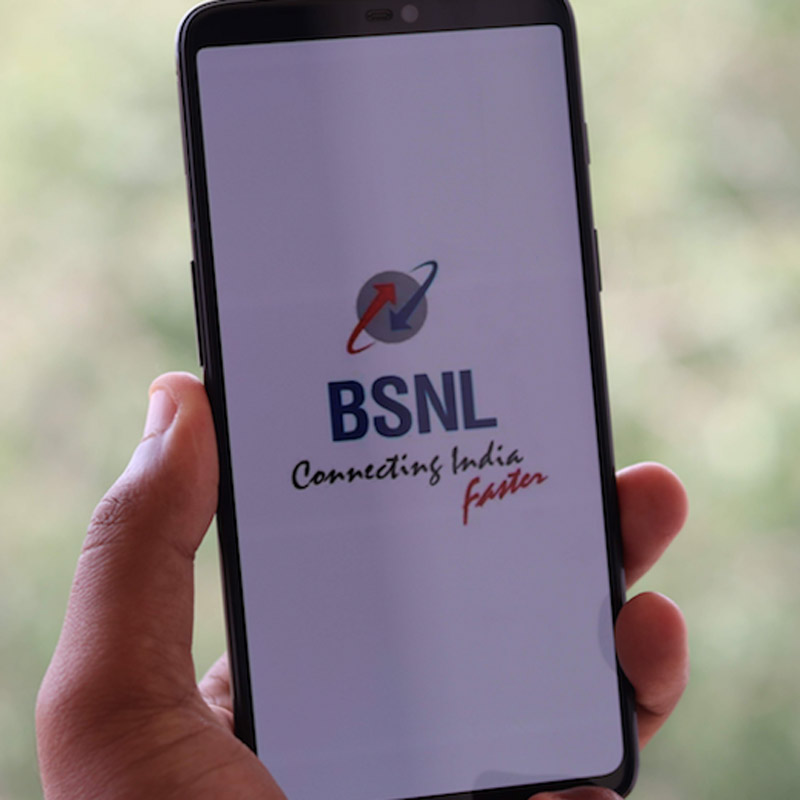
  • BSNL ties up with Softbank, NTT for 5G, IoT deal

    BSNL ties up with Softbank, NTT for 5G, IoT deal

    MUMBAI: BSNL, a mobile service provider, has tied up with two top telecom operators of Japan, Softbank and NTT Communications, to roll out 5G and internet of things (IoT) technology in India, according to a report by the Press Trust of India.
    The service provider will partner with Softbank for its satellite constellation which will have around 900 satellites to provide high speed internet services across the globe.
    BSNL chairman and MD Anupam Shrivastava said, “We have signed agreement with Softbank and NTT Communications to roll out 5G and IoT products and services in India. Under the agreement, we will look at solutions specifically for smart cities.”
    Indian telecom operators are aiming to launch 5G in 2020. Operators such as Bharti Airtel, Idea Cellular and Vodafone launched 3G seven years after the technology was available in other foreign markets and 4G services after a four-year lag.
    BSNL has signed an agreement with Finland-based telecom equipment maker Nokia and US-based enterprise networking company Cisco Systems for developing 5G ecosystem and working to finalise test cases for using 5G in India.
    BSNL is in advance stages of starting 5G field trials. The government is in agreement to provide 5G spectrum for trials.

    Earlier media reports said that the Indian government will not auction 5G spectrum in 2018 or 2019 due to weak financial conditions in the Indian telecom market.
    The Telecom Regulatory Authority of India (TRAI) has recommended auction of about 8,644 MHz of telecom frequencies at an estimated base price of Rs 4.9 lakh crore. The government is yet to finalise details of allocation of spectrum for 5G services.

  • CAS market may reach $ 4.7 bn by ’22, highest growth in A-Pac

    CAS market may reach $ 4.7 bn by ’22, highest growth in A-Pac

    MUMBAI: Conditional access systems (CAS) refer to content security solutions used to restrict unauthorized subscribers from accessing paid digital broadcast services. The Conditional Access Systems (CAS) market is expected to reach US$ 4.73 billion by 2022, a TMR study found.

    Content security using CAS is achieved by encrypting/scrambling digital signals while broadcasting and then decrypting them at the user’s (authorized) end. Conditional access systems, also referred to as revenue security solutions, are mounted on set-top boxes or other receiving devices at the subscribers’ end. Conditional access systems are the most significant components used by service providers for protection against revenue loss.

    The most significant factor responsible for conditional access systems market growth is the rising penetration of digital/pay television, globally. Apart from pay televisions, CAS are also used for content protection in digital radio broadcast, internet protocol television (IPTV), and other internet-based subscription services.

    The market for conditional access systems is segmented, based on the type of solutions, into smartcard-based CAS and card-less CAS. Smartcard-based CAS are the traditional systems that include additional hardware such as chip/smartcard with embedded conditional access software. This hardware is mounted on the set-top box in order to enable content security by providing access to authorized users. Due to the prolonged existence of smartcard-based CAS, this type of CAS currently has the highest penetration in global conditional access systems market. Card-less CAS, also called as software-based conditional access system, requires no hardware and the software is embedded directly onto the set-top box. The most significant advantage of card-less CAS is their low operating and upgrading costs as compared to smartcard-based CAS. In addition, software-based CAS offer better security against hacking than smartcard-based CAS.

    The global conditional access systems market is also driven by the growing penetration of internet-based services such as internet protocol television (IPTV), on-demand video and others in different geographic regions. The demand for conditional access solutions in these applications is mainly fueled from the developed regions having large penetration of IPTV and on-demand video services. Further, the global conditional access systems market is predicted to witness strong growth due to various advancements in the conditional access solutions. Most of the companies are now focusing on development of advanced solutions such as cloud-based conditional access systems, multi-screen CAS and others.

    The global conditional access systems market is segmented into type of solutions, application and geographic regions. On the basis of solution type, the market is segmented into smartcard-based CAS and card-less CAS. In 2014, the smartcard-based CAS segment accounted for the largest share, in terms of revenue and adoption, in the global conditional access systems market. This was majorly due to the prolonged existence of these solutions in the market. However, the card-less CAS segment is estimated to witness the highest demand during the forecast period.

    This is attributed to high advantages such as low costs, easy upgrading and maintenance offered by these solutions over smartcard-based CAS. Another factor driving the growth of card-less CAS segment is its less susceptibility towards hacking. Furthermore, on the basis of applications, the global conditional access systems market is segmented into television, internet services and digital radio. The global market for conditional access systems was dominated by the television segment in 2014. The highest market share of television segment is attributed to the rapidly growing penetration of digital television worldwide. In addition, the television segment is predicted to hold its dominant position throughout the forecast period due to ongoing digital television transition in countries such as China, India, Brazil, Argentina, Mexico and others.

    In 2014, North America accounted for the largest share of over 31 per cent, in terms of revenue, in the global conditional access systems market. This is due to the high penetration of advanced digital television services such as high definition (HD) television and substantially growing adoption of Ultra HD (UHD) television. However, the global conditional access systems market is estimated to witness the highest growth in Asia Pacific during the forecast period. This is due to the rapidly increasing adoption of digital television in China and South Asia.

    The major companies in the global conditional access systems market include Cisco Systems, Inc., Nagravision SA (Kudelski Group), China Digital TV Co., Ltd., Verimatrix, Inc., Irdeto, Inc., Austrian Broadcasting Services GmbH & Co. KG (ORS Group), Viaccess-Orca (Orange Group), Coretrust, Inc., Latens Systems Ltd., Wellav Technologies Ltd. and Alticast Corporation. The global conditional access systems market is highly consolidated in nature with top three players namely Nagravision SA, Cisco Systems, Inc. and China Digital TV Holding Co., Ltd. accounting for over 70% of the market share. Other important players in this market include Irdeto, Inc., Viaccess-Orca and Verimatrix, Inc.

  • Twitter co-founder Jack Dorsey joins Disney board of directors

    Twitter co-founder Jack Dorsey joins Disney board of directors

    MUMBAI: Walt Disney has named twitter co-founder Jack Dorsey as its independent board member. Reports also suggest that the company CEO Bob Iger can see a cut in his pay by 15 per cent.   

    Walt Disney on 23 December, through a statement, also announced the retirement of a former Cisco Systems chief technology officer Judith Estrin, citing tenure policy as a reason, which limits board service to 15 years. Estrin’s term comes to an end on 18 March 2014.

    Dorsey will stand for the election which will be held at Disney’s 18 March annual meeting. Dorsey confirmed the announcement by tweeting a famous quote from Walt Disney and also the sketches of Mickey Mouse.  At 36, Dorsey also is the CEO of the payments startup Square and will be the youngest board member in Disney.

    Iger through a statement said, “Jack Dorsey is a talented entrepreneur who has helped create groundbreaking new businesses in the social media and commerce spaces. His experience and perspective should be extremely valuable to Disney.”

  • ‘Broadcast India 2006’ begins 26 October

    ‘Broadcast India 2006’ begins 26 October

    MUMBAI: The 16th Broadcast India 2006 Exhibition and Symposium will be held from 26-28 October 2006 at the World Trade Centre, Mumbai.

    Broadcast India 2006 will present the latest technology of newsgathering and telecasting of programmes live through a mobile phone.

    From film making to television production and post production, from content creation in all formats to its management and finally to its delivery, the Broadcast India show will cover all the technologies, said an official release.

    More than 400 companies from 31 countries will be at Broadcast India to showcase their latest products and services in Broadcast, Television, Audio, Radio, Film, Computer Graphics, Satellite, Special Effects and Multimedia. This year’s show will throw light on IPTV, Mobile TV, Digital Cinema and High Definition.

    The Broadcast India 2006 Symposium sponsored by Cisco Systems will be held on 25 October 2006 at YB Chavan Centre, Mumbai. The keynote address is by Dan Scheinman, senior VP for corporate development, Cisco Systems.

    Broadcast India Awards for Excellence in Film & Television will also be held at YB Chavan Centre on 25 October 2006 from 7 pm onwards.

  • Cisco Systems to acquire Arroyo Video Solutions

    Cisco Systems to acquire Arroyo Video Solutions

    MUMBAI: US-based internet networking player Cisco Systems has announced a definitive agreement to acquire privately-held Arroyo Video Solutions, Inc., a leading provider of next-generation solutions for on-demand television and related consumer services.

    Under the terms of the agreement, Cisco will pay approximately $92 million in cash. The acquisition is subject to various standard closing conditions, including applicable regulatory approvals and is expected to close in the first quarter of Cisco’s fiscal year 2007, ending 31 October, 2006.

    The integration of the Arroyo platform into the Cisco IP-NGN (Next Generation Network) architectural framework will help enable carriers to accelerate the creation and distribution of network delivered entertainment, interactive media and advertising services across the growing portfolio of televisions, personal computers, mobile handsets and emerging media capable devices in our increasingly connected lives, informs an official release.

    “The entertainment industry is going through a major shift while consumer desire for personalized on-demand service is on the rise. The industry is quickly evolving from pure video-on demand to anything-on-demand with any content delivered to any end device. Cisco’s next generation network strategy offers service providers the ability to make this vision a reality,” Cisco senior vice president and general manager Michelangelo A. Volpi. “With the addition of Arroyo’s innovative software, which offers flexibility in content delivery, service providers will be in a position to serve content how, when and where consumers want it.”

    Joining Cisco from Arroyo will be a team of technical industry leaders. This team includes Drew Major, an original founder of Novell and industry icon recognized for his expertise in network operating systems, distributed systems and content delivery networking (CDN). Also joining is Paul Sherer, former chief technology officer at 3Com and key contributor to a broad portfolio of networking patents and technologies. Arroyo was founded in 2002 and has 44 employees based in California and Utah, the release adds.

    Upon close of the transaction the Arroyo team and product portfolio will be integrated into the Cisco Cable & Video Initiatives Group, within the Service Provider organization led by Volpi.

  • Cable ops in US shift strategies to meet IPTV threat; report

    Cable ops in US shift strategies to meet IPTV threat; report

    MUMBAI: As telcos are gearing up to deploy competitive pay television offerings, a new report from market research division of Light Reading, Heavy Reading indicates that cable companies in US are revamping their video programming offerings.

    The cable ops are primarily doing it to fend off growing competition from IPTV services being launched by incumbent phone companies, adding more interactive services to their existing MPEG/QAM broadcast networks.

    The report suggests that the cable Next-Gen Video Plans and the Future of IP delves deeply into the next-generation video plans of North American multiple system operators (MSOs) as they prepare for the coming assault from telco IPTV and continue to defend against the competitive threat of direct-broadcast satellite providers.

    The report further analyzes the evolution of cable video from both a technology perspective and a business perspective, focusing not just on how MSOs are changing their networks, but also on how they are changing their business models with respect to video on demand (VOD) and the growing trend toward non- linear programming in general.

    “MSOs have no near-term plans to swap out their existing infrastructure to adopt end-to-end IP, nor is this type of move immediately necessary,” notes Heavy Reading and author of the report senior analyst Sterling Perrin. “In the near term, the MSOs plan to mimic the interesting features of IPTV using their existing MPEG/QAM networks.”

    Perrin adds, however, that switched digital video (SDV) could be a precursor to an MSO move to an end-to-end IP network — once SDV proves to be able to deliver quality equal to that offered now by conventional cable networks. “Cable end-to-end IPTV would require the final — large — step of replacing currently installed cable set-top boxes with IP STBs,” he says. “The rest of the network is moving to IP already.”

    Cable Next-Gen Video Plans and the Future of IP delivers a complete analysis of the Next Generation Network Architecture (NGNA) initiative from CableLabs, the cable industry’s research consortium, including how and when NGNA is likely to be deployed by leading MSOs. The report provides details covering product and market strategies of more than a dozen technology suppliers, including Ciena, Cisco Systems (and its Scientific-Atlanta subsidiary), Fujitsu, Motorola, and Nortel Networks.

    The methodology adopted has been exclusive one-on-one interviews with key executives from leading North American cable MSOs provide rich insight into this emerging market sector. Cable MSOs interviewed for the report include Comcast, Cox Communications, Rogers Cable, and Time Warner Cable.

    Other key findings of the report include:

    MSOs will leverage IP technology (and vendors) to expand their reach beyond the TV and set-top box as they branch into new areas, including delivery of content to mobile devices and to PCs. IP is well entrenched in MSO aggregation and core networks, but non-TV video service will likely be the first beachhead of IP in the access network — where preserving traffic in an IP form and building on the enormous industry support for IP (meaning lower costs) makes sense.

    MSOs are facing a spectrum crunch as they look to next-generation services to compete with both satellite and the telcos, but the situation is not dire. Cable executives interviewed for this report insist they have plenty of unused capacity in their networks. The efforts and innovation of the next three to five years will center on how best to tap that unused capacity.

    Deployment of SDV, when it does happen, will not necessarily boost sales of optical transport equipment. SDV is really about doing more with the same – – i.e., boosting the number of video channels available to subscribers without adding any new capacity to the network. The migration will likely be similar to that for VOD, which by its switched nature has allowed MSOs to ratchet up programming choices without having to dedicate much additional bandwidth (if any) to it.

    Cable Next-Gen Video Plans and the Future of IP costs $3,795 and is published in PDF format. The price includes an enterprise license covering all of the employees at the purchaser’s company.