Tag: CIPAM

  • Govt launches interactive IPR website

    Govt launches interactive IPR website

    NEW DELHI: A website has been launched by the government to effectively implement the National Intellectual Property Rights (IPR) Policy.

    The official website for the Cell for IPR Promotion and Management (CIPAM) of the Department of Industrial Policy and Promotion (DIPP) was launched by Minister for Commerce and Industry Suresh Prabhu here today. Secretary DIPP Ramesh Abhishek was also present.

    The website is interactive providing regular updates on all upcoming events including awareness and sensitization programs being conducted, as also information on all Intellectual Property Rights. It would make available resource material on IPRs specially curated for various levels: schools, universities, industry and enforcement agencies.

    One can read the latest news and updates, specially curated feed on all latest happenings in the world of IP, insightful and educational blogs by CIPAM and IP experts.

    The website provides regular updates on the latest IP trends – statistics on applications filed, examined, grants and disposal for various IPRs. It would provide information on the various initiatives being taken by the Government to strengthen the IPR regime in the country.

    The website can be reached on www.cipam.gov.in or follow CIPAM on Twitter at @CIPAM_India for updates.

  • IPR awareness: Govt launches #LetsTalkIP SM campaign

    IPR awareness: Govt launches #LetsTalkIP SM campaign

    NEW DELHI: A social media campaign to promote Indian geographical indications (GIs) has been launched by the Cell for IPR Promotions & Management (CIPAM) with #LetsTalkIP hashtag, which is an ongoing movement initiated by the government to make more people aware about the importance of Intellectual Property Rights (IPRs).

    In recent times, the government has been pro-active on the IPR front. For the media and entertainment industry, online piracy is a big menace causing huge amount of revenue loss to the industry and tax revenues for the government.

    A geographical indication or a GI is a sign used on products that have a specific geographical origin and possess qualities or a reputation that are due to that origin. Such a name conveys an assurance of quality and distinctiveness which is essentially attributable to its origin in that defined geographical locality.

    Functioning under Department of Industrial Policy and Promotion (DIPP) in the Ministry of Commerce and Industry, CIPAM has launched interesting facts and stories related to GIs from across the country on its Twitter handle @CIPAM_India and Facebook Page @CIPAMIndia using #LetsTalkIP hashtag. The government will also be coming up with various other initiatives to promote registered GIs in the future.

    ALSO READ :

    Comment: War on online video piracy, which matters, is here for India to fight

    Animated videos developed to spread message of anti-piracy

    TRAI to discuss IPR of data generated on apps


  • Viacom18 & govt announce anti-piracy partnership

    Viacom18 & govt announce anti-piracy partnership

    NEW DELHI: In a step highlighting seriousness of stakeholders, Viacom18 has forged a partnership with the Cell for IPR Promotion and Management or CIPAM, a professional body under the Commerce Ministry, to launch an anti-piracy awareness campaign laying stress on the importance of IPRs.

    “A possible solution to the problem of piracy lies in creating awareness about intellectual property rights (IPRs) among the masses. It is pertinent that one of the main objectives enshrined in the national IPR policy is creating awareness about IPRs to build a healthy IP ecosystem in the country,” Commerce Ministry’s Department of Industrial Policy and Promotion (DIPP) joint secretary Rajiv Aggarwal said.

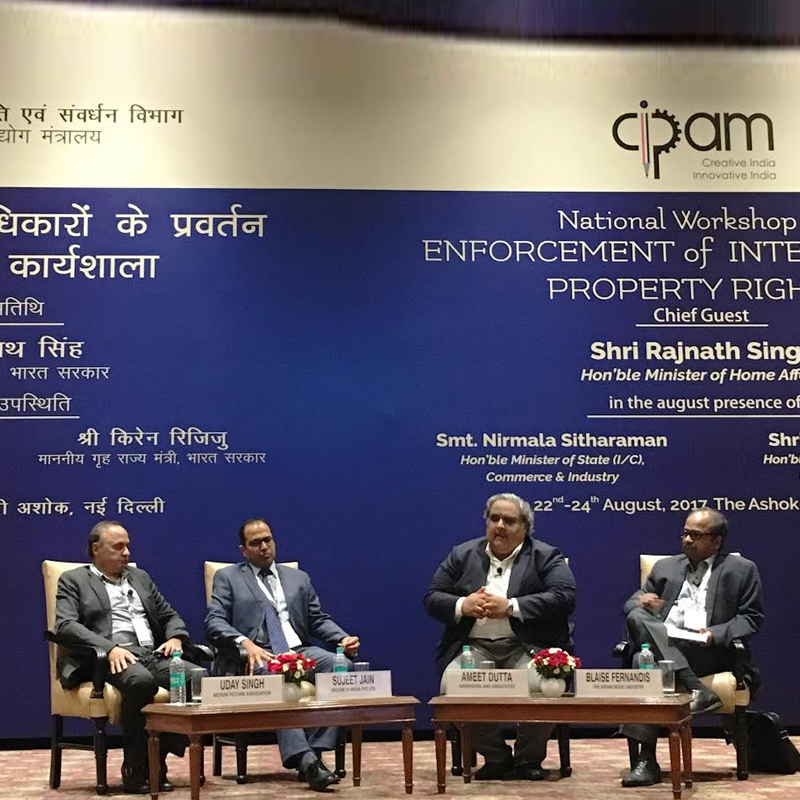
    Aggarwal, speaking on the partnership that was announced during an ongoing three-day national workshop on enforcement of IPRs, lauded the industry’s contribution in taking a lead to rally around the cause of IPR protection.

    According to Viacom 18 Media group general counsel and company secretary Sujeet Jain, “When it comes to consumption and circulation of pirated content, there is limited knowledge about its economic and social impact. Through this partnership with CIPAM, we hope to raise awareness amongst youth and children about the perils of piracy and the need for the protection of IPRs.”

    Content piracy, especially online, is a menace that has started to cause serious dent to revenues of content owners and also the Indian government in terms of taxes. And, it is high time that the industry and the government collaborated on a war-footing to create awareness about IPRs and anti-piracy measures being undertaken.

    As part of the association with CIPAM, Viacom18 has created a behavior change awareness videos, involving popular animated characters of its flagship kids’ channel Nickelodeon and Sonic (Motu-Patlu and Shiva, respectively), spreading the message that content piracy was equivalent to stealing.

    The campaign will see CIPAM and Viacom18 airing these videos across schools, colleges and various educational institutions, in addition to the network’s kids channels.

    Because IPRs are increasingly becoming crucial drivers of social and economic growth in the 21st century DIPP has organized a meet here, which was inaugurated by Home Minister Rajnath Singh in the presence of Minister of Commerce Nirmala Sitharaman and Minister of State for Home Kiren Rijiju. Sessions on various aspects of IPR, its protection, existing laws and anti-piracy measures are scheduled to be discussed by industry and government representatives.

    Singh said that counterfeiting and piracy activities give rise to serious organized crimes and police officials should be equipped with proper knowledge and training so as to curb and restrain IPR breaches.  

    The workshop is designed to help police officials and prosecutors to understand their role in effective enforcement of IPRs. It will also provide an opportunity to the officials to share their experiences, exchange best practices and coordinate effectively with each other.

    Sitharaman, while emphasizing that people need to understand  ways to create and protect their intellectual property for a secure future, said the World Intellectual Property Organization (WIPO), in collaboration with CIPAM, was setting up two technology and innovation support centres  in Punjab and Tamil Nadu.

    Meanwhile, a statement from Viacom18 added that it was not the first time that Viacom18 was championing the cause of IPR protection. Earlier this year, along with the Bombay High Court, the media group conducted a crack-down on counterfeit merchandise of their licensed character Dora the Explorer.

    This initiative was primarily targeted to protect children from hazards of using inferior quality products under the impression of them being original Viacom18 merchandise. The company, which also owns film production unit Viacom18 Motion Pictures, had previously led a campaign against film piracy too.

    ALSO READ:

    Comment: War on online video piracy, which matters, is here for India to fight

    Indian online video to grow to US 1.6 bn at 35 percent CAGR by 2022

    MPA forecasts Asia Pacific online video opportunity at US$35 billion by 2021

  • Vital IP topics, piracy & counterfeiting ill-effects: 4000 workshops to be conducted under DIPP

    NEW DELHI: The newly-launched Scheme for IPR Awareness – Creative India; Innovative India aims to conduct over 4000 IPR awareness workshops/seminars in academic institutions (schools and colleges) and the industry, including MSMEs and Startups, as also IP training and sensitisation programmes for enforcement agencies and the judiciary.

    The Scheme aims at raising IPR awareness amongst students, youth, authors, artists, budding inventors and professionals to inspire them to create, innovate and protect their creations and inventions across India including Tier 1, Tier 2, Tier 3 cities as well as rural areas in the next 3 years.

    It has been launched taking forward the National Intellectual Property Rights (IPR) Policy 2016 by the Cell for IPR Promotion and Management (CIPAM) under the aegis of the Department of Industrial Policy and Promotion (DIPP).

    Workshops will cover all vital IP topics including international filing procedures, promotion of geographical indications and highlighting the ill-effects of piracy and counterfeiting.

    The Scheme for IPR Awareness would be implemented through partner organisations to promote innovation and entrepreneurship.

    Earlier this year, DIPP and World Intellectual Property Organization (WIPO) signed an agreement to establish Technology and Innovation Support Centers (TISC)

    CIPAM is designated as the National Focal point for the TISC national network. As the national focal point, CIPAM shall identify potential host institutions, assess their capacities and support them in joining the TISC project. CIPAM will also act as the main intermediary between WIPO and TISC host institutions and coordinateall the activities of the national TISC network.

    Over 500 TISCs operate worldwide and establishing TISC in India will give the host institutions access to the Global network. In upcoming years CIPAM is planning to establish TISC’s in Universities, State Science Councils, R&D institutions etc. TISC will give an impetus to Knowledge sharing, sharing of best practices among the TISC’s, capacity building, generation and commercialisation of IPs

    Recenly, DIPP Joint Secretary Rajiv Agarwal had said the intellectual property rights regime in India is undergoing a process of re-engineering with the government and industry collaborating.

    The year 2017 marked a step forward for India in its IP history with the Indian leadership adequately recognizing the crucial role that intellectual property played in fostering innovation, accelerating growth and enhancing business competitiveness, industry experts say.

  • IPR: DIPP allocation increased after copyright shift from HRD

    NEW DELHI: With the entire bogey relating to copyright having shifted to it, the budget for intellectual property in the allocation for the Department of Industrial Policy and Planning has jumped up to Rs 1,700 million from Rs 1,112 million in 2016-17.

    After the announcement made in early April last year that copyright issues would be dealt with by DIPP, revised estimates for 2016-17 had shown a jump to 1550 million, necessitating a higher budget for this sector.

    Consequently, the allocation for Human Resource Development which had until now been primarily responsible for this sector shows a blank and the budgetary document says this is because the sector has moved to DIPP.

    Of the total allocation, the highest share has been allocated for modernization and strengthening of Intellectual Property office – Rs 757.8 million, followed by Rs 520.1 million for the Controller General of Patent Designs and Trademarks.

    Several offices have been allocated budgets for the first time: Semi-conductor Integrated Circuit Layout Design Registry (Rs 10 million), Semi-Conductor Integrated Circuit Layout Design Board (Rs One million), Cell for Promotion of Intellectual Property and Management (CIPAM) with Rs 109.9 million, Copyright Office (Rs 36.5 million), Copyright Board (Rs 33.5 million, and  Promotion of copyrights and IPR (Rs 60 million).

    Of these, the last three had been given some allocation in the revised budget. Interestingly, there is no explanatory for these six departments in the budget document.

    In addition to the IP budget, there is an allocation of Rs 6.5 million for the World Intellectual Property Organization (WIPO) as part of support to autonomous organizations.

    It had been announced early in the financial year 2016-17 that issues of copyright had been shifted to the DIPP of the Commerce and Industry Ministry, which became the nodal department to deal with all issues related to copyright in the country.

    (Copyright had until then been the preserve of the Human Resource Development Ministry and the film, music and television industries had always grudged this as they felt it should be with the Information and Broadcasting Ministry.)

    Also Read: 

    Tariff order: Don’t notify without SC nod, TRAI told; Madras HC case to continue

    Copyright Force finally here to fight online piracy

  • IPR Policy expected to speed up clearances

    IPR Policy expected to speed up clearances

    NEW DELHI: Trademark pendency, which is at three months, is expected to come down further to one month by March 2017 following the shifting of the Intellectual Rights Property portfolio to the Department of Industrial Policy and Promotion.

    Trademarks filing increased by around 10 per cent and Trademark examination increased by around 250 per cent during FY16 till November as compared to FY15.

    A comprehensive National Intellectual Property Rights (IPR) policy was adopted for the first time in May 2016 to lay future roadmap for intellectual property. The aim was to improve Indian intellectual property ecosystem, hoping to create an innovation movement in the country and aspires towards “Creative India; Innovative India.”

    This becomes relevant in view of the large number of cases pending in courts on copyright and the emergence of newer vehicles where software can be used, including smartphones and OTT.
     
    The objectives of this policy are to increase IPR awareness; stimulate generation of IPRs; have strong and effective IPR laws; modernize and strengthen service-oriented IPR administration; get value for IPRs through commercialisation; strengthen enforcement and adjudicatory mechanisms for combating IPR infringements; and to strengthen and expand human resources, institutions and capacities for teaching, training, research and skill building in IPRs.

    Subsequently, a Cell for Intellectual Property Rights Promotion and Management (CIPAM) has been created as a professional body which will be working under the aegis of DIPP for addressing seven identified objectives of the Policy.

    During 2016, India signed memorandums of understanding in the field of Intellectual Property signed with U.K, Singapore and the European Union. An India-US Workshop was held on Protection of Trade Secrets organized by CIPAM.

    DIPP Secretary Rajiv Aggarwal had recently said India’s IP framework was in the midst of a paradigm shift following the announcement of the National IPR Policy.

    Aggarwal said while the Department was spearheading the overall policy, specific recommendations listed in the policy were being taken up for action by concerned ministries and departments.

    Also Read

    Govt launches IPR toolkit for enforcement agencies

    Copyright Force finally here to fight online piracy   

    India, US should resolve IPR issues at earliest: IACC


  • IPR Policy expected to speed up clearances

    IPR Policy expected to speed up clearances

    NEW DELHI: Trademark pendency, which is at three months, is expected to come down further to one month by March 2017 following the shifting of the Intellectual Rights Property portfolio to the Department of Industrial Policy and Promotion.

    Trademarks filing increased by around 10 per cent and Trademark examination increased by around 250 per cent during FY16 till November as compared to FY15.

    A comprehensive National Intellectual Property Rights (IPR) policy was adopted for the first time in May 2016 to lay future roadmap for intellectual property. The aim was to improve Indian intellectual property ecosystem, hoping to create an innovation movement in the country and aspires towards “Creative India; Innovative India.”

    This becomes relevant in view of the large number of cases pending in courts on copyright and the emergence of newer vehicles where software can be used, including smartphones and OTT.
     
    The objectives of this policy are to increase IPR awareness; stimulate generation of IPRs; have strong and effective IPR laws; modernize and strengthen service-oriented IPR administration; get value for IPRs through commercialisation; strengthen enforcement and adjudicatory mechanisms for combating IPR infringements; and to strengthen and expand human resources, institutions and capacities for teaching, training, research and skill building in IPRs.

    Subsequently, a Cell for Intellectual Property Rights Promotion and Management (CIPAM) has been created as a professional body which will be working under the aegis of DIPP for addressing seven identified objectives of the Policy.

    During 2016, India signed memorandums of understanding in the field of Intellectual Property signed with U.K, Singapore and the European Union. An India-US Workshop was held on Protection of Trade Secrets organized by CIPAM.

    DIPP Secretary Rajiv Aggarwal had recently said India’s IP framework was in the midst of a paradigm shift following the announcement of the National IPR Policy.

    Aggarwal said while the Department was spearheading the overall policy, specific recommendations listed in the policy were being taken up for action by concerned ministries and departments.

    Also Read

    Govt launches IPR toolkit for enforcement agencies

    Copyright Force finally here to fight online piracy   

    India, US should resolve IPR issues at earliest: IACC


  • Govt launches IPR toolkit for enforcement agencies

    Govt launches IPR toolkit for enforcement agencies

    NEW DELHI: In a bid to sensitise law enforcement agencies and the public in general about intellectual property and copyrights, Indian government has launched an IPR Enforcement Toolkit for police.

    The toolkit has been jointly prepared by Cell for IPR Promotion and Management (CIPAM) and Federation of Indian Chambers of Commerce and Industry (FICCI). The latter is also helming a broadcast and cable industry initiative to fight online piracy of content via formation of Copyright Force that will have its first meeting later this month.

    Aimed at being a reference point for police officials across the country in dealing with IP crimes, specifically trademarks counterfeiting and copyrights piracy, the toolkit will have details of offences under various laws. It provides for checklists for registering a complaint and conducting investigations, apart from laying down general guidelines in case of IP-related crimes. This toolkit will be provided to all state police departments across the nation.

    CIPAM, an organisation under Ministry of Commerce & Industry, has launched several initiatives to ensure effective implementation of the National IPR Policy 2016, which recognizes that awareness and respecting IPRs is crucial for a healthy ecosystem.

    Catch them young also seems to be the government’s aim. To inculcate in children respect for IPRs, CIPAM is collaborating with the International Trademark Association (INTA) to launch an IPR awareness campaign for school kids in a creative and engaging manner through use of presentations and creatively illustrated posters and pamphlets that will cover basics on IPRs and its need to be protected.

    CIPAM, which has also organized seven batches of training programmes for police officials in States of Andhra Pradesh and Uttar Pradesh, is actively facilitating international engagements in the field of Intellectual Property Rights. Two agreements on IPRs were recently signed with the UK and Singapore.

    ALSO READ:  Copyright Force finally here to fight online piracy

  • Govt launches IPR toolkit for enforcement agencies

    Govt launches IPR toolkit for enforcement agencies

    NEW DELHI: In a bid to sensitise law enforcement agencies and the public in general about intellectual property and copyrights, Indian government has launched an IPR Enforcement Toolkit for police.

    The toolkit has been jointly prepared by Cell for IPR Promotion and Management (CIPAM) and Federation of Indian Chambers of Commerce and Industry (FICCI). The latter is also helming a broadcast and cable industry initiative to fight online piracy of content via formation of Copyright Force that will have its first meeting later this month.

    Aimed at being a reference point for police officials across the country in dealing with IP crimes, specifically trademarks counterfeiting and copyrights piracy, the toolkit will have details of offences under various laws. It provides for checklists for registering a complaint and conducting investigations, apart from laying down general guidelines in case of IP-related crimes. This toolkit will be provided to all state police departments across the nation.

    CIPAM, an organisation under Ministry of Commerce & Industry, has launched several initiatives to ensure effective implementation of the National IPR Policy 2016, which recognizes that awareness and respecting IPRs is crucial for a healthy ecosystem.

    Catch them young also seems to be the government’s aim. To inculcate in children respect for IPRs, CIPAM is collaborating with the International Trademark Association (INTA) to launch an IPR awareness campaign for school kids in a creative and engaging manner through use of presentations and creatively illustrated posters and pamphlets that will cover basics on IPRs and its need to be protected.

    CIPAM, which has also organized seven batches of training programmes for police officials in States of Andhra Pradesh and Uttar Pradesh, is actively facilitating international engagements in the field of Intellectual Property Rights. Two agreements on IPRs were recently signed with the UK and Singapore.

    ALSO READ:  Copyright Force finally here to fight online piracy

  • FICCI keen on IPR awareness & enforcement to encourage innovation

    FICCI keen on IPR awareness & enforcement to encourage innovation

    NEW DELHI: Department of Industrial Policy & Promotion joint secretary Rajiv Aggarwal has said India’s IP framework was in the midst of a paradigm shift following the announcement of the National IPR Policy.

    Chairing a session on India’s IPR Policy: A Roadmap to Robust IP Ecosystem in India in a meet organized by FICCI, he said while the Department was spearheading the overall policy, specific recommendations listed in the policy were being taken up for action by concerned ministries and departments.

    He elaborated on the initiatives undertaken by DIPP and the Cell for IPR Promotion and Commercialisation (CIPAM) set up by the Government to implement the seven objectives which formed the basis of the National IPR Policy, besides bringing forth the industry’s role in ensuring the effective roll-out of these initiatives.

    FICCI, in its drive to spur growth in the Indian industry, specially manufacturing, organised in association with the International Chamber of Commerce (ICC) India, the International Conference on ‘IP: Key Enabler to Growth & Innovation’ here.

    FICCI IPR Committee chairman Narendra Sabharwal who is the former convener of Think Tank on IPR Policy and former deputy director-gneral in World Intellectual Property Organisation (WIPO) said that FICCI had a particular interest in supporting and encouraging innovation for the benefit of industry and economic growth. Consequently, FICCI was working with all stakeholders towards creating awareness about IP, its adequate enforcement, besides ensuring the effective implementation of India’s National IPR Policy recommendations.

    He said India’s IP policy gives IP the prominence it deserves as it is for the first time that IP has been brought into the mainstream of the growth process. He underlined the need to raise awareness amongst businesses on how to use IP as a tool to raise competitiveness and foster growth. While the IP policy provides the overall direction, the rest of the economic and social policies need to be tweaked to bring them in sync with the IP policy.

    Sabharwal enumerated the objectives of the IP policy as promotion and awareness of IP issue, generation of IP, legal and legislative framework, administration and management, commercialisation of IP, enforcement and adjudication and creation of human capital.

    He recommended that all industries and businesses should undertake a baseline IP survey to assess where we are and how do we move forward. He also suggested that there was need for a study on the economic contribution of IP such as a copyright-related industries survey on contribution of GDP.

    ICC Commission on Intellectual Property chairman David J Koris underlined the need of creating an ecosystem that nurtured and promoted intellectual property to fulfill its potential as a tool to spur innovation and creativity, and economic growth.

    Through its awareness-raising and advocacy initiatives, the Commission on Intellectual Property promotes the positive role of the IP system, gives guidance on how the system can be made more efficient and cost effective, helps policy makers adapt the system to new challenges, and promotes the use of IP as a business tool. It also actively contributes on issues arising from the areas of interface between intellectual property and other areas, such as the digital environment and the Internet, the environment, health, development, and competition policy.

    Koris said that for meaningful support to countries in the markets where they operate, the key imperatives were: uniform belief in the rule of law, good regulations and laws and focus on infrastructure.

    He said IP is a key driving force for growth in many companies and economies today, as the different types of intangible assets of a business are becoming increasingly important and valuable in relation to its tangible assets. The IP Commission produces publications and organizes events to support the ICC network of business organizations and chambers of commerce in their efforts to help companies use the IP system to increase their competitiveness.

    ICC India president Prashant Modi highlighted the important role of intellectual property in promoting innovation and technology diffusion, and the way technologies were disseminated in different sectors and countries globally. He observed that IP was a dynamic and constantly evolving field, which was closely tied to technological, economic, political and social changes, and the vital role that intellectual property rights (IPRs) – copyrights, patents, trademarks and similar rights upon which the lion’s share of creative and innovative products and services relied – had in helping the economies of developed and developing countries all over the world grow.

    Dr. K. S. Kardam, senior joint controller of patents and designs at Indian Patent Office, observed that, in the recent years, India was paying increasing attention to facilitate the ease of doing business in the country. With the significance of IPR as a foremost enabler now being increasingly recognized, the government was making efforts to address the concerns that the industry had in conducting business in India, and to work with the industry and other stakeholders to identify solutions towards further enhancing India’s business landscape.

    ICC India vice president Subhrakant Panda said protection of IP rights had become more important than ever following the new economic reforms initiatives introduced by the government. Innovation, he said, was the cornerstone of economic development and emphasised that India had a robust IP regime and a strong judicial system for recourse for settlement of disputes.

    The delegates at the conference deliberated on important developments in intellectual property like India’s recently announced National IPR Policy and the subsequent initiatives undertaken by the government e.g. setting up the Cell for IPR Promotion and Commercialisation (CIPAM) to oversee the implement the policy recommendations, besides bringing froth Industry’s views and perspective on these initiatives.

    Discussions also focussed on other IP-specific issues including constraints that India was facing on account of Counterfeiting and Piracy and the sustained actions needed among the stakeholders to effectively combat this global threat; the concerns of industry in areas such as CRI Guidelines, TRAI Regulations for broadcasting sector, issues with regard to SEP & FRAND terms – among other.

    One of the conference sessions was dedicated to a comparative outlook of India’s IP ecosystem vis-a-vis other jurisdictions, where the panelists undertook an assessment of where India stood on IP matters in comparison to the global standards and practices, whether India could incorporate certain relevant international IP best practices and where the country should be positioning to figure in the emerging global IP framework.

    The Conference brought together a number of leading policy makers, professionals, government officials and IP expert from India and from across the globe. A number of members of the International Chamber of Commerce (ICC) attending the ICC IP Commission meeting in India also participated in the conference, both as speakers and delegates.