Tag: Cinevistaas

  • Malhotra’s Alchemy to launch five shows in ’17

    Malhotra’s Alchemy to launch five shows in ’17

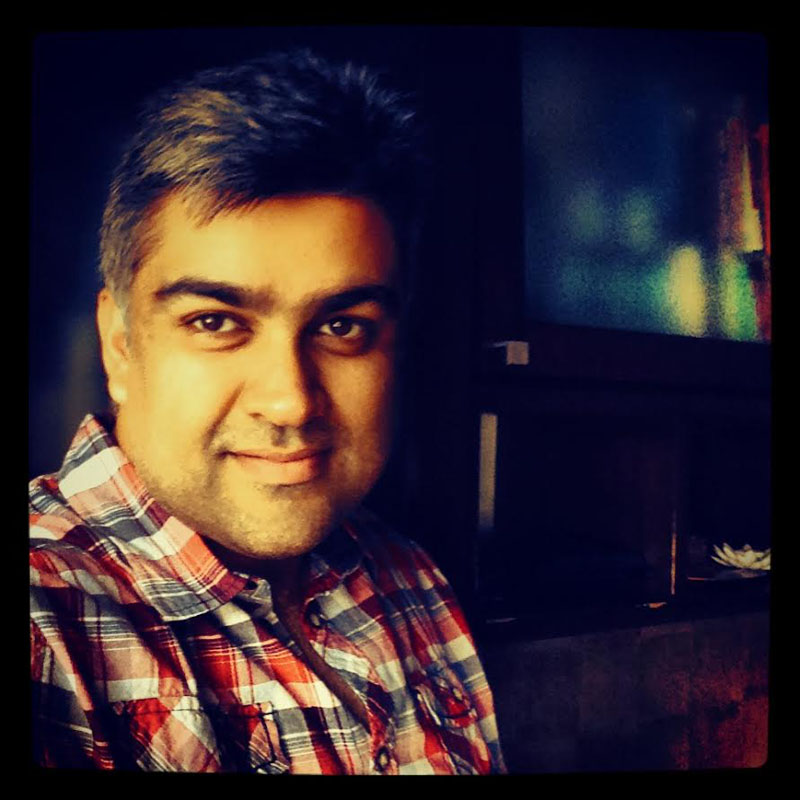
    MUMBAI: One show old in the television industry, the name Alchemy Productions might sound new to the world but the person leading the production house is definitely not new. His production house plans to launch five show in 2017.

    Director-producer Siddharth P Malhotra has been in the industry for over a decade now.

    Apart from the shows, Malhotra, who also directed “We Are Family,” is working on his second film now, with a leading production house. Malhotra is also planning to launch a new division in his company, which will produce plays for theatres.

    Known for shows such as ‘Dil Mil Gaye,’ ‘EK Hazaaro Me Meri Behna Hai,’ ‘Ek Hasina Thi’ and many more, the producer has also been known for his family business Cinevistaas Productions. He is well-versed with the art and craft of creating shows, which were produced under the banner of Cinevistaas.

    Talking about the split, Malhotra said, “Cinevistaas was getting into the development of land, studio and aimed at other things in life. I was more keen in the production aspect of it. My job was only to be a creative and not get into production. There comes a point when everybody needs to grow. And, if you are not ready to willingly give me those responsibilities, then bless me and free me. We are family, and I am not splitting away but i need to start of my own.”

    2016 is the year when Malhotra decided to move out from Cinevistaas, and start his own production house Alchemy along with his wife Sapna. The production house launched its first show Ichhapyaari Naagin for Sab TV in September.

    “I pretty much started from scratch, literally with almost nil bank balance. I have been lucky as the people I have been associated with for so long stood by me, including the channels. I went to Anooj (Kapoor) sir with the concept in Sab TV and I told him this is my concept, and I want to do it on my own. He knew me from the time Sab TV launched. He liked my concept and said, “Let’s do it.”

    “Before that, we worked on ‘Lo Ho Gai Pooja Iss Ghar Ki.’ Raghuvir Shekhawat is writing all my shows, but I am unsure about his pay packet. From this, you would know the mutual trust among us,” he said. “I have with me Santram Sharma too; at present he is not doing any show but he stood by me like a rock. I am very fortunate to be working with such interesting people,” he added.

    The four-month-old company, which started with a single show for Sony Pictures Network’s comedy channel Sab TV, is now working on five shows for all the leading Hindi GECs in India. “The struggle has been on how to put things together and getting the right people,” Malhotra said.

    Alchemy is fully owned by Malhotra and his wife Sapna.

    Talking about his upcoming shows, he said Alchemy was producing a family drama for Zee TV which was slated to be launched in January 2017. He is also producing shows for Sony which is a pure love story, which he is known for.

    The next show in the offing is considered to be television’s biggest show ever on Star Plus, tentatively titled ‘Kya tu meri laage’ bringing on the small screen for the first time the Bollywood actor Minisha Lamba and a bunch of big television stars in the show. The show, written by Nina Arora, is already being talked about and published on various platforms.

  • Malhotra’s Alchemy to launch five shows in ’17

    Malhotra’s Alchemy to launch five shows in ’17

    MUMBAI: One show old in the television industry, the name Alchemy Productions might sound new to the world but the person leading the production house is definitely not new. His production house plans to launch five show in 2017.

    Director-producer Siddharth P Malhotra has been in the industry for over a decade now.

    Apart from the shows, Malhotra, who also directed “We Are Family,” is working on his second film now, with a leading production house. Malhotra is also planning to launch a new division in his company, which will produce plays for theatres.

    Known for shows such as ‘Dil Mil Gaye,’ ‘EK Hazaaro Me Meri Behna Hai,’ ‘Ek Hasina Thi’ and many more, the producer has also been known for his family business Cinevistaas Productions. He is well-versed with the art and craft of creating shows, which were produced under the banner of Cinevistaas.

    Talking about the split, Malhotra said, “Cinevistaas was getting into the development of land, studio and aimed at other things in life. I was more keen in the production aspect of it. My job was only to be a creative and not get into production. There comes a point when everybody needs to grow. And, if you are not ready to willingly give me those responsibilities, then bless me and free me. We are family, and I am not splitting away but i need to start of my own.”

    2016 is the year when Malhotra decided to move out from Cinevistaas, and start his own production house Alchemy along with his wife Sapna. The production house launched its first show Ichhapyaari Naagin for Sab TV in September.

    “I pretty much started from scratch, literally with almost nil bank balance. I have been lucky as the people I have been associated with for so long stood by me, including the channels. I went to Anooj (Kapoor) sir with the concept in Sab TV and I told him this is my concept, and I want to do it on my own. He knew me from the time Sab TV launched. He liked my concept and said, “Let’s do it.”

    “Before that, we worked on ‘Lo Ho Gai Pooja Iss Ghar Ki.’ Raghuvir Shekhawat is writing all my shows, but I am unsure about his pay packet. From this, you would know the mutual trust among us,” he said. “I have with me Santram Sharma too; at present he is not doing any show but he stood by me like a rock. I am very fortunate to be working with such interesting people,” he added.

    The four-month-old company, which started with a single show for Sony Pictures Network’s comedy channel Sab TV, is now working on five shows for all the leading Hindi GECs in India. “The struggle has been on how to put things together and getting the right people,” Malhotra said.

    Alchemy is fully owned by Malhotra and his wife Sapna.

    Talking about his upcoming shows, he said Alchemy was producing a family drama for Zee TV which was slated to be launched in January 2017. He is also producing shows for Sony which is a pure love story, which he is known for.

    The next show in the offing is considered to be television’s biggest show ever on Star Plus, tentatively titled ‘Kya tu meri laage’ bringing on the small screen for the first time the Bollywood actor Minisha Lamba and a bunch of big television stars in the show. The show, written by Nina Arora, is already being talked about and published on various platforms.

  • The Content Hub: Broadcasters are averse to experimenting with content

    The Content Hub: Broadcasters are averse to experimenting with content

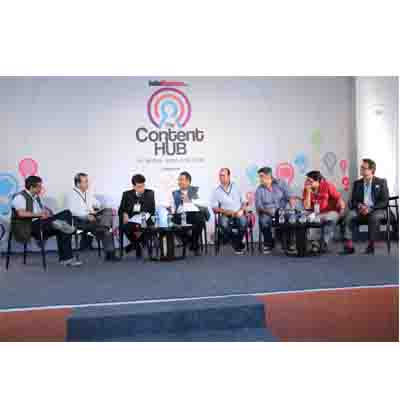
    MUMBAI: The first edition of Indiantelevision.com’s The Content Hub saw a full panel of broadcasters, producers and writers discussing how to change the dynamics of TV content. Moderated by Bodhi Tree Multimedia director Sukesh Motwani, the panel consisted of Doordarshan ADG West Mukesh Sharma, Zee TV business head Pradeep Hejmadi, Cinevistaas producer Siddharth Malhotra, Shashi Sumeet Productions co founder Sumeet H Mittal, Satyamev Jayate director Satyajit Bhatkal, Viacom18 head of content regional network Sanjay Upadhyay and writer Purnendu Shekhar.


    Motwani started off by asking whether the only model of monetising was through having daily soaps with the 23 minute per episode limitation? Upadhyay responded to this saying that some efforts have been made to break away tried to break away. “For instance, Viacom18, we have attempted to do this with our regional shows with one hour shows run twice a week,” he said. “What we found with this is that the audience’s addiction level isn’t as good as a daily because they are so used to dailies. At the same time, economics do play a big role.”


    Motwani further queried if broadcasters could experiment with hour long episodes during weekdays while restricting certain genres to only weekend? Hejmadi  pointed out that it isn’t easy to do dailies, as people generally think. “There is a need for change, yes. But the manner of migrating the audience is also needed. Some people have tried that but even then there is a thought process that broadcasters don’t encourage innovation,” he said.


    On the other hand Malhotra said that when the 9pm-10 pm time band became successful, the economics improved and after that no one even tried to experiment with hour long episodes. Upadhyay clarified that though the broadcaster makes an effort, the pressure on them is heavy. Shekhar lamented that broadcasters are scared of losing loyal audiences by introducing short stories that conclude in four episodes from Monday to Thursday.


    In most shows, the characters drive the shows and shows are scripted accordingly. Hejmadi pointed out that it takes to build characters and promote them amongst viewers to develop stickiness, hence having limited episode shows – like say which run from Monday to Friday does not really work, thanks to the attention deficit among Indian veiwers.  even suggested that producers should comHee with their own research insights that they should show broadcasters.


    Public broadcaster Doordarshan, on the other hand,  tends to look at art, culture and of course  literature for inspiration. Sharma said that this was mainly due to them having a different mandate. “For us the universe isn’t between 7pm to 11pm. We also do events such as every second Sunday is a ‘mothers’ day’ where we bring mothers and daughters to talk about them and this makes good money. But we don’t interfere with producer whether or not a show makes money.”


    As to Motwani’s question of whether there can be different shows for ‘India’ and ‘Bharat’, Upadhyay said, “Honestly, we don’t try hard enough because we don’t have patience. We shift goal posts depending on hits.”


    With a few shows having big names backing them such as Saraswatichandra and Everest, he also went on to say, “The noise that comes out of big shows may amortise costs in a shorter time.”


    While format shows are slowly losing audiences in India, the TV community needs to look at other metrics than simple TVTs and TRPs,  opined Satyemev Jayate director Bhatkal. “We chose the graveyard slot – Sunday morning  – when no one is really watching television to do the show,”he said. “We wanted to reach those viewers who don’t generally watch television, we wanted to encourage appointment viewing. People who would take the trouble  to switch on their sets at that early hour. And we apparently did, if we look at the buzz that SMJ generated online. And this is what sellers of channels also need to do, show the media buyers and planners the  volumes of social media data. In six episodes, we had billions of impressions and we were trending worldwide,” he said.

  • “Failures can teach you, what success can’t”: Namit Sharma

    “Failures can teach you, what success can’t”: Namit Sharma

    From directing fiction shows at Cinevistaas to film production and script writing at Yash Raj and handling events and non-fiction properties at Wizcraft International Entertainment, he has done it all.


    Namit Sharma, the programming head of Zee TV, has bought to the table years of expertise.


    The channel, which is running strong at number three at the TAM TV ratings chart, currently, has explored new concepts this year. With Zee’s three shows not only being the slot leaders, but also in the top 10 fiction shows category, Sharma feels it is in a happy space to be in but believes that  there should always a hunger for more.


    In his first interview, after taking charge at Zee TV, Sharma chats with indiantelevision.com’s Disha Shah in his office about challenges in churning out newer concepts and how to understand audiences’ likes and dislikes amongst other topics.


    Excerpts…


    It’s been almost nine months since you took charge as the programming head of Zee TV, how satisfied are you with the current positioning of the channel?


    There are two answers to it.


    The idea is to be happy with whatever you do because I think from a product and positioning point of view we have changed in the last nine months. We made a conscious shift about how we look and feel. There is certain uniformity in what we are doing and a certain sense of it coming together. The numbers have been good, so satisfied at that level. We are aligned with the legacy of Zee and yet evolving in a direction that we want to take the channel in.


    But at the same time, we will always be dissatisfied because we are hungry for more.


    From handling events to broadcast, did you face any challenges in the transition? Were you prepared for it?


    When you come from a creative background, the easiest part is always about interacting with the industry and getting the best talent to work with you.


    When you take charge or join a new team then there is always a lot of excitement and energy and people expect you to bring newer ideas to the table. At Zee, I have always been encouraged for bringing in fresh thinking. I am very happy the support I have received from the management and the team.


    The challenge always is to try and get inside the consumers’ mind, create products for them and then wait for their reaction to understand what they like and don’t like. Then, after a few months again one has to figure out a way to surprise with with something new and exciting. It is a vicious cycle.


    How difficult it is to churn out new concepts always? What kind of concepts you are looking out for?


    With general entertainment channels (GECs) widening their scope and a number of GECs being launched, the challenge that all broadcasters will face henceforth is that now everybody will dip into the same research pool or try to align themselves to a very uniform way of working.


    While, the uniform way of working is a good thing, one should never allow oneself to not think out-of-the-box. You work towards your TG, create content for them; you sort of know your audience but at the same time you should have the ability as a creative person to surprise yourself and them. There are some happy surprises and there are some not so happy surprises (laughs) and that’s roughly the unpredictability of what we do, that’s the challenge and excitement.


    Yes, it’s difficult to find clutter-breaking ideas but we have this year we did manage to create some extraordinary concepts. We are now seen as a channel that has clutter-breaking ideas within the traditional format. The classic example is Jamai Raja, within the family drama fun, there is a prime-time daily soap with a male protagonist. KumKum Bhagya is another clutter breaker and Jodha Akbar has been a clutter breaker for over year and a half now. They are also slot leaders. Jodha Akbar and Jamai Raja are consistent slot leaders. KumKum Bhagya is a recent convert and we are hoping to stabilise it as a number one show at 9pm for a very long time with very interesting characters and unpredictable twists and turns in the story.


    I am happy with the fact that Zee is now being identified as a platform, as a destination where you can consume the new traditional form of content and where shows are designed for the entire family and yet they provide newer twists, newer characters and clutter breaking ideas. Each show now comes with a new idea and that’s important to us.


    For a very long time now, Zee has been stuck at number three in the ratings chart, according to you what went wrong and how do you plan to rectify it?


    We sustained the number two position for a very long time; we will be back sooner than later. We don’t analyse this on a weekly basis because it is healthy to work in a scenario where everybody is active and fighting hard to keep their spot and aim higher. The greater satisfaction is not only in the numbers, but in the consumers’ appreciation and good feedback on a daily basis.


    All shows don’t click so according to you, what kind of content works on television today?


    If I knew that, I would have sealed a 20-year deal with Zee TV (laughs). I think there are some thumb rules that we all live by and within that thumb rules we try to find innovation and newness. Everybody talks about new launches, but the greater challenge as a programmer is on-going shows. Once the show is on-air and you have put behind the mad eight months of hard work into the launch and then everyone is scratching their heads saying what should we do next on this show to keep the momentum going. And that’s where the criticism comes in and then you are reacting, you are trying to clear your mind about how the story should go now, so these are bigger challenges.


    Frankly, I love failures because failures can teach you what success can never teach you. Your successes teach you nothing. You just become worse as a person with every success because then you are like “I know everything”. As a creative and a television person, I have to start my day saying, “I don’t know anything”. Sometimes the audience will teach you, sometimes a writer who walks in will teach you something. Every day you can learn so much from different people.


    Today, there is nobody in the world, who has 100 per cent track record of success, there is no creative person or network or programmer or broadcaster who has a 100 per cent success rate.


    From mature markets in the US and UK to slightly less mature markets like us to under developed markets, be it film or television, you will always find that sometimes a product works and sometimes it doesn’t and that’s how the cookie crumbles.


    We always fine tuned the formula a little bit and it is not linked to success but is about coming closer to the audience. For me, as a programmer, the most satisfying moment is when the consumer says “the product is really good”. Numbers is like cash, they come and go. When we meet our consumers, they tell us anything they don’t like about the show, that criticism is well accepted and when they tell us that they like something, that appreciation is also welcomed.


    This year we saw a lot of new shows to the kitty, so what is your strategy in terms of programming? Have you been able to understand your audience and their liking and disliking?


    This is going to be an on-going process for anybody who does this job. There is an audience which changes every day and we will change with the audience. This is an on-going process of understanding the consumer, trying to find the best concepts and trying to make that concept work. This is what we do in the business, seven days a week, be it as broadcasters or writers or producers. And that’s what we live for. That basic essence is never going to change, but yes, in the coming months you would see a certain alignment of the programming within itself. You will see certain kind of alignment in the content within the brand values and a certain coming together of the Fixed Point Chart (FPC) with very exciting new products.


    You tried stand-up comedy through Bh Se Bhade, but didn’t really click with the audience, what new offering are you looking at for the audiences?


    Yes, Bh se Bhade did not survive for very long. Then we had Gangs of Haseepur which ran for six weeks, some weeks did well, some weeks did not do well, fair point. And then we launched Neeli Chatri Waale, which is about 10 weeks old. It’s been delivering decent numbers. More than numbers on Neeli Chatri Wale, we feel pride because in it because it’s a show that is about hopes and aspirations of a middle class family. We are really proud of the show because it is something unique and has the good old formula of good storytelling, good characters, good humour, seek and moral built into every episode. So while it’s delivering in its slot, and is fairly delivering to what we had expected it to deliver but we always see the show from a very different filter. We always protect the show and make sure that we don’t touch the soul of the show.


    How do you see competition coming from other channels?


    Competition is an everyday part of our life. They are competition to us and we are competition to them. Nobody is resting, nobody is sleeping easy, and nobody has a peaceful existence (laughs). We are possibly on one of the hyper dynamic businesses ever. You really have to not love yourself to do this because everybody is firing salvoes from all different corners on an everyday basis and there is really no choice of waking up in the morning and fighting a new battle with a smile on your face and a hope in your heart.


    On the non-fiction space, don’t you feel it’s time that Zee moves forward from the dance reality show regime and brings in freshness? Are you looking at reviving Sa Re Ga Ma Pa?


    We are very sure that we don’t want to be different just for the sake of being different. If our consumers like something and if we do well, then we are happy to do it differently. It’s like saying, why is there a love story in a soap? People always question song, dance, and entertainment value of a non-fiction show. Similarly, why don’t one question relationships or love stories in a family drama? This is bread-butter, how do you package it, how aspirational, emotional and engaging we make it defines the success of that particular show.


    Non-fiction is a bit like playing black jack. It’s very easy to risk something very big and it’s very easy to think that you can play safe and you can still lose. Unlike fiction in which you can go wrong and go then correct it within the show. Because non-fiction shows have a 13-week cycle, you can win big or lose big. That’s the risky part of doing it, but that’s also exciting because it allows you to innovate and experiment every 13 weeks.


    At what intervals do you come up with the findings and how do you then change content on the channel?


    Zee has a very robust system of talking to its consumers and allowing the consumers to talk to the channel. Be it through programs or postal addresses earlier and now e-mail id, we are in constant dialogues with our audience. Over and above that we also actively keep talking to the audience through various forums to understand what they like and don’t like.


    Where do you Zee five years from now?


    Zee is the only channel that for over two decades has been a part of India and its life. It is a very difficult track record to beat for anybody and any competition. I really hope that five years from now we continue to be in hearts of the audience because that is exactly where we want to be.

  • Manic Monday: Media scrips join Sensex free fall

    Manic Monday: Media scrips join Sensex free fall

    MUMBAI: It was truly a Manic Monday for Dalal Street. For the second time in the indices’ history (the first being on 17 May, 2004), trading was suspended at the BSE this morning. The Sensex fell by a whopping 1111.70 points in the morning trade below 10,000 to settle at 9,826.91.

    However, it recovered substantially to close at 10,482 down 457 points. The NSE Nifty, on the other hand, closed at 3081 down 166 points. Media stocks, like the predominant market sentiment, were on a downslide.

    In order to avoid pandemonium in the market, Sebi chief M Damodaran asked people not to go by rumours but to take informed decisions. According to him, Sebi was in touch with the RBI and there were no liquidity problems.

    Among the entertainment and media stocks, one company that managed to beat the heat on the bourses was Times Group company Entertainment Network India Ltd (ENIL), which operates the Radio Mirchi brand. The company’s stocks opened at Rs 239.85 and closed higher at Rs 241.10, thus registering a marginal gain of 0.63 per cent.

    The biggest loser today was Prannoy Roy’s NDTV Ltd. The stocks of NDTV opened at Rs 220 today and closed at Rs 190, weaker by 13.64 per cent. Mid-Day Multimedia, on the other hand, recorded a drop of 11.82 per cent and closed at Rs 61.15 (previous close Rs 69.35).

    Pritish Nandy Communications shed 10.14 per cent to close at Rs 45.65 from its previous close of Rs 50.80. Hinduja TMT; which on Friday 19 May took the deepest plunge, going down by Rs 48.30 to close at Rs Rs 701.75; today dropped 3.10 per cent to close at Rs 680.

    Sahara One Media and Entertainment Ltd and BAG Films both shed around eight per cent in today’s bloodbath. TV Today Network was weaker by 7.76 per cent to close at Rs 81.45 at the end of the day’s trade. K Sera Sera also lost 7.45 per cent and ended the day at Rs 36.05. Television Eighteen shed 5.18 per cent (down Rs 32.95 from yesterday closing at Rs 603.20).

    Company
    Last Traded Price
    Previous close
    Change
    Per cent change
    Adlabs Films
    Rs 267.30
    Rs 271.45
    Rs -4.15
    -1.53
    BAG Films
    Rs 9.63
    Rs 10.54
    Rs -0.91
    -8.63
    Balaji Telefilms
    Rs 139.95
    Rs 147.00
    Rs -7.05
    -4.80
    Cinevistaas
    Rs 21.45
    Rs 22.55
    Rs -1.10
    -4.88
    ENIL
    Rs 241.10
    Rs 239.60
    Rs 1.50
    0.63
    ETC Networks
    Rs 37.65
    Rs 38.50
    Rs -0.85
    -2.21
    Galaxy Ent
    Rs 251.15
    Rs 260.95
    Rs -9.80
    -3.76
    Gemini Comm
    Rs 420.00
    Rs 433.30
    Rs -13.30
    -3.07
    Hinduja TMT
    Rs 680.00
    Rs 701.75
    Rs -21.75
    -3.10
    Jain Studios
    Rs 27.60
    Rs 29.00
    Rs -1.40
    -4.83
    K Sera Sera
    Rs 36.05
    Rs 38.95
    Rs -2.90
    -7.45
    Mid-Day Multimedia
    Rs 61.15
    Rs 69.35
    Rs -8.20
    -11.82
    Mukta Arts
    Rs 42.95
    Rs 45.20
    Rs -2.25
    -4.98
    NDTV Ltd
    Rs 190.00
    Rs 220.00
    Rs -30.00
    -13.64
    Pritish Nandy
    Rs 45.65
    Rs 50.80
    Rs -5.15
    -10.14
    Sahara One Media
    Rs 324.00
    Rs 354.00
    Rs -30.00
    -8.47
    Saregama
    Rs 241.65
    Rs 254.05
    Rs -12.40
    -4.88
    Sun TV
    Rs 1159.55
    Rs 1192.35
    Rs -32.80
    -2.75
    TV Eighteen
    Rs 603.20
    Rs 636.15
    Rs -32.95
    5.18
    TV Today
    Rs 81.45
    Rs 88.30
    Rs -6.85
    -7.76
    UTV
    Rs 176.00
    Rs 183.55
    Rs -7.55
    -4.11
    Zee Telefilms
    Rs 228.20
    Rs 229.60
    Rs -1.40
    -0.61

    In the vicinity of the one – five per cent loss incurred by companies were the likes of Mukta Arts (-4.98 per cent), Cinevistaas (-4.88 per cent), Saregama (-4.88 per cent), Balaji Telefilms (-4.80 per cent), Jain Studios (-4.83 per cent), UTV (-4.11 per cent), Sun TV (-2.75 per cent), ETC Networks (-2.21 per cent), Adlabs Films (-1.53 per cent).

    Media major Zee Telefilms had a relatively quiet day at the bourses, closing at Rs 228.20 down a minimal -0.61 per cent from yesterday’s last traded price of Rs 229.60. On the Nifty, meanwhile, Zee ended the day at Rs 227.40, down 1.22 per cent from yesterday’s close of Rs 230.20.

    The big question on every market punter’s mind at the moment seems of course to be just how low will low go. When will the “market correction” bottom out is something no one seems to be able to hazard a guess on currently.