Tag: cinema

  • Max goes maxi on its campaign

    Max goes maxi on its campaign

    MUMBAI: Have you ever, in the middle of some important discussion got up and said something completely out of context and people thought it was too filmy. If it happens often, well you can easily blame the movies for it. Cinema has become a part of our lives which easily influences our thoughts and also adds drama, but in a cute little way. And this is what Sony Max, is trying to cash on through its newly launched three TV campaigns.


    “We wanted to take a step forward and discover the cuteness of this deewanapan that people have within themselves,” says   Sony Max senior VP and business head Neeraj Vyas. “All the three creatives are cute and whacky, but at the same time they are not over the top and not overtly dressed up to sound funny.”

    The campaign is Max’s tribute to the effect cinema has on people


    The three campaigns have tried to keep pace with the current trend of cinema. “The TVCs capture the deewanapan that remains as a residue of movie viewing,” he adds.


    The first of the three TVC’s which went on air on 15 August features a police officer who while describing the action of a criminal in a photograph, promptly says, “Shayad who poochh raha hai agar usne Aashiqui 2 dekhi”. The second TVC is about a girl who confesses to his parents that she is in love with a guy from a different religion, though the girl expected some drama around this revelation, she is upset that her parents are cool with her relationship and goes on to say, ‘Toh kya humare pyaar mein ek bhi kaanta nahi.’ The third TVC shows a boy who questions his mother on the death of his father and is disappointed to know that he died of a heart attack and says, ‘Ab main kiske khoon ka badla loonga’.  All the three ads conclude with ‘Deewana deewana deewana, jahan dekho wahan deewana.’


    “We use filmy tones and dialogues in real life situations to say something funny or nice. And that’s all the campaign is saying,” comments Vyas.


    Eyebrows do go up with the timing of the campaign. One may smell some competition coming in from the launch of Zee TVs new movie channel &pictures. So is it this which forced Max to connect with audiences through new campaigns? Promptly answers Vyas, “Well! This is mere co-incidence, that the launch of Max’s new TVC and &pictures happens at almost the same time. In fact we hurried the campaign because of the October deadline for implementation of ad cap.”


    Explaining further he adds, “We had campaigns even the last year, around the same time which was called Shuruwat Yahin Se, this was more of a sub tribute to deewanapan .  We have at least three creatives per campaign every year.”
    The campaign is Max’s tribute to the effect cinema has on people


    The key insight for this year’s campaign was to demonstrate the latent deewanapan in everyone’s life. “It is communication from the point of view of people. None of the TVC’s asks the audiences to watch Max, they are all talking of their personal issues which is a derivative from the residue of movies.”


    Max has bought space on 22 channels from other networks to promote the new campaign. These include news, music, kids and regional language genres. “It is a part of our massive media plan. It is a media need to reach out to ‘x’ number of people in ‘x’ number of times, which is what we are aiming at by tying up with these networks,” informs Vyas.


    The campaign has been created by JWT, the production house is Kerosene Films and the director for the film is Rajesh Sathi. While currently the campaign involves only on-air promotions, the channel will soon use the digital space as well. No print ads will be used. “How can you translate the TVC into print?” he questions.


    According to the chief creative officer of a Delhi based creative ad agency the commercials are reasonably well made and are likeable. “If the attempt was to establish that the channel is associated with Bollywood, this set of commercials delivers. However, they do evoke a sense of déj? vu as such filmy things have been done before. Also the ad may not be path breaking but certainly makes one smile.”


    A commercial is an attempt to create propensity among viewers to like the channel. “In my opinion, these commercials have achieved that,” adds the CCO. When asked if a channel needs to rope in big names for promotions he says, “Max is an established channel and so can afford to cast real people. But for a new movie channel like &pictures, to announce its arrival, it needs to shout louder, both creative- and media-wise. Therefore, it’s understandable why they have roped big names.”


    When asked if the commercial was an attempt to pre-empt &pictures promotions, he says, “Well I haven’t seen &pictures promos, so can’t comment on that.” Resonating the same another creative head said, “Well, I haven’t heard or seen &pictures on-air promotions.”


    The launch of the campaign at a time of the launch of &pictures is a mere coincidence or no, is something which we can only speculate. But, what comes as good news for Max is that while its campaign is being watched and appreciated, &pictures even with big stars seems to have gone wrong with the marketing. Which of the two make a mark in this campaign driven industry, is yet to be seen.
  • India, Senegal agree on joint cooperation in broadcasting and cinema

    India, Senegal agree on joint cooperation in broadcasting and cinema

    NEW DELHI: India and Senegal have agreed to form a joint working group in areas identified under the executive programme for cultural cooperation, including cinema and broadcasting, signed between the two countries.


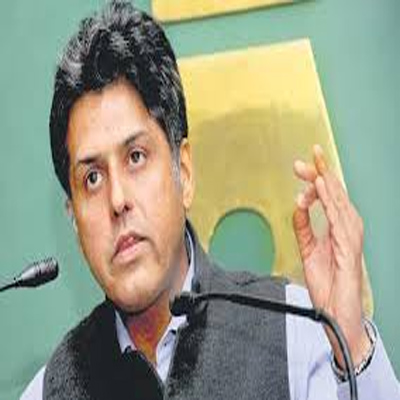
    The areas identified are based on the Articles 4 and 11 of the agreement pertaining to the Information and Broadcasting Ministry. The Agreement to constitute the joint working group was taken during the meeting between I&B Minister Manish Tewari and Senegal Culture Minister Abdul Aziz Mbaye. Both Ministers agreed to draw a time bound roadmap in order to take the cooperation in the Information and Broadcasting Sector forward.


    During the discussions, Mbaye accepted the invitation to visit the International Film Festival of India in Goa in November this year. Both Ministers also agreed to identify cooperation in areas pertaining to co-production in the film sector, sharing the experience by India in setting up the National Museum of Indian Cinema and the efforts being made by India to establish a single window clearance for film shooting in the country.


    Tewari apprised the Minister from Senegal on the potential of the areas of cooperation in the film sector and the participation in festivals such as the Children’s Film Festival and the Documentary Film Festival organised by the Films Wing of this Ministry.


    Tewari also outlined the initiatives undertaken by the Ministry in the Broadcasting space. He specifically referred to the laws/rules/regulations formulated pertaining to Cable TV/DTH/HITS. Special mention was made regarding the digitisation process in the country and the endeavour to create a viable business model for the industry through this process.


    The Senegal Minister referred to the possibilities of cooperation between the Public Broadcaster and the Senegalese Government Broadcaster in the near future.


    Tewari also offered to cooperate in training and capacity building through the Indian Institute of Mass Communication. This segment could be promoted through workshops, training modules and orientation courses.

  • Mexican cinema takes pride at Munich film festival

    Mexican cinema takes pride at Munich film festival

    MUMBAI: Mexican cinema took pride of place at this year‘s Munich International Film Festival, with Amat Escalante‘s drug drama Heli adding the festival‘s Arri/Osram best international film honor to his best director‘s win in Cannes and his fellow countryman Sebastian Hofmann taking the CineVision prize for his debut, the horror tale Halley. The CineVision award, meant to honor cinematic innovation, was also presented, ex aequo, to Slovakian director Mira Fornay for his second feature film, My Dog Killer.

    In the German film section, Jakob Lass‘ feature film debut, Love Steaks, a romantic comedy about a couple who fall in love at a health spa, swept the Forderpreis Neues Deutsches Kino honors, winning best director, best screenplay (Lass with co-writers Timon Schappi, Ines Schiller and Nico Woche), best production (for producer Golo Schultz) and best acting honors for stars Lana Cooper and Franz Rogowski.

    German director Fatima Geza Abdollahyan also took home multiple honors for his documentary, Freedom Bus, a look at Egypt ahead of the 2011 elections. The film won Munich audience award as well as the One Future Prize presented by Munich‘s Interfilm Academy.

    The CineVision award, meant to honor cinematic innovation, was also presented, ex aequo, to Slovakian director Mira Fornay for his second feature film, My Dog Killer.

    In the German film section, Jakob Lass‘ feature film debut, Love Steaks, a romantic comedy about a couple who fall in love at a health spa, swept the Forderpreis Neues Deutsches Kino honors, winning best director, best screenplay (Lass with co-writers Timon Schappi, Ines Schiller and Nico Woche), best production (for producer Golo Schultz) and best acting honors for stars Lana Cooper and Franz Rogowski.

    German director Fatima Geza Abdollahyan also took home multiple honors for his documentary, Freedom Bus, a look at Egypt ahead of the 2011 elections. The film won Munich audience award as well as the One Future Prize presented by Munich‘s Interfilm Academy.

  • Despicable Me 2 sets records with $34.3 mn Wednesday opening

    Despicable Me 2 sets records with $34.3 mn Wednesday opening

    MUMBAI: Traditionally, Fourth of July is a slow movie going day since Americans will be outdoors enjoying what should be good weather nationally. The domestic box office numbers do not tell the full story until Friday at the earliest. But there‘s no question that the ‘A‘ cinema score for Illumination Entertainment‘s and Universal‘s Despicable Me 2 (3,957 theaters) will help it gross well over $120 million domestic for the five-day Fourth of July holiday.

    On Wednesday the well-received and well-reviewed toon opened no 1 with $34.3 mn which is “an incredible start” according to a Universal executive. That‘s higher than Monsters University‘s Friday take of $30.5 mn last month. And it‘s setting records – the third highest opening day ever for an animated feature, the 8th highest Wednesday opening ever, and the biggest Wednesday opening of all-time for Universal. 

    The sequel‘s big draws are those lovable Minions who in the original toon were given form and function by Coffin & Renaud to underscore the comedy surrounding Gru‘s madcap mayhem. Reportedly for the first pic, the pair looked at previous peons like Oompa Loompas from Willy Wonka & The Chocolate Factory and the Jawas from Star Wars: Episode IV – A New Hope.

    This time around, the scribes just wrote as many Minions scenes as they could squeeze into the sequel. And in 2014 the little yellow guys even get their own stand alone Minion movie with Sandra Bullock and Jon Hamm already attached. Meanwhile, the end credits feature the Minion wack-pack‘s 3D demo.

  • A Centenary of experimentation through cinema is highlight of FD festival

    A Centenary of experimentation through cinema is highlight of FD festival

    NEW DELHI: This weekend, Mumbaiikars will see a feast of experimentation through a Retrospective of Indian Cinema and Video over the last one hundred years.

    The Retrospective from 28 to 30 June has been curated by Ashish Avikunthak & Pankaj Rishi Kumar and will be screened at the Films Division in Mumbai.

    The prints of the films have been acquired from the Directorate of Film Festivals, the Film and Television Institute of India in Pune and the Satyajt Ray FTI in Kolkata, and the National Film Archives of India in Pune.

    The retrospective is a celebration of the spirit of experimentation in Indian cinema; from the moment of its mythic birth in 1913 with D G Phalke’s Raja Harishchandra to the innovative and challenging moving images produced and exhibited today. The films brought together chart the transformation of experimentation, from early celluloid spectacle to contemporary digital adroitness. The curatorial impetus of this retrospective is marked by an emphasis on tracing the chronology of experimentation through the history of Indian cinema. The idea of ‘experimentation’ rather than the experimental or avant-garde drives the films put together in this retrospective.

    These films challenge modernity by generating a contemplative dialogue with Indian history, tradition, culture and religion. They are not driven by the desire to just produce an aesthetic artifact, but rather to create a discursive field. 

    It was more than 50 years later after Phalke’s experiments that the first experimentation occurred within the bureaucratic confines of the postcolonial Films Division in the late 1960s. These films challenged the formidable account of the sturdy developmentalist state and shattered its edifying edifice. These were the first cinematic critiques of the nation – forthright, trenchant and angry. S. Sukhdev, Pramod Pati, S.N.S Shastry and K.S. Chari among others, radically altered the possibilities of cinematic representation in India.

    Soon the films funded by Film Finance Corporation (later NFDC) ushered the much-celebrated rise of the Indian New Wave. Mani Kaul’s Uski Roti (1969) and Kumar Shahani’s Maya Darpan (1972) spearheaded profound experimentation in this period. However, the foundation of this continued experimentation was first established in the venerable FTII under the tutelage of Ritwik Ghatak. The section “Experiment in School” is a small curatorial gesture towards the pioneering works produced in its confines along with the later established SRFTI.


    This retrospective is conceptualised as a conversation with cinema, cinematic experience and cinematic thought.

    Screening Schedule
    Day One — 28 June, 2013, Friday
    28 June, 2013, Friday: 10.00-12.30 pm
    Session 1: Experiments with Gods 
    A collection of early films made by D.B. Phalke between 1913 and 1935. 
    Raja Harishchandra (20 mins, 35mm, 1913)
    Lanka Dahan (9 mins, 35mm, 1917)
    Shree Krishna Janma (6 mins, 35mm, 1918)
    Kaliya Mardan (50 mins, 35mm, 1919)

    28 June, 2013, Friday: 1.15- 3.45 pm
    Session 2: Experiment in the State 
    The earliest robust experimentation in India begins under the imaginative tutelage of Jean Bhownagary while he headed the Films Division in 1965. 
    Explorer – Pramod Pati (7 mins, 35mm, 1968)
    Claxplosion – Pramod Pati (2 mins, 35mm, 1968)
    Trip – Pramod Pati (4 mins, 35mm, 1970)
    Koodal – Tyeb Mehta (16 mins, 35mm, 1970)
    Abid – Pramod Pati (5 mins, 35mm, 1972)
    Child on a Chess Board – Vijay B. Chandra (8 mins, 35mm, 1979)
    India ’67 – S. Sukhdev (57 mins, 35mm, 1968)
    28 June, 2013, Friday 4.00- 6.45 pm
    Session 3: Experiment in the School 
    FTII became the centre of experimentation soon after it was headed by Ritwik Ghatak. Since then, along with SRFTI, it has continued to be a space where experimentation in cinema occurs on a regular basis.
    Bodh Vriksha – Rajan Khosa (27mins, 35mm, 1987)
    In Short – Kuntal Bhogilal (18 mins, 35mm, 1996)
    Repentance – Rajeev Raj (22 mins, 35mm, 1997)
    Chinese Whisper – Raka Dutta (27 mins, 35mm, 2006)
    Airawat – Renu Savant (10mins, 35mm, 2011)
    Moon Stars Lovers – Jessica Sadana (10 mins, 35mm, 2012)

    28 June, 2013, Friday, 7.00- 9.00 pm
    Session 4: Feature Film 1- Kanchan Seetha (87 mins, 35mm, Malayalam, 1977)
    by G. Aravindan
    Ending the first day with Malayali Filmmaker Aravindan’s masterpiece Kanchan Seetha – an invigorating reworking of the Ramayana, which opens up a new discourse on Indian cinema and its interpretation of religion. This film is located here to be in direct conversation with Phalke’s cinema of religiosity.

    Day Two
    29 June, 2013, Saturday
    29 June, 2013, Saturday, 10.00- 12.30 pm
    Session 1: Experiment with the Documentary 
    Documentary has been a formidable cinematic form in India. Although most innovation has occurred in world of the political, it has also has seen serious experimentation. 
    I am Twenty S.N.S. Sastry (20 mins, 35mm, 1967)
    Tales from Planet Kolkata – Ruchir Joshi (38 mins, 16mm, 1993)
    Brahma, Vishu, Shiva – R.V. Ramani (19 mins, video, 1999)
    Presence – Ekta Mittal & Yashaswini B. R.- Behind the Tin Sheets Project (18 mins, HD, 2012 )
    Nayi Kheti – Pallavi Paul (11 mins, HD, 2013)

    29 June, 2013, Saturday, 1.15- 3.45 pm
    Session 2: Experiments with the Short Film 
    This section focuses on films that were made outside the institutional framework of the state or the school and can be understood as independent experimentations, especially focusing on the short form.
    Nirjan Godhuli – Santosh Gour (10 mins, 16mm, 1993)
    Dust – Ashim Ahulwalia (20 mins, Video, 1993)
    Atreyee – Shumona Goel (17 mins, Video, 2003)
    Straight 8 – Ayisha Abraham (17 mins, Video, 2005)
    Bare – Santana Issar (11 mins, Video, 2006)
    Jan Villa – Natasha Mendonca (20 mins, HD, 2010)

    29 June, 2013, Saturday, 4.00- 6.00 pm
    Session 3: Experiments in the Gallery 
    In the last decade, the Art Gallery has become a vibrant space for exhibiting moving images mostly in the form of video art and installations. This section attempts to grasp with this new space of experimentation. It has been co-curated by Mortimer Chatterjee.
    Record/Erase – Nalini Malani (10 mins, Video, 1996 )
    Flight Rehearsals – Kiran Subbaiah (7: 26 mins, Video, 2007)
    Dance Like Your Dad – Hetain Patel (6:15 mins, Video, 2009)
    There is a spider living between us – Tejal Shah (7 mins, Video, 2009)
    Man Eats Rock – Nikhil Chopra & Munir Kabani (22:11 mins, Video, 2011)
    The First Dance – Hetain Patel (7:44 mins, Video, 2012)
    Forerunner – Sahej Rahal (12:16 mins, Video, 2013)
    File not Found – Jaret Vadera (1 min, Video, 2013)

    29 June, 2013, Saturday, 6.30-8.30 pm 
    Session 4: Feature Film 2- Satah Se Uthata Aadmi (114 mins, 35mm, Hindi, 1980) by Mani Kaul
    Mani Kaul is known mostly for his landmark film Uski Roti. However, the Satah Se Uthata Aadmi is probably his most conceptually rigorous and philosophically penetrating work. Based on the writings on Muktibodh, this film is a deep philosophical articulation on postcolonial modernity.
    Day Three
    30 June, 2013, Sunday
    30 June, 2013, Sunday 10.00- 12.30 pm
    Session 1: Experiments with Animation
    Co-curated by Nina Sabnani, this section examines experimentation in the world of animation. We shall look at the way in which animation directors have pushed the boundaries and expanded its scope in process, materials, concepts and its functions.

    30 June, 2013, Sunday 1.30- 4pm 
    Session 2: Cinema of Prayoga 
    The invocation of “prayoga” from Sanskrit etymology is Amrit Gangar’s radical move of rejecting the Western art historical terminology of experimental and avant-garde to explain the specific nature of experimentation in Indian cinema. This section has been co-curated by Amrit Gangar.
    And now i feel i don’t know anything – Kabir Mohanty (35 mins, 35mm, 2001)
    Egotic World – Vipin Vijay (21 mins, 35mm, 2002)
    Kramasha – Amit Dutta (22 mins, 35mm, 2006)
    Vakratunda Swaha – Ashish Avikunthak (22 mins, HD, 2010)
    21 Chitrakoot – Sambhavi Kaul (9 min, HD, 2012)

    30 June, 2013, Sunday 4.15- 6.30 pm 
    Session 3: Feature Film 2- Kaal Abhirati (120 mins, 35mm Bengali, 1989) by Amitabh Chakraborthy. 
    This is a significant film of this era that explores the complexities of human existence within the confines of Indian philosophy and discourse. This film, along with Kamal Swaroop’s Om Dar Badar, is the link between experimentations by Mani Kaul and Kumar Shahni and contemporary articulations by the ‘Cinema of Prayoga’ filmmakers.

    30 June, 2013, Sunday, 6.45- 8 pm 
    Session 4: Round Table Discussion
    The curators along with filmmakers, discussants and respondents will have a Round Table conversation teasing out and putting on the board the major points/ issues /debates that have been brought out in these three days.

  • Salman Khan to shake a leg in honour of the Bollywood legends in Chicago

    Salman Khan to shake a leg in honour of the Bollywood legends in Chicago

    MUMBAI: Bollywood‘s biggest night is all set to turn more glamorous with cinema‘s ‘Dabangg‘ star Salman Khan performing alongside his Ek Tha Tiger co-star Katrina Kaif at the Sears Center Arena, Hoffman Estates, Chicago, for the show – 100 Years of Indian Cinema Concert and Awards. The event which is one of its kind is scheduled to start on 30 August and end on 1 September.

    It is reported that the organisers are going the extra mile to reminisce the glorious history of the Indian cinema. The exclusively dedicated two day celebration will sport a number of Bollywood performances from top Bollywood stars including Sonashi Sinha, Prabhu Deva, Katrina Kaif, Ranveer Singh, and more dancing to chart-topping numbers dating from 1913-2013.The dance performances will be choreographed by the dancing superstar, Prabhu Deva.

    The highlight of the event apart from the Awards presented to the living legends of Indian Cinema will be Salman‘s entertaining performance.

    Says Sudesh Sonawane of Entertainment Synergies, “Our focus is to celebrate 100 years of Indian cinema worldwide and besides that we also plan to host an extravagant musical concert featuring leading playback singers Usha Mangeshkar, Krishna Beura and more from Bollywood.”

    While leaving no stone unturned it would be no surprises if the organisers add more exciting names to the list of performers.

  • Cinema must help build the moral compass of the nation and portray positive societal values; Pranab Mukherjee

    Cinema must help build the moral compass of the nation and portray positive societal values; Pranab Mukherjee

    NEW DELHI: President Pranab Mukherjee has said that cinema must be used to portray positive societal values for building a tolerant and harmonious India.

    Referring to recent criminal events involving women and children, he said the role of the film industry was very crucial in building the moral compass of the nation. He said the film industry ought to take steps to ensure that cinema was morally energising.

    Mukherjee was speaking after he conferred the National Film awards for the year 2012 in various categories at the 60th National Film Awards Function held at the Vigyan Bhawan. The award ceremony coincided with the release of the first Indian feature ‘Raja Harishchandra‘ by the father of Indian cinema D G Phalke on 3 May.

    He lauded the initiatives taken by the information and broadcasting ministry including single window clearance for shooting the films in India.

    Lauding the recipient of the highest award in cinema, the Dadasaheb Phalke award, he said actor Pran had commenced in films as a hero in 1940 but then moved on to become the ‘quintessential gentleman villain‘.

    There was standing ovation as the name of the 93-year old Pran Sikand, who could not attend because of illness, was announced.

    I&B minister Manish Tewari said the presence of films with innovative themes at the 60th NFA had proved that the Indian film industry was playing a proactive role in articulating issues and prejudices that had been historically embedded in our society.

    Indian cinema, Tewari added, had been the mirror of the nation‘s milieu and had an incisive influence on the evaluation of society. Internationally, Indian cinema had evolved to cater to the taste of international audiences. A unifying synthesis, Indian films had been able to institutionalise and project India‘s soft power outside the country. The film industry, he said, had grown despite and in spite of the government.

    He announced that the government had decided to institute an annual centenary award from this year to be given to a personality or institution recognising a paradigm transformation in film making and honouring individuals or films that had profoundly influenced contemporary, socio cultural evolution.

    He also announced that the Films Division Auditorium in Delhi was being re-furbished to convert it into a hub for alternate cinema. The Auditorium which was being used for screenings only on special occasions would be modelled along the lines of Prithvi Theatre in Mumbai to not just screen documentaries, small budget films but also provide a forum for film makers and connoisseurs to discuss the film making.

    He referred to the justice Mudgal Committee which was taking a fresh look of the Cinematographic Act 1952, and the Committee would aim to find a golden mean between creative essence and aesthetic sensitivity.

    The highlight of the evening was the release of postal stamps of 50 iconic personalities of Indian cinema by the President to commemorate the century long journey of Indian cinema. The film personalities depicted in stamps include Ashok Kumar, Bhalji Pendharkar, Durga Khote, Dev Annad, Yash Chopra, Smita Patil, Rajesh Khanna, Shammi Kapoor, Suraiya, Geeta Dutt, Sohrab Modi, Tapan Sinha, C.V. Sridhar and Bhanumathi.

    Speaking on the occasion, communication and information technology minister Kapil Sibal said the Department of Posts had given a fitting tribute to the powerful medium by issuing 50 new stamps.

  • Bombay Talkies : A montage of cinema

    Bombay Talkies : A montage of cinema

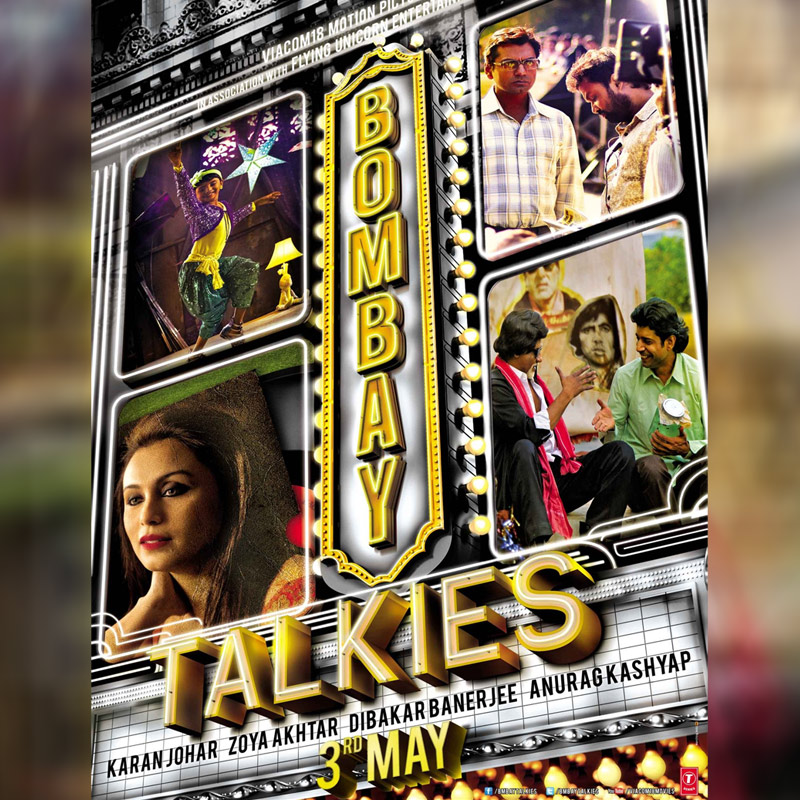
    MUMBAI: Bombay Talkies is a 128-minute film made to pay tribute to the Indian film industry on its completing 100 years. The film tells four stories directed by four filmmakers: Karan Johar, Dibakar Banerjee, Zoya Akhtar and Anurag Kashyap. These are followed at the end by the use of a montage created with the participation by all the top artistes from past and present through a song.

    Producers:Viacom 18 Motion Pictures, Ashi Dua.
    Director: Karan Johar, Dibakar Banerjee, Zoya Akhtar, Anurag Basu.
    Cast: Rani Mukerji, Randeep Hooda, Saqib Saleem, Nawazuddin Siddiqui, Vineet Kumar Singh, Sadashiv Amrapurkar, Ranvir Shorey, Naman Jain, Sudhir Pandey, Khushi Dubey, Amitabh Bachchan and Katrina Kaif incameo

    The first feature by Johar (27 minutes) is about a long-married couple, both professionals in the media, Rani Mukerji and Randeep Hoooda, and co-starring Saqib Saleem. Saleem is a fresh intern at the newspaper where Mukerji is the associate editor. She prefers to sit among her colleagues rather than boxed in a cabin and is an amiable kind. Saleem befriends her instantly and informs her that he is gay. He has a way with words and is full of wit. He is invited over for dinner at Mukerji‘s for his birthday where Hooda is first indifferent to him but later feels that there is more to Saleem than his wisecracks. The story of a happily married couple and their lives changes after that day.

    This is an interesting story thanks to its humour and with restrained performances by Mukerji and Hooda and a sparkling one by Saleem.

    The feature by Banerjee (26 minutes) is about a failed Marathi stage actor, Nawazuddin Siddiqui, whose only connection now with acting is telling his daughter film stories while enacting parts of them. This one is based on a short story, Patol Babu, Film Star, by Satyajit Ray. One day, Siddiqui is on his way for a job of a building security man. He is late and the job has been taken. On his way back, he

    watches a film being shot on the streets. As he penetrates the crowd of onlookers to come ahead for a better view, he is offered a passing shot in the film. He has to pass the star and bang into him and then react with ‘Aeeeeeeee‘. While imagining his dialogue to be all the powerful ones from past films he has mouthed a hundred times he has an encounter with the soul of his father, Sadashiv Amrapurkar, and gets into a debate. He comes out enlightened, suggests to the crew that it made no sense him walking straight and banging into the star. Instead, it would make more sense if he was reading a paper as he walked and banged. His suggestion is welcomed. Shot is okay in one go. Excited that finally he has a new story to tell his daughter that of his own success, he does not even wait to collect his remuneration for that one shot and rushes home.

    This one is a showcase of Nawazuddin‘s versatility as he shows his comfort with the Marathi language as well as character.

    In the feature directed by Akhtar (24 minutes), 12-year-old Naman Jain is out watching a movie with his parents and sister, Khushu Dubey. There comes a song performed by Katina Kaif, ‘Sheila ki jawaani‘, and the boy is absorbed as he watches all the moves made by Kaif. Back home, he gets into his sister‘s clothes and starts to mimic the steps only to be caught by his father, Ranvir Shorey. Shorey wants his son to play football and be athletic, not dance in girls‘ clothes. Then Kaif is on TV telling her viewers to be determined and keep one‘s desires to oneself. Shorey shows a clear gender bias as he would rather pay Rs 3000 for his son‘s football coaching which he hates than spend Rs 2000 on his daughter‘s school picnic. Since Jain has shared his passion for dancing with his sister, he decides to do something about her school trip. After opening piggy banks, they are still Rs 250 short. A show of Naman‘s dances is organised in the building backyard. ‘Shiela ki jawaani‘ saves the day.

    An eternal debate about parents forcing own aspirations on children and their bias towards boy child.

    The last feature, directed by Kashyap (30 minutes) stars Sudhir Pande and is about a dying man‘s last wish to have Amitabh Bachchan taste a piece of murabba from his jar and return the rest so that he may taste a bit everyday and have a longer life. The man‘s father had desired Dilip Kumar to do the same with a jar of honey which Pande was made to carry from Allahabad to Mumbai to meet Dilip Kumar and ask him to do the needful. Pande‘s emotional and obedient son, Vineet Kumar Singh, proceeds to Mumbai to meet Bachchan. After days of trying, he finally meets Bachchan who obliges, no questions asked.

    This purposeless story seems more about a tribute to Bachchan and his popularity.

    The montage tribute song that marks the end of the film is the most watchable.


    Shootout At Wadala: A gory encounter

    MUMBAI: Shootout At Wadala is a chapter chronicled in S Husain Zaidi‘s book on Mumbai underworld about the rise of Dawood Ibrahim Kaskar. However, the film is not really about Dawood Ibrahim as the book is. Not only did Dawood neutralise many reigning dons like Haji Mastan and Karim Lala on his way up, he also created some and met some on the way. Two such people were Manohar Surve aka Manya Surve. This film aspires to make a Deewaar out of Shootout At Wadala using Manya Surve‘s story. But Manya Surve is just a chapter in Dawood story and remains just that. Deewaar was a dramatised version of the rise of Haji Mastan, who was a living mystery for many at the time. He was linked to film stars as well as other city elite and hence had his own glamour. In comparison, to today‘s generation, Manya Surve comes out of the blue.

    Producers: Sanjay Gupta, Anuradha Gupta, Shobha Kapoor, Ekta Kapoor.
    Director: Sanjay Gupta.
    Cast: John Abraham, Anil Kapoor, Tusshar Kapoor, Kangna Ranaut, Manoj Bajpai, Sonu Sood, Ronit Roy, Mahesh Manjrekar, Ranjeet with cameos by Jackie Shroff, Akbar Khan and item numbers by Sunny Leone, Priyanka Chopra and Sophie Choudhary

    John Abraham (Manya Surve), a Mumbai youth and diligent student, is honest to the core and with only one aim: to graduate and bring his mother, Soni Razdan, out of the misery his stepfather has put her through all her life. He has a steady girlfriend, Kangna Ranaut, whom he refuses to help during exams as he does not want to get caught doing any wrong which may derail his plan. Abraham‘s step-brother, though debarred from the city, lands up at home. His enemies soon follow him and are about to kill him. Abraham, a simple, non-violent lad, intervenes on the goading of Ranaut and during that time his brother grabs the opportunity and stabs the last of his enemies attacking him.

    It is the day of the result and Abraham is on the way to check how he did via his mandatory visit to the temple when the police too reach his college. After being beaten in front of the entire college crowd, he is taken in custody for the murder his brother committed. That there is a conspiracy to frame Abraham is revealed only much later. Abraham‘s life does a cartwheel. His future plans of a secure job, marriage and happy life for his mother all end as he is sentenced to life imprisonment along with his brother. The brothers are attacked in jail and while his brother is killed, Abraham is saved by Tusshar Kapoor. Abraham knows there is no turning back now but to rise on the path he has been forced on, that of crime.

    A bond is formed between Abraham and Kapoor and both escape from jail. It has been nine years and that time has taught the duo all the tricks of the crime world and of survival. They need to join some group and decide on Kaskar brothers, Manoj Bajpai and Sonu Sood, though here they are referred to as different names instead of Sabir and Dawood. But instead of joining them, they come back as enemies of these brothers who lead the most dreaded gang in South Bombay at the time because of which no other gang will accept them anymore.

    Abraham decides to form his own gang with the ultimate aim of ruling Bombay, becoming ‘Bambai ka Baap‘. Soon a gang is formed, adding some expert criminals on its roster, like Siddhant Kapoor, a sharpshooter etc. Meanwhile, Ranaut has also returned to his life, duly widowed. As the Surve saga unfolds and meets its inevitable end, there is gore, violence, bullets flying, use of foul words, some sex and item numbers. There are also known faces for cameos like Akbar Khan playing Haji Mastan, Ranjeet as a dada whose conspiracy it was to frame Abraham and Jackie Shroff playing the commissioner of police. His gang members are either killed by the Kaskars or taken in by the police. Left alone, Abraham is holed up at a safe location. But he is bored and wants to break out and leave the city with Ranaut. Ranaut is deceived into believing that police wanted to save Abraham‘s life from the Kaskar gang. Anil Kapoor, the cop chasing Abraham learns about his plan to meet her at Wadala College the next day. A posse of policemen led by Anil Kapoor, Ronit Roy and Mahesh Manjrekar rains bullets on Abraham to carry out the first acknowledged encounter by Mumbai police.

    The narration of Shootout At Wadala is in flashbacks. Abraham is shot fatally and in the pretext of taking him to hospital, Anil Kapoor whiles away time as he dies while listening to the story of Manya Surve. Thus the story proceeds in a number of flashbacks, often confusing the viewer about the time factor. Also, though it may be the first encounter, it is not the first gang world film and hence no novelty including the deception of Ranaut which is similar to a recent film. This also makes the flow of the film suffer. Sanjay Gupta shows some enterprise in shot taking. While the Sunny Leone item number is good, the one on Priyanka Chopra has no appeal and Ala re ala…. is good for front bench masses. Attempts at creating claptrap dialogue have worked a few times but often the result is a blunt nothing. Photography is good. Despite a crowded screen, it is John Abraham‘s show all the way and he does justice to the character of Manya Surve. Tusshar Kapoor is an excellent foil to the protagonist. Ranaut is incidental to the story. Anil Kapoor, Manoj Bajpai, Sonu Sood, Ronit Roy, Mahesh Manjrekar are good in support.

    Shootout At Wadala has its best prospects in the Bombay circuit, especially the Maharashtra belt and its single screens are expected to do better than multiplexes.

  • Pran to be honoured with Dadasaheb Phalke award

    Pran to be honoured with Dadasaheb Phalke award

    NEW DELHI: Bollywood thespian Pran – who entertained Hindi cinema audiences for more than six decades with versatile roles as villain, comedian and character roles – has been chosen to receive the prestigious Dada Saheb Phalke award, the highest official recognition for film personalities in India.

    The announcement comes in the year marking a centenary of Indian cinema.

    Pran Kishan Sikand, who turned 93 in February, has acted in over 400 films and quit acting in 1998.

    On getting the news, Pran telephonically told indiantelevision.com from Mumbai: "I am very happy and honoured to receive this award."

    Pran is the 44th recipient of this award, given for lifetime contribution to cinema. The award consists of a Swarn Kamal, a cash prize of Rs one million and a shawl. The award is given on the basis of recommendations of a committee of eminent persons.

    Pran had been the industry‘s unanimous choice for this award in 2012, but the government committee had chosen the name of veteran actor Soumitra Chatterjee.

    The award, named after the father of Indian cinema D G Phalke, will be conferred on Pran on 3 May, the day on which Phalke‘s film ‘Raja Harishchandra‘ was released in 1913, an Information and Broadcasting Ministry source told indiantelevision.com

    Beginning his career as a hero in 1940 with ‘Yamala Jat‘, Pran went on to achieve fame as a villain in a large number of films including classics like ‘Milan‘, ‘Madhumati‘, ‘Brahmachari‘, ‘Kashmir Ki Kali‘ and ‘Sadhu aur Shaitan‘.

    He brought a new sophisticated touch to the role of a villain by resorting to mannerisms like stammering, lisping or using certain sentences, unlike others who using various facial features like beards or twisted faces.

    At the time when he was at his peak, many people named their children as Pran, a tribute to this multi-faceted actor.

    He later favoured character roles, playing the friend, beloved father and grandfather in movies like ‘Sharabi‘ and as friend in ‘Zanjeer‘, apart from a heart-rending role in Manoj Kumar‘s ‘Upkaar‘ and as a headstrong personality in the Jeetendra-Sanjeev Kumar- Jaya Bachchan starrer ‘Parichay‘ based on the western film ‘The Sound of Music‘. Two of his most memorable comic roles include ‘Victoria 203‘ and ‘Karz‘.

    Born on 12 February 1920 at Delhi, Pran started his career by learning photography in Lahore. A chance meeting with a film producer got him his first break in ‘Yamla Jat‘ in 1940. He married Shukla Sikhand in 1945 and has two sons Arvind and Sunil, and one daughter Pinky.

    At partition in 1947, Pran came to Mumbai and restarted his film career after a brief struggle.

    His favourite hobbies now are watching sports (football, hockey, cricket), reading and looking after his pet dogs. He has five grand children and two great grand children.

  • CinemaCon to honour Morgan Feeman with Cinema Icon award

    CinemaCon to honour Morgan Feeman with Cinema Icon award

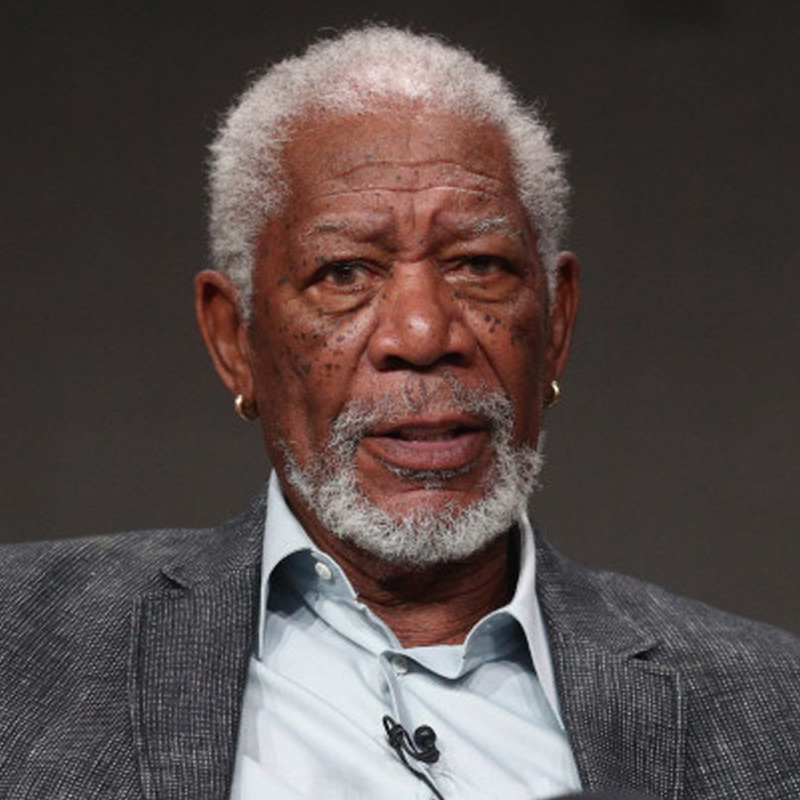
    MUMBAI: This year‘s CinemaCon will honour Morgan Freeman with the 2013 Cinema Icon Award.
     
    The actor will be recognized during the convention‘s CinemaCon Big Screen Achievement Awards ceremony on 18 April in The Colosseum at Caesar‘s Palace.
     
    "As one of the most esteemed actors of our time, Morgan Freeman has portrayed some of the most memorable characters ever to appear on film,"reportedly said CinemaCon managing director Mitch Neuhauser, citing the veteran‘s work in Driving Miss Daisy, Glory, The Shawshank Redemption, Unforgiven, Million Dollar Baby and The Dark Knight trilogy.
     
    "Freeman‘s presence exudes a dignity, charm and soul unmatched by any other actor," he added.
     
    The actor stars opposite Tom Cruise in Universal‘s Oblivion that is scheduled to open on 19 Apri.
     
    For record‘s sake, Freeman received an Academy Award in 2005 for his supporting role in Million Dollar Baby and was nominated again for his role in Invictus. Last year he received the Cecil B. Demille Award at the Golden Globes and the year prior, was honored with the AFI Lifetime Achievement Award.