Tag: cinema

  • Serbian Film Delegation to visit India

    Serbian Film Delegation to visit India

    NEW DELHI: A Serbian delegation is visiting India later this month to help increase exchanges in cinema and television between India and Serbia.


    The five-member delegation will be in Delhi on 24 and 25 April and in Mumbai from 28 to 30 April.


    During their stay, the Serbs will meet prominent film/documentary/commercials producers, and interlocutors in film and TV industry.


    The delegation comprises Milos Djukelic of Red Production, Ana Krivokuca from Top Cut, Alek Bdimilic from Dream Dust, Gaga Djurkovic from Visionteam, and Milica Boni of the Serbia Film Commission.


    The Serbia Film Commission (SFC) was established in July 2009 as the independent non-profit association of the Serbia film industry. Members include the leading producers of feature films, television, TV commercials and animation. Today, the SFC has more than 80 members.


    The principal aim of the SFC is to promote and develop Serbia as a cost-effective, high-quality, competitive destination for international filmmaking, and to provide information and support to international filmmakers considering using Serbia for their productions. The commission is therefore dedicated to expanding the film location and crew/business database, improving skills and services and generally fostering a film-friendly environment in the country.


    SFC has created and is continually updating an extensive online database of film locations in Serbia, offering over 250 locations for shooting in Serbia, with over 3000 high quality photos.


    SFC is the only film commission in the region of Southeast Europe, and is a member of the AFCI (Association of Film Commissioners International) where its executive director Ana Ilic is a member of the Board of Directors. SFC is also member of the European Association of Film Commissioners.


    Red Production specializes in print, radio, television and outdoor commercials, industrial and promotional films, television shows, documentaries, short films and feature films. The company has worked successfully with numerous advertising agencies and production companies, earning recognition at a number of advertising and film festivals. It has made several films and commercials.


    Top Cut is one of the first international production houses to establish its branch offices in Belgrade. It is the only Cannes Lion awarded production house in Greece and Serbia and a Bronze winner at the New York Festival, while a large number of awards have been won in the Greek market, including ”Production House of the Year” award in 2006, 2007 and 2009 and the Production Grand Prix in 2007 and 2009. Since December 2012 Top Cut Belgrade office is able to offer its services on locations in Serbia.


    Dreamdust is a creative post-production studio located in the centre of Belgrade, Serbia. Studio of the new generation, focused on giving that magical touch to all kinds of videos, using the latest technologies for creation and communication. For 17 years its team has been providing full service to some of the biggest brands and a large number of creative agencies worldwide.


    Established in 2002, Vision Team is a full service film rental company offering a range of film and video equipment and production service for feature films, television series and commercials. The company became an ARRI rental partner in June 2007.  Vision Team enjoys partnerships with high quality services and equipment companies in Hungary, Germany and the UK.

    The company strives to provide production houses with high quality services related to camera, light and grip rental. Vision team offers an experienced staff, studio capacities, production and postproduction work, and complete in-house services for its clients.

  • Indian Merchants’ Chamber (IMC) presents the much awaited Fusion 2014

    Indian Merchants’ Chamber (IMC) presents the much awaited Fusion 2014

    MUMBAI: The Indian Merchants’ Chamber is organizing its 3rd edition of ‘IMC FUSION,’ the Conference on Entertainment, Media & Sports on Saturday, February 15, 2014 at Grand Hyatt in Santa Cruz, Mumbai.  


    The IMC FUSION Conference represents convergence of today’s three most dynamic sectors – Entertainment, Media & Sports. This year, the conference is being organized under the auspices of IMC’s Entertainment Committee chaired by Mr. Manmohan Shetty.  Renowned Bollywood film, mainstream television and theatre star Kabir Bedi will be the Host of FUSION 2014.


    The third edition of IMC FUSION will feature renowned personalities as speakers from the three sectors deliberating on a wide array of topics covering current issues and trends, emerging technologies and new-age engagement with the consumer, content and creation, talent and involvement, influence of social media and App. world, technical aspects of Indian cinema, and other contemporary developments in ever evolving and dynamic sectors of Sports, Media and Entertainment. 


    Dr. J. Murali Manohar, Saundarya Rajnikant, Subhash Ghai, Rakesh Roshan, Shekhar Kapoor,  Pritish Nandy, Arnab Goswami, N. P. Singh, Annurag Batra, Komal Nahta, Suchitra Iyer, Kirthiga Reddy, Rajan Anandan, Agnello Dias, Steve Waugh, Surya Mantha, Mary Kom, Saina Nehwal, Dr. Prannoy Roy, among others will likely form panels of speakers during the day-long Conference. 


    The daylong conference will also feature Awards for Excellence in Entertainment, Media & Sports.


    The Conference will host delegates from the entertainment, Media and sports fraternity as well as young professionals and students of mass communication, journalism, film institutions and management schools. FUSION 2014 will provide a unique opportunity to the delegates to network with industry peers and share their thoughts and ideas with some of the top thought leaders of the industry. 


    Commenting on FUSION 2014, IMC President Mr. Shailesh Vaidya said, “With the exponential growth in the content industry across multiple platforms and with the dynamic trends governing its momentum, FUSION 2014 will contribute the best insights under one roof. With this conference IMC, being one of the leading industry bodies, will offer a unique platform for the industry to ponder over the course that it would take in the future and gear up for the challenges ahead. The conference proceedings as well as the Awards for Excellence will offer something for everyone connected with the entertainment, media & sports industry.”


    Mr. Manmohan Shetty, Chairman – IMC Entertainment Committee said, “This year IMC FUSION will focus on all aspects in the fastest growing sectors – entertainment, media and sports.  IMC FUSION Excellence Awards in the evening following the conference will be a star-studded event honoring winners chosen by an eminent panel of judges.”


    Veterans from the Sports, Media and Entertainment fraternity- Mr. Mir Ranjan Negi, Former India Hockey Player & National Coach, Mr. Sanjoy Chakrabarty, Managing Partner Zenith Optimedia, Ms. Bharathi Pradhan, Editor, The Film Street Journal are the Co-Chairperson’s of the Committee.


    Indian Merchants’ Chamber, as the pioneering trade body of the country since 1907, has been actively involved in promotion of the business interests of its various constituents.  In this process, our endeavour has been to reach out to different industry groups, understand their views and perspectives and present them to the policy makers and other decision makers to facilitate growth of that sector, in particular, and industry in general.


    Key issues identified during the FUSION 2014 Conference together with suggestions and outcomes from different sessions will be collated for taking up at appropriate levels.


    Registration for the limited seats and B2B exhibition space is currently open. Information about registration is available on the IMC website www.imcnet.org.


    For more information, contact:


    Malika Bhavnani

    Shraddha Teli 

    9867596309

    shraddha@fort.madisonindia.com

  • Cinema industry pays a tribute to Farooque Shaikh

    Cinema industry pays a tribute to Farooque Shaikh

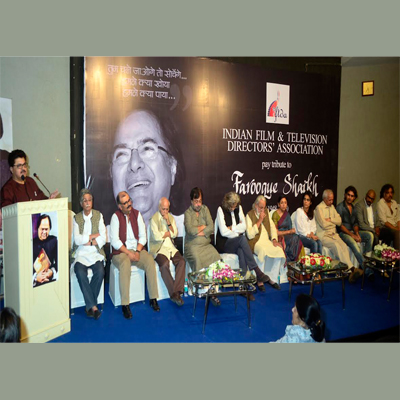
    MUMBAI: With roles that touched the emotional chord, actor Farooque Shaikh made a special place among his fans. When the actor passed away few weeks back, his fans couldn’t help but cry. Shaikh continues to evoke much affection and respect within the film fraternity. Indian Films & TV Directors Association organised a tribute to Shaikh at the S P Jain Auditorium in Bhavan’s College yesterday, where some of India’s finest directors assembled to recall the experience of working with the remarkable actor. 


    The people who came to pay a tribute to the actor included MS Sathyu who introduced Sheikh in Garm Hawa in 1973, Muzaffar Ali who selected the actor to play a lead in nearly all of the films he directed, starting with Gaman (1978) to Umrao Jaan (1981) and Anjuman (1986). It was while shooting Anjuman that Sheikh became acquainted with the plight of the impoverished chikankari artisans of Lucknow. It spawned a lifelong association with the classic white embroidered kurta-pyjama that remained his unique hallmark. Interestingly, he used to order his outfits directly from the karigars.


    Others included veterans and new age Hindi film directors, actors and writers who worked with him including – Sagar Sarhadi, Ramesh Talwar, Raman Kumar, Pankaj Parashar, Sanjay Puran Singh Chauhan, Sanjay Tripathi, Avinash Kumar Singh, Shona Urvashi, Suhail Tatari, Javed Siddiqui and Anand Rai.


    Among his co-actors, Deepti Naval shared her thoughts on their long working partnership spanning Doordarshan television shows leading on to Chashme Buddoor right up to Listen Amaya last year. 

    The ceremony was organised by President of the Indian Films & TV Directors Association Ashok Pandit who said, “We thought we should invite all the directors who have worked with the late veteran actor Shaikh to share interesting moments with the actor, whether these are humorous or sensitive or simply give an insight into his unique personality. They will narrate little trivia which will be useful to those who have merely seen Shaikh on screen and want to know more about him as an actor & human being. This great actor and exceptional human being deserve to be remembered in the most dignified way. What better than inviting all his directors upon a common forum to celebrate his talent and his persona.”

  • Highlights of the 3rd AACTA International Awards

    Highlights of the 3rd AACTA International Awards

    MUMBAI: The Australian Academy of Cinema and Television Arts (AACTA) announced the winners of the 3rd AACTA International Awards on Friday 10 January 2014 at an intimate Awards Ceremony in Los Angeles hosted by multi-award winning actor and AACTA President Geoffrey Rush.


    The Awards recognise screen excellence regardless of geography across seven categories including Best Film, Best Direction, Best Screenplay, Best Actor, Best Actress, Best Supporting Actor and Best Supporting Actress.


    Blue Jasmine’s Australian leading lady, Cate Blanchett was called to the stage by AACTA President Geoffrey Rush to accept the AACTA International Award for Best Actress.


    Blanchett’s acclaimed performance as Jasmine in the Woody Allen film has been tipped to win a raft of awards in the 2014 International Awards season including a possible second Oscar which, if occurs, would make her the first Australian actress in history to be awarded twice by AMPAS.


    Gravity, the visual masterpiece directed by BAFTA winner and Oscar nominee Alfonso Cuarón, received the AACTA International Award for Best Film and the AACTA International Award for Best Direction.


    The space odyssey, based on a story written by Alfonso Cuarón’s son Jonás, pushed the known boundaries of cinematography and technologies to illustrate a tense story of skill and survival set in zero gravity. A team of world renowned VFX artists worked with Cuarón to realise his extraordinary vision including visual effects supervisor Tim Webber and Australian VFX House Rising Sun Pictures.


    American Hustle, the most nominated film in this year’s AACTA International Awards also received two Awards. The AACTA International Award for Best Screenplay, (which went to Eric Warren Singer and the film’s Director David O. Russell) and to actress Jennifer Lawrence who received her second AACTA International Award in a David O. Russell film; this time for her portrayal of Rosalyn, the explosively alluring and manic housewife to Christian Bale’s Irving Rosenfeld.


    12 Years a slave saw wins in both actor categories with Chiwetel Ejiofor receiving the AACTA International Award for Best Actor and Michael Fassbender the AACTA International Award for Best Supporting Actor. Set in pre-Civil War America the film is based on the true story of Solomon Northup, a free black man from upstate New York who was abducted and sold into slavery. 12 Years a slave is directed by UK director Steve McQueen.


    AACTA President, Geoffrey Rush, said: “The AACTA International Awards are Australia’s international stamp of screen success. They recognise our international counterparts, add an Australian voice to international Academy discussion, and celebrate our fellow Australians working internationally.


    “I congratulate all of this year’s AACTA International Award nominees and winners on their compelling and inspiring work and as always I look forward with anticipation to see if our international peers have concurred with the AACTA International Chapter in this year’s Awards season selection.’’ Rush said.


    The 3rd AACTA International Awards will be aired on Foxtel’s Arena in Australia on Sunday 12 January, 2014 at 7:30pm.

  • Suzuki launches new TVC: Chulbul Pandey rides Hayate to Deccan

    Suzuki launches new TVC: Chulbul Pandey rides Hayate to Deccan

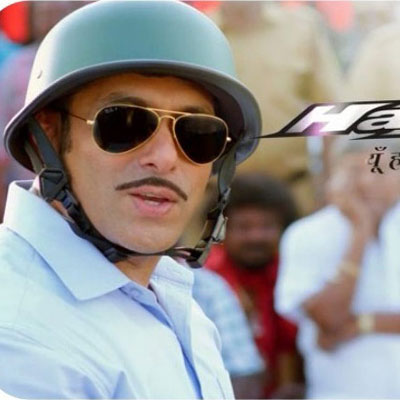
    New Delhi, July 15, 2013: Suzuki Motorcycle India Private Limited (SMIPL), a subsidiary of one of the world’s leading two-wheeler manufacturers Suzuki Motor Corporation, Japan, has launched a new ad campaign for its bestselling mass segment motorcycle – Suzuki Hayate. An extension to the 2012 campaign, Suzuki’s new TVC features Salman in his characteristic Dabangg persona of Chulbul Pandey, this time in a full blown South India avatar.

    The ad features Salman manoeuvring his Hayate on meandering streets set in a Deccan town from South India while recapturing the much acclaimed tagline – “Suzuki Hayate, yun hi nahi chalate!” Challenging Chulbul’s heroism is ‘Gundappa’, a character played by veteran actor from Telugu and Tamil cinemas, Kota Srinivasa Rao, who is known for his customary flair of blending comedy with villainy.

    And the package doesn’t end just yet. Accomplished cinematographer, V Manikandan marks his directorial debut with the Hayate TVC. As a Director of Photography, Manikandan has been a part of mega productions like Ra.One, Main Hoon Na, Om Shanti Om and Raavan.

    The ad has been overtly stylised and executed as a typical South Indian masala film. It has been ideated and executed by RK Swamy BBDO.

    Ms. Anu Anamika, National Head – Marketing, SMIPL says, “The first TVC with Salman was a thundering success. Salman’s Dabangg persona in the TVC helped extend Suzuki Hayate’s appeal across segments. Since Suzuki is a pan India brand, this time we thought of giving the campaign a different treatment with a South-Indian twist. We hope we are able to replicate the previous campaign’s success and expand our reach to customers.”

    Superstar Salman Khan says, “It’s nice to know Suzuki bikes are going places and Chulbul is always happy to go along for the ride. From Uttar, the action has moved to Dakshin and I hope the people in Purab and Paschim enjoy it as well.”

    Mr. Sunil Kukreti, Senior Partner, R.K. Swamy BBDO Pvt. Ltd. says, “The entire campaign is conceptualized keeping in mind the target audience which resides in rural and semi-urban peripheries. We wanted to play along this well-embedded imagery and create a unique blend of North and South. This new TVC gets even bigger and more entertaining.”

    The campaign will spread across all mediums including Television, Cinema, Radio, and Print.

    STORYBOARD

    While in the previous Hayate Ad, we witnessed Chulbul Pandey successfully arresting the fugitive Billa, this time around we will see Salman in his patent Dabanng character chase down Gundappa Kota Srinivasa and his gang to bring an end to the black marketing of film tickets.

    The TVC revolves around its novel tagline “Suzuki Hayate, yun hi nahi chalate”. The scene breaks with Gundappa and his gang selling cinema tickets in black market. Enter Salman Khan in his iconic Chulbul Pandey character riding his trusted Hayate. A constable points at Gundappa and the group selling the movie tickets in black. The scene breaks into an action packed chase and run sequence between Gundappa, his gang and Salman who is seen effortlessly riding the Hayate. The Dabanng Khan with his discerning, unmistaken wits and his credible Hayate as his comrade, is ultimately able to arrest Gundappa and cease his black market racket. The TVC ends with Salman reciting the tagline and urging the viewers to buy Hayate.

  • Brand Integration grows in Indian Cinema

    Brand Integration grows in Indian Cinema

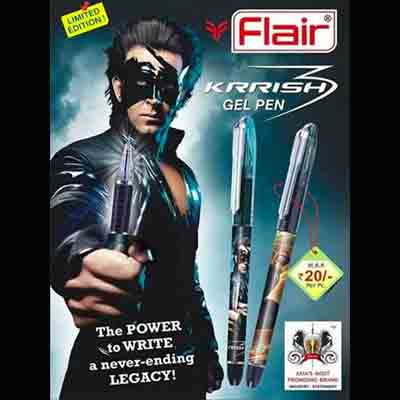
    MUMBAI: As the new Rs 200 crore club emerges in Bollywood, it’s also been a strong year for brand integrations in films. Krrish 3 has revolutionised Bollywood content with the most number of brands ever having been integrated in a film. Mates India, a well-known brand integration, film marketing and celebrity management firm, was behind weaving in five brands – Cadbury Bournvita, Flair pens, Tata Manza, Fortis Hospital and Forever Jewelry into the film. And the jobs of Sooraj and Darshana Bhalla don’t end there as post the integration; merchandising has also become an equally important marketing tool in today’s day and age.

    Cadbury Bournvita for example was not only the drink consumed by Rohit in the film while he works in his science lab but as consumers we soon saw special Krrish Bournvita packs on the shelves in our grocery stores. A fly with Krrish contest was implemented which would create a direct connect with the consumer and also allow for the winners to meet Hrithik Roshan one on one if they happen to be one of the lucky winners.  Such activities not only benefit the brands but also help the film maintain its shelf life beyond the first weekend.  Promotions and ads around the integrated products (ex: Krrish Flair pens) keep the buzz around the film alive and hence it becomes a mutually symbiotic relationship.

    Bridging the gap in this relationship is a firm like Mates, which finds the right synergies and creates opportunities for both the films as well as the brands.  Talking about the changing trends, CEO Sooraj Bhalla says, “It has been amazing to see how over the years content and advertsing are seeping seamlessly into each other and providing for a great viewer experience. Krrish 3 has been a very ambitious project for brands too. The belief and the vision has paid off.”  Besides Krrish, Mates has worked on integrating content in many other films such as Race 2 (Audi), Yeh Jawani Hai Deewani (MakeMyTrip.com and Jabong.com), Bhaag Milkha Bhaag (Birla Sun Life Insurance), etc.

    By Dolly Bhatter, publicist by profession (PR and CEO of a PR firm)

  • O&M and The Hindu tell politicians to behave

    O&M and The Hindu tell politicians to behave

    MUMBAI: With the elections just around the corner, The Hindu has launched an extension of its successful Behave campaign.

    The camping has been conceptualised by Ogilvy & Mather and focuses on some of the concerns like Corruption, dereliction of duty, bad behaviour and inadequate infrastructure of the young voters.

    The campaign boldly poses these questions to the leaders of the country and urges them to behave, for the youth are watching.

    Ogilvy South Asia executive chairman and creative director Piyush Pandey said, “With a huge youth population and our ambition to be a shining nation in the world, there is a great need for us older people in positions of responsibility to set a better example for the young.  I have closely followed cartoonists who have a very effective way of using satire to shame people.  I know that campaigns cannot change behaviour overnight, but I would be very happy if some people are not able to sleep well for a few nights at least.”

    This is the next phase of The Hindu’s Behave campaign, which earlier drew attention to politicians’ bad behaviour. This time, it goes a step further, by not just admonishing bad behaviour but reminding politicians that the power to re-elect them undoubtedly lies in the hands of the youth.

    It uses dark humour to hold up a mirror to a political leader’s bad behaviour, the print and outdoor campaign uses stark facts to bring the issues that the youth face to the forefront. Eventually, it aims to become a crowd-sourced campaign, by asking people to send in their own questions via social media which will be featured as ads in the paper. Going forward, it hopes to address some of these issues so the youth can make an informed decision when they eventually vote.

    The Hindu editor Siddarth Varadharajan said about the campaign: “The Hindu’s ‘Behave Yourself, India” campaign cherishes the spirit of parliamentary debate, which is the true test of a functional democracy. Every Indian has a right to be heard – but that right is only as effective as our ability to listen, engage and disagree courteously with each other. Sadly, the space for tolerance and free speech is narrowing in our republic. This is no surprise because many of our elected representatives – who hold a candle to the rest of society – have failed to debate policy and politics with their peers in Parliament in a civilised manner.”

    He added, “Our campaign shines a light on the errant and discourteous politician, wedded to privilege and power, whose fate now lies in the hands of voters, many of whom are young and who will be exercising their franchise for the first time. The idea has been brought alive through print and a television commercial, beautifully executed by Prasoon Pandey of Corcoise Films.”

    The campaign will be on TV, cinema, print, outdoor across the country and on social media as well.

  • The LGBT challenge for Indian TV & cinema

    The LGBT challenge for Indian TV & cinema

    It’s said that a country’s art and culture reflect its plight in the best way. At the present time its TV and films that have become the biggest platform to showcase the visual arts. And in the present situation when the lesbian, gay, bisexual, transgender (LGBT) community is facing a tough time after the Supreme Court reinstated that gay sex will remain a criminal offence, it seems so apt.

    On Wednesday, the Supreme Court gave a severe blow to the largely-closeted homosexual community in the world’s largest democracy. It overturned a 2009 ruling by Delhi’s High Court, which had lifted a ban on gay sex between consenting adults that dates back to 1861. According to SC, only parliament can now change the penal code. Under Section 377 of the Indian Penal Code (IPC), sexual activities “against the order of nature” – including homosexual acts – are a criminal offence.

    The law says: “Whoever voluntarily has carnal intercourse against the order of nature with any man, woman or animal, shall be punished with imprisonment for life, or with imprisonment of either description for term which may extend to ten years, and shall also be liable to fine.”
    While the law has can be extrapolated to cover even heterosexual couples indulging in oral or anal intercourse, it’s the folks with alternate sexual orientation (the LGBT community) that are the most troubled.

    Apparently, if we look back, we would realise that "mainstream" commercial TV and cinema  (whicht are not just the most disposable form of art in the country, but also the most common source of entertainment across masses) are mostly devoid of any content that features the LGBT community. 

    'Maryada…lekin Kab Tak' featured a gay couple but the main plot overshadowed this sub-plot

    While in the world cinema space, we have had aesthetically and artfully shot films like Brokeback Mountain,All About LoveAnother Country among many others, in India, the ones that feature gay relationship are either very caricaturish in nature (like Dostana that largely made fun of a gay relationship), or aren’t promoted enough to reach the masses. 

    Films like Fire by Deeepa Mehta, My Brother Nikhil and I Am by Onir, one of the short films in Bombay Talkies by Karan Johar and Dunno Y…Na Jaane Kyun have tried to bring up the topic to the fore, but our country’s film certification board hasn’t let them reach the audience the way they were supposed to. Others like Girlfriend sank without a trace as most of the scenes were just meant to provide cheap thrills rather than focusing on the issue. There have been many other independent films, like You Can't Curry Loveabout an Indian gay, Vikas who works in London that has won awards and acclaim at international film festivals but in India remain confined to the certain sections.

    Mitchell and Cameron in 'Modern Family'

    The situation on TV seems to be even worse. While the world TV is opening up to a cross-section of issues, we seem to be lagging far behind with most of our shows still featuring the saas-bahu sagas.

    So if, internationally, we have shows such as Mom and Dads, an Israeli series involving a menage-a-trois between two gay men – Ima and AbaZ and the mother of their child; Modern Family, a comedy that tastefully puts across the relationship of a gay couple; The New Normal that follows a wealthy Californian gay couple – Bryan (Andrew Rannells) and David (Justin Bartha) – who have a child through a surrogate mother; Sean Saves the World about a gay father and his teenaged daughter; and The Fosters produced by Jennifer Lopez featuring a lesbian couple and their three kids, airing on TV, in India, we can hardly recall anything similar.

    While there’s no serial featuring a gay couple in the lead plot, even the side-kicks who have portrayed gay characters haven’t been fleshed out well. One of the first official gay characters was Petha, portrayed by Deven Bhojani in Tara almost two decades ago, that even a hardcore TV viewer would hardly be able to recall. Maddy in Jassi Jaisi Koi Nahi portrayed by Rajesh Khera was another character that showed an alternate sexuality openly, however it was more comical in nature and barely brought out the issues of the community.

    'Moms and Dads' is about a gay couple raising a baby

    It was only in 2010 when Imagine TV reprised a popular Telugu serial Rakth Sambandham that dealt with the character of a closeted eunuch, the industry had thought that Indian TV is coming of age. But unfortunately, the serial, Rakt Sambandh starring Dhruv Bhandari and Sriti Jha, didn’t work its magic on the audience and met with a natural death very soon.

    Another show, Maryada…Lekin Kab Tak had a strong sub-plot featuring a gay relationship portrayed by actors Dakssh Ajit Singh and Karaan Singh. But that too didn’t make much difference as it was overshadowed by the main storyline.

    At a time when the entire country is debating on what could be done to protect the rights of the LGBT community and is suggesting various measures from bringing in young leaders and disowning the judiciary, shouldn’t the creative industry instead of shouting and screaming on social-media platforms come forward and work towards putting the spotlight on this minor community whose members can now be labelled as criminals just because they love someone from the same sex!

  • Disruptions are a necessary evil

    Disruptions are a necessary evil

    CANNES: We live in times of fast changing technology where more often than not, the only way to keep pace is to unlearn what we’ve just learnt and re-adapt ourselves to the transformation.

    Exactly the point Deluxe Media Europe senior director, sales and business development Darren Baker was trying to drive home when he said: “Every time you think you have learnt everything, you have to adapt and learn again. The need is to adapt quickly and learn again.”

    Baker was addressing a gathering at Verriere Grand Audi Level one at the Palais on day two of Mipcom.

    “The important thing is to learn quickly and react to the disruption,” he further stressed.  
    Referring to cinema, TV, VCR, DVD, BluRay and now VOD as techniques used for disruptions, Baker said that while the disruptive nature of some technological shifts was immediately evident, in other cases, it became clear only through tracking the patterns of adoption.

    Speaking of one too many portals in the content supply chain, he said: “The consumer wants the content, the content provider wants to provide the content and the portals are ready to carry them. But then there are too many contracts. There needs to be a disruption here.”

    Not just portals, he also pointed out that there are just too many schemes and updates. “By the time the consumer is happy that they have got all the programmes, the portal updates its software and the consumer has to change the entire system yet again,” he said.

    In his view, the proliferation of vendors too posed a problem. “If you have a large number of vendors, you should reduce them,” he advised buyers.

    Offering his take on successful disruptions, he said: “There is a need for constant improvement in every company. A fresh approach is always welcome and refreshing the digital policy every few months also helps,” adding that with every four year old ignoring television and moving towards mobile and social media, “companies need to be open to disruptions”.

  • Satyagraha: A glorified hunger strike

    Satyagraha: A glorified hunger strike

    There is cinema called Prakash Jha genre. It is basically anti-establishment in its essence. The usual elements involve badly skewed good-vs-bad struggles, the usual locations, plenty of crowds and a small constituency that is supposed to represent the national scene of India today.


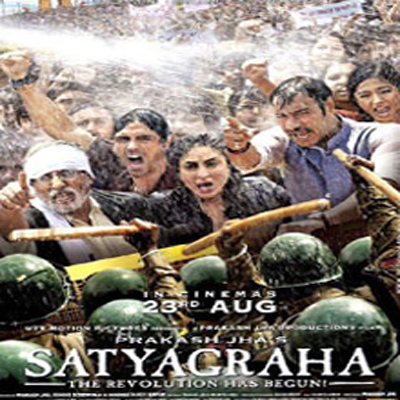
    Amitabh Bachchan is the honest, retired masterji of a small township. His principles are as tall as his personal being. He is not always right but that is the way he is. He has cast his son, Indraneil Sengupta, in his very own mould. The son, an engineer, is the head of development of a whole precinct of Ambikapur, which is represented by the politician Manoj Bajpai in the state assembly. A new bridge is being built with his design, and Bajpai’s brother is the contractor. As expected, a slab from the bridge collapses and kills many workers. The builder has used inferior materials but the blame is put on the designer, Indraneil, who is killed soon after. A compensation award of Rs 25 lakh for the killed workers’ families is announced by Bajpai in front of the media. Days pass but the award is not forthcoming due to corruption. When approached,the district collector is rude. Angry with his behaviour, Bachchan slaps him in front of his subordinates.


    Bachchan is arrested for slapping a public servant. Enter Ajay Devgn, Indraneil’s bum chum who supported Devgn after his parents died in an accident. Devgn tries his best, appointing a topmost lawyer and even approaching the collector. Nothing works and he decides to start a campaign for the release of the honest ex-teacher through posters and MMS clips. Soon the local toughie, Arjun Rampal, an expelled student of Bachchan, joins the campaign with Devgn. Rampal’s speciality is crowd mobilisation. Devgn decides to rope in Kareena Kapoor, a TV journalist from ABP News. Kareena is supposed to travel with the PM on his Japan jaunt but Devgn convinces her that something major is happening in Ambikapur by sending her manipulated pictures of huge crowds. When she arrives, she sees no crowds but not to disappoint her, Rampal soon produces a huge mob.


    Bajpai decides to play a good guy, comes personally to his constituency and orders the release of Bachchan and also presents him the cheque for Rs 25 lakh. But looking at the crowd’s backing, Bachchan refuses to accept the money till corruption is totally done away with in Bajpai’s constituency. He gives a deadline of a month for the purpose. However, Bajpai is a tough nut to crack. He holds the ultimate power in the state government which stands because of support of his party. He is in the position to call the shots. This becomes the clash of egos between Bajpai and Bachchan and his supporters Devgn, Rampal and Amrita Rao. Kareena stays back to cover the movement as well as to support it and ends up falling in love with Devgn while she is there.


    Bachchan is taunted by the widow of one of the workers who died when the bridge slab collapsed. She tells him it is fine for him to refuse Rs 25 lakh but because of him even her compensation of one lakh is not forthcoming. She and her children have to remain hungry. Bachchan is moved and decides he too won’t eat until the widow’s children get their due and the local administration clears all the dues of the people. He is now on a satyagraha. Don’t know why hundreds of people come and stare at the hungry Bachchan on satyagraha because for the viewer of this movie whatever is happening becomes unbearable! Some relief during this time comes in the form of one of Gandhiji’s favourite Bhajans, Raghupati Ragav Raja Ram with reworked words. Since politicians like Bajpai don’t always relent, the only way to end the film seems to be to let the armed forces out on the mob. There is chaos and deaths and for some reason Bachchan goes for a stroll. Devgn goes to find him when Bajpai’s goons shoot at both, killing Bachchan and hurting Devgn.


    Devgn and Rampal go after Bajpai only to hand him over to the police; not a very satisfactory way to deal with a villain for the viewers.


    Satyagraha is a dry, insipid film with a script of convenience. Director Prakash Jha may be adept at collecting and handling crowds but the same can’t be said of scripting. A few scenes and sequences are also taken from the film Gandhi. Dialogue is routine. Photography is fair. Editing is slack. Musically, the film has a couple of good songs: the title song and Raskebhare tore naina. Performances by all artistes are okay; the script offers no scope for histrionics to any character.


    Satyagraha has nothing except its star line-up to attract people. But that has never been reason enough for the cine-going public.