Tag: cinema halls

  • MIB issues SOPs for cinema halls

    MIB issues SOPs for cinema halls

    NEW DELHI: After keeping industry stakeholders on tenterhooks for months, the ministry of information & broadcasting last week announced the opening of theatres across India from 15 October. As part of the government’s Unlock 5.0 plan, cinema halls will operate at 50 per cent seating capacity. Stakeholders welcomed the decision and look forward to reviving the business in the face of persistent challenges.

    Today, the ministry of Information and Broadcasting (MIB) shared SoPs for the exhibition industry to prevent the spread of Covid2019. The ministry has clearly stated that movies will not be showcased at theatres in containment zones; film exhibition activities through cinemas/theatres/multiplexes shall be governed in accordance with pre-existing guidelines issued by the MHA and health ministry. In addition, states and UTs can propose extra measures as per their field assessment. 


    SOPs related to Exhibition of films 

    General Guidelines 

    The generic measures include public health measures that are to be followed to reduce the risk of transmission of Covid2019. These measures need to be observed by everyone (workers and visitors) at all times. 

    These include: 

    ·       Adequate physical distancing of at least 6 feet to be followed outside the auditoriums, common areas and waiting areas at all times. 

    ·       Use of face covers/masks to be made mandatory at all times.

    ·       Availability of hand sanitizers, preferably in the touch-free mode, at entry and exit points as well as common areas within the premises.

    ·       Respiratory etiquettes to be strictly followed. This involves strict practice of covering one’s mouth and nose while coughing/sneezing with a tissue/handkerchief/flexed elbow and disposing off used tissues properly. 

    ·       Self-monitoring of health by all and reporting any illness at the earliest to state and district helpline. 

    ·       Spitting shall be strictly prohibited. 

    ·       Installation and use of Aarogya Setu app shall be advised to all.

    Entry and Exit Points 

    ·       Thermal screening of visitors/staff is to be carried out at entry points. Only asymptomatic individuals shall be allowed to enter the premises.

    ·       Provisions for hand sanitization should be made available at all entry points and in work areas. 

    ·       Designated queue markers shall be made available for entry and exit of the audience from the auditorium and the premises. 

    ·       Exit should be done in a staggered row-wise manner to avoid crowding. 

    ·       Sufficient time interval between successive screenings on a single screen as well as on various screens in a multiplex shall be provided to ensure row-wise staggered entry and exit of the audience. 

    Seating Arrangements 

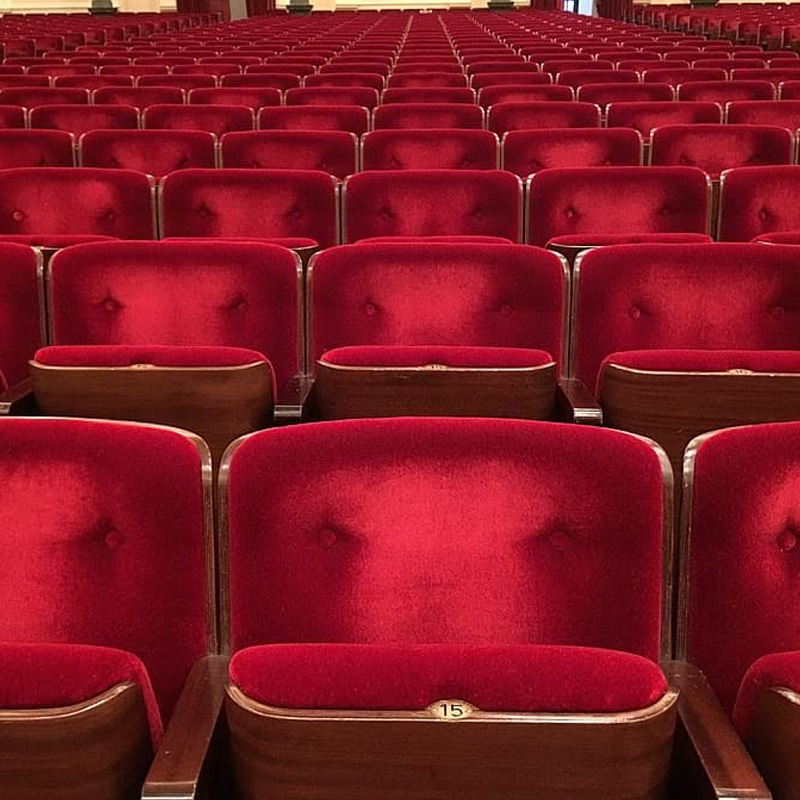
    ·       The occupancy of the cinemas/theatres/multiplexes shall not be more than 50 per cent of their total seating capacity. 

    ·       Seating arrangement inside the auditorium of the cinemas/theatres/multiplexes to be made in such a way that adequate physical distancing is maintained.

    ·       Seats that are “Not to be occupied” shall be marked as such during booking (for both online booking and at the box office sale of tickets). 

    (Note: The “Not to be occupied” seats inside cinemas/theatres/multiplexes should either be taped or marked with fluorescent markers to prevent people from occupying these seats so as to ensure adequate physical distancing at all times.) 

    Physical Distancing Norms 

    ·       Proper crowd management in the parking lots and outside the premises—duly following physical distancing norms shall be ensured.

    ·       Number of people in the elevators shall be restricted, duly maintaining physical distancing norms. 

    ·       Efforts shall be made to avoid overcrowding in the common areas, lobbies and washrooms during the intermission. Audience may be encouraged to avoid movement during the intermission. Longer intermissions may be used to allow audience seated in different rows of the auditorium to move in a staggered manner.

    Staggered Show Timings at Multiplexes 

    ·       Staggered show timings shall be followed for multiple screens to avoid crowding. 

    ·       The show commencement time, intermission period and finish time of a  show at any screen shall not overlap with the commencement time,  intermission period or finish time of a show at any other screen in a  multiplex. 

    Booking and Payments 

    ·       Digital no-contact transactions should be the most preferred mode for  issue/verification/payments for tickets, food, and beverages, etc. by using online bookings, use of e-wallets, QR code scanners, etc. 

    ·       Contact number shall be taken at the time of booking of tickets to facilitate contact tracing. 

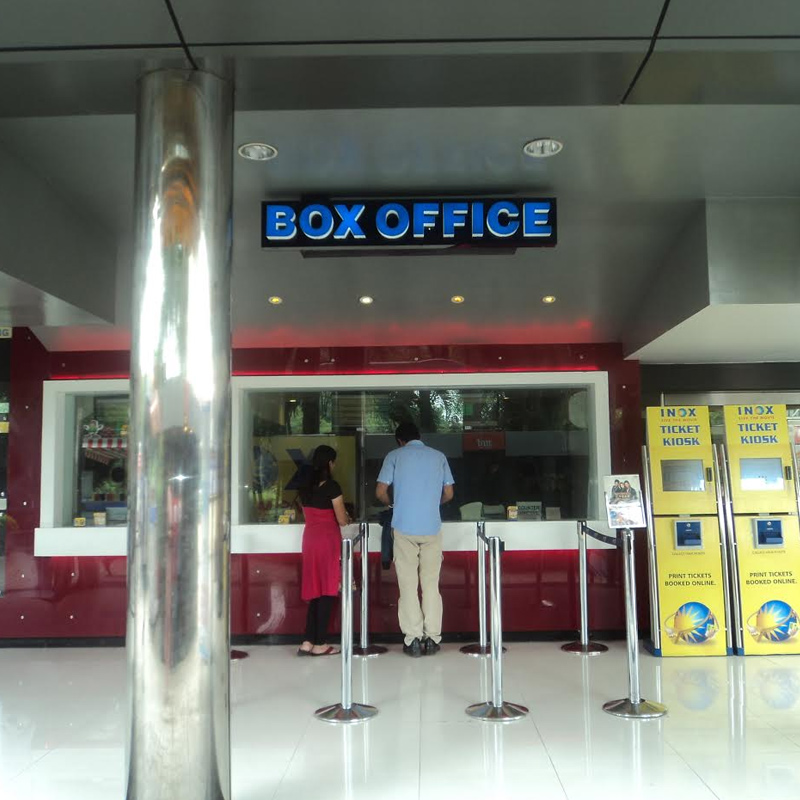
    ·       The purchase of tickets at the box office shall be open throughout the day and advance booking shall be allowed to avoid crowding at the sale counters. 

    ·       Sufficient number of counters at the box office shall be opened with  adequate physical distancing norms, to prevent crowding during physical booking of tickets. 

    ·       Floor markers shall be used for physical distancing during queue management at the box office. 

    Sanitization of the Premises 

    ·       Frequent sanitization of the entire premises, common facilities, and all  points which come into human contact, e.g. handles, railings, etc. shall be ensured.  

    ·       The cinemas/theatres/multiplexes auditorium shall be sanitized after every screening.  

    ·       Regular cleaning and disinfection of the box office, food and beverage  areas, employee and staff lockers, toilets, public areas, and back-office areas shall be ensured. 

    ·       Measures for the safety of sanitization staff such as adequate provisions for rational use of gloves, boots, masks, PPE, etc. shall be undertaken. 

    ·       Disinfection of the premises to be taken up if any person is found positive. 

    Staff Related Measures 

    ·       Wearing of face cover for staff is mandatory at all workplaces and  adequate stock of such face covers should be made available.

    ·       All employees who are at higher risk, i.e., older employees, pregnant employees, employees who have underlying medical conditions, to take extra precautions. They should preferably not be exposed to any front-line work requiring direct contact with the public. 

    ·       With a view to ensure safety at the workplace, employers on best-effort  basis should ensure that Aarogya Setu app is installed and updated by all employees their mobile phones. 

    ·       Communication and training of the staff on precautions related to COVID-19, respiratory hygiene, hand hygiene, etc. shall be carried out. 

    ·       Self-monitoring of health by all employees/staff and reporting any illness at the earliest shall be ensured.  

    Public Awareness 

    ·       Do’s and don’ts shall be communicated at prominent access points: Online sale points, digital tickets, public areas like lobbies, washrooms, etc. 

    ·       Public Service Announcements on wearing mask, observing physical  distancing and maintaining hand hygiene as well as specific announcements on the precautions and measures to be followed within and outside the premises shall be made before the screening, during intermission and at the end of the screening.  

    ·       Provisions must be made for display of Posters/standees/AV media on  preventive measures about COVID-19 prominently outside and inside of the venues. 

    Air-Conditioning/Cooling 

    For air-conditioning/ventilation, the guidelines of CPWD shall be followed which, inter alia, emphasizes the following: 

    ·       Temperature Setting of all air conditioning devices should be in the range of 24-30°C. 

    ·       Relative humidity should be in the range of 40-70 per cent. 

    ·       Re-circulation of air to be avoided to the extent possible. 

    ·       In-take of fresh air should be as much as possible. 

    ·       Cross ventilation should be adequate. 

    Anti-stigma Behaviour  

    COVID-19 related stigmatization or unruly behaviour shall be dealt with strictly by coordination between the auditorium manager(s) and the local authorities.

    Food and Beverage Area 

    ·       Show timings in the cinema halls to be staggered to ensure that intervals of different shows do not occur simultaneously. 

    ·       Customers shall be encouraged to use cinema apps/QR codes, etc. for ordering food as much as possible. 

    ·       Multiple sale counters in food and beverage area be made available wherever possible. 

    ·       One line systems to be followed using floor stickers to maintain physical distancing at every sale counter. 

    ·       Only packaged food and beverages shall be allowed. 

    ·       Delivery of food and beverage inside the hall/auditorium shall be prohibited. 

    ·       Management shall ensure observance of physical distancing and preventing crowds in the food and beverages area. 

    ·       Safe disposal of the food and beverage waste shall be ensured by the management of the premises. 

    The national directives for Covid2019 management and the relevant guidelines issued by the ministry of information & broadcasting, ministry of Health & Family Welfare, state governments, etc. shall be strictly complied with during all activities and operations. 
  • Industry remains cautiously optimistic with reopening of cinema halls

    Industry remains cautiously optimistic with reopening of cinema halls

    KOLKATA: For people across the film exhibition industry, the Unlock 5.0 guidelines have brought them a reason to smile. On Wednesday evening, the ministry of Home Affairs (MHA) allowed opening of cinema halls from 15 October with 50 per cent seating capacity. As the sector is back in business, the stakeholders rejoice the decision despite persisting challenges.

    The reopening of the cinema halls is a critical point for the industry that has been struggling in the face of the pandemic. Even before the nationwide lockdown started, cinema halls shut fearing the spread of Covid2019. Being out of the business for nearly seven months, the cinema owners have been asking for some respite for quite some time now. Last month, the Multiplex Association of India (MAI) appealed to the government to allow theatres to reopen “on an urgent basis”. The association has “wholeheartedly” welcomed the latest decision of the government. Back in June, a survey from Book My Show stated that 54 per cent of Indians want to catch their favourite films in cinemas within 15-90 days of opening up.

    “Millions of movie lovers, employees of the cinema exhibition sector, along with the entire film industry were eagerly awaiting this announcement. We would like to extend our heartfelt gratitude to the MHA and the ministry of Information and Broadcasting (MIB) for their support and guidance. We are committed to ensure a safe, secure and a hygienic cinema going experience for the movie lovers of our country, as always, we would continue to assign top-most priority to the health and well-being of our guests and employees,” MAI stated.

    The multiplex owners have expressed an equal amount of satisfaction around the announcement. Carnival Cinemas managing director PV Sunil said this is the right time to open up with Diwali around the corner. Sunil opined that 50 per cent capacity is better than what they had predicted would be allowed. The industry had been proposing a 50 per cent capacity. Most of the countries are also following the same norm. As of now, Carnival’s software is being modified in accordance with that so that the audience has a seamless experience while booking tickets online.

    “This is a welcome move by both the west Bengal government and the central government. So many people are associated with the industry, so much money is at stake, the industry was losing almost Rs 1,500 crore every month while it was shut. We are happy that we are able to restart and people will be able to go back to the practice of going to a movie theatre.” SVF Cinemas head Rudra Prosad Daw said, the movie chain which operates in east India.

    While a part of the industry has been worried about the seating capacity limits eating up their profits, Daw said that it is a good percentage in the initial phase. He added that average footfall over the year is on an average 32 per cent, although it is higher excluding the southern part. However, he noted that for big blockbuster releases, the footfall goes up to 80-90 per cent during the weekend which could be a cause of discomfort. Daw emphasised that safety would be put at highest priority, for both audience and staff members.

    Ambient director Deepak Kumar welcomed the move and said it would help cinema halls to be better prepared to welcome its consumers like most of the establishments have done that have resumed operations in a phased manner. According to him, cinema halls opening with 50 per cent seating capacity is a step in the right direction. Moreover, as the cinema halls are usually located within a mall, it would also add up to the footfall count. The decision will not just help the owners but also its ancillary.    

    The return of cinema halls to business came as a relief for the studios too which have halted many of their releases. Many of the OTT platforms may have opted for digital premiers giving some breather to the production houses but the number is too limited compared to overall pending movie slate.

    “The reopening of theatres is a relief for studios and theatre owners while once again offering audiences the unparalleled experience of watching movies on big screens. We are looking forward to entertaining audiences in this era of the “new normal”. The pandemic has led to a surge of content consumption across genres and platforms and this is a hugely encouraging indicator for content creators and providers. Cinema is and will always continue to remain an expression of creativity and imagination and we look forward to fostering a stronger bond with our audiences,” Eros Motion Pictures COO Shikha Kapur said.

    But now the eyes are at states like Maharashtra, which has decided to continue the shut down till 31 October. Elara Capital VP – research analyst (media) Karan Taurani said that pan India opening is expected around Diwali or latest by late November. Hence, he opined that large scale content or a big Hindi film is not to hit cinemas before December. SVF Cinema’s Daw also added that they have not heard from Bollywood yet while its parent company SVF and some other producers in west Bengal has already planned releases around Durga Puja.

    “We are cognisant of the prevalent environment and will monitor this on an ongoing basis to determine our release strategy. With regards to our content slate, Eros has an exciting line-up of films for which announcements will be made at an appropriate time,” Kapur added.

    Adding to concerns regarding the fresh releases, analysts believe impact on revenues coming from food and beverages (F&B) and advertising may last longer. “F&B will be under pressure as consumers may not be open to consuming food in cinemas; further, affordability levels too may negatively affect overall F&B spending vs pre-Covid times. Advertising revenue, which is too high margin in nature, will see a negative impact as occupancy in our view will remain restricted until active cases become negligible or a vaccine is launched,” Elara Capital said in a report.

    However, Ambient’s Kumar is optimistic. He stated brands would flock back to cinema halls as cinema is an efficient advertising medium which ensures 100 per cent captive audience. 

  • Unlock 5.0: Maharashtra to not go national way

    Unlock 5.0: Maharashtra to not go national way

    MUMBAI: Denizens of Maharashtra will have to wait a while before they start tasting the freedom of unlock 5.0 guidelines from 15 October announced by the ministry of home affairs (MHA) yesterday.  The MHA gave the go-ahead to organisers of B2B exhibitions, cinema halls, entertainment complexes, schools, and swimming pools to open outside containment zones. Additionally, cultural, religious and  other gatherings of 100 plus persons could also be allowed in certain areas.


    Even as the experiential and event sector was celebrating, the Maharashtra government announced its own set of guidelines which put a dampener on everyone’s spirits. According to these, exhibitions, theatres, swimming pools, large gatherings, schools,  are a no-no in the state until 31 October. The lockdown will continue in Maharashtra  until 31 October. However, the Udhav Thackeray led government has allowed tiffin delivery services to travel by local trains, permitted the opening up of hotels, restaurants and bars at 50 per cent of seating capacity.


    Mumbai, which probably contributes a large chunk of the movie box office, has a very active B2B exhibition schedule, will not be able get going in full swing. For that, we will have to wait for another day.


  • Cinema halls to be back in business from 15 October

    Cinema halls to be back in business from 15 October

    KOLKATA: After coping with the initial shock of Covid2019, the economy has started reviving slowly. With the new guidelines issued by the ministry of home affairs, the revival will speed up, especially in the cinema exhibition sector. The ministry has finally allowed the opening up of cinemas, theatres, multiplexes from 15 October onwards as part of its Unlock 5.0 plan.

    According to the guidelines released today, theatres can open with upto 50 per cent of their seating capacity being thrown to movie goers  outside containment zones. Standard operating procedures (SOPs) are to be released a little later by the ministry of information and broadcasting (MIB) which is the regualtor for the exhibition sector. 

    Along with that, exhibition halls, and entertainment parks have also been given the go-ahead to welcome customers.  States and union territories have been  given the flexibility to to permit gatherings of more than 100 people outside containment zones after 15 October and under social distancing rules.  This probably means B2B exhibitions, cultural, religious, political functions and other gatherings will be allowed from mid-October.  The department of commerce will issue SOPs for these. 

    Earlier this week, west Bengal chief minister Mamata Banerjee had  announced that cinema halls can start screening films for the public come 1 October.  It was the first state government to give the green signal to the beleaguered cinema exhibition sector.

    Since late March 2020, cinema halls have been shuttered leading to huge losses for cinema owners. Film producers and distirbutors , as an alternative, opted for OTT platforms to release their movies. As the move comes just before the festival season, it could be a breather for the industry which has been bleeding for the past six months.

    The experential and events sector is also heaving a sigh of releif with exhibitions, cultural gatherings being permitted. Estimates are that the industry has lost close to Rs 10,000 crore ever since the lockdown was announced late March 2020. And hundreds of thousands of event executives and managers have lost their jobs. With the lockdown measures  being pried open, the hope is that many of them will get back their jobs, with companies working to kick start consumption, and in the process the economy even more.  

  • It’s back to the movies in West Bengal from 1 October

    It’s back to the movies in West Bengal from 1 October

    MUMBAI: Cinema owners in west Bengal are heaving a sigh of relief. West Bengal chief minister Mamta Banerjee today announced that cinema halls can start screening films for the public come 1 October.  In the process, it has become the first state government to give the green signal to the beleaguered cinema exhibition sector which has been shut since March 2020 and has run up huge losses.

    However, screenings will be limited to 50 participants and cinema halls will have to follow strict safety protocols such as masks, sanitisation, physical distancing and other precautionary procedures. Along with film screenings, jatras, plays, open-air theatres, and shows related to music, dance and magic shows will also open from 1 October. Banerjee said the decision was taken as another step to take living to near normalcy.

    Bengali actors, the Eastern India Motion Pictures Association and the Multiplex Association of India  (MAI) – have repeatedly beseeched the state government to  give the sector the go ahead to start operating again. The state has reported 4,700-odd Covid related deaths with 244,000 getting infected and 214,000 recovering. Around 3,200 new cases are being recorded daily.

    Producers and distributors have been releasing films direct to OTT over the past few months in order to cut their losses. It’s quite probable that some of them will start looking at the big screen again.

    Commenting on the development, SVF co-founder and director Mahendra Soni said: “We are happy and welcome Didi’s announcement. This is a huge relief for the exhibition industry. Having said that to restart the actual business the re-opening has to happen at a national level otherwise there would difficulty running the theatre operations without new film releases. I am hoping to get some kind of announcement from central government too. "

    "As far as SVF Cinemas is concerned we are waiting for detailed guidelines and safety protocols before we decide on the opening date. We will open as soon as possible once we have the official notification along-with do’s and don’ts," he added.

    With West Bengal opening up movie theatres, will other state governments follow? The MAI, for one, is hoping they will, sooner than later.  

  • I&B ministry urges home ministry to reopen movie theatres from August

    I&B ministry urges home ministry to reopen movie theatres from August

    MUMBAI: Due to the Covid2019 pandemic, cinema halls across India were shut from March. While several businesses started operational work in Unlock phases 1.0 and 2.0, movie theatres are still waiting for the government's nod.

    Now, as India is approaching  Unlock 3.0, the information and broadcasting ministry (I&B) has passed a recommendation to the home ministry to allow movie theatres across the country to reopen from August.   

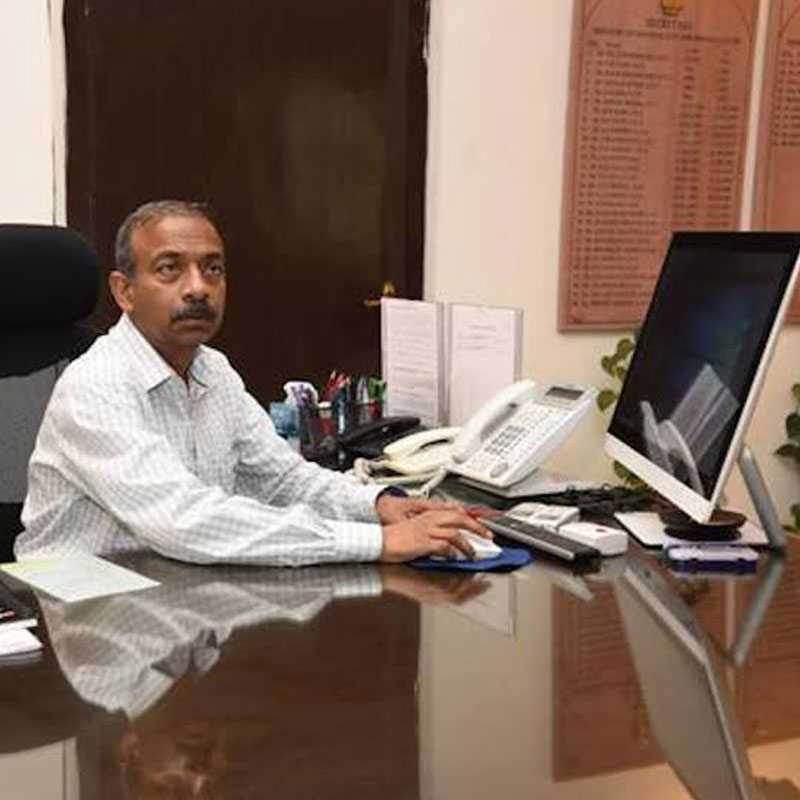
    I&B secretary Amit Khare highlighted this issue at a closed-door meeting with the CII media committee on 25 July. However, he also said that the final decision will be taken up by his counterpart in the ministry of home affairs Ajay Bhalla.  

    Khare, during the interaction, recommended that the cinema halls all over India may be allowed to reopen as early as 1 August  or at the latest around 31 August.

    In the meeting he also suggested an alternative formula to practice social distancing norms and other SOPs. As per his recommendations, in theatres the  seats of first and second row to be kept vacant. Theatres will have alternate seats in the first row and follow the same procedure throughout.

    Khare said that his ministry's recommendation takes into consideration the two metre social distancing norm, but tweaks it gently to two yards instead.

    Movie theatre owners present in the meeting showed objection to this idea and pointed out this idea is unwise and running theatres at 25 per cent capacity is worse than keeping cinema halls shut.

    The attendees at the meeting included media CEOs like NP Singh of Sony, Sam Balsara (Madison), Megha Tata, (Discovery), Gaurav Gandhi (Amazon Prime), Manish Maheshwari (Twitter), S Sivakumar (Bennett Coleman and Co Ltd), and K Madhavan, (Star & Disney) who is also the chairman of CII media committee.

  • Multiplex Association of India expresses displeasure over decision to keep cinemas, multiplexes shut in Unlock 2.0

    Multiplex Association of India expresses displeasure over decision to keep cinemas, multiplexes shut in Unlock 2.0

    MUMBAI: On 1 June the government of India entered into unlocking by phases. As per Unlock 2.0 guidelines, offices, high streets, markets and shopping malls, airlines are opened but there is no relief for multiplexes. It continues to be included in the prohibited activities list.

    Today, Multiplex Association of India (MAI), under the aegis of Federation of Indian Chambers of Commerce and Industry (FICCI) issued an official statement expressing their disappointment over central government’s decision to keep cinemas and multiplexes shut even when the other business is opened up.  

    “At a time when a significant part of the economy is being opened up, including domestic travel, offices, high street, markets, shopping complexes, etc., the Multiplex Association of India (MAI) feels dismayed that cinemas and multiplexes continue to remain in the list of prohibited activities under the central government’s Unlock 2.0 guidelines. The association finds it highly demotivating and disheartening when in fact, cinemas and multiplexes can become an example of how social distancing guidelines and crowd control can be best exercised in a safe and planned manner. As compared to the unorganised retail and shops that have been opened up, multiplexes and cinema are part of the organised sector, playing hosts to ‘revenue paying’ customers only and hence, in a better position to limit crowds unlike marketplaces and deploy all the mechanisms and guidelines for crowd control and social distancing,” MAI states in the note.

    The body highlighted that the multiplex industry in India employs more than 200,000 people directly. It also points out that it is the backbone of the Indian film industry accounting nearly 60 per cent of revenues of film business. And directly providing  livelihoods to more than a million people – right from the spot boys to makeup artists, musicians, designers, technicians and engineers to cinema employees to directors and actors.

    The body also said that the lockdown has brought the entire industry to a standstill with losses mounting every passing day. It mentions that an early decision to allow cinemas to open up will only help the mobilisation of resources in the film industry’s ecosystem and would lead to gradual resurrection.

    It said that even after opening up, they anticipate at least three to six months before things return anywhere close to normal.

    It further read, “On one hand where programming of new content will take some time to kick in; movie buffs on the other hand are expected to take a cautious approach before returning to cinemas. These are real challenges that the industry will have to overcome and we believe together, with the support of the government, we will be able to overcome them.”

    Globally, countries like France, Italy, Spain, Netherlands, Austria, Hong Kong, UAE, US, etc. and more recently Belgium and Malaysia have opened cinemas.

    To which the MAI said, “Many countries around the globe have opened up cinema halls and multiplexes to the public with implementation of the highest degree of safety protocols and have seen a warm response by audiences. In effect, more than 20 major cinema markets around the world have started operating. MAI is of the firm belief that, there must be a start and the unlocking of cinemas in non-containment zones across India should be done post haste – there must be a beginning and an opportunity must be given to us, just like some of the other sectors.”

  • Cinemas stare at empty halls, slow recovery post Covid2019

    Cinemas stare at empty halls, slow recovery post Covid2019

    NEW DELHI: The movie industry has found itself cornered for the first time in history. Cinema halls stayed shuttered since March and it might take a while for the footfall to get back to normal. Meanwhile, business revenue has come to a grinding halt and producers are keen on releasing films on OTT platforms.

    Amitabh Bachchan and Ayushmann Khurrana's Gulabo Sitabo, Vidya Balan's Shakuntala Devi are premiering on Amazon Prime Video whereas Anurag Kashyap's movie, Choked: Paisa Bolta Hai has released on Netflix. Even regional players are releasing their content on digital platforms.

    Until now, movies usually arrive on video streaming platforms only after running in cinemas for a few weeks. As per media reports, around 10,000 single-screen and 3000 multiplexes are closed and this shutdown is estimated to cost the Indian film industry Rs 984 crore in box office revenue.

    As multiplex revenues have become null and producers are switching to video streaming platforms as an alternative option, the theatre industry is anxious about how to deal with the dire situation.

    INOX Leisure Ltd CEO Alok Tandon says, “In these times of an unparalleled crisis, we want the entire ecosystem to show solidarity. We have also urged the producers and studios to wait for the theatres to resume operations and follow the globally prevalent cinematic windowing pattern as it has done wonders in terms of revenues for all the stakeholders, and allows the creators an opportunity to extract the best from all available mediums.”

    He also shares, “The theatrical run has its own significance in the cinematic value chain as it remains the phase which generates the maximum revenues for the content creator. Besides fetching huge volumes of audiences, cinemas also contribute massively towards the experience economy."

    However, even if the government eases the restrictions on the opening of theatres, there are lower chances of high footfalls in the coming months, as many people will not take the risk of going to movie theatres.

    Tandon adds, “We are looking at the post-Covid2019 phase as another evolution with new processes and protocols and we are sure that we will take it into our stride. We are looking at the new normal soon going back to the old normal. Keeping in mind the insistence on social distancing, we will promote private screening as a consumer offering. We also look to leverage our massively successful loyalty program to innovate and curate customised offers which will
    help us to bring them back to cinemas.”

    Editor Complete Cinema and film trade analyst Atul Mohan says, “In my opinion, the first threat OTT brings is to GECs than theatres. Nothing can replace the charm of going to cinemas and OTT is dependent on hits at the cinemas. How many can afford to buy subscriptions from different players? We have so many satellite channels available at one subscription."

    Upon asking, how he sees the situation evolving in the long run, he explains, “The situation is such that many can't hold their investments. The OTT players have deep pockets and hence, can afford to acquire some titles at a premium but even they have their limitations and budgets. This is just a matter of time but in the long run, every actor and producer wants their product to be showcased in cinemas.”

    However, in this situation, OTT giants i.e. Netflix and Amazon have geared up to maintain their position and lure consumers through different genres of content. But, till when? Looking at the scenario, there’s a big question of when shooting will resume. 

    UFO Moviez JMD Kapil Agarwal shares, “India releases almost 140-150 movies in 22 languages in a month, a total of 1700 movies per year. Now, barely there are
    100 movies which are ready, perhaps. The industry has only one month worth of content. If it will be released in the starting months, there will be a crunch of content.”

    According to Agarwal, in the short run, it will hurt the exhibition industry but in the long run, there will be no impact, because films are made for big screens. 

    "Producers prefer to release their content on big screens instead of OTT platforms but people who have invested money are also under pressure and then the uncertainty of opening cinemas is also a challenge, so, they will opt for video platforms but that’s very temporary. The occupancy may go down to 30 -35 per cent and once cinemas open, it will take three to four months to get back to position,” he adds.

    Most cinema chains are expecting to recover by the last quarter of the year. Time will tell if they can resume operations by then.

  • Inox predicts suboptimal operations in future due to lower discretionary spending

    Inox predicts suboptimal operations in future due to lower discretionary spending

    MUMBAI: Multiplex chain operator Inox Leisure Ltd was amongst movie chains that were badly hit due to the pandemic. Nearly three months later there is no sign of when cinema halls will resume functioning. Inox said, in a BSE filing, that to ensure smooth functioning of operations, Inox has cut costs across all the functions and departments. 

    It has strengthened engagement with business partners, developers and distributors and producers. It requested the state and central government for support while invested more time in planning in order to utilise its resources better resumption of operations.

    The company has increased liquidity by adding additional lines of funding through short/ long term debts. The company's management believes that these certain measures ensure that the company has sufficient liquidity to fund the business operations for at least the next six months and will further add liquidity by the additional term debts from banks. For now, it has enough liquidity to continue its operations and does not expect to face any liquidity crunch.

    INOX believes that normalcy could be gradually restored during the financial year ending 31 March 2021. Gradually, over time, it will be able to resume and continue its operations for the foreseeable future.  However, it will be unable to operate at optimal capacity even in the future, considering social distancing norms imposed by the government.

    Inox highlights that it has adhered to all recommended precautions/guidelines in its operations, which includes sanitisation and hygiene, providing work from home facility to all employees, maximising audio and video-conferencing and minimising contact. It also closed employee travel and followed all government directions on the subject. However, it points out that once the lockdown ends, the company will be able to open all its offices, cinema halls adhering to the guidelines as specified by the government and will comply with all safety measures to safeguard its stakeholders from Covid2019.

    Its worry is that there could be future impact on its operations if there is a prolonged lockdown situation, inability to operate at optimal capacity due to distancing norms and customers’ change in priorities and postponing discretionary spending.

    Cinema chains tend to have added products and services that go along with its main movie offering. Inox expects there to be pent-up demand for its products and services but it could estimate the amount. For Q4 2020, it saw, loss after tax of Rs 2 crore.

    Apart from this, the company has performed a sensitivity analysis on the assumptions used and based on economic information and assessment, with its help the company expects to recover the carrying amount of these assets. The report also mentions that it will continue to closely monitor any material changes to future economic conditions.

  • How to bring audience back to cinema halls?

    How to bring audience back to cinema halls?

    MUMBAI: The Covid2019 pandemic has ravaged the film and exhibition sectors the most. With the aviation industry and restaurant services opening up soon it would be interesting to see how cinemas in India are prepping. Also, there’s nothing for this sector in the packages announced by prime minister Narendra Modi. There has been some ease in rental and electricity charges but it varies from state to state. These are the pertinent issues that need to be addressed. In a virtual conference hosted by UFO Moviez India Limited under the aegis of FICCI, industry stakeholders discussed the various issues that have been afflicting the film and exhibition segment, the way forward, the precautions to be taken at the cinema halls, etc.  

    The main area of concern is about the standard operating procedures that will be followed by cinema halls once things are back to normalcy.

    Due to panic created by the Covid2019 outbreak, people are not willing to come to theatres. At the same time, there is a severe OTT fatigue among viewers as well. So the question arises: What measures can be taken to regain the confidence of the audiences and restore the trust of the cinema-going audience?

    INOX Leisure Limited CEO Alok Tandon said: “Our first objective is to bring trust among audiences. At INOX, we have divided the entire thing in three buckets. Pre-resumption, post-resumption and lastly the visit of audiences. We are taking various processes and initiatives to ensure they feel safe once they go home. These are the aspects we are currently working on.”

    About the social distancing and hygiene measures, Tandon said that the company is looking at how guests don’t crowd the cinema halls and maintain specific distance. Another important thing is the allocation of seats. They are also working on movie schedules and timings to avoid gathering during entry, intermission, exit points, lobby and rest rooms. Where safety and hygiene measures are concerned Tandon said that a lot of man hours went into ensuring guests are safe; they are encouraging people to use paperless transactions at every counter. They are also using thermal guns to check temperature. There will be dedicated hand sanitiser stations installed at theatres. There are SOPs in place to disinfect counters and surfaces. PPE kits will also be introduced in case people are interested to buy them. As far as food supplies are concerned, multiplex chains will bring single-use disposal bags, to avoid reuse of cutlery and crockery.

    “Cinema halls have many similarities to the hospitality, aviation, restaurant and retail sectors. These are unseen times; nobody has a perfect formula for this. We all can learn a lot from each other in this crisis. In this pandemic we have been closely observing what other sectors are doing so that we can also implement that,” he added.

    The Covid2019 lockdown is choking all the production activities across the nation. UFO Moviez India Limited joint MD Kapil Agarwal raised a question if the film exhibition sector and producer’s guild can work together and learn from each other.

    Answering this question, film producer and president Film and Television Producers Guild of India Siddharth Roy Kapur said: “We are looking at exactly the same measures what other sectors are doing. Unfortunately, shoot resumption is in the same lines with cinema resumption. It is the last thing to be started. The biggest issue for us is if there is going to be some sort of curtailment on the number of people you can congregate at the sets. Especially when it comes to film units it is larger as compared to TV units. But the challenge is you need to have a bare minimum number of people on the set to make it productive.”

    Agarwal feels that the capacity issue is not entirely going to affect the film fraternity as the majority of the people are working from home. The concept of weekend shows faring better than weekdays will not make sense now. He thinks that because of this the negative impact will be neutralised.

    “I think a lot of producers and distributors will get signals from how these films are performing at box-offices. When the first lot of people come to cinemas, it is then important for cinema halls to give an impression that we have got our acts together,” said PVR Pictures Limited CEO and chief business planning & strategy PVR Pictures Kamal Gianchandani.

    There are very few movies ready in different languages. Answering whether there is a strong need of releasing movies in all different languages, Telugu film producer studio owner, exhibitor and distributor Daggubati Suresh Babu says, “This idea of dubbing films across languages from Telugu to Hindi or Hindi to Bengali should be done not only in Covid times but post-Covid era also. A few films like Bahubali or Robot have been working like that. There is a huge scope for a lot of regional movies to reach the Hindi market. Usually, the films that do well in dubbing are the ones that are not provided by local films. Now Vijay’s movie Master will have a very big release. Now, is he willing to wait till theatres open up? It is something we need to look at.”

    Daggubati also mentioned about his meeting with Andhra Pradesh chief minister Chandrababu Naidu. He said that the government is very positive about re-starting the shooting. He also pointed that within a week they will get intimation from the CM’s office about resuming the shoot with restrictions. After that, they will explore the possibility of cinema theatres opening up.

    Follow Tellychakkar for the consumer facing news & entertainment