Tag: cinema halls

  • Cinema Halls to Smartphones: The Shift in Indian Entertainment Consumption

    Cinema Halls to Smartphones: The Shift in Indian Entertainment Consumption

    India has long been among the world’s biggest film markets in terms of ticket sales, number of films produced, and theatre infrastructure. Over the past decade, the rise of digital streaming, cheaper data, and changing consumer behavior has pushed for a rebalancing.

    According to a recent EY research, the Indian media and entertainment (M&E) industry increased by 3.3% in 2024 and was valued at approximately INR 2.5 trillion (US$29.4 billion).

    Within that, digital media is the largest segment, and contributed around 32% of total revenues. In contrast, traditional media, like TV, print, and radio, saw drops in both advertising and subscription income.

    The Legacy of Cinema Halls

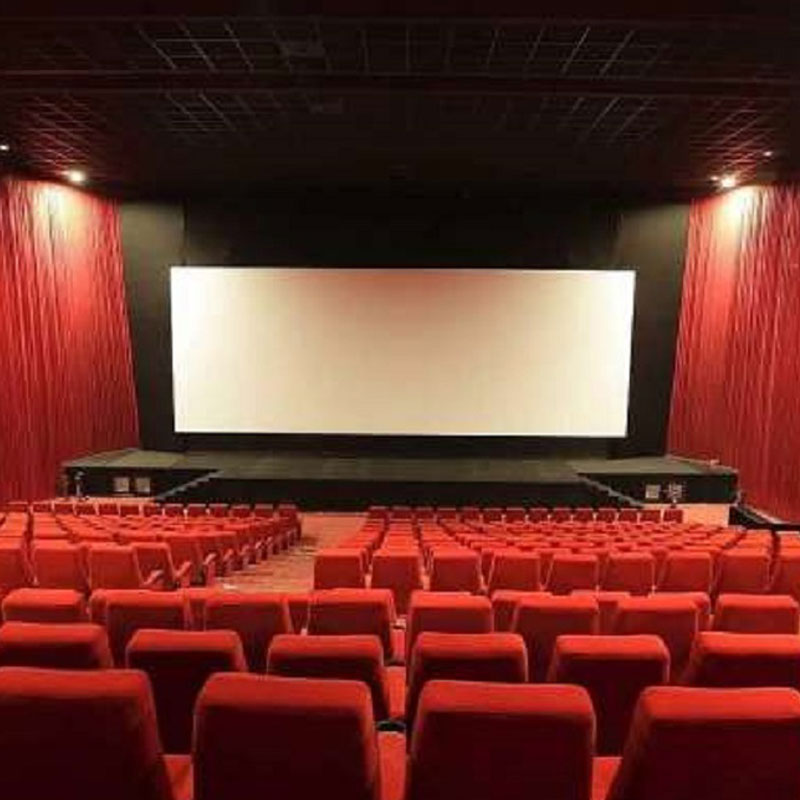
    For so long, the cinema has been the centrepiece of Indian entertainment. Big festivals, major star vehicles, and regional cinema in language hubs built the live-theatre experience. It was in the 2000s and 2010s when multiplexes in large cities boomed. Single screens remained relevant in smaller towns, and cinema halls generated major portions of film revenues.

    However, it can’t be denied that experiencing entertainment at the cinema can be a bit pricey. The cost of theatre tickets, travel, and supplementary expenses (food, parking) slows attendance for many films. Some mid-budget or smaller regional films struggle to recoup costs via theatrical alone. The impact of COVID-19 also forced many delayed releases or direct-to-OTT experiments, which in turn raised questions about the sustainability of cinema as the only route.

    Rise of OTT and Mobile-First Viewing

    India’s OTT universe in 2025 stands at 601.2 million people who watched at least one streamed or online video in the past month. That accounts for about 41.1% of the population.  
    Of those, 148.2 million are active paid OTT subscriptions (including through telecom bundles and OTT aggregators).

    Connected TV usage has surged: the number of Connected TV users is now 129.2 million, up 87% year-on-year.  This shift shows streaming is no longer confined to phones only, as viewers want larger screens and living room experiences as well.

    Data costs have fallen, smartphones have become ubiquitous, and broadband penetration has improved in urban and rural areas alike. Streaming platforms like Netflix, Amazon Prime Video, Disney+ Hotstar (now JioHotstar), Zee5, SonyLIV, and many regional players have scaled voice, subtitle, language localisation, and pricing to reach broader audiences.

    Sports-related platforms or communities, both legal streaming and fan engagement spaces, show another angle of audience shift. For instance, users who follow cricket or other live sports not only stream matches on OTT platforms but also use various digital forums and social media platforms.

    10CRIC and other similar websites are some of those online spaces where fans get access to the latest odds, team stats, and more. That reflects the way entertainment and live content spill over into related digital spaces, though the core viewing remains on OTT and smart devices.

    Regional Content and Language Diversity

    Regional language content is a key driver in this transformation. Ormax Media reports show that in 2024, the number of streaming originals in India dropped by about 18% compared to the previous year, after peaking in 2023. Still among originals, fiction series dominate (around 70% of OTT originals), and Hindi remains the dominant language with 65%share.

    Other languages, such as Bengali, Telugu, and Tamil, have growing representation. Platforms focused on regional content (e.g., those devoted to one language) are just really seeing stronger engagement in their markets.

    Viewers increasingly prefer content in local languages, with dubbed or subtitled versions helping content move across state borders. Films originally released in theatres are seeing extended life on OTT in regional markets.

    Economics: Theatrical vs OTT

    Releasing a film in theatres is expensive. Studios spend on distribution, digital or print delivery, big marketing campaigns, and then share a large cut with theatre owners. If a film doesn’t get a strong opening weekend, it often struggles to recover those costs.

    An OTT release works differently. Platforms can cut down distribution expenses, reach audiences across cities and smaller towns at once, and earn through subscriptions or ads. This makes it a safer option for mid-budget or niche films that may not draw big crowds in cinemas.

    Subscription Video On Demand (SVOD) and Advertising Video On Demand (AVOD) are also coexisting. Many platforms give both options. There is also bundling through telecom providers. Some films release theatrically and land on OTT after a window. Some would have direct-to-OTT release strategies, especially for smaller budgets or niche content.

    Technology, Platforms, and Interactivity

    Better mobile networks (4G, growing 5G), cheaper data, improved video compression, and smart TVs all push streaming quality up. Platform features like offline downloads, profiles, parental controls, and multi-device sync help retain users.

    Interactivity now matters. Live trivia, polls during shows, social features built into streaming apps, and second-screen experiences. Streaming of sports or live events gets further amplified by chat, fan forums, commentary, and behind-the-scenes clips.

    Hybrid content consumption (combining cinema and streaming) is becoming standard. Consumers may watch big action or festival films in theatres, but a large part of their weekly content diet comes from OTT. As streaming grows, the role of theatres adjusts.

    What the Future Looks Like

    Growth projections are strong, and the FICCI-EY report estimates the M&E sector will grow 7.2% in 2025. So, that’s about INR 2.7 trillion at a CAGR of about 7% to reach around INR 3.1 trillion by 2027.

    OTT audience and adoption are also expected to increase, though growth rates might moderate. Connected TV adoption will likely continue its sharp rise.

    However, platforms will still need to combine technology investment, pricing innovation, content localisation, and strong marketing to retain audience loyalty. Those who will are the ones likely to remain relevant for a long time. 

    Disclaimer:This article has been published without the journalistic or editorial involvement of Indiantelevision.com. IndianTelevision.com Group, or any of its affiliated websites. IndianTelevision.com Group does not endorse, subscribe to, or take responsibility for the content, opinions, or views expressed herein.

    Readers are further advised that Online Casino, Betting, Cryptocurrency products, Financial Investments/Engagements, NFTs, and products or calls-to-action related to Health, Booking, Wellness, and Food are largely unregulated and carry significant risk. There may be no regulatory protections or avenues for recourse in the event of financial losses or health-related risks arising from engagement with such products or services.

    IndianTelevision.com Group expressly disclaims any responsibility or liability for the information, views, announcements, declarations, or affirmations presented in this article. By choosing to proceed, the reader acknowledges and agrees that they do so at their own discretion and risk, and expressly absolve indiantelevision.com (IndianTelevision.com Group) from any potential legal claims, liabilities, or actions.

    The content provided is solely for informational and awareness purposes.
     

  • Seven in ten urban Indians claim their frequency of going to the cinema has decreased: YouGuv

    Seven in ten urban Indians claim their frequency of going to the cinema has decreased: YouGuv

    Mumbai: New YouGov data reveals where people are watching new films and how the shift to streaming platforms may affect cinema attendance in a post-covid world.

    When asked about the change in their cinema viewing habits since the pandemic, nearly seven in ten urban Indians (69 per cent) agreed with the statement, “My frequency of going to the cinema/theatre has decreased.”

    According to data, 44 per cent of people stop visiting the cinema hall because of  streaming films online, followed by 42 per cent of people’s preference to watch films at home. Nearly a third think going to a cinema is expensive or feel there aren’t any films worth going to the cinema are 32 per cent each. North Indians were more likely to say they do not go to cinemas because of the flexibility of streaming films online. Similarly, the 40+ group prefers to watch films at home.

    When asked about the medium they have used most often to watch newly released films in the past six months, OTT platforms emerged as the most popular choice for nearly half of urban Indians. A fifth (22 per cent) said they watched new movies on TV and only 16 per cent went to the cinema or theatre to watch films during this period.

    Looking at the data by age, 57 per cent between age group of 18-29 years were most likely to watch new films on OTT/streaming platforms in the past six months, while 40+ adults than others were more likely to watch them on TV (26 per cent) or in theatres (19 per cent). Notably, residents in South India were more likely to say they watched newly released films in theatres as compared to residents of other regions (22 per cent).

    Even though OTT has gained precedence, not all hope is lost for theatres. YouGov data shows a quarter of urban Indians (26 per cent) said their frequency of visiting theatres has increased since the pandemic, with young adults between 18 and 29 years old echoing this sentiment most strongly.

    An overview of people’s cinema viewing habits shows one in six urban Indians (15 per cent) said they go to a theatre to watch a film at least once a week, while eight per cent do so once a fortnight. Just under a quarter visit a theatre at least once a month (23 per cent), and nearly half visit it once every two-three months or longer than that. This behaviour is similar across all age groups.

    Past behaviour shows cinema outings in the last 12 months have mostly been with friends or family. At 61 per cent, Bollywood films emerged as the most popular kind of cinema among people, followed by Hollywood or regional South Indian films at 45 per cent each.

    When it comes to film genres, urban Indians prefer comedy (67 per cent), followed by action (54 per cent), and thrillers (51 per cent). Specifically, thinking about how they like to watch these genres, a majority (55 per cent) said they enjoy watching comedy films on OTT or streaming platforms. 19 per cent prefer watching them in a theatre, and 26 per cent prefer both the options. The higher preference for OTT platforms is uniform across genres, except for action films, where people were more likely to say they liked watching these films in theatres than on OTT platforms.

    Commenting on the research, YouGov India GM Deepa Bhatia said, “After two years of the pandemic, theatres in India finally opened to full capacity this year. However, the rising popularity of streaming platforms remains a challenge, discouraging people to step out of their homes.”

    “While cost and home viewing habits keep many people away from the movies, it should be remembered that people go to the cinema to enjoy the experience. It is important for brands to understand the changing cinema habits and behaviours of urban Indians to re-imagine their marketing strategies and prepare themselves for this ever evolving relationship between films and consumers,” added Bhatia.

    Data was collected online among 1,004 urban Indian respondents in September 2022 by YouGov’s Omnibus using its panel of over 20 million people worldwide.

  • PVR Q3 results: Revenue surges 5.3x QoQ, 36% below pre-Covid levels

    PVR Q3 results: Revenue surges 5.3x QoQ, 36% below pre-Covid levels

    Mumbai: Multiplex chain PVR has reported a revenue surge of 5.3 times QoQ and approximately nine times YoY to Rs 5.9 billion in the third quarter ending 31 December 2021. 

    Occupancies remained soft at eight per cent, but saw a strong improvement to nearly pre-Covid levels by the end of Q3’FY2022. This was offset by a 26 per cent ATP (Average Ticket Price) increase to Rs 255. Spends/head (SPH) remained constant at Rs 128, PVR said in a statement.

    The total screen count improved to 860 from 855 in Q2’FY2022. PVR added five screens in Q3’FY2022 and 40, or five per cent, since the pre-Covid (Q3’FY2020) period. The company’s net loss narrowed down to Rs 220 million.

    The business has been impacted by the third Covid-19 wave. However, as releases in February and March 2022 have not been postponed, a quick recovery is expected once the situation normalises, said the company.

    At present, multiplexes have an exclusive window of four weeks. This is expected to return to the pre-Covid standard of eight weeks after March, it added.

    Currently, PVR is focusing on the completion of screens that are in the pipeline. It expects to resume the pace of additions (80-100 screens pre-Covid) as soon as normalcy returns.

  • Omicron Surge: Cinema halls, multiplexes shut in Delhi, ‘Jersey’ release put on hold

    Omicron Surge: Cinema halls, multiplexes shut in Delhi, ‘Jersey’ release put on hold

    Mumbai: Just when the theatrical business was limping back to normal, a sudden surge in Covid-19 cases has once again put a halt to the recovery plans, with fresh restrictions across several states. On Tuesday, the Delhi Disaster Management Authority (DDMA) announced the closure of cinema halls and multiplexes across the national capital with immediate effect.

    The decision was taken after Delhi recorded the highest single-day spike in Covid-19 cases since 9 June. As many as 331 fresh cases and one death was reported on Tuesday, while the positivity rate mounted to 0.68 per cent.

    Soon after the announcement, the makers of actor Shahid Kapoor starrer “Jersey” issued a statement regarding their decision to postpone the release of the film to a later date. The sports drama based on the life of a middle-aged cricketer who returns to the game for the love of his child was set to be released in theatres on 31 December.

    “In view of the current circumstances and new Covid guidelines, we have decided to postpone the theatrical release of our film ‘Jersey.’ We have received immense love from you all so far and want to thank you all for everything. Until then everyone please stay safe and healthy, and wishing you all the best for the new year ahead,” said the makers in a statement.

    Apart from cinemas, and theatres, schools, colleges as well as gyms have been directed to close with immediate effect. The restrictions have also been put on the functioning of shops, and public transport as a yellow alert was sounded under the Graded Response Action Plan (GRAP) in Delhi. Under the ‘yellow’ alert restrictions, shops and establishments of non-essential goods and services and malls will open based on odd-even formula from 10 a.m to 8 p.m.

    Also, the Delhi Metro will run at 50 per cent of its seating capacity, and buses too will ply at 50 per cent of capacity with exempted category passengers. Private offices can function with up to 50 per cent of the staff. “As the Covid-19 positivity rate has been above 0.5 per cent for the past few days, we are enforcing Level-I (Yellow alert) of the Graded Response Action Plan. A detailed order on restrictions to be implemented will be released soon,” said Delhi CM Arvind Kejriwal, adding that the decision was taken after a high-level meeting on Tuesday.

    According to the health ministry, India has logged 653 cases of the Omicron variant of coronavirus across 21 states and UTs so far out of which 186 people have recovered or migrated. Maharashtra recorded the maximum number of 167 cases followed by Delhi at 165, Kerala 57, Telangana 55, Gujarat 49 and Rajasthan 46.

  • Cinema is not going to be an easy sell: Inox’s Anand Vishal on advertisers returning

    Cinema is not going to be an easy sell: Inox’s Anand Vishal on advertisers returning

    Mumbai: After nearly 18 months of strict lockdowns and intermittent breathers, the opening of theatres in Maharashtra signals the much-awaited revival of the industry that was hit hardest among all entertainment media. With an estimated 146 million people returning to the theatres, advertiser interest in the medium is also witnessing healthy revival, albeit slowly.

    For the next three months starting Diwali, an impressive line-up of movies including ‘Sooryavanshi’, ‘Bunty aur Babli 2’, ‘Satyamev Jayate 2’, ‘83 The Film’, ‘Jersey’, ‘Tadap’, ‘Chandigarh Kare Aashiqui’, ‘No Means No’, ‘Annaatthe’, ‘777 Charlie’, ‘Pushpa : The Rise’, ‘Antim: The Final Truth’ and ‘Bhavai’ awaits the audiences in 2021 alone.

    Inox Leisure Ltd chief sales and revenue officer Anand Vishal tells us that the continuous flow of content from Diwali will ensure the return of advertisers to the cinema, however, it could take anywhere between three to six months for the volumes and rates to reach pre-covid levels.

    In-cinema advertising contributes around 11-12 per cent to the overall revenue pie for Inox. Vishal is expecting a 25-30 per cent drop in rates from what he was operating at earlier. As regards volumes, in a typical week like ‘Sooryavanshi’, there used to be nearly 100-125 advertisers on board, nationally. He anticipates 75-80 per cent of them to return for the big Diwali release on 5 November.

    Even as the situation plays out, Vishal says that numbers are not his primary concern at present. The focus is on bringing advertisers who have been away from the medium due to the lack of either content or a proper timing of the release, back to it.

    “The strength of Cinema as an advertising medium is that it offers a large and relevant audience for brands across categories. Unlike TV where there is a lot of refraction or variance happening, the definite and premium price-points at which we operate are what get brands interested in us. It’s just a matter of time until advertisers taste the success of this medium once again. In the meanwhile, though, Cinema is not going to be an easy sell,” he avers.

    Given the uncertainty that prevails around the number of footfalls in theatres, brands, even though enthusiastic about the reopening, are treading with caution. While all sorts of pricing negotiations continue to happen, Vishal informs that Inox is encouraging marketers to opt for the CPC or Cost Per Contact model wherein the advertiser pays for the number of admits at a fixed rate per person.

    “The numbers of the audience may have gone done, but the quality hasn’t, and therefore we believe this model is best suited and fair for both parties. The approach is working well with the premium, regular clients who are well-acquainted with the medium, but a lot of small and medium budget clients do not understand this model, and that’s where rate negotiations come into the picture. That being said, we are carefully judging where we need to stop. In the process of making informed decisions, we might have to let people go, but we are definitely not selling ourselves short,” he asserts.

    Among the brands that are proactively returning are the likes of Manyavar, Siyaram’s, Allen Solly, Lux, and OnePlus that share a long association with Cinemas, being present on all screens throughout the year. Others that advertise five-six times in a year are the ones that the multiplex brand is making an effort to reach out to for the volumes.

    For ‘No Time to Die’ Inox roped in two new luxury clients, namely, Tata CLiQ and NDC (Natural Diamond Council). The rise of new-age, online/tech advertisers that was fuelled by the pandemic has been media agnostic. Vishal shares that he is “looking forward to a good 15-20 per cent advertisers from this space, which includes e-commerce, edtech, and cryptocurrency brands, pushing revenues for Inox”. 

  • Covid second wave pushes multiplexes’ recovery to next fiscal: CRISIL

    Covid second wave pushes multiplexes’ recovery to next fiscal: CRISIL

    New Delhi: Multiplexes across the country are set to log operating losses for the second straight fiscal as localised lockdowns, night curfews and other restrictions to contain the resurgence of Covid2019 infections will keep occupancies low for the next few months, according to CRISIL ratings.

    The film exhibition sector was one of the worst impacted by the lockdown in 2020, being the first to lower their shutters in March, and among the last to resume operations, in October.

    Occupancy had started improving post-resumption, and was expected to reach 18-22 per cent – the breakeven level in terms of operating profit – in the current quarter. Sequentially, occupancy doubled to 12-13 per cent last quarter, and was seen climbing anew to 22-25 per cent in south India.

    However, the sudden spike in Covid2019 cases in April will send that estimate askew and defer recovery to the second half of this fiscal, said CRISIL in its latest report.

    “Our base case assumes average occupancy of 10-12 per cent in the first half of this fiscal and 20-22 per cent in the second half, when restrictions on occupancy and fears of infection will hopefully recede. A full recovery is seen only in fiscal 2023,” said CRISIL Ratings director Nitesh Jain. 

    Temporary closures in many states, especially Maharashtra, will push back new film releases, at least the big-ticket ones, to the second quarter, noted Jain. 

    “Maharashtra is a crucial market for cinema, accounting for a fifth of the total screens in India. The resurgence of pandemic has created many uncertainties, and restrictions could continue for longer, leading to deferment of film releases on big screens and continuation of cash burn for multiplexes,” he elaborated.

    In the milieu, CRISIL-rated multiplex operators, which account for almost half of the industry’s revenue, are expected to log cash losses this fiscal, too. They had bled roughly Rs 900 crore in fiscal 2021, compared with a cash profit of around Rs 785 crore in fiscal 2020.

    Last fiscal, multiplex operators undertook steep cost controls, including deferring maintenance and major capex outlays. They also raised Rs 1,350 crore equity to fund losses and augment liquidity. The current liquidity could comfortably cover operating expenses and debt servicing of these players for the next four to six months.

    But with the sudden turnaround in the state of affairs, cost cutting measures, including deferring maintenance and major capex outlays, are likely to continue even this fiscal. Their ability to keep a leash on fixed cost will, however, be a monitorable, opined CRISIL Ratings associate director Rakshit Kachhal. 

    “Lease rentals is the largest fixed cost and they could save 70-75 per cent (~Rs 800 crore) from waiver of rentals in the last fiscal. Their ability to renegotiate rentals for the current fiscal will be crucial to contain the losses. Besides cost controls, the ability to raise funds in a timely manner will bear watching,” he added.

    The spread of infections, the success of the vaccination drive, and the return of moviegoers will be monitorables, too, as will be the players’ ability to raise funds in a timely manner. But this is only when one sets aside people’s fear of closed spaces.

    According to CRISIL, since multiplexes are among the few out-of-home entertainment options in India, occupancy should bounce back once the fear of infection recedes and the pace of vaccination picks up.

    Besides, big-budget movies, which are temporarily being deferred, are unlikely to be released on over-the-top (OTT) platforms, given that multiplexes contribute more than 50 per cent of the total box office collection. Thus, exhibition of big-budget movies leading to recovery in occupancy should script the recovery for multiplexes, currently seen in second-half of this fiscal.

  • Weekend curfew in Delhi, cinema halls to operate with only 30 per cent occupancy

    Weekend curfew in Delhi, cinema halls to operate with only 30 per cent occupancy

    New Delhi : After witnessing the highest ever single-day spike in the number of Covid2019 cases, the Delhi government has decided to impose a strict weekend curfew in the national capital, starting 10 pm on Friday.

    The AAP government has also ordered all the malls, auditoriums and spas to shut shop from 16 April till further orders. Cinema halls, however, have been allowed to remain open during the weekdays, but can function with only 30 per cent occupancy.

    "I had a meeting with the L-G. We have decided to impose weekend curfew in Delhi. This is because people generally go out for work on weekdays and entertainment on weekends. In order to break the chain we are imposing a weekend curfew, exempting essential services," said Delhi chief minister Arvind Kejriwal on Thursday.

    According to the new restrictions, no dine-in options will be allowed in restaurants and eateries and only home deliveries will be permitted. The weekend curfew will start at 10 pm on Friday to 6 am on Monday. However, all essential services will remain functional.

    A night curfew has also been imposed in Noida and Ghaziabad Friday onwards.

    The decision comes two days after the Maharashtra government announced strict restrictions for the next two weeks in wake of the alarming surge in the number of infections. However, unlike Delhi, Maharashtra has also closed all movie theatres as well. All television and film shoots have been shut down till 1 May.

    The country is reeling under a severe second wave of the novel Coronavirus, with the number of caseloads surpassing last year's records. On Thursday, India recorded a record two lakh cases during the last 24 hours and over 1,038 deaths.

    The national capital too reported 17,282 fresh cases in the last 24 hours, its highest spike so far. The number of daily Covid deaths has also been increasing, with 104 deaths recorded on Wednesday alone.

  • Maharashtra allows opening up of cinema halls from tomorrow

    Maharashtra allows opening up of cinema halls from tomorrow

    KOLKATA: After months of closure due to Covid2019 crisis, the Maharashtra government has given green signal to the film exhibition sector to restart the business. The state government has allowed cinema halls, theatres, and multiplexes outside containment zones to open from tomorrow.

    On the lines of the central government’s decision, screenings will be limited to 50 per cent of the overall seating capacity. No eatables will be allowed inside, the notification stated.

    The SOP for the same will be issued by the cultural affairs department and local authorities. It will also take into consideration the SOP issued by the ministry of information and broadcasting (MIB). Earlier, ministry of home affairs (MHA) allowed the opening of cinema halls from 15 October but all states did not follow the decision immediately. However, the industry was awaiting the decision of the Maharashtra government specifically.

    Since late March, the cinema halls have been shut amounting to huge losses for the cinema owners. The producers opted for OTT platforms to release their movies. As the move comes just before Diwali, it could be a breather for the industry which is bleeding for last six months.

  • 50% cap on seating to continue for cinema halls till November 30

    50% cap on seating to continue for cinema halls till November 30

    KOLKATA: As the number of Covid2019 cases is inching towards the 80 lakh mark, preventive measures continue to remain in force. While the ministry of home affairs (MHA) allowed the reopening of cinema halls with limited capacity from 15 October, the 50 per cent cap will be applicable till 30 November.

    At the time of announcing unlock 5.0 guidelines, the ministry stated that the movie theatres outside containment zones can open with 50 per cent of their seating capacity. The announcement brought smiles to the faces of stakeholders across the film exhibition industry, who welcomed the decision despite persisting challenges.

    Later, the ministry of information and broadcasting (MIB) shared an extensive list of SOPs for the exhibition industry to abide by to check the spread of Covid2019. The ministry has clearly stated that no exhibition of films shall be allowed in containment zones; film exhibition activities through cinemas/theatres/multiplexes shall be governed as per the prevalent guidelines of ministry of home affairs and ministry of health & family welfare, and further states/UTs may consider proposing additional measures as per their field assessment.

    However, not all states have permitted the functioning of theatres and multiplexes. Cinema halls remain closed in states like Maharashtra, Telangana, Tamil Nadu, Kerala and Chhattisgarh. On the other hand, Delhi, Haryana, Uttar Pradesh, West Bengal, Madhya Pradesh are some of the states where theatres have reopened.