Tag: CII

  • TRAI recommendation on media and ownership including cross-media issues expected next month

    TRAI recommendation on media and ownership including cross-media issues expected next month

    NEW DELHI: More than 15 months after its second consultation paper on media ownership, the Telecom Regulatory Authority of India (TRAI) is expected to come out with its recommendations on media control and ownership including the tricky issue of cross-media ownership next month.


    TRAI chairman Rahul Khullar has said that he hopes the final recommendation will be out in early August but says that at the latest it would be available before the end of the month.


    TRAI had in 2008 and in its consultation paper in February 2013 given its view on the matter in which it ruled out state and government ownership leading to a furore since states like Tamil Nadu and West Bengal have applied for state ownership of either television channels or TV signal distribution. After issuing the paper, TRAI had also organised several Open House meets with stakeholders in different parts of the country. Open Houses were in Ahmadabad, Hyderabad, Delhi, Bhubaneswar and Indore.

    It has gained urgency with Tamil Nadu once again raising the issue of Arasu licensing for Digital Access Systems.

    While bodies like the Delhi Union of Journalists have suggested dismantling of existing monopolies and cross media empires, Times Television Network wants a ban on entry of lobbyists having association with public relations or political parties, religious bodies, urban and local administrative bodies, central government ministries and departments, and central government owned companies undertakings.


    However, the Indian Newspaper Society feels TRAI should stay out of this as this will mean placing restrictions on the print media with which TRAI is not authorised to deal.

     
    Besides media companies, industry bodies including Cable Operators Association of India, CII, CASBAA, FICCI and IAMAI also participated in consultation process.


    In its paper issued in February last year, TRAI had sought comments on devising ownership rules for vertical integration between broadcasting and distribution entities.

     
    The paper was expected to devise rules/restrictions in case of mergers and acquisitions in the media sector, and media ownership rules within and across media segments.


    Methodology to measure ownership or control of an entity over a media outlet, identification of genres to be considered while framing media ownership rules and prescribing norms for mandatory disclosures by media entities are some other issues.

     
    TRAI also discussed in its paper issues relating to identification of media segments wherein media ownership rules are to be prescribed, and identification of relevant markets for evaluating various parameters to be used for devising ownership rules and the methodology for measuring these parameters.

     
    At the outset, TRAI said the paper had been issued at the request of the Information and Broadcasting Ministry earlier last year following a report of the Administrative Staff College of India, in Hyderabad.


    TRAI said that it was felt that reasonable restrictions may need to be put in place on ownership in the media sector, to ensure media pluralism and to counter the ills of monopolies. It pointed out that such restrictions do exist in many international markets.


    In the Open Houses, a majority of the participants in the fifth Open House on Media Ownership in Indore today alleged that the media in the country was in the hands of just a handful of large corporate houses.
  • Budget 2014 is an opportunity for M&E to grow: Sudhanshu Vats

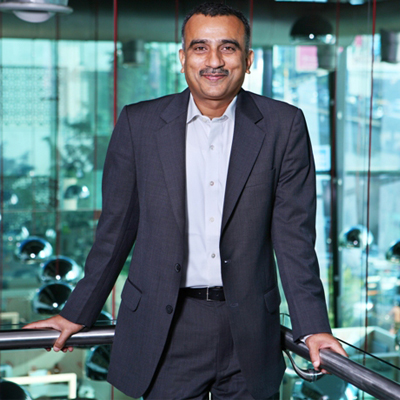
    Budget 2014 is an opportunity for M&E to grow: Sudhanshu Vats

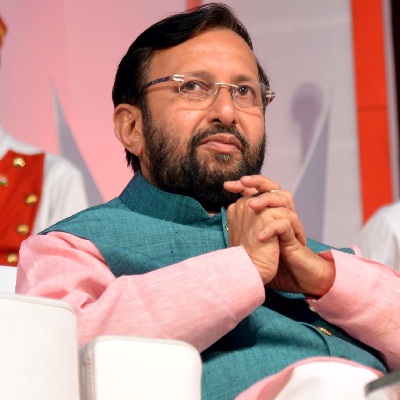
    The new government’s overall inclination towards development brings with it great optimism about the new Budget (2014) for me – not just as the head of an organisation but also as a representative of the Media and Entertainment industry. In fact, the Media & Entertainment industry experienced a whiff of fresh air with the new I&B Minister’s thoughts at the recent CII CEO roundtable. Eminent colleagues from across the industry raised key issues, which Shri Javadekar patiently heard and responded to – a sign of the new government’s strong preference for accountability and focus on governance.


    The industry is poised for exponential growth during the term of this new government – almost doubling every year. It has the potential to provide almost six million direct jobs and also add to the economy as an aid to tourism.


    After the extensive discussions and dialogue with colleagues and members of this bustling industry, I’ve penned some suggestions that can fuel the industry to reach never-before levels of growth.


    Accountability


    Accountability is the one thing that lacks processes in the Media & Entertainment space. A single-window clearance mechanism for permissions, especially for films and events, will motivate the industry to concentrate more on revenue streams rather than go around in circles. The wish list would remain only partially addressed without queries and licenses becoming more time-bound.


    And while we expect an evolution in policies, keeping them clear and consistent with foresight at the back of the mind constantly, future action can be planned at the organisational level with greater certainty and generate opportunities for employment in large numbers, thus contributing significantly to the economy.


    Pragmatic Policies


    The media and entertainment industry is currently valued at USD 20 plus billion with significant growth potential. We’re poised to catapult to the next level with a few pragmatic policy reforms. Additionally, the M&E industry has the capacity to generate almost six million jobs directly and also further boost sectors like tourism.


    More Spending Power


    Rationalising Income Tax slabs is a key step towards taking the burden off the consumer’s shoulders. He will have more money to spend on his favourite means of recreation – entertainment.


    Tax Abatement


    And while we are on the topic of the Media & Entertainment industry and its role in the economy, one of the biggest losses I believe that it incurs is almost the one-third of revenue that it gives away in taxes and multiple licence fees over and above recurring commissions. These need to be re-evaluated and rationalised. In anticipation of GST implementation, entertainment and service taxes can be lowered to a more reasonable level.


    Considering the premise of development that the new government has adopted, we expect a growth oriented budget, laying down a clear and consistent long-term roadmap. These steps that I have attempted to chalk out, will only allow the entire industry to collectively entertain India even more, even better!


    (These are purely personal views of CII National Committee on Media & Entertainment chairman & Viacom18 Media group CEO Sudhanshu Vats and indiantelevision.com does not subscribe to these views.)

  • Government committed to communicating with people across media platforms: Javadekar

    Government committed to communicating with people across media platforms: Javadekar

    NEW DELHI: Information and Broadcasting Minister Prakash Javadekar today promised a stable policy regime with transparency and time-bound mechanism and said efforts would be streamlined so as to make the process of clearances speedy and transparent.

    He said while addressing the “CEOs Roundtable on Media & Entertainment” by Confederation of Indian Industry (CII) that the government has always promoted the Media & Entertainment fraternity as partners in growth and would remain a facilitator to encourage the growth of the industry and provide a roadmap in the interests of the people.

    Javadekar said the potential of the Indian M&E industry is untapped and endorsed the CII vision of taking the Indian M&E industry to $100 billion by the end of this decade. He said the government will be “partner in progress” with the growth of the M&E industry.

    Reacting to suggestions from stakeholders, Javadekar said the policies of this government would be people-centric and would aim at meeting the aspirations of the common citizens. He added that providing information, entertainment and knowledge to the citizens would be the priority of the Ministry. Innovative approaches would be encouraged so as to ensure quality information.

    “This government is about communication and consensus. We will create a process in which decisions will be taken in four weeks which was taking four months earlier,” he said with reference to decisions pertaining to the broadcast sector.

    The Minister was categorical that the ongoing digitisation will not be abandoned, Radio phase III licensing will be processed faster, news allowed in FM radio, current DAVP rates will be relooked and self regulation advocated for print medium.

    The Minister also emphasised on the need for expanding the reach of Community Radio and aimed at opening up of 1000 Community Radio Stations in near future.

    Referring to the vision of Prime Minister Narendra Modi of ‘Speed, Skill and Scale’, the Minister urged the media industry to strive to attain new heights.  

    Praising new-age technologies, he described how the social media platforms had changed the dimensions of news reporting.

    While recognising the importance of the Freedom of Speech and Expression he emphasised on the need for responsible journalism. Javadekar assured the stakeholders that their suggestions on various policy issues would be looked into in a time-bound manner.

    Earlier, I&B secretary Bimal Julka assured the media that the Ministry would work as a facilitator for the industry and would work towards single-window clearances ‘with no multiple grills’ for better transparency and accountability. He said the phase III FM Radio auctions will be completed by December 2014. Julka also made a request to the M&E industry to present budget proposals to his Ministry by 23 June to be presented to the Finance Ministry.  

    40 top CEOs of the M&E sector interacted with the Minister and were confident that pending decisions will not be further delayed by the new government. Issues related to broadcast, films, DTH, cable, radio, print, news broadcast were briefed by industry leaders at the CII roundtable.

     “We believe that the soft power of Indian M&E sector can bring innumerable benefits to the Indian economy. The M&E industry provides direct employment to around 10 million people and has the potential to double the number. This sector also is on the cusp of achieving the same global success that the Indian IT industry has achieved,” said CII president Ajay Shriram.

    CII Media and Entertainment Committee and group CEO, Viacom 18 Media, Sudhanshu Vats said accountability, clarity and foresight from M&E stakeholders will take the sector to new heights.

    In his opening address CII DG Chandrajit Banerjee said that an innovative push from the government in an enabling regulatory infrastructure and policy reforms will create a world class knowledge driven entertainment in India. 


  • Sports industry a key to sports development in India: CII-KPMG report

    Sports industry a key to sports development in India: CII-KPMG report

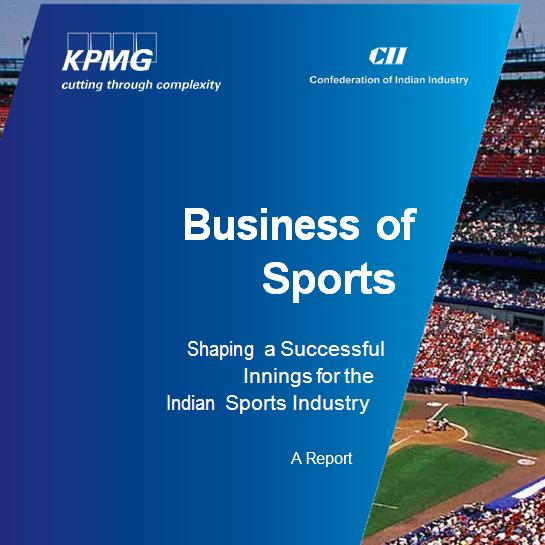
    MUMBAI: KPMG under the aegis of CII released a report titled Business of Sports – Shaping a Successful Innings for the Indian Sports Industry. The report identifies key issues in the sports ecosystem and explores measures to develop a private-investment led sporting scenario in the country – one that helps imbibe a sporting culture and achieve the country’s vision of excellence in sports.


    The report states that resource scarcity in India makes it difficult for the government to attain the above objectives and calls for collaborative efforts of both the government and private sector towards strengthening the sports ecosystem. Long term sustainability of commercial ventures in the Indian sports sector would require sustained audience interest driven by India’s winning performances at international sporting events.


    Sports not only boost the youth and instil pride among citizens, but also facilitate social and economic development of a nation. Sports sector is seen to have a significant socio-economic impact worldwide contributing to 1-5 per cent of national GDP.  This can be achieved by building a sporting culture in the country.


    However, in India sports is not recognised as an industry yet, limiting corporate investments except in cricket and a few other leagues. Being home to various upcoming leagues and the youngest population in the world, India’s sports sector offers tremendous growth potential.


    Ministry of Youth Affairs & Sports Secretary Ajit M Sharan, released the CII – KPMG report at the Scorecard 2014, CII’s National conference on Sports. 


    Earlier CII National Committee on Sports and Group (Asia) president and Coca Cola Company chairman Atul Singh highlighted Industry’s role of ‘going beyond Sponsorships and CSR activity and the need for a policy shift to recognize Sports as an industry’.  He said: “This would help actualise the India@75 vision for broad-basing sports in India, and promote excellence in Sports, by promoting infrastructure development, providing technical support for athletes, as well as grooming talented sportspersons”.


    “Corporate funding in sports may be the answer to ignite sports development in India. The gestation period for realizing return on such investments may be long, but global experience shows us that it could be potentially rewarding”, added KPMG partner in India Jaideep Ghosh.


    Global sports industry is estimated to be worth around $ 600 billion and growing at a rate higher than national gross domestic product rates around the world. While direct sports revenues are dominated by gate collections, sponsorships, media rights, the sports sector may comprise several segments such as sports tourism, sporting equipment manufacturing and retail, sports apparel, recreational sports, high school and college athletics, as well as associated businesses such as sports marketing, sports medicine, venues & infrastructure, hospitality and merchandising.


    Click here for the Key issues and recommendations

  • Sanjay Kapoor joins PVR Board as Director

    Sanjay Kapoor joins PVR Board as Director

    NEW DELHIPVR Cinemas, the largest cinema exhibition company in India, has announced the appointment of Sanjay Kapoor as the Director on the Board of PVR with effect from 31 January.


    Sanjay brings with him expertise and understanding to the rapidly growing and changing Indian market. With an experience of close to three decades, global business acumen, perspective and intelligence, Sanjay will advise the PVR Company to achieve greater milestones.

    “We are pleased to welcome Sanjay to our board of directors”, said PVR Ltd Chairman and Managing Director Ajay Bijli. “His brand expertise, experience in building large service businesses, digital penchant and consumer insights will be invaluable as we continue to expand our business of exhibiting quality cinema in the country. Our board is looking forward to the perspective Sanjay will provide to our strategy and operations as we continue to focus to give the best to our audience.”


    On accepting the new responsibility, Kapoor said, “I am very excited to contribute to the largest multiplex chain in India. PVR is the most respected name in the film exhibition industry and I look forward to sharing my experiences and contributing to the growth of the leading multiplex chain in India.”


    With a robust career spanning over 28 years, Kapoor, an Ex-CEO Airtel (India & South Asia), has been instrumental in shaping the growth and diversity of India’s largest integrated telecom service provider and held key leadership positions in the Bharti group till 15 May 2013. Prior to joining the Bharti Group, Sanjay worked with Xerox India as Director – Operations Support.


    Kapoor’s leadership extended well beyond the confines of Airtel and he elevated himself as an industry spokesperson globally. For more than 13 years he has played an active role in various industry forums like CII, COAI and NASSCOM. He has been a Board & Executive committee member of GSMA and the Board member of Indus Towers. Presently, Sanjay is a board member of Bennett, Coleman & Co.


    Kapoor holds an MBA from Cranfield School of Management (UK) and is a Graduate of The Wharton Advanced Management Program. He earned his Bachelor’s degree in Commerce ( Hons ) from Delhi University.

  • Unlocking Indias potential to build a more sustainable tomorrow

    Unlocking Indias potential to build a more sustainable tomorrow

    The CII-ITC’s 8th Sustainability Summit held in New Delhi saw the release of a new report on ‘How India Innovates: The promise of sustainable and inclusive innovation.’ As economic growth rates go down and global climate temperatures go up, innovation has become nothing short of a necessity. India, too, has declared 2010-2020 as the Decade of Innovation.

    Under the framework of Indo-German bilateral cooperation the Umbrella Programme for the Promotion of Micro, Small and Medium Enterprises (MSME) funded by the German Ministry of Economic Cooperation and Development (BMZ), GIZ India has partnered with CII-ITC-CESD to strengthen sustainable and inclusive innovations and to support the dissemination of knowledge and the scaling up of successful SI2.

    As part of this partnership GIZ and CII-ITC-CESD have conducted this study with the objective to provide the innovation eco-system with information on how business in India innovates and the promise it sees in Sustainable & Inclusive Innovation.

    According to the report, 79% companies in India innovate with radical solutions while 71% innovate with incremental or radical solutions. Companies have also identified exploiting green growth opportunities and reducing environmental impacts as other important factors to innovate. However, the bottom-of-pyramid market is still not an important driver for companies to innovate.

    According to Ms. Seema Arora, Executive Director, CII-ITC Centre of Excellence for Sustainable Development, awareness on sustainability issues has come a long way in the 30 years since the Brundtland Commission, with leading companies taking proactive steps towards building a more secure, sustainable and equitable future. She adds, “Regardless of whether it is called climate change, responsible business or CSR; the message today is clear – sustainable business is here to stay and industry must change the way it operates.”

    Sharing her thoughts on the event, Ms Arora, states, “The Centre is pivotal in spearheading the sustainability agenda in the country in that it was created by the industry itself. And the Summit is the realisation of the fact that by bringing civil society, government and industry together on one platform, we can truly succeed in co-creating a more sustainable India.”

    The Prime Minister’s Office set up the National Innovation Council with a mandate to substantially enhance the innovation ecosystem in India. The Council has developed a roadmap that would, among other things, create State Innovation Councils and innovation clusters. CII is a member of the National Innovation Council and is helping set up innovation clusters in a couple of sectors.

  • Media should consider reasonable restrictions: Tewari

    Media should consider reasonable restrictions: Tewari

    NEW DELHI: Information and Broadcasting Minister (I &B) Manish Tewari today stressed that the government wanted the relationship with the media to be one of persuasion rather than regulation but the media should introspect about the reasonable restrictions laid down in the constitution to the freedom of speech.

    Making the inaugural address at the Big Picture Summit on Media and Entertainment organised by CII, the minister said the government will cooperate to ensure that the M & E sector is able to ‘unlock the potential of millions.’

    He stated that the phase III in FM radio will get underway next month with the e-auctions, adding that radio had seen a major resurgence thanks to mobile telephony.
    Manish Tewari believes that the industry must explore new avenues and technologies like mobile telephony and how it can be used to grow the sector

     The minister announced that the Justice Mudgal Committee which was going into the Cinematograph Act including film censorship was expected to give its report by mid-October. Tewari was responding to remarks made by previous speakers Star TV CEO Uday Shankar and Walt Disney MD Ronnie Screwvala about extra-constitutional authorities and even state governments raising voices even after a film had been cleared by the Central Board of Film Certification, and making a strong case for bringing cinema on the concurrent list.

    Tewari noted that despite the general slowdown the world over and in India, the M and E sector was expected to grow at a pace of 18.4 per cent CAGR to Rs 2,245 billion by 2017 from Rs 965 billion in 2012.

    He noted that the print and television sector comprised 48 per cent of this growth and the internet was expected to take over by 2017. He said the real success story was the print media since its growth continued at a rate of ten per cent per year when it was falling all over the world.

    Although India had the largest number of TV news channels in the world, it represented only 17 per cent of the M and E industry and therefore there was need to remove the bottlenecks in distribution.

    While the channels were not lagging in content, hardware was an area in which they were found lagging, he felt. The minister said that he wanted the industry to come up with ideas on how the number of cinema screens could be increased.

    Complimenting CII for its optimism in setting a target of USD 100 billion for the industry, he spoke of the opportunity that the sector presents in terms of innovation in content and non-content areas, adding that the government would partner the industry to put into place a system to see that the vision of USD 100 billion is translated into reality.

    He also mentioned that the industry must explore new avenues and technologies like mobile telephony and how it can be used to grow the sector, emphasising that the government would look to facilitate innovation and expansion.

    Screwvala in the keynote address said that although there have been challenges and a sense of gloom, there has been a fair amount of progress as well, especially in the movie industry, which has flourished.

    The M&E industry, he said, is seen as an industry of ‘high impact’ with the ability to bring about noteworthy transformation. Therefore, he felt that the time is right for the M&E industry, the government and other stakeholders to take time to deliberate upon the challenging issues that the industry faces such as dependency on advertising, inconsistent regulation, the need and ability to attract the best talent, unanimity and long-term thinking and then come up with a roadmap that will help the industry achieve the target of USD 100 billion.

    He hailed the progress in digitisation of cable TV and efforts to go on to better consumer TV viewing surveys, he said dependency on advertising remains a big problem and ways have to be found to make the consumer pay. There was need for unanimity and long-term thinking in the industry, a need to attract the best talent, and the need to recognise that new media needed a different kind of audience and talent.

    While India was among the least regulated countries in the world, he admitted that some regulation was necessary and this has to be consistent and not vary from state to state.

    He also wanted edutainment to be encouraged without being dependent on curriculum, sports to extend from just cricket as far as media was concerned, and the need for a greater bandwidth.

    He suggested setting up of a core group of the government and the industry which could work over the next 18 months or so to get over the bottlenecks, an issue supported by eminent filmmaker Amit Khanna.

    Khanna said the target of $100 billion for M &E was not unrealistic, if there was proper planning and greater cooperation between the government and the industry.

    He said it was unfortunate that the country was over-producing in cinema, considering the small number of screens.

    He suggested that the I & B ministry should change its name to the media ministry as new media was taking over.

    He regretted that there was no proper broadcasting regulator and the Telecom Regulatory Authority of India had been given this responsibility.

    India may have the largest number of TV news channels, but they were all getting ‘tabloidised’.

    He also felt the need for more trained professionals if the industry had to meet its targets.

     Delivering the theme address, Shankar said that openness to new ideas, capital and talent would unleash a fresh wave of growth, just as it did in the 1990s, when economic reforms ushered in a fresh wave of growth for the Indian economy.

    Earlier, in his welcome remarks, CII director general Chandrajit Banerjee spoke of the tremendous ‘soft power’ of the industry to bring about innumerable benefits to the Indian economy.
    A CII-PriceWaterhouse Coopers report on the M&E industry, titled ‘India Entertainment and Media Outlook 2013’ was also released on the occasion by Tewari.

  • ICC engages CII for commercial rights protection programme

    MUMBAI: Following a partnership during the International Cricket Council (ICC) Cricket World Cup 2011 and the ICC World Twenty20 Sri Lanka 2012, the ICC has once again engaged Copyright Integrity International (CII) to work closely with its in-house legal team on the management of a comprehensive rights protection programme for the ICC Champions Trophy 2013, which gets underway on 6 June in England and Wales.

    Based in Bengaluru, CII is a privately-held specialist in online and offline anti-piracy protection services for sports clients. It will provide the ICC with a suite of commercial rights protection and anti-piracy services and solutions such as online content and broadcast protection, comprehensive trademark and brand protection and media terms enforcement, in a programme designed to protect the ICC‘s intellectual property rights from the threats of piracy, ambush marketing and unlicensed use.

    ICC head of legal Iain Higgins said, “Our commercial partners and sponsors make our events possible and generate significant funding for the global game. The aim of the ICC‘s commercial rights protection programme is to maintain the exclusivity of their association with our events. It is vital that those rights are protected so that our partners‘ investments can be channelled into the development of cricket throughout our 106 Members.”

    CII CEO Nanda Chalam said, “It‘s a privilege to be engaged by a client such as the ICC to manage the commercial rights protection programme for the ICC Champions Trophy 2013. Our role will include not only the monitoring and enforcement of infringements but also an education programme for the public that will ensure enjoyment of the event with due respect to the ICC‘s commercial partners and sponsors.”

    The ICC‘s legal team has been working hard over the past few months to develop strategies to monitor and combat unlawful association with the ICC Champions Trophy 2013.

    As part of that programme, it has recently released brand and content protection guidelines for the tournament. Through a series of FAQs and illustrations, this document provides companies and members of the public with a useful guide to how they might associate with the event without infringing the rights that have been granted to the ICC‘s official partners.

  • CII moots 5% customs duty on imported STBs in bid to boost local manufacture


    NEW DELHI: While demanding various reductions and exemptions of taxes and duties that would be beneficial for the media and broadcasting industry in general, the Confederation of Indian Industry (CII) has demanded a hike in customs duty on STBs from the present nil to 5 per cent.

    The CII has demanded exemptions and tax burden relief on capital goods import and other issues, especially those meant for infrastructure development, creation of intellectual property and import of colour TV and picture tubes.

    Yet, so far as STBs are concerned, the CII says that whereas in the present situation, import of STBs do not attract any customs duty, this should be raised to five per cent in the budget for 2007.


    The CII, in its document “Pre-Budget Memorandum” gives its own arguments on that count.

    It says: “Excise Duty on STBs was exempted on 24th June 2003 to facilitate introduction of Conditional Access System in the country. In the budget 2006, the exemption on excise duty was withdrawn but customs duty was reduced from 15 per cent to Nil. However, there was no corresponding reduction of customs duty on inputs used in the manufacturing of STBs. This has resulted into another case of inverted customs duty structure.

    “The correction of the anomaly can be achieved either the by reduction of customs duty on inputs required for manufacturing of STBs to Nil, or increasing of customs duty on the import of STBs from Nil to 5 per cent, and also allowing import of inputs at five per cent.”

    A senior tax consultant told indiantelevision.com that the measure would benefit local manufacture of STBs, as the customs duty on import of boxes and import of input components would be the same, whereas previously, there was no customs duty on import to STBs.


    Currently, MSOs are importing STBs mainly from China and Korea.

    “This is a pro-local manufacturing and necessary corrective measure from an earlier skewed customs regime so far as STBs are concerned,” he explained.

    The CII recommendation says that the second option is preferable.

    It says also: “In case it is felt that it would increase the price of imported STBs, then excise duty can be reduced from 16 per cent to 12 per cent on STBs as well as its major imported inputs.

    Meanwhile, there are many general recommendations of the CII that would benefit the industry.

    It has specifically suggested that the customs duty on glass parts of the colour picture tubes for TV sets should be reduced from 12.5 per cent to five per cent.

    It has argued here that the Free Trade Agreement between India and Thailand has a list of goods covered by the Early Harvest Scheme and includes CTV and colour picture tubes.

    “Consequently, customs duty on CTV (8528 12) and CPT (8540 11) imported from Thailand was reduced to 12 per cent on September 2004, and to 6.25 per cent on September 1, 2005. The impact of (this) reduction has resulted in tremendous increase of imports (from Thailand).

    On the telecom sector the CII has recommended that there should be a reduction of customs duty to five per cent on capital goods required for manufacture of telecommunication equipment covered by the IT agreement.

    It also wants to extend the present “Nil” customs concession to inputs for the manufacture of components / sub assemblies duty under serial number 239 of customs notification 21/2002.

    Across the board, CII has recommended measures that will benefit industry as a whole and consequently the media and broadcasting industry. It has, for instance, recommended reduction of CENVAT rate of 16 per cent to 14 per cent in the budget 2007, and has also said that the service tax of 12 per cent must not be increased.

    On the issue of infrastructure development CII has suggested that the government may consider more loans from international institutions.

    “Gross Capital Formation in infrastructure must be progressively raised from 4.5 per cent of GDP to 11 per cent,” the report of CII says.

    In general, all companies and employees may stand to benefit also if the CII recommendation of abolishing of Fringe Benefit Tax (FBT), in consonance with the desires of business as a whole, ever since the tax was slapped vide the Finance Act 2005.

    It outlines the alternative thus:

    “Either the tax should be abolished or the choice be given to tax paying firms to pay one per cent additional corporate tax on its total income in lieu of FBT. Otherwise the corporate could chose to remain under FBT. If this is not possible, the CII proposes levy of FBT only on elements of personal benefit to employees, and exclusion of deeming provision of treating a portion of pure business expenses as personal expenses.”

    The CII recommendation on depreciation would also benefit the media and broadcasting industry.

    Stating that it is well known that technology is changing fast, “and unless we are able to replace our assets fast, we cannot match with other countries in terms of productivity, CII has recommended that depreciation rate be raised from 15 per cent to 25 per cent, as was the case earlier, provided the rate charged under Income Tax is the same or higher than charged under the Companies Act.

    Development of infrastructure would also benefit from the industry body recommendation that the Minimum Alternative Tax is abolished. If it is not, CII feels, it should at least be removed for infrastructure companies in order to promote development and to motivate the private investor to come into this sector.

  • Institutional finance on the up for Indian movies

    Institutional finance on the up for Indian movies

    MUMBAI: Institutional finance is beginning to flow in to fund Indian movies. IDBI, for instance, has sanctioned Rs 5.5 billion on a cumulative basis over the last five years. Exim Bank, similarly, has extended lending to over Rs 4 billion for film projects which have potential to earn foreign exchange.

    “Overseas earnings from films recently financed by us has touched Rs 1.15 billion. We are not only financing on the production, but also on the overseas distribution side. The industry has a lot of potential even in the animation business,” said Exim Bank chairman & managing director TC Venkat Subramaniam, while speaking at “India The Big Picture,” a seminar here today on the film entertainment industry organised by the CII.

    Exim Bank has a lending cap of Rs 250 million for a single film project. The film industry earns an estimated Rs 69 billion a year, contributing 26 per cent to the total revenue of the entertainment sector. This is just 1.7 per cent of the global market, said Subramaniam.

    Export revenues have jumped from Rs 2 billion in 1998 to Rs 4 billion in 2000 and further to Rs 11 billion in 2005, accounting for 16 per cent of the total earnings. “There is a healthy outlook as we increase earnings from the international market, strengthen animation outsourcing, provide institutional financing and extend government incentives,” he added.

    IDBI is also cautiously bullish on the industry. “We have funded 70 movies. We are not only providing rupee loans but also in dollars for borrowers to hedge foreign exchange risk. Besides, we are extending line of credit so that film producers can cover up not on one but a slate of movies,” said IDBI general manager Aloke Dasgupta.

    IDBI funds only projects which have a minimum budget of Rs 4 billion and have a debt-equity ratio of 1:1. “We are providing financial support only for film production. We don’t fund in the reail and distribution end of the business. But for supporting smaller movies, we are in dicussions with NFDC to ensure that money is put in the right place for such projects,” said Dasgupta.

    But are the southern films having access to institutional finance? South Indian Film Exporters association president and MD of Ananda Exports L Suresh said film financing had not trickled down to the southern region. “It is probably because most of the banks are headquartered in Mumbai. Besides, banks take a long time to sanction loans and we finish production within three months. Besides, banks insist on collateral securities,” he said.

    Speaking on the sidelines, Dasgpta, however, said IDBI had financed Tamil and Telugu movies.

    Speaking on the occasion, Sony Pictures India MD Uday Singh said financial rigour was essential as the movie business is not without risks and revenue leakages. Media is fragmented and there are market access issues in certain states. “We have done enough hard work and there is now a bottom-up realism. We are extending from our distibution business and getting into film production as well. We are starting with one but are in alks with other directors as well. Our mandate is to have a slate of at least 2-3 films in a year’s time,” he said.

    Emphasising on the importance of a theatrical success, he said the Hollywood studios are realising that fast growth would come from the BRIC (Brazil, Russia, India and China) markets.

    Ernst & Young partner and head of media practice Farokh Balsara said the home video segment accounted for just 4 per cent of filmed entertainment revenues while in the US it was as high as 50 per cent. This sement could see increased activity as ventures capitalists have started to invest into new models of home video.