Tag: CII

  • MIB favours self-regulation, TRAI says some regulation mandatory

    MIB favours self-regulation, TRAI says some regulation mandatory

    NEW DELHI: Even as he favoured the idea of self-regulation in the media, Minister for Information and Broadcasting (MIB) M Venkaiah Naidu stressed that “regulation should not become strangulation” and added the government wants to be a facilitator for creating a good business environment for the media and entertainment (M&E) sector.

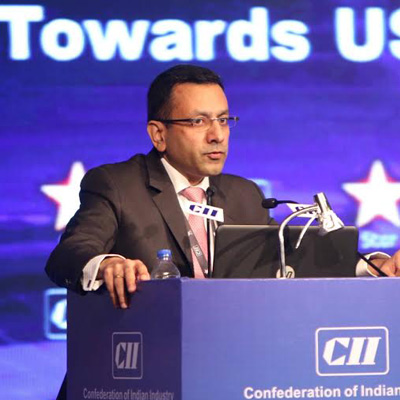
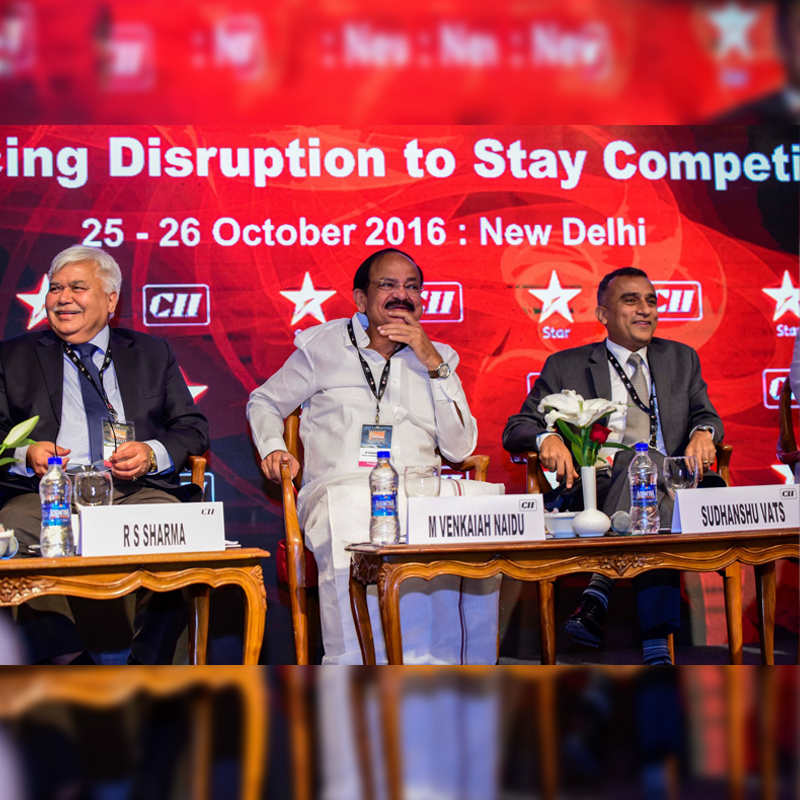
    Delivering the keynote address at the inaugural session of 5th edition of CII-organised `Big Picture Summit’ at New Delhi here yesterday Naidu said that digital and mobile tools have been leading to paradigm shifts in the M&E sector and the growth of varied platforms such as 4G, broadband, mobile technologies and digital media has enabled the sector to move towards “convergence across platforms and content”.

    According to the Minister, 500 million mobile phones were expected in India by 2020 and music streaming had grown from 49 per cent to 61 per cent in just one year with video on demand gaining popularity as number of internet connections had grown to 81 million of which 41 million used local languages. “The entertainment industry was today capable of creating five billion jobs a year,” he said.

    Referring to the broadcast segment, the MIB Minister said Indian television was very vibrant and exciting, which is exemplified in the over 800 TV channels licensed by the government.

    Dwelling on some initiatives taken by the government to boost the M&E sector, Naidu said that foreign direct investment norms had been liberalized further earlier in the year with an aim to help the industry grow. Similarly, the Minister said, the radio category too has shown impressive growth and the third Phase of auctions of Radio FM licenses was expected to bring in $390 million.

    While he was impressed with the growth achieved by cinema — India produced more films than any other country in the world — Naidu took note of a big problem of less number of screens in the country and that Indian cinema had a share of less than one per cent in world cinema.

    Expressing his concerns on the growth of the media, the Minister highlighted that there were some problems that had been inherited by this government and that those would take some time to be resolved as he plans to hold separate meetings with all stakeholders.

    TRAI Says Regulatory Framework Necessary For Big M&E Sector

    While MIB made a case for self-regulation, Telecom Regulatory Authority of India Chairman R S Sharma said some regulatory framework was necessary for such a large media sector, but regulations should be non-discriminatory, transparent, ensure quality and empower the consumer.

    Speaking at the inaugural session, along with the Minister and industry representatives, Sharma said India was a very cost-effective market where the average mobile recharge was just Rs 10. As connectivity had to be cost-effective and price-sensitive, cable television can be used to provide broadband connectivity as well.

    Holding forth on audience measurement, Sharma said there was still scope for better audience measurement systems as it was important to let the consumer decide what he wanted.
    As TRAI has a recommendatory role in the broadcast sector, except the carriage part where its recommendations can be implemented by it, Sharma also highlighted that several set of recommendations by the regulator on a variety of issues were pending at the Ministry concerned.

    Viacom18 Group CEO Sudhanshu Vats’ On Disruption & Competition

    Amongst the pantheon of Indian gods and goddesses, the Trinity of  Brahma, Vishnu and Shiv hold a special place as they ensure the world, as we know it, goes through a cycle of creation, preservation and destruction to continue growing and surviving. Is this also true for a business sector? Yes!

    Dwelling on the theme of the two-day media conference, ‘Embracing Disruption to Stay Competitive’, Sudhanshu Vats, Chairman of National Committee on Media & Entertainment, CII and Group CEO, Viacom18, said if the cycle, as highlighted in the Indian Trinity or to some extent in economist Schumpeter’s theory of creative destruction, is not followed by businesses (including those in the M&E sector), it’d be disrupted

    “Our systems discourage destruction. In our minds we have this notion that the word ‘destruction’ itself is wrong. But if you look back, our belief system has always emphasised on the need to destroy. If we don’t destroy, then we will be disrupted,” Vats said setting the tone for the Big Picture Summit and emphasizing the need for a well-balanced mix of all three — creators, preservers and destroyers.

    Vats went on to give some examples of the Big Picture Summit’s theme of disruption or reinvention to stay relevant and competitive, which are as follows:

    –    It’s a theme that explains how the sport of cricket reinvented itself 8 years ago to create a completely new avatar (called the IPL) that is arguably it’s most lucrative and successful one till date.

    –    It’s a theme that explains how a new Hindi GEC called Colors launched in 2008 and became number 1 in just 9 months of launch.

    –    It’s a theme that probably explains how a government owned distribution platform known as DD FreeDish revolutionized the world of Indian television so much so that it is a topic of conversation in the boardroom of every M&E organization.

    –    It’s a theme that explains how a show idea rejected by MTV, led to the creation of one of India’s most iconic YouTube channels: The Viral Fever.

    –    It’s also a theme that explains why a telco called AT&T is expected to close a deal to acquire a media conglomerate called Time Warner in what is amongst this year’s biggest acquisitions.  “Of course, I’d like to see this as ‘convergence in action’,” explained Vats.

    Dwelling on some industry vital stats — based on knowledge partner Boston Consulting Group’s yearly report for the event — Vats said the M&E industry’s size had been pegged at approximately Rs. 13, 000,00 million, almost one per cent of the Indian GDP with a direct employment base of half a million.

    “If we look at indirect employment, the number will multiply several times over. If we look at employment in sectors in which we have a multiplier effect, say telecom, tourism, sports and so on, and we are looking at a much larger base. If we have to, say, double in size (and this is not impossible)… then there are three fundamental truths that we need to prepare for. Bear in mind, that none of these can be leveraged if we fear ‘destruction’. Each of these truths has significant implications for us,” Vats elucidated.

    Vats also dwelt on several issues ranging from the need to develop direct-to-consumer offerings, importance of listening to suggestions and ideas, benefits of discovering new talents and embracing technology and data as a friend and not foe, apart from several other issues, including the need to put aside squabbles amongst stakeholders in the M&E sector.

    However, not the one to every shy away from making a factual statement, even though it may sound contentious, Vats aptly said the M&E sector was amongst the biggest stars of the PM Modi’s  `Make in India’ programme. “In the last two years, India has seen 35 new smart-phone factories, with a production capacity of 18 million devices per month and employment to 37,000 Indians. While the focus here – at least in the popular context- is on telecom handset manufacturing, think what is the use of the smart-phone with a 5-inch screen if you don’t have video content? I have no qualms in stating that our industry will play the biggest role in the 4G revolution that this country is about to witness,” he concluded.

     

  • CII Sports Summit: The role of corporate India

    CII Sports Summit: The role of corporate India

    MUMBAI: Profit is not a bad word which the sports ecosystem has awakened to and realised, seemed to be the essence of the discussion at the inaugural ‘Corporatization of Sports’ session at the CII summit on the business of sports and entertainment held in Mumbai on 21 September. The session sought to discuss how Indian sport could evolve and produce champions with the involvement of corporate India.

    The need for looking at the commercial aspect of sports, scope for public-private partnership in promotion, possibility of the government incentivising investments, supporting sports for the sake of business and branding, games packaging and cultivating viewership and media coverage were some of the ideas thrown up at the summit to which almost all the experts agreed.

    KPMG partner Jaideep Ghosh, GroupM business head – entertainment, sports and live events Vineet Karnik, IMG Reliance COO Ashu Jindal, PMG chairman Sam Balsara, YES Bank president and country head, media & entertainmemt, luxury & sports,Karan Ahluwalia and MICA professor Sanjeev Tripathi, were the panelists. Harsha Bhogle, commentator and journalist, moderated the session.

    Bhogle introduced the experts and sought some opinions on the subject. “It is indeed encouraging to see that lately sports was being promoted from the school and college level,” Jindal said. Ghosh said that consumption of sporting events in India has been on the rise, which mainly included online consumption. He underlined the importance and growth of digital media and social media rights for such events.

    Pointing at the international sporting leagues, Ghosh quoted an example of how La-Liga had tweaked its sports timing so as to suit the Indian viewership timings. He noted the positive trend of a worthwhile increase of 20-30% in female viewership of sporting events in India.

    Profit-making training academies and sports good manufacturing were other areas that get a boost with the promotion of sports, Ghosh remarked.

    Whether the Indian government will support sports, Bhogle sought to know from the panelists. Tripathi, quoting a government web site, said that the establishment’s self-declared role was creating infrastructure and capacity-building. “One needs to love sports to promote it,” quipped Bhogle referring to the government versus corporate role.

    Tripathi suggested the concept of public-private partnership in promoting sports. “If tollways can follow the PPP model, I don’t see any reason why sports can’t,” he seemed curious. Giving the example of a private company managing the commercial exploitation of swimming pools at Kendriya Vidyalayas after school hours, he said Sports Authority of India stadia could also be exploited along similar lines.

    “Almost 340-350 days in a year, the SAI stadia are unused,” he quipped. In metros, Bhogle said, because of the traffic snarls and other issues, people barely manage to reach the stadia. There is no time to play or practice. “Medals will hopefully come from small towns – where there is space and time,” Bhogle opined.

    Jindal agreed that the government builds infrastructure and corporates invest. Reliance Foundation, he said, was supporting sporting events in around 2000 schools in the country. “IMG sponsored two sportspersons to train at a US academy and one of them today is playing for the prestigious NBA,” Jindal said.

    Bhogle said it was very significant to reach the grassroots level to cultivate sporting talent. “Let under-16 boys and girls play their game at various levels – talent and technique will follow suit,” he felt.

    “There is no database of grassroots-level sporting events being played in the country,” Karnik remarked. There is no national-level academy for training budding talent, he said. Corporates, Karnik stated, were engaging in sports. Like broadcasters and distributors, etc. make money, he said, it was crucial that Indian companies sought RoIs (returns on investments). “But, are they looking at the long-term (say, five years) perspective? May be, no,” he felt.

    In almost 30 years, Balsara said, the business of sports (advertsing,etc.) in India has grown around 50 times which was far less than growth in other sectors/sub-sectors.

    Balsara said there was a need to see sports as a business. “And, in business, there are profits – however distant that may be.” Be a ‘lambi race ka ghoda’, he said. Balsara believed that corporates need to have more and better risk appetite to be in the business of sports promotion.

    Corporates, of course, support events for the sake of building their brands, said Ahluwalia. Given the demographics in India, advertising was done for more visibility. For the sake of going the whole hog into sports promotion, Ahluwalia said, the complete supply chain would need to be looked at – from scouting for talent to sports good manufacturing etc. to CSR

    We also need to support games other than cricket, Bhogle said. Tripathi agreed, and informed that he found 20 football academies in Ahmedabad but none for cricket.“The different leagues being played in India are creating dreams,” Bhogle said. There was a need for heroes.There were fewer heroes because federations used to dwarf them in the wake of retaining their own supremacy, Bhogle said.

    Balsara agreed on heroes and winners. The whole nation is watching sports. Winners at any level – state level or national level – are a good bet. “Only then, people and corporates would go after them,” he said.

    India needs a revolution in all sporting activities. “The revolution that the former world champion Grandmaster Vishwanathan Anand could bring about in chess, could not be replicated in the case of Mary Kom,” Bhogle lamented. “You need the power of media to establish and popularise a sport,” Balsara said. A strong medium like TV was very significant for sports promotion, he said.

    Bhogle agreed – TV creates heroes. “The digital medium in India, which does not need the help of airtime or printing, is also growing very well,” Bhogle said. Jindal nodded, saying, “All the school matches supported by IMG were published on the social media and uploaded on Youtube”. The influence of social media, especially the opinions and reactions, was very powerful, he said. Jindal said the social media helps in taking sports to the next level.

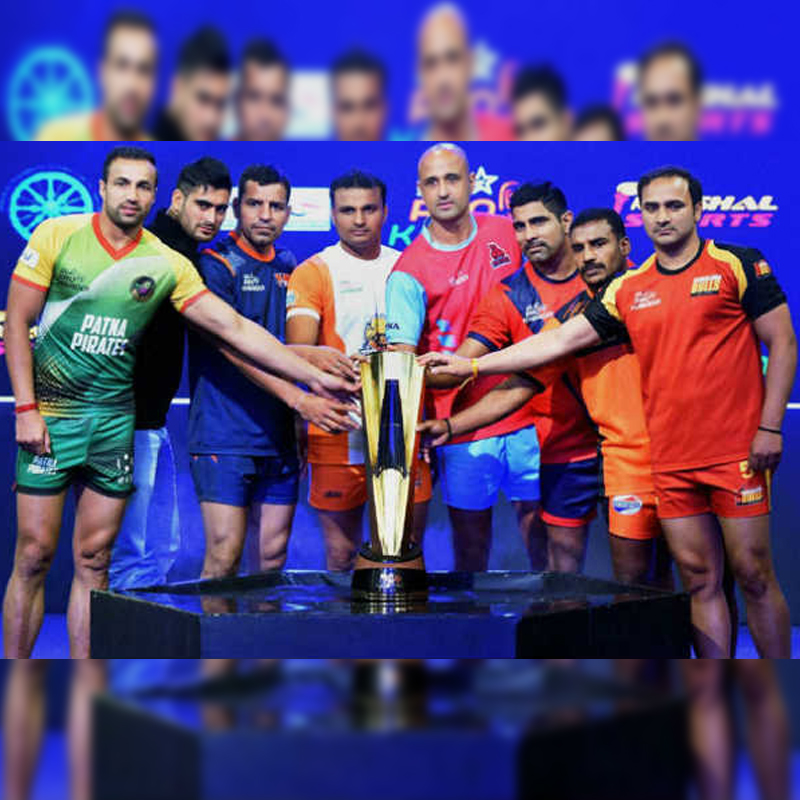
    Bhogle sought to analyse the success of ‘pro-kabaddi’ in India. “Apart from some tweaks to the game’s rules, did it succeed because there was no burden of legacy,” he asked. “The packaging was very good, although there were no top-level, known players,” Ghosh answered. “Each game, which helped release the regional pent-up demand, is short and held the viewers’ interest for 45-50 minutes,” he said. Half-jokingly, he said he found some DJ kind of effect at the ‘pro-kabaddi’ matches.

    “Kabaddi is a kind of revolution brought about with multimedia help.Players who were making Rs 2-5 lakh are now making 50-70 lakh,”Ahluwalia said. Regional brands and products are associating with the game. Sarpanchs etc. have become trainers, mentors and coaches.

    “Leading kabaddi players are earning more than the average IPL players,” Bhogle remarked. He said, as in the US, he could foresee regions in India playing against each other.

    Whether mega corporations can help sports and/or fund stadiums, Bhogle asked. To this, Karnik said that Hero, Pepsi and Vodafone (which supported 10 seasons of a game) were the examples of that phenomenon. “Casual relationships with sports doesn’t work,” Balsara agreed. Relationships over some years reaped a good harvest, he said.

    “Pepsi, for example, does not support only a few episodes of a TV serial,” Balsara said. Consistency of sponsorship in sports is critical, he said.

    However, with limited spending and maximum leverage, RoI is also possible. Balsara gave the example of Kent RO which sponsors non-live after-hours of games. On the other hand, he said, IPL sponsors Vivo was leveraging far less than it could have had. Everybody agreed.

    “Eventually, with low RoI, they may end up being unsatisfied,” said. Bhogle said some companies were quietly supporting potential winners so that they could leverage them when they triumph.

    The business of sports in India was merely worth $2 billion, whereas, in the developed countries, it was pegged at around $ 50-60 billion, Ahluwalia said. So, are we bullish on the business of sports in India, Bhogle asked. Almost all panelists answered in the affirmative, with Jindal adding, “India is growing at 7%, earnings are increasing and so is sports.”

    Bhogle concluded by saying that (sporting) opportunities well-packaged get investments. Begging bowls get pennies.

  • CII Sports Summit: The role of corporate India

    CII Sports Summit: The role of corporate India

    MUMBAI: Profit is not a bad word which the sports ecosystem has awakened to and realised, seemed to be the essence of the discussion at the inaugural ‘Corporatization of Sports’ session at the CII summit on the business of sports and entertainment held in Mumbai on 21 September. The session sought to discuss how Indian sport could evolve and produce champions with the involvement of corporate India.

    The need for looking at the commercial aspect of sports, scope for public-private partnership in promotion, possibility of the government incentivising investments, supporting sports for the sake of business and branding, games packaging and cultivating viewership and media coverage were some of the ideas thrown up at the summit to which almost all the experts agreed.

    KPMG partner Jaideep Ghosh, GroupM business head – entertainment, sports and live events Vineet Karnik, IMG Reliance COO Ashu Jindal, PMG chairman Sam Balsara, YES Bank president and country head, media & entertainmemt, luxury & sports,Karan Ahluwalia and MICA professor Sanjeev Tripathi, were the panelists. Harsha Bhogle, commentator and journalist, moderated the session.

    Bhogle introduced the experts and sought some opinions on the subject. “It is indeed encouraging to see that lately sports was being promoted from the school and college level,” Jindal said. Ghosh said that consumption of sporting events in India has been on the rise, which mainly included online consumption. He underlined the importance and growth of digital media and social media rights for such events.

    Pointing at the international sporting leagues, Ghosh quoted an example of how La-Liga had tweaked its sports timing so as to suit the Indian viewership timings. He noted the positive trend of a worthwhile increase of 20-30% in female viewership of sporting events in India.

    Profit-making training academies and sports good manufacturing were other areas that get a boost with the promotion of sports, Ghosh remarked.

    Whether the Indian government will support sports, Bhogle sought to know from the panelists. Tripathi, quoting a government web site, said that the establishment’s self-declared role was creating infrastructure and capacity-building. “One needs to love sports to promote it,” quipped Bhogle referring to the government versus corporate role.

    Tripathi suggested the concept of public-private partnership in promoting sports. “If tollways can follow the PPP model, I don’t see any reason why sports can’t,” he seemed curious. Giving the example of a private company managing the commercial exploitation of swimming pools at Kendriya Vidyalayas after school hours, he said Sports Authority of India stadia could also be exploited along similar lines.

    “Almost 340-350 days in a year, the SAI stadia are unused,” he quipped. In metros, Bhogle said, because of the traffic snarls and other issues, people barely manage to reach the stadia. There is no time to play or practice. “Medals will hopefully come from small towns – where there is space and time,” Bhogle opined.

    Jindal agreed that the government builds infrastructure and corporates invest. Reliance Foundation, he said, was supporting sporting events in around 2000 schools in the country. “IMG sponsored two sportspersons to train at a US academy and one of them today is playing for the prestigious NBA,” Jindal said.

    Bhogle said it was very significant to reach the grassroots level to cultivate sporting talent. “Let under-16 boys and girls play their game at various levels – talent and technique will follow suit,” he felt.

    “There is no database of grassroots-level sporting events being played in the country,” Karnik remarked. There is no national-level academy for training budding talent, he said. Corporates, Karnik stated, were engaging in sports. Like broadcasters and distributors, etc. make money, he said, it was crucial that Indian companies sought RoIs (returns on investments). “But, are they looking at the long-term (say, five years) perspective? May be, no,” he felt.

    In almost 30 years, Balsara said, the business of sports (advertsing,etc.) in India has grown around 50 times which was far less than growth in other sectors/sub-sectors.

    Balsara said there was a need to see sports as a business. “And, in business, there are profits – however distant that may be.” Be a ‘lambi race ka ghoda’, he said. Balsara believed that corporates need to have more and better risk appetite to be in the business of sports promotion.

    Corporates, of course, support events for the sake of building their brands, said Ahluwalia. Given the demographics in India, advertising was done for more visibility. For the sake of going the whole hog into sports promotion, Ahluwalia said, the complete supply chain would need to be looked at – from scouting for talent to sports good manufacturing etc. to CSR

    We also need to support games other than cricket, Bhogle said. Tripathi agreed, and informed that he found 20 football academies in Ahmedabad but none for cricket.“The different leagues being played in India are creating dreams,” Bhogle said. There was a need for heroes.There were fewer heroes because federations used to dwarf them in the wake of retaining their own supremacy, Bhogle said.

    Balsara agreed on heroes and winners. The whole nation is watching sports. Winners at any level – state level or national level – are a good bet. “Only then, people and corporates would go after them,” he said.

    India needs a revolution in all sporting activities. “The revolution that the former world champion Grandmaster Vishwanathan Anand could bring about in chess, could not be replicated in the case of Mary Kom,” Bhogle lamented. “You need the power of media to establish and popularise a sport,” Balsara said. A strong medium like TV was very significant for sports promotion, he said.

    Bhogle agreed – TV creates heroes. “The digital medium in India, which does not need the help of airtime or printing, is also growing very well,” Bhogle said. Jindal nodded, saying, “All the school matches supported by IMG were published on the social media and uploaded on Youtube”. The influence of social media, especially the opinions and reactions, was very powerful, he said. Jindal said the social media helps in taking sports to the next level.

    Bhogle sought to analyse the success of ‘pro-kabaddi’ in India. “Apart from some tweaks to the game’s rules, did it succeed because there was no burden of legacy,” he asked. “The packaging was very good, although there were no top-level, known players,” Ghosh answered. “Each game, which helped release the regional pent-up demand, is short and held the viewers’ interest for 45-50 minutes,” he said. Half-jokingly, he said he found some DJ kind of effect at the ‘pro-kabaddi’ matches.

    “Kabaddi is a kind of revolution brought about with multimedia help.Players who were making Rs 2-5 lakh are now making 50-70 lakh,”Ahluwalia said. Regional brands and products are associating with the game. Sarpanchs etc. have become trainers, mentors and coaches.

    “Leading kabaddi players are earning more than the average IPL players,” Bhogle remarked. He said, as in the US, he could foresee regions in India playing against each other.

    Whether mega corporations can help sports and/or fund stadiums, Bhogle asked. To this, Karnik said that Hero, Pepsi and Vodafone (which supported 10 seasons of a game) were the examples of that phenomenon. “Casual relationships with sports doesn’t work,” Balsara agreed. Relationships over some years reaped a good harvest, he said.

    “Pepsi, for example, does not support only a few episodes of a TV serial,” Balsara said. Consistency of sponsorship in sports is critical, he said.

    However, with limited spending and maximum leverage, RoI is also possible. Balsara gave the example of Kent RO which sponsors non-live after-hours of games. On the other hand, he said, IPL sponsors Vivo was leveraging far less than it could have had. Everybody agreed.

    “Eventually, with low RoI, they may end up being unsatisfied,” said. Bhogle said some companies were quietly supporting potential winners so that they could leverage them when they triumph.

    The business of sports in India was merely worth $2 billion, whereas, in the developed countries, it was pegged at around $ 50-60 billion, Ahluwalia said. So, are we bullish on the business of sports in India, Bhogle asked. Almost all panelists answered in the affirmative, with Jindal adding, “India is growing at 7%, earnings are increasing and so is sports.”

    Bhogle concluded by saying that (sporting) opportunities well-packaged get investments. Begging bowls get pennies.

  • Govt partners industry bodies to curb misleading and fake ads

    Govt partners industry bodies to curb misleading and fake ads

    New Delhi: The Department of Consumer Affairs has entered into partnership with the industry associations ASSOCHAM, CII, DICCI, FICCI and PHD Chamber of Commerce and Industry to implement a six point agenda to protect the rights of consumers against misleading advertisements, fake and counterfeit products, and for effective redressal of consumer complaints.

    An MOU in this regard will be signed tomorrow in the presence of Consumer Affairs, Food and Public Distribution Minister Ram Vilas Paswan. 

    The MoU will broadly cover the collaborative programmes on developing and implementing a self-regulated code of fair business practices, establishing a consumer affairs division/vertical within the industry body, initiating advocacy action against unfair trade practices and preventing fake, counterfeit and sub-standard products and services and adoption of voluntary standards by Industry members.

    Earmarking of CSR funds for consumer awareness and protection activities, partnering with the National Consumer Helpline and State Consumer Helplines for grievance redressal; launching joint consumer awareness, education and training programmes under the “Jago Grahak Jago” will also be part of the agenda.

    A joint working group will monitor the implementation of agenda. 

    A self-regulation code of ethical business conduct and video spots on consumer advocacy by the industry bodies will also be released during the event.The joint initiatives of the government and the industry bodies will surely go a long way in protecting the interests of the consumers and will be a win-win situation for all the stakeholders. 

    The Department of Consumer Affairs is celebrating the World Consumer Rights Day 2016tomorrow. This is an annual occasion for celebration and solidarity within the International Consumer movement. The World Consumer Rights Day is an opportunity to promote and protect the basic rights of consumers.  


  • Govt partners industry bodies to curb misleading and fake ads

    Govt partners industry bodies to curb misleading and fake ads

    New Delhi: The Department of Consumer Affairs has entered into partnership with the industry associations ASSOCHAM, CII, DICCI, FICCI and PHD Chamber of Commerce and Industry to implement a six point agenda to protect the rights of consumers against misleading advertisements, fake and counterfeit products, and for effective redressal of consumer complaints.

    An MOU in this regard will be signed tomorrow in the presence of Consumer Affairs, Food and Public Distribution Minister Ram Vilas Paswan. 

    The MoU will broadly cover the collaborative programmes on developing and implementing a self-regulated code of fair business practices, establishing a consumer affairs division/vertical within the industry body, initiating advocacy action against unfair trade practices and preventing fake, counterfeit and sub-standard products and services and adoption of voluntary standards by Industry members.

    Earmarking of CSR funds for consumer awareness and protection activities, partnering with the National Consumer Helpline and State Consumer Helplines for grievance redressal; launching joint consumer awareness, education and training programmes under the “Jago Grahak Jago” will also be part of the agenda.

    A joint working group will monitor the implementation of agenda. 

    A self-regulation code of ethical business conduct and video spots on consumer advocacy by the industry bodies will also be released during the event.The joint initiatives of the government and the industry bodies will surely go a long way in protecting the interests of the consumers and will be a win-win situation for all the stakeholders. 

    The Department of Consumer Affairs is celebrating the World Consumer Rights Day 2016tomorrow. This is an annual occasion for celebration and solidarity within the International Consumer movement. The World Consumer Rights Day is an opportunity to promote and protect the basic rights of consumers.  


  • ‘M&E industry’s $100 billion dream remains elusive with choking of investment:’ Star India COO Sanjay Gupta

    ‘M&E industry’s $100 billion dream remains elusive with choking of investment:’ Star India COO Sanjay Gupta

    MUMBAI: Despite the India Shining and Digital India waves that the country has been witnessing, the $100 billion dream has remained elusive for the Indian media and entertainment (M&E) industry.

    Speaking at a CII conclave in New Delhi today, Star India COO Sanjay Gupta lamented this fact that saying that from 0.8 per cent of GDP three years ago, the industry had resolved to grow to 1.5 per cent within a decade. However, in the past three years, media as a percentage of GDP has instead fallen by two basis points and the $100 billion dream has continued to remain distant.

    “The biggest hurdle has been the choking of investment. To meet ambitious targets, a business either needs to generate large profits internally, which are then invested back into the business or they grow on the back of external investments – national or international. But the M&E industry boasts of neither,” he said

    CII National Committee on Media and Entertainment and Group CEO, Viacom 18 Group CEO and CII National Committee on Media and Entertainment chairman Sudhanshu Vats, Prasar Bharati CEO Jawahar Sircar, Information and Broadcasting Ministry special secretary JS Mathur and Minister of State for Information and Broadcasting Rajyavardhan Singh Rathore were among those present at the summit.

    During the past 15 years, the M&E sector has barely seen any new entrants and only around $4 billion in foreign direct investment (FDI). To garner $100 billion, the industry needs to invest at least $50 billion over the next decade – something that seems farfetched, given the present circumstances. “With M&E remaining an unattractive destination for investments, investors have no interest to invest in a fragmented and unprofitable business. Despite the 12 per cent year-on-year growth touted for the industry, the sector is paradoxically riddled with a host of unprofitable verticals. For example, sports is a $2 billion industry that could easily grow to around $10 in the next five years. Be it Hockey, Football, Kabaddi or Badminton, the new sporting leagues are being lapped up by the audiences,” Gupta said.

    Yet, the M&E industry has been unable to take off on the back of these investments. “Although Star India has been investing almost Rs 200 crore every season for the past two years, dividends are not commensurate. For this to happen, one needs to scale up the volume of content. In other words, more teams, more players and more days of Kabaddi are required annually to capitalize on this opportunity,” Gupta added.

    “A bizarre challenge confronts us here, however. Although Punjab and Haryana contribute large numbers of Kabaddi players, one cannot add more teams based in either of these two states because they do not have a single indoor stadium that could host a Kabaddi match. In Mumbai, the game is hosted at the NSCI Dome, but the biggest constraint is the availability of this facility for a reasonably long period of time. One venue for a city with more than 1,000 Kabaddi clubs simply does not make sense. In this case, consumer interest and the ability to invest are no hurdles, but the fact that the sporting infrastructure required is simply non-existent. Worse, there are no plans to address this situation,” Gupta continued.

    The movie business is no different. With around 7,000 screens, India has one of the world’s lowest screen densities. Despite breakthrough movies such as Queen, PK or Bajrangi Bhaijaan, revenues are stagnant, although the cost of producing these movies has soared dramatically in the past decade. Therefore, a $2 billion industry that sets a billion hearts racing earns zero profits.

    Even news channels fare no better. Without a robust business model, news channel have no money to invest in their business. Whether English or regional, number one channel or last, none of the channels make any money because none earn any money from subscription. Globally, subscription contributes as much as 60-70 per cent of the total earnings of a news channel.

    Television distribution is roughly a third of the total value of the media industry. In the past few years, immense investments have been made in both direct to home (DTH) and the cable business. But the tragedy of this sector is that even after many years of continued investment not a single company or business makes any money. Since the sector is considered a basic need from a consumer viewpoint, the prices at which content is sold by creators to platforms is regulated – prices frozen in 2003 haven’t changed in the past 12 years. In the same 12-year period, even the price of milk has jumped from Rs 12-15 a litre to Rs 35-40 a litre. 

    “Such anomalies are making the sector bleed. But no one seems to care,” Gupta lamented. “In Delhi, for example, the new government has doubled entertainment tax. Consequently, almost 30 per cent of revenue is paid as entertainment tax. The lack of political alignment and consistency of policy in the sector makes it impossible to plan a sustainable business model.”

    In 2015, where millions across the country receive their daily dose of news from Facebook feed, radio broadcasters can only air news snippets from All India Radio (AIR). “In the US, radio has gone hyper local and people spend an hour daily listening to radio. This gives a fillip to local brands since a quick and cheap platform is available to build their business. In India, conversely, there are a limited number of radio stations and limited content that can be aired – and without any news. It is no surprise then that even in large cities where FM exists, the time spent on radio per person is five minutes. Can any industry on Earth make money in such circumstances?” he asked.

    Gupta concluded by asserting, “Unless we unblock minds, we cannot unblock capital.”

    Accordingly, there is an urgent need to make distribution profitable, position animation as the next wave of export-oriented growth, support a serious scale-up of exhibition screens and sports stadiums and allow content innovation in radio. A hugely attractive pitch for domestic and international investors is required, giving them clarity on the policy environment for the next 10 years and confidence of generating sizeable returns on the investments.

    All stakeholders, businesses, policymakers and regulators need to stop being happy with the status quo and incrementalism. In the new era backed by technology, every sector from automobiles to financial institutions and even grocery shopping have witnessed dramatic growth and serious disruptions on the back of serious flow of capital.

    “M&E too needs to see brave new entrepreneurs, disruptive ideas and unconventional business models but this will only happen if we unblock the capital,” stressed Gupta.

  • ICC unveils commercial rights protection programme for Cricket World Cup 2015

    ICC unveils commercial rights protection programme for Cricket World Cup 2015

    MUMBAI: Following a successful partnership during the ICC Champions Trophy 2013 and the ICC World Twenty20 2014, the ICC has continued its engagement of Copyright Integrity International (CII) to work closely with its in-house legal team on the management of a comprehensive rights protection programme for the ICC Cricket World Cup 2015, which gets underway on 14 February, 2015 in Australia and New Zealand.


    Based in Bengaluru, India, CII is a privately-held specialist in online and offline anti-piracy protection services for sports clients. It will provide the ICC with a suite of commercial rights-protection and anti-piracy services and solutions such as online content and broadcast protection, comprehensive trademark and brand protection, and media terms enforcement, in a programme designed to protect the ICC’s intellectual property rights from the threats of piracy, ambush marketing and unlicensed use.


    ICC general counsel Iain Higgins said, “Our commercial partners and sponsors make our events possible and generate significant funding for the global game. The aim of the ICC’s commercial rights protection programme is to maintain the exclusivity of their association with our events. It is vital that those rights are protected so that our partners’ investments can be channelled into the development of cricket throughout our 105 Members.”


    CII head – legal & business affairs Roshan Gopalakrishna added, “It’s a privilege to continue our engagement with a client such as the ICC to manage the commercial rights protection programme for the ICC Cricket World Cup 2015. Our role will include not only the monitoring and enforcement of infringements but also an education programme for the public that will ensure enjoyment of and engagement with the event with due respect to the ICC’s commercial partners and sponsors.”


    The ICC’s legal team has been working hard over the past few months to develop strategies to monitor and combat unlawful association with the ICC Cricket World Cup 2015.


    As part of that programme, it has recently released brand and content protection guidelines for the tournament. Through a series of easy to understand FAQs and illustrations, this document provides companies and members of the public with a useful guide to how they might associate with the event without infringing the rights that have been granted to the ICC’s official partners.


  • MSO’s request govt to set up regional units to facilitate DAS registrations

    MSO’s request govt to set up regional units to facilitate DAS registrations

    NEW DELHI: Even as the government has agreed to consider extension of four to five weeks for registration of multi system operators (MSO), who want to opt for phase III of the Digital Addressable System (DAS), the government has been asked to consider setting up regional units to facilitate such registrations.

    Speaking at the task force meeting last week, several stakeholders also wanted online registration for MSO’s wanting to enter their names for phase III.

    Ministry additional secretary J S Mathur, who chaired the meeting, also said that meetings were being organised between manufacturers of indigenous set top boxes and the Ministry of Information and Technology.

    Mathur responding to queries from some MSO’s wanted them to prepare a list of areas in phase III which were currently not being reached by cable television. A member had pointed out that a Headend In The Sky (HITS) platform could be used in such areas.

    Some consumer organisations which are part of the task force, said they will need to organise workshops in different parts of the country to help people understand DAS.  

    The Confederation of Indian Industry (CII) representatives said that the association was planning such workshops in Kerala and Guwahati. Mathur asked CII to give him details of the workshops when they are scheduled.

    Mathur regretted that the number of stakeholders attending the meetings was very minimal and expressed hope that later meetings will be attended by larger number of members.

    In the last meeting it had been announced that the task force would meet every month to ensure deadlines are met and phase III of DAS comes into operation by December 2016.


  • Bengali film viewing has dropped: CII & IMRB report

    Bengali film viewing has dropped: CII & IMRB report

    KOLKATA: Majority of Bengali film viewers in Kolkata have not been in theatres in the last one year to watch a Bengali film, despite proliferation of multiplexes. However, it is interesting to note that in the districts, around two thirds have visited movie theaters to catch a Bengali film, but the frequency of visits are quite low, not even three films in a year, reveals a report ‘Bengal Bioscope: A Big Picture Outlook for Sustainable Growth’ launched jointly by the Confederation of Indian Industry (CII) and IMRB.

    The report further reveals that around 30 per cent of Bengali cinema viewers do not contemplate watching a Bengali film in a hall in near future and an additional 10 per cent have stopped watching Bengali films on big screens in the last one year.

    This is further corroborated by IMRB’s primary survey of 35 single screen theatres across Kolkata and West Bengal revealing 30 per cent occupancy on weekends and around 20 per cent on weekdays.

    The tastes and preference of viewers in Kolkata and rest of Bengal are quite different which is echoed by only handful of releases successfully straddling both geographies.
    While original engaging content, a larger pool of good actors and directors and better in hall experience can drive Bengalis back to cinema halls.

    The report was launched at CII Big Picture Summit – Vision Bengal, 2014 on 12 December. The CII has partnered with IMRB International to conduct a study on Bengali film industry that focuses on understanding the emerging business models, importance of internet and innovative viewer engagement methods that are vital for the growth of the industry. 

    As a part of this project, IMRB conducted a first of its kind consumer survey across eight districts in urban West Bengal to learn the changing nature of film viewership and the general perception of Bengali films among its target audience. In addition to the consumer survey, a series of interviews were conducted to understand the trade insights of the film industry through in depth interactions with producers, actors, directors, distributors, exhibitors and broadcasters of Bengali cinema, it is further learnt.

    “With the increasing investment in infrastructure and production as well as growing consumer interest in regional cinema, we see a very bright future for Bengali film industry which has always been a flag bearer of creative excellence. The study encompasses the key constituents of the industry – producers, creative artists, distributors- as well the opinions of consumers who decide the fate of the creative products,” said IMRB International SVP media & retail Hemant Mehta.

    CII director General Chandrajit Banerjee said, “CII’s vision is to take the Indian Media and Entertainment sector towards achieving $100 billion by the year 2020. We expect that this growth will also come from regional media and entertainment markets across India.”

    “Regional is the new national and it fits well for the media and entertainment sector. Bengali Cinema has an enviable past and it continues to be one of the most vibrant regional film industries in the country,” Banerjee concluded.

  • Entertainment and media industry to double in five years

    Entertainment and media industry to double in five years

    MUMBAI: India’s entertainment and media industry is expected to double and grow to over Rs 2,27,000 crore by 2018 from Rs 1,12,044 crore in 2013, according to a report by industry body Confederation of Indian Industry (CII) and professional services firm PwC.


    “The industry growth is expected on account of healthy growth in areas like advertisement and television industry,” the report – India Entertainment & Media Outlook 2014 predicted.


    In 2013, the broad entertainment and media industry, anticipated to be Rs 1,12,044 crore rose 19 per cent over the preceding year. The film segment was estimated at Rs 12,600 crore in 2013 and is projected to grow steadily at a CAGR of 12 per cent, on the back of higher domestic and overseas box-office collections as well as cable and satellite rights.


    Internet access and internet advertising were the fastest growing segments in 2013, clocking growth rates of 47 per cent and 26 per cent respectively over the previous year. The report added that the companies in the sector will need a business strategy fit for the digital age. The industry needs to get even closer to the consumer and adopt more flexible business models.


    “The revenue from advertising is expected to grow at a CAGR of 13 per cent and will exceed Rs 60,000 crore in 2018 from Rs 35,000 crore in 2013. Internet access has overtaken the print segment as the second-largest segment contributing to the overall pie of entertainment and media sector revenues,” it said. 


    Television and print are expected to remain the largest contributors to the advertising pie in 2018 as well. Internet advertising will emerge as the third-largest segment, with a share of about 16 per cent in the total entertainment and media advertising pie, as per the estimates.


    PwC India Entertainment and Media practice leader Smita Jha said, “Digital success does not just necessarily mean better, improved technology. It means applying a digital mindset to build the right behaviours among industry stakeholders. This includes getting ever closer to the customer–across the entire organisation, and in everything it does.”


    With the rapidly increasing mobile usage, the gaming sector is also emerging as a promising source of revenue for the industry. Efforts by industry players as well as support from the government are expected to provide a major boost to the gaming sector, which is still in its infancy.


    Out-of-home advertising is gradually expected to slide to the last position in terms of revenue contribution to the sector, with its share declining to 1 per cent in 2018, while music remains constant at 1 per cent revenue share between 2013 and 2018.