Tag: CII

  • Government to launch centralised digital music licensing registry within two months

    Government to launch centralised digital music licensing registry within two months

    NEW DELHI:  India’s information and broadcasting ministry will roll out a centralised digital music licensing registry by October 2025, in partnership with rights societies, as part of a wider push to unlock the country’s live entertainment sector.

    The decision was sealed at the inaugural meeting of the joint working group (JWG) on promoting live events, chaired on 26 August at the National Media Centre by Sanjay Jaju, secretary in the information and broadcasting ministry.

    Officials from the ministries of culture, youth affairs and sports, skill development, finance and DPIIT joined, alongside the Sports Authority of India and state governments from Maharashtra, Delhi, Uttar Pradesh, Telangana and Karnataka. Industry bodies Ficci, CII, Eema and Ilea sat across the table from companies including BookMyShow, Wizcraft, Saregama, District by Zomato and Touchwood Entertainment. Rights societies IPRS, PPL, RMPL and IMI Trust were also present.

    Key outcomes included integrating live-event approvals into the India Cine Hub portal to cut red tape, drafting a model policy for multi-use of stadiums and public spaces, and embedding live-entertainment skills in the national skills framework. Financial incentives—from GST rebates and blended finance to subsidies and MSME recognition—were also discussed.

    Prime minister Narendra Modi has recently described live entertainment as an engine for jobs, tourism and cultural influence. The sector was worth Rs 20,861 crore in 2024 and is growing at 15 per cent annually, buoyed by demand in tier-one and tier-two cities and a rising appetite for music tourism.

    Jaju said the government’s target is to place India among the world’s top five live-entertainment destinations by 2030, with potential to create 15–20m jobs. “The JWG will work to harness the concert economy as a driver of infrastructure growth, employment, tourism and soft power,” he said.

    The JWG was formed in July on the orders of union I&B minister Ashwini Vaishnaw. It will meet regularly to review progress and feed policy recommendations, building on the white paper India’s Live Events Economy: A Strategic Growth Imperative unveiled at the Waves 2025 summit.

  • Gaurav Banerjee to chair CII media and entertainment council for 2025-26

    Gaurav Banerjee to chair CII media and entertainment council for 2025-26

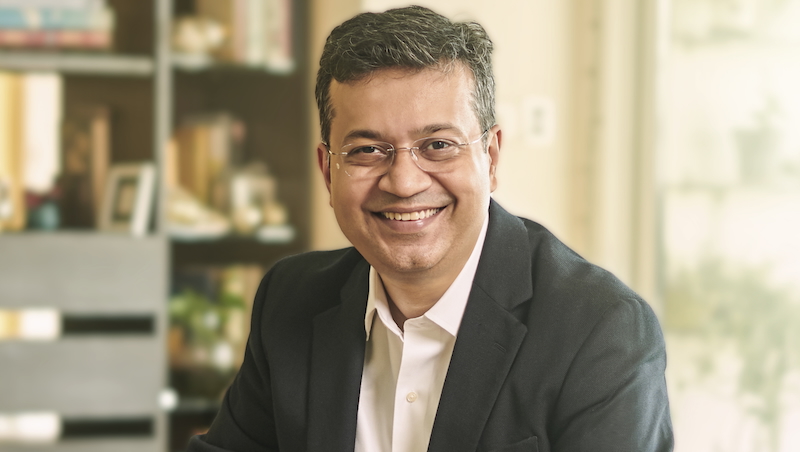
    NEW DELHI:  Gaurav Banerjee, managing director and chief executive of Sony Pictures Networks India (SPNI), has been named chairman of the Confederation of Indian Industry’s national media and entertainment council for 2025-26. The move signals CII’s push to turbocharge the M&E sector’s global competitiveness with a focus on policy reform, skilling, tech-creative innovation and inclusive growth.

    Banerjee, who also chairs BARC India, steps into the role at a time when India’s media and entertainment engine is revving up to be a $100bn juggernaut—fuelled by AI, VFX, and a hungry Gen Z audience. His mandate? Drive trust, sharpen policy, and make “Create in India” the global gold standard.

    “At a time when the world is looking to India for inspiration, our M&E industry is uniquely positioned to reflect our cultural ethos while shaping global narratives,” said Banerjee. “We need frameworks that empower innovation, creative-tech and opportunity—without compromising trust or accountability.”

    As council chair, Banerjee will double down on four key levers:

    * Policy and regulation: Partnering with government to streamline norms, fight piracy, and foster a level playing field.
    * Tech meets creativity: Embracing AI, AR/VR and automation to supercharge content quality, personalisation and productivity.
    * Skill-building: Rolling out future-ready courses via the Indian Institute of Creative Technologies to upskill youth in animation, VFX and immersive storytelling.
    * Going global: Backing Indo-foreign co-productions and showcasing Indian stories to the world with tech muscle and cultural soul.

    The CII council under Banerjee will act as a bridge between industry, academia and government—taking on thorny issues like fair monetisation, content ethics, data privacy and equitable tech access. Expect sharp focus on regulating generative AI without stifling innovation.

    A filmmaker by training and former journalist at Aaj Tak, Banerjee brings over two decades of experience to the table. At SPNI, he has been the force behind bold content bets and digital pivots—balancing creative risk with fiscal discipline.

    His new role is likely to give India’s M&E sector the push it needs to move from scale to stature on the global stage.

  • Union cabinet clears AVGC National Centre of Excellence

    Union cabinet clears AVGC National Centre of Excellence

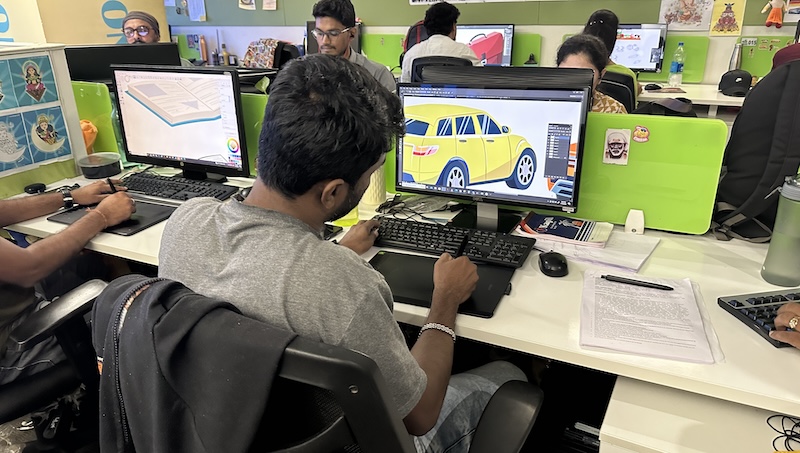
    MUMBAI: The Modi-led central government is putting its might behind the AVGC (animation, visual effects, gaming, comics &XR ) component of the media & entertainment sector. It has followed up its announcement a couple of weeks ago about the setting up of a National Centre of Excellence (NCoE)  in Mumbai by getting the plan cleared by the  union cabinet.

    The NCoE is planned to be set up as a section 8 company under the Companies Act 2013 with equity participation from the Federation of Indian Chambers of Commerce & industry  (Ficci) and the Confederation of Indian Industry (CII) and the Indian government. More than  Rs 500 crore is to be pumped into the centre by the government, possibly through the National Film Development Corporation (NFDC). .

    Provisionally named the Indian Institute for Immersive Creators (IIIC), the center aims to revolutionise the AVGC sector and foster innovation in immersive technologies. It is planned  to be modelled after the Indian Institutes of Technology (IITs) and Indian Institutes of Management (IIMs) with a sharp focus on creating content for India and the world.

    A press release issued by the ministry of information &  broadcasting on 29 September said that the idea is to create “a world class talent pool in India to cater to the Indian as well as global entertainment industry and make India a global hub for AVGC.”

    With rapidly evolving technology and increasing internet penetration all across the country, coupled with one of the cheapest data rates, the usage of AVGC-XR globally is poised to grow at an exponential pace.  This is bound to create abundant opportunities, particularly through the National Centre of Excellence (NCoE).

    Some of its key objectives are:

    * Focusing on creating Indian IP
    * Leveraging India’s cultural heritage in new age
    * Create a multiplier effect in the industry
    * An industry led initiative, in partnership with state and academia
    * Integrated focus on education, skilling industry, development, innovation
    * Hub and spoke model of development to be followed
    * IIIC as the hub and several centers as its spokes dedicated innovation and research fund to promote start-up ecosystem.

    The NCoE is being planned to provide a fertile platform for immersive tech – including virtual reality, augmented reality, mixed reality, 3D modelling, animation, comics and gaming – by offering cutting-edge training and integrate India’s rich cultural heritage with modern technology, fostering the creation of indigenous intellectual property (IP) and building the future of India’s digital creative economy.
    The target is to create an estimated 500,00 jobs,  with students gaining  practical experience through industry-driven courses, ensuring they are job-ready upon graduation. Those graduating will be provided with internships while start-ups will be mentored.  

    It may be recalled that union minister of finance & corporate affairs Nirmala Sitharaman had announced in the 2022-23 budget that an AVGC task force would to created. The NCoE is one of the recommendations of the task force.

  • Earlier, there was a creative courage to be roughly right, rather than precisely wrong: CII The Big Picture Summit 2022

    Earlier, there was a creative courage to be roughly right, rather than precisely wrong: CII The Big Picture Summit 2022

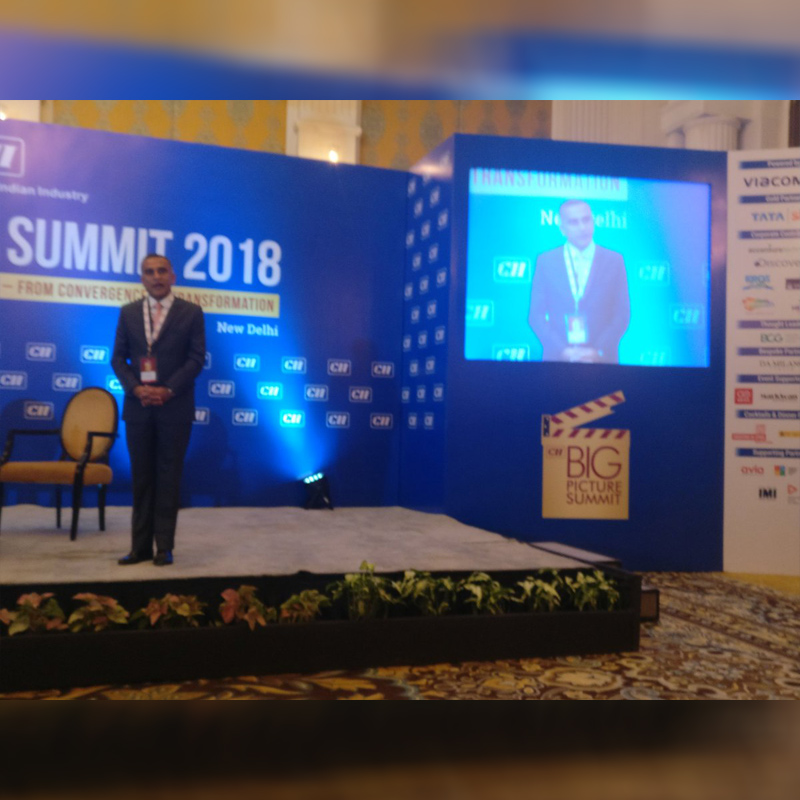
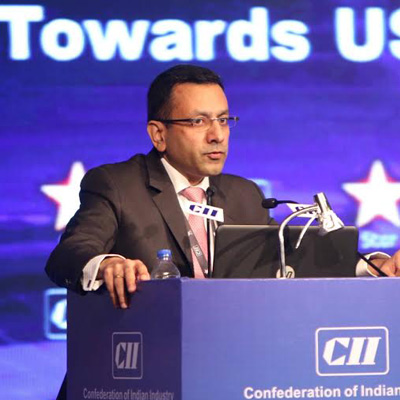
    Mumbai: The Big Picture Summit 2022, organised by the Confederation of Indian Industry (CII) on 16 & 17 November saw the presence of various senior executives and officials from the advertising, film, TV, marketing, and OTT fraternities.

    On a panel discussion on 17 November, Madison World chairman and managing director Sam Balsara brought to the fore that advertising has been through a lot of changes. Opening the conversation, he said, “I started work in 1972, and advertising was a few thousand crores, and there was a time advertising was merely about announcing product availability and making a manufacturer’s statement – that I am the best – this was considered a good advertising approach probably for decades.”

    He added that everything has changed, but on another level, you can argue that not much has changed. He looks back at his favourite definition of advertising, which was given by a humorist – called Stephen Leacock – “Advertising is the science of arresting human intelligence long enough to get money from it.”

    Balsara goes on, “I haven’t come across any definition that, ideally, more accurately describes advertising. The fundamentals of what we try to achieve in advertising haven’t changed all that much. Sure, volumes have changed. Advertising cost a few hundred crores, which was the total outlay of AdEx. It is currently worth around Rs 90,000 crore. Global AdEx, just for perspective, is now $880 billion. So surely advertising works for marketers, and I think there is widespread acceptance that advertising is indeed the gas that fuels the entire economy or the machinery that keeps the wheels of the economy moving.”

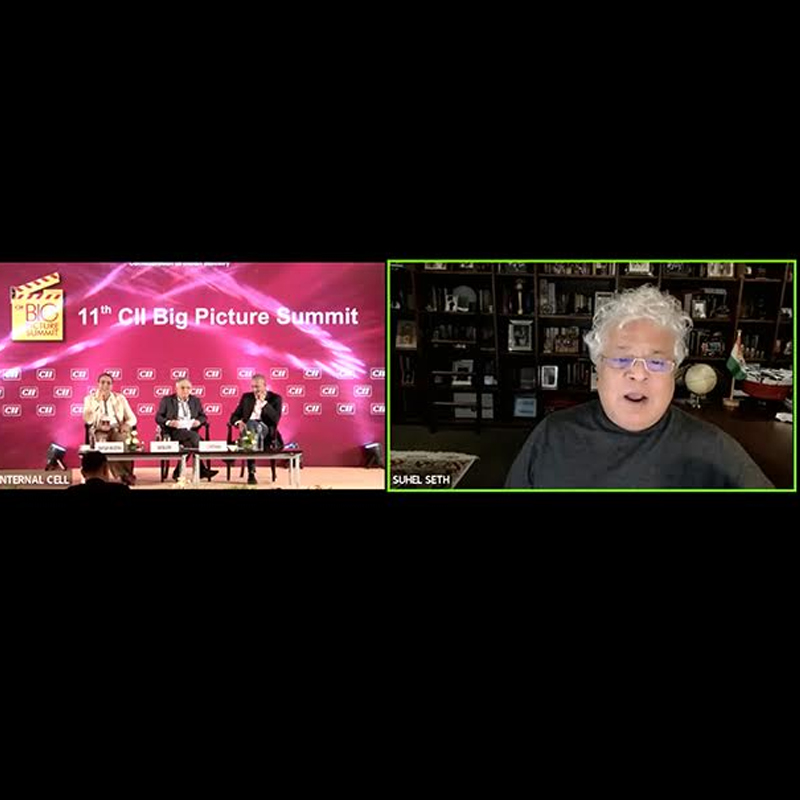
    Taking the discussion further about how advertising has changed, columnist and Counselage India founder and managing partner Suhel Seth expressed, “I think advertising has changed for the worse. Earlier advertising was about civility and about creating things in partnership with clients, and the relationship was both mutually beneficial and one of respect. Sadly, nowadays, agencies are treated by clients like vendors, and the relationship by and large has become unequal.”

    He understands that previously, there were times in advertising when they sat and co-created campaigns, but those were created on the basis of deep consumer insight and a rigorous approach to consumer behaviour learnings and insights that one could then weave and work into the narrative of the creativity that was produced.

    He discussed, “We don’t get the kind of people we used to get in advertising in the good old days, and the reason is we don’t pay enough. When you pay peanuts, you get monkeys – and the tragedy is that advertising agencies are paying peanuts because clients are monkeying around with advertising agencies who don’t have the courage to tell the clients that they don’t know what they’re talking about.”

    “In the good old days, when the client asked us to jump, you would say ‘why’- today you ask ‘how high’. When the relationship dramatically alters and changes and becomes a master-servant or a master-slave relationship, advertising and creativity suffer,” pointed out Seth.

    He also reminisced about how earlier liberal arts people also staffed client offices. “I have no grouse against MBAs, but MBA has been the worst disaster for advertising agencies because people who have done management by rote, who have no idea of Shakespeare or Tagore, who have no idea about the sensitivities of music, are asked to produce advertising that is bereft of sensitivity,” he states.

    Seth went on to say that he has a different definition of advertising. For him, the purpose of advertising is to invent desire. “It is not to inform – for that you got to go to Google, Yellow Pages or Wikipedia. What I think advertising was all about – is that it was all about creating magic. It was about engaging the consumer with the brand through the medium of creativity.”

    He also shed light on the proliferation of media. In the previous days, the clients would ask about hoardings, TV, and cinema – that’s about it. Today’s spread is massive—it’s digital. India has changed dramatically. It is no longer consuming advertising that is English-speaking; it is consuming advertising that is vernacular. It is regional to the point where the regional influxes are actually carried forward pan India.

    Expressing his views, Seth said, one of the dramatic changes is that, due to the rush that everybody seems to be in, less time is spent on strategy and agencies are becoming more tactical. That’s not advertising; that’s salesmanship.

    “They also don’t prepare for brands with the rigour that we used to. For example, there were partnerships between Madison’s creative and media agencies. “Now, rather than partnering communication, I see media agencies as a post box or an amplifier for disseminating communication,” he said.

    Seth also put forth his concern, saying that the advertising industry has stopped being inventive and innovative. “We have become more and more risk averse. Because you are talking about billions of dollars being spent, and no one wants to take the risk,” he said.

    “Another thing is that people are wanting to manage not the consumer, but the client. When you start managing the client, you immediately forget the consumer. Nowadays, it’s very important for the CEO and his wife to be happy, rather than the other way round,” he said.

    “Today, we are also fraught with a lot of social tensions in our society. Religion, which was in the background, is now in the foreground. You have discrimination; you have political grandstanding. People using social media are bullying and trolling clients and companies to withdraw advertising, which is actually an attempt at conveying something creatively,” Seth went on to say.

    Ogilvy India head of strategic planning Rohitash Srivastava feels that in an ideal scenario, advertising has become complete. “Earlier we were worried about changing people’s thoughts and beliefs. And the behaviour part was kind of missing, you change a person’s mindset and then you leave him to behave the way he wants to. Now with digital and technology coming in, the promise of technology was that we are going to change behaviour, we are going to drive behaviour change. So that was the ideal scenario. And that’s why I’m saying that now advertising in an ideal world is not just about thinking and feeling; it’s also about thinking, feeling, and doing,” he pointed out.

    He goes on to explain that, in reality, the advertising industry has become more schizophrenic than ever. And there is a lot of speed, but there is no velocity.

    Srivastava adds, “There’s no sense of direction; you’re trying to do a lot, but there is no bigger plan. And this whole short-termism thing is really killing the industry. And I’ve seen so many marketers behave like salespeople. Now, marketing’s role is to create a facilitated environment, so that the scalability of the product goes up, not the sales themselves. But today’s marketers are so worried about that very moment. And when sales happen, they forget the larger tasks of marketing and advertising to create conditions for scalability over weeks of marketing. That is exactly what I mean by ‘short-termism.’”

    Also, information is being confused with knowledge, he said. “There’s a lot of data out there, and it’s called dumb data because you have to look for the right meaning to make sense of it. And then within that, there is data that is readily available, and then there is long-term data, equity studies, and all of that amounts to a lot of hard work. This whole desire to go through spreadsheets and excel sheets is blinding us to the human stories that are happening and what people are really thinking. So whatever data comes in, you want to react to it,” he said.

    Srivastava revealed, “The discernment is going away. And this whole thing about people being more precisely wrong than roughly right—before, being roughly right was such a big gift—In fact, we were paid so much because we could make decisions in grey areas, and there was a creative courage to be roughly right. But this whole obsession, to be precise, is making us precisely wrong.”

    TAM Media Research CEO LV Krishnan commented on the creative aspect of advertising, “The things have changed so much in the last 50 years that we’ve seen advertising kick start in India. And the interesting thing is the fact that the one thing that hasn’t changed between the first year of advertising and today is that nobody knows that the 50 per cent that I spend on advertising is a complete waste.”

    He explained further that until and unless the whole industry puts a finger on it, testing in terms of advertising will continue.

    Krishnan added, “Earlier, for every piece of communication, there was a brand and an advertising positioning strategy, and once they were done, one would know exactly what kind of execution needed to be done. But today, even if those two definitions are not thought through, execution is already happening on the ground to create communication effectively.”

    He is of the opinion that, now that everything is digital, it’s no longer a strategy. There is simply a local influencer using a brand and attempting to showcase it to his or her followers in order to demonstrate that this is the brand that they use. These influencer and social media marketing campaigns are not aligned with the national campaign that is run on television or in national print. So it’s becoming more tactical. Most of the campaigns we’re seeing now are more tactical sweatshop in nature.

    Balsara went on to reveal that out of the $880 billion, 60 percent of all advertising money today is spent on digital, and not on print, television, or any other medium. He believes that the arrival of digital has actually killed the big idea, which we all used to crave, and big production budgets are now a thing of the past.

    Srivastava agreed that digital is a big part of the clients’ spends, and even within digital, the performance part, which is called performance marketing, is really becoming significant. And to that extent, the role of the big idea sometimes gets compromised.

    Seth said, “Clients and agencies want one particular campaign idea and then try to force potential into several other media options, whether it is YouTube or Twitter.”

    “It is tactical; advertising is no longer about the consumer. It’s about the client. And when advertising becomes about the client, advertising suffers because the consumer is sidestepped and disregarded,” he wraps up.

  • Apurva Chandra talks about credibility of social media, RPD and direct-to-broadcast: CII The Big Picture Summit 2022

    Apurva Chandra talks about credibility of social media, RPD and direct-to-broadcast: CII The Big Picture Summit 2022

    Mumbai: At the Big Picture Summit organised by the Confederation of Indian Industry (CII) on 16 & 17 November, among the many dignitaries that were in attendance and spoke on various topics, the ministry of information & broadcasting (MIB) secretary Apurva Chandra was also present.

    On his recent visit to the Global Media Congress in Abu Dhabi, he made some observations and spoke about the same. He raised his concern (as well as the concern of many) with regard to the fact that the use of social media is on the rise and traditional media is on the decline.

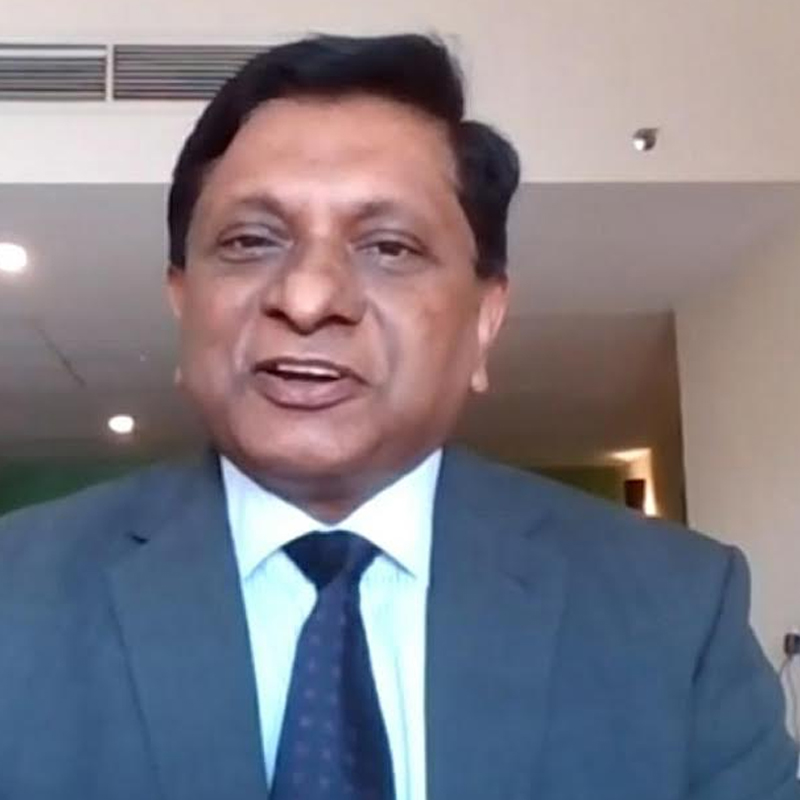
    “The use of social media is increasing – that is how the consumption of media now takes place. And within that too, there is the short video format, which has become more popular. In fact, I was surprised to learn that youngsters now turn to TikTok for search and not Google anymore – TikTok has now become a more popular search engine as compared to Google because nowadays short videos are available for anything and everything,” he stated.

    Chandra elucidated that now there is an issue of credibility. “For people of our age, the credibility of the media is paramount. Achieving credibility in social media will be the challenge. The media authorities will also have to consider that viewers’ tastes are changing towards shorter and shorter versions.”

    He went on to reveal that the next big thing that MIB is working on is direct-to-mobile broadcast. A pilot study by IIT Kanpur and Sankhya Labs on direct-to-mobile broadcasting that had been undertaken in Bengaluru has been successful; a similar pilot study will be launched soon in Noida or someplace near Delhi.

    He added, “There are 20 crore households, 60 crore smartphone users, and 80 crore broadband users. Once we start direct-to-mobile broadcasting, the reach of the TV media would be much higher.”

    Additionally, Chandra mentioned that they are also working on the issue of TRP ratings.

    “The reverse path data (RPD) pilot has also been successful; the report has been submitted. We will now take it forward on integrating more and more RPD. The major concern was that the number of households involved in Barc ratings is very low and it should be increased. Once RPD is implemented, the TRP will become much larger,” he assured.

  • Nilesh Gupta to handle additional charge of branding and creative strategy at Meesho

    Nilesh Gupta to handle additional charge of branding and creative strategy at Meesho

    Mumbai: Meesho announced on Friday that senior director of growth Nilesh Gupta, who has been leading the company’s activation and acquisition arm for the past two years, will now be handling branding and creative services for the company as well.

    Gupta will be in charge of the team that manages brand building and creative strategy, as well as acquisition and activation at Meesho. His expertise in growth & marketing strategy, business analytics, and deep user understanding has greatly contributed to the company’s growth over the past few years. Under his leadership, Meesho became the most downloaded e-commerce application in the world.

    Prior to joining Meesho in 2021, Nilesh was with Kearney, where he primarily worked on the consumer and retail practice, including co-authoring a report with CII (Confederation of Indian Industry) to help unlock the full potential of retail growth in India.

    “Nilesh is strongly aligned with Meesho’s mission to “democratise e-commerce for everyone” and passionate about solving for Bharat,” said Meesho CXO of growth Megha Agarwal. “His experience in the arenas of acquisition and activation combined with retail will help contribute immensely to Meesho’s accelerated growth. As we further our mission to democratise e-commerce for everybody and bring the next billion users online, user growth will be a key area of focus for us.”

    Gupta strongly believes that Meesho has challenged conventions in the Indian e-commerce landscape. He adds, “Meesho has made significant strides towards democratising e-commerce in India, and I have been fortunate to witness this 10X growth firsthand over the last two years. I am thrilled to take up the branding and creative mandate in addition to my current responsibilities at Meesho. We have a clear vision and will continue to innovate to become India’s preferred e-commerce destination.”

  • Boosting local market manufacturing will help the Indian M&E industry to become a supplier to the world: CII Big Picture Summit 2022

    Boosting local market manufacturing will help the Indian M&E industry to become a supplier to the world: CII Big Picture Summit 2022

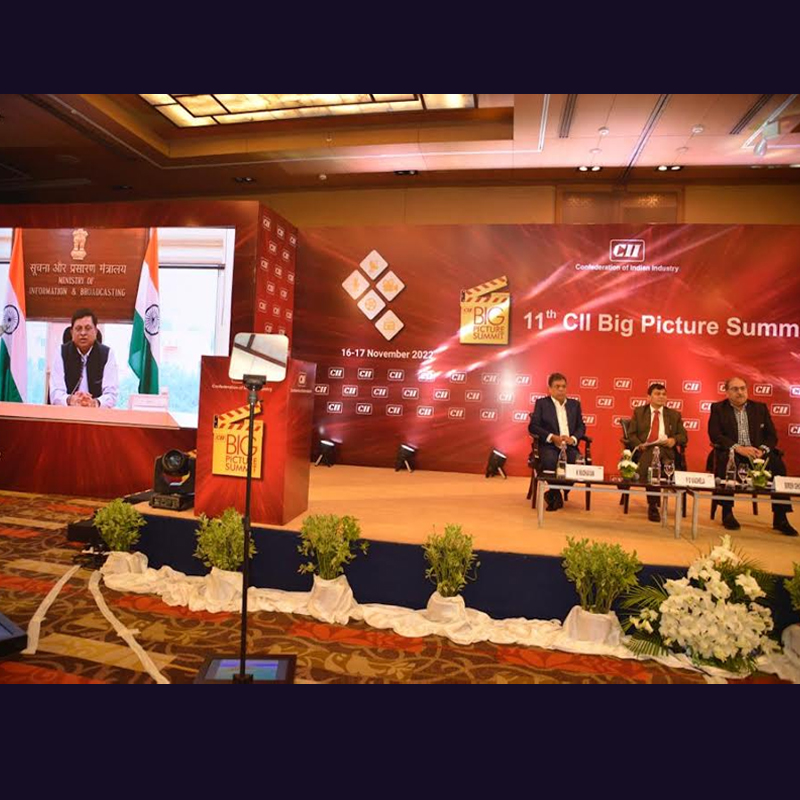
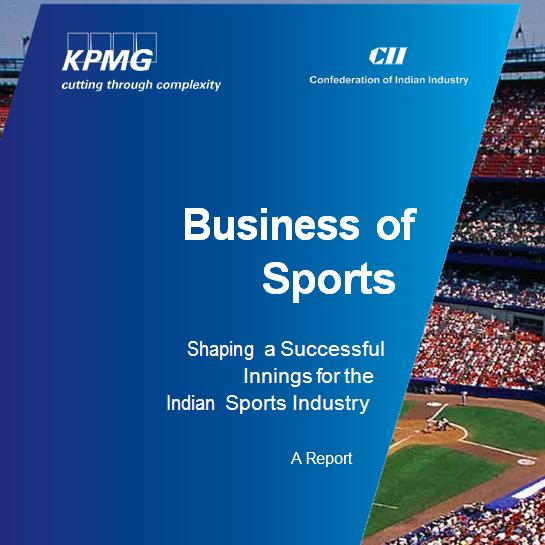
    Mumbai: The 11th edition of the Big Picture Summit 2022, organised by the Confederation of Indian Industry (CII), is a two-day event that is taking place on 16-17 November. The Summit witnessed the participation of various eminent panellists and marked the release of the CII-BCG report on “Shaping the Future of Indian M&E” and the CII-IBDF-KPMG report on “Sports Broadcasting in India.”

    CII Big Picture Summit 2022, with a range of sessions, has participation from content creators, broadcasters, buyers, studios, production companies, publishers, distributors, and developers across the gamut of the Media & Entertainment (M&E) landscape.

    On 16 November, the first day of the event, discussions centred around global trends and opportunities, the bounce-back of revenues to pre-pandemic levels, domestic consumer preferences, and local opportunities for a global audience through digital platforms that have never existed before, especially for the creative industry, storytellers, and technology providers.

    Speaking at the event, the ministry of information and broadcasting (MIB) secretary Apurva Chandra, stated that MIB, along with the Indian M&E industry, has set a goal of making the M&E sector a $100 billion industry by 2030. Chandra acknowledged the announcement by the ministry on the incentive policy for cinema at the Cannes Film Festival this year, out of which many proposals have been accepted for foreign productions in India.

    He further revealed, “The animation, visual graphics, gaming, and comics (AVGC) taskforce, which was launched as a part of the budget 2022, has completed its deliberations and is in the process of finalisation. The government will soon work towards actioning on the recommendations that come out of the report.” As regards the broadcasting sector, Chandra stated that the ministry has recently revised the guidelines for uplinking and downlinking for satellite television channels in India to ease the burden of compliance on channels.

    Telecom Regulatory Authority of India (Trai) chairman Dr. P.D. Vaghela highlighted the significance of the Indian M&E sector in the national growth story and economic prosperity. With about half of the population being young, the Indian demographic dividend presents a huge opportunity for Indian M&E services. Television is the largest and fastest-growing segment, representing around 50 per cent of the total media and entertainment revenue.

    He added that during the last decade, the M&E sector in the country has undergone several radical changes and is experiencing a paradigm shift due to the advancement of technologies and innovations in the creation, distribution, and consumption of media. He stressed that the traditional media would lose ground unless it understands, adopts, and merges its own business models with society 5.0, AI, machine learning, and other technologies that are being unleashed. Vaghela further mentioned, “The government needs to come out with policies that are flexible in nature and allow new players to easily enter the industry while at the same time not strangling the traditional sector with numerous regulations.”

    MIB joint secretary Sanjiv Shankar mentioned the various efforts made by the ministry in the recent past to ensure significant interventions in the regulatory framework, largely based on ease of doing business, Atmanirbhar Bharat, and Make in India. He stressed on the Broadcast Seva portal, which offers a single point facility to various stakeholders and applicants to apply for various permissions, registrations, licences, etc., for the development and integration of the broadcast industry.

    CII National Committee on media & entertainment chairman and Disney Star country manager & president K Madhavan, in his opening remarks commended CII for bringing together key stakeholders and policy makers together to discuss the future of India’s M&E industry and its potential in shaping societies. The M&E sector in India is underpenetrated, with a contribution of 0.9 per cent to the GDP compared to 3-4 per cent for many developed countries.

    He further advocated the potential for growth for the industry, owing to the presence of 300 million households in India, of which about 100 million households still have no access to television headsets. He further urged for timely support by policymakers in the areas of privacy, ensuring a supportive IPR protection measure, and announcing content-related policies while taking note of changing consumer habits and helping the industry to reinvent itself and adapt to creating travelable content.

    CII National Committee on media & entertainment chair & CII sub committee for AVGC & Immersive Media – vice chairman, and Technicolor India country head Biren Ghose in his closing remarks mentioned about the need to evolve in the ways content is being created and urged the stakeholders to look at growth from a different lens, particularly away from a linear vertical growth. Moreover, he mentioned fostering collaboration between government, industry, and academia for the continued growth of the M&E sector.

    Furthermore, Trai advisor Anil Bharadwaj said that while Trai is trying to enable a positive, consultative-based, industry-friendly approach with regards to the new tariff order (NTO), the industry needs to focus on building capacities and centres of excellence.

    CII has been driving several initiatives to take the Indian M&E sector to new heights and expand its global footprint in close collaboration with MIB. These include representing the Indian film and entertainment industries at the prestigious Cannes Film Market for the past 20 years, at the Berlin Film Festival for the past five years, and at the Toronto Film Festival for the past three years. CII’s strength in policy advocacy is acknowledged and accepted by both the government and media industries.

  • Prasar Bharti collaborates with IIT Kanpur for direct-to-mobile broadcasting project

    Prasar Bharti collaborates with IIT Kanpur for direct-to-mobile broadcasting project

    Mumbai: Today, there is a shift in viewing habits from linear television to OTT and from theatres to OTT. The rise in content creation is leading to more and more jobs for people. With the arrival of 5G, there is the possibility of direct-to-mobile broadcasting. In a collaboration, Prasar Bharti and IIT Kanpur have come up with a proof of concept whereby, with a small attachment, there can be a direct-to-mobile broadcast. So, without purchasing data, there can be 100-200 channels streamed direct to mobile.

    Speaking at Ficci Frames Fasttrack 2022, I&B secretary Apurva Chandra said, “Without data and high-quality internet, users will be able to see high-resolution movies and listen to digital radio on their mobile phones. This change is coming. It will happen.”

    He also announced that a report on the creation of an AVGC task force will be submitted soon. He noted that there were reports on skills, gaming, education, incentives, and other policy aspects within the task force. They are all being combined and will be submitted to the authorities. He added that the report will be adopted during the course of the year.

    “AVGC is the future of this country. The best Hollywood films are being created in Bangalore and other places. AVGC will be the next great revolution like IT was 30 years ago,” he stated. Furthermore, he mentioned changing the cinematography act to include anti-piracy provisions. Also, there will be an age classification within the U/A category. The aim is to bring in amendments to the Act and put it before Parliament during the winter session.

    He further added that the AVGC centre of excellence, which has not seen the light of day over the past six years, aims to do this only in collaboration with the private sector. An in-principle decision has been taken in this regard. A total of 26 per cent of the task force will be owned by the Confederation of Indian Industry (CII), 48 per cent by the ministry of information and broadcasting (I&B), and 26 per cent by the Federation of Indian Chambers of Commerce & Industry (Ficci).

    He also said that the media and entertainment industries should target a combined size of $100 billion by 2030. He noted that during National Cinema Day, theatres were full even in the morning. That, he said, shows that you can get people to view movies in theatres as long as the ticket pricing is right. National Film Development Corporation of India (NFDC) will be the cinematic arm of the I&B ministry. The four film units will be merged into one. The film facilitation office will be revamped, he concluded.

  • Mobavenue to ride the growth in the D2C market

    Mobavenue to ride the growth in the D2C market

    Mumbai: Mobavenue, a high-performance user acquisition platform using its dynamic creative, programmatic advertising, and proprietary in-house AI-based media buying platform, is set to ride the growth in the D2C market, which is expected to rise from $12 billion in FY22 to $60 billion by FY27.

    The expansion of the start-up ecosystem as a whole, which has produced well-established firms in the payments, logistics, app development, and marketing industries, has also aided the D2C sector by giving rise to several enablers and decreasing entry barriers. Direct-to-consumer firms are upending the retail industry by eschewing established distribution channels and passing the cost savings to their clients.

    According to a recent analysis released by e-commerce enablement platform Shiprocket in cooperation with CII (The Confederation of Indian Industry) and Praxis Global Alliance, India’s D2C (direct-to-consumer) industry is expected to reach $60 billion by FY27. Many factors are working in favour of D2C industry expansion, including a youthful, active populace. Experts predict that by 2030, consumer spending will reach four trillion dollars. Speculation suggests that by 2030, spending on food, clothing, transportation, communication, and personal care will be doubled.

    It is essential for a D2C player to quickly capture market share in sectors where traditional enterprises with established distribution channels and sizable client bases compete. The quickest way to do this is through aggressive marketing.

    Mobavenue added that it has generated good traction in leading D2C companies with the help of its in-house products in programmatic acquisition, re-targeting, and growth management. With access to internal and external data management systems (DMP), Mobavenue generates user buckets that span different locations and strongly prefers D2C customers’ product offerings. Mobavenue’s in-house DMPs are the integrating systems that gather, organise, and activate first, second, and third-party audience data from various sources—allowing them to discover unique customer insights.

    Mobavenue, with its consolidated database, dynamic creative, programmatic advertising, and proprietary in-house AI-based media buying platform, offers an extra benefit for D2C businesses: it enables enterprises to develop connections with target consumers through continued interaction with their brand. The significant amount of first-party data that D2C companies gather at each stage of the customer journey is one of the driving forces behind direct-to-consumer marketing. Coupled with Mobavenue’s unique marketing solutions, D2C businesses get access to a marketing superpower with data included in a mobile in-app advertising strategy.

    Mobavenue Media co-founder Kunal Kothari said, “In one of our very effective marketing campaigns for a leading D2C fashion e-commerce client, we collaborated with the client to define the Ideal Customer Profile (ICP) and to find certain target populations who fit the specification. We observed that smaller towns, which up until now haven’t had access to fashion and lifestyle products suited to their requirements, make up a significant portion of the market for these D2C brands.”

    He added, “The Tier II, III, and IV cities are mostly responsible for the D2C growth since these areas have wealthy yet brand-starved consumers who are open to trying new items. With the help of regional and vernacular publishers, in addition to premium listings, we were able to scale into these markets and reach new consumers. Once our DMP recognised the persona of a general user, we extended the traffic and witnessed gradual growth in numbers.”

  • AVGC fastest-growing sector in South Indian M&E industry; TV leads by share: CII

    AVGC fastest-growing sector in South Indian M&E industry; TV leads by share: CII

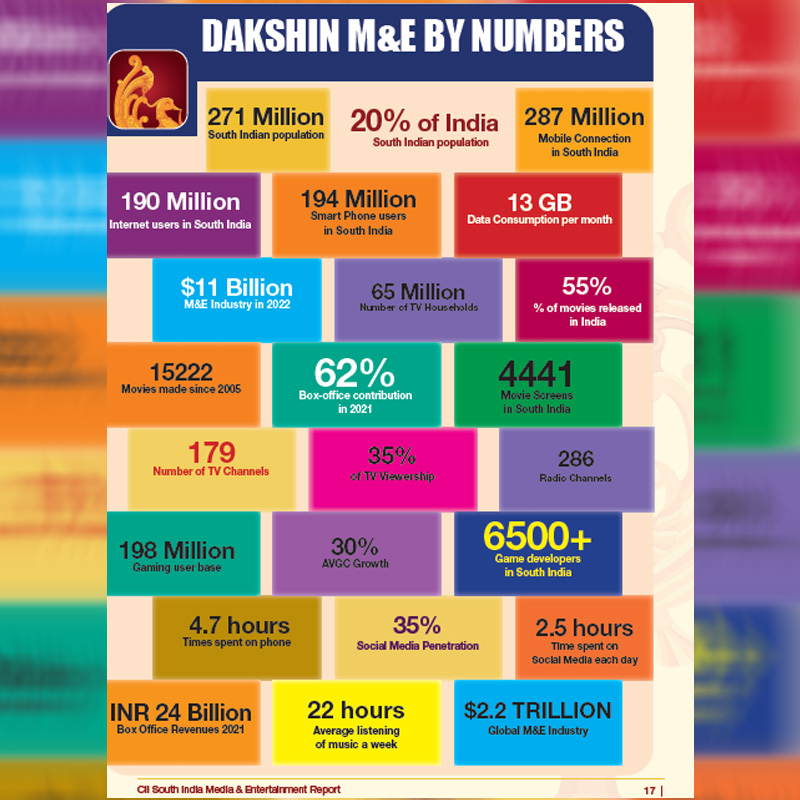
    Mumbai: The South Indian media and entertainment (M&E) sector, with a market value of around Rs 70,000 crore and a share of 40 per cent, will play a critical role in assisting India to follow a sustainable path to becoming the world’s largest credible marketplace, with M&E contributing two to three per cent to the country’s GDP. The findings were revealed in the CII Southern Region’s report titled ‘Regional is the New National – Way Forward for the South Indian Media & Entertainment Industry.’

    Television continues to occupy a major 45 per cent of the South India M&E market share. By the end of 2022, it is expected to be worth Rs 33,100 crore, with a 10 per cent compound annual growth rate. The south Indian TV sector had a market size of Rs 36,000 crore in 2019, which dropped to Rs 29,000 crore in 2020 because of the Covid-19 epidemic, but recovered to Rs 30,100 crore in 2021. It is expected to grow even more in the coming years, reaching Ra 33,100 crore in 2022 and surpassing 2019 by 2024.

    Subscriptions continue to be the most lucrative source of revenue for television, followed by advertising and programming. According to industry estimates, TV stations in South India earned Rs 25,200 crore in subscriptions, Rs 9,360 crore in advertising, and Rs 1,440 crore in programming in 2019. Due to the pandemic’s impact, these figures fell in 2020 to Rs 20,300 crore for subscriptions, Rs 7,540 crore for advertising, and Rs 1,160 crore for content-based revenue.

    AVGC is the fastest growing sector in the South Indian M&E industry, with a CAGR of 30 per cent. It is expected to account for up to 10 per cent of the overall M&E sector by 2030. The budget allocation for VFX in high-budget films is expected to rise to 30-35 per cent by 2023, up from 25-30 per cent currently.

    Establishment of a state-of-the-art 30,000 Sq ft Centre of Excellence in Whitefield, Bengaluru, and the construction of Image Towers in Hyderabad, which is a 600,000 square feet dedicated space for the AVGC-XR sector, has contributed to this growth.

    More than half of the films released in the last year were in one of the four south Indian languages. The South Indian film industry has also produced some of the most successful box office hits in recent years. It is expected to be worth Rs 6050 crore by the end of 2022, with a compound annual growth rate of 13 per cent.

    Southern films have performed exceptionally well on OTT platforms, and they are among the most watched films in Indian cinema. With a compound annual growth rate of 25 per cent, the South Indian streaming and digital media market is expected to be worth Rs 16,200 crore by the end of 2022, nearly two-and-a-half times the film revenues. Disney Hotstar, Amazon Prime, Zee5, Netflix, and SonyLiv are aggressively establishing themselves in the southern states.

    The South Indian print industry market is expected to be worth Rs 9,900 crore by the end of 2022, with radio, digital, OTT, and music following close behind. Further, South India’s five states account for 286 of India’s total 1369 radio channels, accounting for a 21 per cent share of the total radio pie in India.

    “South India has continued to play an important role in the evolution of the M&E industry, owing to the popularity of vernacular content, rapid digitisation and connectivity, an evolving ecosystem, global viewership, and personalisation,” the report stated. “Tamil Nadu, Kerala, Andhra Pradesh, Telangana, and Karnataka, the five southern states, have been at the forefront of leading the transformation of India’s M&E sector.”

    “The growth story of the South Indian M&E sector, like that of the rest of India, continues to be unique and multimodal, with digital and traditional media co-existing and growing with very different underlying trends,” it added.