Tag: Christopher Slaughter

  • Cable & broadcast biggies discuss issues on day 1 of CASBAA Convention

    Cable & broadcast biggies discuss issues on day 1 of CASBAA Convention

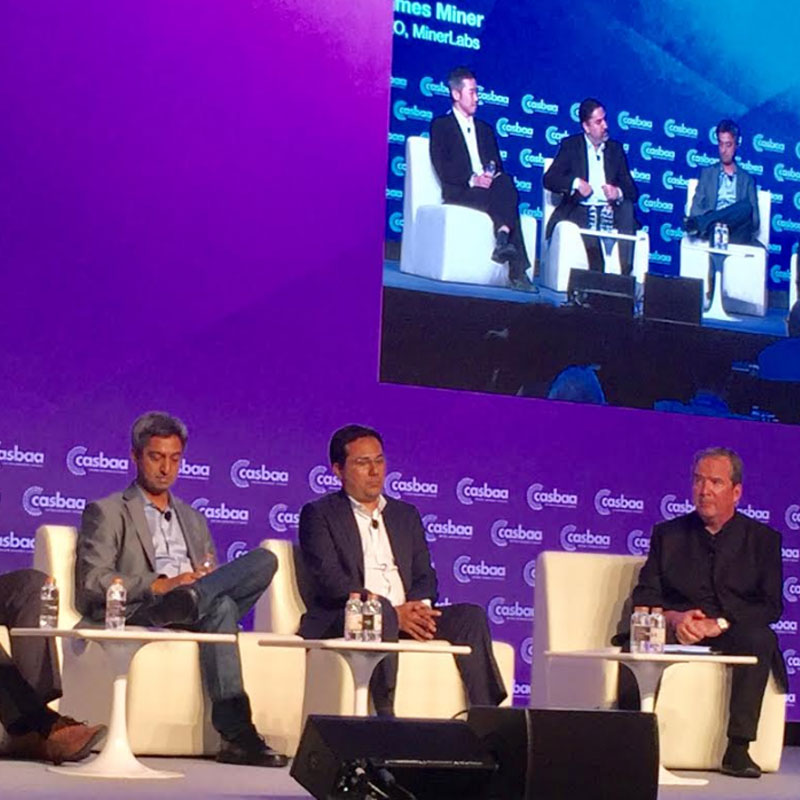
    MACAU: The CASBAA Convention 2017 in Macau kicked off on 7 November 2017 with welcoming remarks from 21st Century Fox CASBAA Board Chairman and SVP Public Affairs Asia Joe Welch, during which he highlighted the association’s escalating efforts to curb the on-going regional revenue leakage caused by piracy.

    “Most importantly”, said Welch, “CASBAA recently launched the Coalition Against Piracy, funded by 18 of the region’s content players and distribution partners”.

    In the meantime, CASBAA CEO Christopher Slaughter, emphasised the yet to be fully-realised digital dividends for the Asia Pacific.

    According to CASBAA, TV production quality is soaring across Asia. Audiences are engaging as never before. New ways of video distribution such as over-the-top (OTT) broadband services are reaching millions of additional customers across a CASBAA footprint that reaches from India and Pakistan to Japan and Korea, from China and Mongolia to Australia and New Zealand.

    Operator workshops and conference sessions such as “New Ecosystems: Myanmar & Cambodia” and “OTT in China” showcased the plus side, while digital negatives were highlighted during sessions such as “Under Attack” and “the ISD Battle”, as well as clear-eyed examinations of the India market and new content offerings both domestic and international.
    Some noteworthy points mentioned through the day:

    New Wine, New Bottles: Astro COO Henry Tan said,“We need to expand beyond our domestic market, it would be foolhardy to be satisfied, with 75 per cent of Malaysian households. The way the world is going, is mergers, acquisitions, and partnerships.”

    “Last year at the CASBAA Conventions I met with Group M’s Irwin Gotlieb; he told me ‘Bet on transactions’. Since we have 75 per cent market share, how to do that? Home shopping, eCommerce. We have to see ourselves as a consumer care company, our biggest asset is our customer base.”

    On Piracy:

    Premier League Kevin Plumb said,“In the past 18 months the illegal broadcasting of live Premier League matches in pubs in the UK has been decimated.”

    Sky UK Matthew Hibbert said,“Site-blocking has moved the goalposts significantly. In the UK you cannot watch pirated live Premier League content any more.”

    Federation Aganst Copyright Theft (FACT) Kieron Sharp said,“The most successful thing we’ve done to combat piracy has been to undertake criminal prosecutions against ISD piracy. Everyone is pleading guilty to these offences.”

    UK Intellectual Property Office (UKIPO) Ros Lynch said,“The UKIPO provides intelligence and evidence to industry and the Police Intellectual Property Crime Unit (PIPCU) in London who then take enforcement actions. We first heard about the issues with ISDs from TVB in Hong Kong and we then consulted the UK rights holders who responded that it wasn’t a problem. Two years later the issue just exploded.”

    On New Content New Platforms:

    Vice Media Hosi Simon said, “The business isn’t in some regional office where people send out emails, it’s about local offices building local content.”

    “What Vice trades in is being able to identify emerging trends – artists, music, movements – that young people care about. We trade on an understanding about cultural diversity and nuance, and we don’t believe there is just one global lens, the excitement is about the local story.”

    The Death Of Television?:

    The Promotion Fix @ The Drum Sam Scott said,“As Ad Contrarian Bob Hoffman said, we need to counter the falsehood that TV is dying by pointing out that it’s having babies.”

    “Marketers are not normal people. We love social media, but most people do not. 93% of marketers are on LinkedIn. Among everyone else, it’s 14 per cent. 81 per cent of marketers use Twitter. Everyone else, 22 per cent.”

    “The marketing industry has its own ‘fake news’ problem. Too many marketers – especially in digital marketing – accept what is said in our industry’s echo chamber without thinking critically or asking for evidence.”

    “Don’t let those who are biased towards digital mediums and tactics frame the debate.”

    On C-band and Satellite:

    APT Satellite Huang Baozhong: “With complementary OTT services, we add value instead of lowering prices.”

    “If other countries will follow [the US/FCC]: Japan, Europe, Australia, Korea and others … this will completely destroy the broadcasting industry in C-band.”

    ABS Raymond Chow: “C-band is a precious resource, not only for broadcast, but also mission-critical for military applications.”

    On OTT:

    BrightCove Greg Armshaw said, “Really start understanding your customer base is the essential to selling OTT …. Even though there are free offers, not everyone is signing up to it, so personalised offers, being flexible about bundling and looking at marketing partnerships are key…”

    Fox Network Group Rohit d’Silva said, “Data science is now front and centre for a multitude of industries. In the media industry the sooner they understand that data science is a huge part their operations, then they won’t get left behind.”

    Sony India Uday Sodhi said,“There is a huge mindset change required, when you move from traditional the broadcast business, to digital platforms. You have to deal with the huge explosion of data that you develop.”

  • MIB secy Sinha, Viacom18 CEO Vats to speak at CASBAA convention in Nov

    MIB secy Sinha, Viacom18 CEO Vats to speak at CASBAA convention in Nov

    MUMBAI: Regional multichannel TV and digital video trade body CASBAA has announced the key themes (and workshop programme) for the CASBAA Convention 2017 to be held in Macau, from 6-8 November.

    The line-up for the convention has been designed “to capture the urgent issues facing our industry at a time of the most dynamic market changes seen in more than 20 years,” said CASBAA CEO Christopher Slaughter.

    CASBAA represents 100 corporations across 20 markets in the Asia-Pacific, from China to Australasia, Japan to Pakistan and encompassing over 623 million Pay-TV subscribers and 2.5 billion broadband connections (source: MPA).

    The full implications of the digital video revolution are at the top of the convention’s agenda, including solutions to the potentially devastating impact of digital piracy, the on-going opportunities presented by local, regional and global OTT platforms and the challenges arising from the mountains of detailed digital data now being assessed by broadcasters, carriers, technology vendors and advertisers alike.

    “The blue-chip list of Pay-TV operators, content creators, broadband carriers, investors, sponsors and regulators attending the convention guarantee unrivalled access to the Asia Pacific Pay-TV and Digital Video decision makers,” said Slaughter.

    In the meantime, through a series of ‘Masterclass’ panels and presentations, the convention programme will deliver:

    – Real-time case studies focused on the crucial battle against on-line piracy, including a few “Wins!”
    – A fresh look at the best performing business models for Pay-TV
    – Deep-dive presentations on the vital security technologies and regulatory “fixes” under debate across Asia Pacific and around the world
    – Close examinations of the new ecosystems and revenue streams now available for the monetisation of emerging digital video markets
    – New insights on the impact of soon to be launched broadband satellite services across Asia

    Plus Understanding the Viewer: a series of closely moderated conference sessions shedding fresh light on the complex worlds of digital media and programmatic advertising.

    The key speakers at the convention include:
    – Samuel Scott, Columnist, The Promotion Fix @ The Drum
    – Hosi Simon, Global General Manager, VICE Media
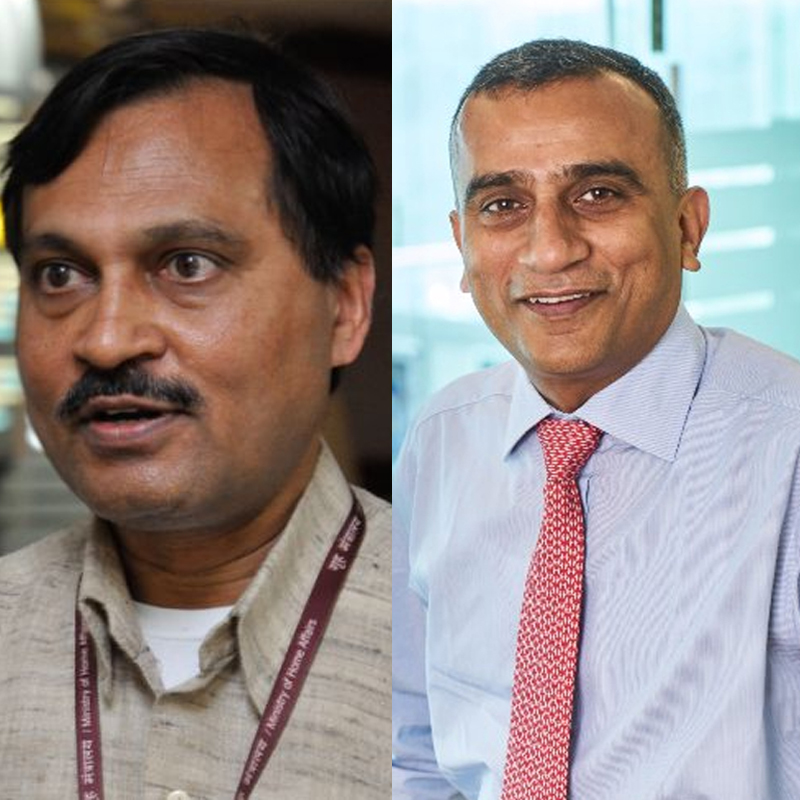
    – NK Sinha, Secretary, MIB, Government of India
    – Dr Ros Lynch, Director, Copyright & IP Enforcement, UK Intellectual Property Office
    – Sudhanshu Vats, Group CEO, Viacom18
    – Birathon Kasemsri Na Ayudhaya, Chief Content and Media Officer, True Corporation
    – Jeremy Butteriss, Managing Director for Global Partnerships, APAC, Google

  • CASBAA CEO Christopher Slaughter steps down

    CASBAA CEO Christopher Slaughter steps down

    MUMBAI: CASBAA has announced that following five years’ service as the Association’s chief executive officer Christopher Slaughter is to step down, effective 31 December. Slaughter will continue as CEO through the remainder of the year while a search is carried out for his successor.

    “The Board deeply appreciates Chris’s stewardship of the Association over the past five years. He has spearheaded structural reform of the organisation, created new events, and delivered on CASBAA’s aim to represent, inform, and connect its membership. We are grateful for his service to the membership and the industry,” said CASBAA board chairman Joe Welch.

    “It has been a tremendous privilege to work so closely with some of the most inspiring leaders of Asia’s multi-channel TV industry, both on the Board and among CASBAA’s members. In addition, it has been an honour to serve alongside the passionate and dedicated staff in the Executive Office. My time at CASBAA has given me a unique perspective on what has been a transformational period in the industry,” said Slaughter. “I want to express my deep appreciation to the Board for this fantastic opportunity over the past five years.”

    Slaughter was appointed as the CEO of CASBAA in October 2012, and had previously served as Convention Director in 2004. Before joining CASBAA, Slaughter held leadership roles in global and regional production, research, and news organisations: APV, The Yankee Group, CNBC, & Asia Business News.

  • Taiwan digital video still underperforming

    MUMBAI: A key meeting of government officials, political leaders, industry regulators, business heads and international and local experts in Taipei has called for removal of investment constraints in the multichannel video industry, and increased attention to online piracy, as the Taiwan market reshapes itself as an all-digital (and often mobile) regional communications hub.

    Participants in the meeting, convened by regional industry body CASBAA on June 22nd, heard that a major hurdle blocking further development of the Taiwan digital video industry is the rigid application of the “No state/No party ownership” rule prohibiting any “government official, political party, or elected official to invest, directly or indirectly”, in cable system operators. ** The meeting heard that the rule is interpreted to prohibit acquisition of cable equities by companies where their corporate parents, several levels up, have even a single share owned by a government entity.

    “Because of these rigid restrictions, only introduced in 2005, urgently needed mergers between telecom carriers (fixed-line and mobile) and cable TV operators have proved almost impossible,” said CASBAA CEO Christopher Slaughter at the end of the meeting.

    Slaughter added that the “No state/No party” investment rule flies in the face of global industry experience over the past 20 years. “This is preventing Taiwan from enjoying the most compelling aspects of the twenty-first century media revolution,” he said.

    Proliferation of online piracy networks were cited as another major problem.

    Representatives of start-up OTT operators trying to market bouquets of programming to Taiwan consumers observed they faced huge obstacles, as long as pirate networks based offshore were free to steal the programs and distribute them for free. They warned that the development of innovative, indigenous Taiwan programming was at risk.

    Earlier points made during the packed agenda for the 130 Taiwanese government and media-industry decision makers included lively discussion of pay-TV pricing issues (the basic tier programming package is tightly controlled) and the desire of the government to promote broadcast of more Taiwan programming.

    By Y/E 2017, online video in Taiwan should attract 15 per cent of US$120 billion in revenues accrued by TV/telecoms industry from traditional free-to-air TV, pay-TV and OTT services, according to research house MPA.

    In the meantime, the rising level of mobile broadband penetration in Taiwan is benefitting cable TV and IPTV operators such as the dominant state-owned telco Chunghwa Telecom as they develop their own local-language, multiscreen services.

    No longer limited to traditional TV viewing, Taiwan’s mobile broadband subscribers are downloading apps and logging-in to pay-TV programming of all kinds. The largest group of OTT followers in Taiwan are young women aged 18-34, some 42 per cent of the total. Together with 18-34 year-old males, almost 70 per cent of OTT subscribers are “binge” viewers.

    While the CASBAA meeting was generally upbeat, warnings of the cost of revenue leakage i.e. piracy) were a recurring theme. “The hugely damaging level of content piracy is not only holding back growth of both traditional pay-TV and innovative OTT offerings, but also the overall economic development of Taiwan as a whole,” said CASBAA chief policy officer John Medeiros.

    “Living with massive revenue leakage from piracy while blocking sufficient investment in the digital economy, Taiwan is falling behind its natural potential as a regional communications hub,” added Slaughter.

    (** 
The island of Taiwan and its 23 million people are served by 61 cable operators, 36 of which are controlled by five Multi-System Operators, plus 25 smaller independent providers. As of Y/E 2016, the five MSOs controlled 73% of Taiwanese cable subscriptions.)

  • 80k illicit streaming consumers lost connections in Asia, CASBAA says

    80k illicit streaming consumers lost connections in Asia, CASBAA says

    MUMBAI: Tens of thousands of consumers of illegal TV services in Asia have lost their connections in recent weeks, as enforcement action against networks operating through illicit streaming devices (ISDs) picks up speed. Asian regional pay-TV association CASBAA applauded recent police actions in Thailand and Malaysia, which resulted in takedowns and arrests of operators of ISD networks.

    “The criminal syndicates selling ISDs have defrauded many consumers into believing their services were legitimate,” said CASBAA Chief Policy Officer John Medeiros. “They are not. And anyone buying an illicit IPTV box takes the risk of losing their money without warning when the network is taken down.”

    After the Thai raids, an estimated 50,000 consumers in Singapore, Hong Kong, Vietnam, Indonesia and other places all lost service, despite having pre-paid substantial amounts for “Expat.tv” services. The enforcement action that shut down the service led to the arrest of two British nationals and one Thai citizen, as well as the seizure of a considerable amount of equipment.

    In Malaysia, police estimated that 30,000 consumers were receiving service from a syndicate illegally retransmitting programming from Astro channels. Six men were arrested in raids in Kuala Lumpur and Johor.

    CASBAA CEO Christopher Slaughter said the TV industry — including creators of all genres of TV content as well as leading distribution companies like Astro, PCCW, and True Visions – are determined to keep up enforcement actions against ISD networks. “It’s important for consumers to understand that if a bouquet of TV programming offered on a box seems “too good to be true”, then it probably is not legitimate,” he said. “Money invested in an ISD is at risk of loss at any time.”

    Consumers also risked infection with malware when they attach ISDs, with their dodgy apps, to home networks, warned Medeiros. “Researchers in the UK have found ISD boxes importing viruses that could allow hackers access to all devices on home networks. This could result in the theft of personal data, credit card fraud or even being held to ransom. It’s only a matter of time before this problem hits consumers in Asia, too.”

    “Legitimate, licensed TV services are a far more reliable and more secure way to obtain programming.”

  • CASBAA India OTT Forum: Asian players in search of a winning formula

    MUMBAI: Catering to regional choices, reasonable pricing coupled with fabulous viewing experience, good user interface (UI) and worthwhile user engagement through membership and social media connect seemed to the gist of “the Asian experience” conversation CASBAA chief executive Christopher Slaughter had with Hooq managing director Salil Kapoor, Spuul chief executive Subin Subaiah and NBA India managing director Yannick Colaco.

    Spuul and Hooq are Asian in nature and are willing to adapt according to every market they enter, including India. NBA (National Basketball Association) too is learning to be a player to contend with in a complex market like India.

    Kapoor admitted that, though Hooq has done well in Philippines and Indonesia and, in a small way, in Singapore, the India story is yet to happen after 18 months of presence in the country. “In the Philippines, for example,” Kapoor said, “We garnered good traction with the strategy of best of Hollywood and local content.”

    However, he added, in India, the audience is wide — different regional languages, dialects, content preferences, classes and masses — and a definite strategy is yet to evolve. Kapoor and others were speaking at the CASBAA India OTT Forum in Mumbai on 3 March 2017.

    NBA entered India with its own content. “Small players who seek a bigger premium have less fan growth,” Colaco observed. “If we want to control the destiny of our brand NBA, we need to be more nimble,” he added. “Our growth will depend on how we engage with the users,” the NBA executive said. Colaco elaborated how NBA, as part of user engagement, had put a reasonably-priced league pass behind a pay wall. “Content users, who bought the passes, have access to 1400 live games, archives, four different angles of game viewing and three types of commentaries,” he said.

    With various tie-ups OTT players are reaching out to maximum audience. Broadcasters, sometimes, Colaco felt, may limit content-providers’ engagement with the users. “But, through our association with Sony 6,” Colaco said, “we bring 14 live games to our audience every week.” Reiterating NBA’s aim to control the “destiny of their users”, the NBA man said they have managed to garner around seven million fans on Facebook and were exploring more efficient ways of engagement.

    Subaiah, who sees Spuul as the company’s livelihood in the sense it being a pure play OTT company with no other agenda, said that they were gathering metrics. “We have experimented and ruled out several content formats such as short form,” he added, pointing out that at times the consumer is challenged to find good content.

    Prodded by Slaughter on revenue in the broadcast versus pure play game, Kapoor said that different players may have experimented with SVoD and AVoDs, but the industry in India seems to be dominated by a couple of large players. He finds TVoDs to be an exciting challenge. He opined weekly passes or sachet pricing may work, but not AVoD.

    Colaco recommended that one needs to grow its fan base for the sake of content. Since the audience is the young generation, content makers/aggregators too need to evolve constantly. Many a broadcaster, he felt, was not always equipped to evolve constantly. Also, he observed, several content formats were inefficient for mobile platform: “We (NBA) shoot at least seven games a week only for the mobile (landscape) audience.”

    When pointed out that audio too was important for sports content, Colaco agreed, and said that they were actively looking at going regional. “We are already having the audio for 600 games in Chinese,” he stressed, adding in three months, NBA planned to have its games commentary in Hindi as well. Supporting the idea, Subaiah said that Tamil content dubbed in Hindi on Spuul was doing well.

    So who’s going to be ahead in the arms race? The Hooq executive felt that, although Bollywood was important, regional content seemed to be critical too. If one (player) is something in everything, there is an apprehension of being rendered irrelevant, Kapoor said, since the raw material (content) is becoming expensive by the day. And then, there is the new girl in town — originals. “How can we leave her alone?” he asked.

    So, there is original versus ‘freemium’ versus regional content. But, Subaiah believes that content, if not backed with worthwhile distribution and sufficient marketing, is of no use no matter how good it might be. The jury seemed to be out on a blend of original and regional coupled with high-decibel marketing.

    Who cuts the ice for this kind of cocktail? All OTT players in India seem to be testing the market and learning and evolving for the last 24 months. But, for how long? And, is it affordable too?

    Kapoor, having also done a successful stint at Dish TV selling satellite connections, however, did make an apt point on freebies being thrown at consumers. “An e-commerce giant is giving away good content almost free (Amazon), a telco (Reliance Jio) is giving data almost complimentary and a broadcaster (Star) is giving most of the content for free,” Kapoor said throwing up his hands, adding that there was a need to stop with such freebies that don’t make much business sense and “consolidate” as India has seen 17 telcom players playing the game initially, but now reduced to just four or five major and serious players.

    But, the NBA India chief was confident that the India code could be cracked. Pointing out that most MNCs believed in the power of India where 500 million people were under the age of 25, Colaco said as his parting shot, “There is an opportunity to reach out to the millenials. Let’s build on the opportunity — it’s tremendous.”

  • How is OTT redefining media: CASBAA announces summit in Singapore

    MUMBAI: CASBAA, the Association for digital multichannel TV, content, platforms, advertising and video delivery in Asia, has announced its 4th OTT Summit, Asia’s OTT industry marquee annual event. A series of panels comprising the region’s leading experts will explore in detail how traditional media is responding to the digital challenges of OTT.

    “We are delighted to be returning to Singapore for the fourth edition of CASBAA’s OTT Summit,” said CASBAA CEO Christopher Slaughter. “While traditional media incumbents remain dominant, there’s no denying the growing impact of over-the-top (OTT) video services, and how they are transforming viewing habits throughout the region. We have been saying it for years, but it’s now increasingly apparent that OTT is truly a big part of pay TV’s future.”

    The spectacular success, both critical and commercial, of such diverse video platforms as Netflix, Hooq and Spuul have established OTT services as real competitors to mainstream broadcasters. According to a survey by BCG, OTT services are growing by more than 20 per cent annually and winning share over traditional TV.1 Traditional media must respond fast to this existential crisis.

    The real challenge for incumbents is how to rethink their business strategies in light of such drastic industry transformation. Are legacy business models holding traditional media back as they contemplate the OTT challenge?

    CASBAA has convened a select field of industry thought leaders, senior executives and market practitioners, including:

    Ajit Mohan, CEO Hotstar
    AravindVenugopal, VP – Media Partners Asia
    Winradit Kolasastraseni, SVP Innovation – Discovery Networks Asia Pacific
    Simon Vella, Head of Asia, MPP Global
    Oliver Wilkinson, MD, PwC
    Alan Soon, Founder & CEO, Splice Newsroom
    Shad Hashmi, VP – Digital Development, Global Markets &Operations Asia,BBC Worldwide
    Lam Swee Kim, CMO, Dimsum& Star Online Malaysia
    PremKamath, Deputy MD, A+E Networks Asia
    Alexandre Muller, MD APAC, TV5MONDE
    Jonas Engwall, CEO, RTL CBS Asia
    Virat Patel, MD, Pioneer Consulting
    Monica Bhatia, Regional Digital Director, APAC, Maxus
    Genny Yang, Group Account Director, Kantar Milward Brown
    David Schonfeld, Director Technical Operations, A+E Networks Asia
    Alex Merwin, VP International, SpotX
    Luke Gaydon, VP of OTT Solutions, Brightcove
    Yu-Chuang Kuek, Managing Director APAC, Netflix
    Ravi Vora, CMO, Hooq
    S Mohan, Co-Founder & COO, Spuul
    Lindsay Servian, Head of ONTAPtv.com, PCCW Global
    Maya Hari, MD –SEA & India, Twitter
    Tim Martin, CEO RugbyPass
    Michael Greco, VP APAC,Vindicia
    CK Lee, VP, Sports Business – Content Group, ASTRO
    Unmish Parthasarathi, Head of Digital Sales, International Cricket Council & Founder, Picture Board
    Craig Johnson, MD Media, SEA & India, Nielsen
    Priya Khatri, GM Sales & Business Development, SEA Eyeota
    Jay Shah, CEO, OpenDNA
    James Miner, CEO, Miner Labs
    Roger Harvey, Regional Director, Irdeto
    Mike Kerr, MD Asia, BEIN
    Joe Welch, SVP Government Relations APAC, 21st Century Fox
    HianGoh, Partner, NSI Ventures
    Yinglan Tan, Venture Partner, Sequoia
    Marcel Fenez, President, Fenez Media

    The industry’s essential platform to explore how OTT is transforming the broadcasting landscape, the CASBAA OTT Summit 2017 will take a deep dive on a range of topics, includingtrends in Asian viewership, whether OTT is a game changer in sports, how traditional media is adapting, the synergy between OTT and multiscreen, and how to use data as metrics for success.

    The CASBAA OTT Summit 2017 has been recommended for all those involved at the senior level in media and broadcasting, from content providers and broadcasters to investors and regulators.

    CASBAA OTT Summit 2017 is supported by the presenting sponsor Brightcove, and sponsors including Adobe, Diagnal, Irdeto, Mediamorph, MPP Global, PCCW Global and Vindicia.

  • CASBAA hails judicial review of broadcast & cable tariff

    CASBAA hails judicial review of broadcast & cable tariff

    MUMBAI: CASBAA, the association of Asia’s pay-TV industry, has applauded the judicial review now under way in India of proposed extension and tightening of India’s pay-TV rate regulations.

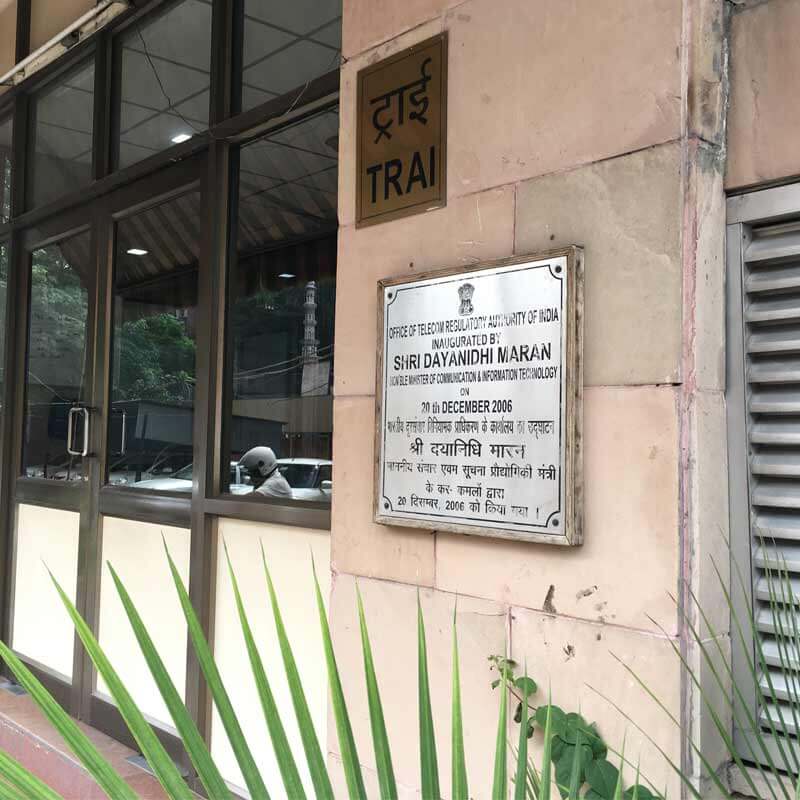
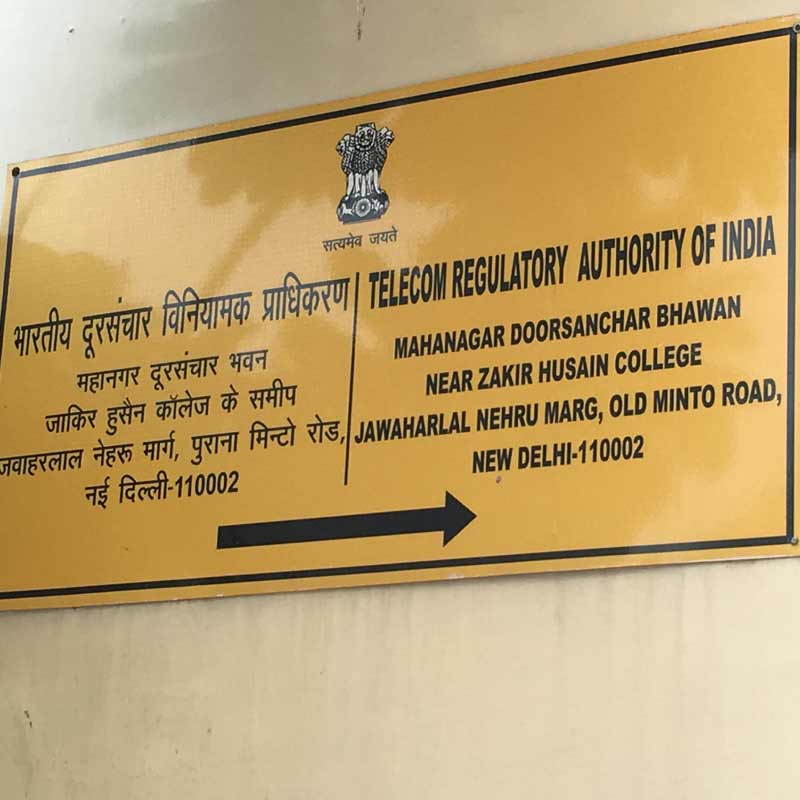
    The Madras High Court is reviewing the clash between the rights of copyright owners around the world and new tariff regulations proposed by the Telecom Regulatory Authority of India (TRAI). The court has ordered the TRAI not to give effect to the rules until the underlying issues are considered, with a hearing now set for 19 January.

    CASBAA CEO Christopher Slaughter observed that the new rules would be a major negative factor for the business environment in the US$ 17 billion Indian media industry. “India’s pay-TV regulations have long been among the strictest in the world”, he said. “The proposed new rules are highly intrusive and would make the environment much worse. Such a heavy-handed regulatory regime will inevitably hit foreign companies’ interest in investing in India.”

    Indian law gives copyright owners the ability to price and sell their creative works. In filing the Madras suit, the petitioner broadcasting organizations denounced the TRAI regulation as contrary to these principles as enshrined in the law, and in international treaties to which India is a signatory. (The TRAI rules would establish a controlled price regime by mandating a la carte channel supply, setting the ceiling, by specific genres, that broadcasting organizations can charge to multi-channel programme distributors, limiting discounts, prescribing carriage fees, and stipulating a compulsory distribution fee to be paid by Broadcasting Organizations to multichannel programme distributors.

    CASBAA has long expressed concern about India’s previous rate regulations, which included a cable retail price freeze imposed in 2004 “until the market became more competitive” and never revoked.

    “Today, India’s television content market is among the most competitive in the world,” said Slaughter. “Modern cable MSOs, six different DTH platforms and now online OTT television are all giving Indian consumers a wide range of viewing options.”

    CASBAA’s chief policy officer John Medeiros observed, “As convergence and greater competition sweep the TV economy, other governments around the world are eliminating rate controls, to give more scope to competition among traditional and new online providers. In the last few years, Korea and Taiwan have both undertaken to liberalize their pay-TV price controls, leaving India as the last market economy in Asia with a hyper-regulatory regime. The proposed new rules would take India in the opposite direction from the rest of the world.”

    Also Read:  Tariff order: Don’t notify without SC nod, TRAI told; Madras HC case to continue

    Also Read:  Copyright owners call for competitive pricing over TRAI regulation

  • CASBAA hails judicial review of broadcast & cable tariff

    CASBAA hails judicial review of broadcast & cable tariff

    MUMBAI: CASBAA, the association of Asia’s pay-TV industry, has applauded the judicial review now under way in India of proposed extension and tightening of India’s pay-TV rate regulations.

    The Madras High Court is reviewing the clash between the rights of copyright owners around the world and new tariff regulations proposed by the Telecom Regulatory Authority of India (TRAI). The court has ordered the TRAI not to give effect to the rules until the underlying issues are considered, with a hearing now set for 19 January.

    CASBAA CEO Christopher Slaughter observed that the new rules would be a major negative factor for the business environment in the US$ 17 billion Indian media industry. “India’s pay-TV regulations have long been among the strictest in the world”, he said. “The proposed new rules are highly intrusive and would make the environment much worse. Such a heavy-handed regulatory regime will inevitably hit foreign companies’ interest in investing in India.”

    Indian law gives copyright owners the ability to price and sell their creative works. In filing the Madras suit, the petitioner broadcasting organizations denounced the TRAI regulation as contrary to these principles as enshrined in the law, and in international treaties to which India is a signatory. (The TRAI rules would establish a controlled price regime by mandating a la carte channel supply, setting the ceiling, by specific genres, that broadcasting organizations can charge to multi-channel programme distributors, limiting discounts, prescribing carriage fees, and stipulating a compulsory distribution fee to be paid by Broadcasting Organizations to multichannel programme distributors.

    CASBAA has long expressed concern about India’s previous rate regulations, which included a cable retail price freeze imposed in 2004 “until the market became more competitive” and never revoked.

    “Today, India’s television content market is among the most competitive in the world,” said Slaughter. “Modern cable MSOs, six different DTH platforms and now online OTT television are all giving Indian consumers a wide range of viewing options.”

    CASBAA’s chief policy officer John Medeiros observed, “As convergence and greater competition sweep the TV economy, other governments around the world are eliminating rate controls, to give more scope to competition among traditional and new online providers. In the last few years, Korea and Taiwan have both undertaken to liberalize their pay-TV price controls, leaving India as the last market economy in Asia with a hyper-regulatory regime. The proposed new rules would take India in the opposite direction from the rest of the world.”

    Also Read:  Tariff order: Don’t notify without SC nod, TRAI told; Madras HC case to continue

    Also Read:  Copyright owners call for competitive pricing over TRAI regulation

  • TRAI regulations threaten investment, warns CASBAA

    TRAI regulations threaten investment, warns CASBAA

    MUMBAI: CASBAA, the Association of Asia’s pay-TV Industry, today warmly applauded the judicial review now under way in India of proposed extension and tightening of India’s pay-TV rate regulations.

    The Madras High Court is currently reviewing the clash between the rights of copyright owners around the world and new tariff regulations proposed by the Telecom Regulatory Authority of India (TRAI). The court has ordered the TRAI not to give effect to the rules until the underlying issues are considered, with a hearing now set for January 19th.

    CASBAA CEO Christopher Slaughter observed that the new rules would be a major negative factor for the business environment in the $17 billion Indian media industry. “India’s pay-TV regulations have long been among the strictest in the world”, he said. “The proposed new rules are highly intrusive and would make the environment much worse. Such a heavy-handed regulatory regime will inevitably hit foreign companies’ interest in investing in India.”

    Indian law gives copyright owners the ability to price and sell their creative works. In filing the Madras suit, the petitioner broadcasting organizations denounced the TRAI regulation as contrary to these principles as enshrined in the law, and in international treaties to which India is a signatory. (The TRAI rules would establish a controlled price regime by mandating a la carte channel supply, setting the ceiling, by specific genres, that broadcasting organizations can charge to multichannel program distributors, limiting discounts, prescribing carriage fees, and stipulating a compulsory distribution fee to be paid by Broadcasting Organizations to multichannel program distributors.

    CASBAA has long expressed concern about India’s previous rate regulations, which included a cable retail price freeze imposed in 2004 “until the market became more competitive” and never revoked.

    “Today, India’s television content market is among the most competitive in the world,” said Slaughter. “Modern cable MSOs, six different DTH platforms and now online OTT television are all giving Indian consumers a wide range of viewing options.”

    CASBAA’s Chief Policy Officer John Medeiros observed that “As convergence and greater competition sweep the TV economy, other governments around the world are eliminating rate controls, to give more scope to competition among traditional and new online providers. In the last few years, Korea and Taiwan have both undertaken to liberalize their pay-TV price controls, leaving India as the last market economy in Asia with a hyper-regulatory regime. The proposed new rules would take India in the opposite direction from the rest of the world.