Tag: Choti Maa

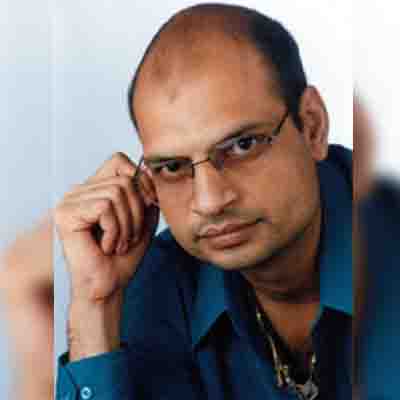
  • “Nobody writes dailies by choice” : scriptwriter Irshad Kamil

    “Nobody writes dailies by choice” : scriptwriter Irshad Kamil

    He is one of the few writers in the Indian television industry who took up scriptwriting out of choice, not chance.

    Irshad Kamil started writing for television in 1998. Starting off with writing from Chandigarh – he wrote two serials, Ravindra Peepat’s Na Jaiyo Pardes and Lekh Tandon’s Kahan Se Kahan Tak from there, his first assignment in Mumbai was writing the dialogues for Manish Goswami’s Kartavya.

    Soon followed Drishtaant, a serial produced and directed by Pankaj Kapur, Smriti on Channel Nine Gold and the more recent Choti Maa…Ek Anokha Bandhan on Zee and Sony’s Dhadkan. Kamil is currently writing the dialogues of Love Marriage, the new show on Zee. 

    The fact that Kamil holds a doctorate in Hindi Literature only enhances his level of understanding and flow of thought as a writer, besides making his usage of the language flawless. Indiantelevision.com correspondent Amar spent time with Kamil, to uncover the writer within the man and to understand the man behind the writer.

    How did your journey into the world of letters begin?
    I did my doctorate in Hindi Literature, specialising in poetry. As a student of literature, I studied poetry and drama extensively and always had a flair for writing. After a brief stint as journalist with The Tribune and The Indian Express, I got to write my first serial Na Jaiyo Pardes in 1997 while I was still in Chandigarh. That was how I started writing for TV. Then during a visit to Mumbai, I was introduced to Lekh Tandon at a party. Lekhji offered me a serial Kahan Se Kahan Tak for Zee TV, which I wrote from Chandigarh. Thanks to the success of this serial, I soon had to move to Mumbai and there’s been no looking back since.

    What is your forte – story, screenplay or dialogues?
    Dialogues are my forte. I think of screenplay as visual poetry and dialogues as spoken poetry. As a writer, I feel dialogues play a very important role in making the transition from one scene to another smooth and in bringing out the psychology of the characters. I also believe in the importance of something called unspoken dialogues. For instance, if one has to propose to somebody, it can be done by some beautiful gestures and does not always have to be said in so many words. I had carved out such a scene in Drishtaant and the effect was just beautiful.

    What does giving a different speech to each character mean?Well, each character speaks in a different way and his speech depends on three factors – his home, company and profession. Depending on these three factors, each character has a distinct identity. The identity of a character inspires his thought process and the thought process inspires the speech. Moreover, positive and negative characters also speak differently.

    “Writers get breaks easily
    because the producer
    does not have
    to invest anything
    in testing them”

    What form of screenplay do you like to be given to you?
    I like the screenplays to be brief and to the point. I look at the content and as long as the content is spelt out clearly, I don’t need excessive detailing or suggested dialogues.

    Which subjects appeal to you as writer?
    I like subjects that have a feel of realism about them. I also like family dramas that tackle realistic problems.

    Does writing require isolation from people?
    It helps to be in isolation when one is penning one’s thoughts. But that is not indispensable as I have concentrated even when there have been many guests at home. But otherwise, one needs to be an interactive person and talk with as many different people as one can, because that gives a different perspective about characters.

    Do you read a lot?
    Yes. Due to my background in literature, I would read a lot of books on literature, but today I like to catch up with books on psychology because it helps me get psychological insights into disparate characters that I don’t know well.

    Is it correct to have separate people do screenplay and dialogues like we have in our country? 
    Ideally, the screenplay and dialogues should be done by the same person, but the problem is that this can only happen if all writers are fluent in Hindi. But in India, what happens if a person from the South visualizes fantastic screenplay but cannot come up with appropriate dialogues? In this case, having a separate person to do dialogues becomes necessary. But it is also unfortunate that a lot of writers who believe they are quite good with the language are actually quite weak at it.

    With such intellectual moorings, how do you relish writing dailies that actually symbolise the worst form of commercialisation? 
    Actually, nobody writes dailies by choice. It’s just that very few weeklies are being made nowadays, so that one doesn’t have much choice but to take them if one has to be in business out here. In fact, one of the first serials I was offered after coming to Mumbai was a daily. Today, of course I won’t do the same.

    What are the major failings of new writers?
    The main problem with writers over here is that only some 20 per cent of them took to writing by choice, the rest became writers by chance.


    “Such was the level of research that went into “Dhadkan” that I would speak to doctors to authenticate correct names of medicines and these were actually used in the dialogues”

    But why is this so? 
    See, it’s easiest to get a break in writing even though getting a quick break does not mean you are a good writer. Writers get breaks easily because the producer does not have to invest anything in testing them. He basically has to ask the writer to develop the first four episodes of a story and any new writer will jump at the opportunity. And if the writer comes up with something really good, the producer takes him on, as having him will reduce the costs vis-?-vis a veteran writer. But then a lot of writers fizzle out after a while, because they cannot sustain their output levels over a period of time.

    Have you ever felt a great disparity between what you have written and how the director has actually executed that scene?
    Yes. Whenever I have felt such a problem, I have spoken to the director and made him understand my point better and more often than not, this disparity has been taken care of.  A writer needs to be in constant interaction with the director. I have always believed that directors should be a part of all brainstorming sessions on the script, no matter how hectic the shooting schedules are.

    Who are your favourite directors?
    Lekhji (Lekh Tandon), Arvind Babbal, with whom I’ve worked onKartavya and Choti Maa… and Deepak Bavaskar, with whom I’ve doneSmriti.

    Scripting, being the backbone of any project, requires immense concentration and sustainability of fresh ideas. Have you ever felt mentally exhausted doing a project?
    No, I take care of it by taking a complete break from work after a project ends. So, after Choti Maa… and Dhadkan ended, I did nothing for a month, except read a couple of novels, catch up with old friends and watch TV. This kind of helps me to re-charge my energies and get back to work with a fresh mind.

    Can you tell us about a research-oriented script you have worked on?
    Yes, Dhadkan was one such. Fortunately, the producer had also set up an in-house research team that would co-ordinate with the writers. For instance, whenever I would suggest that a certain disease be covered, the primary call on extracting information on the disease would be of the production house’s research team. Once they fed me information, I would start weaving it into my story. Subsequently, I would also download information on the disease from the Internet. Such was the level of research that went into the writing that I would even speak to doctors to authenticate the correct names of medicines and these were actually used in the dialogues.

    What are the projects that you have in the pipeline?
    Well, I’m doing the dialogues of  Love Marriage. Apart from this, I’m writing two daily soaps that will come on air in the next few weeks. They are Pyar Koi Khel Nahi for Sahara and Lakshmanrekha. Besides, I’ve written the lyrics for two movies. The first one, Socha Na Tha, being produced by Vijeta Films, will release in December. Hopefully, after that I will start writing movies.
  • If I get into direction, the writer in me will suffer. : Mir Muneer

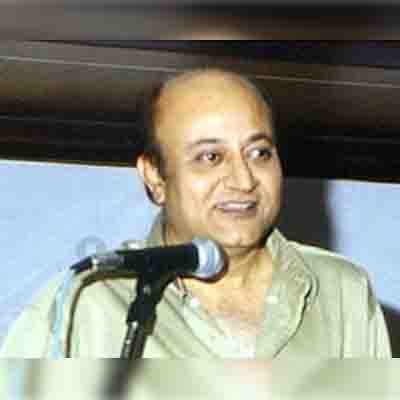
    If I get into direction, the writer in me will suffer. : Mir Muneer

    Mir Muneer is a trendsetter. After writing Chunauti, Campus and Challenge– some of the most successful youth based serials on TV, Muneer re-wrote trends with Saans.

    Muneer is also the brain behind the novel storylines of Amanat and Aashirwaad and is currently busy penning the screenplay for Choti Maa- Ek Anokha Bandhan. If the last few months have been relatively quiet for this writing powerhouse, things are bound to change with Saanjhi– the latest soap from the Neena Gupta stable, scheduled on go on air in January.

    Muneer strikes one as an extremely modest person. Unlike other writers who bear a grudge over the recognition and pay that TV writing fetches, Muneer is content on these counts. He has no plans of venturing into movie writing. After a decade and half of writing for television, Muneer is still all charged up and feels that there are innumerable stories still up his sleeve that he would like to develop in the coming years.

    Excerpts from an interview with Indiantelevision.com’s correspondent, Amar.

    How and when did you decide to take up TV scriptwriting as a profession?
    The ability to think and pen down your ideas into worthwhile stories is God’s gift. I enjoyed reading literature and would write plays while studying at Bhavan’s College in Mumbai. From there, I guess it was a logical extension to start writing television serials.

    Where do you draw your inspiration?
    I can’t think of any particular source, except that I draw heavily from my experiences of life. It could be anything – from my relationship with my daughter to incidents from my college days.

    Do you write in English or in Hindi?
    A mixture of both, actually. I write the screenplay in English because I’m habituated to doing it this way. The dialogues are written in Hindi.

    In order to create the desired impact in a scene, it is very important that the same person writes the screenplay and the dialogues.
    _______

    How has story telling on Indian television evolved in the last 15 years?
    Where are the stories today? Serials are just an accumulation of ‘scenes’. One of the few serials that does have a good story, which I can think of at the moment, is Sarhadein. But, frankly, I feel story-telling today is virtually non-existent.

    You are one of the few veteran writers who are writing their own dialogues nowadays. Your comments?
    Yes, I know many veteran writers do not like to write the dialogues because it can sometimes get monotonous. But I feel that in order to create the desired impact in a scene, it is very important that the same person writes the screenplay and the dialogues. I’ve written the screenplay and dialogues for most of my serials, with just a few exceptions. For instance, I write the screenplay for Choti Maa…, while the dialogues are written by a writer in Bangalore because the serial is shot there.

    Does TV writing tend to be very cumbersome, what with writers having to plan out the commercial breaks too and accordingly plan out the pitch of each scene?
    I usually don’t write an episode keeping the breaks in mind. I just maintain the freeze point of the story at the end of each episode. Planning out the breaks does put some form of a burden on my creative freedom. So I leave this task to the directors.


    Neena Gupta in a still from Saans
    By watching movies, you can develop a few ideas, but there is no substitute to reading rich literature.

    Do you find the channel executive producers acting overbearing nowadays? How often have you had to re-work the script of an episode after a channel EP disapproved of it?
    No episode of mine has ever been rejected in totality. The channels have sometimes asked for minor changes – either I have managed to convince them to do it my way or they have convinced me to do it their way. Everything has been in good faith.

    How many projects do you like to work on simultaneously?
    One. (laughs) But last year, I was writing all of six serials simultaneously- Saans, Palchhin, Abhimaan, Aashirwaad, Aanchal ki Chaaon Mein and Ittefaq. How I managed to do that is a miracle. Actually on TV, you can’t plan things precisely. You might want to start two projects this year and two more in the next. But a situation might arise when all these projects are approved around the same time, needing you to work on four projects simultaneously. Then there could be old friends who might want you to write something for them and who you can’t say no to.

    Do you have assistant writers helping you out?
    No, because like I’ve said I write the dialogues myself. There are writers who get the credit for screenplay and dialogues but who actually have assistants helping them out with the dialogues. But I don’t operate that way.

    What is your writing schedule like?
    I start writing at 6:30 in the morning and continue till about 1:30 pm or 2:00 pm, with a small break or two, in between. I like to have my meetings post lunch.

    They have been built upon at least one facet drawn from my personality… I don’t really feel alienated from any of my characters.

    A still from Amanat, scripted by Muneer

    Many writers feel dissatisfied with the money and recognition that TV writing gets. Do you agree?
    No. I find TV writing very satisfying. I have absolutely no complaints.

    Many writers feel that there is a huge difference between what they have written and what ultimately comes out on screen because the director has other ideas. Have you ever felt the same?
    No. The reason is that I have mostly worked with directors who are personal friends -Neena Gupta, Rakesh Saarang and the late Sanjiv Bhattacharya, with whom I vibe very well. After having worked with somebody over a period of time, you automatically develop a level of trust and understanding and as such do not experience this problem.

    Many veteran writers also take to direction. Have you ever wanted to direct?
    No. That’s because I feel I still have innumerable concepts that I would like to work on as a writer. I enjoy being a writer and by getting into direction, the writer in me will suffer.

    Do you personally relate with any of the characters you have created?
    In fact, I relate with all of them. That’s because they have been built upon at least one facet drawn from my personality. Let me put it this way – I don’t really feel alienated from any of my characters.

    Where are new writers falling short? What is your advice to them?
    My advice to aspiring and fresh writers is to read a lot of literature. I feel shocked when young writers who come to me offering assistance are found wanting in the basic flow of either language – English or Hindi. That explains why dialogues sound so clichéd nowadays. By watching movies, you can develop a few ideas, but there is no substitute to reading rich literature.

    Which has been the happiest moment of your career?
    The telecast of the first episode of my serial – Bante Bigadte way back in 1985.

  • Zee scrip spiraling downwards

    Zee scrip spiraling downwards

    If anyone thought the Zee Telefilms scrip had finally bottomed out better think again. Down is where it has been plummeting since yesterday. And there seems to be no end to it all. On the day of Zee’s AGM, the share price was hovering between the range of Rs 90 and RS 92. But it seems that the AGM could only dampen the market sentiment, rather than supporting the price.


    The reasons attributed to the fall in price are many. The first is pessimistic picture painted by chairman Shubhash Chandra during the AGM. He warned investors that the overall negative market scenario prevailing was going to impact on financials as companies cut back on advertising. The search for a strategic investor for Zee Telefilms being put on hold only added to the sentiment.


    ‘Zee has always gone up or down on the ‘news’ and not on fundamentals,’ says an analyst with a foreign equity research firm. Short trading takes place in the script based on the same news, so players normally take positions for short periods of time and immediately exit when there are small fluctuation in the price. The price is simply not allowed to settle down.


    The market also seems to be very concerned about the huge outstanding the company has. Even though Chandra has categorically made clear that there will not be any further financial transactions between any Essel Group company and Zee Telefilms, the market does not believe that, opined one analyst. ‘Zee has always made such commitments which were later not kept. There are various items which are waived off in the financial statements at the end of the year. And this is possible in this case also.’ The market is concerned about the amount (close to RS 900 million) that is still to be paid by Essel Group to Zee and the close to RS 1 billion to be received from Buddha Films.


    The recent relaunch exercise hasn’t fetched much results. Apart from Baazi Kiski and Nilaam Ghar, which are game shows, other soaps are not doing that well. “It’s been almost a month and half, and the shows are not yet picking up. Dailies should not take that long to show the results.” As far as the new programmes go, most analysts were of the opinion that a few shows like Choti Maa, Sarhadein and Koi Apna Saa were really good and should be developed.


    As for the movement of the scrip on the bourses today, it (up 4.94% to RS 74.30) bounced back on renewed buying interest after Monday’s fall. The stock shed 10% on Monday amid fears of a slowdown in earnings, and a possible delay in the induction of a strategic partner by the company.