Tag: chocolates

  • Schmitten wanted people to see Diwali in a new light

    Schmitten wanted people to see Diwali in a new light

    MUMBAI: For Schmitten, Diwali is called the Festival of Lights for a reason. One of the most popular festivals in the country, Diwali marks the spiritual victory of light over darkness. Conventional Diwali commercials showcase this as a time to celebrate with the family. But with #AadhiAadhiDiwali, Schmitten Chocolates wanted people to celebrate the festival with their loved ones – especially the ones who are often not included in the celebrations of your immediate family.

    An initiative by Schmitten Luxury Chocolates, #AadhiAadhiDiwali wanted to build a sense of belonging towards the family of one’s partner. The initiative wanted people to accept themselves as a member of their partner’s family, and create new memories with them, as if they were your own family. Schmitten believes in bringing you closer to every part of your family, which makes every occasion more memorable.

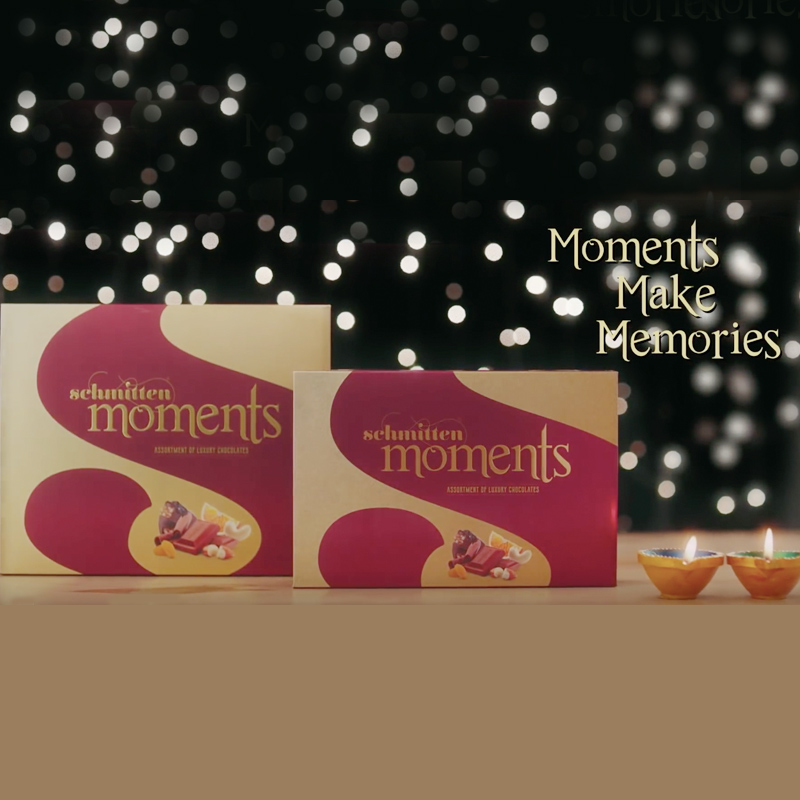
    Schmitten Moments is a gifting pack with an assortment of Schmitten Luxury chocolates and Hoppits Chocolate bars. The brand believes in not only sharing sweetness but also sharing memories, thereby making every moment memorable. Schmitten believes that these wonderful moments last a lifetime – a thought summarized by its brand tagline “Moments Make Memories”.

    According to Jayesh Desai, the founder and chairman of Rajhans (Desai-Jain) Group, the brand is breaking new ground when it comes to festival advertising. “Where every brand is riding on the festival season to deliver the same-old stories, Schmitten is creating new conversations, which will impact positively within the society and give Diwali celebrations a whole new meaning.”

    Schmitten marketing head Rishabh Verma believes this initiative is the beginning of a cultural paradigm shift. “Usually, men do not look beyond their immediate family. We wanted to not only make men accept their responsibility towards their partner’s family, but also foster a sense of belonging. #AadhiAadhiDiwali is the beginning of a very poignant conversation that shall spark a new reason to celebrate Diwali.”

    Envisioned by ADK-Fortune, a WPP group company, the campaign has already struck an emotional chord with its consumer base. Commenting on its success, national creative director Akashneel Dasgupta said, “It reminds you that when you share everything with your loved ones, why should Diwali be an exception? Diwali should bring together the entire family, which extends to your partner’s as well. Understanding this is key to building a healthier relationship. Not to mention, making new memories.”

    ADK-Fortune managing partner Subroto Pradhan added, “Schmitten Moments is not just a premium gift offering. It also stands for creating lasting memories and celebration of togetherness. And what better occasion than Diwali to create moments that are memorable.”

  • Hershey Kisses will now be Made in India

    Hershey Kisses will now be Made in India

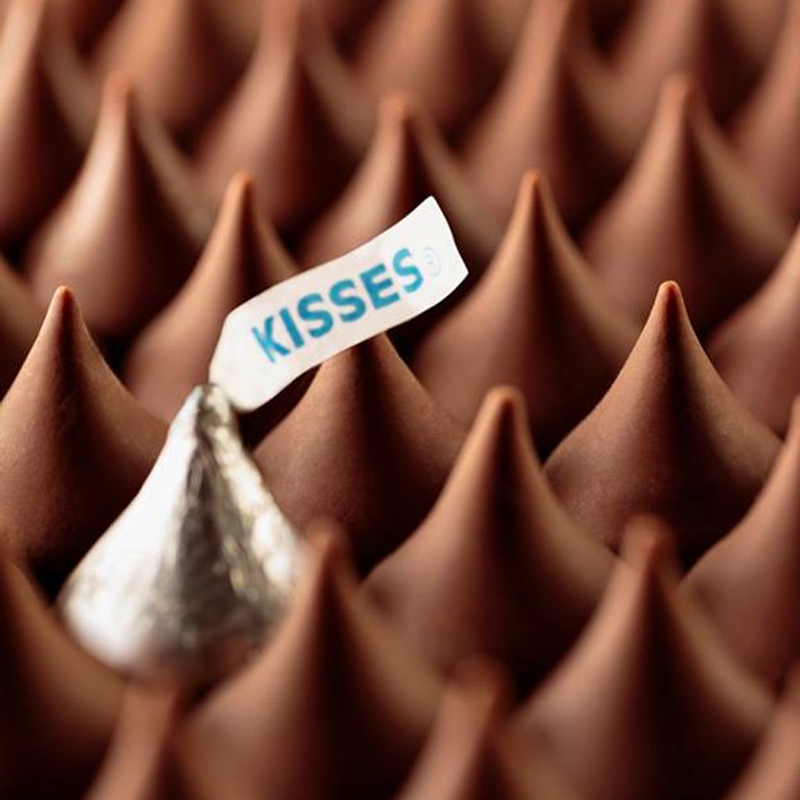
    MUMBAI: We’ve all been there where we ask our relatives and friends to bring us imported chocolates and candies from their trip abroad. Hershey’s Kisses have always been one such popular chocolate. The chocolates are distinct because of their unique shape and each one is delicately wrapped to make them perfect for sharing them with loved ones. 

    But you wont have to ask anyone to bring those scrumptious chocolates from abroad anymore. Hershey India, a part of The Hershey Company, a leading global snacking giant and the largest producer of quality chocolates in North America, has launched its iconic and much-loved Hershey’s Kisses chocolate brand in India. 

    Hershey’s Kisses will come in milk chocolate, almond and cookies ’n’ creme flavours. The Kisses range in India is the result of intensive R&D and consumer testing to develop the right taste profile for discerning Indian consumers who seek premium chocolates.

    And that’s why it wont taste like the Hershey Kisses you get in United States because the taste is different considering the Indian palate and weather conditions here.

    The Hershey Company president international Steven Schiller says, “There is a lot of potential for The Hershey Company in India. This market is an important part of our International growth model. The Hershey’s brand has been leading our India growth and Hershey’s Kisses is a wonderful way to continue that growth by tapping into the growing chocolate segment.”

    Hershey’s Kisses milk chocolate will be available at an attractive price point of Rs 50 and Rs 140. During the first phase of this launch, Hershey’s Kisses will be available only in South India at modern trade, large general trade and e-commerce in South India. The rational behind launching in South first is because the company has a strong base in south India and it contributes to one-third of the total chocolate consumption in India. 

    The company has a manufacturing plant in Bhopal, Madhya Pradesh and the other two are run in Gujarat and Telangana.  The US-based chocolate and confectionery firm Hershey has committed to investing $50 million in India over the next five years to scale up its operations here. 

    The festive season has just embarked in India but Hershey does not plan on having festive and gifting options for its portfolio just as yet. Hershey India managing director Herjit Bhalla says, “We will consider gifting going forward but not at the moment as want to concentrate only on south market right now and increase the consumer base.”

    Steven Schiller thinks that there is more potential in India than there is in any other market right now because of the sheer size of the young population with strong economy that creates a ripe environment for people to partake in the snacking category.

    Without giving out any details, the multinational company announced that it is set to bring another product in India by the end of 2018. 

    Kisses will be marketed with an extensive 360 degree marketing plan including TVC, digital campaign, print, outdoor, sampling, in-store visibility.

    Globally, as many companies are reducing the sugar and salt content in their products to provide consumers a healthy and better alternative, Hershey believes in not changing the proportions and formulation too much. Steven Schiller mentions, “We spend a lot of time understand the trends and different types of products that people are interested in. I don't want to make commitments about the reduction because it also has to make commercial sense.”

    The journey of the Hershey’s brand in India started a decade ago with the introduction of the Hershey’s Chocolate Syrup and now has Sofit milk, chocolate spreads and Jolly Rancher candies. Globally, the company makes nearly 70 million Hershey’s Kisses every day that are sold in nearly 60 countries.

    The launch of Hershey’s Kisses might further fuel the growth of the Hershey’s brand in this country.

  • Should junk food ads be banned on kids’ channels?

    Should junk food ads be banned on kids’ channels?

    MUMBAI: Just a few days ago, there were whispers of a possible ban on junk food ads on kids’ channels that were quickly rebutted by information and broadcasting minister Smriti Irani. Though the ministry has clarified that such a stand hasn’t been taken, it would be worthwhile to consider the pros and cons of such a move.

    There’s a need to worry about all kids who watch television frequently are susceptible to bad eating habits. According to studies, teenagers who watch television for more than three hours daily are twice as likely to eat more snacks like crisps, biscuits, fizzy drinks and chocolates thanks to the commercials they watch along the way.

    At present, Britannia’s Treat cream biscuits and Fruity Fun cake, Waffy, Rich Feast Yum Pie, Diamond Rings, McDonald’s Snoopy Meals, ITC’s Bingo No Rulz and Dark Fantasy biscuits are some of the brands that are running campaigns on kids’ channels.

    Looking at the situation from a broadcaster’s point of view, a blanket ban on junk food advertisements will hamper their monetisation ability. These ads, however, are likely affecting the health of children. When Indiantelevision.com reached out to kids’ channels, none of them were willing to speak up on the issue.

    FMCG brands will be the hardest hit since kids these days are the driving force behind the purchase choices of parents. The demand may dwindle if they are asked to put a full stop to the advertisements and the market share of their products may nosedive to a certain extent.

    When asked about the merits and demerits of this proposal, Harish Bijoor Consults Inc brand-expert and founder Harish Bijoor says that kids’ channels are meant for kids. “Any brand that is not considered kid-friendly in terms of health, attitude development, learning or frivolity of use, must not be allowed on such channels. That wouldn’t be responsible advertising.” 

    Stratagem Media director Sundeep Nagpal also has the same view as Bijoor. According to him, such proposals are made keeping in mind the welfare of our country’s future. “The eventual outcome would only benefit the children of this country, several millions of whom are getting progressively affected by the consumption of junk food.”

    A news report in 2017 stated that Britannia had around 35 per cent share in premium cream biscuits and the idea was to build the share to 50 per cent in two years. The company will be investing Rs 50 crore on Treat in the next nine to 12 months while the total investment for the premium cream biscuit category would be Rs 100 crore for the same time frame. The company is planning to achieve this through multiple activities, straddling between Pure Magic, Bourbon and Treat.

    Bijoor says that some of the FMCG brands will get affected whereas others will not. Brands that appeal to children without the harmful effects of junk food will find a platform on such channels to advertise. FMCG players that create such products will, therefore, remain unaffected. Nagpal, however, recommends that one shouldn’t fall for the plight of the manufacturers.

    When asked whether the creative and storytelling need to change, Nagpal says, “The powers that be on issues like these should put a stop to such hypocritical practices. Any change in storytelling for such products would be an attempt to sell something harmful under a guise. So, this should not even be allowed under the garb of surrogate advertising.”

    Bijoor believes that the product must be first analysed as being fit for kids’ consumption and only after that should any other development happen.

    According to another media report, ITC expects the chocolate category to contribute to 10 per cent to its food division revenue in the next five years. The company will extend the Sunfeast brand to all core biscuit segments, like Marie (an English tea biscuit), glucose, milk, and crackers. Dark Fantasy, meanwhile, will span the indulgence space and cover products across biscuits and cakes (including Yumfills). Farmlite, catering to the health space (biscuit segment), and Mom’s Magic, in the cookies segment, will be the other two brands.

    Children today are increasingly susceptible to obesity and the growing trend of unhealthy food habits and lifestyles are major offenders. Going by the current trends, the World Health Organisation contends that nearly 70 million children will be overweight or obese by 2025. That’s a scary prediction considering the serious health risks are associated with obesity. Considering the fact that the government told Parliament that nine major operators in the food-processing business have voluntarily decided not to advertise products with high fat on children’s channels while the Food and Beverage Alliance of India (FBAI) is already instituting mechanisms to restrict advertising of food and beverage items concerning children voluntarily, the tide seems to be turning.

    Another approach to reducing the intake of commodities such as pre-packed foods with high salt and fat content, sweetened beverages, chips and among others maybe to impose additional taxes.

    It is clear that a ban on junk food ads on kids’ channels will have far-reaching ramifications for the advertiser-broadcaster ecosystem. At a time when child obesity rates and lifestyle diseases are on an alarming rise, it would be prudent for FMCG players to take a step back and re-examine their advertising strategy and build goodwill in the long run. 

    Also Read :

    No proposal to ban junk food ads on TV: Smriti Irani

    Kids’ candy segment: Communication sees a shift

  • Ramesh & Suresh get ‘lost’ again in Cadbury 5Star 3D

    Ramesh & Suresh get ‘lost’ again in Cadbury 5Star 3D

    MUMBAI: Ramesh and Suresh are back and this time they are lost at a whole new level. Over the last twelve years, Cadbury 5Star has entertained viewers bringing to them ‘lost’ antics of the iconic duo of Ramesh and Suresh.

    Each time as they get lost in the flavour of the chocolate, the world around them twists and turns giving way for quirky madness and laughter. With this ad, Cadbury 5Star takes forward the idea of getting ‘Lost in Taste at a different level’ with the all new Cadbury 5Star 3D. Mondelez India aims to build on its market leadership in the count line segment as it aims at premiumising the eating experience for its consumers.

    The TVC opens with Ramesh and Suresh standing in a lifeless lobby staring at a painting of a calm lake. As soon as they take a bite of the all new crunchy Cadbury 5Star 3D, the painting comes alive and Ramesh & Suresh begin to swim their way into the painting entering a whole new three-dimensional world. The viewers are taken in for a joy ride, when the ‘lost’ antics of Ramesh and Suresh land them up in a fashion show. Ramesh and Suresh are so lost in its taste appeal that they fail to realise that they are walking on a ramp. The audience is taken in for a surprise and they burst into applauding the brave quirkiness of Ramesh & Suresh.

    Mondelez India director of marketing Chocolates Prashant Peres says, “With Cadbury 5Star 3D, we aim at widening the brand’s play in the category as we add another dimension of ‘Crunch’ to the mix and hence the name ‘Cadbury 5Star 3D’. Ramesh-Suresh have become synonymous with Cadbury 5Star and even as we enter the twelfth year of our campaign, they continue to tickle the funny bone of the viewers. We are confident that they will further help the brand generate strong cut through and continue to be much loved by our consumers.”

    Building on the 12-year-strong legacy of Ramesh and Suresh, the new TVC conceptualised by Ogilvy & Mather has given the iconic duo a cool look as they swim their way into the 3D world.

    Ogilvy & Mather group creative director Amitabh Agnihotri adds, “With the launch of Cadbury 5Star 3D, ‘lost’ gains a new dimension. The launch TVC takes everything; from entertainment to humour, to look & feel; onto a whole new level. We hope that people will enjoy Ramesh & Suresh getting lost on a different level.”

  • Eveready forays into confectionery business

    Eveready forays into confectionery business

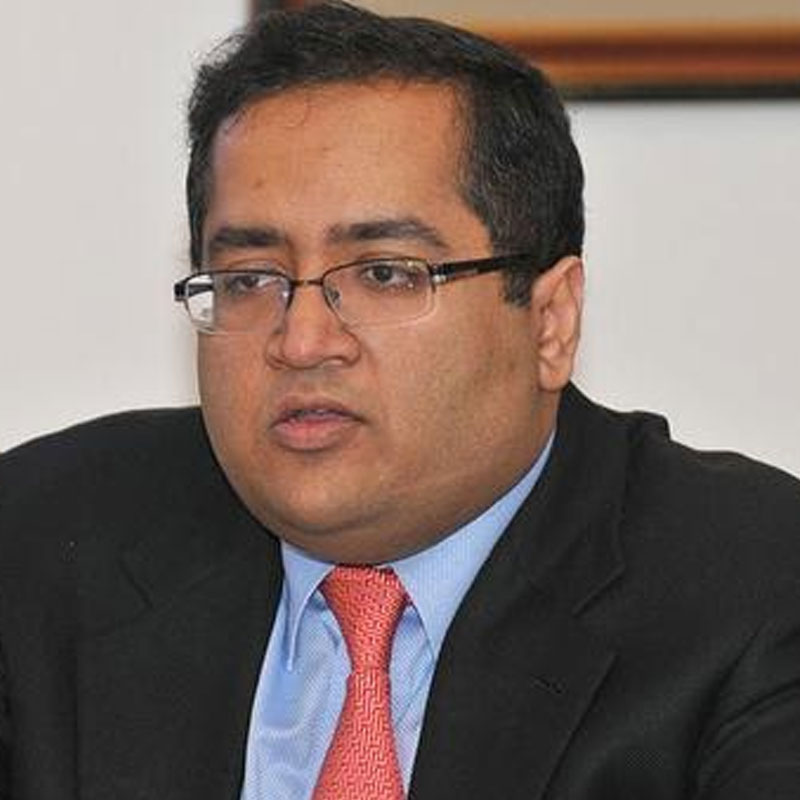
    MUMBAI: With a view to scale up its fast-moving consumer goods (FMCG) portfolio of products, dry-cell-battery maker Eveready Industries India Ltd (EIIL) is all set to enter the confectionery business with Jollies, its new fruit chew candies. 

    The move is a part of its diversification plan and the brand will foray into the Rs 9000 crore confectionary segment with the product. Priced at Re 1, Jollies will have higher fruit content and lower sugar content.

    EIIL said that the fast-growing fruit chew segment, estimated to be a Rs 400 crore market, will double in the next three to four years and expects to become a significant player in the segment by making the under-penetrated category available across urban and rural India through its distribution network. 

    EIIL managing director Amritanshu Khaitan said, “The product being launched has a high percentage of natural fruit pulp making it a preferred healthier option to pure sugar candy. Candies are a mass-market product and can be carried in the Eveready vans reaching a million outlets. This brings in a major competitive advantage for us and we believe we can become a major player in the fast-growing confectionery market in the next 3-5 years with only investments required for branding.”

    The company has over 400 distributors and 42 distribution centres across India. The company is working on an asset-light model involving outsourcing and believes it can add significant turnover and profitability with an entry into the segment.

    EIIL is a manufacturer of dry-cell batteries, flashlights, lighting and packet tea. The company reported 55 per cent revenue from dry cell batteries, 14 per cent from flashlights, 22 per cent from lighting and electrical and 9 per cent from other segments in financial year 2016-17. 

    Also Read:

    Kids’ candy segment: Communication sees a shift

    Patanjali to partner e-tailers to boost sales

    FabIndia sets aside 40% on digital advertising

  • Want the Silk jingle to be popular culture: Mondelez’s Prashant Peres

    Want the Silk jingle to be popular culture: Mondelez’s Prashant Peres

    MUMBAI: What comes to your mind when you hear “Kuch meetha ho jaaye”? Chocolate? Cadbury? Dairy Milk? Well, that’s what most people in India associate with ‘meetha’ today. Cadbury India, now known as India, began its operations in India as early as 1948 by importing chocolates. The brand has always been known for its loveable advertisements that make you want to sing along and do a little jig yourself.

    The Indian chocolate industry was worth Rs 58 billion at the end of 2014 and is predicted to reach Rs 122 billion with a compounded annual growth rate of 16 per cent by 2019. According to the 2016 Euromonitor International report, the chocolate confectionery market in India is projected to grow at around 8 per cent per annum between 2016 and 2021 to reach Rs 16,200 crore (on constant value) from Rs 11,256 crore in 2016, backed by better retailing across rural areas. Mondelez is the market leader in India’s chocolate space, with over 65 per cent market share and Cadbury Dairy Milk is its highest selling product that has a market share of 41 per cent.

    Mondelez India has created some of the most prominent ads in its 69 years of existence in the Indian market, with some of the famous catch-phrases being — ‘kuch khans hai zindagi mein’, ‘shubh aarambh’, ‘pappu paas ho gaya’, ‘aaj pehli tareek hai’, ‘interstellar party’ and ‘kiss me’. All these notable campaigns are attributed to Ogilvy & Mather (O&M), an advertising agency that has been associated with the brand for over 25 years.

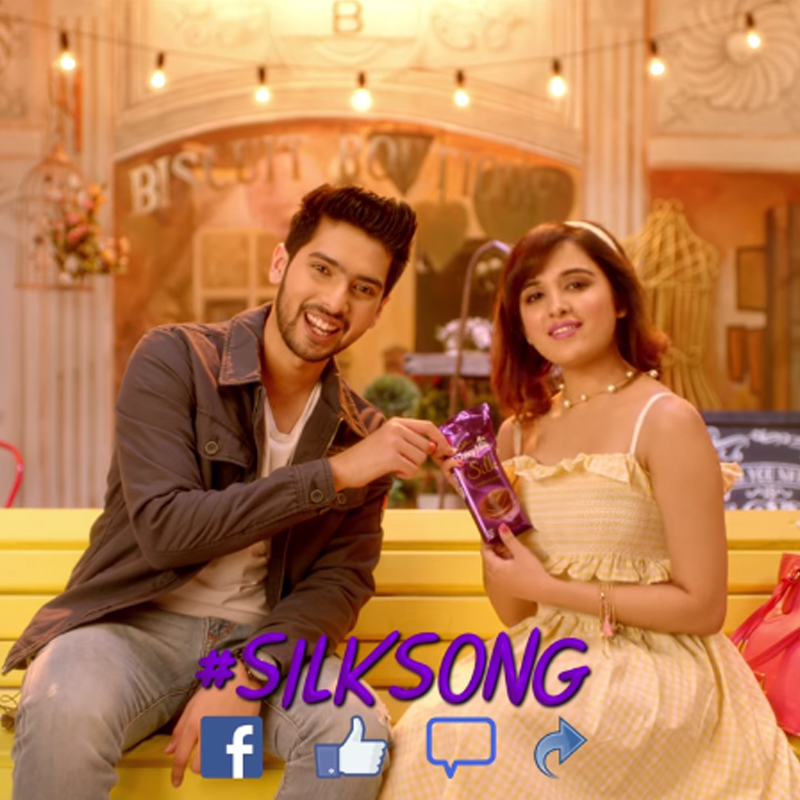
    In India, Dairy Milk Silk has been one of the marquee products for the brand, which was launched in early 2010. Ever since then, the Silk jingle has probably been one of the most loved and recognised tunes in advertising and popular culture. Mondelez recently renovated its Cadbury Dairy Milk Silk making it curvier and with a fresh packaging. Now, the company has rolled out a new music video that showcases a refreshing rendition of the jingle by Bollywood singers Armaan Malik and YouTuber Shirley Setia.

    O&M wanted to explore the digital medium to showcase the fresh new look of chocolate in an impactful manner. O&M Client services director Smita Padmanabhan says, “For Silk, the jingle is our biggest brand identity and for the first time this year we had a TVC where the protagonists were actually seen singing it on screen and that gave us the idea to get more people to sing the song they love.”

    This festive season, it kept a low profile on mainstream media and instead took a risk in the digital medium with the first music video. Mondelez India director of marketing (chocolates) Prashant Peres mentions, “The key objective of this campaign was to try and make the jingle a part of the popular culture through an aspirational yet mainstream portrayal as digital is gradually becoming a lead medium for youth brands.”

    Digital has shattered the invisible wall between brands and customers but it questions the optimal usage of advertisements. “While digital provides us with the medium to reach out and engage with consumers on a one-on-one basis, it is always a challenge to stand out in the clutter and grab their attention. As marketers we have to be on top of trends and emerging platforms, which pushes us to constantly innovate and adapt,” he adds.

    When it comes to brand recall, some of Mondelez’s campaigns occupy the top shelf in the consumers’ mind. The iconic chocolate manufacturer has managed to pull the rabbit out of the hat every time it has wanted to draw attention to new brands. With digital on top priority to target consumers, we are sure the company will come up with another breakout campaign to call out to those with a sweet tooth.

  • A two-sided story

    A two-sided story

    MUMBAI: The rupee going into a tailspin or prices shooting through the roof; be damned. The wheels of general entertainment channels (GECs) seem to be in continual motion, what with a new soap here or a new reality show there. Makes one wonder as to what exactly these television majors do to keep their employees happy and productive, despite taxing schedules and OTT deadlines.  

    Well, the answer lies in the kind of incentives and rewards these channels, rather – their human resources teams, are willing to heap on their staff just so as to make them want to come back every morning, ready for the grind.

    And we’re not simply talking boxes of chocolates or free tickets to movies here. Imagine an iPad being gifted for a clean and decorative desk or a five-star hotel stay in Australia or even a shopping spree in Bangkok…

    An example of the kind of moolah these companies are willing to splurge on their employees is Star India, which took its top management (nearly 35 people) on an extravagant tour down under a month or two back.

    While Viacom18 arranged separate tours to exotic destinations like Egypt or more popular ones like Bangkok early this year. In a similar vein, Sony took its employees to Dubai last year whereas Zee ferried its entire team to the beaches of Thailand. We hear Sony is currently planning an itinerary for its annual trip this year.

    While these junkets (even called off-sites) don’t come cheap for these companies, there’s a catch: they aren’t entirely about fun and booze. There are leadership and team-building exercises, presentations on progress reports, panel discussions about the future etc. built into these trips.

    But with employees not expected to shell out anything from their own pocket, they’re fun nevertheless.

    However, there’s another side to this ‘Television (GECs) shining’ story.
    Even as most of them are coughing up crores of rupees on such junkets, there are other channels like news channels that are finding it difficult to survive in the present economic situation.

    There have been widespread instances of companies handing out pink slips to their employees in the past few months.

    First, NDTV shut down its Mumbai operations, followed by Network18 relieving around 350 employees across the network in little over a month. Next in line was Bloomberg TV which terminated the services of nearly 30 employees and the latest to join the bully gang is Ananda Bazar Patrika (ABP), which is learnt to have issued notices of non-renewal of service contracts to as many as 127 employees and speculations are ripe that even Business World magazine is closing shop soon.

    According to a study by the New Delhi-based Associated Chamber of Commerce and Industry (ASSOCHAM), the weak rupee hasn’t spared even Bollywood producers, who’re shying away from shooting overseas. In the past four months, foreign film shoots have dropped 30-35 per cent owing to the volatility in currency.
    Given this not-so-bright side of the television (and film) industry, one wonders if life is truly a soap opera for GECs…