Tag: chief

  • Zomato’s Mohit Gupta bids adieu

    Zomato’s Mohit Gupta bids adieu

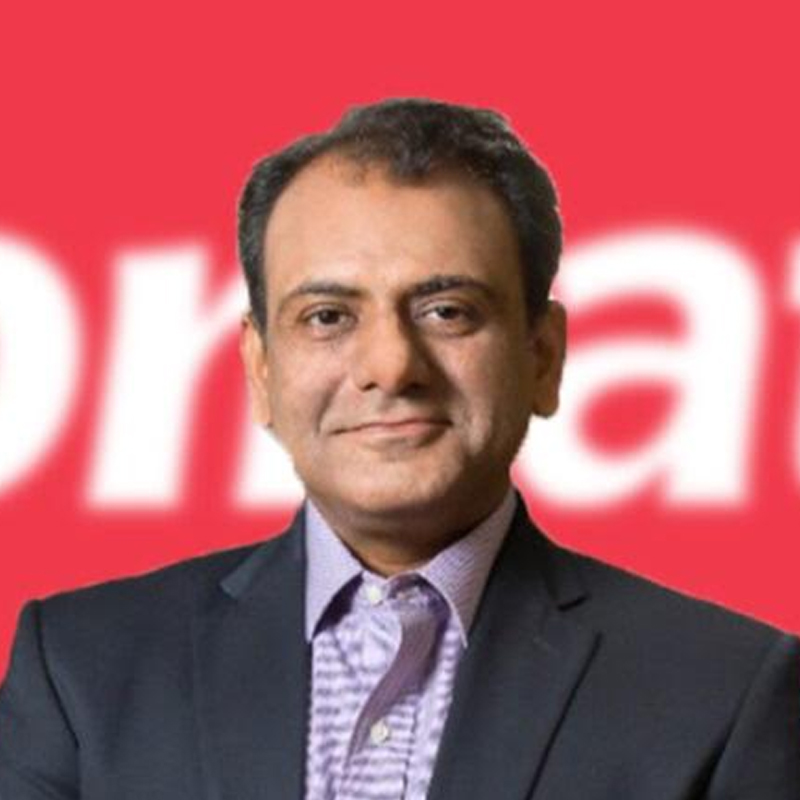
    Mumbai: In a sundry of exits at Zomato, Mohit Gupta has put in his papers as co-founder.  He had been with the food delivery company for about four and a half years.

    Gupta’s departure marks the third high-profile departure from Zomato. Earlier this week, the food delivery major’s head of new businesses and former food delivery chief Rahul Ganjoo, had put in his papers. Also, Siddharth Jhawar, who held the position of vice president of global growth and head of the Intercity Legends service at Zomato, called it a day.

    Gupta joined Zomato in 2018 as the head of food delivery. He was subsequently elevated to co-founder in 2021 to oversee new businesses when Ganjoo was made the CEO of food delivery. Before joining the food delivery major, Gupta was the chief operating officer of travel portal Makemytrip. He has also worked at PepsiCo during his career.

    Kamayani Sadhwani, a director at Zomato-owned quick commerce company Blinkit, has taken over from Jhawar as the head of the Intercity Legends service. Prior to taking on the role at Blinkit earlier this year, Sadhwani has also worked at Coca-Cola India, Bain, Accenture, and McKinsey.

  • Paramount TV chief Amy Powell fired over alleged insensitive remarks

    Paramount TV chief Amy Powell fired over alleged insensitive remarks

    MUMBAI: After 14 years, chief of Paramount TV Amy Powell has been fired over alleged insensitive remarks – which she has emphatically denied.

    The incident occurred during a studio notes call for Paramount Network’s First Wives Club reboot, which is being penned by Girls Trip co-writer Tracy Oliver and will feature a predominantly black cast.

    Paramount CEO Jim Gianopulos was quoted stating, “Last week, multiple individuals came to us to raise concerns around comments made by Amy Powell in a professional setting, which they believed were inconsistent with our company’s values. Having spent the past several days conducting a thorough investigation into this matter and speaking to those who were present, our human resources and legal teams came to the same conclusion, and we have made the decision to terminate Amy’s employment, effective immediately,” according to Hollywoodreporter.com.

    The company immediately started looking for Powell’s replacement. In the interim, Paramount COO Andrew Gumpert will provide operational support.

    “There is no truth to the allegation that I made insensitive comments in a professional setting — or in any setting. The facts will come out and I will be vindicated,” Powell responded in a statement.

    Powell joined Paramount in 2004 and was appointed as chief of its relaunched TV division in 2013.

  • Brands, youth mindsets & Samyak Chakrabarty

    Brands, youth mindsets & Samyak Chakrabarty

    MUMBAI: “Who can know the heart of youth but youth itself?” wrote punk rocker Patti Smith in her memoir, Just Kids.

    Indeed, global brands have made it their business to figure out what the youth wants, often ending up classifying them into categories which they think define them – cool, sexy, social media presence and so on.

    This is however their biggest mistake, opines DDB Mudra chief youth marketer Samyak Chakrabarty. “Youth can’t be classified or boxed into traditional or conventional SECs. A certain 21-year-old may appear to be the consumer for a brand but this doesn’t mean he/she will actually purchase it. For instance, a youngster living in Dharavi may own an iPhone while someone in SoBo may have a Nokia Asha,” he says.

    Samyak is speaking from a position of knowledge; he and his agency have spent six months with 40 youth unraveling the complexity of a youth generation in the Indian metros which is more connected and aware than any other in the history of mankind, thanks to the spread of the internet, mobiles and the power that both have showered on them. The output is Youth Report 2013 which aims to provide some insights into those between 18-25 years of age.

    While many question whether it is right to paint a very disparate and fickle demographic grouping with a broad sweep of a brush, Samyak has indeed taken a shot at it in his Youth Report 2013, which is drawing some attention amongst advertisers and marketers.

    The basic premise of his report is “that those born post 1988 are extremely moody people. At one level they are very sure of what they want to do in the long run, but on another there is immense amount of confusion and parallel thought flow. Again it is the number of options available and continuous bombardment of information through new media to blame. 9 out 10 decisions are made based on the prevailing environment and frame of mind.  5 mindsets (read: mood) existing every Young Indian born post 1988 living in metro cities. Each gets triggered based on the type of decision and plays a critical role in influencing choice.”

    The five according to Samyak are:

    * The Passionista: Someone who transforms into a Passionista while making decisions would base judgment purely on feelings often also defying strong logic.

    * The Racehorse: It’s always about being the first in everything he/she does. Such as state of mind is active in people who are generally very motivated, aggressive and competitive in nature.

    * The Label: All decisions are completely based on the badge value of a product. Unlike someone who thinks likes a racehorse, here it’s not about being the first but rather being the ‘coolest’.

    * The Shiny Disco Ball: If someone thinks like a Shiny Disco Ball, He / She is an optimist and will be open to try different things just for the experience.

    * The Kite: Those in this state of mind prefer to follow others when it comes to buying decisions.

    And how do these mindsets come into play. Samyak explains that if the youngster has a racehorse mind or competitive and aggressive mindset, he/she will buy a certain product to be in a position of leadership and create talk value among others.

    If a youth has a kite mind where say five friends get together in a bar with four of them ordering a certain brand of beer, the fifth friend will display a kite mind and order what his four friends ordered. At this point, his/her mindset is to simply go with the flow. However, if the same person is in a passionista mindset, he/she will take charge and order what he/she likes instead of blindly following the others.

    “Today, youngsters are driven a lot by mindsets rather than economics. I think they are more inclined towards their passion, following their desires and finding ways and means to achieve them,” says the young in years, but old in experience Samyak. Irrespective of their economic background, they strive to achieve what they want and it doesn’t have anything to do with their ability or inability to buy the product. It has got more to do with what they want.”

    However, diversity (economic, social, geographic or religious) does influence choice and so. Say, a like on a facebook page does not always translate into the youngster buying the brand and that’s where mathematics fails, explains Chakrabarty.

    For a brand to understand the youth, it is necessary to tap the thinking process. “Tap it because it remains constant. If a brand has been able to understand the ingredients that contribute towards building an opinion or brand preference, it has cracked the code,” says Chakrabarty.

    He cautions against the use of jargon and quick fixes like celebrity endorsement, popular lingo and bright colours to attract the youth. Asked how the Youth Report would help brands understand youngsters, he says: “One must remember that most statistics expire even before they are put to print. For instance, a report may say that seven out of 10 people think this way and so end up buying a certain product. However, what influenced a person today may not influence him/her tomorrow depending on the influence of his/her peer group and other such.”

    While the Youth Report helps brands by offering this kind of a classification, Chakrabarty also points out that brands would do well to stick to their core values even if they reinvent themselves with time. He cites the example of Red Bull which at its core continues to be about energy and adrenaline however much it may revamp itself. Ditto for Nike and Kingfisher.

    “It’s suicidal for a brand to reinvent its core because then you lose the long term relationship with the TG. Young people don’t wake up thinking about brands. They don’t care. If brands want to be in the youth’s priority list, they need to connect emotionally with the youth or have the youth looking up to them for example Apple,” he elaborates.

    The other thing he talks about is how a 22-year-old will always have options B and C if he/she doesn’t get option A but the same 22-year-old will turn 50 at some point in future. So, it is for brands to decide if they want a long-term relationship with such a customer. In the event they do, the message has to be sustainable and not fluctuating.

    Chakrabarty is candid about the fact that media – both print and television (even the likes of MTV and Bindass) – has failed to capture the mind of the youth.

     “MTV was MTV because of the music. It picked up on various popular trends and kept changing according to time. But now, shows have become bigger than the channel. Take Roadies, for instance – if we take the show away from the channel and put it on any other, it will still work. The same can be said about Emotional Atyachar. There has to be a balance between content and the brand. That is why we tell our clients to focus on 10 per cent of people and not the remaining 90 per cent because you can’t please everyone. When a brand tries to be overly youthful, it has lost the plot. MTV made a big blunder by changing their core.”

    “Having said that, I also think we give undue importance to the youth. Yes, it is true that those born after 1988 and those before 1988 will behave differently. The main reason is of course the social influences around them – internet was not an integral part of life before 1988, facebook wasn’t around, there was no ‘e’ before commerce. Plus, as a society too, we are changing, parents are giving more freedom to their children. The problem lies in the fact that people think that today’s youth is special, which it is not. Yes, it is different and it is quantitatively more but there is nothing starkly unique about it,” he adds.

    However, wouldn’t he agree that social media, which has become an integral part of youth today, has changed the youth’s psyche? He disagrees: “The time has changed but the thinking hasn’t in a way. Earlier our parents used to tell us to beehave in a certain manner because of what the society will think. And now youngsters behave in a certain manner because they want to be seen like that on social media. However, social media doesn’t influence when it comes to brands. It might surprise you to know that a brand so popular on social media may not have so many consumers. Also, there isn’t too much of branded content on social media that will engage young people.”

    Chakrabarty points out that the Youth Report clearly highlights the power of off-line communication (word of mouth).

    If someone were to buy a Rs 30K phone, he/she is going to show off in front of his/her friends. He/she may read a few reviews but will talk to his/her tech-savvy friends before making the purchase. In this case, it’s not peer pressure but peer influence. According to Chakrabarty, this can be artificially regulated and the agency is working toward it.

    And what is the youth’s attitude toward money? “There is no answer to it. We are still trying to figure it out. At one level, there are a lot of young people exploring the merits of economical products and savings. Currently, whatever the youth earns, 75 per cent of it is spent on satisfying desires while the rest is spent on survival. They do try to achieve a balance between the two. However, my prediction is that looking at our future and the way the economy is youngsters too will become cautious about their finances. So, all the financial product companies shouldn’t ignore them. They might form only five to seven per cent of the TG of these companies at present but it is going to amplify into something much bigger,” says Chakrabarty.

    Apart from what the youth think and how brands can decode that, Chakrabarty, who started young, is simultaneously running a Blackdot campaign to motivate youngsters to step out and vote in Maximum City. He feels that this year, a lot of youngsters are going to take charge because they want a better future and know that they need to take a stance rather than being passive observers. Maybe, he does know their mind better than most others….

  • Yahoo! CEO Marissa Mayer is the highest paid chief in new media: SNL Kagan

    Yahoo! CEO Marissa Mayer is the highest paid chief in new media: SNL Kagan

    MUMBAI: Internet major Yahoo! CEO Marissa Mayer is the highest  paid CEO among new media companies according to SNL Kagan. She made $36.6 million last year out of which $35 million was stock and option awards.

    At the bottom of the rankings, meanwhile, were Mayer‘s former boss Google CEO Larry Page and LiveDeal CEO Jon Isaac, who both received total compensation of $1.

    According to SNL Kagan, Mayer easily surpassed all rival executives in the new media space in terms of total compensation.

    Mayer‘s year was characterised by a hands-on push to lead Yahoo‘s turnaround strategy. Long before the company was doing things such as angling for a far younger user base with its $1.1 billion Tumblr acquisition it was already in the midst of a major turnaround strategy overseen by Mayer. That strategy included a shakeup of Yahoo‘s top executive team.

    Meanwhile, Yahoo also culled certain low-performing noncore assets such as Yahoo! Korea and a Chinese music service, all while stepping up an M&A strategy that saw Yahoo acquire such companies as video chat startup OnTheAir and mobile startup Stamped, while it eyed Summly, the news summarisation startup it ultimately bought in March 2013. In those dizzying 5.5 months, Yahoo additionally signed cross-promotional content deals with ‘Us Weekly‘ and ‘Rolling Stone‘ publisher Wenner Media and with NBC Sports Group, of Comcast Corp.‘s NBCUniversal Media LLC, and it overhauled both its Yahoo! Mail service, optimising it for Apple Inc iOS, Microsoft Windows 8 and Google Android mobile devices, doing much the same with a social-first revamp of its Flickr app.

    Now-former CFO Timothy Morse presaged the Mayer era just as the executive took the reins, telling analysts on a July 17, 2012, earnings call that under Mayer, Yahoo would focus on bettering its technology, content offerings, mobile presence and ties with social players such as Facebook Inc. The company subsequently disclosed in August 2012 that Mayer was at work re-evaluating Yahoo‘s growth and acquisition strategy with an eye potentially toward investment rather than unquestioningly returning cash to shareholders. By April 2013, Mayer was calling that focus shift a "build, buy and partner," as she reiterated the company‘s previously stated commitment to M&A activity and to a robust mobile strategy.

    Mayer‘s approach seemed to pay off for Yahoo in 2012, as the company ended the year with fourth-quarter earnings results reflecting Yahoo‘s first revenue growth in four years. All the ambitious strategising and execution, furthermore, was undertaken as Mayer gave birth to her first child right in the middle of her 2012 tenure as CEO.

    Coming in behind Mayer in terms of CEO pay was eBay CEO John Donahoe, who likewise saw the bulk of his salary come in the form of equity-based compensation. Donahoe‘s base salary was $970,353, while he recorded roughly $25.7 million in stock and option awards, $2.8 million in non-equity incentive compensation and $160,420 in other salary, for a total of roughly $29.7 million.

    Although Donahoe‘s 2012 was not quite as headline-friendly as Mayer‘s, he also led his company at a time of significant growth. EBay shares opened 2012 by ending the first day of trading 3 January with a value of $31.34 and climbed to close 31 December, 2012, at $51.00, a massive 57.3 per cent rise for the year.

    EBay ended the year with meaningful revenue growth, capping off a year that saw the company transform its PayPal unit from an e-commerce transaction option to a bona fide real-world rival to traditional payment systems.
     
    Donahoe was followed in the rankings by Vistaprint NV CEO Robert Keane and Expedia Inc. CEO Dara Khosrowshahi, who also had the distinction of recording the largest bonus out of the top 10 CEOs by compensation, with a $3 million payout on top of his $1 million base salary, $895,000 in other salary and roughly $10.4 million in stock and option awards. In fact, just one CEO in the entire new media sector, according to SNL Kagan, got a bigger bonus than Khosrowshahi: IAC/InterActiveCorp chief Gregory Blatt, who received a $3.5 million bonus, contributing to $4.6 million in total compensation, which did not qualify him for the top 10.

    Overall, the average total compensation for the top 25 new media CEOs in 2012 was roughly $9.3 million. Not making the top 25 were such high-profile executives as Facebook CEO Mark Zuckerberg and Amazon CEO Jeff Bezos. Apple CEO Tim Cook made the top 25 but not the top 10, with his roughly $4.2 million in total compensation.