Tag: Chhota Bheem

  • Voot Kids partners with Singapore Tourism Board to launch animation series

    Voot Kids partners with Singapore Tourism Board to launch animation series

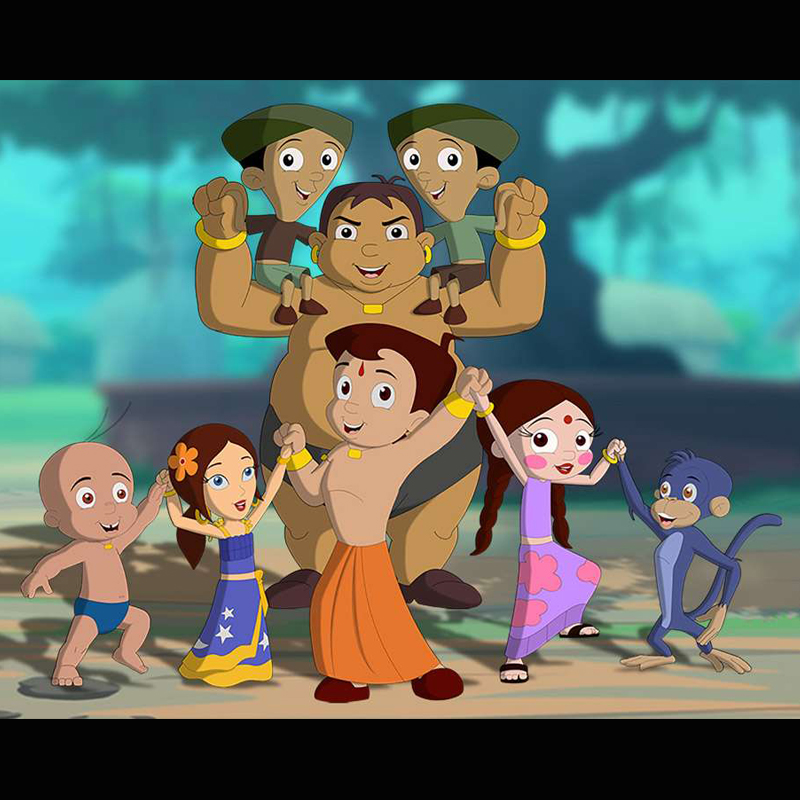
    Mumbai: The Singapore Tourism Board (STB) has joined hands with Voot Kids and Green Gold Animation to take Indian audiences on a virtual adventure in Singapore with the iconic Indian comic character, Chhota Bheem. Titled Chhota Bheem – Adventures in Singapore, the mini-series brings the destination closer to audiences in an innovative format and engages families and children across India in English, Hindi, and Tamil languages, starting 17 July.

    The web series also marks the 11th anniversary of the much-loved personality Bheem. To commemorate this occasion, Chhota Bheem and friends celebrate his birthday in Singapore and embark on fun and exciting activities. Each episode takes the viewer through different experiences in Singapore, from action and adventure to shopping and food. The seven special stories feature the thrills and spills of a memorable trip, set in various locations across Singapore.

    Speaking about the partnership, STB’s regional director, India, Middle East & South Asia, GB Srithar, said, “For us, this project is all about putting happy smiles on the faces of children and families across India, under these stressful times. Chhota Bheem and friends are well-loved characters who bring much cheer, hope, and optimism to Indian audiences. STB is pleased to present the 7 episodes as our “Gift of Smiles” to the Indian audiences. We hope the episodes will entertain families and allow them to experience a slice of Singapore virtually, as they keep safe at home.”

    “As part of a vision to engage our Indian audiences creatively in the new COVID-19 environment, the STB has been harnessing technology to reimagine its content, products, and offerings. We have explored new partnerships and social engagements with many well-known brands. Many of these collaborations involved Indian talents and influencers working with Singaporean artistes, presenting their common passions to the Indian audiences virtually through engaging storytelling and showcasing of the destination. This creative partnership with Voot Kids and Green Gold is our first animation project and we are happy to offer this to the family audiences in India,” he added.

    Speaking on the collaboration, Voot Kids’ content head Ashutosh Parekh, said, “At Voot Kids, our mainstay is to provide meaningful screen time pivoting around fun – learn and entertainment which is age-appropriate and 100 % safe. This is fueled by one of the largest content libraries in the genre that is truly multi-format spanning across top kids’ franchises from all over the world, making it truly a house full of toons. Made locally and loved globally, Chhota Bheem is one of the most-watched characters since the day we launched Voot Kids. This mini-series is packed with specially created “app-i-sodes” to add diversity to our content slate. As market leaders, we thrive on content curation and creation with the consumer at the centre of everything we do. This was the right time to bring delight to our young subscribers and their families  who have enjoyed our app indoors, and now will magically be transported to Singapore with never seen before stories of Bheem, without leaving the safety of their home,  exclusively on Voot Kids.”

    “As a powerhouse platform for kids, we will continue to invest in bringing in more characters and tales that spark the imagination with a compelling story of young minds that are truly digital natives.  We aim to engage our kids and family audience with an immersive and interactive experience and celebrating Bheem and team’s adventures in Singapore is a one of kind initiative in the kids’ digital space,” he added.

    Elaborating on the alliance, Green Gold Animation CEO Rajiv Chilaka said, “My biggest endeavour is to push the envelope with Chhota Bheem as an animated character that has millions of fans world over. New stories and new setting always add to Bheem adventurous streak and we are thrilled to partner with Singapore Tourism board to take it to the next level with Voot Kids as the exclusive home of the mini-series Chhota Bheem and friends – Adventures in Singapore.”

    “STB allowed us to bring out our best animation capabilities and Voot Kids pushed the envelope for creative exploration and the sharp kid-centric insights for us to create stories that will make children chuckle. The best minds in the business worked on this project with a phenomenal vision in these unprecedented times and I am really excited about the final cut. Voot Kids is a pathbreaking platform to emerge as best in the business and rewritten content rules for kids digital platform and we are hopeful that its subscribers will enjoy this fascinating mini-series that stars every kid’s favourite toon Bheem set in every kid’s favourite destination – Singapore,” he added.

    In addition to the webisodes, young fans will also be treated with exciting and entertaining e-books and interactive games featuring their adventures, which will be available for download from the Voot Kids app.

  • ‘Chhota Bheem’ boosts DD National’s 2 pm slot viewership

    ‘Chhota Bheem’ boosts DD National’s 2 pm slot viewership

    MUMBAI: Chhota Bheem on DD National improved the slot viewership, according to the latest BARC-Nielsen report data.

    Kids in the 2-14 age group contributed 38 per cent of the slot viewership of 2-2.30 pm.

    In the Hindi Speaking Market (HSM) 2+ category, the programme saw an increase from 154,000 impressions during the pre-Covid2019 period to 1,729,000 impressions in week 16. This is a jump of 11 times.

    In the HSM 2 to 14 years, it increased from 34,000 impressions in pre-Covid period to 662,000 impressions in week 16, which was a jump of 20 times. 

  • ‘Chhota Bheem’ back on Pogo in Kung Fu avatar

    ‘Chhota Bheem’ back on Pogo in Kung Fu avatar

    MUMBAI: Kids’ favourite character Chhota Bheem is back on television in a brand-new Kung Fu avatar. A new series of 10 episodes of Chhota Bheem Kung Fu Dhamaka premiered on television on 25 April and will be aired every day at 12.30 pm.

    Chhota Bheem Kung Fu Dhamaka movie was released last year and became the first 3D movie released by an Indian company. The movie received a great response from the audience and narrated the journey of the Dholapkur gang, consisting of Chhota Bheem and his friends and how they helped in saving the life of princess Kia in China as they defeated Zuzu. The new series of "Chhota Bheem Kung Fu Dhamaka" will focus on the individual adventures of Chhota Bheem and his friends as the story continues further.

    Green Gold Animation Pvt. Ltd founder-CEO Rajiv Chilaka said: “Chhota Bheem Kung Fu Dhamaka movie has been well accepted theatrically by kids all over India, Middle East as well as South Korea. The series carries on the adventures of Bheem and the team in China. With a completely new setting and all-new adventures, we hope the kids will love watching the series and be entertained.”

    Abhishek Dutta, South Asia Network Head for Cartoon Network and POGO, said: “We are excited to launch this new Chhota Bheem series on POGO this summer along with fun-filled, relatable content starring kids’ superhero Bheem that will keep our young viewers engaged and entertained.”

    Amidst the Covid2019 outbreak, with kids’ being the most challenging of the lot, the premiere could not have happened at a much better time. These are tough times for kids’ as they can no longer go out to play and are looking for something new always. The return of Chhota Bheem Kung Fu Dhamaka will surely help kids’ keep entertained and busy as they stay during this time.

    Follow Tellychakkar for the consumer facing news & entertainment

  • Nazara Technologies, Delta Corp to invest Rs 40 cr in HalaPlay

    Nazara Technologies, Delta Corp to invest Rs 40 cr in HalaPlay

    MUMBAI: Nazara Technologies Ltd and Delta Corp Ltd, which is India based casino gaming company, together will invest Rs 40 crore as part of Series-A funding round in an online daily fantasy sports platform, HalaPlay.

    HalaPlay, launched in 2017, has seen an explosive growth in the user base and total transactions since then. It has in the past received investment from Nazara Technologies, Kae Capital, Angel List and other angel investors. The company has seen 10x user growth in the last 12 months and will exponentially grow with over 1 crore active players to play in upcoming cricket season.

    Halaplay CEO Swapnil Saurav said, “Getting funding support from two of India’s largest gaming companies instills faith in us as a team taking us a notch higher in the Indian fantasy sports arena. Fantasy sports has been on the rise with the market being estimated to be $1 billion currently and is expected to go up to $5 billion in the next two years and hence this boost could not have come at a better time ensuring and enabling our growth along with.”

    Nazara Technologies Ltd CEO Manish Agarwal said, “Nazara invested in HalaPlay in 2017 and we continue to be excited about the growth story of HalaPlay. We are confident that Halaplay with this fresh round of funds will ride the explosive growth of fantasy sports in India.”

    Nazara has been actively pursuing opportunities in the interactive sports vertical categories and has invested in mobile gaming companies like Mastermind Sports Limited and Moonglabs Technologies Pvt Ltd apart from HalaPlay Technologies Pvt Ltd. Nazara has also taken a majority stake in Next Wave Multimedia Private Limited and Nodwin Gaming Pvt Ltd in the e sports arena in addition to recent investments in CrimzonCode and NZWorld (NZWorld Kenya Limited) to set up operations of real money gaming in Kenya.

    Delta Corp MD Ashish Kapadia said, “Delta believes in the HalaPlay team and their ability to innovate in the daily fantasy sports industry. Their viral growth is proof that they have been able to build a differentiated product that users love. We are excited by their potential, and are confident that this round of funding will help propel them to even greater heights.”

  • OTT has been favourable for animated content

    OTT has been favourable for animated content

    MUMBAI: Much of the Indian TV market is ruled in one way – the broadcasters keep IP rights for the shows and not the production houses. The scenario is the same whether it’s Hindi GEC or kids or lifestyle. Indiantelevision.com’s The Content Hub hosted a panel discussion ‘Animation Producers: Getting Animated’ with panellists Discovery Kids head Uttam Pal Singh, Golden Robot Animation head of business development RK Chand, Paper Boat Animation chairman, creative director Soumitra Ranade and Biscopewala managing partner Nishith Takia. The session was moderated by Kinsane Entertainment CMO Pranab Punj.

    Emphasising the retention of IP rights, Ranade said, “IP creation is a big thing and for this socio-political aspects are to be kept in mind as to what kids are watching now and five years later. But for this, we need to create relevant stories. It’s not going to work if we make B grade version of Disney or Pixar.”

    Singh said that Discovery Kids is making relatable shows for the Indian market and targeting global reach with OTTs. The idea behind making Little Singham was to create an IP and make it a brand.

    While speaking of the emergence of OTT platforms, Singh was of the opinion that he has not seen significant investment from the OTT players to create IPs which come to the OTT platform first and then on linear television. He added, “While OTT is growing and most of the English TV genres have been affected immensely in terms of audiences, the kids' genre, on the other hand, has grown on Indian television. It has grown to 8 per cent as per BARC report and we still see that a broadcaster has maximum reach as opposed to OTT platforms.”

    Moreover, Chand said that OTT platforms have given them the scope to explore new ideas and stories. He said, “The entire catalogue of Chhota Bheem was the first kids content on Amazon. OTT gives us a range of audience that isn’t restricted to TV. Netflix and Amazon have enabled us to innovate stories and characters.”

    Takia revealed that his company is talking to OTT platforms in a bid to make content for them. He added that budgets restrict the quality of animation. “We feel that very few people understand the aesthetic behind the project. Budgets also restrict the quality of animation. If you want to create high-quality content, you need high budgets,” he said.

  • Green Gold, TV Asahi to co-create new Ninja Hattori episodes

    Green Gold, TV Asahi to co-create new Ninja Hattori episodes

    MUMBAI: The creator of India’s largest animated character is going abroad. Green Gold Animation, the company behind Chhota Bheem, is collaborating with Japanese broadcaster TV Asahi and its animation production arm Shin-ei Animation to produce new episodes of a show that’s also popular in India, Ninja Hattori. Though TV Asahi has all rights to make creative calls, Green Gold can contribute in cultural or custom-oriented inputs to the script.

    Green Gold Animation content sales VP Bharath Laxmipati says, “Japanese flavour is something that we never had. Doraemon is not today’s time; it is from the 70s time. So, as of now, it is very important for the artists to always learn multiple styles and the collaboration with Japanese production house— Shin-ei will help them understand storytelling in very different lines. So that’s one of the reasons, apart from the strategic reasons, to produce Japanese content.” The new episodes of Ninja Hattori will be created in 2D-HD through a digitally mastered process. 

    While some say Japanese content was used as fillers when the price to produce home-grown content was steep. But Laxmipati objected that it is unfair to slot that content as such. He says, “If you see viewership ratings, Japanese content is doing well. Of course, localised content like Chhota Bheem and others are today’s flavours but there are also places where Japanese content are still working well with the audiences.”

    TV Asahi will hold the IP rights for the new series. When asked about retaining the IP rights for a production house’s creation, Laxmipati says that most broadcasting houses want to retain the IPs. “We are taking the initial risk of investing into IPs, so the production houses if they turn into pure production houses without the thought of having an output from the IP outrage broadcast, will die down because they don’t have the incentives to perform better and to further invest in creative energies.”

    He suggested that there has to be a win-win model for both. The broadcasters and the studio producing their IPs should come together where it shouldn’t be 'my way or the highway', it should be a new way, where both are winning this process where some territories will be with the broadcasters, a few of them will be given to the production houses. He added that there has to be a certain limit to hold on and a certain extension of the property that will be given to exploiting like licensing or merchandising, product or promotional and among others. “So there are a lot of things on the table that the studios and the broadcasters can come together on, but this is only possible if the IP is successful,” he concludes.

  • Content play of India’s kids channels

    Content play of India’s kids channels

    MUMBAI: Kids from 90s that grew up watching Aladdin, Duck Tales, The Flintstones, Tom and Jerry and Dexter’s Laboratory among others will cherish the memories of being couch potatoes during their childhood. Until 2008, when Chhota Bheem, a dhoti-clad boy chomping laddoos made an entry in the industry, all eyes were glued to foreign content dubbed in local languages.

    With the evolution of the animation industry in India and the change in financial strategies, broadcasters are now focusing on India-made characters and shows, moving beyond international syndications.

    Back in 2007, Sun TV’s kids’ channel, Chutti TV, dedicated for Tamil-speaking audience was launched in India. Later in 2009, Khushi TV was launched for Telugu viewers and since then, Chintu TV, a Kannada channel and Kochu TV for Malayalam audience have been added.

    Though the regional space is the most happening one now, kids’ channels are primarily Hindi with just regional audio feeds.

    Indian animation studios and companies are moving up the value chain and have started to create their own intellectual property rights. Global conglomerates such as Sony, Walt Disney and Warner Brothers have also seen the benefit in outsourcing animation characters and special effects to Indian companies.

    Moreover, in 2014, the average ratio for acquired versus local content was 60:40 for most broadcasters against 90:10 in 2008. Hindi broadcasters today are keen on creating their own IPs while the regional broadcasters bank on dubbed content. Gloomy Bear, Talking Tom, Garfield, and Dora are some of the shows that work well with the south Indian audience. The network only has one property involved named Happy Kids, which is an animated series launched for the Kerala market.

    Considering the fact that anything that is made for the own territory is far more expensive than syndicated content, the amount of money required to produce a show for the regional audiences is comparatively lower than the Hindi market. Animation production is far more expensive than general entertainment channels as well. The type of content and the investment in it also attracts the right kind of sponsors. Low budget content will only get a handful of sponsors, while big budget and sponsors will require the storyline to be universal.

    According to the FICCI report 2018, the Indian share in the global animation industry is less than one per cent. However, it is expected to increase in the coming years. Yet, international projects account for 70-80 per cent of the Indian industry revenues. The animation industry is 70 per cent art and only 30 per cent technology, leading to small enterprises driven by the passion of art bagging prominent deals.

    On one side, there is the Hindi speaking market making an effort to shift the kids’ preferences towards Indian original shows, while on the other side there is the regional space feeding them with syndicated content. Will the regional players also take a lesson from the Hindi market and go for local content or will their bombardment of international shows hold back the kids from wanting more?

  • ‘Chhota Bheem’ movie to travel to Indonesia, US, UK, Thailand

    ‘Chhota Bheem’ movie to travel to Indonesia, US, UK, Thailand

    MUMBAI: A decade after entertaining the children of India, animated cartoon character Chhota Bheem will fly abroad. The upcoming venture of the franchise has hit both the big and small screens and is set for a global release. The year 2018 seems bright for the production with KickO and Super Speedo on Sony Yay’s channel.

    The production house is venturing for the first time in the international market with the upcoming 3D movie, Chhota Bheem: Kung-fu Dhamaka. The movie will fly to many countries such as Indonesia, Thailand, the US and the UK. The quality of VFX for the movie will be at par with international ventures.

    Green Gold Animation chief strategy officer Srinivas Chilakalapudi said, “We want Chhota Bheem to be on a global level. As far as marketing strategies for international space are concerned, we are looking for tie-ups with FMCG and leisure brands.”

    According to reports, the production house usually spends not more than a million dollar (between Rs 5-6.7 crore) on its feature films, including the expenses on marketing and promotion. The company, which has its own merchandise, is growing at over 20 per cent in revenues and is cash positive.

    Green Gold Animation was founded in 2001. The company produced Vikram Betal and Krishna animation shows which convinced Pogo TV to give a chance to the production house. Chhota Bheem made his first appearance in 2008 on Pogo TV. It succeeded and continued to run. The company is financed by Samir Jain, Raj Viswanadha, Arun Shendurnikar and Nidhi Anand.

    The show was aired on Sirasa TV in Sri Lanka with the name ‘Chandi’. Chhota Bheem is also aired in Pakistan on Cartoon Network Pakistan and Pogo in Hindi. The show received high ratings and today Chhota Bheem is watched more than any other cartoon show in Pakistan, Afghanistan and Iran.

    Not only this, the company inked a deal with Netflix to digitally broadcast Mighty Little Bheem – a spinoff of Chhota Bheem and Amazon Prime for the show Kalari Kids – a lost martial art form of Kerala (Kalaripayattu).

    Also Read :

    Kids’ channels undaunted by IPL

    Is it the end of the road for anime in India?

    Sony Yay banks on originals with a slew of fresh content


  • Is it the end of the road for anime in India?

    Is it the end of the road for anime in India?

    MUMBAI: Back in the 90s, a new legion of toon addicts was created in India with the advent of anime shows such as Pokémon, Dragonball Z and Naruto that were telecast on Cartoon Network. A few years later, the genre hasn’t found the popularity in Indian kids that it has in some other parts of the world.

    The popularity of anime has suffered owing to parental restrictions because of the adult themes in some of the content, relatively low promotions and the lack of merchandising. Long gone are the days when anime fans, or Otaku, went bonkers collecting tazos or duel master cards or even the Pokémon Red Emulators.

    While cartoons and anime are both caricature sketches that are, in turn, animated, the latter has a very distinct style of art using specific visual elements for its characters. A majority of the animes are based on manga comics that were not easily available in India until online shopping companies started selling anime DVDs and manga comics from other parts of the world.

    Sony Pictures Entertainment’s channel Animax was one of the channels that aired Japanese anime content in 1998. Last year, the channel was replaced by Sony Yay, which has a full-fledged focus on local home-grown content. Recently, Turner International India announced that it would pull the plug on its anime offering Toonami from 15 May. This is a clear indication that the genres failed to elicit interest from its young audience. At present, Toonami airs shows from the Cartoon Network Studios, Hanna-Barbera and the Warner Bros Animation libraries.

    Doraemon, Shinchan and Ninja Hattori, which are still the most popular among kids after Chhota Bheem, started life as manga series and were subsequently adapted as anime shows. These shows are among the flagship shows that the Indian broadcasters showed on television but, as the TV viewing evolved, the focus shifted to local home-grown content. That was the time when Chhota Bheem was born in 2008.

    A media professional said that anime series are still popular among the kids. “Who wouldn’t love watching Pokemon, Dragonball Z. These shows would have worked only if they were promoted well like the shows like Chhota Bheem, Motu Patlu and among others. If these channels push anime content, the kids will love it. It is not the case like kids are not watching these shows that are why they are shutting the channel; in fact, it is because they want to come up with their original content.”

    However, another media expert had a different view. “Japanese content was created during the 70s and 80s and was picked up by the broadcasters because they had to fill the programming slots, so there’s a different approach between Japanese content and original content,” they pointed out.

    In the early years of Indian animation, broadcasters found it suitable to licence shows from other countries for air time. But as the industry picked up, producing and owning IPs became cost-effective. Channels didn’t need to depend on borrowed material like anime. Another aspect is that it is not easy to dub anime content, considering the different East Asian culture. Local shows can be easily modified to the kids’ thinking.

    However, it would be wrong to say that the anime culture isn’t developing in India. Growing fan clubs; online social media groups are providing great platforms to share and gather information; stores are printing anime clothes, cups, gifts and other merchandise for shopping in several areas. Though not in every city, Comic Cons are being organised and promoted as well. Awareness is increasing, but slowly and it seems the teen and adult audiences are more inclined towards it than children.

    It remains to be seen whether Turner comes up with a replacement of Toonami just the way Sony Yay entered the market. The future of Indian home-grown content seems bright, as far as new characters emerging on every kids’ channels is concerned, but it will be interesting to observe whether broadcasters find answers to the conundrum of Japanese anime content in India.

    Also Read :

    Sony Yay banks on originals with a slew of fresh content

    No reason for GECs to panic as IPL grabs eyeballs

    The era of dance reality shows

    Owning IP not priority for Big Synergy

  • Animation sees an uptick despite expensive production

    Animation sees an uptick despite expensive production

    MUMBAI: When it comes to popular content on TV in India, general entertainment channels (GEC) lead the way. Primetime shows are most watched, most-earning and most talked about since the early years of the saas-bahu serials.

    Animation as a genre is sidelined to the kids’ channels but producing it involves tons of cash, which may not necessarily be recoverable so easily. At first, India was content with syndicated content like Tom & Jerry, Mickey Mouse, etc and only in 2008 did we get our most pride-worthy IP Chhota Bheem.

    A media professional quoted the price for producing 2D or 3D animated content to be Rs 10-20 lakh or above for one 11-22 minute show. Initial episodes entail an even higher spend at Rs 20 lakh. The cost depends on the number of characters, background, etc. Another professional estimated it to be between Rs 30-50 lakh for shows that top the chart. If we produce it with the intent of selling it to the overseas market, the investment could skyrocket to Rs 1 crore. Compare these staggering numbers with just Rs 7-8 lakh needed for a single GEC episode.

    Green Gold Animation chief strategy officer Srinivas Chilakapudi said that GECs will raise the cost depending on the quality they wish to achieve. With Netflix and Amazon bringing in high value content, TV channels will be compelled to add visually appealing elements as well. He says that the case is similar with animation.

    It took a while for producers to realise that owning IPs was more profitable than syndicating animation content. However, Green Gold has a balance of local and syndicated shows. By playing shows at different times and watching where the ratings come from, the production house does its budgeting. Older shows like Luv Kush or Arjun are syndicated at a lower price.

    GEC ad rates are four times that of kids’ channels due to the viewership they command. Brand-building founder Ambi Parameswaran says, “It will be a much lower cost per thousand to reach kids through channels focussed on them. Obviously, GECs have huge barriers to entry and while they may deliver good number of kids, you are also reaching homes without kids.”

    He says that as the penetration of TV grows, there will be a growth of sub genres like kids, sports, religion, travel etc. There has also been a growth of Indian language niche channels that will further lead fragmentation of audiences. “Surprisingly multiple TV homes are still a rarity. I expect this to change in the next five years. From the current low level of multiple TV homes (less than 5 per cent) we can expect this to go beyond 15 per cent in the coming decade,” says Parameswaran.

    Viacom18 kids entertainment head content Anu Sikka says that kids love animation as it allows them to step into an imaginary world with their favourite characters. “Kids love stepping into Furfurinagar with Motu Patlu or riding a cycle in Vedas city with Shiva. Also, the repeat value of animation content is high, which increases the shelf value of the show. This, in turn, allows broadcasters to produce hours of original content that can be played on the channel for years bringing in a great success thereby reducing the cost average.”

    She further added that connect of an original Indian show with Indian characters is higher given that there is better connect and relatability to the environment. “Also creating content locally and owning the IP’s gives us more control over the creative of the show, which then can incorporate the local sensibilities thus making the show more endearing to the audience.” She added that the turn-around time for local show is much faster compared to international shows, which is the need of the hour, especially in India, as today kids are always looking for refreshed and newer content. Today, there’s a dearth of international shows, which has a strong universal appeal and which can match the success of some of the earlier acquisitions like Ninja Hattori or Oggy and the Cockroaches. “If we own the IP, it opens up more streams of revenue for the broadcaster, especially in CP, digital platforms, licence products, etc.”

    In an earlier interview, Shemaroo Entertainment head-animation business Smita Maroo and Green Gold Animation VP-content sales Bharath Laxmipati agreed that anything that is made for the own territory is far more expensive than syndicated content.

    Sikka also agrees with Maroo and says that today there’s a strong potential as the content is being viewed on multiple platforms world over in various languages. “If the content and the characters are universal enough, the potential of them being acceptable in the international market goes up substantially.” She said that an Indian show, Pakdam Pakdai was renamed as Rat-a-Tat and was sold to 30 territories worldwide, the concept was developed by Nick and executed by Toonz animation.

    Vaibhav More Films founder Vaibhav More takes a different view. He said that GECs are expensive than animation production. “In GECs the actors are charged high. Not only this, the equipment costs, editing, post-production activities, etc are also taken into consideration.” He feels that some stories live longer via animation.

    When asked about the ways you keep the production cost low, Sikka said that today it’s increasingly becoming difficult to keep down the cost of animation series in India as there’s been a surge in demand for local animation content in India. This requirement for local content is coming not just from the broadcasters, but also from digital platforms as kids are consuming content from all these mediums. “There’s also a shortage of big animation studios which can deliver the product from scratch to the end while maintaining a certain benchmark in terms of quality,” she says. She further added that one way to control the cost is by commissioning and committing to a certain number of episodes, which allows the studios to re-use the assets which in turn keeps the cost in control. “The other option that can always be explored is to go with 2D animation, which is cheaper in comparison to 3D show, provided the concept allows you to do so.”

    Though animation is a more intense and cost-expensive content, broadcasters and creators see potential in it, especially with the growth of digital and the global reach that popular ideas are likely to get.

    Also Read :

    Japanese kids’ content going strong despite home-grown onslaught

    20 years later, ‘The Powerpuff Girls’ still breaking stereotypes