Tag: Chhattisgarh

  • Simba enters Tier 2 cities with 100 stores by 2014 in India

    Simba enters Tier 2 cities with 100 stores by 2014 in India

    MUMBAI: SimbaToys, one of the largest toy manufacturers in the worldand slated to be the largest toy chain in India is all set to expand its reach to Tier 2 cities. Following the opening of existing stores across Mumbai,Delhi, Bangalore and Chennai the company is now ready to extend its reach to Orissa, Rajasthan, Gujarat and Chhattisgarh over next few months.

    Commenting on the expansion Shree Narayan Sabharwal, Business Head, Simba Toys India stated “In India, almost 70% of the toy market is unorganized. Simba Toys mission is to let kids play with better quality and safer toys. The idea behind SIMBA stores in India is to establish them as your neighborhood toy store. Through which good quality products come closer to mass consumer across all cities in India, as it’s difficult to have easy access to such toys in India.”

    “We are planning to open 50 outlets across the country by the end of this year”, he further added. German – based toy brand, Simba Toys entered the Indian market through an exclusive franchise arrangement in 2010. Simba Toys opened its first Simba store in 2012 in Mumbai, the financial capital of India.

    Eighteen stores of SIMBA are already operational in diversified locations across the country which includes Delhi-NCR, Madhya Pradesh, Bangalore Mumbai, Gujarat, Uttarakhand and Chennai. The product range includes Back to School range, Steffi, Majorette, Art and Craft, Music.

  • Battle for the States

    Battle for the States

    MUMBAI: As the 5 states of Delhi, Madhya Pradesh, Chhattisgarh, Rajasthan and Mizoram go to elections in November-December, CNN-IBN & IBN7, in partnership with THE WEEK, bring to you the most incisive and definitive pre-election survey in these states, conducted by the Centre for the Study of Developing Societies (CSDS).

    Amidst the tough multi-party competition and hectic campaigning in these states, the survey will give the viewers a head start on the likely outcome of the Assembly elections; delving into seat projections, sensing the mood of the voters in key constituencies and discussing the biggest factors and issues that are going to impact the results.

    With a formidable team of journalists, joined by the best political experts in the country, the survey aims to give its viewers the sharpest and most precise analysis of the elections.
    Rajdeep Sardesai, Editor-in-Chief, CNN-IBN, IBN7 and IBN-Lokmat, said, “The pre-poll study is an attempt to sense the mood of the voters and determine how this will impact the overall constitution of the respective State Assemblies. Once again, we are pleased to partner with THE WEEK in this endeavour.”

    Ashutosh, Managing Editor, IBN7 said, “In the run-up to the State Assembly elections, this pre-poll study is an initiative to reach out to voters, understand their issues and how their decision will impact the electoral outcomes in these 5 key poll-bound states.”

    Philip Mathew, Managing Editor, THE WEEK, said, “We are glad to partner with CNN-IBN & IBN7 in conducting this pre-poll survey. As usual, it is our endeavour to give our readers the most thorough insights into the current political and social scenarios in the poll-bound states.”
    To know the findings of this study, tune into ‘Election Tracker’ on CNN-IBN and ‘Mera Vote Meri Sarkar – Agar Abhi Chunav Hon Toh’ on IBN7, from Mon, Oct 28 to Thu, Oct 31 at 8pm.

    You can also read the detailed results and analysis of the survey in the issue of THE WEEK, hitting stands on Nov 1, 2013.

  • Election Commission to allot time to five state assemblies for poll broadcast on DD, AIR

    Election Commission to allot time to five state assemblies for poll broadcast on DD, AIR

    NEW DELHI: All India Radio and Doordarshan, which provides a platform to political parties for their poll broadcasts before election, will also organise panel discussions or debates at the Kendras/Stations for the forthcoming elections, for the state assemblies of Rajasthan, Madhya Pradesh, Chhattisgarh, Mizoram and the National Capital Territory of Delhi.


    The eligible party can nominate one representative for this programme, but only the Election Commission of India will approve the names of coordinators for the panel discussion and debates in consultation with the Prasar Bharati Corporation.


    The Commission, in the previous years, has worked out a schedule to provide different time slots for poll broadcasts to different parties.


    Only the ‘national parties’ and ‘recognised state parties’ will be eligible to avail the facility of the broadcast and telecast time.


    A base time of 45 minutes will be given to each party uniformly on the Regional Kendras  of  Doordarshan network and All India Radio network in the States/UT of Rajasthan, Madhya Pradesh, Chhattisgarh, Mizoram and NCT of Delhi. The additional time to be allotted to the parties has been decided on the basis of the poll performance of the parties in the last assembly election. The facilities will be available at the Regional Kendra of the All India Radio and Doordarshan in the states and then will be relayed by other stations within the states.


    In a single session of broadcast, no party will be allotted more than 15 minutes.


    The period of broadcast and telecast will be between the last days of filing the nominations and will end two days prior to the date of the poll. However, there will be no telecast or broadcast during the 48 hours before the polls close, as per specific provisions of the Representation of People Act, 1951.


    Prasar Bharati, in consultation with the Commission, will decide the actual date and time for broadcast and telecast. This will be subject to the broad technical constraints governing the actual time of transmission available with the Doordarshan and All India Radio.


    The guidelines prescribed by the Commission for telecast and broadcast will be strictly followed. The parties will be required to submit transcripts and recording in advance. The parties can get this recorded at their own cost in studios that meets the technical standards prescribed by Prasar Bharati, or at the Doordarshan/All India Radio Kendras.


    Alternatively, they can have these recorded in the studios of Doordarshan and All India Radio by advance requests. In such cases, the recordings may be done at the State Capital and at timings indicated by Doordarshan/All India Radio.


    Time Vouchers will be available in the denomination of five minutes with one voucher having time allotment from one to four minutes. The parties will be free to combine them suitably.


    Introduced for the first time for the Lok Sabha elections in 1998, the scheme of free broadcasts was extended by the Commission to the State Assemblies held after 1998 and General Elections to the Lok Sabha in 1999, 2004 and 2009.


    With the amendments in the Representation of People Act 1951, “Election and Other Related Laws (Amendment) Act, 2003”, and the rules notified in that, equitable time sharing for campaigning by recognised political parties on electronic media now has statutory basis.


    In exercise of the powers conferred by clause (a) of the Explanation below section 39A of the Representation of People Act, 1951, the Central Government has notified all such broadcasting media that are owned or controlled or financed wholly or substantially by funds provided to them by the Central Government, as the electronic media for the purposes of that section. Therefore, the Commission has decided to extend the said scheme of equitable time sharing on electronic media through Prasar Bharati Corporation to the ensuing General Elections to the State Legislative Assemblies.

  • Election Commission mandates poll-related behaviour of media before state polls

    Election Commission mandates poll-related behaviour of media before state polls

    NEW DELHI: With elections to five states on the anvil, the Election Commission has prohibited conduct of Exit polls and dissemination of their results in the hour fixed for commencement of polls in the first phase and half hour after the time fixed for close of poll for the last phase in all the States, as also stated in Section 126A of the Representation of Peoples Act 1951.


    The Commission has clarified that there have been violations in the past of Section 126 of the Act which prohibits displaying any election matter by means of television or similar apparatus, during the period of 48 hours ending with the hour fixed for conclusion of poll in a constituency. There are allegations sometimes during elections of violation of the provisions of the above Section 126 by TV channels in the telecast of their panel discussions/debates and other news and current affairs programmes.


    “Election matter” has been defined in that Section as any matter intended or calculated to influence or affect the result of an election. Violation of the aforesaid provisions of Section 126 is punishable with imprisonment upto a period of two years, or with fine or both.


    Elections in November and December are being held for Chhattisgarh, Madhya Pradesh, Mizoram, Rajasthan, and Delhi.


    A mechanism has been laid out with three-tier Media certification and Monitoring Committees (MCMC) at District, State and Election Commission level to deal with the menace of paid news, it said. Revised comprehensive instruction on ‘Paid News’ has been issued on 27 August 2012 and is available on the Commission’s Website. Necessary instructions have been issued to the CEOs of the poll going states to ensure briefing of political parties and Media in the districts about ‘Paid News’ and the mechanism to check ‘Paid News’. Representatives of Political Parties and Media Organizations of poll going states have also been briefed at Election Commission. The MCMCs of all states have been trained to do their job.


    The Commission has reiterated that the TV/Radio channels and cable networks should ensure that the contents of the programme telecast/broadcast/displayed by them during the period of 48 hours referred to in Section 126 do not contain any material, including views/appeals by panelists/participants that may be construed as promoting/prejudicing the prospect of any particular party or candidate(s) or influencing/affecting the result of the election.


    During the period not covered by Section 126 or Section 126A, concerned TV/Radio/Cable/FM channels are free to approach the state/district/local authorities for necessary permission for conducting any broadcast related events which must also conform to the provisions of the model code of conduct and the programme code laid down by the Information and Broadcasting Ministry under the Cable TV Networks (Regulation) Act 1995 with regard to decency, maintenance of communal harmony, etc.


    The Commission said they are also required to stay within the provisions of Commission’s guidelines dated 27th August, 2012 regarding paid news and related matters. Concerned Chief Electoral Officer/District Election Officer will take into account all relevant aspects including the law and order situation while extending such permission.


    It drew attention of the media to guidelines issued by Press Council of India to follow for observance during the election:


    (i) It will be the duty of the Press to give objective reports about elections and the candidates. The newspapers are not expected to indulge in unhealthy election campaigns, exaggerated reports about any candidate/party or incident during the elections. In practice, two or three closely contesting candidates attract all the media attention. While reporting on the actual campaign, a newspaper may not leave out any important point raised by a candidate and make an attack on his or her opponent.


    (ii) Election campaign along communal or caste lines is banned under the election rules. Hence, the Press should eschew reports, which tend to promote feelings of enmity or hatred between people on the ground of religion, race, caste, community or language.


    (iii) The Press should refrain from publishing false or critical statements in regard to the personal character and conduct of any candidate or in relation to the candidature or withdrawal of any candidate or his candidature, to prejudice the prospects of that candidate in the elections. The Press shall not publish unverified allegations against any candidate/party.


    (iv) The Press shall not accept any kind of inducement, financial or otherwise, to project a candidate/party. It shall not accept hospitality or other facilities offered to them by or on behalf of any candidate/party.


    (v) The Press is not expected to indulge in canvassing of a particular candidate/party. If it does, it shall allow the right of reply to the other candidate/party.


    (vi) The Press shall not accept/publish any advertisement at the cost of public exchequer regarding achievements of a party/government in power.
    (vii) The Press shall observe all the directions/orders/instructions of the Election Commission/Returning Officers or Chief Electoral Officer issued from time to time.

  • New Kid on the Hindi news block: Jia News

    New Kid on the Hindi news block: Jia News

    MUMBAI: Starting 5 October, 7:00 am onward, the Hindi news space will see one more channel going live.

    Named Jia News, after channel chairman Rohan Jagdale’s daughter, the channel, whose slogan reads: ‘Ehsaas Badlav Ka’ (Feel the change), is looking to tap people’s spiritual side apart from giving them their daily fix of news and current affairs.

    About five months ago, Jagdale and his wife who is channel director Madhulika, started work on Jia, which also stands for ‘Journalist in Action’.

    Equipped with a head office in Noida, 16 bureaus in states like Jharkhand, Chhattisgarh, Gujarat, Maharashtra, Madhya Pradesh and Haryana, and a staff of 150 people including journalists, cameramen and stringers, Jia will air 60 per cent current affairs and 10 per cent sports and 10 per cent entertainment  as part of its programming strategy. As of now, no south Indian state has been included and news from the southern region will be through tie-ups with ANI. Joy Sebastian has been appointed channel head while Ashish Mishra is chief editor. The hunt for a CEO is still on.

    Interestingly, Jagdale, who has an oil and gas business, has funded Jia entirely out of his own pocket. “I have started the channel on emotions and feelings,” he says.

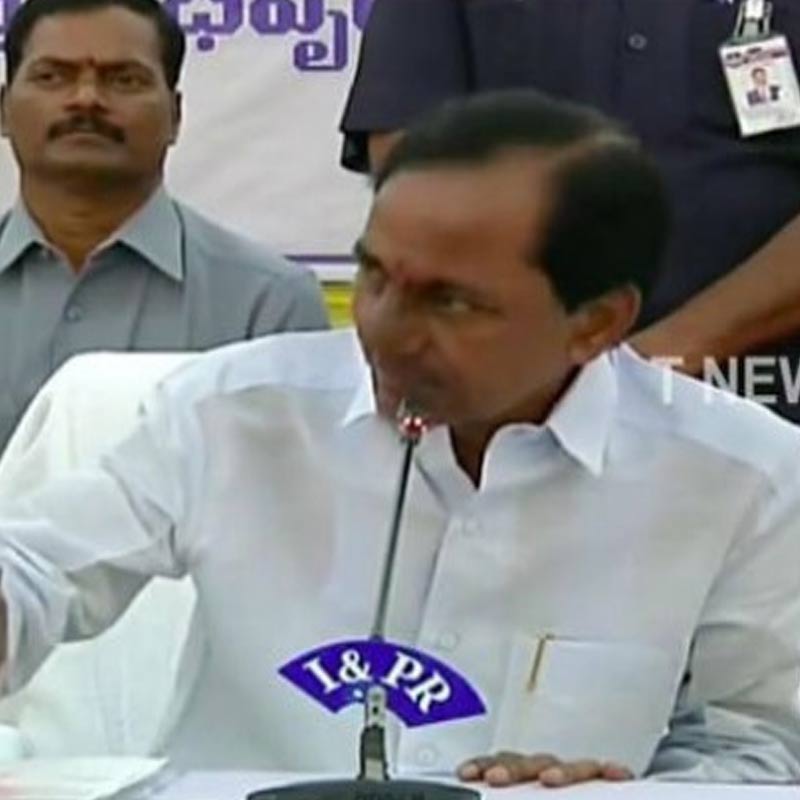
    Unlike other channel launches, no big marketing campaign has been planned. Reason is Jagdale wants to first reach out to school and college students by hosting debates and elocutions and making them understand the importance of Hindi as a language. “Hindi as a language has become something of a burden and I want to change that,” he says. Promos will be uploaded on the Internet on the day of the launch.

    Initially available on cable TV only, Jagdale plans to touch nearly 1.5 crore people. The web page will be launched on the tenth of this month. The channel also plans to have spiritual shows to help people relax and relieve stress.

    Given the rash of Hindi channels lately, it remains to be seen whether Jia will manage to stand out from the crowd.

  • PVR launches first multiplex in Bilaspur

    PVR launches first multiplex in Bilaspur

    MUMBAI: PVR Ltd has announced the opening of the first multiplex at Rama Magneto the Mall in Bilaspur, Chhattisgarh.

    With this launch in Bilaspur, PVR now has eight screens and two multiplexes in two key cities of Chhattisgarh including four screens and 1212 seats in Raipur.

    The 27,821 sq ft multiples will have a capacity of 792 seats and will provide an digital movie experience to the cine goers of the city at ticket prices ranging from Rs 70 to Rs 160.
    PVR Ltd group president Pramod Arora said, “We are extremely delighted to launch PVR Cinemas in Bilaspur, the second largest city of the state of Chhattisgarh. The launch in Bilaspur is part of PVR Ltd.‘s organic growth strategy and is another step in its efforts in reaching out to patrons in tier II cities. We are looking forward to provide a world class movie experience to other centres in Chhattisgarh as well. Also we will be expanding to other cities like Pune, Mysore and are hoping to add another 64 screens by the end of this financial year. It is PVR‘s constant endeavour to reach out to our patrons across cities and create benchmarks in entertainment and we understand that Raipur has a discerning audience who are ready to experience the new and international cinematic wave”

    Rama Magneto the Mall director Sandeep Agrawal said, “We are extremely pleased to form an association with PVR Cinemas. They are the leaders in the entertainment space and we are delighted with the opening of PVR Cinemas in our mall. The quality entertainment experience offered by PVR Digital Cinema will change the way the cinema lovers in the city will watch movies. With digital projection, high-quality sound system, and comfortable seats in all Audis, PVR will surely provide an ultimate movie experience to the people and we hope to receive a positive response from the people here.”

    With the launch in Bilaspur, PVR stands at 188 screens in 43 cinemas in 13 states and 26 cities across India.

  • Journalists can be prosecuted for sting operations: CBI

    Journalists can be prosecuted for sting operations: CBI

    NEW DELHI : Journalists can be prosecuted on corruption charges for conducting sting operations to expose corruption in public life, according to the Central Bureau of Investigation.

    The CBI told the Supreme Court that a party to a sting operation, allegedly undertaken to expose corruption by public servants, can be liable for prosecution under the Prevention of Corruption Act, if he/she does not inform the law enforcing agency before or immediately after the sting.

    A bench headed by Justice Altmas Kabir admitted petitions filed by journalist Arvind Vijaymohan and businessman Rajat Prasad who are facing prosecution for their role in a sting operation. The petitions challenge the 30 May 2008 order of the Delhi High Court dismissing their plea against framing of charges by a special CBI court in Delhi.

    The video showed then Environment Minister Dilip Singh Judeo allegedly receiving Rs 900,000 bribe from an Australian firm in exchange for mining rights in Chhattisgarh on 5 November 2003.

    Senior counsel Harish Salve who appeared for the petitioners said journalists exposing corruption in public life could not be prosecuted as they acted like ‘whistleblowers’.

    He drew the court’s attention to the NDTV sting operation case in which the court praised the channel for exposing the nexus between the accused and the prosecution and no action was taken against the journalists.

    The CBI, however, has said a party to a sting operation can also be prosecuted when there is active inducement by the sting party or when there are other vested interests other than the public interest.

    The probe agency asserted: “Law enforcement is exclusively a function of government machinery. Others can only help the competent/intended government institution in enforcing the law of the land but can never do the job independently taking law into their hands keeping the intended government machinery at bay.”

  • Pearl Broadcasting invests Rs 400 million in P7 News, Mumbai launch on 23 September

    Pearl Broadcasting invests Rs 400 million in P7 News, Mumbai launch on 23 September

    MUMBAI: Pearl Broadcasting Corporation has invested close to Rs 400 million in P7 News and is set to formally launch the Hindi news channel in Mumbai on 23 September.

    P7 has already signed up major cable networks including Incablenet, Hathway Cable & Datacom, Scod18 and Wire & Wireless India Ltd (WWIL).

    “Our investment so far has been close to Rs 400 million (barring distribution). For Mumbai, we are spending around Rs 50 million for distributing the channel on cable networks. We have already signed annual deals with the the major cable networks in Mumbai,” Pearl Broadcasting director Jyoti Narain tells Indiantelevision.com.

    Launched on 27 March in Delhi, the channel is already available in other Hindi speaking markets. “We have spent around Rs 80 million on distribution. We are available in the states including Madhya Pradesh, Chhattisgarh, Uttar Pradesh and Gujarat. We recently signed a deal with Gujarat Telelink Private Ltd (GTPL),” avers Narain.

    The free-to-air (FTA) channel is also available on Essel Group’s direct-to-home (DTH) company Dish TV and DD Direct Plus.

    With the tagline ‘Ek Umeed’ (a ray of hope), the channel has a staff count of 375 across 11 bureaus. The channel has six OB-vans for news gathering and an association with 600 stringers across the nation for news.

    “It is a very competitive space. We can’t compromise on content. Our focus is on social and developmental stories across the country,” adds Narain.

    With the Mumbai launch, the channel will have a new look and feel as new segments will be added. At present, P7 News runs over 20 news-based supplements in weekdays, while it picks up social issues and campaigns on weekends.

    Within six months of launch, the channel has roped in advertisers like Coca-Cola, Bata, and Morepen apart from a clutch of real estate companies.

    Pearl Group has a wide array of business interests spanning real estate, tourism, TV & film production and print publication.

  • Discovery to air a four part travelogue on ‘Chhattisgarh: The Tribal Planet’

    Discovery to air a four part travelogue on ‘Chhattisgarh: The Tribal Planet’

    MUMBAI: This year infotainment channel Discovery increased the number of hours devoted to India themed programming. Each week Discover India airs in a two hour block now instead of just one hour in the past.

    Now in its endeavour to present India’s cultural heritage and natural diversity, Discovery has produced a special four-part programme on Chhattisgarh. The travelogue Chhattisgarh: The Tribal Planet the channel says will present a journey of surprise and enchantment, uncovering the mystical, traditional place.An Indian commission, Chhattisgarh: The Tribal Planet will air on consecutive weekends (Saturday and Sunday), 9-10 December and 16-17 December at 10 pm.

    Discovery India executive VP, MD Deepak Shourie said, “Discovery Channel has showcased India’s diverse cultural and natural landscape through captivating programmes. Chhattisgarh: The Tribal Planet explores the state’s inimitable and unexplored attractions and will serve as a gateway for eco and ethno-tourists from across India.”

    The Honourable Chief Minister of Chhattisgarh, Dr Raman Singh said, “Chhattisgarh is endowed with a rich cultural heritage and attractive natural diversity offering an interesting blend of nature, ethnic, heritage, wild life and eco-tourism. The state is full of ancient monuments, rare wildlife, exquisitely carved temples, Buddhist sites, palaces, water falls, caves, rock paintings and hill plateaus.

    “Most of these sites are untouched and unexplored and offer an alternate experience to tourists. I am delighted that travellers across India will be able to explore the state’s unique attractions on Discovery Channel – an ideal partner in our endeavour to showcase Chhattisgarh’s tourism potential.”

    Honorable Minister of Tourism and Chairman of Chhattisgarh Tourism Board Brijmohan Agrawal said, “It is my firm belief that in the coming years Chhattisgarh will emerge as a leading tourist destination and will leave its mark on the international tourist map. I am confident that Discovery Channel’s programme Chhattisgarh: The Tribal Planet will help position the state as an attractive destination for both domestic and foreign tourists.”

    Presenting one of India’s least explored eco and ethno-tourist destinations, the show will take viewers through the state’s history, culture, architecture, wildlife and its varied tribes. Providing a holistic view of the state, the programme will cover Raipur, Kawardha, Bhoramdev, Kumhapura, Jagdalpur, Sirpur, Turturiya, Kanger National Park, Tirathgarh and Chitrakoot waterfalls, Bastar tribes, forests, tribal ‘Haats’ and villages and craft centers.

    Covering the Bastar region in southern Chhattisgarh, the first episode presents its large tribal population and abundant natural resources. Exploring the state’s traditions, this episode will take viewers through the weekly markets called ‘Haats’, local food, customs, dance and festivities. It will uncover the state’s handicrafts like terracotta at Nagarnar village through interactions with the artisans. The episode will also showcase the ancient temples at Barsur.

    The second episode highlights the heritage of the state in terms of its history and architecture – excavations at Sirpur, Laxman temple, Rajiv Lochan temple, Danteshwari temple, Bhoramdeo temple and Mainpat, a Tibetan settlement. The viewers can also witness Teejan Bai’s captivating performance at the Laxman Temple at Sirpur.

    The third segment is an ode to the artistic traditions of the state. It gives a glimpse into the crafts and costumes through interactions with tribals and artisans. Viewers will discover their culture, unique delicacies like the red ant chutney and interesting traditions like Ghotul. Viewers will also learn the rare craft of bell metal from master craftsman Jaidev Bhagel. Apart from the cultural aspect, the episode would also showcase the natural beauty of the state including the spectacular waterfalls at Chitrakoot.

    The final episode takes a look at the natural splendour of the state, showcasing its many national parks and flora and fauna. Viewers will get to see picture-postcard waterfalls at Tirathgarh and the verdant valley. They will get a taste of life in a jungle and a glimpse of its wildlife – leopard, deer and bison. Apart from the sanctuaries in Bharnawapara, Kanger and Udanti, viewers will also visit the megalithic rock site of Karkabhat with archaeologist A K Sharma.