Tag: Chennai

  • Ogilvy wins Woodward’s Gripe Water creative biz

    Ogilvy wins Woodward’s Gripe Water creative biz

    MUMBAI: Woodward‘s has awarded its Gripe Water’s creative mandate to Ogilvy India following a multi-agency pitch.

    The account will be handled by the agency‘s Chennai office.

    The incumbent agency on the account is JWT.

    Woodward’s Gripe Water is a relief for stomach wind and gripe and is an offering from TTK Healthcare, an integrated manufacturing and marketing group.

    The TTK Group reaches out to the world with its core products – kitchenware, pharmaceuticals, condoms, medical devices and food products.

    Vizeum is handling the media account of Woodward’s Gripe Water.

  • Hindu wants to stay ahead of ‘The Times’

    Hindu wants to stay ahead of ‘The Times’

    MUMBAI: In a classic media ad war, The Hindu has hit indirectly against The Times of India to protect its turf in Chennai. With its ‘Stay Ahead of The Times campaign‘, The Hindu has declared that it is a force in print journalism which may not be so easily put down by the popular trend of trivialising news.

    The campaign, conceptualised by Ogilvy and Mather, broke on the back of the launch of Times of India’s Kerala edition.

    The 360 degree campaign aims at raising the issue of commercialisation and ‘bollywoodisation’ of print journalism today.

    Speaking to Indiantelevision.com, The Hindu Group vice president advertising, Suresh Srinivasan said: “In a globalising knowledge-driven economy, it is vital that readers are well informed about the world at large. And yet, over the last few years, news from the media industry in India has increasingly focused on serving up a steady diet of trivia and shied away from the national and international issues that matter. It is the kind of news that equates to junk food and results in a steady dumbing down.”

    Srinivasan maintains that the aim of the campaign is to set the agenda for raising concern about the type of news disseminated by the media and the need to report news on issues that really matter.

    The campaign kicked off with a tongue-in-cheek TVC. It has followed it up with an equally in your face print campaign with copies like “Also has pages 1,2,4,5,6,7..” and “Sense. Not Sensational”. The social media has been utilised as well with dedicated Facebook and Twitter accounts. Plans are on for an extensive outdoor campaign along with some on ground activations as well.

    Srinivasan added, “The goal here is to start a debate and get the readers involved. Having been in the print media for so long, we decided to put into use the newspaper’s credibility and heritage in the business to voice this concern. Yes, there is a fun side to it, and it may seem we are answering a rival newspaper through this campaign, but there is no such intention to take on any competitor.” He goes on to add that the responses in the commercial are real answers and not rehearsed ones.

  • Dhanush takes to direction; wants Hrithik in his debut film

    Dhanush takes to direction; wants Hrithik in his debut film

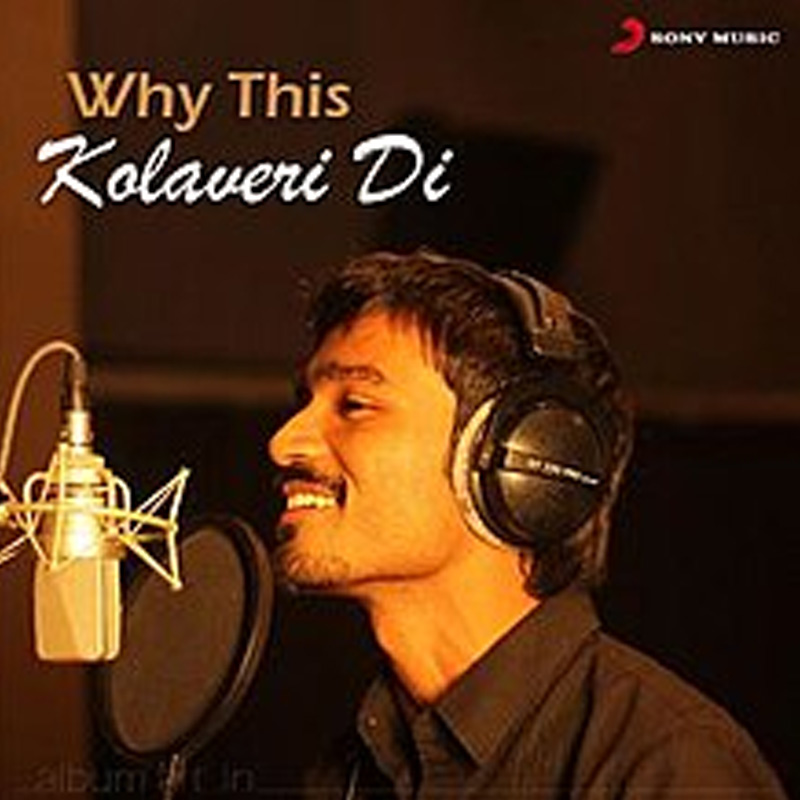
    MUMBAI: After receiving accolades for Kolaveri Di, Dhanush has plans to direct a fantasy film in Hindi.

    It is learnt that Rajnikant‘s son-in-law is keen to cast Hrithik Roshan as his main lead.

    Roshan happens to be on the top of his list with a few more names in his mind. With the proposed film being touted as a big budget fantasy film, Dhanush needs someone larger-than-life who can carry off the film.

    “It‘s my dream project and I want to give it my all. So I‘d rather just focus on one thing. Though I think it is too premature to talk about the film, I am definitely finalising the story and looking at some big names to cast,” Dhanush has been quoted in reports.

    The Kolaveri man has now decided to regularly travel between Chennai and Mumbai for his forthcoming ventures and his project, he is expecting to start by 2012 end.

  • R Kannan to direct Tamil remake of Delhi Belly

    R Kannan to direct Tamil remake of Delhi Belly

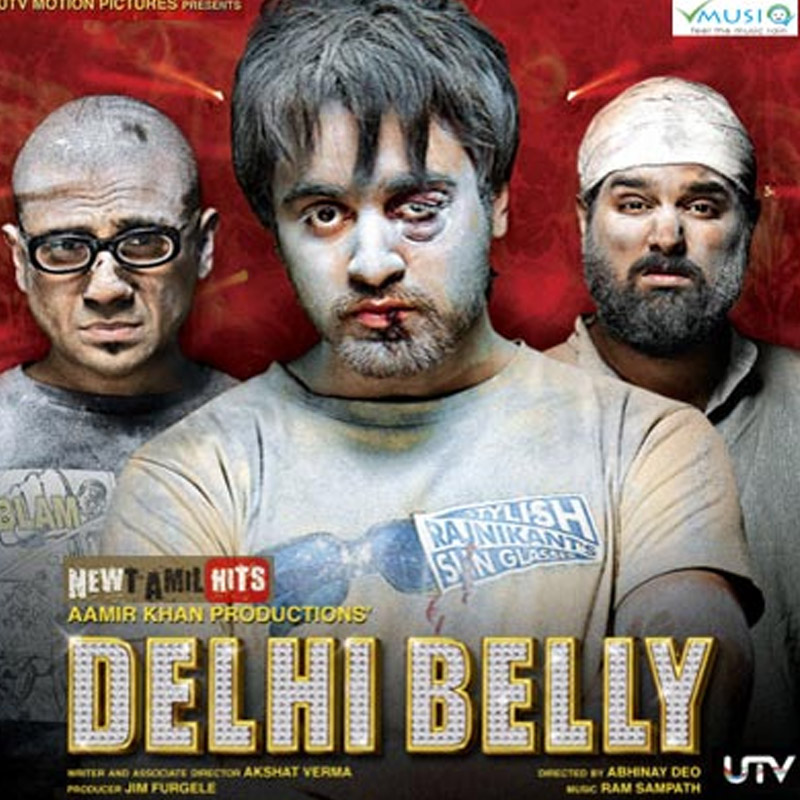
    MUMBAI: Way back in July indiantelevision.com had reported that a number of South Indian filmmakers were anxious to buy the remake rights of the Aamir Khan and UTV film Delhi Belly. Now, it has been confirmed that director R Kannan will be remaking the film in Tamil.

    The remake will be shot with a Chennai backdrop and the dialouges will be interspersed with some common swear words used by the locals. On the dialogue front, Kannan has teamed up with John Mahendran who has been entrusted to write the dialogues of the film.

    Delhi Belly released in mid-2011 was a crime comedy film revolving around three Delhi-based bachelors.

    The name of the production house that will produce the film is currently under wraps.

  • UTV partners Sundar C and Khushbu Sundar to produce Masala Café

    UTV partners Sundar C and Khushbu Sundar to produce Masala Café

    MUMBAI: Continuing its alliance with south film industry, UTV Motion Pictures has announced partnership with director Sundar C for his film Masala Café in association with his wife Khushbu Sundar‘s production house Avni CineMax.

    Sundar is known for a slate of successful films like Ullathai Alli Tha, Mettukudi, Rajinikanth‘s Arunachalam, Kamal Haasan‘s Anbe Sivam, Winner, Giri, London, and Rendu.

    Sundar is also penning the story and screenplay while dialogues are being written by Badri and camera by UK Senthil Kumar. The music composer is Ebinizer.The comic entertainer film stars Vimal, Shiva, Anjali and Santhanam.

    Targeted at the youth, Masala Café will be a summer 2012 release. The film will commence shooting in Kumbakonam and Chennai from November.

    UTV Motion Pictures will also release Vettai, Vazhakku Enn 18/9 and Kumki produced in association with Lingusamy‘s Thiruppathi Brothers. It is currently in the process of commencing the shooting of Mysskin’s Mugamoodi, starring Jiiva, Narain, Pooja Hegde and others.

  • UTV News CEO Arun Anant resigns

    UTV News CEO Arun Anant resigns

    MUMBAI: After serving a short period of seven months, UTV News CEO Arun Anant has resigned.

    Anant joined UTV news in November 2007. He was spearheading the business operations of UTV News’ English business news channels UTVi.

    Prior to joining UTV News, Anant was working with Economic Times as vice president.

    Ronnie Screwvala promoted UTV News runs the newly launched English business news channel UTVi. UTVi has a strategic content tie-up with ABC News. With the head office in Mumbai, UTVi has bureaus in Delhi, Hyderabad, Ahmedabad and Chennai.

  • NewsX goes into dry run, brand campaign starts this month

    NewsX goes into dry run, brand campaign starts this month

    NEW DELHI: NewsX has gone into a 24-hour dry run, covering news across the country. The brand campaign will start later this month, said NewsX news room head Arup Ghosh.

    Ghosh, who joined on 5 February, said sigificant progress had been made towards the launch of the news channel, having turned from producing a mere 30-minute news show to going 24 X 7 within a few days.

    Speaking to Indiantelevision.com, founder-promoter Indrani Mukerjea confirmed that the 24-hour dry run has started, and that the editorial is “fully staffed”.

    “We are fully staffed. Though we have not put a date to the launch so far, it will be soon,” Mukerjea said.

    The team is working out from six major bureaux, six smaller ones and scores of other linkages. “We are also working out the programme slots,” said Ghosh.

    The brand campaign will start with a teaser campaign, on outdoors and also on television, and will be followed by AV promos that will show the entire team.

    “We have got all relevant licenses, with the main license having come our way some months ago, and now we have the licenses for uplinking from OB vans as well,” Ghosh said.

    He added that all the bureaux are linked and each is watching NewsX bulletins rolling out from the other centres as well – from Mumbai (“which is a “super bureau”, he said), Hyderabad, Chennai, Bangalore and Chandigarh, as well as the other smaller bureaux.

    There are altogether 200 persons working already in the editorial department and more are joining, he said.

    Ghosh confirmed that some top of the rung editorial personnel are going to join, in key positions like Political Editor, as well as assignment and forward planning editors.

    “They are coming from some of the top channels. I can’t yet reveal names, as you know it takes time to resign from one company and join a new one,” Ghosh said.

    The announcements will be made over the next two weeks and once that process ends, the date for final launch will be decided, he added.

    He revealed too that the look and packaging has been done by a renowned British company, which has also designed the graphics.

  • Marching to a new tune

    Make no mistake about it, 2007 was a b-a-a-a-d year for the industry.

    That’s no doomsayer sounding the deathknell for the music industry, but one of the opening remarks of a series of year end insights put out on MTV.com. Globally, the biggies of the music industry have had to contend with dipping physical sales graphs, even as the indies and sharp eyed innovators in the digital world have been snapping up the advantages offered by the Internet, live performances and merchandise.

    The low tide hit Indian shores too in 2007. Internet downloads however did not hit the Indian industry as hard as did the rapidly growing mobile phone industry, where music entertainment was one of the prime drivers of the value added services industry here. FM, which boomed this year, was one of the biggest applications utilised over the mobile phone, aided in no small measure by scaled down prices for FM enabled mobile phones.

    Physical sales plummet…
    Indians purchased more music on their mobile phones than they did physical music products like CDs and cassettes in 2007, says a Soundbuzz report. Mobile music products, in fact, will be purchased nine times more often than physical within the next 18-24 months, the report adds. One doesn’t need to look far for the reason. The region is experiencing an exploding mobile market, virtually dominated by consumers under the age of 30 who are generating and sharing content on a spectrum ranging from pure entertainment, to self projection, to self expression and self actualization.

    While experts within the industry differed on the quantum of mobile music sold during the year, claiming that it could not have surpassed the Rs 600 crore worth of physical sales, most agreed that India is now part of the Asian juggernaut – 50 per cent of all music purchases in Asia in 2006 were digital – online or mobile, and the figures only spiralled in 2007.

    Hardly surprising, considering industry estimates that in the next 12 months, 12 per cent of the world’s population will comprise of young singles in Asia who will command a purchasing power of about US$150 billion.

    The mobile industry taps into music to grow
    Music in 2007 became one of the key value adds that helped the mobile phone industry to grow.

    By the end of July 2007, India had 192.98 million wireless subscribers, a number expected to grow to 250 million handsets by the year end. As if the rapid penetration of the mobile in the country wasn’t enough, global companies like Nokia, Sony Ericsson, Motorola and Samsung strove neck-to-neck to come up with handsets loaded with FM radios, MP3 players and a good memory capacity.

    Today, around 35 per cent of their Indian handset products feature downloadable music applications and Sony’s Walkman phone accounts for 65 per cent of total revenues. Sony is also toying with expanding its chain of Expression Stores, which feature phones and music download stations.

    Nokia too set up college sponsorship deals and collaborated with music companies to buy the rights for free downloadable songs on some of their handsets to encourage the use of digital music. Some of Nokia’s N-series handsets, with a 3,000 song capacity, offer 100 preloaded songs free; just to make a mark, and money of course, in this segment. Most of the major handset makers have tie-ups with music content sites such as Soundbuzz.com and OnMobile.com as well as revenue-sharing deals with local telcos and music companies.

    VAS – the big deal
    Mobile value added services (VAS) in India stood at Rs 2850 crore at the end of 2006, and according to a IAMAI and IMRB study, by end 2007 it stands at nearly Rs 4560 crore, a growth of 60 per cent. Ringtone downloads contribute over 35 per cent of the whole. These comprise the spectrum of mono and polyphonic ringtones, apart from caller ring back tones, true tones – all of which borrow heavily from either Bollywood, devotional or regional music.

    The innovations
    While the industry lamented the downward trend in sales, labels continued to innovate, expand and diversify, tapping into newer arenas.

    Companies like Saregama introduced mobitune cards for ringtones, a pilot project across Bangalore, Chennai and Hyderabad, for music downloads at Nokia outlets. The company said there were 8000 music downloads against 4000 handsets sold at the 25 Nokia outlets during the trial period.

    Companies also tried to expand by signing exclusive deals with mobile operators and others in this segment, with everyone realising that five years down the line, this segment will be a very important source of income and revenue.

    Companies like T-Series and Yash Raj turned out to be key players in the digital music segment, with Yashraj beginning to offer music downloads online. Other music labels like Saregama also launched its own online music store. Others may follow suit in the coming year, although the domestic market for net downloads is still abysmal.
    Regardless of the discovery of new artistes and tuneful Bollywood compositions that made their mark in 2007 – compilations of old Bollywood music continued to contribute significantly to companies’ bottomline. 2008 should see the witness the continued slow but steady rise of spiritual music, which many leading labels tried their hand at.

    The new launches
    Despite sluggish revenues, the industry perceived enough to launch some new labels. Reliance’s Big Music and Home Entertainment was the first off the block early this year. Starting off with Bollywood music, Big Music now plans to reach into regional music in a big way next year. Regional music will also be the focus of Times Music’s new label, Junglee music that launched at the fag end of the year with the music of Nadiadwala’s Welcome. After a fallout with Big, UTV decided to go ahead and launch its own music label for its forthcoming production, Jodhaa Akbar.

    Piracy – the demon’s talons refuse to get trimmed
    Pirated music CDs and illegal Net downloads apart, mobile chip piracy became the latest demon to haunt the Indian music industry. The Indian Music Industry estimates that the size of the music market on mobile phones is around Rs four billion, including products like ring tones – monophonic and polyphonic; True Tones; Ring back Tones; Full song mobile downloads; Music videos.

    Considering royalty, for the music industry, on products like full songs download at approximately Rs five per download and assuming one illegal transfer per phone per month, the loss amounts to Rs 12.5 million per month, says the IMI. Digitized music can be easily copied from any storage device like computer hard disc or USB drive, mobile phone with stored music etc. into the built in memory of a mobile phone or on memory cards or chips which can be further inserted into other mobile phones.

    Individual companies like Shemaroo continued their own campaign against piracy, raiding illegal CD burning outfits and bringing culprits to book with the help of the police. The Phonographic Performance Limited, the licensing wing of the IMI, also did its bit by launching awareness campaigns about the need to procure licenses to play music at events and venues.

    India – the new destination
    The number of international artistes wanting to perform live in India continues to grow. Nelly Furtado kicked off the year’s musical proceedings by performing at the Nokia New Year’s Night eve in Mumbai. Shortly thereafter, Shakira, Aerosmith, Beyonce, 50 Cent, Iron Maiden, America and the Scorpions, among others, performed to packed crowds in venues as diverse as Shillong and Chennai. Obviously, the music lovers’ demand here is huge – Iron Maiden will start their ’08 world tour with a performance in Mumbai.

    The new tunes in ’08
    Globally, music delivered to mobile phones via operators’ networks (mobile music) will jump from the current 13 per cent of global recorded music retail value to 30 per cent by 2011.

    “Looking to emerging markets, mobile could become the number one platform for music, where packaged CDs haven’t gained traction due to piracy and lack of hardware ownership,” says a recently released report by Understanding & Solutions.

    Experts say that in India, ringtones which are the dominant digital format, will continue to remain so till 2009. Mobile music growth will however be fuelled by additional formats, including ringback tones, caller id tones plus full track audio adn video downloads. These forms of mobile music will grow dramatically to achieve 3.9 billion USD in sales in Asia by 2009, up from 210 mn USD in 2005. Online sales will remain relatively static in the coming three years, point out experts.

    Regional could well be the new flavour for music labels, that want to tap the huge interiors. They could well be wary of artistes and music directors, who are slowly taking the production route themselves – turning producers or launching their music directly on the Internet a la Radiohead. As technolgy advances by leaps and bounds, the sky’s the limit for the creators of music in the country.


  • ‘We used the brand ambassador route to break through the cluttered FM market’ : Tarun Katial – Big FM COO

    ‘We used the brand ambassador route to break through the cluttered FM market’ : Tarun Katial – Big FM COO

    Reliance ADAG has aggressive plans laid out for its radio venture Big FM. With 29 stations already in place, Big FM has 16 more waiting in the wings. And it has an investment outlay of Rs 4 billion.

    Banking on Abhishek Bachchan as the face of Big FM and supported by the brand philosophy of ‘Suno Sunao Life Banao,’ Reliance’s radio venture is looking to firm up its position in existing markets by rolling out four unique properties this year-end.

    In an interview with Indiantelevison.com’s Nasrin Sultana, Big FM chief operating officer Tarun Katial speaks about the penetration of the FM stations into the urban and smaller markets, the potential that the sector has, and the advertising opportunities it throws open for local advertisers.

    Excerpts:

    Being a new entrant in established markets, has it been a tough journey for Big FM?
    We have been extremely successful in selling the brand across the country. Our success comes from launching in cluttered markets like Kolkata, Mumbai, Bangalore and Chennai. We were the first station in Bangalore to come out with local language content.

    How has it been in the smaller markets which opened up for private operators in the second phase?
    Big FM is working extremely well in small towns. We have, in fact, revolutionised media and media consumption habits in the tier II and tier III cities. Eventually people are realising that radio is a local medium which needs to have localised content and marketing to make it successful.

    We have even entered troubled places like Srinagar and Guwahati where no one thought of venturing.

    Are the big advertisers willing to put money in the small town stations?
    For Big FM, local advertising contributes 30-40 per cent of our entire revenue kitty. Apart from this, there are corporates who advertise across all the 29 stations including big FMCG and telecom players.

    Is Delhi turning out to be a sticky wicket for the new players?
    Delhi is one of our best stations. It has been getting us good revenue. Nokia, Samsung and the big FMCGs, apart from the local retailers, are our major advertisers in Delhi. As far as listnership goes in Delhi, our internal research says that we have a good amount of base in the capital city.

    What has been the focus area for Big FM?
    It is really bad to say that we are focused on some markets and not on others. In the tier II, tier III cities it has been our effort to gather a base for listenership. In the next roll out phase, our focus will be about building a uniqueness and getting the dynamics of the company to all the stations.

    Why was there a requirement to change content in your Delhi station?
    The consumer behaviour and attitude of Delhi changes very frequently and it is very different from the other cities. Our internal research showed that Delhi is happening and on the move. That is where we zeroed in the ‘100 chartbuster’ format whereby every week the songs that the station plays is renewed. 100 songs are selected on the basis of a survey that covers mobile phones, internet downloads, music sales and song requests. This way, we satisfy the need of Delhi listeners to get something new every week. We are the first station in the country to have introduced such content in music.

    How is Big FM faring in regional markets like Jhansi, Bareilly, Jalandhar, Asansol and Guwahati among others?
    We have created a local brand out of the local product. FM has created an atmosphere where local entrepreneurs have understood these cost effective measures. There are lots of un-organised and semi-organised workers in the Indian economy for whom we have provided a platform.

    In the regional space, we have been beneficial to the common people by generating job avenues. People now need not go to cities in search of jobs in media.

    Physical hardware sales are also up. Nokia, Reliance and Samsung have got sales high. Even FM radio is being launched on the mobile platform.

    Is having Abhishek Bachchan, Upendra and Asin as brand ambassadors helped you in grabbing listenership in the Hindi and southern regions?
    Today we are in a cluttered FM market in India. The easiest way to break through the clutter is through the brand ambassador route.

    FM should be allowed to have news and sports in the content mix

    How has the brand philosophy ‘Suno Sunao Life Banao‘ worked for Big FM?
    The whole premise was to provide a new space. If you listen to our station, it’s about raising ones voice. Our content and marketing campaigns affect the lives of the people. Later this year we will introduce four new properties that will make (banao) someone’s life. As far as music goes, we are currently playing contemporary hot music of Tempo 3. Tempo 3 are specific songs that are up beat because as a rule the station does not play extremely slow music.

    What do you regard as prime time for Big FM?
    Our prime time is dependent on who our target audience is at a particular time band. If it’s the youth, then the prime time band is evening. If it’s the office goers, then it’s definitely in the morning. If it’s women, the target then is the afternoon time band.

    Which are the different platforms you are experimenting with to build brand awareness?
    Across mediums, internet is the best medium as it has an extended reach. But the best thing that works for us is on-ground activities. Big FM has been doing a good amount of on-ground activities across the country, which has received a good response in terms of participation.

    What do you think about TV campaigns used by FM stations to advertise?
    TVC is definitely a good way of promoting a brand. We are also looking to launch a TVC soon.

    What is your argument for or against the Content Code?
    Instead of getting ways to regulate us, the government should grant us some freedom. As FM affects so much of the consumption of people’s life, we should be allowed to have news and sports in our content mix.

    The ministry is talking about regulating FM broadcasters, when we are already functioning with restrictions to our content.

    When they are comparing Indian FM stations with the international radio industry, they have conveniently forgotten that we are the only set of broadcasters who have been working on the restricted content set up by the government.

    What is the investment outlay for Big FM?
    We are pumping in Rs 4 billion.

    What is the de-merger status of Big FM?
    I can’t comment on that.

    How is Big FM planning to synergise Reliance ADAG’s Big Music and Entertainment for music and home video?
    Big FM gets the exclusive music and content rights from Big Music and Entertainment, giving us the first right of refusal. We have the option to build music properties across the medium. We have the option to promote the division by pushing the content through internet downloads and mobile ring tones. Big FM does 360 degree advertising for Big Music and Entertainment.

    How are your advertising spots being priced?
    Recently we have introduced the uniform rate card system ‘Aqua’ for all our advertisers across the country. This is easily available in our website. Unlike other stations, we are transparent in our advertising rates. The advertisers know what is the rate for the same space on the other stations. The advertisers are aware of how we are priced in different markets.

    Besides, all our stations have installed the wide orbit software.

    With the increasing content clutter on radio especially with Bollywood music, how is Big FM placed?
    I agree that Bollywood is all over FM stations, but it also depends on what kind of songs you are playing at what time of the day. How you treat the music is what differentiates the content. We play old songs across era in different time bands.

    You have recently got Raju Srivastav (stand up comedian of The Great Indian Laughter Challenge) as an RJ. In an attempt to break away from the clutter, every FM station is now adopting the fun element. How is this differentiated?
    Fun is an important aspect of entertainment. We are here to entertain, so what’s wrong in doing it? Some are doing it by some other means and people; we are doing it with Raju. He is the best and the biggest clutter breaker in the industry. Nobody wants to start the day on a sad note. We will get you to start the day with laughter and good thoughts. Our effort is rewarded if we can put smile in our listener’s faces.

    Do you think the future will be in niche or mass stations?
    The FM business is in a nascent stage for me to predict the future. It depends on what is the target, though I would recommend that segmentation is required.

    How are you looking to close 2007?
    We have recently announced the four properties that Big FM has planned for the various festival seasons for the later part of the year. Starting from September, Big FM will start rolling out these properties.

    We will soon launch a show completely based on and coinciding with the ICC World Cup Twenty20. The show will provide scrore updates, interactive contests and interview of cricket celebrities.

    During the time of Diwali and Dusshera, Big FM will launch a shopping contest Sabse Sasti Diwali. With the various tie-ups that we are still working on, the contest will offer shopping discounts from 9.27 per cent to 92.7 per cent.

    Then we have a contest titled Chipak Ke Dekho by which we will give away a car to whoever remains near the car for the longest duration of time.

    Finally, we have the biggest contest of its kind, Ek Saal Free Maal to bear the entire expenses of the winner for the whole year of 2008.

  • CNN-IBN starts reality news show

    NEW DELHI: CNN-IBN is launching a show Summer Showdown in a reality show format.

    Encouraging citizen journalism, the show will follow a family each from the five metros – Delhi, Mumbai, Bangalore, Chennai and Kolkata – for five-weeks. They will be asked to report on all the civic problems that they feel are threatening to become a crisis this summer – from continuous power cuts, overflowing sewers to the dismal state of our roads.

    In addition, these citizen journalists will be provided opportunities to meet and interact with the local civic authorities to find solutions to these real and unrelenting problems and work towards realising them.

    The two-three minute daily basis stories of their personal experience will be carried on CNN-IBN’s Newswheel. The initiative will culminate in a one-hour special on 26 May that will track the previous week’s progress to see which city’s civic authorities were the most efficient in responding to their citizen’s appeals.