Tag: Chennai Super Kings

  • Reebok launches IPL merchandise

    Reebok launches IPL merchandise

    MUMBAI: Reebok, which is the official apparel sponsor of Indian Premier League (IPL) franchises Chennai Super Kings, Royal Challenger Bangalore and Kolkata Knight Riders, has launched merchandise as well as accessories for the teams such as caps and wristbands.

    The merchandise available for the three teams include Fangear Polos, CSK No.7 Polo and CSK Champ Polo in addition to team jerseys and the team premium jerseys.

    In the RCB, KKR and CSK collection, the Fangear polo has the team badge on the upper left side of the shirt and a Reebok symbol on the right, with the pellets being gold in the RCB and KKR collection respectively. The premium jersey available for all the three teams are the jerseys worn by the team players themselves. The premium jerseys are available for boys as well.

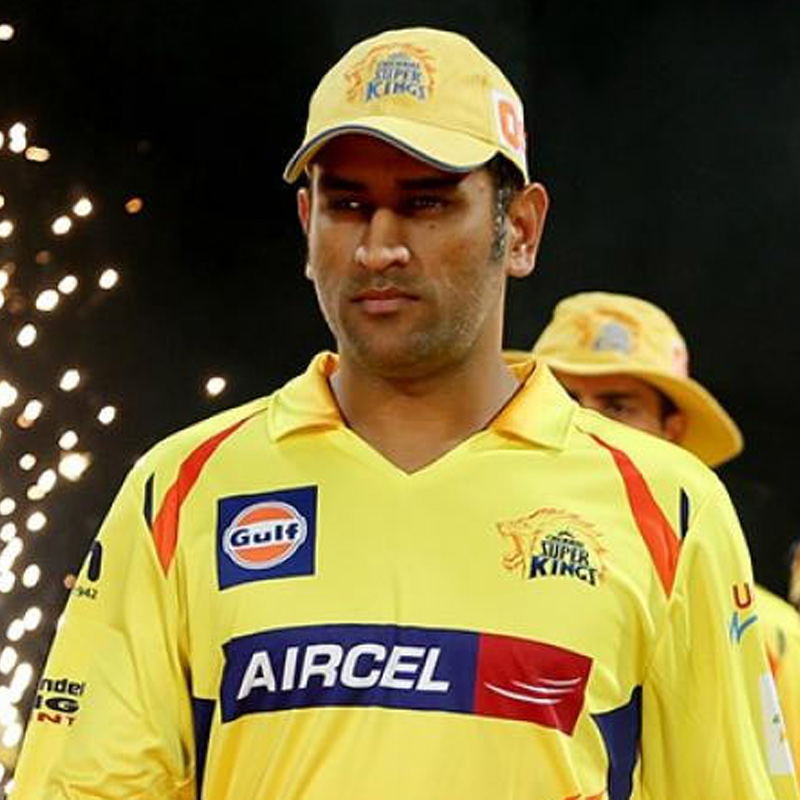
    Reebok has churned out two special CSK Polos. For Dhoni, Reebok has created a special CSK No.7 Polo in navy and white which sports Dhoni’s jersey number. Along with this, Reebok has made a ‘Triple Champion Polo’ in red and black with the number ‘3’ on the upper left side to commemorate the winning streak of CSK. This Polo was specially made keeping in mind that Chennai Super Kings have won the IPL series twice and the Champions League once.

  • Chennai Super Kings launches IPL 5 merchandise

    Chennai Super Kings launches IPL 5 merchandise

    MUMBAI: IPL franchisee from the south Chennai Super Kings is geared up for the fifth season of IPL with the launch of a new range of merchandise that has been designed to incorporate the team spirit and vigour for the upcoming season.

    The new range includes T-shirts, caps & accessories, key chains and a variety of home, office products ranging from Rs 200- Rs 2500. The team has also launched exclusive silk ties starting Rs 2500.

    India Cements executive president TS Raghupathy said, “We have launched an exciting new range of merchandise for our fans and supporters. The collection will be available both nationally and internationally. We have around 380 outlets in Tamil Nadu for the distribution of the same. Reebok as always would help us to reach out to fans along with other multiple stores. We have tied up with Café Coffee Day, Univercell for the distribution of our merchandise.

    To enhance their reach across the globe, CSK tied up with Ingene Entertainment, a Los Angeles based company for promoting the brand, design and distribution of official merchandise worldwide outside India.

    “In partnership with Ingene, we’re formally launching our official International store www.ShopSuperKings.comwhich will be exclusively targeted at our global fan-base in USA, Canada, UK, Europe, South Africa, Asia Pacific and other countries,” said Raghupathy.

    The CSK mascot is named ‘Super Singam’ and the franchisee has launched a new video- ‘Chennai Super Kings Ku raise your hands’. The team has retained all its old sponsors and added new sponsors like Usha, Life OK and Washington Apples.

  • ‘All IPL teams should be able to break even by 2011’ : Hiren Pandit – GroupM ESP managing partner

    ‘All IPL teams should be able to break even by 2011’ : Hiren Pandit – GroupM ESP managing partner

    The Indian Premier League (IPL) promises huge space for revenue growth. The team franchises will have to focus on building the brand consistently, project a healthy personality and take the sponsorship value to a different level.


    It is not wise to draw sponsors just on the back of winning and losing. Performance is a factor, but it is not the only thing.


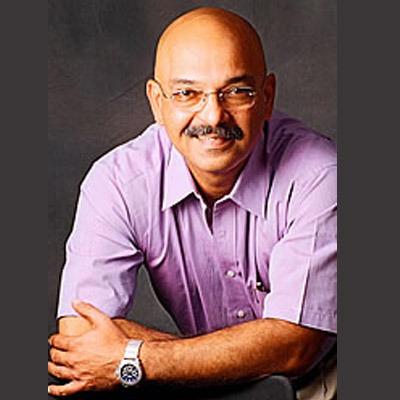
    In an interview with Indiantelevision.com’s Ashwin Pinto, GroupM ESP managing partner Hiren Pandit says there is value in T20, but warns that it should not be at the cost of the other formats.


    Excerpts:

    How have the franchises fared financially in the second edition of the IPL?
    Our assumption is that there are two who have not made a profit – Deccan Chargers (Hyderabad) and Royal Challengers (Bangalore). They had their own brands on their T-shirts, which could be looked at as an investment rather than a loss. The others have broken even at the operational level. This was due to the rise in television rights fees. The question is whether they have wiped out the losses of last year. I expect everybody to break even by 2011.


    In terms of sponsorship revenues between the team and central revenues, the IPL got Rs 3 billion. Last year it would not have been more than Rs 2.5 billion. Kolkata Knight Riders (KKR), Chennai Super Kings (CSK) and Delhi Daredevils have got the most in terms of local sponsorships, followed by Mumbai Indians, Kings XI Punjab Rajasthan Royals (RR).

    And what about sponsorships?
    CSK and KKR did a particularly good job. But you would have a team like Royal Challengers (RC) which is not interested in outside sponsorships. That franchisee put its own brands on display.

    How about defending champions Rajasthan Royals?

    RR has broken even because their payout to the BCCI is much less as compared to the others. They only shell out $6.5 million each year. Having said that, I am not so sure that finishing number one necessarily translates into higher sponsorship revenue.

    Then what matters?
    You need to look at what a team stands for. Is its branding consistent? Does it show on the ground? Does the team overall project a strong and a healthy personality? Are there characteristics in the team that can take sponsorship value to a different level?


    If an IPL team draws sponsors on the back of winning and losing, then you have a problem. Performance is a factor, but it can’t be the only thing.


    While KKR did well in terms of getting in sponsors, somewhere down the line they or the brands associated with it made the mistake of going down the performance route. That is a dangerous platform to walk on. The amount of bad press it got did not help the franchisee nor the brands that were associated with it.


    On the other side, Idea did an outstanding job with the Mumbai Indians. Their activation platform was brilliant and had nothing to do with winning or losing. It gave fans the opportunity to aspire to talk with their favourite players. Even though Mumbai Indians lost on the field, the aspirational value is still there.

    What was Group M’s role in this IPL?
    We did a few deals with some clients for having their logos appear on T-shirts. We lost out big time, though, as the IPL moved out of India. We had a smaller role to play compared with last year. We are now not involved with the Deccan Chargers.

    Revenue growth will come from local sponsorships. If you are heavily relying on the central pool, then the franchise has not built itself properly. Building up local sponsorships and fan base will be key

    Do you see yourself playing a bigger role going forward?
    Yes! We have knowledge on brand activation around the IPL. We have got a good understanding of this space and the valuation process. We can give clients a fair idea of what they should pay for a logo, depending on the position they take. We are also open to associating with teams.

    The IPL is looking at doing another event each year abroad, possibly a smaller one. Is this the best way forward?
    The aim appears to be to develop cricket in smaller, non cricket markets. Is there a window available? Are players available? These issues have to be addressed.

    Where does KKR go from here?
    They have to relook at what they have got. They are not a bad team per se. They have a high profile owner and they need to look at the relationship between owner and team.


    Secondly, they had too many people like Buchanan and Ganguly trying to become high profile. The bigger you are, the harder you fall and that is what has happened.


    Kolkata’s sponsorship is on the back of Shah Rukh Khan and not because of the team. They could rejig what their brand stands for – and then sponsors will come in for the team’s values. That is a call that they will have to take. What you will find is that franchisees will move away from performance as a platform for brand activation.


    Going forward, the growth of revenues will come from local sponsorships – and not so much from the central pool. If you are heavily relying on the central pool, then the franchise has not built itself properly. Building up local sponsorships and fan base will be key.

    How would this happen?
    The IPL will move away from being just a 45-day event. Franchisees will do activities over a longer period of time to build a fan base. They would do things like promotions, interactions and meets.

    There is talk that with the IPL the focus is shifting away from individual player sponsors and more towards team sponsorship. Are players like Dhoni going to lose out on lucrative deals going forward?
    When a team association is done, three to four players are used. Even if you are associated with CSK, you can only use Dhoni as far as IPL is concerned. This makes sense when the IPL is on or just about to start. But in December if the team endorses a brand, what will a viewer take out of it? The viewers are not stupid. If people believe that they are getting a Dhoni for free by associating with his IPL franchise, then they have a short term approach to the business.


    You could associate with a team to get national reach. If you associate with a player, it would be due to his characteristics. It is not necessary that the characteristics of the franchisees will be the same.

    When the IPL adds more teams in 2011, what would be the likely cities?
    Gujarat and UP have opportunities. You could see another team from Maharasthra – perhaps Pune or Nagpur. Kerala also has a chance if some NRI is interested. The payout could cross $200 million. But the interested party will have to work his maths out properly. Otherwise, it will be difficult to recoup your investments. The parties that shelled out the most for a franchisee the last time around are just about making it. The lower end of the payout table are more comfortable.


    Also keep in mind the fact that after 2010 all player contracts are up for grabs. The whole scenario will be reworked and changed. There should again be a cap on money that can be spent or there will be teams that will be far stronger than the rest. The IPL could then turn into a two or a three horse race which will take away from its appeal. Some deals, though, might be done outside the bidding. We will see more performance-related deals. Player loyalties and disloyalties will also come into the equation.

    Next year England starts P20. In 2011 South Africa, Australia and New Zealand start a joint league along the lines of the IPL. How do you see this affecting international cricket?
    The question is with so many leagues happening, what happens to Tests and one-dayers. Is there enough of a window for this to happen? There was a league that started in the West Indies, which subsequently got killed.


    Can the other leagues generate the kind of money that the IPL gets? I don’t know if Kevin Pietersen will get $1.5 million a year in those leagues.


    Then you must look at it from a player’s perspective. He plays around 35 ODIs, 15 Tests, 20 T20 games a year. Does he have time to play anything else? Remember also that T20 is successful in India as it is a country sport first. Then it is a club sport.

    Could we see players bypassing the international grind and just focusing on league cricket which is lucrative?
    The question is whether a player wants to play cricket for a living or does he want to represent his country and make money. You cannot have somebody only focus on the T20 format. This is something that this edition of the IPL brilliantly showed.


    The players who did well like Kumble, Gilchrist and Hayden are seasoned campaigners who have excelled in the other formats as well. T20 is not a wham bam affair. It is about playing proper cricket. If a cricketer chooses league cricket over his country, then he might be asking for trouble. Most of the IPL players got there as they made a statement by playing for their country. Then there are youngsters who did well in the IPL and are now playing for their country. I do not think that it is a choice of one versus the other.

    What impact will India’s exit in the T20 World Cup have on ESPN Star Sports?
    Ratings will take a hit. Already we are seeing that clients are not getting enough of a return when India does not play.
    How do you see the Champions T20 League faring?
    You need to let it happen once. Some players play for two teams and so will have to decide where their loyalties lie when this event starts.
    Would playing at night help Test cricket?
    This is not a bad idea. What has happened is that T20 has had a positive impact on the other formats. The run scoring in Test matches is quicker which is forcing results. This is desirable. Each format lives off the other in some form or the other.
    There will be lots of T20 cricket happening. Are you concerned that the overdose might kill the format?
    It could lose its flavour. You cannot have too much of one format. There is value in T20, but it should not be at the cost of the other formats.
    What challenges does the economic downturn pose for Group M ESP?
    We need to work harder. We need to give more value to clients. It is a partnership in good times and bad. We need to find better opportunities for clients but it is not as though we need to think differently.
    What progress has Group M ESP made in the celebrity endorsement and management space?
    We have moved away from this. Keeping in mind the Indian mindset towards celebrities, we did not believe that it was a scalable model. We focus, among other areas, on branded content in film and television. The strike affected us but hopefully the films have only been shifted and not cancelled. We have done regional tie ups with brands.
  • IPL is the name of the game

    Three decades after Kerry Packer revolutionised cricket with the World Series, cricket stands on the threshold of another potentially disruptive revolution. On 18 April, the Board of Control for Cricket in India (BCCI) will unveil the Indian Premier League (IPL), a format the Indian board hopes will change the way Indians watch the game.

    Instead of cheering the country, one will cheer city-based leagues. Eight teams – Jaipur, Mumbai, Mohali, Chennai, Hyderabad, Kolkata, Bangalore and Delhi – will take the field.

    Can this work? The answer is yes if one looks at the experience of the first mover in India – Essel Group’s Indian Cricket League. The ICL is currently holding its second event and is getting good visibility as matches are also being aired on Ten Sports. The on-ground attendance has also been decent, showing that if an event is well marketed there is scope. Considering that ICL has managed all this in the face of a take-no-prisoners onslaught by the Indian cricket board, what the officially sanctioned event might well deliver boggles the mind.

    One must also note at the outset that IPL and ICL are possible because of the success of the T20 format. Initially there was some cynicism even within the BCCI as to how the new format would fare. The T20 World Cup, though, changed all that. With India winning, the viewership grew and the final scored a ratings of 9.81 TVR (Tam data, C&S 4+).

    Broaden the game’s appeal: The aim of the IPL is to broaden the appeal of the game. Since matches will take place in the evening, the hope is that families including women and children will turn up in large numbers.

    The IPL has also brought corporates closer to the game. Companies like Reliance Industries now own a team. This is expected to inject professionalism and also entrepreneurship. The larger aim is to push cricket at the grassroots and domestic level.

    The IPL is conceived as a city-based league format. With the base price set at $50 million for the city-based franchisees, the teams were bought for well above that.

    The prices paid show that after a lot of due diligence, corporate India views the IPL as being a serious business venture. Reliance Industries, for instance, paid $111.9 for Mumbai while Dr Vijay Mallya’s UB Group shelled out $111.6 million for Bangalore.

    The IPL will have flair and flamboyance when you consider that Bollywood also got into the act. Shah Rukh Khan paid $75.09 million for Kolkata. Preity Zinta took Mohali for $76 million. On the other side, we have Emerging Media, an expert in organising sport, paying $67 million for Jaipur.

    The broadcaster’s viewpoint: The BCCI hit the jackpot when the Sony-WSG combine bought the ten-year broadcast rights to the IPL for $918 million. Compared to this, the price that ESPN Star Sports (ESS) paid for ICC rights looks like a good bargain.

    While many have questioned the financial wisdom of such a huge payout for an as yet untried format, the numbers do not look quite so daunting when the fine print of the deal is examined. The guaranteed payout commitment by Sony-WSG is $306 million for the first five years. The remaining $612 million, to be paid out in the second half of the deal, comes with an exit clause built in.

    Sony president network sales, licensing and telephony Rohit Gupta is gung ho about the IPL, noting that T20 is the game’s future. “If you see the scene for the last four years, ratings for ODIs have been steadily falling. T20 brought the game back in a big way. The stickiness is far higher than it is for the other forms of the game.”

    Marketing is of paramount importance: The main challenge for IPL is for the franchises to build up fan clubs. After all, Indians are not used to cheering at a local level. As Gupta notes, the key challenge for each of the franchisees is getting fans of that state to identify with the team.

    The first step in that direction was to have names that reflect the city. So Emerging Media christened the Jaipur team as Rajasthan Royals. The aim is to convey the pomp and regal splendour of the city.

    Reliance has called their team Mumbai Indians to show the character of this city. They, like the other franchises, will run a 360-degree marketing initiative with a strong local flavour.

    Glamour is also an important quotient in the marketing strategy. Cricket and Bollywood are two religions in India. Mix them and the result is potent. For instance, Bangalore has roped in actresses Katrina Kaif and Deepika Padukone for a music video to promote their Royal Challengers.

    A push for domestic talent: One of the great things about the IPL is that it gives youngsters the chance to prove themselves. At the second auction, a draft for the Under 19 was held. This was to ensure that in a few years time India will have a young talent pool who are experts in this format of the game.

    RoI: There are several revenue streams available for franchisees. There are central revenue streams, which include a share of the TV rights. The franchisees will get 80 per cent of TV revenues in the first five years and 60 per cent from the next five. They will also get 60 per cent of sponsorship revenues. The franchisees get all local revenues.

    The revenue will come from many sources including gate revenues, franchisee shirt sponsorship, local sponsorship, licensing programme and uniform merchandising.

    Reliance and Emerging Media are looking at a three-year time frame to break even. If, however, the IPL takes off, then that period could be sooner.

    Gupta adds that corporate involvement is the best thing that could have happened. “Now you will see more accountability from the players. If a corporate house has paid over a million dollars for Dhoni, then he better perform. It can no longer be a case of doing well in one match and taking it easy for the next three.”

    Performance is key in brand perception and each franchise will be doing its utmost to ensure that perception is not hurt by a lack of on-field performance.

    Infrastructure will get a boost: Corporates will back infrastructure creation like academies and training camps since these are the places where talent will bloom.

    Mindshare’s Hiren Pandit says that Deccan Chronicle is looking at grassroots activities. There are plans to take this concept to schools and colleges. Therefore, there is a larger picture at stake.

    A mix of caution and optimism: As far as advertiser interest is concerned, DLF, which lost out on the franchise bid, has taken the IPL title sponsorship. Hero Honda is the co-sponsor.

    Sony Entertainment Television (Set) India, which has telecast rights for the matches, has closed its advertising sales. Set India CEO Kunal Dasgupta says ad sales revenues have already crossed Rs 2 billion.

    Pandit says that companies that get involved with the IPL early will reap the benefits in the long run. When asked about the mix of sports and entertainment, he says that for IPL it is important that while the entertainment quotient like the opening ceremony is good, the cricket played should be serious.

    “It should not be treated as a tamasha. Otherwise you lose out on both,” warns Pandit.

    Lodestar Universal CEO Shashi Sinha, though, has doubts over whether the high rates of sponsorship are worth it for clients. In his opinion, it might be over-priced. “If the IPL does not live up to expectations of advertisers, there will be losses,” he cautions.

    IPL could boost globalisation of cricket: What IPL might do is globalise the game. T20 is, in fact, the best way to get new countries like China involved with the game. Since it is only three hours long, it is easier to get new audiences to sit through it. Adam Gilchrist seconds this view saying that it is important that other nations start playing the game.

    Gilchrist also says that IPL should be given time to grow. It is important not to be pessimistic about it straight away. One will get an idea of how it is faring after a few years, he adds.

    Conclusion: BCCI VP and DLF IPL chairman and commissioner Lalit Modi is very confident that the IPL will mark the dawn of a new era in Indian cricket. One would, however, be better served by not getting bowled over by all the hype and hoopla that is surrounding what could well be termed the ‘gentleman’s game’ on steroids. The maidens may be bringing in sex appeal to the new format but how the event fares over the next three years will be the real test to assess where the IPL, and for that matter ICL, stand.