Tag: Chennai floods

  • India Ahead Dialogues to set accountability for Chennai floods

    India Ahead Dialogues to set accountability for Chennai floods

    Mumbai: In its continuing focus on the southern states, India Ahead will carry Live, a two-hour interaction between citizens of Chennai and the top bureaucracy of the state to find solutions to the annual problem facing the city – flooding.

    The show will broadcast Live at 3 p.m on 23 December on India Ahead’s TV and digital platforms, therefore, giving citizens a chance to directly ask questions from the bureaucrats who formulate policies and carry out disaster management activities.

    The event will host two additional chief secretaries who have extensive hands-on experience in handling floods and the aftermath namely Atulya Misra IAS, and Vikram Kapur IAS, representing the government of Tamil Nadu.

    Joining them will be NK Sudheendra of the City of 100 Tanks project, eminent environmental scientist Dr Jayshree Vencatesan and Vanessa Peter, who works with coastal communities, among other prominent guests.

    “This is an endeavour of our rapidly growing Tamil digital platform, which aims to be the non-partisan voice in a cluttered and polarised Tamil media environment,” India Ahead editor-in-chief Bhupendra Chaubey said. “India Ahead is the voice of the states, especially those of the south of the country, to bring back sanity and real news back in the media.”

    India Ahead is a national news channel with a country-wide footprint in both broadcast and digital media, is the preferred choice for discerning viewers. India Ahead has been envisioned as a news platform with a focus on ground reports and perspectives while staying away from theatrics and punditry. The channel is available on both TV (English news) and digital (English, Hindi, and Tamil news).

  • Tamil Nadu cable TV industry incurs Rs 25 crore loss due to floods

    Tamil Nadu cable TV industry incurs Rs 25 crore loss due to floods

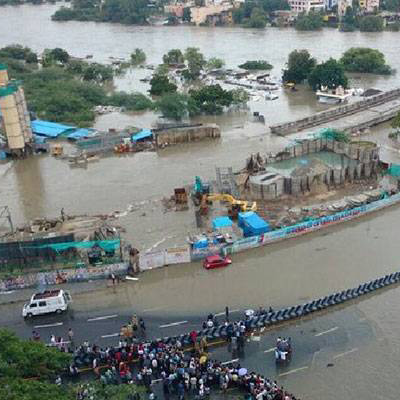
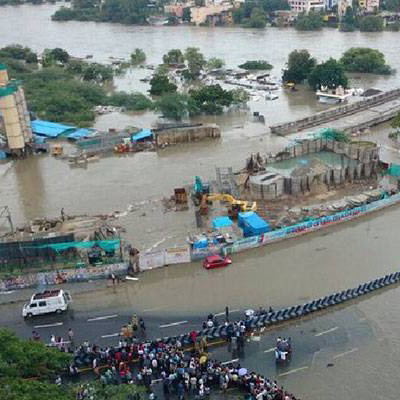
    MUMBAI: ’Twas Mother Nature’s fury at full throttle when the state of Tamil Nadu was flooded by the heaviest rainfall it has been privy to in the last century. Many lives were lost even as over three lakh people became homeless.


    While the southern state is slowly inching back to normalcy from the unprecedented rains and floods, which engulfed whatever came in its way, the natural disaster had a massive impact on the media and entertainment industry as well. The entire cable TV ecosystem was brutally affected by the calamity. It may be recalled that for the last couple of weeks, the Broadcast Audience Research Council (BARC) India hasn’t received television ratings data from the region too.


    In the light of this disaster, a senior cable federation member from Chennai estimates the overall loss suffered by the cable industry to be close to Rs 25 crore. “We have done an on-ground survey and after a thorough analysis, we came to the estimate. Local cable operators (LCOs) will have to bear the majority of the loss as most of the fibre amplifier devices, which were damaged belong to them,” he adds.


    While industry body ASSOCHAM estimated the overall financial loss from the torrential rains and floods in Tamil Nadu to be in excess of Rs 15,000 crore, the Rs 25 crore loss to the cable industry may even be a conservative one. The on-ground reality indeed paints a grim picture.


    “Thousands of fibre amplifiers got affected. The LCOs are trying their level best to restore services but the damage is so massive that it will take at least a week or 10 days more to get things back on track,” added a senior official from the cable fraternity.


    A fibre amplifier, which is located in the operating room of cable operators, costs around Rs 3500 and a large number of them were totally destroyed as they immersed in the flood water. Fortunately, no instance of head-end damaged could be traced.


    An independent multi system operator (MSO), who was also affected by the natural calamity, said, “The head-ends are generally placed at a good height and hence they got saved. But my transmitter is totally damaged. The flood has damaged cable operations brutally, and to restore services it will take me more than 15 days at least.”


    “The transmitter costs Rs 50,000 and I have to invest in a new one,” he adds.


    The other equipment that was damaged in the flood and needs serious investment is Erbium Doped Fiber Amplifier (EDFA), which is an optical repeater device used to boost the intensity of optical signals being carried through a fiber optic communications system. “I need to invest Rs 1.5 lakh in my EDFA and there are many other such operators who will have to change their EDFA,” said an LCO.


    While some equipments may be under warranty, it is unlikely that the warranty applies in the case of natural disasters. A looming question is also that of insurance. All said and done, many LCOs and MSOs affected severely by the flood will have to bend over backwards in order to get their system back on.

  • Media During Deluge in Chennai

    Media During Deluge in Chennai

    MUMBAI: The historic floods of the Century that ravaged Chennai in December 2015 has a few lessons for the media. It was the absence of national media in the initial stages of the deluge and the criticism thereof that brought to fore the relevance of local FM radio to the rescue of the battered people of the flooded plains. The first casualty in the flooded areas was electricity and the hype TV channels wanted to create reached none of the victims who were in dire straits to contact the volunteers for help. It was Chennai Live FM 104.1 that managed an Operational Command post of sorts, connecting the victims and a number of cell phone armed individual volunteers and NGOs. Other FM channels followed suit. All India Radio’s RJs came handy with total service agenda on all days, that followed heaviest dumping of 1605.2 mm by the rain clouds, which accounted for 130 per cent above the average rainfall of the North East monsoons this season in Chennai alone. The rainfall on 2 December in Chennai alone is more than the annual rainfall of some of the wettest European nations.


    The realty greed that respected no water places and flood plains converted most of the storm water courses and marsh lands into posh colonies in the last two decades that turned into watery graves in Chennai this monsoon. People unwittingly removed bamboo bushes and trees along the bunds of ponds and reservoirs that added to the misery of Chennai. The Chemberambakkam lake, the life line of Chennai swelled so perilously forcing release of 34500 cusecs of water or 10 lac litres of water per second through the sluice gates on 2 December, inundating fields, homes, the airport and heavily inhabited areas of Chennai mercilessly that never experienced the fury of floods in the past. The only communication possible was through radio waves when the mobile towers, telephone exchanges and sub stations of electricity got flooded and most of the facilities came under water and crashed. Most of the flooded areas had water reaching the first floor forcing power shut down in the whole city. 


    The mapping of flood plains and the storm water course in all the inundated areas of Chennai would have taken a few years of survey but the Mother Nature has delineated the same in a matter of few days along with pain and misery to the people of Chennai. Such details documented by radio stations and TV channels would be of great use to the policy makers in the near future. 


    But resilience of Chennai was on its best when most of the FM stations started receiving calls from the affected people raising SOS messages. The Radio Jockeys continued without respite to broadcast the distress calls reaching the NGOs and individuals ready to help. Some anchors were checking and telling Chennaiites the rainfall details, road conditions, water level, actual need of the victims from torch light, charge packs, food, milk, blankets medical assistance and so on. An IAF helicopter could evacuate a pregnant woman to labour room with active and accurate information from the spot through cell phone to the studio. The contact details from where the help could reach the affected areas was best done by the FM stations of Chennai when hundreds of land phones with government control rooms could not aid rescue when they went dumb due to gushing waters. One thing was very clear, Muslims, Hindus, Christians, Jains… every one joined hands breaking the divisive barriers of religion, language or the region. Foremost in the minds of the rescuers was safety of human beings and rescue operations by teams and individuals with the tinge of heroism. Humanity was reigning supreme. 


    It was the innovative skills of Radio Jockeys that kept repeating dos and don’ts for the people in the hours of emergency. While the TV channels contributed immensely to show the external world, the gravity of the devastation with a bird’s eye view of affected areas, the Army, Navy and NDRF could do the rescue operations efficiently. The credit for huge resource mobilisation of relief materials and efficient dissemination of information and resultant coordination goes to the electronic media of Chennai especially, the FM Radio. 


    Chennaiites are proud of their media at its best in the cause of relief and rebuilding. 


    (The views expressed here are those of the author and Indiantelevision.com need not necessarily subscribe to the same.)