Tag: Chatbot

  • NDTV’s longest-running health campaign Banega Swasth India launches AI chatbot and loyalty cards for children

    NDTV’s longest-running health campaign Banega Swasth India launches AI chatbot and loyalty cards for children

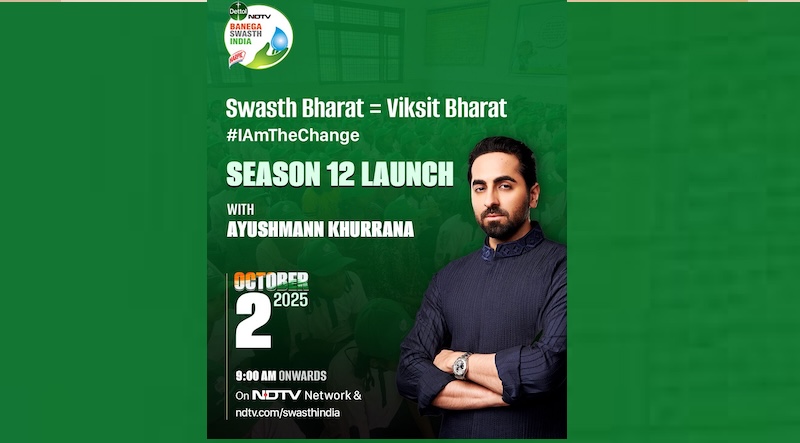
    NEW DELHI: Banega Swasth India is back for a 12th season, and this time it means business. NDTV and Dettol’s flagship health campaign will launch an AI-powered hygiene chatbot, a gamified loyalty card programme for children, and an accessibility curriculum for disabled youngsters when it takes to the airwaves on 2 October 2025.

    The telethon, fronted by actor Ayushmann Khurrana, will rally Indians around the theme “I Am the Change” and the call to action Mere Dus Gaz Se Viksit Bharat Tak (From My Ten Yards to a Developed India). The ambition is bold: transform every citizen into an agent of health change.

    The star attraction is Hygieia, India’s first hygiene chatbot, which will dispense health guidance in 22 Indian languages and four global ones. It sits alongside the Swasth Bharat Champ Hygiene Loyalty Card Programme—India’s first non-financial hygiene loyalty scheme for children, designed to build lifelong healthy habits through gamification and rewards.

    Breaking new ground on inclusion, Dettol will unveil what it claims is the world’s first digital accessibility curriculum for children who are blind, deaf, mute or autistic. Awards will honour maternal and child health tech accelerators focused on the critical first 1,000 days of life.

    President Droupadi Murmu will grace the event, joined by Uttar Pradesh governor Anandi Ben and Odisha chief minister Vishnu Deo Sai,  Malaika Arora, Nimrat Kaur and Jasmine Sandlas will perform.

    NDTV chief executive & editor in chief Rahul Kanwal said the campaign has evolved into a movement that inspires citizens to contribute to the nation’s health journey. “With innovations like Hygieia and inclusive programmes for every child, the campaign demonstrates that purposeful individual action can transform communities—and collectively, guide India towards a Viksit Bharat by 2047.”

    Reckitt executive vice-president for south Asia  Gaurav Jain said the partnership was driving meaningful change in millions of lives. “By leveraging innovative solutions, we’re empowering individuals and communities to take charge of their health and hygiene. Our commitment to health equity and inclusivity is reflected in our Dettol Accessibility Curriculum, which ensures that no child is left behind.”

    The campaign has reached over 26 million children and enabled more than 38 billion handwashing occasions. Its architects believe individual responsibility and collective resolve will propel India’s health transformation. Change, they insist, begins with me.

  • Google’s AI arm gets new marketing muscle in Anuj Gulati

    Google’s AI arm gets new marketing muscle in Anuj Gulati

    MUMBAI: Google has appointed a new ringmaster to its artificial intelligence circus. Anuj Gulati, a 12-year veteran of the search giant’s marketing ranks, has been tapped as head of global growth marketing for Gemini, the company’s conversational AI platform that aims to give ChatGPT a run for its money.

    Gulati announced his promotion on LinkedIn with the customary corporate humility: “I’m happy to share that I’m starting a new position as head of global growth marketing, Gemini at Google!” The exclamation mark suggests genuine enthusiasm—a commodity as rare in Silicon Valley these days as profitable startups.

    The appointment comes at a crucial moment for Google’s AI ambitions. As the chatbot wars heat up faster than a neural processor under load, Gemini represents Google’s best hope of maintaining relevance in a world where users might soon bypass traditional search entirely.

    Gulati brings a developer-focused pedigree to the role. He previously served as group marketing manager for developer growth and performance, where he led global growth, lifecycle and paid media marketing for Google’s developer products across mobile, web and the increasingly crowded AI landscape.

    His career trajectory reads like a textbook case of corporate ladder-climbing done right. Prior to his developer marketing stint, Gulati spent nearly six years as senior product marketing manager for developer platforms based in Singapore, where he helped developers in India and southeast Asia “build great products and successful businesses” on Google’s ubiquitous platforms.

    Before joining the Google mothership, Gulati cut his teeth at The Times of India, where as head of mobile products he claims to have increased mobile traffic sixfold in just 12 months—a performance that likely caught Mountain View’s acquisitive eye.

    His CV also features a brief philanthropic interlude as head of marketing at Save the Children, sandwiched between stints at The Times of India, where he began his career as a brand manager after a short consultancy role at Tata Technologies.

    As Google continues its desperate sprint to catch up with OpenAI’s head start, Gulati will need to draw on every marketing trick in his considerable playbook. For while Google may have invented much of the technology underpinning today’s AI boom, it finds itself in the unfamiliar position of underdog in the race to commercialise it.

    Whether Gulati can help Gemini outshine its competitors remains to be seen. But one thing is certain: in the increasingly cutthroat world of AI, Google is gemini-ly serious about winning.

  • Gemini AI now remembers chats, offers smarter replies

    Gemini AI now remembers chats, offers smarter replies

    MUMBAI: Google has introduced a new memory feature for its Gemini AI chatbot, enabling it to recall past conversations and provide more context-aware responses.

    Previously, Gemini could only remember user preferences upon request. With its expanded memory, the chatbot can now review entire conversations, answer follow-up questions, and summarise past discussions. This allows users to continue chats seamlessly without searching through old messages.

    Google assures users that they have full control over their stored data. Users can review, delete, or set a retention period for their chat history. The memory feature can also be fully disabled via the settings menu by turning off Gemini apps activity.

    Testing of the feature showed that Gemini effectively retrieved and consolidated information from multiple past chats. A ‘Source and related content’ section is also included, citing previous conversations. However, this functionality is currently limited to fully released models such as Gemini 2.0 flash and 1.5 pro, excluding experimental versions.

  • Infobip creates a new digital experience for tennis fans

    Infobip creates a new digital experience for tennis fans

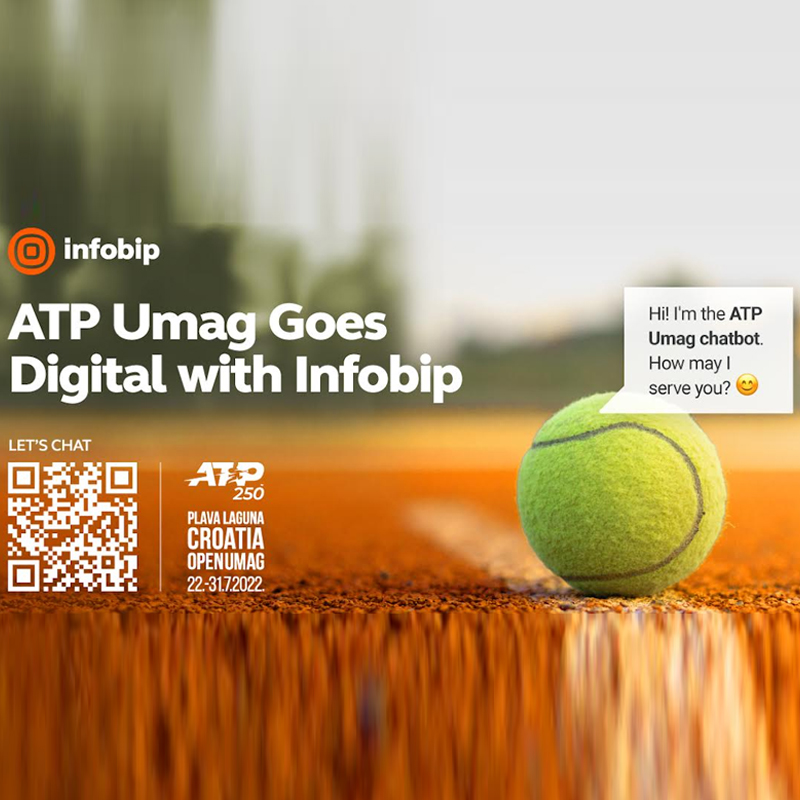
    Mumbai: The global cloud communications platform Infobip this week offers visitors and fans of the ATP Plava Laguna Croatia Open in Umag access to all tournament details through a new WhatsApp chatbot. As the tournament’s technology partner, Infobip has a tennis tournament chatbot to provide a seamless digital experience for visitors and tennis fans globally, helping boost engagement.

    Now the entire digital experience takes place through the ATP Umag Chatbot. The app has been created on Infobip’s chatbot-building platform Answers and WhatsApp Business, one of the most popular communication channels on Infobip’s cloud communications platform.

    Infobip chief product officer Adrian Benić said, “Together with the Plava Laguna Croatia Open, we are redefining the interaction between tennis fans and a globally recognised tournament. In the palm of their hand and with just a few moves, visitors and tennis fans worldwide can get all the necessary details about the tournament using the popular chat application WhatsApp. This chatbot also provides a continuous user journey regardless of where fans are based.”

    In one place, tennis fans and Croatia Open Umag attendees can find out details about the players, the tournament, the schedule, draw, daily entertainment agenda, tickets, and book accommodation. Also, every ATP Umag Chatbot user on WhatsApp can participate in a quiz with prizes.

    “In addition to the fact that all spectators can follow the matches of young global tennis stars like Carlos Alcaraz and Jannik Sinner, they can now also be part of a real digital experience. In Infobip, we recognised a great partner with whom we made a significant tech leap in the presentation of the tournament and its additional content,” said Plava Laguna Croatia Open Umag director Tomislav Poljak.

    The ATP Umag Chatbot on WhatsApp can be activated by sending the keyword “Hi” to the number +385 99 537 1830, which must first be saved in contacts, or by clicking on the link. All tournament visitors can also activate the chatbot by scanning a QR code located across all ATP Umag properties, including at the tournament, on social media, in printed brochures and tickets.

    “It’s great to see that fans and spectators can be even more involved in tennis events and more connected to tournaments through this digital way, compared to when I was playing. The possibilities of this type of interaction are numerous, and Infobip, as a leader in the global cloud communications market, is the ideal tech partner for ensuring optimum audience engagement in this global sporting event,” said former Olympics medalist and world Top 10 Mario Ančić. Mario is a partner at One Equity Partners, which is a strategic investor in Infobip.

  • Aaj Tak asks netizens for ideas on Sudhir Chaudhary’s next show with #AskSudhir campaign

    Aaj Tak asks netizens for ideas on Sudhir Chaudhary’s next show with #AskSudhir campaign

    Mumbai: Aaj Tak, the Hindi news channel from India Today Group, and veteran journalist Sudhir Chaudhary experimented with a technology-driven interactive digital campaign.

    The campaign #AskSudhir garnered over three lakh plus WhatsApp messages, 1.2 lakh plus listens on Twitter spaces and 75,000 plus Tweets and trended for about six hours on the top during the day.

    The social media campaigns saw Aaj Tak viewers and lakhs of netizens engage on Twitter spaces and the Chatbot campaign, and emotionally connect with Sudhir Chaudhary on Aaj Tak.

  • GUEST COLUMN: The all-pervasive role of technology in new-age marketing

    GUEST COLUMN: The all-pervasive role of technology in new-age marketing

    Mumbai: It was October 2020 when a Cadbury campaign featuring the Bollywood star Shah Rukh Khan (SRK) caught my attention. Christened as a ‘NotJustACadburyAd’, the campaign blended SRK’s image and voice using AI to create customised ads for local shops by directly naming them.

    This idea to promote local businesses when they had taken a big hit during the pandemic was widely appreciated. Also, from a creative angle, the campaign went viral. This level of hyper-personalisation could only be possible with the use of AI-led innovation and technology. This reflects two defining developments:

    1.      How new-age marketing is developing a deep understanding of the latest technology tools now playing a key role in developing meaningful customer relationships, and delivering friction-free, cross-channel experiences for consumers.

    2.       ‘Unified Analytics’ will replace ‘analytics by channel’ and customer groups will see an elevated level of strategic measurements and a much more holistic view of the customer.

    The chances are that while browsing through any marketing guide today, you will find it peppered with tech jargon. That’s how ubiquitous technology has become to the very essence and practice of marketing. As a result, brand campaigns have become more personalised and immersive than ever.

    While technology has exploded and there are hundreds of versions vying for space in the market, here are the ‘Top five most transformative technologies’ that will reshape marketing in times to come:

    1.      Increasing use of Chatbots

    This AI-led software can simulate meaningful conversations with internet users in a natural language through a combination of text and voice messages. Its popularity is increasing by the day due to its 24×7 role in solving customer queries. Bluebot, the chatbot of KLM Royal Dutch Airline, reported in excess of 1.7 million messages from 500,000 passengers.

    According to Salesforce, 69 per cent of the US consumers prefer using chatbots when engaging with brands since it often leads to a prompt response. As per estimates, ~40 per cent of big organisations are already using chatbots, and in the next few years, ~80 per cent of communication between the customers and organisations will be done through chatbots.

    2.      The rise of Voice Assistants

    Voice assistants like Amazon’s Alexa and Apple’s Siri have greatly altered the way users search for information on the web, fast gaining popularity in the voice search feature of search engines due to two important factors;

    -Average typing speed of 41.4 words per minute is far less productive than the speed at which we speak, i.e.160 words per minute

    -The Natural Language Processing (NLP) technology has gotten very advanced, making it easier for voice assistants to pick up and dissect queries accurately.

    Recent statistics reveal that one-third of 3.5 million searches on Google are voice searches. Therefore, from a marketer’s point of view, the voice search SEO strategy becomes important by updating content and becoming mindful of keyword research tools to come up with more voice search questions.

    3.      Fast growth of Virtual Reality

    The rise of Virtual Reality (VR) is mainly due to two reasons. Firstly, the hardware is relatively inexpensive. A Google Cardboard VR headset and a smartphone are enough for you to immerse yourself in another world. Also, many VR applications available on smartphones are completely free to play.

    Secondly, the unique user experience is visceral, the controls are far more intuitive, and the characters more relatable. That’s why it has been dubbed as the ‘ultimate empathy machine.’

    Taking a few examples from the retail sector, Tanishq partnered with Milestone Brandcom to install augmented reality (AR) kiosks (termed as ‘MirrAR’) for elevating the jewellery shopping experience. On the other hand, Lenskart offers 3D face modelling by measuring and mapping the user’s face from multiple angles, thereby providing a 360-degree view of the glasses. Similarly, Sephora’s AR beauty app lets users try makeup by superimposing certain lipstick shades and eyeliner looks using users’ selfie poses.

    4.      The imminent rise of Web 3.0

    Web 3.0, which is being built on blockchain technology [underlying bitcoin and other cryptocurrencies], aims to eliminate all-controlling intermediaries and provide the key benefit of a single login across social media accounts for seamless browsing, networking, engagement, and data security.

    This blockchain-led tech has the potential to re-invent the digital marketing industry. With users having direct control over their data and privacy, companies will have the opportunity to become highly user-centric and transparent by :

    -Analysing customer buying habits across platforms

    -Gathering previously unobtainable data on how consumers interact with devices and products

    -Gaining deeper insights on where a customer is in the buying journey.

    International luxury brands such as Balenciaga and Adidas are ahead of the curve and have started experimenting with Web 3.0, but time will tell how such virtual interactions can become stickier, and translate to potential sales. Even everyday brands like Taco Bell, Coca-Cola, McDonald’s, Gucci, and Warner Music are using non-fungible tokens [NFTs], thus introducing more and more audiences to the process of buying, owning, and selling digital collectibles. A great way for marketers to leverage NFTs is to use the technology for tickets and souvenirs.

    5.      AI-led Hyper-Personalisation

    The concept of a hyper-personalised experience is based on the use of AI in understanding and learning from human responses to communication by using data, such as recent purchases etc. This hyper-accurate segmentation of AI engines is a marketer’s delight in providing improved customer experience beyond assumptions and practices by using Customer Data Platforms (CDPs) as solutions for data architecture, integration, and reliability problems.

    Starbucks is an excellent example of hyper-personalisation. It took its already personalised menu to the next level by adopting a real-time personalization engine [primarily pulling data from their loyalty app] that produces individualized offers for their customers based on their previous behaviour and preferences.

    Most organisations utilise only ~15 per cent of the technologies and capabilities they are already paying for. Therefore, the number of technologies adopted is not as important as ‘applying’ them to solve business needs. Today, marketers are at the critical junction of integrating human experience and technology. They have forever been trying to demystify the customer’s mind. Thanks to technology, now we have endless ways of knowing!

    (The author is executive vice president – global marketing at Wadhwani Foundation. The views expressed in this column are personal and Indiantelevision.com may not subscribe to them.)

  • Appy Pie launches an all-new DIY chatbot builder in India

    Appy Pie launches an all-new DIY chatbot builder in India

    New Delhi: Appy Pie, the leading cloud based no-code app building platform that lets businesses convert their app ideas to reality without the hassle of getting into the nuances of coding, has launched an all-new chatbot builder. With a wide array of beautiful templates, the DIY chatbot builder can help enhance the outreach and customer interaction for a wide range of businesses. Currently in an Open Beta version, the chatbot builder is super easy to use and one just needs to go through three simple steps to get started. 

    To meet the requirements of different businesses, Appy Pie is offering users a huge bank of pre-designed templates to choose from. While there are templates to serve the purpose of inquiry and appointment chatbots, there are a few other case specific templates for purposes such as course enrollment, recruitment, health insurance and loan application, among others.

    Talking about the new offering, Appy Pie founder Abhinav Girdhar said, “We are also giving our customers the option to go for live chatbot wherein once a botflow is completed, it would automatically redirect the customer to a live agent. The chatbots can also be customized with regard to look & feel and there’s also a first-in-the-segment provision to integrate a brand logo with the same.” 

    The comprehensive bouquet of chatbot builder further includes an answer bot which is based on AI, NLP and ML. While usually chatbots pose questions for the customers to answer, Appy Pie’s answer bot will respond to the queries raised. In case it is unable to provide a response, it will give the customers an option to chat directly with a live agent or send an inquiry which can be answered by a company representative. 

    The Appy Pie chatbot builder enables the integration of the chatbots on websites. Going ahead, a mechanism is slated to be introduced to integrate the chatbots with apps and social media platforms such as Facebook. Also, in the pipeline is a customized plug-in for WordPress. To ensure a seamless and hassle-free integration, the platform provides a widget code, which the user merely needs to paste in their website’s html. 

    For more information:

    Visit: https://www.appypie.com/chatbot/builder

  • Idea promotes video calling feature in new ad

    Idea promotes video calling feature in new ad

    MUMBAI: Mindshare, India’s largest full-service media agency and part of GroupM, launched a unique interactive campaign with Mallika Dua – a renowned comedian and social media influencer, as part of Idea 4G #IndiaKaLiveNetwork initiative. The campaign is an attempt to bring alive the experience of video calling with a renowned celebrity in real time.

    Building on the brand’s tagline of ‘India Ka Live Network’, Idea 4G Live leveraged the power of video calls in an attempt to create awareness about common misdoings of people and encourage them to change their behaviour.

    Mindshare and Idea 4G unveiled a distinctive voice-enabled AI led interactive video chat bot ad campaign that enabled millions of users to interview Dua.  This has never been attempted before in the digital mobile ad-space and was co-created by mCanvas, the experiential storytelling ad platform for small screens. The tool allows users to interact with Dua, and ask her questions ranging from personal trivia to the benefits of Idea 4G network and the power of live videos by simply tapping on the mic icon. Trending questions are also prompted at the bottom of the screen which the user can scroll through and ask Dua. The innovation is done through live media banners placed on popular websites, which can be accessed through mobile phone browsers.

    The experience is designed to be seamless and resemble a live video call with the user's own face seen on the screen. This experience can last for as long as the user has questions to ask and also allows users to ‘Get Idea’ in just a few clicks.

    The innovation uses Artificial Intelligence (AI) where the ad creative listens to user questions in English & Hindi and uses Machine Learning (ML) to analyse all the questions asked by previous users and increase the accuracy of the responses. For example, if a user asks a question in Hinglish, the AI detects that it contains English and Hindi. Next, the ML helps accurately assign a relevant answer to that question.

    The campaign is live on several media and news websites and has already seen engagement from over 7.2 million users. The campaign is witnessing about eight times higher than the average mobile-banner click-through rate. Interactions with this creative have also been found to last for an average of 22 seconds, with some users spending over 10 minutes.

    Speaking about the launch of the campaign, Mindshare India national head – mobile Niraj Ruparel said, “We at Mindshare always look forward to crafting innovative and effective solutions for brands. Idea, as a brand, does not shy away from taking an unconventional path when it comes to communication. With the video-chat bot ad we have come together to create a first of its kind innovation on an effective platform. By leveraging on Mallika Dua’s popularity, and Idea’s 4G network, we are hopeful of bringing about a change in people’s behaviour, and habits, as well as encourage more people to go Live to highlight societal issues.”

    Vodafone Idea Ltd president marketing Sunita Bangard said, “Over the years, brand Idea has built a strong reputation for creating purposeful, conscientious campaigns that encourage change for the betterment of society. The Idea 4G #IndiaKaLiveNetwork campaign highlighted the power of streaming LIVE videos over Idea’s robust 4G network thereby driving a positive change in behaviour among citizens. In its endeavor to engage with the digital natives, Brand Idea has always tried digital-first initiatives for our ATL campaigns, many of which have been appreciated and rewarded at various digital forums. Our innovative AI-and ML-aided campaign has set new benchmarks in digital advertising.”

  • Take ‘Actions on Google’: partner’s Gupshup with enterprises

    Take ‘Actions on Google’: partner’s Gupshup with enterprises

    MUMBAI: Gupshup has partnered with Google to enable enterprises to quickly and easily build for ‘Actions on Google’, its development interface for the Google Assistant. Bot builders can now create and deploy bots or actions for the assistant using Gupshup’s cross-platform development tools.

    One of the early Google Assistant actions to come to Google Home is from VentureBeat, source of technology and chatbot news. Developed in coordination with Gupshup, the bot will be available to consumers later this month.

    Gupshup CEO Beerud Sheth opined that the bot landscape has grown exponentially in the past year. It has enabled the world where intelligent, conversational interfaces will soon be all around us. He expressed gratitude about being one of the first developer platforms to join Actions on Google.

    Google Home users launch the VentureBeat bot by saying “Ok Google, let me talk to VentureBeat,” and can then navigate the latest technology news stories and headlines from the comfort of their own home by interacting with the Google Assistant.

    Few more content providers will be available on Actions on Google soon.

    Gupshup is the first truly omni-channel bot development platform, offering developers and enterprises the ability to connect with consumers on their favorite messaging platforms, now including voice-assisted ecosystems such as Google Home.

  • Take ‘Actions on Google’: partner’s Gupshup with enterprises

    Take ‘Actions on Google’: partner’s Gupshup with enterprises

    MUMBAI: Gupshup has partnered with Google to enable enterprises to quickly and easily build for ‘Actions on Google’, its development interface for the Google Assistant. Bot builders can now create and deploy bots or actions for the assistant using Gupshup’s cross-platform development tools.

    One of the early Google Assistant actions to come to Google Home is from VentureBeat, source of technology and chatbot news. Developed in coordination with Gupshup, the bot will be available to consumers later this month.

    Gupshup CEO Beerud Sheth opined that the bot landscape has grown exponentially in the past year. It has enabled the world where intelligent, conversational interfaces will soon be all around us. He expressed gratitude about being one of the first developer platforms to join Actions on Google.

    Google Home users launch the VentureBeat bot by saying “Ok Google, let me talk to VentureBeat,” and can then navigate the latest technology news stories and headlines from the comfort of their own home by interacting with the Google Assistant.

    Few more content providers will be available on Actions on Google soon.

    Gupshup is the first truly omni-channel bot development platform, offering developers and enterprises the ability to connect with consumers on their favorite messaging platforms, now including voice-assisted ecosystems such as Google Home.