Tag: Chanel

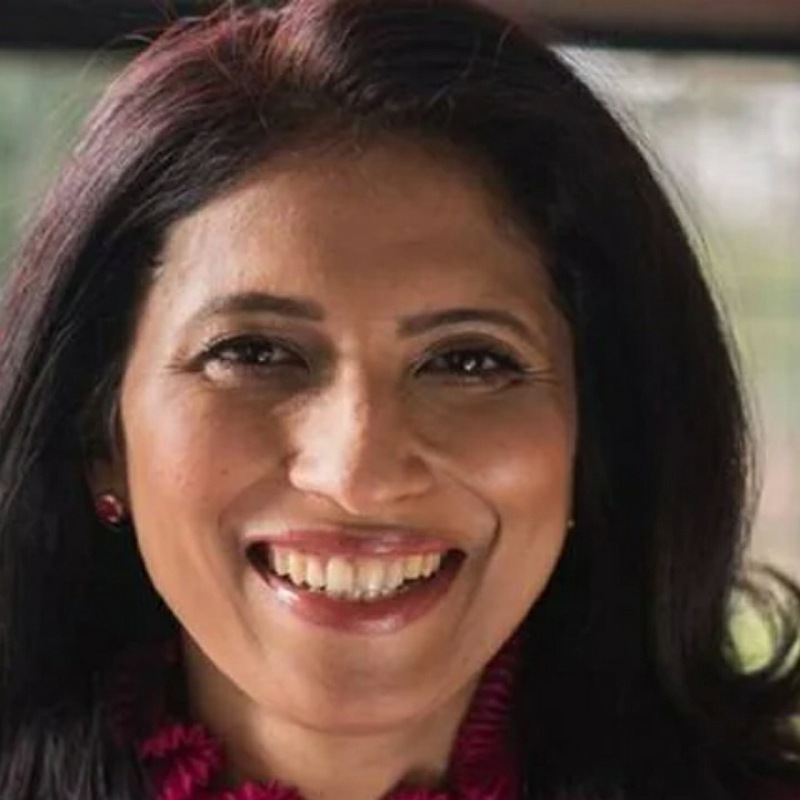
  • Leena Nair named CEO of French fashion house Chanel

    Leena Nair named CEO of French fashion house Chanel

    Mumbai: In another crown for India, one more Indian has landed the top job with a global leader, only this time in the fashion industry. French luxury group Chanel has named former Unilever executive Leena Nair as its new global chief executive, based in London.

    Alain Wertheimer, who owns the 111-year-old luxury brand with his brother Gerard Wertheimer, will act as global executive chairman, the group said in a statement.

    A British national, born in India, Nair’s career at Unilever spanned 30 years, most recently as the chief of human resources and a member of the company’s executive committee. Nair rose through the ranks of Unilever having started out as a management trainee. Under her watch, Unilever achieved gender parity across global management.

    Nair posted the development on her LinkedIn page and said, “I am humbled and honoured to be appointed the Global Chief Executive Officer of CHANEL, an iconic and admired company. I am so inspired by what CHANEL stands for. It is a company that believes in the freedom of creation, in cultivating human potential and in acting to have a positive impact in the world.”

    “I am grateful for my long career at Unilever, a place that has been my home for 30 years. It has given me so many opportunities to learn, grow and contribute to a truly purpose-driven organisation. I will always be a proud advocate of Unilever and its ambition to make sustainable living commonplace,” she further added.

    Nair follows US businesswoman Maureen Chiquet, who came from a fashion background and was CEO of Chanel for nine years until early 2016.

    Thereafter Alain Wertheimer, who will now move to the role of global executive chairman, had originally taken on the CEO job on a temporary basis.

    Nair would join at the end of January and be based in London, the group said, adding that the new appointments would ensure its “long-term success as a private company.”

  • ShareChat gets Wavemaker’s Ajit Varghese as chief commercial officer

    ShareChat gets Wavemaker’s Ajit Varghese as chief commercial officer

    NEW DELHI: ShareChat has appointed Ajit Varghese as its chief commercial officer. Varghese brings in a track record of 25+ years of leading large-scale business transformations and building diverse and successful businesses around media, creative, digital, data, content, sports, and performance.  

    Prior to joining ShareChat, Varghese was the global president at WPP group’s Wavemaker, known among the world’s top five media networks with clients ranging from industry giants like Vodafone, L’Oreal, Huawei, IKEA, Paramount Pictures, Chanel, Xerox, Netflix, Chevron, Beiersdorf, and Tiffany.  

    In his new role at ShareChat, he will be pivotal in expanding and strengthening the platform’s revenue efforts and building a robust monetisation approach with the strategic content partnership. He will also spearhead its marketing functions, to be inclined towards brand elevation, aligned with business centricity. He will be reporting into ShareChat COO & co-founder Farid Ahsan. 

    This key appointment announcement comes amidst Sharechat witnessing exponential growth in the past few months. The upward curve not only mirrors the new user growth and higher user engagement on the platform but also reflects an increased interest among B2C brands, for leveraging Bharat internet audiences. 

    Farid Ahsan said, “Brand marketing and monetisation is going to be the core focus of ShareChat and we will direct our efforts towards elevating the brand positioning through strategic communications approach. Ajit, with his leadership capabilities and expert knowledge of the media, marketing and advertising domain, will play a critical role in further building brand awareness, deepening relationships with our business stakeholders and driving ShareChat toward the next phase of growth.”  

    Ajit Varghese said, “Having previously worked and transformed several global organisations, it has always been a hidden desire to contribute towards transforming an Indian organisation to global repute. I believe ShareChat in the next few years will evolve as the default partner to every brand, homegrown and global, who intends to engage with the internet-first population. As the digital advertising landscape awaits the inclusion of over 400 million new internet users, mostly inclined towards native languages, ShareChat will stay at the forefront of unveiling a new digital era. This will be an exciting journey for me as I look forward towards contributing to ShareChat’s growth and building a win-win relationship with our community of users, partners and business stakeholders.” 

    An alumnus of Xavier Institute of Management, Bhuvaneshwar, and a graduate in agriculture engineering from Orissa University of Agriculture and Technology, Varghese has worked across India, Singapore and London. With years of leadership positions across globally-reputed media organisations like Wavemaker (WPP), Maxus (WPP), Madison World, he has been recognised as a Global Media Leader with a track record of turning around organisations, leading rapid growth, and gaining market dominance. 

    Over the past few months, ShareChat has been strategizing to become a future-ready organisation by delivering an immersive social experience to its users and building a global product. The platform has collaborated with leading music labels in India and across the globe, set up ‘ShareChat Labs’ in Silicon Valley, and driven content partnerships with various news and entertainment organisations. Over 150 B2C brands have partnered with ShareChat to explore its strength in engaging with Bharat (language-first) internet audience on the platform. 

  • LuxHub focus: Luxury super brands still dominate for luxury consumers

    LuxHub focus: Luxury super brands still dominate for luxury consumers

    MUMBAI: A global survey from LuxHub, Havas Media Group’s newly launched luxury consulting boutique, takes in the views of the notoriously hard-to-reach affluent luxury goods customers, all within the top 10 per cent of the household income bracket in each of the USA, UK, China, Russia, France, Italy, Germany, Spain and Saudi Arabia/UAE markets.


    The survey looked at luxury trends for personal spend across retail, travel, home furnishings, auto, jewellery and art and analysed 40 of the top global brands.


    Luxury ‘super brands’ still have the edge


    Global luxury power brands are preferred to niche brands by 64 per cent of respondents. Geographical differences show that in China 83 per cent prefer super brands (the most widely recognised brands being Louis Vuitton and Chanel), and in the US 73 per cent prefer them (top brands being Mercedes and Chanel) vs. only 43 per cent in Spain.


    Quality matters more to people in the UK vs. other markets


    The swings in both brand ranking and preference by country can be explained by differing cultural definitions of luxury. UK luxury shoppers, with an average spend of ?28,243, defined luxury in terms of quality (78 per cent vs. a global average of 63 per cent) and personal reward (44 per cent vs. a global average of 26 per cent). When it comes to luxury products conferring social status, this was important for only 20 per cent in the UK vs. an average of 37 per cent across the markets.


    Germany, Italy and Spain were the only three countries out of the nine to define luxury as exclusivity over quality. Overall luxury perceptions are driven by quality, exclusivity and the desire to express taste and style.


    Average personal spend on personal luxury across the nine markets is ?21,126.


    The affluent luxury consumer spent an average of ?21,126 on luxury in the past year. The highest spend was seen in Russia at ?36,078, UK at ?28,243 and France third, spending on average ?27,402 per year. 


    Among men and women combined, the most popular category for luxury shoppers is clothing and accessories purchased by 89 per cent last year, with an average spend of ?1,625. This is followed by travel, purchased by 87 per cent with an average spend of ?3,791. While only 30 per cent purchased an automobile, average spend among those who did buy one was ?27,630.

    Amount spent on the categories studied shows significant differences according to the country. For example, the average spend on cars is ?27,629 whereas in France it is just over ?10,000 higher at ?38,492. The average spend on travel is as high as ?6,356 in the UK and as low as ?2,121 in China.


    Luxury spend to rise by seven per cent


    Overall growth rate forecast for the industry of seven per cent (33 per cent expecting to spend 28 per cent more, eight per cent expect to spend 36 per cent less and 59 per cent expect to spend the same amount as they did last year). This growth of luxury is in line with the growth projection of GDP for China in 2015 (seven per cent) and non-oil GDP growth in Saudi Arabia (five – six per cent) but considerably higher than the low single digit GDP projections in Europe and the UK.


    When looking at these results however, some very positive indicators can be found. For example, amongst the 33 per cent who expect to spend more on luxury, 44 per cent say this is largely due to seeing more items that they want – demonstrating that the supply side of luxury is a key driver for the sector’s share of wallet. The leading driver is an expectation of increased disposable income (49 per cent).


    Shopping in physical stores is still the favoured method for shopping for luxury goods for 49 per cent of respondents, while 24 per cent shop mainly online. Statistics show that the move by a quarter of the respondents to shop online is not being matched by competency from the brands. Over half of respondents (57 per cent) felt that luxury brands should engage with social media, mainly because they feel that this is how brands in general are communicating nowadays.


    Millennials are more comfortable engaging with and buying luxury goods in the digital sphere. Among Millennial consumers aged 20-34, 72 per cent felt luxury brands should engage with social media, versus 51 per cent of those 35 to 54 years of age. About 29 per cent of Millennials prefer to shop for luxury online versus 19 per cent of the 35 to 54 year age group, and only 44 per cent of millennials prefer to shop for luxury in physical stores, versus 50 per cent of those aged 35 to 54.


    Discounting trend highest in US, Germany


    Over half of those surveyed revealed that they purchase luxury goods at a discount rate, including sales and outlets. The UK luxury shopper shows the highest percentage of full price purchase with 55 per cent purchasing at full price, equal with niche brand loving Spain. This compares to the US luxury shoppers who purchase an average of 67 per cent of their luxury goods at a discount.


    LuxHub Global executive director Tammy Smulders, who oversaw this research, said, “This discounting culture shown in the survey is one that interests many of our clients. The fact is, there are simply more luxury products available in the market today. As a reaction to the recent economic challenges, we saw many luxury brands introducing accessible diffusion lines with different styles and price points, creating something for everyone. In addition, the trend of introducing new lines came as a reaction to the globalisation of luxury and the need for more accessible entry price points for the emerging luxury consumer.”


    “The discounting culture came into common practice, and now the global trend for discounting is here to stay. Despite this, our survey also points to an optimistic future for luxury with a projected increase in spend of 7 percent. It is our view that this discounting culture, coupled with more sophisticated targeting, data management through CRM and storytelling is actually stimulating shopping and there are a wealth of opportunities out there for agile, smart luxury brand marketers,” Smulders added.


    LuxHub global CEO Isabelle Harvie-Watt said, “This global survey highlights differences between cultures, which show how important is to personalise the shopping experience for people in their own countries. What is now critical is the ability to implement culturally relevant strategies that also work in the actual locations where customers engage with the brand. For example, today more than half of the luxury purchases from the Chinese consumers are made outside of China, mostly in Europe and USA. This means luxury brands need to create culturally tailored content, services and experiences that can be implemented anywhere in the world.”