Tag: Challenge

  • TTK Prestige challenges gender roles in kitchen with #CookingHasNoGender campaign

    TTK Prestige challenges gender roles in kitchen with #CookingHasNoGender campaign

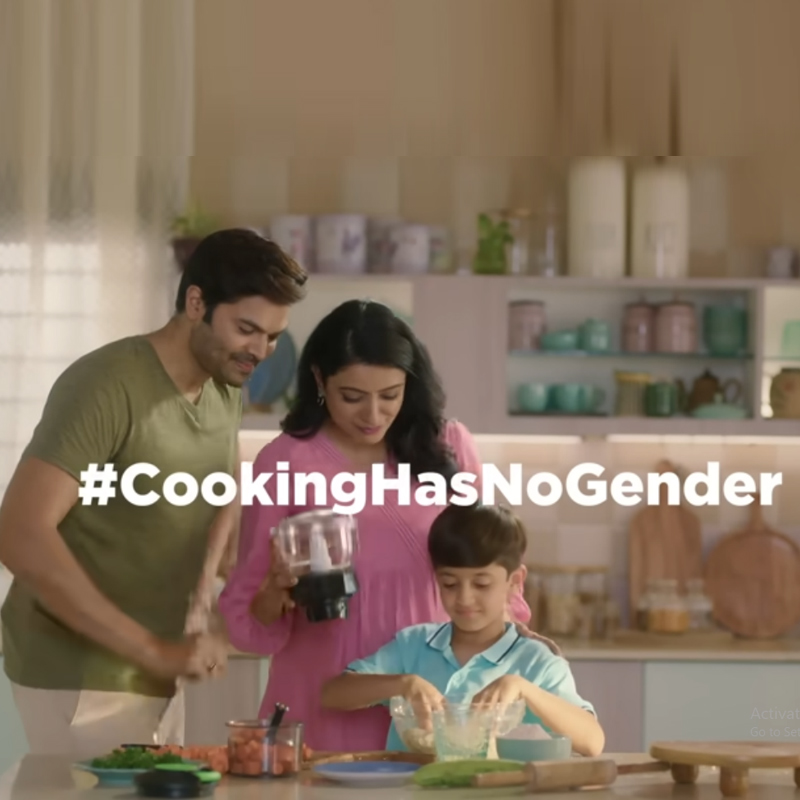
    Mumbai: TTK Prestige has launched a new campaign on Mother’s Day that echoes its progressive views of gender roles in the kitchen. Titled #CookingHasNoGender, the campaign conceptualised by 22feet Tribal Worldwide intends to make Indian kitchens gender-neutral by bringing men into the fold. The marketing campaign will run on all major social media platforms.

    “For a long time, advertising for cookware brands has featured women front and centre in the kitchen because of stereotypes that expect them to fulfil that role in the family. This new campaign reflects the dynamics of a modern family where cookware is for anyone to cook and feel more comfortable in the kitchen regardless of gender,” said the brand in a statement.

    The film opens with a young boy learning to cook from his father, who insists on teaching him the effort that goes into making a simple meal. Tired, the boy asks if it’s necessary to learn cooking. The father imparts a simple lesson that everyone should learn how to cook.

    ‘‘As a brand with a legacy of over 66 years, mothers have always had a special place in our hearts. TTK Prestige shares a strong bond with them through our range of innovative products that eases their lives in the kitchen,” said TTK Prestige deputy general manager Ankur Agarwal. “Through the narrative in the campaign, TTK Prestige endeavours to capture the little things that make family time so meaningful and endearing. This campaign strongly endorses aspects such as love, togetherness and food, which fuels closeness in a family. As a brand that is relatable to current times, we believe that #CookingHasNoGender.’’

    “Progress cannot be limited to the fringes, it has to be mainstream. And we are proud to see brands like TTK Prestige wanting to drive progressive narratives,” commented 22feet Tribal Worldwide EVP and national head of business Ken Sekhar. “We are fortunate to work with a company that partnered with us to push the envelope on inclusive and diverse communication. The result of that relationship is what you see in this campaign.”


  • Address the advertising challenges in the digital world to convert the non-believers

    Address the advertising challenges in the digital world to convert the non-believers

    MUMBAI: What do you do when you have a discussion to moderate, a ready panel of speakers on stage, but your audience is even less than the number of speakers? Well, you take the mike and charge forward without a care in world – not to put on a show, but because some issues need a serious, straightforward and honest discussion. The audience will definitely follow.

    That’s exactly what the charismatic chairman and MD of Grey Group India Sunil Lulla did when moderating a session on day three at FICCI Frames 2016. The topic was simple and burning — The Advertising Challenge amidst disruptive technology, digital innovations enabling targeted and smartadvertising — and Taboola APAC VP Ran Buck set the tone of the discussion with his key note on the issue. Buck shared his experiences on how the digital world behaved internationally from his experience of working with the brand discovery platform Taboola that helps advertisers find relevant end users.

    Lulla took control of discussion and the first thing he did was to throw a question at the audience – ‘How many believed that the digital medium will be the largest advertising revenue driver in the coming years?’ — to which most of  the audience responded by raising their hands. Next, he relayed an objective to the panellists — to convert all the non-believers in the room to believers by the end of the discussion. What a way to get the audience involved right from the start!

    The quickest way to get the ball rolling was to go through the panel as each one pointed out opportunities or challenges in advertising in the digital world.

    The panellists –  POKKT Video Ads CEO and founder Rohit Sharma, Zapr Media Labs co-founder Sandipan Mondal, Ping Digital Broadcast co-founder Rajeshree Naik, Vidooly founder Subrat Kar, Yahoo India MD and VP Gurmit Singh, and Adsparx CEO Kunal Lagwankar.

    Mondal, seated on the extreme end of the panel, pointed out the obvious and very straightforward reason to believe in the digital advertising boom. “It’s digital where the eyeballs are, and where more eyeballs will shift to. And advertisers follow eyeballs.” Gurmit Singh went into the details when chalking out the opportunities the digital age posed for advertisers and other stakeholders in the business. “If you follow the rate at which digital startups are being acquired by the big players and notice the value at which the deals happen, it gives you the idea how much the market analysts and value setters are betting on the digital platforms.”

    “Going forward,” Singh added, “Mobile will be the biggest traction driver and it is already going big in India. There are several stats and data to showcase the tremendous growth of the smartphone penetration in India. This will be followed by the huge video boom that again poses an awesome opportunity for brands to tap into. The other trend that will have a strong impact onadvertisers and will open up new vistas for them is native advertising.”

    Privacy right, Kar said, was currently a big challenge for digital advertisersand policy makers needed to come together and educate and come up with solutions for advertisers on this front.

    Having worked closely in the video advertising space on digital media, there was no one better than Lagwankar to shortlist the hiccups in the business currently. “Firstly,” he said, “it is a major challenge to retain the TV experience of seamless transition between content and advertising on VOD platforms. It’s not a bandwidth issue, but a design and aesthetics one.”

    “Secondly, ad-blockers take away a major chunk of the advertising revenues from publishers; and thirdly, content providers and distributors need to come up with a way to give seamless streaming of content between all platforms or screens, and address the needs of each screen individually,” Lagwankar stated.

    Being the optimist that she is, Naik stated, “Any barrier is dwarfed by the opportunities the medium offers for advertisers.” As the need of the hour was to state the barriers, Naik listed out a few as well. “We need a clear understanding of the medium. Lack of understanding such as equating views as metrics to measure reach and visibility by advertisers will set the industry crumbling faster than anything.”

    The often abused term ‘digital video measurement’ was tackled by the panel with a fresh perspective.  Advertisers have been heard citing the lack of a standard measurement of eyeballs on the digital platform as an excuse to not spend as much advertising dollars as they do on traditional media. Newspapers have distribution and sales count; TV has got BARC; what has the web got?

    “Perhaps web doesn’t need a ratings system,” came Singh’s head turning answer. “Web metrics at a large work differently, even within the different digital players. Some sites and apps use cookies and adtags to monitor and record consumer behaviour.”

    “There is also SDK code in apps that can be used to track how consumers interact with ads or record other analytics for the brands,” Sharma further accentuated the point. Hence the traditional concept of ratings might not be required for a vibrant medium like the web that has other powerful technological tools to fulfil the same need for advertisers.

    While the discussion on the stage covered everything including whether long form television ads would work on digital platform and content branding, a member from the audience got up and pointed out the ‘Skip button’, which was a problem of mammoth proportions.

    “While we all are banking on digital videos to drive ad revenue, what are we doing about the ‘skip ad’ button that is also the second most clicked button?” the panel was quizzed.

    Agreeing that traditional form of advertising would need some heavy tweaking to survive and coexist with ad blocking, Singh stated that digital medium empowered the end users to skip the ads, and further encouraged people to stay in the medium.

    It ultimately came down to how an ad was relayed to the consumer, whether it was in the viewer’s face, or packaged as good content with a value addition. After all, for a viewer, a good story was a good story, be it an ad or entertainment content.

    By the time the finishing bell rang, Lulla and the panellists had a hard time reaching the exit, as a sea of people hounded them for ‘one last question.’

  • Address the advertising challenges in the digital world to convert the non-believers

    Address the advertising challenges in the digital world to convert the non-believers

    MUMBAI: What do you do when you have a discussion to moderate, a ready panel of speakers on stage, but your audience is even less than the number of speakers? Well, you take the mike and charge forward without a care in world – not to put on a show, but because some issues need a serious, straightforward and honest discussion. The audience will definitely follow.

    That’s exactly what the charismatic chairman and MD of Grey Group India Sunil Lulla did when moderating a session on day three at FICCI Frames 2016. The topic was simple and burning — The Advertising Challenge amidst disruptive technology, digital innovations enabling targeted and smartadvertising — and Taboola APAC VP Ran Buck set the tone of the discussion with his key note on the issue. Buck shared his experiences on how the digital world behaved internationally from his experience of working with the brand discovery platform Taboola that helps advertisers find relevant end users.

    Lulla took control of discussion and the first thing he did was to throw a question at the audience – ‘How many believed that the digital medium will be the largest advertising revenue driver in the coming years?’ — to which most of  the audience responded by raising their hands. Next, he relayed an objective to the panellists — to convert all the non-believers in the room to believers by the end of the discussion. What a way to get the audience involved right from the start!

    The quickest way to get the ball rolling was to go through the panel as each one pointed out opportunities or challenges in advertising in the digital world.

    The panellists –  POKKT Video Ads CEO and founder Rohit Sharma, Zapr Media Labs co-founder Sandipan Mondal, Ping Digital Broadcast co-founder Rajeshree Naik, Vidooly founder Subrat Kar, Yahoo India MD and VP Gurmit Singh, and Adsparx CEO Kunal Lagwankar.

    Mondal, seated on the extreme end of the panel, pointed out the obvious and very straightforward reason to believe in the digital advertising boom. “It’s digital where the eyeballs are, and where more eyeballs will shift to. And advertisers follow eyeballs.” Gurmit Singh went into the details when chalking out the opportunities the digital age posed for advertisers and other stakeholders in the business. “If you follow the rate at which digital startups are being acquired by the big players and notice the value at which the deals happen, it gives you the idea how much the market analysts and value setters are betting on the digital platforms.”

    “Going forward,” Singh added, “Mobile will be the biggest traction driver and it is already going big in India. There are several stats and data to showcase the tremendous growth of the smartphone penetration in India. This will be followed by the huge video boom that again poses an awesome opportunity for brands to tap into. The other trend that will have a strong impact onadvertisers and will open up new vistas for them is native advertising.”

    Privacy right, Kar said, was currently a big challenge for digital advertisersand policy makers needed to come together and educate and come up with solutions for advertisers on this front.

    Having worked closely in the video advertising space on digital media, there was no one better than Lagwankar to shortlist the hiccups in the business currently. “Firstly,” he said, “it is a major challenge to retain the TV experience of seamless transition between content and advertising on VOD platforms. It’s not a bandwidth issue, but a design and aesthetics one.”

    “Secondly, ad-blockers take away a major chunk of the advertising revenues from publishers; and thirdly, content providers and distributors need to come up with a way to give seamless streaming of content between all platforms or screens, and address the needs of each screen individually,” Lagwankar stated.

    Being the optimist that she is, Naik stated, “Any barrier is dwarfed by the opportunities the medium offers for advertisers.” As the need of the hour was to state the barriers, Naik listed out a few as well. “We need a clear understanding of the medium. Lack of understanding such as equating views as metrics to measure reach and visibility by advertisers will set the industry crumbling faster than anything.”

    The often abused term ‘digital video measurement’ was tackled by the panel with a fresh perspective.  Advertisers have been heard citing the lack of a standard measurement of eyeballs on the digital platform as an excuse to not spend as much advertising dollars as they do on traditional media. Newspapers have distribution and sales count; TV has got BARC; what has the web got?

    “Perhaps web doesn’t need a ratings system,” came Singh’s head turning answer. “Web metrics at a large work differently, even within the different digital players. Some sites and apps use cookies and adtags to monitor and record consumer behaviour.”

    “There is also SDK code in apps that can be used to track how consumers interact with ads or record other analytics for the brands,” Sharma further accentuated the point. Hence the traditional concept of ratings might not be required for a vibrant medium like the web that has other powerful technological tools to fulfil the same need for advertisers.

    While the discussion on the stage covered everything including whether long form television ads would work on digital platform and content branding, a member from the audience got up and pointed out the ‘Skip button’, which was a problem of mammoth proportions.

    “While we all are banking on digital videos to drive ad revenue, what are we doing about the ‘skip ad’ button that is also the second most clicked button?” the panel was quizzed.

    Agreeing that traditional form of advertising would need some heavy tweaking to survive and coexist with ad blocking, Singh stated that digital medium empowered the end users to skip the ads, and further encouraged people to stay in the medium.

    It ultimately came down to how an ad was relayed to the consumer, whether it was in the viewer’s face, or packaged as good content with a value addition. After all, for a viewer, a good story was a good story, be it an ad or entertainment content.

    By the time the finishing bell rang, Lulla and the panellists had a hard time reaching the exit, as a sea of people hounded them for ‘one last question.’

  • The Gillette India Flexball challenge on Twitter

    The Gillette India Flexball challenge on Twitter

    MUMBAI:  Since it launched the Fusion Proglide Flexball  razor, Gillette India has been coming up with various promotional strategies,  with one of the strategies being promoting it through social media .

    The new Gillette razor is different from the previous razors launched by the brand. It has five blades on the front and one blade at the back that allows it to swivel back and forth. The movement of this razor is quite similar to how one’s wrist works. The new Flexball technology helps men to shave without twisting their face in awkward ways.

    The brand now has an ongoing campaign for its Fusion Proglide Flexball  razor on Twitter – The Flexball Challenge that challenges its patrons. To enter The Flexball challenge, one has to tweet to Gillette India with #Flexiballchallenge and wait till Gillette India makes its first move. (For example; ‘I am ready for #TheFlexballchallenge @GilletteIndia’)

    Once Gillette India has made its first move by sending a chart which is divided into three rows and three columns -A1-A3,B1-B3,C1-C3, the participants have to reply to the move by choosing the desired position. (For example A3#TheFlexballchallenge). The game is a clever way of explaining the flexibility of the product as players do not have to use pen or pencil to play the game. 

    Before getting started with the game, participants have to keep its in mind. For instance only one game at a time can be played. Furthermore participants can always ask for a rematch. The hashtag has to be used always and one must wait until Gillette India responds back, resending or changing of moves are not allowed. The challenge has taken Twitterti by storm. Over a hundred participants have tweeted and taken part in the challenge so far.  Here are a few examples:

    sujoy_kapur tweeted, “C1 is my first move team @GilletteIndia #TheFlexballChallenge.”

    avdesh_roy tweeted, “Friends lets take #TheFlexballChallenge Play & win  @GilletteIndia @saraf_silky

    Amol_77 tweeted, “I am ready for #TheFlexballChallenge join me and play it @GilletteIndia guys.”

  • The Gillette India Flexball challenge on Twitter

    The Gillette India Flexball challenge on Twitter

    MUMBAI:  Since it launched the Fusion Proglide Flexball  razor, Gillette India has been coming up with various promotional strategies,  with one of the strategies being promoting it through social media .

    The new Gillette razor is different from the previous razors launched by the brand. It has five blades on the front and one blade at the back that allows it to swivel back and forth. The movement of this razor is quite similar to how one’s wrist works. The new Flexball technology helps men to shave without twisting their face in awkward ways.

    The brand now has an ongoing campaign for its Fusion Proglide Flexball  razor on Twitter – The Flexball Challenge that challenges its patrons. To enter The Flexball challenge, one has to tweet to Gillette India with #Flexiballchallenge and wait till Gillette India makes its first move. (For example; ‘I am ready for #TheFlexballchallenge @GilletteIndia’)

    Once Gillette India has made its first move by sending a chart which is divided into three rows and three columns -A1-A3,B1-B3,C1-C3, the participants have to reply to the move by choosing the desired position. (For example A3#TheFlexballchallenge). The game is a clever way of explaining the flexibility of the product as players do not have to use pen or pencil to play the game. 

    Before getting started with the game, participants have to keep its in mind. For instance only one game at a time can be played. Furthermore participants can always ask for a rematch. The hashtag has to be used always and one must wait until Gillette India responds back, resending or changing of moves are not allowed. The challenge has taken Twitterti by storm. Over a hundred participants have tweeted and taken part in the challenge so far.  Here are a few examples:

    sujoy_kapur tweeted, “C1 is my first move team @GilletteIndia #TheFlexballChallenge.”

    avdesh_roy tweeted, “Friends lets take #TheFlexballChallenge Play & win  @GilletteIndia @saraf_silky

    Amol_77 tweeted, “I am ready for #TheFlexballChallenge join me and play it @GilletteIndia guys.”