Tag: Chairman

  • RS Sharma takes over as TRAI chairman from 10 August

    RS Sharma takes over as TRAI chairman from 10 August

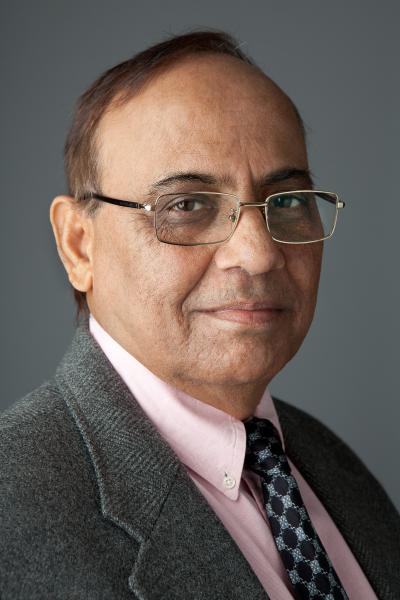
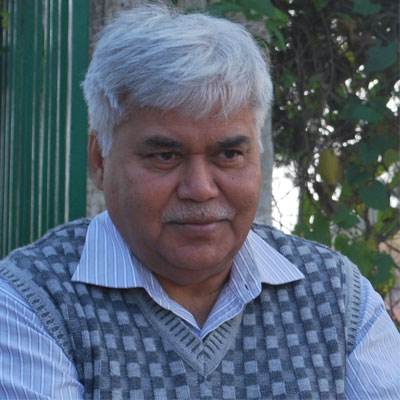
    MUMBAI: The Telecom Regulatory Authority of India (TRAI) new chairman RS Sharma has taken over his new position, effective 10 August. 


    Prior to joining TRAI, Sharma was working as secretary to Government of India in the Department of Electronics and Information Technology. He has also worked as chief secretary to the State Government of Jharkhand (India).


    Sharma’s other assignments include director general and mission director of the Unique Identification Authority of India (UIDAI) where he was responsible for over-all implementation of the project undertaken by the Government for providing Unique Identification to all its  residents. Before his posting with UIDAI, Sharma worked with the Government of Jharkhand as principal secretary of the Departments of Science and Technology, Drinking Water & Sanitation.


    Sharma has held important positions both in the Government of India and State Governments in the past and has been deeply involved in the administrative reforms and leveraging IT to simplify administrative processes.


    During his posting in the Government of India, he worked in the Department of Economic Affairs and dealt with bilateral and multilateral development agencies like World Bank, ADB, MIGA and GEF. He was also in-charge of Financing of Infrastructure projects in the Highways, Ports, Airports and Telecom sectors. 

  • TRAI Chairmanship: An onerous responsibility fraught with delicate diplomacy & balancing acts

    TRAI Chairmanship: An onerous responsibility fraught with delicate diplomacy & balancing acts

    NEW DELHI: For any bureaucrat assigned to an autonomous organization under any Ministry, the biggest problem is to ensure smooth functioning between the Ministry and the organization.


    Even as Ram Sewak Sharma, a 1978-batch IAS officer of Jharkhand cadre who is currently serving as secretary in the Department of Electronics and Information Technology appears to be the favourite for the hotseat of chairman of the Telecom Regulatory Authority of India (TRAI), he is one of over seventy-five contenders who reportedly include Information and Broadcasting secretary Bimal Julka.


    Erstwhile chairman Rahul Khullar had taken charge of the regulatory body on 14 May 2012, and demitted office earlier this month on 13 May.


    TRAI had been established under an Act of Parliament to deal with telecom issues, but was given additional charge of broadcasting just over a decade earlier. Even though it appears to have handled broadcasting issues with fair competence, the bent of mind of the officials in the regulator is still towards telecom.


    Convergence: A delicate balancing act


    The task for the seventh chairman of TRAI becomes even more onerous: he has to ensure smooth coordination with two Ministries. Even though TRAI technically falls under the Communication and Information Technology Ministry, it has to also work at tandem with the Information and Broadcasting Ministry. 


    This balance between the two Ministries becomes crucial, considering that the National Democratic Alliance (NDA) Government is again talking about convergence at a time when two of the primary players who were involved on this issue a decade earlier when the matter had come up – to utter failure – are still in the cabinet. Arun Jaitley then headed Law and now heads the Finance and I&B Ministries, whereas Sushma Swaraj, who was then in charge of I&B Minister is now in External Affairs. In that round, the late Pramod Mahajan as Communications Minister was also part of the Group of Ministers headed by then Finance Minister Yashwant Sinha.


    The fact remains that convergence is bound to become a hotly debated subject during the tenure of the new chairman, and a lot of diplomacy will be required to balance the demands of the two ministries.


    Digital India and Broadband


    Even as a lot has been heard about programmes on Digital India and Make in India with little tangible showing so far in telecom and broadcasting, one of the greatest challenges the new incumbent will have to face is ensuring the growth of broadband.


    At present, India is at the 89th position in Network Readiness Index with countries like Singapore, Finland and Sweden having become leaders and by TRAI’s own admission the broadband connectivity is abysmally low with just 99.2 million subscribers by March this year. 


    In view of this, the government’s ambitious national broadband plan to connect as many as 2.5 lakh villages through optic fibre appears to be too far-fetched and even came in for sharp criticism from outgoing chairman Khullar, who termed the move as “impossible” to implement and something that is bound to “fail.” In fact, he said a plan to connect the entire country at one go is not the right way of providing broadband connectivity to all.


    Broadcasting Sector


    Expectedly, TRAI will need to not only strengthen its broadcasting team but also ensure greater coordination among officers in both broadcasting and telecom. This is also obvious from the number of policy decisions with regard to broadcasting, which have been taken to the Telecom Disputes Settlement and Addressable System and the Courts.


    The primary challenge that TRAI faces in broadcasting is to establish its credibility of being impartial and not playing into the hands of the broadcasting lobby. The cable operators and independent multi-system operators have been crying hoarse over this issue, often leading to litigation.


    In fact, the regulator has had to backtrack several times in the recent past, either on its own or because of Telecom Disputes Settlement and Appellate Tribunal (TDSAT) and court decisions and hopes the Supreme Court will come to its aid.


    A day after Khullar laid down office, TRAI on 13 May announced that amendments to its tariff orders issued on 1 October, 2004 and 21 July, 2010, which had been set aside by TDSAT earlier this month would be subject to the outcome of the appeal filed by the regulator before the Supreme Court.


    The two amendments made by the TRAI to its tariff orders that aimed at preventing broadcasters from giving their channels directly to the subscribers and putting commercial subscriber at par with ordinary subscribers were struck down by TDSAT on 9 March.


    TDSAT said TRAI must now undertake a fresh exercise ‘on a completely clean slate. It must put aside the earlier debates on the basis of which it has been making amendments in the three principal tariff orders none of which has so far passed judicial scrutiny. It must consider afresh the question whether commercial subscribers should be treated equally as home viewers for the purpose of broadcasting services tariff or there needs to be a different and separate tariff system for commercial subscribers or some parts of that larger body. It is hoped and expected that TRAI will issue fresh tariff orders within six months from to-day.’


    On 16 May, TRAI failed to get a stay from the Supreme Court of the order of TDSAT setting aside the amendments in two tariff orders, which had sought to put an inflation-linked hike of 27.5 per cent on addressable and non-addressable systems.


    The regulator also failed to get permission to take action against television channels violating its diktat of a total of 12 minutes of commercial and promotional advertisements every hour, though all broadcasters were asked to keep records of this by the Delhi High Court.


    Despite announcements, there has been little progress in the Make in India campaign as far as indigenous set top boxes for digital addressable systems go and most consumers have to put up with Chinese or other boxes.


    Similarly, analogue transmission continues in many parts of the cities and towns that have gone digital and the Government failed to get the stay of Digital Addressable Systems (DAS) in Chennai vacated.


    The subscription charges for the average consumer under DAS still continues to create confusion as far as free to air and pay channels go and that is the primary reason for the LCO’s inability to do proper billing – giving a reason for the broadcaster to complain.


    The Direct-to-Home (DTH) sector also complains about the fee charged by the Ministry, which they say makes it difficult for them to continue or earn profits.


    Both Internet Protocol TV (IPTV) and headend-in-the-sky (HITS) are still considered nascent technologies despite having been around for some years, and TRAI will have to find ways to encourage their growth, particularly in the face of smartphones which can receive live TV signals for which they often pay nothing.


    While the nation is talking about digital technology, Prasar Bharati feels that Frequency Modulation, which is an analogue technology, should be promoted until the nation is read for digital radio sets. This seems to militate against the crores of rupees spent by All India Radio (AIR) in Digital Radio Mondiale technology. Though TRAI has not interfered as it is a matter between the I&B Ministry and the public service broadcaster, it may have to do so if digitization has to succeed.


    Both the Government and TRAI have been announcing that e-auctions of the first batch of Phase III FM would begin in May but the month is almost at an end and no date has been fixed yet.


    Telecom Sector


    The new chairman would be taking charge at a time when the telecom sector is facing major turmoil with the emergence of over-the-top (OTT) operators. While the broadcasting community appears to be happy as the communication OTT will help popularize its programmes, the cellular operators feel OTT will affect their revenues adversely. The TRAI consultation paper also touched upon net neutrality, which is bound to gain controversy in the era of convergence.


    If the successor is Sharma, then his task will become even more challenging as it is bound to militate against the post he has been holding until now and where he had in fact set up a committee on the same subject even as a Parliamentary Committee is also considering this issue.


    Spectrum and the inability of the government to auction the entire spectrum available in the last e-auction – with 12 per cent remaining unsold – is bound to trouble the regulator. Added to that is the fact that despite the fact that the last e-auction was held in the tenure of the present government, Minister Prasad recently assuring the industry that the auction of spectrum in the future too would be conducted in a timely, fair and transparent way.


    Even as 3G is still to become a success, the regulator has been asked to look at 4G at a time when many telecom service providers are facing problems.


    Other challenges in telecom include extending the mobile network to rural India, and a debate whether India is ready for Virtual Network Operators.


    Clearly, the new chairman has to burn the midnight oil and at the same time avoid heartburn as he goes about his task of resolving the multifarious tasks before him.
  • Jai Prakash Chowksey is new FFI chief

    Jai Prakash Chowksey is new FFI chief

    MUMBAI: At the first meeting of the executive committee of Film Federation of India held after the 61st Annual General Meeting on 17 December, Central Circuit Cine Association Jai Prakash Chowksey was unanimously elected the president.


    Other Office Bearers elected are as under:


    Vice Presidents:

    Ravi Kottarakara (South)

    TP Aggarwal (West)

    Ram Vidhani (West)

    Sakshi Mehra (North)

    K S Rama Rao (South)

    Pulak Mukherjee-(East),

    KCN Chandrashekar (South)

    K Murli Mohan (South)

    TA Arulpathy (South)


    Hon. General Secretary:

    C Kalyan  (South)

    Naresh Mohnot (West)


    Hon. Treasurer :

    Sangram Shirke (West)


    The secretary general is Secretary General Supran Sen.


    The office bearers will assume office on 1 January 2015.

  • “I&B to partner with ASCI to curb misleading advertisements”: Narendra Ambwani

    “I&B to partner with ASCI to curb misleading advertisements”: Narendra Ambwani

    An IIM Ahmedabad alumnus, Narendra Ambwani has spent over 34 years of his career with Johnson & Johnson. He led the rapid growth of Indian operations of Johnson & Johnson by building hugely successful and strong brands like Johnsons’ Baby and Stayfree. His strong focus on people engagement and development made J&J India as one of the “Best Companies to work for” in India.


    Ambwani, a professionally trained CEO coach and business advisor, now serves on boards of leading companies in India and acts as business advisor for marketing of FMCG products.


    In the coming year, we hope to promote ASCI’s guidelines more vigorously among advertisers and creative agencies, so that new ads meet ASCI’s standards at the creative stage itself, he said while taking charge as Advertising Standards Council of India (ASCI) chairman .


    During the year 2013-14, the Consumer Complaints Council (CCC) met 41 times and considered complaints against 1,937 advertisements. Indiantelevision.com’s Meghna Sharma spoke to the new chairman to see what is on his priority list.


    As the new ASCI chairman, what will be on your priority list and why?


    Our priorities for year 2014-15 are:


    •         Self discipline by creators of advertising – This would ensure that the advertisements are compliant with the self-regulation code of the ASCI at the time of their creation itself.


    •         Easier access to ASCI services – More and more consumers now have better access to internet. Social media is also playing a very important role when it comes to consumers expressing their opinion. Our efforts are underway to make it easier for consumers to reach ASCI – be it to complain against objectionable advertisement or for ASCI members to get trained on self-regulation code. We would announce these initiatives in the coming months.


    •         Collaboration with the regulators – The new mantra of “Less Government, more Governance” is in the true spirit of self-regulation. Department of Consumer Affairs, FSSAI and the Ministry of Information and Broadcasting is looking to partner with ASCI to curb the issue of misleading advertisements and protect the consumers’ interest. We are closely collaborating with e-regulators and are a key stakeholder in the Inter Ministerial Committees.


    •         Being seen as fair by all stakeholders – For every complaint that we process, one party is always unhappy! If a complaint is upheld, it is the advertisers and if a complaint is not upheld, it is the consumer who may feel that has ASCI been fair. By continuing to keep our processes transparent and decisions providing clear rationale, we would be seen as a fair and unbiased organisation taking very objective decisions. Our aim is to communicate this better with all our stakeholders.


    Recently, ASCI had set new guidelines that will not allow ads for fairness creams and other fairness products to depict people with dark skin as inferior to those who are fair. What triggered the association to come up with the new guidelines now?


    While all fairness products are licensed for manufacture and sale by relevant state Food & Drug Administration (FDA) under the Drugs & Cosmetics Act, there is a strong concern in certain sections of society that advertising of fairness products tends to communicate and perpetuate the notion that dark skin is inferior and undesirable. ASCI code’s Chapter III 1 b already states that advertisements should not deride race, caste, colour, creed or nationality. Yet given how widespread the advertising for fairness and skin lightening products is and the concerns of different stakeholders in society, ASCI therefore felt a need to frame specific guidelines for this product category.


    Setting up these new guidelines for the skin lightening and fairness products will help advertisers comply with ASCI code’s Chapter III 1 b which states that advertisements should not deride any race, caste, colour, creed or nationality . Given how widespread the advertising for fairness and skin lightening products is and the concerns of different stakeholders in society, ASCI saw the need to setup specific guidelines for this product category.


    What other segments are under scrutinisation? Why?

    None at this moment.


    You have said that ASCI wants to collaborate strongly with the regulators and consumer groups. When do we see that happening?


    ASCI has been in close contact with all the key stakeholders such as regulatory bodies or consumer groups. It is an ongoing process and with the efficiencies that we have achieved in the last few years in terms of speed of complaint redressal, regulatory bodies and consumer groups are seeing ASCI as a strong partner. This collaboration is continuing to strengthen as these stakeholders are now relying more and more on ASCI to process complaints.


    As awareness increases, will we see more marketing activities from the association to let more common people complain about ads?


    We have seen encouraging responses in the last couple of years and are looking forward to reaching out to the consumers extensively. We organise campaigns and seminars in colleges for the youth to be aware of ASCI. We have a dynamic PR team that helps us spread communication and visibility of the council to our consumers. With our digital medium consumers lodge complaints via the ASCI website, the ASCI Facebook page, email and through smartphones. We also have maintained the traditional mediums i.e. toll free telephone and regular post for increased customer feedback. Growing awareness of ASCI is evident in the fact that the number of complaints that we have processed in the last two years have grown ten folds!


    ASCI code of conduct is known to all advertising agency. Then why do we see repeated offence. Do you think the penalty should be more stringent?


    By and large, contrary to the perception, we have a very healthy compliance rate with the ASCI’s CCC decisions. There are very few repeat offenders and the compliance rate is more than 90 per cent. With the strong support coming in from the government bodies, we are confident that the compliance rate would only improve further.


    Last year, ASCI reduced the complaint processing turnaround time to just 12 days. What can we expect this year?

    This year we have some very interesting initiatives planned. We would announce them in the coming months. These are in line with the priorities set for the year 2014-15.


    Lastly, any advice for the advertising agencies?


    Regulate yourselves, else somebody else would regulate you!

  • Former Prasar Bharati chairman and veteran journalist MV Kamath is no more

    Former Prasar Bharati chairman and veteran journalist MV Kamath is no more

    NEW DELHI: Former chairman of Prasar Bharati and veteran journalist MV Kamath died this morning after a brief illness at the age of 93.


    A Padma Bhushan awardee, Kamath was also the former Editor of The Illustrated Weekly of India. Kamath served as the Washington correspondent of The Times of India and as editor of The Sunday Times. He also worked for the Press Trust of India.


    After beginning his career as a chemist, Kamath joined journalism as a reporter with the Free Press Journal in Mumbai. He was the president of Bombay Union of Journalists in 1953.


    Born in Udupi on 7 September 1921, Kamath completed his early education in Manipal. He graduated in B Sc.


    A prolific writer, he wrote several books including Narendra Modi – The Architect of a Modern State (2009) with co-author Kalindi Randeri and Reporter at Large (2002). Other books included one on the Pursuit of Excellence.


    Kamath was the honorary director of the Manipal School of Communications since its inception in 1997. He was a board member of Manipal University.


  • Rajat Sharma named as new NBA president

    Rajat Sharma named as new NBA president

    MUMBAI: The News Broadcasting Association (NBA) has just concluded its annual general meeting. India TV chairman and editor in chief Rajat Sharma has been named as the new president of the association for the year 2014-2015.


    Meanwhile, MCCS CEO – ABP News Ashok Venkatramani continues to be the vice president of NBA and News24 Broadcast India chairperson and MD Anurradha Prasad has been named as the honorary treasurer. She takes the place of former Network18 group CEO B Sai Kumar who quit the company a few months ago.


     The other members of the board are NDTV group executive vice chairperson KVL Narayan Rao who was the president for four consecutive years, TV Today Network director Ashish Bagga, Times Global Broadcasting Company MD and CEO MK Anand, Zee Media Corp CEO Bhaskar Das, Odisha Television director Jagi Mangat Panda, Mathrubhumi Printing and Publishing whole time director MV Shreyams Kumar.

  • McCann Worldgroup promotes Prasoon Joshi to APAC chairman

    McCann Worldgroup promotes Prasoon Joshi to APAC chairman

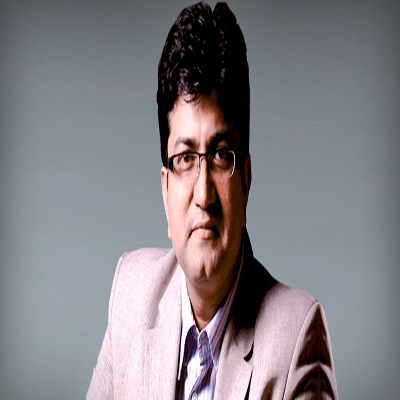
    MUMBAI: McCann Worldgroup has promoted Prasoon Joshi to McCann Worldgroup Asia Pacific chairman.


    In this position, he will focus, along with McCann Worldgroup Asia Pacific president Charles Cadell and, McCann Worldgroup Greater China CEO Jesse Lin, on driving client businesses through collaboration and integration across one of the world’s fastest growing economies.


    Joshi is currently McCann Worldgroup South Asia president as well as McCann Worldgroup India CEO. Joshi, Cadell and Lin will focus on delivering integrated approaches and communications solutions for clients by leveraging all of McCann Worldgroup’s broad capabilities and resources.


    McCann Worldgroup chairman and CEO Harris Diamond said, “Prasoon has built a model for the network by delivering integrated ideas to drive growth for our clients across India. His brand-building talent has been acknowledged globally. With our clients increasingly looking for multiplatform communications solutions to drive growth, the combined leadership team of Prasoon, Charles and Jesse will help all of our agencies in the region to take full advantage of these opportunities.”


    Recognised as one of the advertising and marketing communication world’s top creative leaders, Joshi this year headed the Cannes Lions Titanium and Integrated Jury.


    Joshi first joined McCann India in 2002 as executive VP and national creative director. In 2006, he was named McCann Worldgroup South and Southeast Asia executive chairman and regional CD. Under his leadership, McCann Worldgroup India has built its position as the most creatively awarded agency in the market while also expanding its multiplatform capabilities. As part of this expansion, last year it acquired the direct marketing and database company End to End Marketing Solutions which, like McCann, has offices in New Delhi, Mumbai, Bengaluru, and Chennai.


    Joshi said, “We are extremely well positioned for continued growth and I look forward to building on the momentum we’ve seen across the network. McCann Worldgroup is boldly entering this new era of advertising with leadership who realise the value in globalisation. Our capacity to effectively craft local communication with global leverage means we can solve our clients’ biggest marketing challenges.”


  • Shekhar Gupta quits India Today group, to pursue entrepreneurial interests

    Shekhar Gupta quits India Today group, to pursue entrepreneurial interests

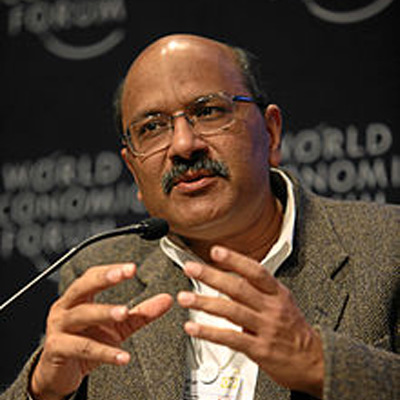
    MUMBAI: Two months after joining the India Today group, Shekhar Gupta has decided to relinquish his duties as vice chairman of India Today group and editor in chief of news properties. He will now be the editorial advisor to India Today Group.


    Meanwhile, India Today Group chairman Aroon Purie will resume responsibilities of editor-in-chief. In an official statement, Poorie says, “Shekhar has spent the last two months getting to know the organization, and we him. After much thought and discussion, we have decided to restructure our arrangement to our mutual benefit.”


    Gupta will pursue his creative and entrepreneurial interests. His column, ‘National Interest’, will continue to be published along with other articles that he will pen exclusively for the India Today magazine. He will support the group as a sounding board, critic and mentor and will attend the India Today weekly news meetings to brainstorm with the team. 


  • RIP pilot season, says Fox entertainment chairman

    RIP pilot season, says Fox entertainment chairman

    MUMBAI: American commercial broadcasting television network, FOX, owned by News. Corp. will be abandoning the traditional pilot season and will focus on developing new TV shows all year round.


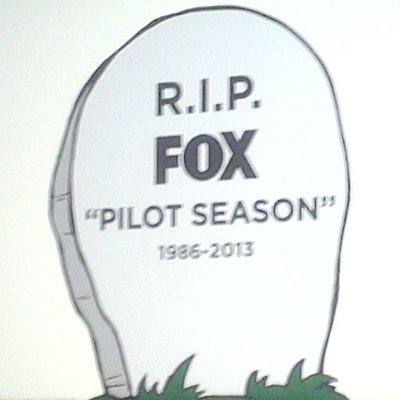
    At the 2014 Television Critics Association Press Tour, 21st Century Fox Inc.’s Fox Broadcasting chairman of entertainment Keith Reilly explained that the outdated “pilot season” process just doesn’t work for TV anymore. Reilly opened his executive session with a R.I.P. sign “FOX Pilot Season 1986-2013? and stated that the network will not adhere to the traditional pilot season starting this year.


    “We are going to be bypassing pilot season,” he said, later referring to the old system as “a welfare state.” “The broadcast development system was built in different era with three networks and is highly inefficient. It is nothing short of a miracle talent can still produce anything of quality in that environment,” which he said includes ordering a ton of pilots, then screening them and making a decision over a two-week period, with the producers of the newly picked up series tasked with delivering a series on the air in six weeks.


    Pilot season came into existence not long after Philo Farnsworth in 1927 invented television, and is the beat that the television industry marches to. Networks fight it out for the best talent in front of and behind the cameras and then parade the end result to advertisers in glitzy presentations over the course of one week in New York City.


    “We’ve been trying to do away with pilot season for a long time at FOX,” said Reilly. “The broadcast scheduling process was built for a different era when there were three networks that had a near monopoly. We don’t live in that age anymore.”


    FOX will still participate in television’s so-called upfront presentations to advertisers in May, where networks present new shows to marketers.

  • Y&R’s chairman & CEO Edward Ney is no more

    Y&R’s chairman & CEO Edward Ney is no more

    MUMBAI: Young & Rubicam former chairman and CEO, Edward N Ney, breathed his last on 8 January at 88 years old.


    He had joined the company as a young account manager in 1951 and worked his way up to preside over the company as CEO from 1970 till 1986.


    The industry attributes him for creating the agency’s integrated “whole egg” strategy which was later followed by others. In a press statement, WPP Group’s global CEO Martin Sorrell said that Ney “understood, probably more than anyone else, both the power of agency brands and, at the same time, the paradoxical need to bring them together… He understood it all and saw it sooner than most.”


    Besides his work at Y&R, Ney was politically active as well. He became a member of the Council on Foreign Relations in 1974. In 1989, President George HW Bush nominated him as the United States Ambassador to Canada. He served in Ottawa until June 1992.


    After his time as the ambassador, Ney returned to the agency as chairman.


    Ney is survived by his wife, a son and two daughters.