Tag: Chairman

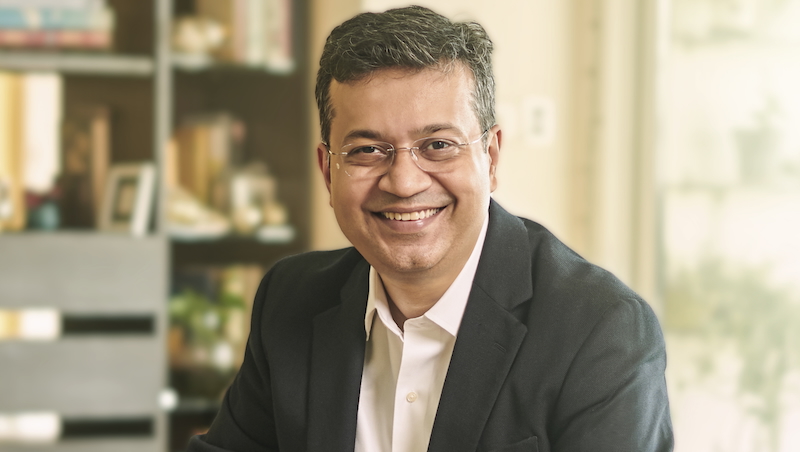
  • Gaurav Banerjee to chair CII media and entertainment council for 2025-26

    Gaurav Banerjee to chair CII media and entertainment council for 2025-26

    NEW DELHI:  Gaurav Banerjee, managing director and chief executive of Sony Pictures Networks India (SPNI), has been named chairman of the Confederation of Indian Industry’s national media and entertainment council for 2025-26. The move signals CII’s push to turbocharge the M&E sector’s global competitiveness with a focus on policy reform, skilling, tech-creative innovation and inclusive growth.

    Banerjee, who also chairs BARC India, steps into the role at a time when India’s media and entertainment engine is revving up to be a $100bn juggernaut—fuelled by AI, VFX, and a hungry Gen Z audience. His mandate? Drive trust, sharpen policy, and make “Create in India” the global gold standard.

    “At a time when the world is looking to India for inspiration, our M&E industry is uniquely positioned to reflect our cultural ethos while shaping global narratives,” said Banerjee. “We need frameworks that empower innovation, creative-tech and opportunity—without compromising trust or accountability.”

    As council chair, Banerjee will double down on four key levers:

    * Policy and regulation: Partnering with government to streamline norms, fight piracy, and foster a level playing field.
    * Tech meets creativity: Embracing AI, AR/VR and automation to supercharge content quality, personalisation and productivity.
    * Skill-building: Rolling out future-ready courses via the Indian Institute of Creative Technologies to upskill youth in animation, VFX and immersive storytelling.
    * Going global: Backing Indo-foreign co-productions and showcasing Indian stories to the world with tech muscle and cultural soul.

    The CII council under Banerjee will act as a bridge between industry, academia and government—taking on thorny issues like fair monetisation, content ethics, data privacy and equitable tech access. Expect sharp focus on regulating generative AI without stifling innovation.

    A filmmaker by training and former journalist at Aaj Tak, Banerjee brings over two decades of experience to the table. At SPNI, he has been the force behind bold content bets and digital pivots—balancing creative risk with fiscal discipline.

    His new role is likely to give India’s M&E sector the push it needs to move from scale to stature on the global stage.

  • Stent maker  SMT announces leadership appointments

    Stent maker SMT announces leadership appointments

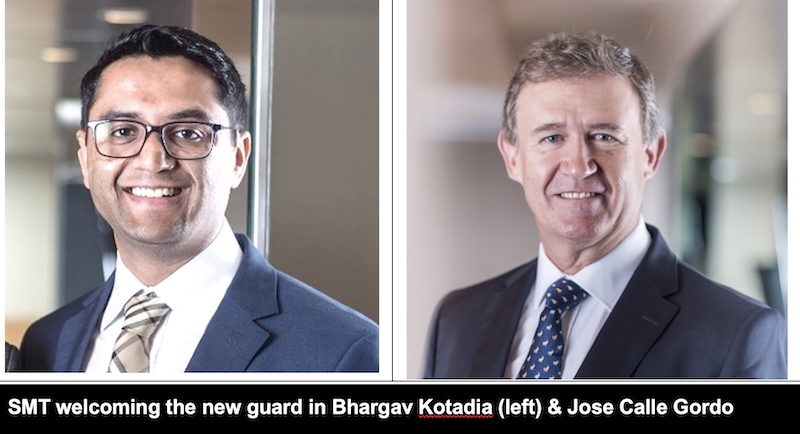
    MUMBAI: Cardiovascular medical device manufacturer Sahajanand Medical Technologies (SMT) has appointed Bhargav Kotadia as chief executive officer and Jose Calle Gordo as chairman, effective 1 April 2025.
    Kotadia succeeds Ganesh Sabat, who is stepping down after 12 years at the helm. Company founder Dhirajlal Kotadia will transition to chairman emeritus, whilst continuing to provide strategic guidance.

    The incoming chief executive has been closely involved with SMT’s strategic direction for the past 12 years. “Our goal remains clear: to innovate, expand, and make a meaningful impact in global cardiovascular care,” said Kotadia.

    Gordo, the newly appointed chairman, expressed confidence in the leadership change: “Bhargav’s deep understanding of the industry, combined with his strategic vision, will drive SMT’s continued growth and leadership in cardiovascular technologies.”

    SMT, which operates in more than 80 countries, specialises in drug-eluting stents and structural heart disease solutions. The company is known for pioneering biodegradable polymers in cardiovascular treatments.

  • AI innovation takes center stage at Global AI conclave

    AI innovation takes center stage at Global AI conclave

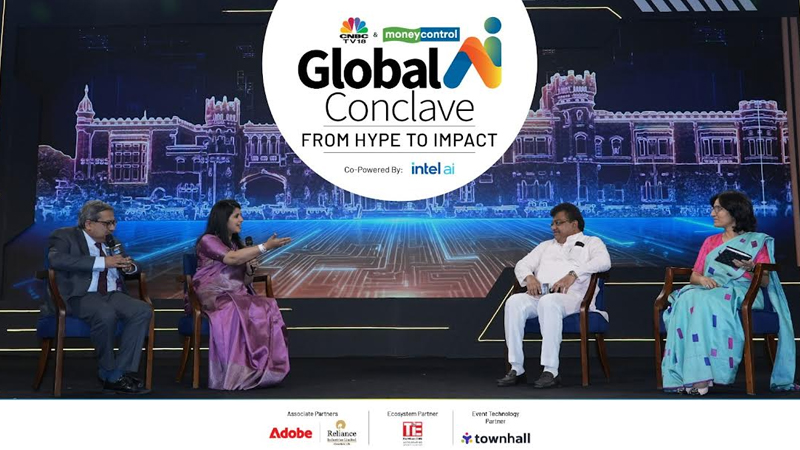
    Bengaluru – The Global AI Conclave, hosted by Moneycontrol and CNBC-TV18, concluded its second edition in Bengaluru, showcasing how artificial intelligence (AI) is transforming industries, governance, and society. With the theme ‘From Hype to Impact,’ the event brought together global leaders, innovators, and policymakers to explore AI’s potential to solve pressing challenges and drive real-world change.

    The event highlighted advancements in AI across sectors like healthcare, governance, urban planning, and more. Attendees included visionaries, industry leaders, and investors, offering insights into AI’s risks, rewards, and transformative possibilities.

    Moneycontrol managing director Nalin Mehta emphasised India’s pivotal role in the AI revolution:“India is at the forefront of an AI-powered transformation, with ₹10,300 crores committed to the India AI mission. It’s time to move beyond the hype and deliver real-world impact.”

    Intel India VP & MD Santhosh Viswanathan celebrated India’s unique strengths:“This is an extraordinary moment for India to lead, fuelled by abundant data, scalable solutions, and frugal innovation.”

    The session progressed into a thought-provoking discussion on ‘Reimaging Governance with AI’ featuring former union minister of state for electronics and information technology, skill development & entrepreneurship & Jal Shakti, Rajeev Chandrasekhar. He stated, “The Prime Minister envisions the next phase of governance, propelled by the monumental success of Digital Public Infrastructure that has already redefined citizen interactions.  Leveraging vast datasets, the focus is on enhancing public services and decision-making, much like how UPI transformed financial inclusion, aiming to redefine governance for the modern era.”

    The conclave continued with two interesting fireside chats on ‘Decoding the AI Gold rush’ with General Catalyst CEO & managing director Hemant Taneja. He stated “India stands at a pivotal moment, driven by global resilience and shifting geopolitics. With strategic focus on core industries like defence, healthcare, and energy, its high growth and entrepreneurial spirit make it an ideal global leader. The success of quick commerce in India reflects more than convenience—it highlights transformative infrastructure like UPI. It’s the bold aspirations of visionary founders that are driving this change, and it’s inspiring to support their journey.”

    The sessions then further delved intoan insightful fireside chat with Ministry of Electronics & IT secretary S. Krishnan GoI on ‘Inside the India AI mission’, he shared “India’s AI initiatives are progressing rapidly, with significant investments and over 1,000 proposals already under review. The next phase will focus on trusted technologies and advanced computing under the National Supercomputing Mission, emphasising a balanced, inclusive approach to drive transformative growth.”

    Among the many highlights was a fireside chat with Adobe senior director & head of digital media business, India/South Asia, Girish Balachandran on ‘Digital Transformation in the Era of Gen AI’. Further enriching the discourse were panels such as, ‘Can AI reshape healthcare and diagnosis’ with Dr H. Sudarshan Ballal, Chairman, Manipal Hospitals; Dr Geetha Manjunath, CEO and Founder, Niramai Health Analytix and Laina Immanuel, Co-founder & CEO, BrainSightAI.

    The event proceeded with another fireside chat on ‘From India to the world: How Premji Invest built a world-beating global AI portfolio from Bengaluru’, featuringTK Kurien, Chief Executive Officer , Premji Invest. . Following this insightful discussion, the focus shifted to a dynamic panel on ‘AI for All: Building a Future where AI benefits everyone’ with Manish Gupta, Director, Google Deepmind; Kalika Bali, Senior Principal Researcher, Microsoft Research India; Shri Nand Kumarum, President and CEO, National e-Governance Division, Ministry of Electronics and Information Technologyand Manu Chopra, Founder, Karya.

    The summit then transitioned to another fireside chat on ‘Can AI solve the traffic woes of India’s tech capital?’ with M.N. Anucheth, IPS, Joint Commissioner of Police (Bengaluru Traffic). He said “Bangalore is implementing smart traffic signalling at 165 junctions by February, with adaptive systems at 200 locations to prioritise flow based on density. These measures, already cutting travel times by 17-22 per cent, aim to manage the city’s rapidly growing vehicle population, which has doubled in a decade, now surpassing Delhi.”

    The conclave concluded with a special address on ‘Karnataka’s Path to Becoming India’s AI Powerhouse: What does it take?’ by Dr M. B. Patil, Minister for Commerce & Industries and Infrastructure-GoK and Gunjan Krishna, Commissioner for Industrial Development and Director, Department of Industries & Commerce, Government of Karnataka. Sharing his thoughts Dr M. B. Patil said”Karnataka, India’s IT capital, is now a global leader in machine learning, robotics, and quantum computing. With 1.2 million skilled professionals and contributing 60% to biotech, defence, and aerospace, the state’s talent and infrastructure make Bengaluru a vibrant hub of innovation and creativity.”

    Adding to this Gunjan Krishna said “At the Global Investors Meet in February 2025, Karnataka will unveil a new industrial policy focused on high-value industries, boosting employment with an emphasis on women, and advancing technologies like EVs and hydrogen. The goal is to raise manufacturing growth to 12 per cent, attract Rs seven lakh crore in investments, and create 25 lakh jobs, solidifying Karnataka as a hub for sustainable growth.”

    The second edition of the Global AI Conclave was not only celebrated AI’s transformative journey but also set the stage for future breakthroughs that promise to redefine industries, improve lives, and propel India as a global AI leader. As the curtains close on this year’s edition, the commitment to leveraging AI for a better tomorrow continues to inspire.

  • Tata to take over Bisleri

    Tata to take over Bisleri

    Mumbai: Ramesh Chauhan has done it again.  After selling his brands – Thums Up, Maaza, Citra, Gold Spot and Limca to Coca Cola almost three decades back, the 82-year old business tycoon and chairman of Bisleri International has planned to divest his stake in the company to Tata Consumer Products Ltd (TCPL) for an estimated sum of Rs 6,000 – 7,000 crore, as per media reports.

    The reports say that the current management will continue for two years as part of the deal. Bisleri brand’s turnover is estimated at Rs 2,500 crore with profit at Rs 220 crore for FY’ 23, reveal reports.

    Media reports cite that Chauhan’s motive behind selling the brand was the fact that he has no successor to expand and handle the brand. His daughter Jayanti isn’t too keen on taking care of it.

    Ramesh Chauhan-led Bisleri International functions in the segment with bottled water brand Bisleri and spring water Vedica. It is also existent in fizzy drinks with brands – Spyci, Limonata, Fonzo and PinaColada.

    The Tata Group runs its consumer business under Tata Consumer Products Ltd (TCPL) which also sells packaged mineral water under the brand Himalayan, and also has brands such as Tata Copper Plus Water and Tata Gluco+ in the hydration segment.


  • Earlier, there was a creative courage to be roughly right, rather than precisely wrong: CII The Big Picture Summit 2022

    Earlier, there was a creative courage to be roughly right, rather than precisely wrong: CII The Big Picture Summit 2022

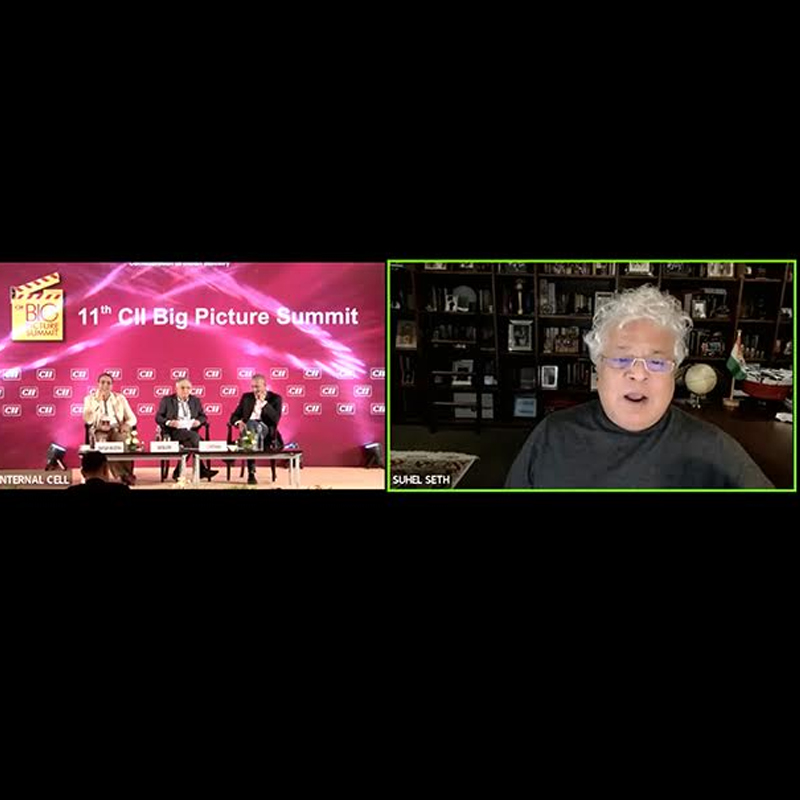
    Mumbai: The Big Picture Summit 2022, organised by the Confederation of Indian Industry (CII) on 16 & 17 November saw the presence of various senior executives and officials from the advertising, film, TV, marketing, and OTT fraternities.

    On a panel discussion on 17 November, Madison World chairman and managing director Sam Balsara brought to the fore that advertising has been through a lot of changes. Opening the conversation, he said, “I started work in 1972, and advertising was a few thousand crores, and there was a time advertising was merely about announcing product availability and making a manufacturer’s statement – that I am the best – this was considered a good advertising approach probably for decades.”

    He added that everything has changed, but on another level, you can argue that not much has changed. He looks back at his favourite definition of advertising, which was given by a humorist – called Stephen Leacock – “Advertising is the science of arresting human intelligence long enough to get money from it.”

    Balsara goes on, “I haven’t come across any definition that, ideally, more accurately describes advertising. The fundamentals of what we try to achieve in advertising haven’t changed all that much. Sure, volumes have changed. Advertising cost a few hundred crores, which was the total outlay of AdEx. It is currently worth around Rs 90,000 crore. Global AdEx, just for perspective, is now $880 billion. So surely advertising works for marketers, and I think there is widespread acceptance that advertising is indeed the gas that fuels the entire economy or the machinery that keeps the wheels of the economy moving.”

    Taking the discussion further about how advertising has changed, columnist and Counselage India founder and managing partner Suhel Seth expressed, “I think advertising has changed for the worse. Earlier advertising was about civility and about creating things in partnership with clients, and the relationship was both mutually beneficial and one of respect. Sadly, nowadays, agencies are treated by clients like vendors, and the relationship by and large has become unequal.”

    He understands that previously, there were times in advertising when they sat and co-created campaigns, but those were created on the basis of deep consumer insight and a rigorous approach to consumer behaviour learnings and insights that one could then weave and work into the narrative of the creativity that was produced.

    He discussed, “We don’t get the kind of people we used to get in advertising in the good old days, and the reason is we don’t pay enough. When you pay peanuts, you get monkeys – and the tragedy is that advertising agencies are paying peanuts because clients are monkeying around with advertising agencies who don’t have the courage to tell the clients that they don’t know what they’re talking about.”

    “In the good old days, when the client asked us to jump, you would say ‘why’- today you ask ‘how high’. When the relationship dramatically alters and changes and becomes a master-servant or a master-slave relationship, advertising and creativity suffer,” pointed out Seth.

    He also reminisced about how earlier liberal arts people also staffed client offices. “I have no grouse against MBAs, but MBA has been the worst disaster for advertising agencies because people who have done management by rote, who have no idea of Shakespeare or Tagore, who have no idea about the sensitivities of music, are asked to produce advertising that is bereft of sensitivity,” he states.

    Seth went on to say that he has a different definition of advertising. For him, the purpose of advertising is to invent desire. “It is not to inform – for that you got to go to Google, Yellow Pages or Wikipedia. What I think advertising was all about – is that it was all about creating magic. It was about engaging the consumer with the brand through the medium of creativity.”

    He also shed light on the proliferation of media. In the previous days, the clients would ask about hoardings, TV, and cinema – that’s about it. Today’s spread is massive—it’s digital. India has changed dramatically. It is no longer consuming advertising that is English-speaking; it is consuming advertising that is vernacular. It is regional to the point where the regional influxes are actually carried forward pan India.

    Expressing his views, Seth said, one of the dramatic changes is that, due to the rush that everybody seems to be in, less time is spent on strategy and agencies are becoming more tactical. That’s not advertising; that’s salesmanship.

    “They also don’t prepare for brands with the rigour that we used to. For example, there were partnerships between Madison’s creative and media agencies. “Now, rather than partnering communication, I see media agencies as a post box or an amplifier for disseminating communication,” he said.

    Seth also put forth his concern, saying that the advertising industry has stopped being inventive and innovative. “We have become more and more risk averse. Because you are talking about billions of dollars being spent, and no one wants to take the risk,” he said.

    “Another thing is that people are wanting to manage not the consumer, but the client. When you start managing the client, you immediately forget the consumer. Nowadays, it’s very important for the CEO and his wife to be happy, rather than the other way round,” he said.

    “Today, we are also fraught with a lot of social tensions in our society. Religion, which was in the background, is now in the foreground. You have discrimination; you have political grandstanding. People using social media are bullying and trolling clients and companies to withdraw advertising, which is actually an attempt at conveying something creatively,” Seth went on to say.

    Ogilvy India head of strategic planning Rohitash Srivastava feels that in an ideal scenario, advertising has become complete. “Earlier we were worried about changing people’s thoughts and beliefs. And the behaviour part was kind of missing, you change a person’s mindset and then you leave him to behave the way he wants to. Now with digital and technology coming in, the promise of technology was that we are going to change behaviour, we are going to drive behaviour change. So that was the ideal scenario. And that’s why I’m saying that now advertising in an ideal world is not just about thinking and feeling; it’s also about thinking, feeling, and doing,” he pointed out.

    He goes on to explain that, in reality, the advertising industry has become more schizophrenic than ever. And there is a lot of speed, but there is no velocity.

    Srivastava adds, “There’s no sense of direction; you’re trying to do a lot, but there is no bigger plan. And this whole short-termism thing is really killing the industry. And I’ve seen so many marketers behave like salespeople. Now, marketing’s role is to create a facilitated environment, so that the scalability of the product goes up, not the sales themselves. But today’s marketers are so worried about that very moment. And when sales happen, they forget the larger tasks of marketing and advertising to create conditions for scalability over weeks of marketing. That is exactly what I mean by ‘short-termism.’”

    Also, information is being confused with knowledge, he said. “There’s a lot of data out there, and it’s called dumb data because you have to look for the right meaning to make sense of it. And then within that, there is data that is readily available, and then there is long-term data, equity studies, and all of that amounts to a lot of hard work. This whole desire to go through spreadsheets and excel sheets is blinding us to the human stories that are happening and what people are really thinking. So whatever data comes in, you want to react to it,” he said.

    Srivastava revealed, “The discernment is going away. And this whole thing about people being more precisely wrong than roughly right—before, being roughly right was such a big gift—In fact, we were paid so much because we could make decisions in grey areas, and there was a creative courage to be roughly right. But this whole obsession, to be precise, is making us precisely wrong.”

    TAM Media Research CEO LV Krishnan commented on the creative aspect of advertising, “The things have changed so much in the last 50 years that we’ve seen advertising kick start in India. And the interesting thing is the fact that the one thing that hasn’t changed between the first year of advertising and today is that nobody knows that the 50 per cent that I spend on advertising is a complete waste.”

    He explained further that until and unless the whole industry puts a finger on it, testing in terms of advertising will continue.

    Krishnan added, “Earlier, for every piece of communication, there was a brand and an advertising positioning strategy, and once they were done, one would know exactly what kind of execution needed to be done. But today, even if those two definitions are not thought through, execution is already happening on the ground to create communication effectively.”

    He is of the opinion that, now that everything is digital, it’s no longer a strategy. There is simply a local influencer using a brand and attempting to showcase it to his or her followers in order to demonstrate that this is the brand that they use. These influencer and social media marketing campaigns are not aligned with the national campaign that is run on television or in national print. So it’s becoming more tactical. Most of the campaigns we’re seeing now are more tactical sweatshop in nature.

    Balsara went on to reveal that out of the $880 billion, 60 percent of all advertising money today is spent on digital, and not on print, television, or any other medium. He believes that the arrival of digital has actually killed the big idea, which we all used to crave, and big production budgets are now a thing of the past.

    Srivastava agreed that digital is a big part of the clients’ spends, and even within digital, the performance part, which is called performance marketing, is really becoming significant. And to that extent, the role of the big idea sometimes gets compromised.

    Seth said, “Clients and agencies want one particular campaign idea and then try to force potential into several other media options, whether it is YouTube or Twitter.”

    “It is tactical; advertising is no longer about the consumer. It’s about the client. And when advertising becomes about the client, advertising suffers because the consumer is sidestepped and disregarded,” he wraps up.

  • BBH India onboards Himanshu Saxena as COO & MD

    BBH India onboards Himanshu Saxena as COO & MD

    Mumbai: BBH India, a Publicis Groupe agency, has announced the appointment of Himanshu Saxena as chief operating officer & managing director. Saxena will report to CEO, Leo Burnett-South Asia & chairman, BBH India Dheeraj Sinha.

    As BBH’s chief operating officer & managing director, Saxena will be responsible for developing talent, organisational tools, new services and steering these to acquire future-facing businesses.

    He brings over 29 years of experience across the communication spectrum, including advertising, marketing & sales, brand management, digital & social, PR, design, and market research.

    Saxena has helmed country and multi-office leadership for some of South Asia’s leading organisations, including Lowe, McCann, Trikaya Grey, JWT, Edelman, IMRB & Reliance Jio. Saxena’s passion for leading businesses to market excellence through powerful full-funnel solutions has led these agencies to win accolades at prestigious forums like APAC and India Effies, Cannes, Spikes, Adfest, Goafest, PRAXIS, and SABRE APAC. He has spearheaded creative solutions across iconic brands like Unilever, GSK, PepsiCo, Diageo, Asian Paints, Dubai Tourism, One Plus, Idea Cellular, Audible, and Starbucks, to name a few.

    Welcoming Saxena, Sinha said, “BBH India, with its legacy of modern, creative, and effective solutions that are well-entrenched in the modern Indian zeitgeist, has built a reputation as a creative firepower in the country. I am delighted to welcome Saxena onboard. A talented leader known for his deep client relationships, his commitment to business innovation, and his operational acumen, Saxena embodies the black sheep and zag philosophy that will further fuel this brilliant creative engine.”

    Speaking on his appointment, Saxena added, “I am both excited and honoured to join BBH. With its legacy of creating stunning work that has transformed not only brands but also categories, BBH India is truly built for the modern age of marketing. I am looking forward to scaling this further and bringing my experience and a fresh perspective to lead such talented individuals and ambitious clients.

    BBH India has grown into a creative powerhouse with offices in Mumbai and Delhi and a repertoire of highly effective, consistent, and modern marketing solutions spanning across advertising, design, digital, consulting, and experiential. The agency currently works with a diverse portfolio of brands like Marico, Red Bull, Nestle, Audi, Taco Bell, Mahindra Group, and L’Oreal, among many others. In 2022, BBH won mandates for Hitachi and Roposo and created campaigns like Disney+ Hotstar’s “Thoda Rukh Shah Rukh”; Mahindra Racing’s “Dance For Good” and Marico’s “Re-teach The Teachers.”

  • Adman Sumanto Chattopadhyay discusses his creative journey and rewinds ‘The Good Times’

    Adman Sumanto Chattopadhyay discusses his creative journey and rewinds ‘The Good Times’

    Mumbai: One can’t match his English skills and the research that he puts into defining every idiom, metaphor, and phrase with so much ease unless you are a walking-talking-living version of a Thesaurus yourself! Yes, ladies and gentlemen, we are talking about the much-proclaimed ‘The English Nut’ aka long-haired Sumanto Chattopadhyay (also fondly known as Sumo by his advertising fellow mates).

    Very recently, Sumo (as I address him as well because I have known him since I started writing about the advertising and marketing segment in 2006), who had been holding the fort at 82.5 Communications as chairman and chief creative officer for the last five years, hung up his boots. He had been associated with the Ogilvy group for 30 years.

    At 5:30 p.m. on his last day at the agency, 30 September, Sumo was asked to unveil a book. To his surprise, it turned out to be a comic book called “Fearless Sumanto.” It was created by 82.5 Communications’ co-chief creative officer Mayur Varma with inputs from many colleagues at the agency. It brings to life a few incidents that reveal facets of Sumo’s personality and working style. Guess, Varma just thought that turning Sumo into a comic-book superhero would be a nice tribute to him.

    With an MBA from McGill University, Montreal (Canada), Sumo began his career in advertising at Response in Kolkata, in 1990. After a short stint of two years, his tryst with Ogilvy began. After joining the agency in Kolkata, he moved to the Mumbai office in a couple of years. He climbed up the various rungs to the creative director position – in those early days, becoming a creative director was a really big deal. A few people made it to that level. It took him a long time to get there. In those days, there wasn’t the so-called ‘designation inflation’ that we see now.

    Sumo was finally pronounced executive creative director of South Asia at Ogilvy where he spent 25 years before he donned the hat of chairman and chief creative officer at WPP’s Soho Square in 2017, which was later rebranded to 82.5 Communications in 2019.

    A man with a creative predisposition, he has dabbled in various forms of art from modelling to acting and also has an alter ego which he is famous for on social media – The English Nut. The English Nut is a celebrated video work of English idioms, metaphors, synonyms, phrases, etc., by Sumo wherein he decodes the English language in a simple manner, more in the form of educational content. He scripts, produces and enacts in these videos. The English Nut will take the form of a book soon!

    Sumo has been bestowed with national and international recognition at Cannes, the Clios, the One Show, the London Festival, the Abbies and Kyoorius, and has been privileged to work with some of the best and most influential brands in the country.

    Sumo in a conversation with Indiantelevision.com, discusses his experience of setting up 82.5 Communications (previously known as Soho Square), his three-decade-long journey with the Ogilvy group, his mentors at the agency, The English Nut and so much more.

    Edited excerpts:

    On his 30 years at Ogilvy

    One of the things that attracted me to advertising was the casual dress code, especially for creative people. But I took it a step further and started wearing shorts to work. It was not a done thing in those days. I remember one of my seniors asked me if I found the weather exceptionally hot. And once, I was stopped from entering the Hindustan Unilever (HUL) office. The security guard called my client and said a ‘chaddiwala’ had come to meet him. My client had to come down and get me in! It’s these kinds of incidents and memories that make it fun to look back at the past.

    On the brands and campaigns, he worked at Ogilvy which are dear to his heart

    I worked on a lot of HUL brands—Dove, Pond’s, Lakmé, Sunlight, Comfort, etc. In the early days, the Ogilvy office was at Churchgate and the HUL office was a short walk away. Because I worked on so many of their brands, their office became a second home. Years later both companies relocated to the suburbs and we were relatively close to each other again.

    I have also worked on brands like Maharashtra Tourism, Diu Tourism, Star Plus and The Economist—which have required me to wear completely different kinds of creative caps.

    On even though it is the same group, what is it that made him switch from Ogilvy to 82.5 Communications (the erstwhile Soho Square)

    It was the challenge of trying to make a success of a new entity that made me take up the 82.5 role. And the realisation that hit me was that while I was at Ogilvy a large part of the status that I enjoyed among clients was because of the Ogilvy aura surrounding me. Though 82.5 was an Ogilvy company, it had to prove itself on its merit. As its chief creative officer, the same principle applied to me. This lesson made me a little humbler and wiser.

    On the thoughts and goals of putting 82.5 Communications in place

    82.5 degrees east is the longitude of Indian Standard Time. We gave ourselves this name because we were going to work mostly with Indian brands. Also, as our slogan says, we are about ‘ingenious Indian ideas’.

    On the memorable brands and campaigns that he worked on at 82.5 Communications

    The most famous campaign by 82.5 is the one for Bisleri. I have been closely involved with the work on Himalaya, LAVA, Ghadi, Slice and Havells among others. I also enjoyed working on the branding of 82.5 itself.

    On his experience in the advertising industry and movie business

    I’ve lived and breathed advertising for all these years. It’s been an exciting profession to be a part of. I think there was more room for having fun back in the day. Or maybe I just feel that way because I’m older. Perhaps the youngsters of today are having as much or more fun. One should ask them!

    I love acting too and I have done a bit of theatre and acted in a few films over the years. But I can’t say I know much about the movie business. Though as a viewer I can see that OTT has transformed the kind of movies and serials being made; it has broadened tastes. There’s a lot more diversity in what’s hitting the screens today.

    On how he has seen the advertising industry take shape in the last three decades

    It was all about TV, print and radio when I started. Print is something that has experienced a great decline – not just in terms of the money spent on it but also in terms of the ideation going into it. Today you still see full-page ads – so it means that money is being spent on the medium in spurts – but the ads are usually tactical or offer-led and often don’t have a creative soul.

    Coming to digital, while some people may feel that it’s only about algorithms and data, I think that the future will show that it is only when these things are combined with a great idea that you will have breakthrough communication. You don’t even have to wait for the future. Cadbury’s Diwali communication with Shahrukh Khan (SRK) has demonstrated it beautifully. Ogilvy India chief creative officer Sukesh Nayak, who was a key player behind this campaign, used to be a key player in my team. I’m proud of his work.

    On his mentors at Ogilvy and 82.5 Communications

    Piyush Pandey is a mentor for the entire Ogilvy group. At 82.5 the other person who played a special role as a mentor to us is Madhukar Sabnavis—the man who initiated and developed the planning function in the Ogilvy system. There are others as well—Zenobia Pithawalla, Hephzibah Pathak, VR Rajesh, Prem Narayan, Sujoy Roy, Mayur Varma to name a few who have always been there for me.

    On the reason for his retirement from the Ogilvy group and what is that he seeks after this

    I’ve had three wonderful decades with Ogilvy. It’s time to explore the world beyond it. I am waiting to find out what new adventures are there around the corner.

    On the story behind ‘The English Nut’

    The English Nut started as a ‘side’ hustle in 2019. But it has become a special part of my life. It has received a lot of love from the people who follow it. I would like it to continue for as long as possible.

    About the book, somewhere along the way a publisher discovered ‘The English Nut’ and asked me to write a book along similar lines. I started writing the book a while back but could not finish it because of work commitments. I hope to complete the book in the next few months.

    On whether we will get to see more of him in the movies and his plans

    R Balki, Pradeep Sarkar, Shoojit Sircar, Amit Sharma, Anvita Dutt, Juhi Chaturvedi, Kopal Naithani and all the other directors who know me from advertising—I’m waiting for them to cast me!

    On his favourite memories of his stay at Ogilvy and 82.5 Communications

    The years have been punctuated by some wonderful events. I played David Ogilvy in one such event. In another event, I played the Love Guru. Getting to interact with colleagues informally on these occasions, revealing other aspects of our personality, helped strengthen the bonds. It’s the strength of these bonds that made me want to stay all these years.

    On the learnings that he carries further with him

    For me, it’s always about the people. And it’s about loyalty. I hope I have been loyal to those I value. Because there is nothing I value more.

  • Asci names N. S. Rajan as new chairman

    Asci names N. S. Rajan as new chairman

    Mumbai: August One Partners director N. S. Rajan was unanimously elected as chairman of the board of governors of the Advertising Standards Council of India (Asci) on Thursday. The decision was taken at the board meeting following the 36th annual general meeting of the industry’s self-regulator.

    N. S. Rajan is a public relations (PR) veteran with a demonstrated history of setting up and managing firms in the PR industry. He was previously the founder and managing director of Ketchum Sampark, an Omnicom Group.

    Marico managing director & CEO Saugata Gupta was elected vice-chairman, while Shashidhar Sinha, chief executive officer at IPG Mediabrands India, was appointed honorary treasurer.

    Subhash Kamath, the outgoing chairman, will now be a part of the consultative committee of the board, which, among other activities, mentors the new initiatives of the organisation.

    Lintas India Group CEO Virat Tandon and GMS India (Meta) director Arun Srinivas were newly inducted onto the board at the same meeting.

    Talking about his new role as the Asci chairman, N. S. Rajan said, “It is indeed a privilege to take up the role of Asci chairman. Our thought leadership initiatives, industry reports, and Asci academy are important pillars of taking Asci ahead into the future. I am looking forward to advancing the agenda of the Council to rapidly increase Asci awareness among consumers so that they engage more readily and in greater numbers, voicing their concerns, anxieties, and questions about what they experience in the form of thousands of ads per day. That number, on average, in India is anywhere between 7,000-10,000 ads per day!”

    “I would also focus on Asci’s efforts more towards prevention, in addition to the robust corrective mechanisms we have built over the decades. This we would do by using the several initiatives already in play – whether advice, guidance, training, or self-regulation. The third pillar would be to keep ahead of the fast-expanding and fractionalising digital domain to ensure that responsible advertising principles are followed equally across all media and consumer engagements by advertising in every form. A lot has been done by Asci over the last several years, and I am committed to seeing that the momentum generated by all past efforts is kept alive or even pushed forward with greater speed,” he added.

    A key initiative announced at the AGM by the outgoing chairman, Subhash Kamath was the soon-to-be-launched Asci Academy. Asci Academy is set to move industry’s self-regulator in the direction of training and awareness creation, and deep engagement with various stakeholders in the prevention of objectionable ads. This underlines Asci’s move to create impact at the point of creation, and not merely the point of publication. A more detailed agenda for Asci Academy will be unveiled over the next few weeks and months.

    Speaking about his two-term tenure as Asci chairman, Subhash Kamath said, “The past two years have been truly transformational for Asci. Our vision of making Asci more future-ready by taking on the challenges of a digital world and a fast-changing communication landscape, and by adding value to the industry through more agility, responsiveness, services, and thought leadership, has started showing results. I’m sure Asci will continue to grow from strength to strength in the coming years. It’s been a privilege to serve as its chairman and I thank the board, the CCC members and the wonderful secretariat team for making it possible.”

  • Akash Ambani to take over as the chairman of Reliance Jio as Mukesh Ambani steps down

    Akash Ambani to take over as the chairman of Reliance Jio as Mukesh Ambani steps down

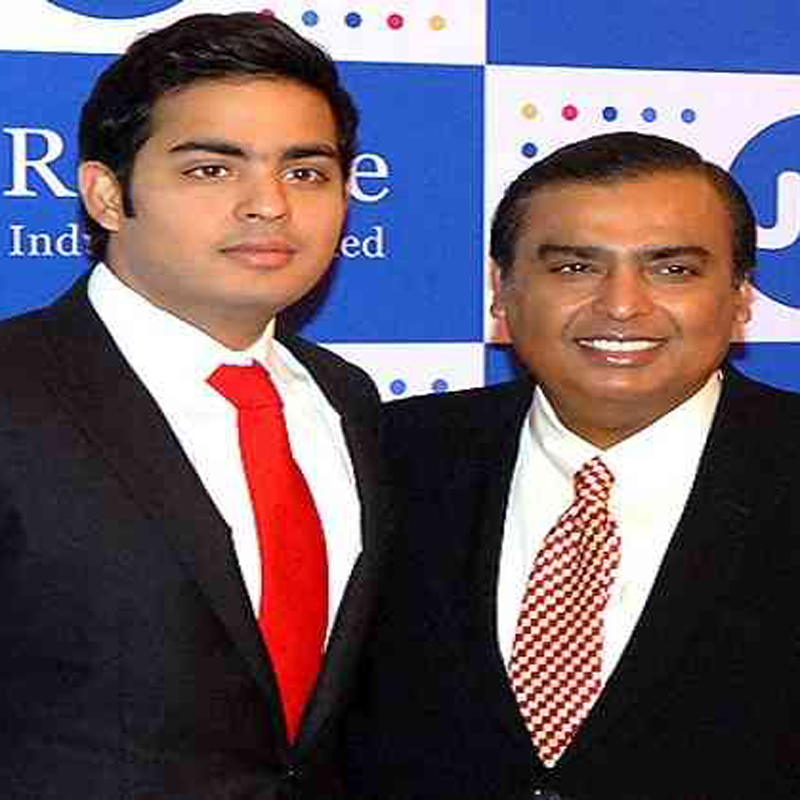
    Mumbai: Reliance Jio Infocomm, the telecom arm of Reliance Industries, announced on Tuesday that Reliance Industries chairman and managing director Mukesh Ambani has resigned his position at the company effective from 27 June. Akash Ambani, who is a non-executive director on the board of the company, will take over as the chairman of Indian telecom conglomerate.

    Further, Pankaj Mohan Pawar will take over as the managing director of the company, according to the decisions taken at Jio’s board of directors meeting held on 27 June 2022. The appointment is for a period of five years commencing from 27 June 2022, subject to approval of the shareholders.

    In a regulatory filing, Reliance Jio said the company’s board at a meeting on 27 June, “approved the appointment of Akash M Ambani, non-executive director, as chairman of the board of directors of the company.”

    Among other decisions taken by the company’s board of directors at the meeting held on Monday were appointing Raminder Singh Gujral and KV Chowdary as independent directors of the company for a period of five years commencing from 27 June 2022.

    The board noted the resignation of Mukesh D Ambani as director of the company effective from close of working hours on 27 June, even as it approved the appointment of Akash M Ambani, non-executive director as chairman of the board of directors of the company.

  • DNEG hires Academy Award winners Eric Brevig, Greg Butler as visual effects supervisors

    DNEG hires Academy Award winners Eric Brevig, Greg Butler as visual effects supervisors

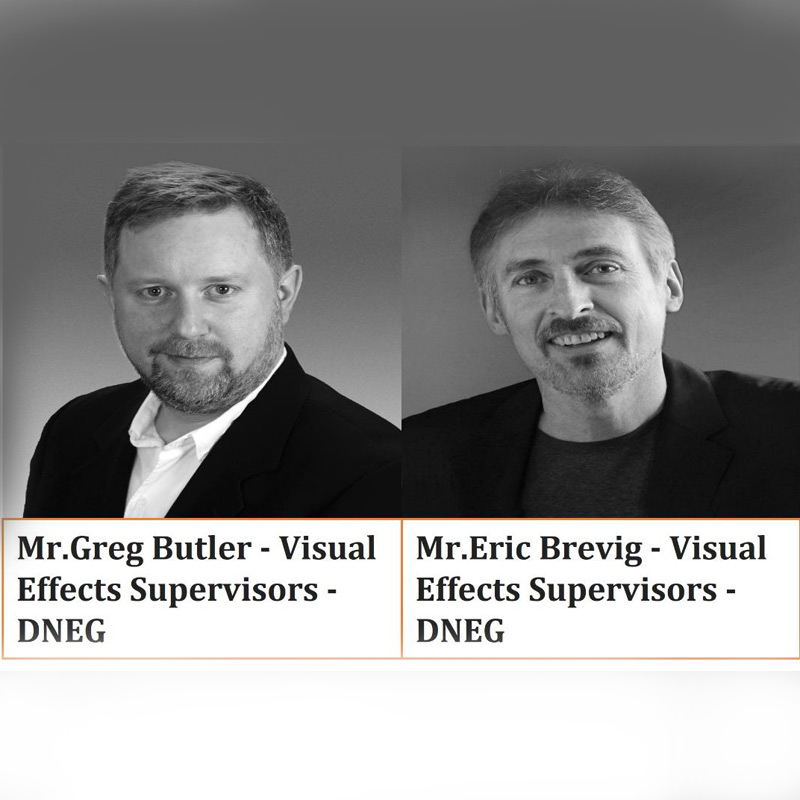
    MUMBAI: Visual effects (VFX) and animation studio DNEG has announced on Friday the hiring of Eric Brevig and Greg Butler as visual effects supervisors. Brevig and Butler each join DNEG with decades of experience in the film industry.

    Brevig’s notable award-winning credits as VFX supervisor include ‘Total Recall’ (1990), for which he received the Academy Award for Best Visual Effects, “Hook” (1991), for which he was nominated for the Academy Award for Best Visual Effects, “Men In Black” (1997), which earned him a Bafta nomination for Best Visual Effects, and “Pearl Harbor” (2001), which earned him an Academy Award nomination for Best Visual Effects.

    Butler’s portfolio of credits as VFX supervisor includes Sam Mendes’ ‘single shot’ war drama ‘1917’ (2019), which earned him an Academy Award and a Bafta for Best Visual Effects, and ‘Harry Potter and the Deathly Hallows: Part 2’ (2011), which earned him his first Bafta. Earlier in his career, Butler received a Visual Effects Society Award for ‘Outstanding Character Animation’ for his work on Gollum in ‘The Lord of the Rings: Return of the King’ (2003).

    “I am proud to have both Eric and Greg, two highly accomplished industry veterans each with their own incredible legacy of breathtaking work, join DNEG’s creative ranks. Eric and Greg will certainly help us continue to push the creative boundaries of what is possible during this period of technological advancement in our industry and unprecedented demand for our services. Adding professionals with track records, talent, and expertise such as theirs further solidifies DNEG as the VFX and animation studio leader in the category” said DNEG chairman & CEO Namit Malhotra.

    Talking about his new role, Brevig said, “I have had the pleasure of working with DNEG and Namit on several projects in the past and I am delighted to become part of this world-class creative team. DNEG’s commitment to excellence and future growth plans make this a very exciting time for me to join the company.

    “My approach to the craft of VFX has always been to find the right techniques to create the most believable, engaging, and immersive experience for the audience. Using both virtual and physical tools, we can now realize anything the filmmaker can envision.”

    Butler joins DNEG from Method Studios, where he worked as a VFX Supervisor on various feature, episodic, and advertising projects, including most recently on a large scale, yet to be announced project for Amazon.

    “I have been following DNEG for many years – even before my London Soho days – as a competitor, a collaborator and as the home to many of my favorite people in visual effects. I am very excited to join DNEG’s Montréal office and I know we are going to make some great work together.

    “Visual effects is a magic trick. Its purpose, to keep the audience engaged in the story and the world of the film. Whether it is used to create fantastic wand duels in Harry Potter or invisible cuts in 1917, visual effects is a series of illusions created in service of the story. While it’s the end result that matters, I have always been enthralled by the filmmaking process; the dynamic behind-the-scenes collaboration of VFX artists and the live action crews whose work is their foundation” said Butler.