Tag: Chad Gutstein

  • VICE to launch digital service with ToI Group 1Q 2017

    VICE to launch digital service with ToI Group 1Q 2017

    MACAO: VICE Media, the Canadian-American digital media and broadcasting company, will be launching its digital services in India, as part of a slew of other product offerings, in association with Times of India Group in the first quarter of 2017, while actively exploring the option of starting its pay TV service under Viceland brand sometime in the near future.

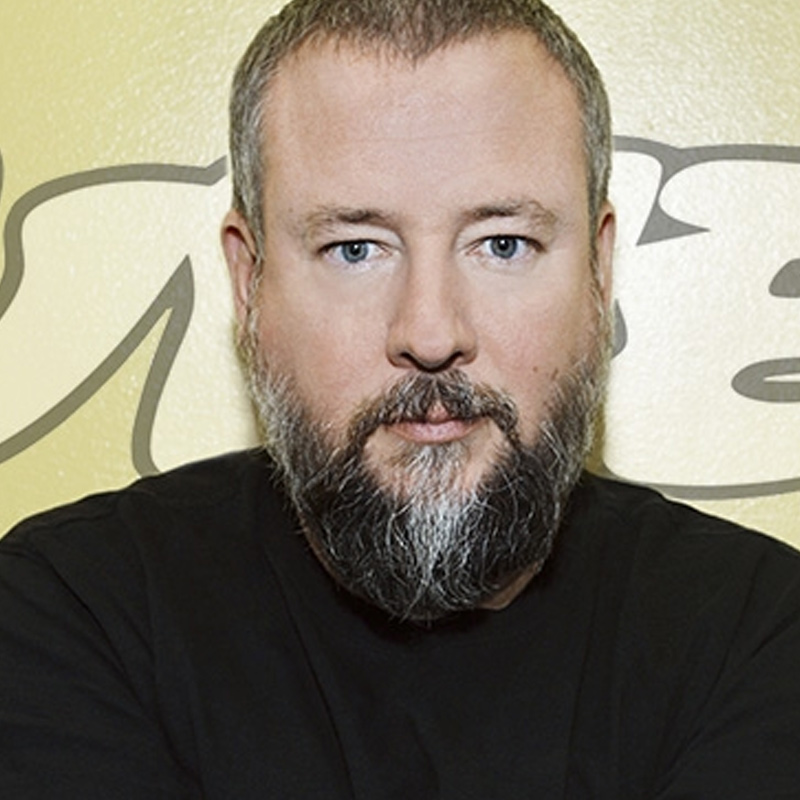
    “”We are working towards a launch of our digital offerings in Q1 of 2017 in India,” VICE Media Co-President James Schwab told indiantelevision in an exclusive interview.

    Schwab, who also went off to visit India to confabulate with his India partners this week, was in Macao to deliver a keynote at the CASBAA Convention 2016, which also saw a galaxy of other media industry stalwarts, including GroupM global boss Irwin Gotlieb; Bennett Pozil, Head of Corporate Banking & EVP, East West Bank; Chad Gutstein, CEO, Machinima; Avigail Gutman, Programme Director, Operational Security, Cisco; Nickhil Jakatdar, CEO & Founder, Vuclip; Basil Chua, CEO, AsiaMX; Dave Downey, CEO, INVIDI; Zaid Mohseni, COO, MOBY Group, apart from heads of Indian platform operators like Jagdish Kumar of Hathway and Tony D’Silva of the Hinduja Group.

    Schwab, who announced VICE’s launch in Indonesia at the CASBAA Convention, said that India was an exciting market in Asia and that he’s looking at bringing the whole suite of company products in India, of course in association with the Indian partner.

    Originally based in Montreal, Canada, VICE re-located to New York City in 2001. In 2014, VICE Media got injected by US$200 million investment (10 per cent equity) by American broadcasting company A&E Networks, a joint venture of The Walt Disney Company and Hearst Corporation. Disney made a second 10 per cent (US$200 million) investment in 2015. Known for some edgy content, VICE also has Rupert Murdoch’s 21st Century Fox as an investor.

    VICE Media, according to Wikipedia, after starting with a magazine expanded primarily into youth and young adult-focused digital media, including online content verticals and related web series. The news division VICE News, a film production studio, and a record label are among other properties. In February 2016, VICE launched a cable television network in Canada and the United States, Viceland, which is a millennial-targeted network that draws upon the resources of the lifestyle-oriented verticals of the company.

    Though India has foreign investment restriction in news ventures of a non-majority stake of 49 per cent, VICE Media feels that it would not hamper their news offerings in association with the Times of India Group. “VICE creates local content in various territories around the world, produced by local hosts, editors, and shooters. VICE looks at each market on an individual basis and makes sure that the content that airs in specific territories is content that young people in those territories care about,” Schwab said.

    The Indian market that is witnessing a slew of new product offerings to consumers on traditional and new technology platforms, including OTT, for VICE offers opportunities that could be monetised and exploited. And, as part of the strategy, the launch of pay TV service Viceland with local and foreign content too is in the pipeline.

    “As we would like to be on all platforms, including digital, at some point of time we would look at launching our pay TV service too in India. But the launch won’t be soon as we still are working on distribution strategies. We’d launch when we feel the product is right (for the Indian market). But we would like even Indian consumers to experience all our products,” Schwab said.

    While speaking at the CASBAA Convention, he admitted that TV was a “powerful tool to reach audience(s) and revenue from subscription TV preserved the “quality of good content.”

    With estimated revenues of US$ 915 million in 2015 and total assets worth about US$ 2.5 billion as on 2014, VICE Media is betting big on Asia-Pacific, including India. Partnership with the TOI Group in the form of two joint ventures is part of that strategy, which will witness creation of new local production studios with leading journalists and filmmakers hired for 24-hour local news and lifestyle programming.

    “We would like to bring all our capabilities to Asia. However, before we enter a market, we think through the local market economics as we would like our businesses to be self- sustaining. Indonesia and India are great examples (of such strategies) as the population of young people is huge as is growth in mobile usage,” Schwab explained.

    VICE also feels that the Indian market is economically viable for the company’s creative agency service despite presence of strong and existing global and domestic players. As VICE’s creative agency, Virtue, works closely with both brands and other media agencies to deliver for clients, Schwab said, “We believe there is interest (in India)…some of our global customers have evinced interest.

  • VICE to launch digital service with ToI Group 1Q 2017

    VICE to launch digital service with ToI Group 1Q 2017

    MACAO: VICE Media, the Canadian-American digital media and broadcasting company, will be launching its digital services in India, as part of a slew of other product offerings, in association with Times of India Group in the first quarter of 2017, while actively exploring the option of starting its pay TV service under Viceland brand sometime in the near future.

    “”We are working towards a launch of our digital offerings in Q1 of 2017 in India,” VICE Media Co-President James Schwab told indiantelevision in an exclusive interview.

    Schwab, who also went off to visit India to confabulate with his India partners this week, was in Macao to deliver a keynote at the CASBAA Convention 2016, which also saw a galaxy of other media industry stalwarts, including GroupM global boss Irwin Gotlieb; Bennett Pozil, Head of Corporate Banking & EVP, East West Bank; Chad Gutstein, CEO, Machinima; Avigail Gutman, Programme Director, Operational Security, Cisco; Nickhil Jakatdar, CEO & Founder, Vuclip; Basil Chua, CEO, AsiaMX; Dave Downey, CEO, INVIDI; Zaid Mohseni, COO, MOBY Group, apart from heads of Indian platform operators like Jagdish Kumar of Hathway and Tony D’Silva of the Hinduja Group.

    Schwab, who announced VICE’s launch in Indonesia at the CASBAA Convention, said that India was an exciting market in Asia and that he’s looking at bringing the whole suite of company products in India, of course in association with the Indian partner.

    Originally based in Montreal, Canada, VICE re-located to New York City in 2001. In 2014, VICE Media got injected by US$200 million investment (10 per cent equity) by American broadcasting company A&E Networks, a joint venture of The Walt Disney Company and Hearst Corporation. Disney made a second 10 per cent (US$200 million) investment in 2015. Known for some edgy content, VICE also has Rupert Murdoch’s 21st Century Fox as an investor.

    VICE Media, according to Wikipedia, after starting with a magazine expanded primarily into youth and young adult-focused digital media, including online content verticals and related web series. The news division VICE News, a film production studio, and a record label are among other properties. In February 2016, VICE launched a cable television network in Canada and the United States, Viceland, which is a millennial-targeted network that draws upon the resources of the lifestyle-oriented verticals of the company.

    Though India has foreign investment restriction in news ventures of a non-majority stake of 49 per cent, VICE Media feels that it would not hamper their news offerings in association with the Times of India Group. “VICE creates local content in various territories around the world, produced by local hosts, editors, and shooters. VICE looks at each market on an individual basis and makes sure that the content that airs in specific territories is content that young people in those territories care about,” Schwab said.

    The Indian market that is witnessing a slew of new product offerings to consumers on traditional and new technology platforms, including OTT, for VICE offers opportunities that could be monetised and exploited. And, as part of the strategy, the launch of pay TV service Viceland with local and foreign content too is in the pipeline.

    “As we would like to be on all platforms, including digital, at some point of time we would look at launching our pay TV service too in India. But the launch won’t be soon as we still are working on distribution strategies. We’d launch when we feel the product is right (for the Indian market). But we would like even Indian consumers to experience all our products,” Schwab said.

    While speaking at the CASBAA Convention, he admitted that TV was a “powerful tool to reach audience(s) and revenue from subscription TV preserved the “quality of good content.”

    With estimated revenues of US$ 915 million in 2015 and total assets worth about US$ 2.5 billion as on 2014, VICE Media is betting big on Asia-Pacific, including India. Partnership with the TOI Group in the form of two joint ventures is part of that strategy, which will witness creation of new local production studios with leading journalists and filmmakers hired for 24-hour local news and lifestyle programming.

    “We would like to bring all our capabilities to Asia. However, before we enter a market, we think through the local market economics as we would like our businesses to be self- sustaining. Indonesia and India are great examples (of such strategies) as the population of young people is huge as is growth in mobile usage,” Schwab explained.

    VICE also feels that the Indian market is economically viable for the company’s creative agency service despite presence of strong and existing global and domestic players. As VICE’s creative agency, Virtue, works closely with both brands and other media agencies to deliver for clients, Schwab said, “We believe there is interest (in India)…some of our global customers have evinced interest.

  • CASBAA Convention kicks off with focus on deals, revenue and content

    CASBAA Convention kicks off with focus on deals, revenue and content

    Macau: The CASBAA Convention annual conference got underway today at its exciting new venue, Studio City, Macau. This year marks the 25thanniversary of CASBAA which is dedicated to representing key players from the cable and satellite broadcasting industry under the motto ‘represent, inform, connect’. Today’s sessions looked at the deals being made in the industry today, as well as the tools to aggregate and measure audiences. As ever, content was hotly discussed, with a focus on how content is evolving in the digital age.

    Following opening remarks by Sompan Charumilinda, Chairman for CASBAA, Irwin Gotlieb, the Global Chairman for GroupM, was first to take to that stage to discuss the changing nature, and measurement of viewing behaviors. He also touched upon how the way to reach audiences via the marketing funnel is the same but a granularity of data can now inform decisions for each stage of the funnel. He underscored how media will continue to play a role becoming more targetable, addressable and eventually part of the transaction process. Also on the subject of measurement, Ben Reneker of S&P Global Market Intelligence highlighted how machine-driven predictive measurement models are now able to inform strategic decisions on marketing and investment.

    Oliver Wilkinson, managing director for PricewaterhouseCoopers, provided statistics to illustrate that pay-TV is not dead, despite what the headlines say, and that it remains a primary form of entertainment. Yet, with digital players increasingly on their turf, content and channel providers should look to diverse and digitalize their offer. Doing deals in China was the topic for Bennett Pozil, EVP of East West Bank, who discussed the migration of content both ways as well as some of the pros and cons of doing business in China. Vivek Couto, Executive Director at Media Partners Asia, flagged the rise of digital players with the forecast that pay-TV growth would slow to about 3% as content providers looking to establish more direct to consumer offerings.

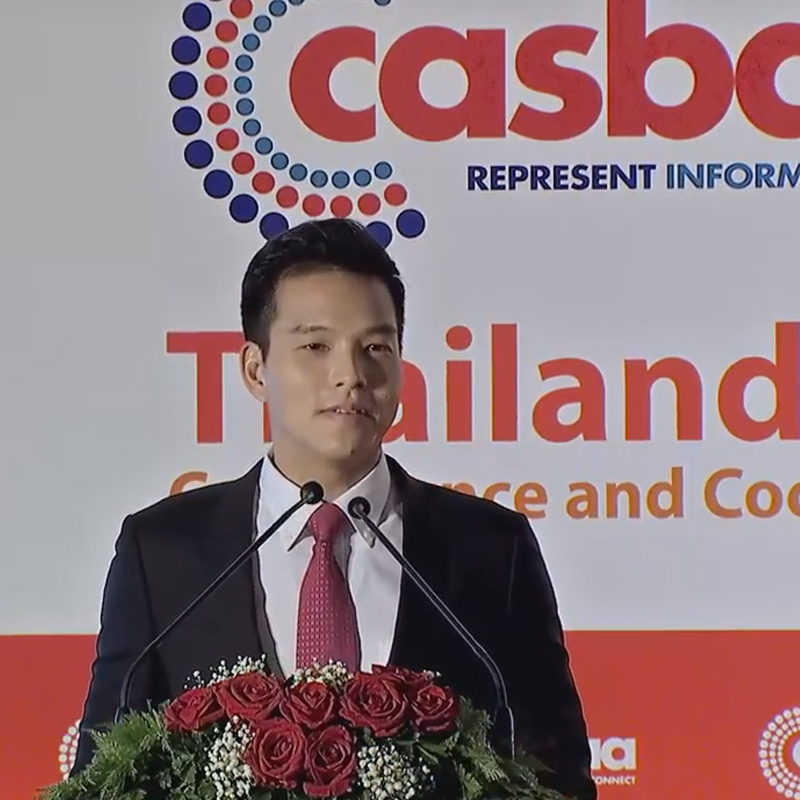
    Reaching a vast audience through tailored video and gaming content was the topic for Chad Gutstein, CEO of Machinima who highlighted that their most valued content was when viewers felt they had a connection to the creation of it. On a video note, Ricky Ow from Turner International predicted that Machinima’s e-Sports will be as successful as the English Premier League.

    James Schwab, Co-President of VICE announced the opening of the company’s first full-service office in Asia, in Jakarta, Indonesia. He discussed how their local content policy over digital channels has helped the company grow exponentially over the last few years. The recent move into TV has been important for VICE as it gives them the ability to invest more in content.

    Localized and Asian content was flagged by Henry Tan, COO of Astro, for being one of the main drivers that has seen the provider defy the trend of decline in time spent on TV, reporting healthy growth in this respect. A true understanding of the complexities of the Malaysia audience demographic is key to content that works for Astro’s market. Tan also discussed the effectiveness of current measurement models with Nick Burfitt, MD, APAC, Kantar Media. On the global stage, compelling content that tells a great story is the wining formula for Thom Beers of BoBCat whose male-oriented programmes like “Deadliest Catch” and “Monster Garage” have achieved success the world over. Norman Lao, VP International of Leyard showcased how MR – mixed reality comprising a kind of virtual reality that reacts with real physical events – will shape the content of the future.

    Piracy cropped up in conversation throughout the day with opinions polarized on whether this would continue to be an issue. In a session devoted to the subject, Avigail Gutman, Programme Director, Operational Security, CISCO, advised that the industry needed to ‘follow the money’ in combating piracy. Lucia Rangel, VP Latin America, Asia Pacific & Worldwide Game Strategy and Operations Warner Bros. agreed the problem was worldwide and that ISD boxes formed a critical part of the problem as many consumers were not even aware of the illegality of these and other streaming mechanics. A global effort was needed to fight the pirates, she commented. Desmond Chan, Deputy GM, Legal and International Operations, TVB highlighted the tangible impact piracy had already made to their business. Nickhil Jakatdar of Vuclip talked about how the content provider’s strategy was to provide a better experience than that available from pirate outfits.

    Different models of OTT content streaming were also a hot topic. Jakatdar illustrated how Vuclip’s Viu platform was a direct to consumer offering while David Weiland, EVP Asia, BBC Worldwide discussed how the ‘Beeb’ had instead opted to stream their new OTT app via their operator, Starhub. With all the different streaming options available, it was concluded that consumers could hardly keep up and would want a ‘one-stop’ shop when seeking out their viewing content.

    “Today’s Convention was a hot bed of debate on key issues facing our members today,” said Christopher Slaughter, CEO of CASBAA. “With issues on deals, revenue, appealing content, measurement, piracy and OTT streaming models all on the agenda, we hope our delegates found the sessions useful and informative, and that the information shared will be of help as they shape their business models for the fast-changing landscape in which they operate.”

  • CASBAA Convention kicks off with focus on deals, revenue and content

    CASBAA Convention kicks off with focus on deals, revenue and content

    Macau: The CASBAA Convention annual conference got underway today at its exciting new venue, Studio City, Macau. This year marks the 25thanniversary of CASBAA which is dedicated to representing key players from the cable and satellite broadcasting industry under the motto ‘represent, inform, connect’. Today’s sessions looked at the deals being made in the industry today, as well as the tools to aggregate and measure audiences. As ever, content was hotly discussed, with a focus on how content is evolving in the digital age.

    Following opening remarks by Sompan Charumilinda, Chairman for CASBAA, Irwin Gotlieb, the Global Chairman for GroupM, was first to take to that stage to discuss the changing nature, and measurement of viewing behaviors. He also touched upon how the way to reach audiences via the marketing funnel is the same but a granularity of data can now inform decisions for each stage of the funnel. He underscored how media will continue to play a role becoming more targetable, addressable and eventually part of the transaction process. Also on the subject of measurement, Ben Reneker of S&P Global Market Intelligence highlighted how machine-driven predictive measurement models are now able to inform strategic decisions on marketing and investment.

    Oliver Wilkinson, managing director for PricewaterhouseCoopers, provided statistics to illustrate that pay-TV is not dead, despite what the headlines say, and that it remains a primary form of entertainment. Yet, with digital players increasingly on their turf, content and channel providers should look to diverse and digitalize their offer. Doing deals in China was the topic for Bennett Pozil, EVP of East West Bank, who discussed the migration of content both ways as well as some of the pros and cons of doing business in China. Vivek Couto, Executive Director at Media Partners Asia, flagged the rise of digital players with the forecast that pay-TV growth would slow to about 3% as content providers looking to establish more direct to consumer offerings.

    Reaching a vast audience through tailored video and gaming content was the topic for Chad Gutstein, CEO of Machinima who highlighted that their most valued content was when viewers felt they had a connection to the creation of it. On a video note, Ricky Ow from Turner International predicted that Machinima’s e-Sports will be as successful as the English Premier League.

    James Schwab, Co-President of VICE announced the opening of the company’s first full-service office in Asia, in Jakarta, Indonesia. He discussed how their local content policy over digital channels has helped the company grow exponentially over the last few years. The recent move into TV has been important for VICE as it gives them the ability to invest more in content.

    Localized and Asian content was flagged by Henry Tan, COO of Astro, for being one of the main drivers that has seen the provider defy the trend of decline in time spent on TV, reporting healthy growth in this respect. A true understanding of the complexities of the Malaysia audience demographic is key to content that works for Astro’s market. Tan also discussed the effectiveness of current measurement models with Nick Burfitt, MD, APAC, Kantar Media. On the global stage, compelling content that tells a great story is the wining formula for Thom Beers of BoBCat whose male-oriented programmes like “Deadliest Catch” and “Monster Garage” have achieved success the world over. Norman Lao, VP International of Leyard showcased how MR – mixed reality comprising a kind of virtual reality that reacts with real physical events – will shape the content of the future.

    Piracy cropped up in conversation throughout the day with opinions polarized on whether this would continue to be an issue. In a session devoted to the subject, Avigail Gutman, Programme Director, Operational Security, CISCO, advised that the industry needed to ‘follow the money’ in combating piracy. Lucia Rangel, VP Latin America, Asia Pacific & Worldwide Game Strategy and Operations Warner Bros. agreed the problem was worldwide and that ISD boxes formed a critical part of the problem as many consumers were not even aware of the illegality of these and other streaming mechanics. A global effort was needed to fight the pirates, she commented. Desmond Chan, Deputy GM, Legal and International Operations, TVB highlighted the tangible impact piracy had already made to their business. Nickhil Jakatdar of Vuclip talked about how the content provider’s strategy was to provide a better experience than that available from pirate outfits.

    Different models of OTT content streaming were also a hot topic. Jakatdar illustrated how Vuclip’s Viu platform was a direct to consumer offering while David Weiland, EVP Asia, BBC Worldwide discussed how the ‘Beeb’ had instead opted to stream their new OTT app via their operator, Starhub. With all the different streaming options available, it was concluded that consumers could hardly keep up and would want a ‘one-stop’ shop when seeking out their viewing content.

    “Today’s Convention was a hot bed of debate on key issues facing our members today,” said Christopher Slaughter, CEO of CASBAA. “With issues on deals, revenue, appealing content, measurement, piracy and OTT streaming models all on the agenda, we hope our delegates found the sessions useful and informative, and that the information shared will be of help as they shape their business models for the fast-changing landscape in which they operate.”

  • Warner Bros leads $24 million investment into Machinima online video network

    Warner Bros leads $24 million investment into Machinima online video network

    MUMBAI: Warner Bros Entertainment has upped its investment in Machinima, leading a $24 million round of financing for the online video network.


    Machinima, the first global Many2Many programming service is focused on fandom and gamer culture.


    Other previous investors in Machinima, including Redpoint Ventures, MK Capital, Coffin Capital alongside Machinima chairman Allen DeBevoise.


    The investment builds on a year-long transformation at Machinima, during which monthly viewership is up over 70 per cent and US unique viewers have tripled. Overall, Machinima boasts a massive audience of more than 430 million subscribers worldwide, 170 million monthly unique viewers and 3.7 billion monthly video views.


    “In 2014, Machinima regained our leadership position in the global digital video marketplace by focusing on our Talent Network and transforming our brand into one that is reflective of our content, our audience and our community of creators. This additional funding will enable Machinima to accelerate our growth through increased investments in content and technology that better serves our audiences, advertisers, creators and distributors,” said Machinima CEO Chad Gutstein.


    “Under Chad’s leadership, Machinima continues to grow as a key entertainment destination for millennials. With its enormous fan base, Machinima is an important exhibition partner, providing content creators, including Warner Bros., multiple platforms for distributing and monetizing digital content and programming brands,” said Warner Bros. Television Group president, business and strategy Craig Hunegs.


    Warner Bros.’ participation in this funding continues the longstanding relationship between the two companies, which has resulted in live-action web series including two seasons of “Mortal Kombat: Legacy.” Later this year, Machinima will release “Justice League: Gods and Monsters Chronicles,” an animated limited series from DC Comics and Blue Ribbon Content, and executive produced by Bruce Timm and Alan Burnett.


    In 2014, the company revamped its executive team first with the hiring of former Ovation TV COO Chad Gutstein as CEO. Throughout the year, Gutstein unveiled key appointments to all areas of Machinima’s business, including most recently chief content officer Daniel Tibbets.


    The new team capped off 2014 by executing a comprehensive brand repositioning of the company. Placing a renewed focus on Machinima’s vast and gifted talent network, and original programming capabilities, the rebrand featured a new tagline “Heroes Rise” along with a completely revamped talent program, which was supported by the launch of Console, a state-of-the-art technology platform. Additionally, the Machinima.com website was overhauled into a valuable resource for creators and advertisers and the Machinima Legion viewer panel was unveiled.


    With more than 30 million monthly unique viewers, Machinima currently ranks ninth in total US audience for Online Video Entertainment Properties and fourth for US males 18-49. The company is making a concerted effort to supplement its explosive YouTube presence with additional distribution platforms. Recently, Machinima announced distribution partnerships with Samsung and Vessel.