Tag: CFSI

  • ‘Make an Indian’ through the right type of kids content

    ‘Make an Indian’ through the right type of kids content

    MUMBAI: In a country where one third of the population is composed of children, very little has been done to encourage and promote kids content. While most will argue and point to the vibrant plethora of content for kids that kids’ networks in India boast of, it is just a fraction of what is required and can be achieved. To discuss the issues that held the industry back from catering quality kids content,  industry stalwarts like filmmaker Subhash Ghai, CFSI chairman Mukesh Khanna, GEAR Education founder Shrinivasan, Green Gold founder and CEO Rajiv Chilaka, Bioscopewala Pictures president Nishith Takia and Viacom 18 Kids cluster head Nina Jaipuria were a part of a panel. Moderated by FICCI animation chairman and Screenyug Creations founder Ashish SK, the panel addressed the need to have a Kids Content Act.

    The panellists unanimously agreed that India lacks any guidelines on what kind of content kids should consume, which exposed them to content that isn’t meant of them. Today’s kids are tomorrow’s future, and hence what content today’s kids consumed would have a character building influence on the adult of tomorrow, was the argument that Ghai had in support of the Act.

    “The formative years till the age of 8 years are crucial for a child. That is why pre-school content for kids has great power to familiarise them with our culture and add morals and values to their lives,” Shrinivasan stressed. “India lacks any form of parenting education. Parents often mistake the TV to be their babysitter, and expect their children to learn life values from it. Therefore we must pay attention to what kids are consuming on television.”

    A large part of the panel discussion was dominated by the need to have more Indian content for kids that reflected Indian culture and connected today’s kids with the roots of their parents. Both Ghai and Khanna felt that this generation of kids were so taken by the second screen – be it the mobile phone or the tablet — they were slowly drifting away from their own culture and embracing the west. They pointed at westernised kids’ content available right now and the lack of proper home grown content that adhered to the values of the land. Chalika also pointed out that he grew up amidst Archie comics and American and British superheroes and characters.

    Jaipuria however begged to differ with her fellow panellists. Pointing out to the progress of her own network, Jaipuria shared that 65 per cent of what Nickelodeon showrd was originally home grown, and the rest was either dubbed or tweaked to make it relatable for the local kids. Bringing in a fresh perspective to the digital era, she shared that soon all players would be in an even field thanks to digitisation. This would lead to such a huge demand for kids content that she doubted the country could meet at the moment with any measure of sustainability. Her reason for supporting an act was to ensure that the industry and all its sections — the creators and the distributors– were prepared with a ready supply of quality kids content for the near future.

    To make that a reality, there were certain legal, financial, and logistical hold ups, the moderator pointed out. Takia, who has been closely involved with the making of the recent National Award winning children’s film Delhi Safari, painted a sad picture of the current motion pictures sector for kids’ films. “Our film did extremely well in China and South Korea, but failed miserably in India. The movie was pulled out of screens way too quickly. Most of the money we made was from foreign market. This shows how we need to create an environment where children’s films reach their due audiences. The act may consider screen reservation or other ways to ensure viewership of such films,” he said. Government sanctions, subsidies, and entertainment tax reliefs were also brought up while discussing the act.

    “The ease of producing a children’s film is the key to take this industry in the right direction. Outside India, most animated children’s films are co-produced but Indian film makers can’t do that. We are restricted by law,” said Khanna. “The act should deal with this and allow filmmakers to co-produce the films and share the financial burden of creating something which requires a huge budget.”

    To address the visibility issue, Ashish proposed a free to air DD Kids channel so that kids living in the most remote parts of the country could enjoy quality content.

    The one take away from the discussion was perhaps the phrase ‘make an Indian.’ Giving a clever twist to the extremely popular ‘Make In India’ phrase that prime minister Modi had devised , the panellists urged that content creators should ‘make an Indian’ out of the tiny tots, riding on powerful home grown kids content that reflected the country’s culture.

    With so much stress on raising the country’s kids to the right type of ‘Indian’, is there a risk of homogenising kids content and regulating creativity? — A question the panel raised but did not answer.

  • ‘Make an Indian’ through the right type of kids content

    ‘Make an Indian’ through the right type of kids content

    MUMBAI: In a country where one third of the population is composed of children, very little has been done to encourage and promote kids content. While most will argue and point to the vibrant plethora of content for kids that kids’ networks in India boast of, it is just a fraction of what is required and can be achieved. To discuss the issues that held the industry back from catering quality kids content,  industry stalwarts like filmmaker Subhash Ghai, CFSI chairman Mukesh Khanna, GEAR Education founder Shrinivasan, Green Gold founder and CEO Rajiv Chilaka, Bioscopewala Pictures president Nishith Takia and Viacom 18 Kids cluster head Nina Jaipuria were a part of a panel. Moderated by FICCI animation chairman and Screenyug Creations founder Ashish SK, the panel addressed the need to have a Kids Content Act.

    The panellists unanimously agreed that India lacks any guidelines on what kind of content kids should consume, which exposed them to content that isn’t meant of them. Today’s kids are tomorrow’s future, and hence what content today’s kids consumed would have a character building influence on the adult of tomorrow, was the argument that Ghai had in support of the Act.

    “The formative years till the age of 8 years are crucial for a child. That is why pre-school content for kids has great power to familiarise them with our culture and add morals and values to their lives,” Shrinivasan stressed. “India lacks any form of parenting education. Parents often mistake the TV to be their babysitter, and expect their children to learn life values from it. Therefore we must pay attention to what kids are consuming on television.”

    A large part of the panel discussion was dominated by the need to have more Indian content for kids that reflected Indian culture and connected today’s kids with the roots of their parents. Both Ghai and Khanna felt that this generation of kids were so taken by the second screen – be it the mobile phone or the tablet — they were slowly drifting away from their own culture and embracing the west. They pointed at westernised kids’ content available right now and the lack of proper home grown content that adhered to the values of the land. Chalika also pointed out that he grew up amidst Archie comics and American and British superheroes and characters.

    Jaipuria however begged to differ with her fellow panellists. Pointing out to the progress of her own network, Jaipuria shared that 65 per cent of what Nickelodeon showrd was originally home grown, and the rest was either dubbed or tweaked to make it relatable for the local kids. Bringing in a fresh perspective to the digital era, she shared that soon all players would be in an even field thanks to digitisation. This would lead to such a huge demand for kids content that she doubted the country could meet at the moment with any measure of sustainability. Her reason for supporting an act was to ensure that the industry and all its sections — the creators and the distributors– were prepared with a ready supply of quality kids content for the near future.

    To make that a reality, there were certain legal, financial, and logistical hold ups, the moderator pointed out. Takia, who has been closely involved with the making of the recent National Award winning children’s film Delhi Safari, painted a sad picture of the current motion pictures sector for kids’ films. “Our film did extremely well in China and South Korea, but failed miserably in India. The movie was pulled out of screens way too quickly. Most of the money we made was from foreign market. This shows how we need to create an environment where children’s films reach their due audiences. The act may consider screen reservation or other ways to ensure viewership of such films,” he said. Government sanctions, subsidies, and entertainment tax reliefs were also brought up while discussing the act.

    “The ease of producing a children’s film is the key to take this industry in the right direction. Outside India, most animated children’s films are co-produced but Indian film makers can’t do that. We are restricted by law,” said Khanna. “The act should deal with this and allow filmmakers to co-produce the films and share the financial burden of creating something which requires a huge budget.”

    To address the visibility issue, Ashish proposed a free to air DD Kids channel so that kids living in the most remote parts of the country could enjoy quality content.

    The one take away from the discussion was perhaps the phrase ‘make an Indian.’ Giving a clever twist to the extremely popular ‘Make In India’ phrase that prime minister Modi had devised , the panellists urged that content creators should ‘make an Indian’ out of the tiny tots, riding on powerful home grown kids content that reflected the country’s culture.

    With so much stress on raising the country’s kids to the right type of ‘Indian’, is there a risk of homogenising kids content and regulating creativity? — A question the panel raised but did not answer.

  • 18th ICFF gets over 100 films made by child directors for next edition

    18th ICFF gets over 100 films made by child directors for next edition

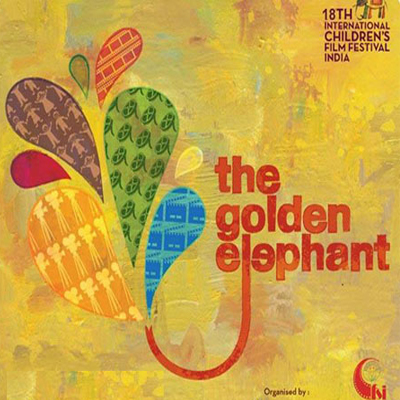
    NEW DELHI: A total of more than 845 entries have been received from over 70 countries for the 18th International Children’s Film Festival, India (ICFF), popularly known as ‘The Golden Elephant’, to be held in Hyderabad in November.

    The Festival, which is traditionally held every second year alternating with the Mumbai International Film Festival for short films, will also have films from twenty countries like Austria, Chile, Cuba, Lebanon, and Ghana that were not represented in the last edition in 2011. The Festival will as usual be held from 14 to 20 November.

    Chairman of the Children’s Film Society India Amole Gupte said, “We have received an overwhelming response this year and we aim to make the festival bigger and better than ever before. The number of entries for the section ‘Little Directors’ which will feature films made by children is over 100.”

    CFSI CEO and festival director Shravan Kumar added that there were many ‘firsts’ in this festival. “Some of the ICFF films have been sourced from Cannes Film Market, allowing us to pick a selection of the latest children’s films, awaiting their World/Asian Premiers. ICFF has received 26 films from south America, a region barely represented in the earlier editions. We have also received 255 animation films from around the world.”

    The Lalitha Kala Thoranam – built in 1986 for the International Film Festival of India – will be the venue for the inaugural and closing ceremony this year and the films will be screened at Prasad IMAX Multiplex and seven other theatres.

    This was decided in the first organising committee meeting held in Hyderabad recently attended among others by Andhra Pradesh chief secretary Prasanna Kumar Mohanty, Information and Broadcasting Ministry Secretary Bimal Julka, I&B Joint Secretary (Films) Raghuvendra Singh, and Dr. Shravan Kumar.

     The festival will present four competitive sections. The best film would bag the Golden Elephant trophy and Rs two lakh in cash and and the second best feature will bag the Golden Elephant Plaque with Rs one lakh in cash.

    The Festival will also focus on “Children with Special Needs” through its Open Forum, where filmmakers will interact with activists, educators and parents. Films representing children with special needs will also be screened.  

    A Master-Class Workshop on how to market Indian Children’s films internationally will be organised in collaboration with Cine-Kid, Amsterdam, the world’s most popular children’s film market.

    The festival will also be bringing the best of Czech children’s cinema in the Country Focus section, including animations created by world renowned Czech animators, in collaboration with Zlin Film Festival – the oldest children’s film festival in the world.  

    Kumar added, “We are sourcing international award winning films featured in the 20 most prestigious International children’s film festivals including Dutch nomination for the Academy Awards and other recent children’s films that have won or featured in Berlinale, Toronto, Cannes, etc.”

  • Four film personalities align to develop quality children‘s films in India

    Four film personalities align to develop quality children‘s films in India

    MUMBAI: Director Onir, Paan Singh Tomar screenwriter Sanjay Chouhan, actress Tannishtha Chatterjee and noted German director Arend Agthe have decided to align to develop quality Indian children‘s cinema.

    The group will mentor 18 screenplays for children‘s cinema at the Green Screen Lab 2012 being organised by Eleeanora Images Pvt Ltd (India) and Performing Arts Lab (UK) in association with Children‘s Film Society, India (CFSI), in Bhubhaneshwar in Odisha.

    The 18 screenplays include five from North-East India as part of the Lab organisers‘ idea to bring out the many exciting stories from the neglected region to the mainstream India and beyond.

    At least five projects are likely to be chosen for development and production funding with the target to take the films to the floor in 2013.

    Acclaimed author Ruskin Bond, whose works have been adapted to the screen by directors like Shyam Benegal and Vishal Bhardwaj, will attend the Lab as a special guest, and share his thoughts on the relationship between literature and cinema with the participants.

    “The call for entry to the Lab elicited a huge response and the selection jury had a tough time picking up the chosen 18 as the quality of the submissions was generally quite high. In fact, this gives us great hope about the future of children‘s cinema, which has been a neglected genre in India largely,” said Nila Madhab Panda, maker of I am Kalam.

  • CFSI fails at the box office with Gattu

    MUMBAI: The Children‘s Film Society of India (CFSI) has failed to find box office success with its films yet again. The award-winning Gattu failed to win theatrical audiences, disappointing CFSI‘s commercial attempt made after a 16-year gap.

    The last film that CFSI released was Santosh Sivan‘s Halo in 1996.

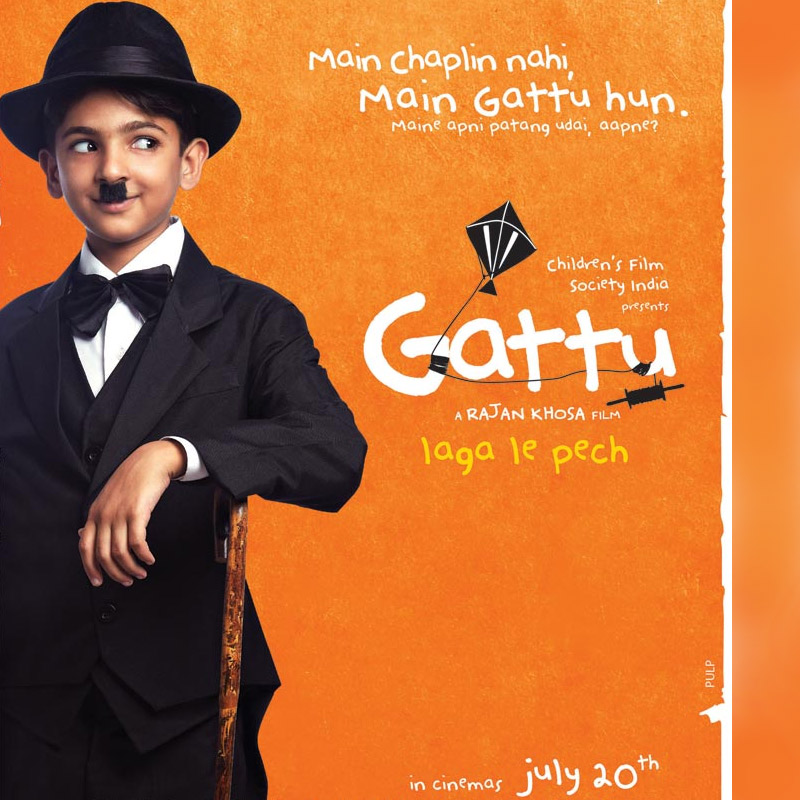
    Gattu, directed by Rajan Khosa, is a film about a small child‘s passion to fulfill his dreams helps him get admission in a school. It won several awards including the ‘Best Film’ award at the 12th New York Indian Film Festival (NYIFF).

    Gattu had good opportunity as all the Friday releases were weak and proved to be disasters at the box office. Stale and out of sync in its content and treatment, Mere Dost Picture Abhi Baki Hai proved to be a commercial dud.

    Challo Driver met with a similar fate, failing to find patrons as it lacked face value and enough promotion.

    Meanwhile, despite a limited exposure, as most screens were blocked by Bol Bachchan, Cocktail excelled to find appreciation from the youth. The film collected Rs 538 million and was holding steady in the second weekend as well.

    Bol Bachchan remained fair in its second week, mopping up Rs 216 million, to take its total net collections at the box office to Rs 821 million.

    Teri Meri Kahaani ran out of steam in its fourth week, while Gangs Of Wasseypur added Rs 6 million in its fourth week to take its total to Rs 264.5 million.

    Ferrari Ki Sawaari added Rs 5 million in its fifth week. Its total net collections so far stood at Rs 281.5 million.

    Rowdy Rathore collected Rs 5 million in its seventh week to take its tally to Rs 1.38 billion.

  • CFSI to release Gattu commercially

    CFSI to release Gattu commercially

    MUMBAI: The Children‘s Film Society of India (CFSI) has decided to release Rajan Khosa‘s Gattu commercially.

    CFSI chairperson Nandita Das said, “Gattu is the first film that CFSI is releasing commercially. We also have a Kannada and an animation film coming up. Gattu will be a gate opener for all of them.” Das was speaking at the launch of Gattu‘s promotional song – Laga le pech.

    Gattu, starring Mohammad Samad as Gattu, is the story about a nine-year-old street boy who is obsessed with flying kites. “He wants to cut this black kite called Kali and for this he needs a high roof. He realises that the school has one and pretends to go to the school and wins the heart of all children,” Khosa said while elaborating on the story.

    “The film is about the have and have-not and the right to education. It is about all of us. I am sure it will be a lovely movie and I want to give it my entire support. Lower the budget, more are the challenges. The film seems entertaining and the story is wonderful. Let‘s revisit our childhood through this film,” he said.

    Producer-director Rakeysh Omprakash Mehra, who is supporting Gattu said that the entertaining story will take viewers back to their childhood days. “I am proud that I am associated with Gattu. I will do whatever I can to support the film,” he added.

  • CFSI celebrates Tagore’s birth anniversary

    CFSI celebrates Tagore’s birth anniversary

    MUMBAI: On the occasion of Nobel laureate Rabindreanath Tagore’s 250th birth anniversary, the Children’s Film Society India (CFSI) recently celebrated Tagore and his connect with the children in Nandan, Kolkata.

    On the appointed day, the CFSI organised ‘Chhelebela’, a celebration of Tagore’s stories on children through films, workshops, story reading, and panel discussion. The occasion also marked the screening of Buddhadeb Dasgupta’s film Woh that is inspired by Tagore’s book.

    Said CFSI chairperson Nandita Das,“Rabindranath Tagore’s contributions towards children’s literature is very significant, but not much has been done in sesquicentennial. We are really delighted that we have been able to put together three of our films based on his delightful literature. Our recent film, Woh directed by Buddhadeb Dasgupta is the latest edition to our tribute to Gurudev.”

    In the day long festivities, films like Mrinal Sen’s Ichchapuran and Zul Vellani’s Dak Ghar were also screened. Every screening was followed by a story discussion with the children about the films.

    While Sen was the chief guest of the eventful day, noted actor Soumitra Chatterjee read out a short story of Tagore.

  • Gattu to release on 20 April

    Gattu to release on 20 April

    MUMBAI: After getting a lot of praise in several international film festivals including the recently concluded Berlin Film Festival, Children‘s Film Society’s film Gattu is being readied for release in India on 20 April.

    Talking about the film CFSI chairperson Nandita Das said, “Gattu is a fun film, full of charm and adventure, made with sensitivity and a keen cinematic eye. Gattu’s desire to fulfill his dream speaks to both, children and adults alike. We are delighted to produce this film as part of rejuvenating the Children’s Film Society, India. We hope to reach out to millions of children within the country and elsewhere, to share with them the journey of an orphan boy who finds a reality that is bigger than his dream.”

    Gattu is the story of a little village orphan child labourer, whose aim is to cut the large black kite Kaali with his kite-flying skills. The adventurous spirit of this little boy finally leads him to leading a normal kid‘s life, complete with an adoring foster parent in his employer and education!

    Berlinale 2012‘s International Jury Generation Kplus awarded a special mention to the film. On his Berlinale experience, CFSI CEO Sushovan Banerjee said, “Berlin was a very proud moment for us at CFSI. Gattu is a movie that will touch a lot of hearts and I am sure that the audience in India will connect with this little street urchin determined to fulfill his dream.”

    The film stars Mohammad Samad as Gattu, Naresh Kumar as Anees Bhai and Bhura as Tiger the sheep.

  • CFSI to charge for screening of children films in metros

    CFSI to charge for screening of children films in metros

    MUMBAI: The Information and Broadcasting Ministry has approved a proposal by the Children‘s Film Society of India (CFSI) to issue tickets to screen children’s films in metros.


    Accordingly, the CFSI has decided to start charging marginally, at around 30 per cent of the cost of general film tickets for its film shows in the metros.


    Confirming the same, CFSI CEO Sushovan Banerjee said, “The Information and Broadcasting ministry has approved a proposal by the CFSI after which there would be a ticket for the children‘s film shows held in metro cities.”
     
    Till 2007, the CFSI used to sell tickets for its film shows but the policy was changed and all screenings were made completely free.


    However, with sponsorships continuing to be difficult to obtain and the high cost of booking multiplexes and publicity, CFSI was forced to do a rethink.


    The additional funds generated would not only help the Children‘s films Society to organise better film festivals but also to reach out to children in the rural areas.


    Earlier, this exercise did not attract any ticket rate.

  • CFSI releases DVDs of popular Children’s films from its archives

    CFSI releases DVDs of popular Children’s films from its archives

    HYDERABAD: A set of five DVDs containing three children‘s films each from the archives of the Children‘s Film Society, India, was released here today by CFSI chairperson Nandita Das.


    Speaking on the occasion, she said that the CFSI has 250 films in its library including some acquired films. Films made by CFSI are also being dubbed in other Indian languages with the help of a Pune-based organisation.


    CFSI CEO Sushovan Banerjee said the CFSI had restored 21 old films as part of the National Heritage Mission of the Government. 17 or 18 of these were marketable and therefore these would be brought out in DVDs.


    The number of DVDs would be doubled in the next phase and all the films would be out in DVDs within two or three years. The DVDs had been brought out in collaboration with Shemaroo. They were priced at Rs 399 for three films in one DVD, Rs 299 for two films in a DVD and Rs 149 for single films in a DVD.


    Reacting to a question relating to content not suitable for kids in some of the films being exhibited at the 17th International Children‘s Film Festival, Das and Banerjee said at a press meet here that children today know more about life than we had known as young people. Each screening committee had educators amongst the members and they had approved these films.


    Banerjee said the aim of showing films from overseas is to let children learn about other cultures.


    Das said the aim of the selection process of the films at the 17th ICFF is to ensure fun films that served as an alternative to the sordid programming that children are forced to see in the home on television whose remote is in the hands of the elders. Films that appeared to be preaching are not preferred, though all films taught something.


    She said she had understood the relevance of children‘s film during her two years at the CFSI.